On this day in history….15th October 1871

On this day in history : 15th October 1871 – The Church Times publishes Onward Christian Soldiers – originally written for a children’s festival by the Rev. Sabine Baring-Gould….

Reverend Sabine Baring-Gould – Engraving from Strand Magazine – Public domain

It was the Monday following Whitsuntide, 1865…. It had been arranged for the children of Horbury village school, near to Wakefield in Yorkshire, to meet up with children from a school in a neighbouring village…. They were to rendezvous at St. Peter’s Church in Horbury where Baring-Gould was curate at the time….
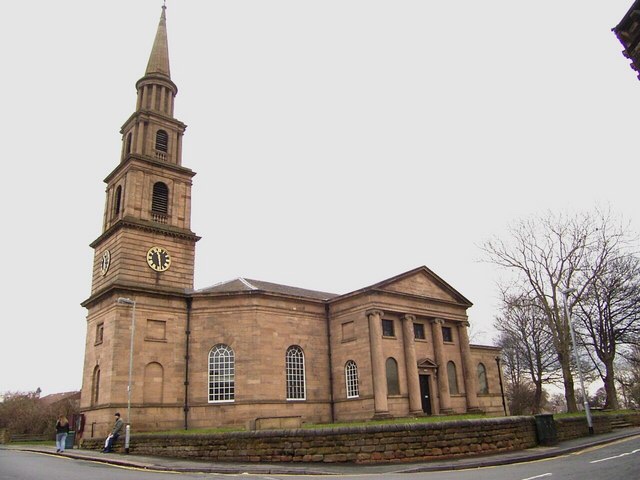
St. Peter’s Church, Horbury – Image credit : Stanley Walker CC BY-SA 2.0

Baring-Gould wanted a suitable rousing song for the children to sing as they marched along but was unable to find anything fitting…. So, he sat up the night before and wrote Onward Christian Soldiers – it reputedly took him 15 minutes to write the words….

He had not ever intended the song to be published – and when it was later added to the hymn books he apologised profusely for his hastily written words…. He allowed the compilers to change some of his lyrics – for example his ‘one in hope and doctrine’ was amended to ‘one in hope and purpose’….

The tune Baring-Gould had originally set his words to was Joseph Haydn’s Symphony in D No.15…. This did not particularly inspire public interest in the hymn – and even after being printed in the Church Times it did not increase in popularity…. Then along came composer Arthur Sullivan – best known for his collaborations with W.S. Gilbert, where together they produced works such as HMS Pinafore and The Pirates of Penzance…. Sullivan wrote the tune St. Gertrude to accompany Onward Christian Soldiers – it was first publicly performed in 1902…..

Winston Churchill further helped increase its popularity when in August 1941 he met with Franklin Roosevelt onboard HMS Prince of Wales to agree the Atlantic Charter…. As part of the proceedings a church service was held, for which Churchill chose the hymns…. Onwards Christian Soldiers was one of them….

Public domain

On this day in history….14th October 1881

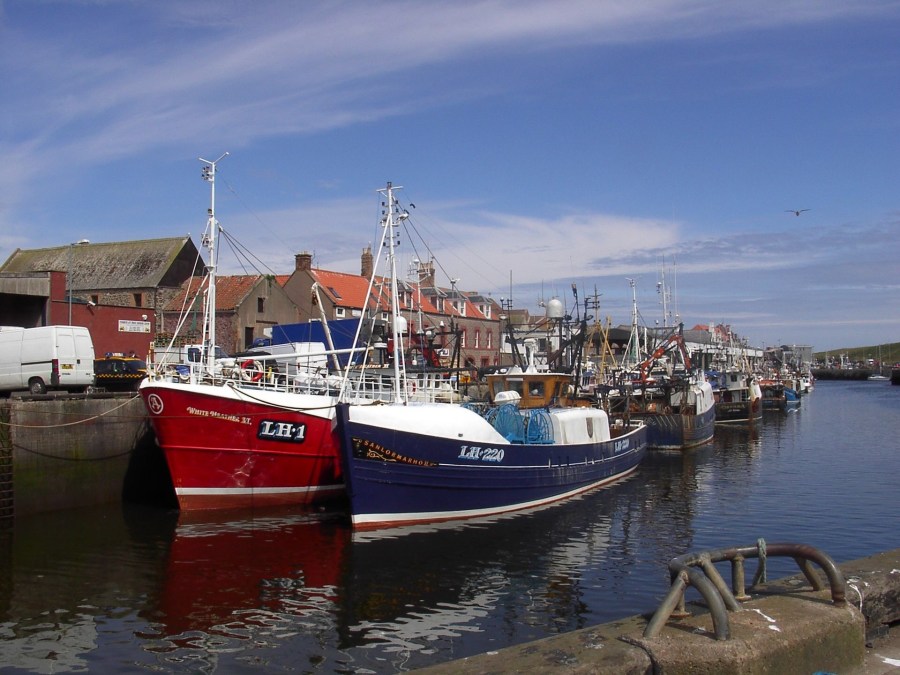
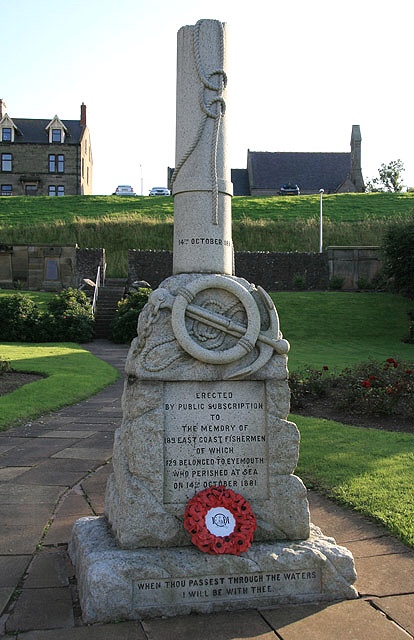
On this day in history : 14th October 1881 – Scotland’s worst ever fishing disaster occurs when a Berwickshire fishing fleet gets caught in a violent storm – 189 fishermen lose their lives….

Granite memorial in Eyemouth; depicts a broken sailing mast – Image credit : Walter Baxter CC BY-SA 2.0

Locals still know the day, when some 29 boats were swallowed by the sea off the south coast of Scotland in hurricane force conditions, as Black Friday…. Most of the fleet was from Eyemouth; 129 men from the town drowned, around 10% of the male population…. A further 24 from Burnmouth died, 15 from Newhaven-by-Edinburgh, 11 from Cove, 7 from Fisherrow, Musselburgh and 3 from Coldingham….

Bronze memorial at St. Abbs, figures of women and children looking out to sea – Image credit : Karen Bryan CC BY-SA 2.0

Fishing, being such a vital part of the economy, meant the fishermen had ignored the weather forecast that day…. Times were hard and not being able to afford losing a day’s income meant the fleet had set out as usual…. By lunchtime their worst fears were being realised – they were caught in the most violent of storms…. Those boats that could headed back to harbour but some were already beginning to sink, many more capsized and others were smashed against rocks…. The only glimmer of brightness out of this dark time being when fishing boat Ariel Gazell limped back into harbour at Eyemouth two days after the storm….

Eyemouth Harbour – Image credit : Peter Nisbet at English Wikipedia – Public domain

A massive relief fund was launched to help the families of the lost fishermen and the community – more than £5m in today’s equivalent was raised….

A commemorative tapestry of the tragic event can be seen in Eyemouth Museum….

On this day in history….13th October 1904

On this day in history : 13th October 1904 – The birth of actor and radio presenter Wilfred Pickles – a proud Yorkshire man and the first newsreader to speak on the BBC with a regional accent….

Wilfred Pickles in 1950 – Fair use

Pickles was born and grew up in Halifax – and when his family moved to Southport, Lancashire in 1929 he, now a young man, went with them…. He was to join an amateur dramatic society and here he was to meet Mabel Cecelia Myerscough; they were to marry on the 20th of September 1930 and went on to have one child….

It was during the 1920s that Pickles made his first professional appearance as an actor, at the Theatre Royal in Halifax, as an extra in a production of Julius Caesar…. He was to go on to become a radio celebrity after joining the BBC in 1927…. He was chosen by the BBC as an announcer for their Northern Regional Radio Service during World War 2 – the thinking behind this being that his regional accent would make it harder for the Nazis to impersonate BBC broadcasters….

Pickles made his West End debut in 1946 – and his acting career developed to include films and television…. Also in 1946 he became the host of radio show Have A Go, which ran until 1967…. This hugely popular show, which also featured his wife, brought familiar catchphrases, such as ‘How do, how are yer?’, ‘What’s on the table, Mabel?’, ‘Give him the money Barney’ and ‘Are yer courting?’…. By sharing their innermost secrets contestants could earn £1.19s.11d…. Over 20 million listeners tuned in each week….

In 1948 a children’s board game, called Ask Pickles, was released that was based on the format of the show…. In May 1954 the hit radio show became a TV show, with the same name – Ask Pickles…. It ran until 1956…. Pickles starred in his first TV sitcom Caxton’s Tales (along with Mabel) in 1958….

Pickles was not unique in his family for becoming famous…. He was the uncle of actresses Vivian Pickles and Christina Pickles and great uncle to Carolyn Pickles…. He was also uncle to colourful and outspoken Judge, James Pickles….

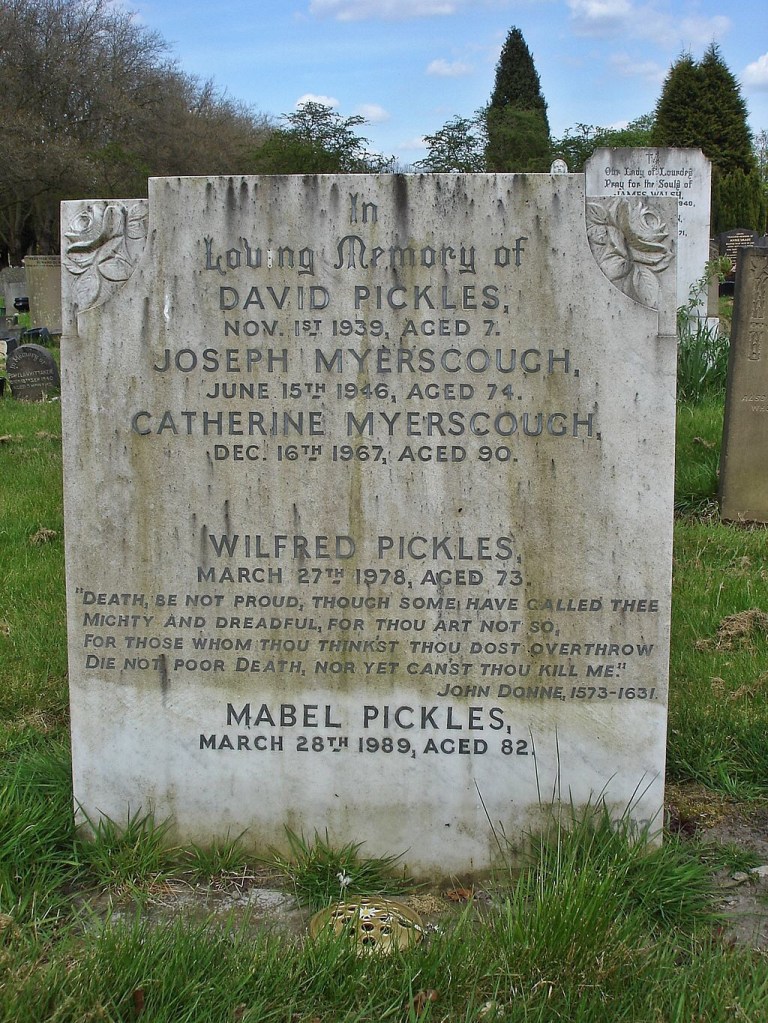
Pickles was awarded with a CBE for services to broadcasting in 1950…. He died in Brighton on the 27th of March 1978 and is buried with Mabel in Southern Cemetery, Manchester….

Image credit : Plucas58 -own work CC BY-SA 4.0

On this day in history….12th October 1216

On this day in history : 12th October 1216 – Bad King John loses his Crown Jewels in an attempted crossing of the Wash in East Anglia….

King John hunting – Public domain

King John has always had a reputation in the history books as being evil and incompetent…. 1216 – a year after the Magna Carta and the country was in a state of Revolt and King John had never been so unpopular; he had lost most of England’s land in France, had been excommunicated and had been forced to sign the Magna Carta….

An original version of the Magna Carta – Public domain

He was travelling from Spalding in Lincolnshire to Kings Lynn (then called Bishops Lynn) in Norfolk….and to avoid the rebel held area of East Anglia it was decided they should cut across the marshy area of the Wash…. As it was the King did not make the journey himself as he was taken ill with dysentery – but he sent his baggage train on ahead of him…. Some 3,000 of his entourage carried with them the Kingdom’s valuables, which included the Crown Jewels….

The tide was out on the Wash; the conditions were wet and muddy on the causeway – and the wagons moved too slowly…. Disaster was inevitable – the wagons sank in the mud and were engulfed…. The King’s men tugged at the horses but to no avail – and the tide was now coming in…. Soon everything was covered – and lost…. The Crown Jewels were never found – and as for King John – he died of his illness a week later….

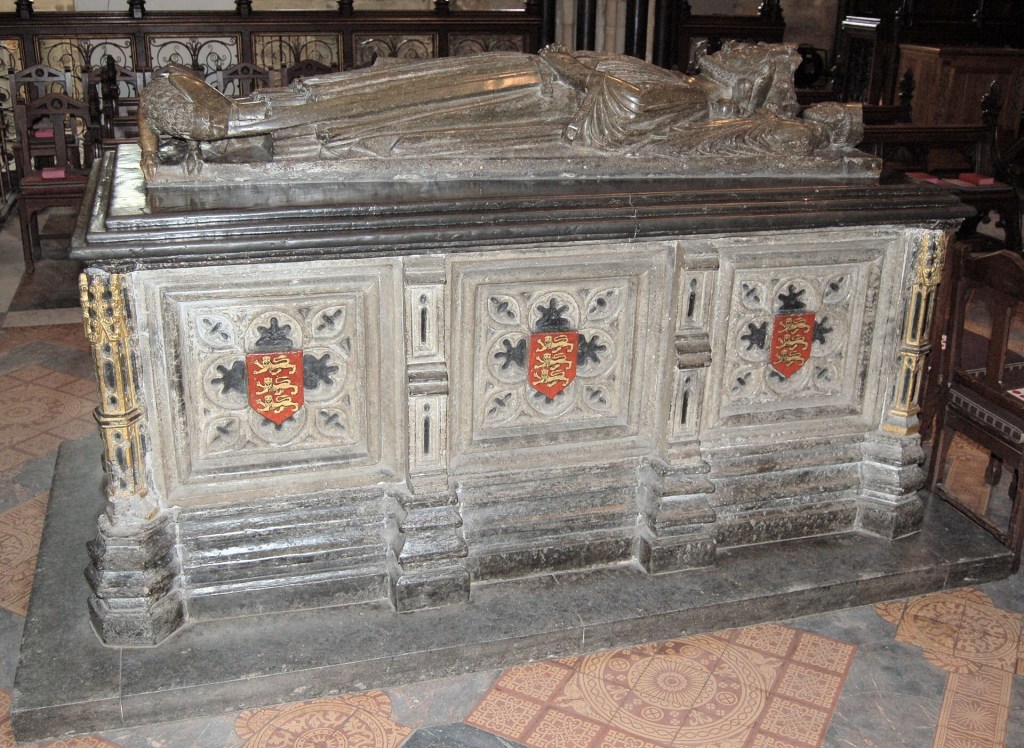
King John’s tomb, Worcester Cathedral – Image : Greenshed at English Wikipedia – Public domain

On this day in history….11th October 1821

On this day in history : 11th October 1821 – The birth of English philanthropist and businessman Sir George Williams – who founded the Young Men’s Christian Association (YMCA)….

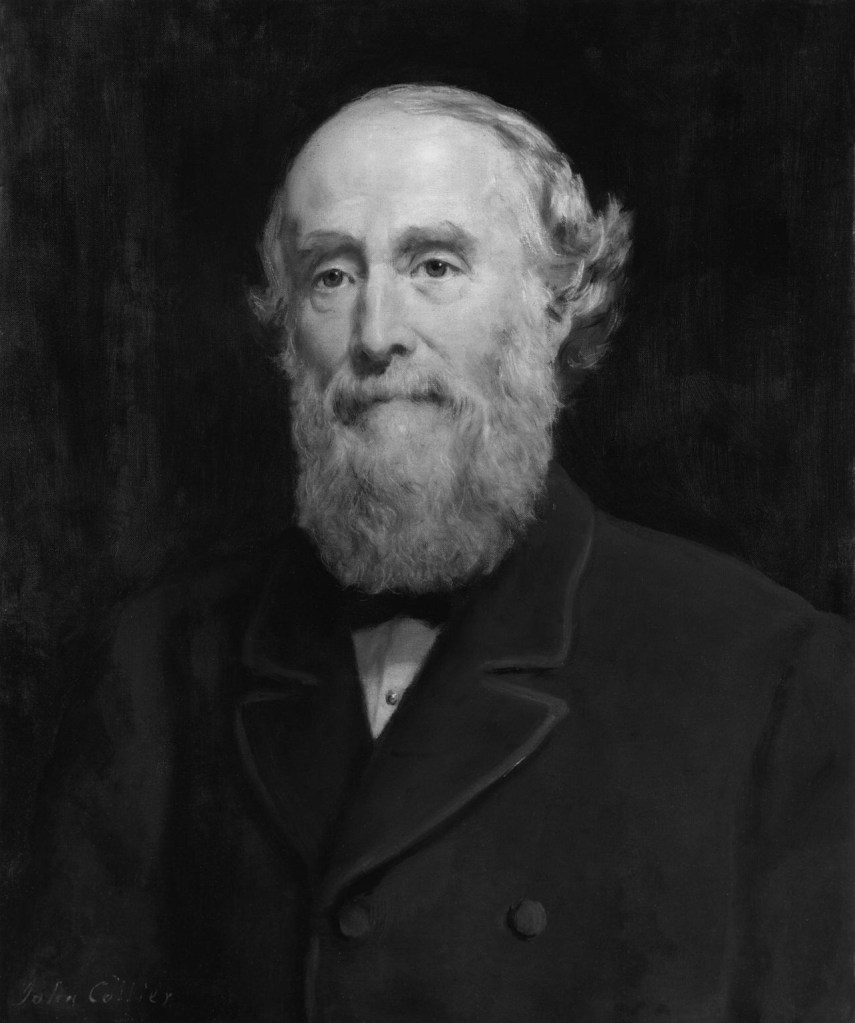
Sir George Williams by John Collier

Williams was born on a farm in Dulverton, Somerset – the youngest of the seven sons of Amos Williams and Elizabeth Vickery…. He attended school in Tiverton until the age of 13 and then began to work on the family farm….

In 1837 he became the apprentice of draper Henry William Holmes in Bridgewater…. It was also around this time that he converted from Anglicanism to Congregationalism, becoming an involved member of the Zion Congregational Church….

In 1841 Williams moved to London and began working at the drapers store Hitchcock and Rogers – and in 1844, at the age of just 22, he had become a department manager….

As a young man himself Williams was appalled by the terrible living conditions of the many young working men drawn to the city by the Industrial Revolution…. He was concerned that there were few healthy activities for them to occupy themselves – many spent all of their free time in the taverns and brothels…. He gathered together eleven of his friends, all fellow young drapers and on the 6th of June 1844 the first meeting was held that led to the founding of the YMCA…. Its purpose : ‘To improve the spiritual condition of young men engaged in the drapery, embroidery and other trades’….

Between 1844 and 1849 the YMCA began to address other concerns of young, working city men…. Public lectures and classes were held and reading rooms were established…. By 1845 the organisation began to spread from London to other areas of the country…. In 1873 its first holiday centre opened on the Isle of Wight…. By 1879 it had reached the United States…. What started as a simple Bible study and prayer meeting group for young men now serves more than 65 million people in 120 countries….

World Alliance of YMCAs logo emblem 1881 – Fair use

As for Williams – he didn’t do too badly for himself…. In 1853 he married the daughter of the owner of Hitchcock and Rogers, Helen Jane Maunder Hitchcock and they had seven children…. He became a partner in the drapers and when his father-in-law died he became the sole owner…. In 1894 he received a Knighthood from Queen Victoria – and when he died in 1905 he was buried in St. Paul’s Cathedral….

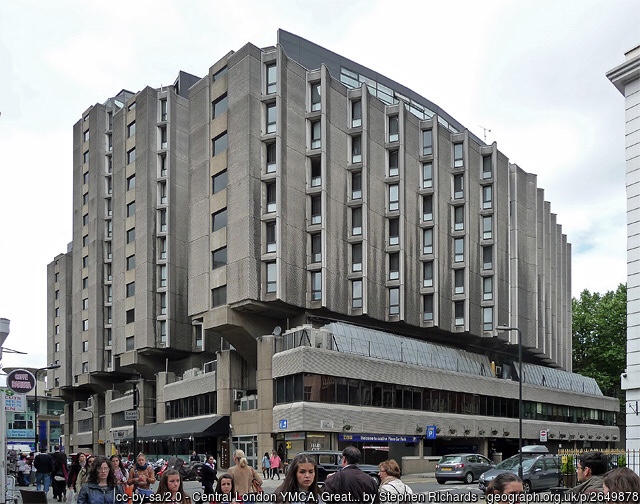
Central London YMCA, Great Russell Street