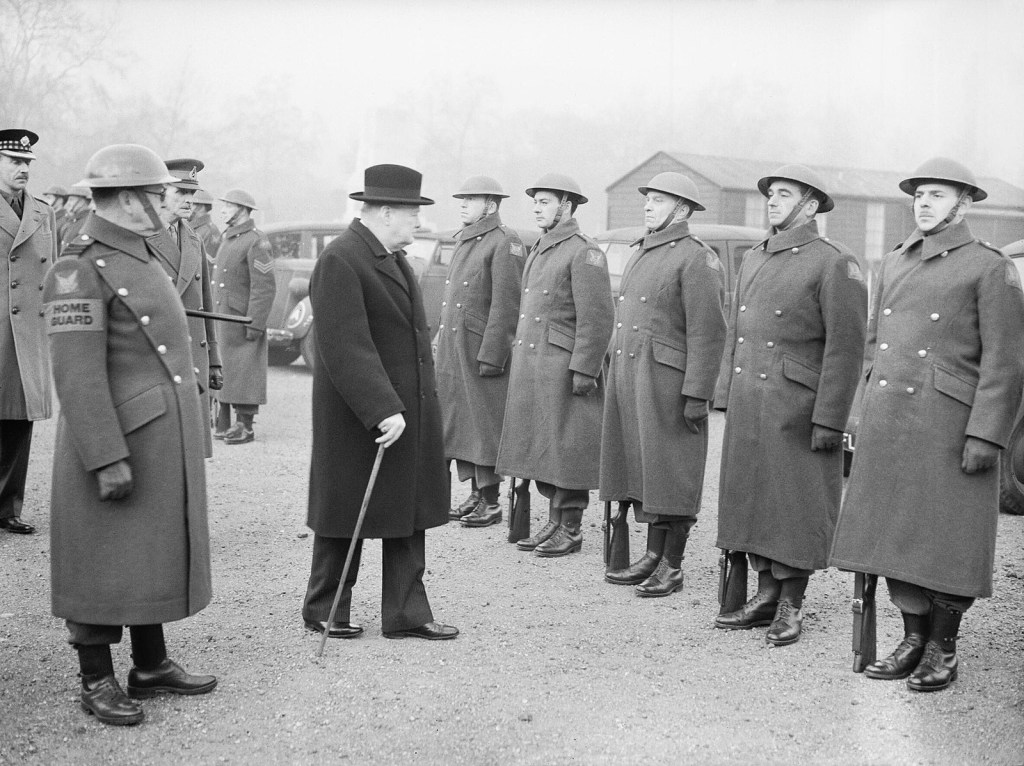
On this day in history : 23rd July 1940 – Winston Churchill changes the name of the Local Defence Volunteers to the Home Guard….
From the collections of the Imperial War Museums
The LDV had been set up in May 1940; Anthony Eden, the Secretary of State for War, called for men between the ages of 17 and 65 to sign up for the new force…. Very often they were in fact men above and below this age, or those deemed unfit for active service…. In the beginning it was very much a ‘make-do’ organisation, with improvised uniforms and weapons….
However, it evolved into a well-equipped and trained army of some 1.7 million men – not only ready for a possible invasion but also involved with bomb disposal and manning coastal artillery and anti-aircraft guns….
The Home Guard was stood down on the 23d of December 1944 – during its existence 1,206 men lost their lives through serving it….
On this day in history : 22nd July 1946 – Due to continuous rainfall Britain’s wheat crop is ruined and as a result the government introduces bread rationing….
The measure had been announced by the Food Minister in the House of Commons the previous day…. It came as a blow to the morale of the British people; all throughout World War Two bread was the one staple food item that had avoided being rationed…. Winston Churchill commented on the announcement as “One of the gravest I have ever heard of in time of peace”…. He demanded that figures of stocks and movements of cereals should be produced by Clement Attlee’s Labour Government, to justify these “extreme measures”….
The average daily allowance for an adult was just 9oz and this was to include bread, flour, cakes, scones and biscuits…. To compensate the meat ration was increased by 2ds worth per week…. This highly unpopular measure was to last for two years before finally coming to an end on the 24th of July 1948…. Historians now generally agree that the practice was unnecessary and ineffective….
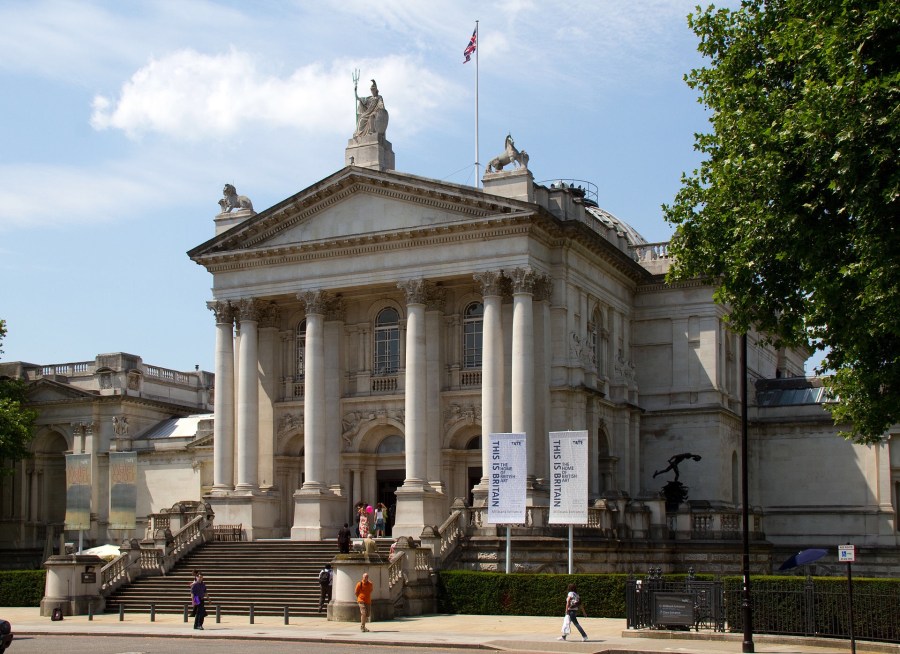
On this day in history : 21st July 1897 – The grand opening of the Tate Gallery, in the City of Westminster, London – by the Prince of Wales (the future King Edward VII)….
The gallery was built on the former site of Millbank Prison, which had been the departure point of convicts being transported to Australia…. It had been demolished in 1890….
The architect for the new gallery was Sidney R.J. Smith and construction began in 1893…. The building we see today is still very much like it was when it was first built….with its grand entrance, central dome and statue of Britannia with a lion and a unicorn….
Image credit : Tony Hisgett CC BY 2.0
The gallery was officially opened as the National Gallery of British Art – but from the onset people referred to it as the Tate Gallery, after its founder and benefactor, Sir Henry Tate…. The sugar magnate had also donated 65 paintings and 2 sculptures, forming the founding collection of the gallery…. In 1932 it became officially known as the Tate Gallery….
On this day in history : 20th July 1685 – Lady Alice Lisle shelters two supporters of Monmouth’s defeated army, following the Battle of Sedgemoor…. They are caught and all three are executed….
The Monmouth Rebellion, or otherwise known as the ‘Pitchfork Rebellion’, was an attempt to overthrow James II…. The Battle of Sedgemoor was the last confrontation between the rebels and the King’s men…. It took place near to Bridgewater, Somerset….the rebels were no match for the superior, trained army…. Monmouth himself escaped but was captured near to Ringwood in Hampshire; he was taken to the Tower of London and beheaded…. Around 500 rebels were captured and imprisoned in St. Mary’s Parish Church in Westonzoyland, whilst others were hunted down and shot…. Many more were hanged by the roadside….
The Duke of Monmouth leads the Rebels – Jan Wyck – Public domain
Two weeks after the Battle of Sedgemoor Lady Alice agreed to help two of the rebels who had avoided capture, by giving them refuge at her home, ‘Moyles Court’, near Ringwood…. John Hickes was a well-known non-conformist minister and his companion was a Richard Nelthorpe…. Lady Alice was the widow of lawyer and politician John Lisle – who had fled England to Switzerland after the Restoration – only to be assassinated in 1664….
Hickes and Nelthorpe spent the night at Moyles Court – but the following morning they were arrested…. Lady Alice initially denied that they had been in her home but she was charged with harbouring fugitives…. At her trial, which was held at the Bloody Assizes in Winchester, the jury questioned whether her actions should be considered as treasonable as she had not been directly involved with the rebellion…. She claimed she had no sympathy with the rebellion and had believed Hickes had done nothing more than a bit of illegal preaching….
The trial was presided over by Judge Jeffreys – who was also known as the ‘Hanging Judge’…. He denied Lady Alice permission to speak and defend herself and placed pressure on the jury – who, if not somewhat reluctantly, found her guilty after just 15 minutes of deliberation…. She was sentenced to burn at the stake….
Judge Jeffreys – Public domain
Lady Alice’s execution was delayed for a week…. However, James II refused to show mercy – but did allow her sentence to be changed to beheading, seeing it more fitting to a woman of her standing….
On the 2nd of September 1685 she was publicly beheaded by axe in the market square of Winchester…. She was the last woman to be executed by beheading in England…. She spent her last night in the Eclipse Inn, Winchester – close to the Cathedral…. She accessed the scaffold directly from one of the upstairs windows…. She died with dignity….
The Eclipse Inn, Winchester – Image credit : Ptelea – own work CC BY-SA 4.0
Lady Alice Lisle is buried at St. Mary and All Saints Church in Ellingham, Hampshire….
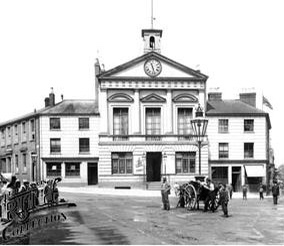
On this day in history : 19th July 1919 – The Luton Peace Day Riots begin – when ex-servicemen, unhappy about the unemployment situation following the end of World War One, burn down the town hall….
The Town Hall in 1897 – Image : Gazman7 CC BY-SA 3.0
Many servicemen, who had fought in the Great War, were angry about the vast amount of money that had been spent on the London Peace Parade to commemorate the anniversary of the end of the War…. They felt the money would have been better spent on helping servicemen find jobs and settle back into normal life….
Across Britain Peace Day had been declared a pubic holiday, in order to allow people to participate in the celebrations – but there were certainly plenty who did not feel like celebrating….
The riot in Luton began after council members read out the King’s proclamation of peace – many in the crowd voiced their disapproval…. To add to the unrest veterans had been refused permission to hold a service…. On the 7th of July 1919 the Discharged Sailors and Soldiers Association had asked to hold a drumhead mass in Wardown Park – but this had been rejected by the Tolls and Municipal Buildings Committee….
The unrest erupted into violence…. Protesters broke through the police line and stormed into the town hall…. Clashes followed and many more of the crowd surged into the hall…. Rioting was now in full force and in the furore the town hall was set a blaze….
Firemen were unable to put out the fire and by the next day the town hall was so severely damaged that the remains had to be demolished….
The Luton Peace Riots – bedsarchives.bedford.gov.uk – Public domain
As for the rioting…. By midnight things had calmed down but this was only to be a temporary reprieve, as the next day violence flared up again…. The protests were to last for three days…. Many were arrested and those convicted faced tough sentences, such as hard labour….






 Cottage Capers