On this day in history….3rd July 1966

On this day in history : 3rd July 1966 – Over 30 protesters are arrested outside the US Embassy in London as a demonstration against the Vietnam War turns violent….

The US Embassy, Grosvenor Square, London

Throughout the Vietnam War protest marches, often led by students, were organised in cities across America and Europe…. Eventually, as public opinion increased more and more against the war, the US government was forced to reconsider its intervention in Southeast Asia….

One such demonstration was held outside the US Embassy in Grosvenor Square, London, by a crowd of some 4,000 protesters – 2,000 of which were members of the newly formed ‘Youth for Peace in Vietnam Movement’…. The YPVM had earlier marched to Downing Street, chanting….“Victory to the Vietcong”…. before handing in a letter for Prime Minister Harold Wilson demanding that the United Kingdom disassociate itself from the US policy in Vietnam…. The YPVM then joined the rest of the demonstrators at Trafalgar Square ready for the march to the US Embassy….

When the protesters arrived at Grosvenor Square 200 police officers had already cordoned it off…. Things became ugly when John Gollan, General Secretary of the Communist Party, urged them to disperse…. At one point a policeman was knocked from his motorcycle and as fuel leaked from it a lit match was thrown upon it….

Accompanied by chants of….“hands off Vietnam”….a delegation of 5 handed over a resolution to Embassy officials, calling for an end to the US bombings and a withdrawal of its troops….

Protests across the world intensified towards the end of the 1960s as casualties in Vietnam continued to rise…. The demonstrations eventually declined when President Nixon began to withdraw US troops in 1971….

Image credit : Manhhai via Flickr

On this day in history….2nd July 1819

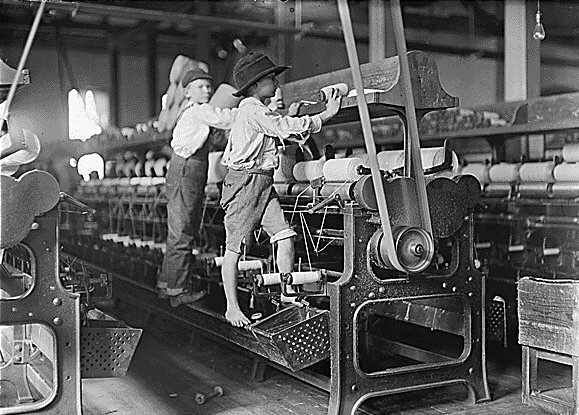
On this day in history : 2nd July 1819 – A Cotton Mills & Factories Act is passed in Britain, prohibiting children under 9 from working in textile mills and older children from working more than 12 hours a day….

Image : The Wellcome Collection CC BY 4.0

Children as young as 5 or 6 were often forced to work day and night, with little or no education and very few meal breaks….

Prompted by previous social reform work, undertaken by Welsh textile manufacturer Robert Owen, investigations into child labour were carried out by the committees of Robert Peel and of the House of Lords…. This resulted in the Factory Act of 1819, which was to be the first in a set of laws to improve working hours and conditions in the cotton mills…. However, there were no inspectors to enforce the laws and local magistrates had to be relied upon…. Mill owners argued that parents wanted their children to work – and many a child’s age was lied about….

A further Act was passed in 1833 which forbade night work for the under 18s…. The government also pressed for two hours a day schooling…. Four paid inspectors were appointed to enforce the regulations…. In 1844 schooling was increased to three hours and these children became known as ‘part-timers’, as between the ages of 8-13 the working day was restricted to 6.5 hours so they could attend lessons…. It was also in 1844 that the working day was reduced to 10.5 hours for women and 13-18 year olds….

Child labour finally stopped in the cotton mills around 1918 when the education system was reformed and half-time schooling was phased out….

Public domain

On this day in history….1st July 1969

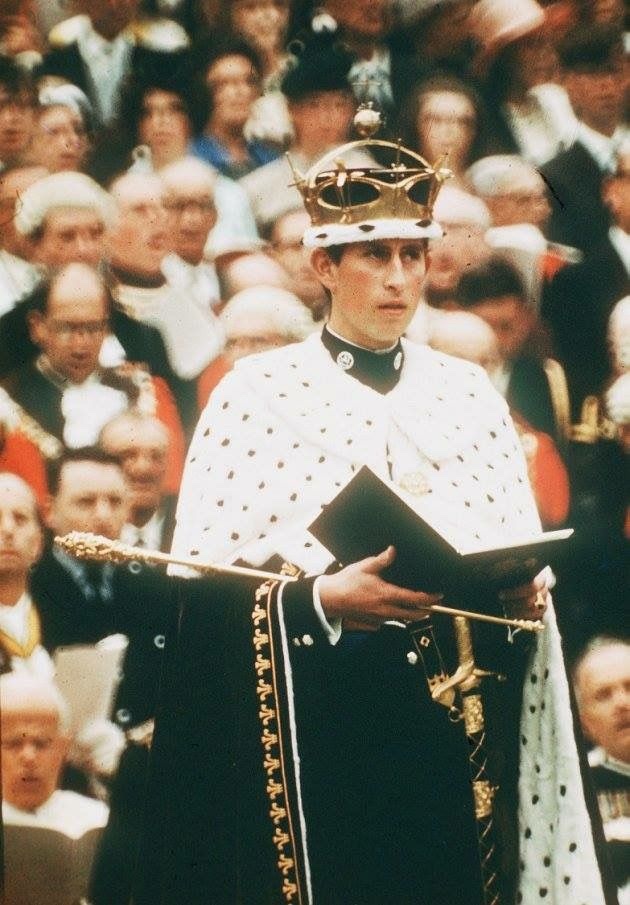
On this day in history : 1st July 1969 – Prince Charles is invested Prince of Wales by his mother, Queen Elizabeth II, at Caernarfon Castle, in North Wales….

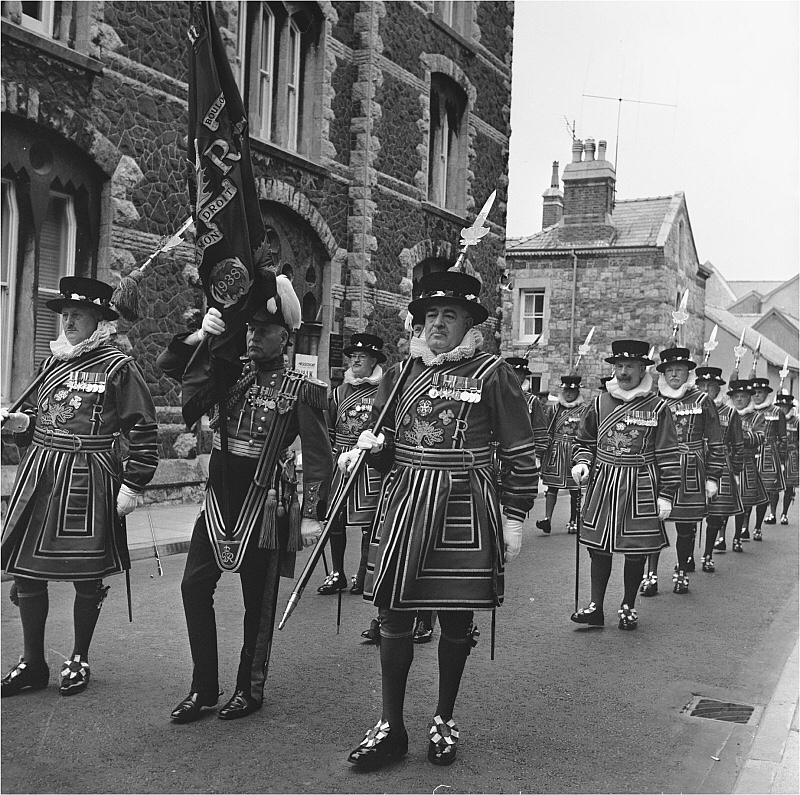
Caernarfon Castle prepared for the Investiture

Prince Charles had been created the Prince of Wales on the 26th of July 1958, when he was just 9-years-old – but it was 11 years later, when he was 20, that his investiture took place…. It is a title traditionally given to the eldest son of the reigning monarch…. Prince Charles is the longest serving Prince of Wales in British history, making him the longest waiting heir ever to become monarch….

The tradition began in 1301, when King Edward I of England gave the title to his son, Prince Edward (later to become King Edward II)…. It was after deposing the last native Prince of Wales, Llewelyn ap Gruffudd, following the conquering of Wales….

Millions of people watched the investiture of Prince Charles on television and huge crowds were attracted to Caernarfon – and to the castle which had seen the investiture in 1911 of Edward VIII before him….

Image credit : Journalist Geoff Charles – National Library of Wales CC0

The centuries old custom involved the Secretary of State for Wales, who read the Letters Patent in Welsh…. The Queen then bestowed upon Charles a sword, coronet, ring, the gold rod and the kingly mantle…. Prince Charles then took his oath….

“I, Charles, Prince of Wales, do become your liege man of life and limb and of earthly worship and faith and truth I will bear unto thee to live and die against all manner of folks”….

He then gave a speech in both Welsh and English….

Image : Pinterest

On this day in history….30th June 1956

On this day in history : 30th June 1956 – ‘I’m Walking Backwards for Christmas’ by the Goons enters the British music charts – six months after Christmas….

The Goons – Fair use

During the 1950s the BBC was one of the biggest employers of musicians – but it also played contemporary music in the form of records…. At the same time new technology had arrived making it possible to pre-record programmes, rather than everything going out live…. In early 1956 negotiations began between the BBC, the copyright licensing organisation Phonographic Performance Ltd (PPL) and the Musicians’ Union – who wanted restricted recorded music…. However, talks broke down resulting in the 1956 Musicians’ Strike….

Radio comedy shows of the time, of which the Goon Show was one, had their roots in the old music hall performances – and so their format was expected to have musical breaks…. One episode of the Goon Show that was recorded during the Musicians’ Strike was episode 13 of series 6, ‘The Great Tuscan Salami Scandal’ in February 1956…. The plot involved Ned Seagoon attempting to prevent a war with the other side of the Spaghetti Curtain by tracking down the missing breeding pair of ground-to-ground salami missiles that had been fitted with war heads….

With no professional musicians available something had to be done to fill the void that should have contained a musical interlude…. So to prevent radio-silence Spike Milligan quickly composed a song, which he then performed accompanied by Peter Sellars….

The original song was only about 50 seconds long but proved extremely popular with the audience and the Goon team realised they could be on to something….

Image : Pinterest

After signing with Decca in the Spring of 1956 the song was revamped and added to – and then quickly released so it could be got into the shops…. It reached No.4 in the UK charts – and was also released in the States – but was not received with the same enthusiasm (not everyone gets British humour)….

I’m walking backwards for Christmas,
Across the Irish Sea,
I’m walking backwards for Christmas,
It’s the only thing for me....

Ive tried walking sideways,
And walking to the front,
But people just look at me,
And say it’s a publicity stunt....

I’m walking backwards for Christmas,
To prove that I love you....

On this day in history….29th June 1916

On this day in history : 29th June 1916 – British diplomat Sir Roger Casement, an Irish patriot, is sentenced to death for his part in the Easter Rising against British rule in Ireland….

Sir Roger Casement – National Library of Ireland

Casement was the British consul in Portuguese East Africa and was well regarded and respected for his work…. He published his Congo report in 1904 which led to major changes in the Belgian rule of the Congo and his Putumayo report of 1912 gained him a knighthood….

In 1912 he retired to Ireland due to ill health as a result of the malaria he had contracted from his time in the Congo…. Although Casement came from a Protestant background he sympathised with the Irish Catholic Nationalists…. In 1913 he helped form the Irish National Volunteers and travelled to New York in 1914 to promote the cause and raise money for the Volunteers from among the large Irish community in New York….

After the outbreak of World War 1 Casement travelled to Berlin via Norway – he considered himself an ambassador for Ireland…. The idea was that if Germany would supply guns to the Volunteers and provide military leadership the Irish would revolt against the English diverting attention away from the war with Germany….

However on arriving in Germany in November 1914 he discovered the German government were not willing to risk an expedition to Ireland…. Another blow was that the majority of Irish prisoners of war being held in Germany, who he had intended to recruit to the cause, refused to give their support…. To add to all of this he could only secure a fraction of the guns he was hoping for….

Casement at around the time of his time in Germany – Public domain

When he learned that an uprising had been planned for the Easter of 1916 he knew that without the full quota of weapons and the lack of military support that he had to get back to Ireland to try and prevent it…. He returned on board a German submarine, departing on the 12th of April and was dropped off in County Kerry on the 21st of April – just 3 days before the planned uprising….

However, on his return Casement was suffering from a bout of malaria and was too weak to travel…. The British, who had been intercepting German radio communications, knew that there was something afoot and that there was going to be an attempt to land arms in Ireland…. Casement was quickly found and on the 24th of June he was arrested and taken to London….

At his highly publicised trial on the 29th of June Casement was found guilty of treason, sabotage and espionage – and sentenced to hang…. He was also stripped of his knighthood….

Casement was hanged at Pentoville Prison on the 3rd of August 1916 – on the day of his execution he was, at his request, received into the Catholic Church…. He was buried in the prison cemetery but in 1965, after many formal requests had previously been refused by the British government, he was repatriated to Ireland…. Here he was given a state funeral and buried with full military honours in the Republican plot of Glasnevin Cemetery, Dublin….