On this day in history….3rd June 1978

On this day in history : 3rd June 1978 – The Guinness Book of Records officially becomes the most stolen book from British libraries – the second most commonly stolen book is The Bible….

Books on sex and witchcraft are also popular amongst the thieves…. In a 1996 poll the top books missing were ‘The Joy of Sex’ and ‘The Prophecies of Nostradamus’….

Rare books and documents are obvious targets for professional thieves – it is a problem that has become so epidemic that in 2015 librarians and lawyers held a conference in Euston to discuss the issue and to try and find a solution…. With tens and thousands of historic books having gone missing from heritage libraries worldwide – it was obvious library security had to change…. Most libraries had a good idea of the value of their books – but not always the content between the covers – and thieves were getting more sneaky….

An American thief used razor blades to extract pages from valuable books…. He stole 97 maps from six libraries in the US and Britain – being caught in the British Library in 2005…. Another wily thief smuggled rare volumes out hidden under his jacket – he was jailed for three and a half years in 2010 after stealing £40K worth from the Royal Horticultural Society….

Inside the British Library – Image credit : Jynto – CC BY-SA 3.0

It’s not always those trying to make a dishonest profit who are guilty of book snatching…. A wealthy Iranian millionaire businessman was jailed for four years after he spent eight years, between 1997 and 2005, cutting out pages from some 150 rare books to add to his own private collection…. He caused an estimated £1m worth of damage to books, some dating back to the 16th century, belonging to the British Libaray and the Bodleian Library, Oxford….

Of course the Internet has provided book thieves with a whole new marketplace – and so the crime continues…. Between October 2017 and August 2018 some 7,000 books stolen from the library of the University of Edinburgh and other similar institutions were sold online for approximately £40K by an entrepreneurial book thief…. He also earned himself a two year prison sentence….

On this day in history….2nd June 1840

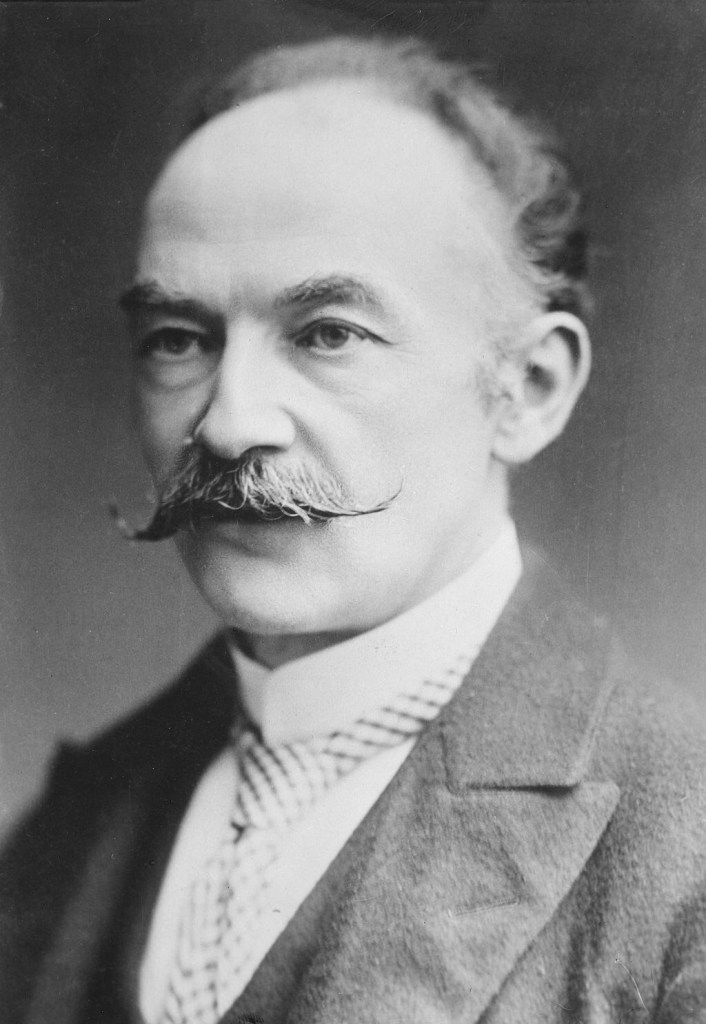
On this day in history : 2nd June 1840 – The birth of English novelist and poet Thomas Hardy – who brought us classics such as ‘Far From the Madding Crowd’, ‘The Mayor of Casterbridge’ and ‘Tess of the d’Urbervilles’….

Thomas Hardy between 1910-1915 – Public domain

Hardy was born in Upper Bockhampton (now Higher Bockhampton) in the parish of Stinsford, near Dorchester…. His father was a stonemason and builder – and his mother, being educated, was his teacher at home until he went to school at the age of 8…. He attended Mr Last’s Academy for Young Gentlemen until he was 16 – he learned Latin and showed promising potential but the family did not have the means for him to go to university…. Instead he became an architect’s apprentice….

Hardy’s birthplace at Higher Bockhampton – Image credit : Martinevans123 – own work – Public domain

Hardy moved to London in 1862 and enrolled at King’s College…. He then joined the architecture practice of Arthur Bloomfield and became involved mainly with the restoration of churches…. However, he found it hard to settle in London – he became all too aware of class division in the city and felt himself to be socially inferior…. It led to him developing an interest in social reform…. By 1867 he’d had enough of London and returned to Dorset, to live in Weymouth…. It was at this time that he began to concentrate on his writing – although for his first novel ‘The Poor Man and the Lady’ he was unable to find a publisher…. After being advised by his friend, the poet and novelist George Meredith, that his book was too political Hardy destroyed the manuscript…. His next two novels, ‘Desperate Remedies’ (1871) and ‘Under the Greenwood Tree’ (1872) were published anonymously…. His 1873 novel ‘A Pair of Blue Eyes’ was inspired by his courtship of his future wife….

Hardy met Emma Gifford whilst working on the restoration of the parish church of St Juliot in Cornwall during 1870…. It was to be a long courtship, they eventually married in Paddington, London on the 17th of September 1874…. Being unable to have children may have put a strain on the marriage – it is known that they did not get along together very well…. Her delusions of superiority would not have helped matters much either – Emma regarded herself as being above her husband socially and it appears did little to hide her feelings….

In 1885 they moved into ‘Max Gate’ – a house which Hardy had designed himself and was built by his brother…. Emma became involved with the Suffragist movement and she and Hardy began to lead separate lives, to the point of becoming estranged…. In 1912 she died – and despite their differences Hardy was devastated…. Nevertheless, just two years later he married Florence Emily Dugdale, his secretary and nearly forty years his junior…. Florence was also a writer in her own right, as the author of children’s stories….

Florence Hardy, 1915 – Public domain

Hardy’s own writing career was now beyond established…. ‘Far From the Madding Crowd’ had been written in 1874, ‘The Mayor of Casterbridge’ in 1886 followed by ‘Woodlanders’ in 1887…. ‘Tess of the d’Urbervilles’ was met with controversy in 1891 and was initially refused publication – Victorian society was scandalised that a fallen woman could be viewed in a sympathetic light…. ‘Jude the Obscure’, published in 1895 was even more controversial – due to the way it dealt with religion, marriage and sex….

In December 1927 Hardy developed pleurisy – he died at home on the 11th of January 1928…. His funeral was held on the 16th of January at Westminster Abbey…. He had always expressed his wish to be buried with his first wife, Emma…. However, it was insisted upon that he be interred at Poets’ Corner within Westminster Abbey…. Therefore a compromise was reached…. Hardy’s ashes were indeed interred in the Abbey – but his heart was buried with Emma at Stinsford….

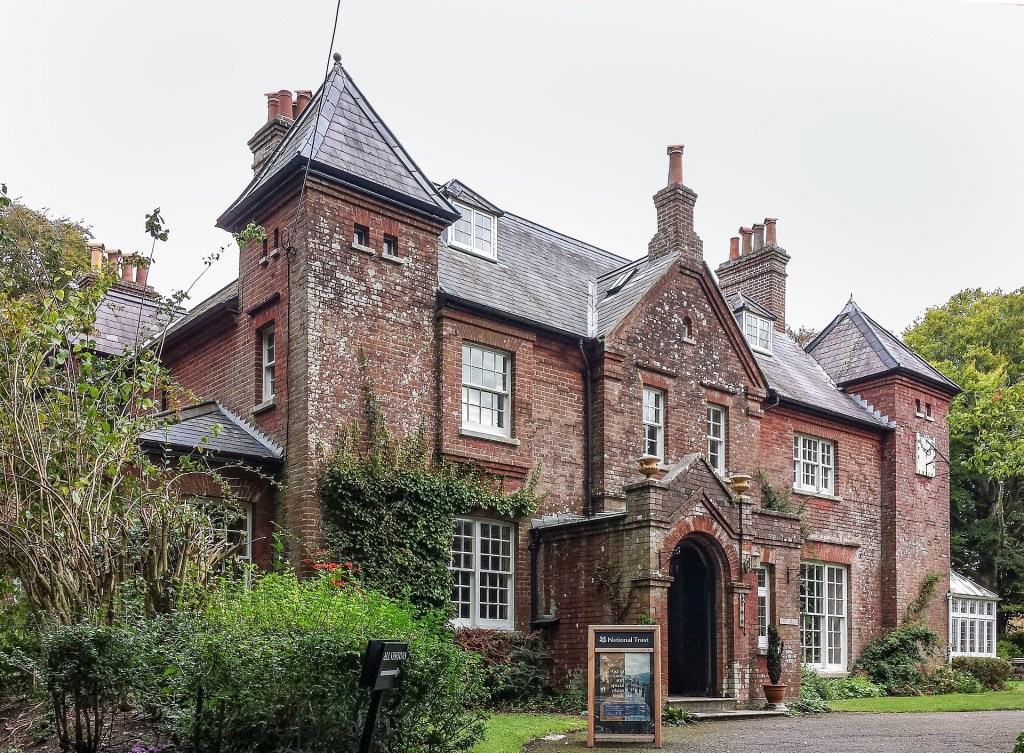
Max Gate is now owned by the National Trust – as is his birthplace at Bockhampton….

Max Gate, 2015 – Image credit DeFacto – own work – CC BY-SA 4.0

On this day in history….1st June 1494

On this day in history : 1st June 1494 – The first known batch of Scotch whisky is recorded by Friar John Cor at Lindores Abbey, Fife….

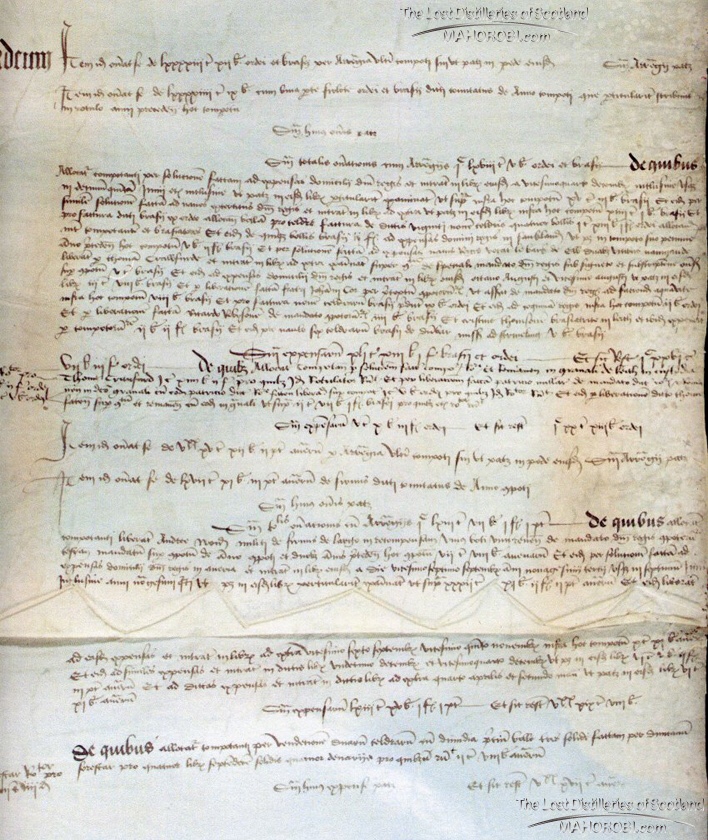
“Eight bolls of malt to Friar John Cor wherewith to make aqua vitae”….is how a commission from King James IV is cited on the exchequer roll for 1494…. Now the King is known to have liked a drop of the hard stuff but this is an order for a huge volume, even by his measures….

Exchequer Rolls mentioning Aqua vitae and Lindores Abbey – Image credit : DehraSw – CC BY-SA 4.0

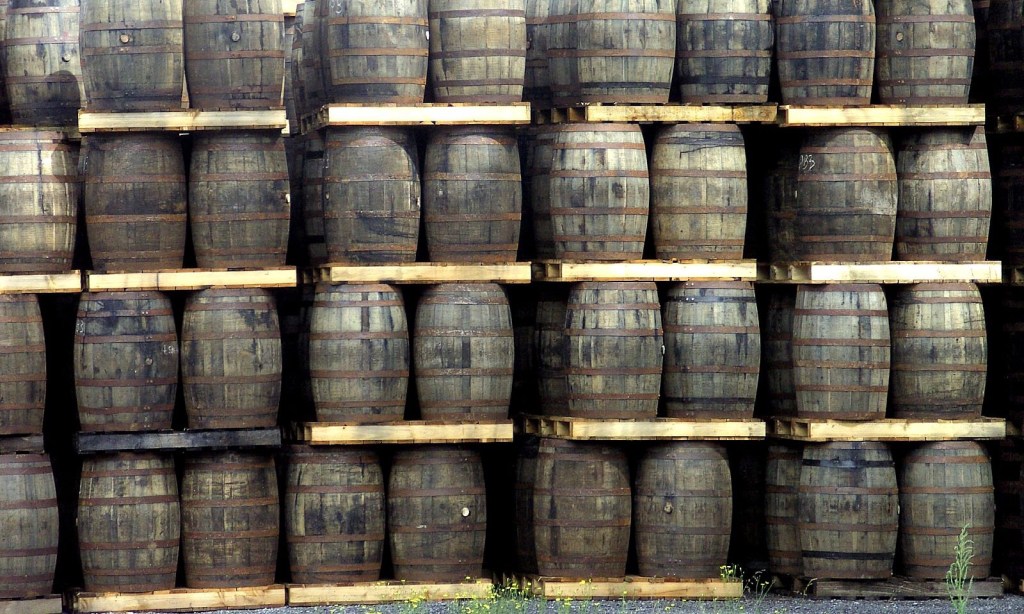
A ‘boll’ is an ancient unit equal to 64 ‘pecks’ – another ancient unit – but equalling to two ‘dry gallons’ of material (usually food based)…. So when we do the maths : 8 bolls = 1,024 gallons of malt – and that’s enough to produce around (gulp!) 800 gallons of whisky….or as they liked to call it back then ‘aqua vitae’…. Latin for ‘water of life’ if substituted for Gaelic it becomes ‘uisgue (pronounced ‘oos-key’) beatha’…. Say that after a few gallons and you can bet your bagpipes it would come out as ‘whisky’….

Whisky barrels – Image credit : High Contrast via Wikimedia

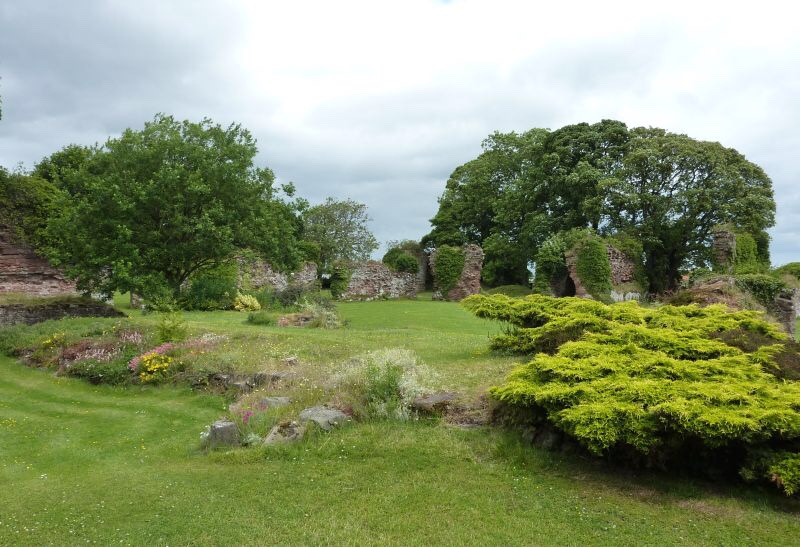
Brother John Cor was a Tironensian monk – the order of Tiron being a medieval monastic order named after its French mother abbey ‘Abbaye de la Saints-Trinity de Tiron’…. Lindores Abbey, on the outskirts of Newburgh, Fife and now a ruin on the banks of the River Tay, was an abbey of that order…. In 2018 a distillation vat was discovered within the ruins – giving evidence that at one time it is highly likely that whisky production played an important part in abbey life….

Ruins of Lindores Abbey – Image credit : Bubobubo2 – own work – CC BY-SA 3.0
Eastern entrance – Image credit : Bubobubo2 – own work – CC BY-SA 3.0
Abbey ruins – Image credit : DehraSw – CC BY-SA 4.0

On this day in history….31st May 1578

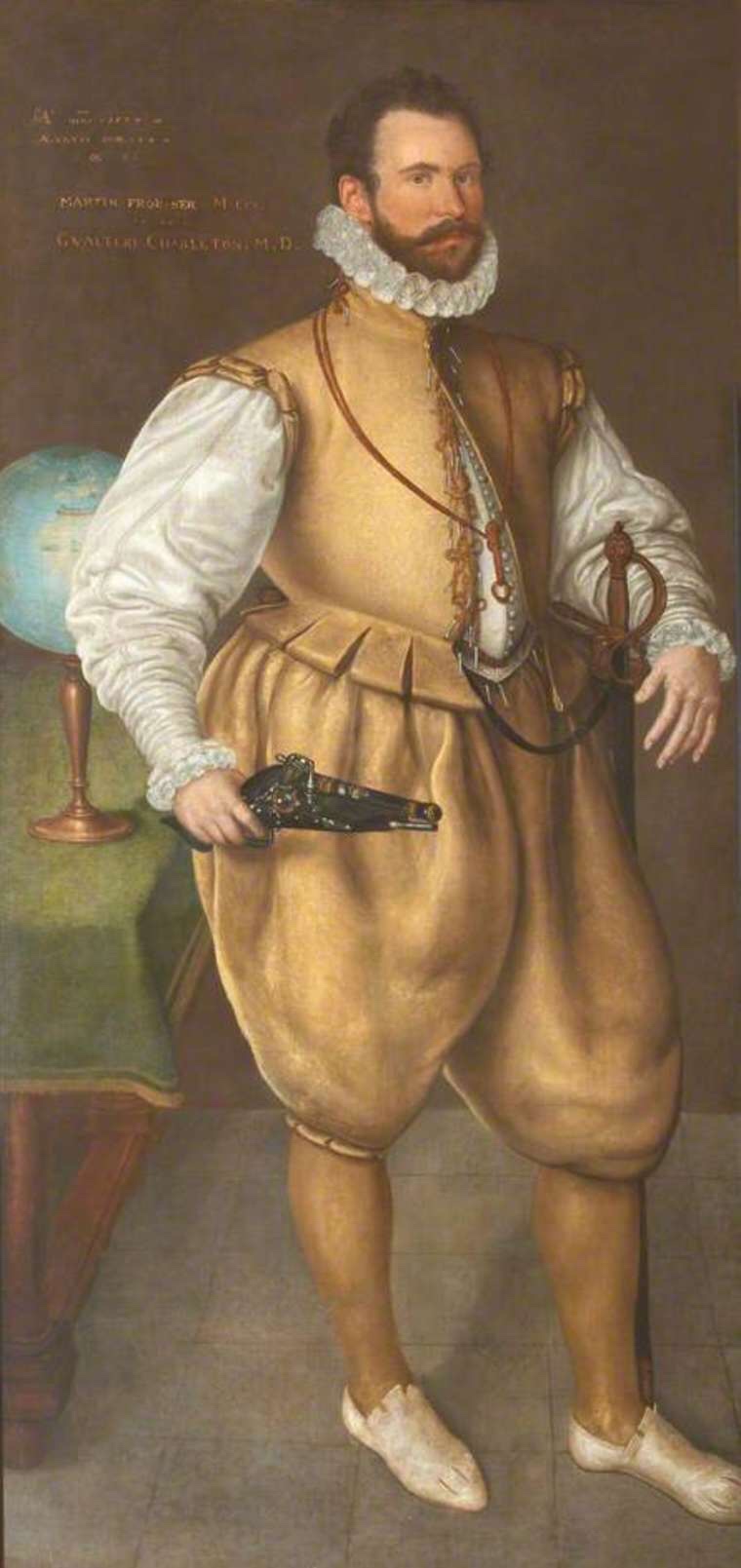
On this day in history : 31st May 1578 – Martin Frobisher sets sail from Harwich to Frobisher Bay, Canada….where he is to discover ‘gold’…. Over the following years he brings back over 1500 tons – before it is realised it’s worthless….

Sir Martin Frobisher – Public domain

Frobisher was an English seaman and a privateer – in all he made three voyages to the New World with the original intention of looking for the ‘North-West Passage’…. It was on his second voyage that he found what he thought to be gold and using three ships he carried 200 tons of it back to England…. Indeed it seems he wasn’t the only one to believe he had the real thing – for his ‘gold’ was valued at £5.20 (nearly £225K in today’s terms) per ton…. It comes as no surprise that he was so excited by the prospect of all this wealth – that on his third trip to Canada he returned with a further 1,350 tons….

Only all that glitters is not necessarily gold…. After years of smelting it was realised that this was not the precious metal they had all thought it to be – but instead it was practically worthless Iron Pyrite – otherwise known as ‘Fool’s Gold’….

In the end Frobisher’s fool’s gold was used for road metalling – which is quite possibly where the saying ‘the streets of London are paved with gold’ comes from…. As for Frobisher – he managed to redeem himself…. He, in his capacity of privateer, took a fleet to Spain and plundered a whole load of Spanish ships – bringing so much wealth back to England that Queen Elizabeth I gave him a Knighthood….

Fool’s Gold – Image credit : Tudor Barker via Flickr

On this day in history….30th May 1972

On this day in history : 30th May 1972 – The Angry Brigade goes on trial for a series of 25 bombings throughout the United Kingdom…. It is to be one of the longest criminal trials in English history….

Angry Brigade logo – Fair use

The Angry Brigade, a far left, militant anarchist group, often referred to as urban guerrillas, were discontent with Tory cuts, high unemployment, the general state of the economy and just about every other political issue going-on at the time…. Their wish was to bring about an uprising and they decided to launch a campaign using small bombs…. The aim was to get as much media coverage as possible to expose their demands….

The campaign began in August 1970 and was to continue for a year before any arrests were made…. Their targets were varied – from the homes of Conservative MPs, banks, property speculators….to the embassies of far right regimes – they even targeted a BBC mobile broadcasting unit being used to broadcast the 1970 Miss World contest…. Bombs mostly caused damage to property and throughout the campaign only one person received minor injuries…. Each bombing was followed by a printed statement explaining the reason for the attack….whether it was for the government’s policies, the situation in Northern Ireland, the Vietnam War, sexism – or whatever other grievance they had at the time….

The arrests began in 1971 with Jake Prescott…. Although he was cleared of direct involvement in the bombings he admitted having addressed three envelopes for letter bombs…. Prescott was sentenced to 15 years imprisonment by Judge Milford Stevenson – this was later reduced to 10 years on appeal….

Sir Melford Stevenson – Fair use

The 30th of May 1972 saw the trial begin at the Old Bailey of another eight members of the group….known as the ‘Stoke Newington Eight’ – after the area of London they came from…. The group were prosecuted for carrying out the bombings and the trial was to go on until the 6th of December 1972…. Four members, John Barker, Jim Greenfield, Hilary Creek and Anna Mendelssohn were sentenced to ten years each…. The other members were acquitted…. The explosions were to lead to the formation of the Bomb Squad – now the Antiterrorist Branch….