On this day in history….17th April 1951

On this day in history : 17th April 1951 – British submarine, ‘The Affray’, goes missing off the south coast of England…. It is feared all 75 crew members onboard are dead….

HMS Affray – Royal Navy photos – Public domain

The Amphion-class submarine belonged to the 5th Submarine Flotilla and had been commissioned on the 25th of November 1945…. She had left Portsmouth at around 4pm on the 16th of April 1951 on her way to a simulated war mission exercise – ‘Spring Train’…. Onboard was a reduced crew of 50 – as opposed to the usual 61 – but she also carried 25 naval officers undergoing training….

The Affray had submerged at 9.15pm around 30 miles south of the Isle of Wight – the last sighting of her had been by the destroyer HMS Contest, which was returning to Portsmouth…. The submarine was due to resurface at 8.30am on the 17th of April – but failed to appear….her position was unknown….

Crew of HMS Affray – Lieutenant John Blackburn (far right) was in command at the time of the disaster – Fair use

A large search party, led by HMS Agincourt and comprising of 24 ships and submarines from Britain, France, Belgium and the United States set out….accompanied by as many aircraft as could be mustered up…. It was thought the crew onboard the Affray could survive up to three days…. At one point in the search two of the searching ships received a morse code signal, reading ‘We are trapped on the bottom’ – but it gave no help in locating them…. After three days the search was scaled down….

The Affray was eventually found two months later, 46 miles south of Portland, in 300ft of water – making it impossible to recover, due to the depth…. Remote control cameras were used during an investigation that was to last for three months…. One theory was that the submarine’s battery had exploded…. But the main conclusion was that the ‘snort mast’ (the tube allowing the Diesel engine to ‘breathe’) had snapped – allowing water to flood in….

Wreck of the Affray, as taken by remote control camera – Fair use

It was to be the worst British submarine disaster since World War 2….

A strange event occurred shortly after the time of the incident…. The wife of the captain of one of the Affray’s sister submarines experienced a visit from a ghost…. Dressed in dripping wet submarine officer’s uniform, she recognised him as an officer who had been killed during WW2 – and not from the crew of the Affray…. He told her the location of the missing submarine – and when it was eventually found – the location proved to be correct….

On this day in history….16th April 1965

On this day in history : 16th April 1965 – The death of actor and comedian Sydney Chaplin – who died on the birthday of his younger half-brother, Charlie Chaplin….

Promotional picture of Sydney Chaplin – Public domain

Sydney was born on the 16th of March 1885 in London…. His mother was 19-year-old Hannah Hill, a music hall entertainer…. She claimed his father to be Sydney Hawkes – but this was never to be confirmed…. A year later Hannah married Charles Chaplin Sr – and he became Sydney’s legal guardian and his name was changed to Chaplin…. When Sydney was 4-years-old a little brother arrived, Charlie…. The pair were always to be close as brothers….

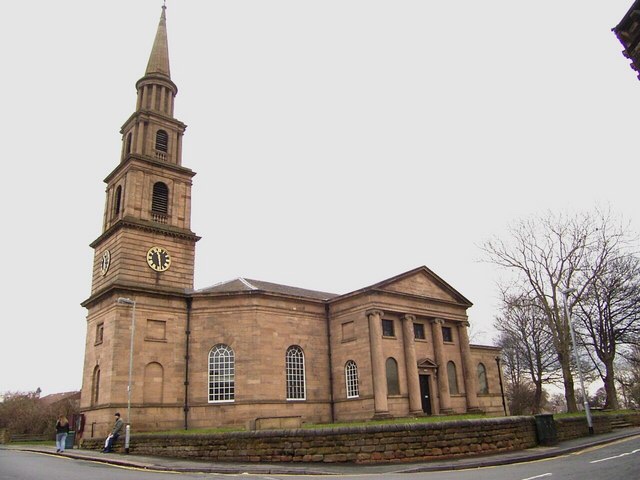
Syd and Charlie were taken into care following their mother’s mental breakdown…. At the age of 12 Syd was trained for a life at sea, serving on the ‘Exmouth’, a training ship based at Grays, Middlesex…. He spent the next few years at sea as a steward….

However, entertainment was in Syd’s blood…. In 1905 he and Charlie appeared on stage together for the first time, in a production of ‘Sherlock Holmes’…. Then in 1906 Syd managed to get a contract with Fred Karno as a music hall comedian – performing with ‘The Speechless Comedians’, one of the most successful entertainment troupes of the time…. Syd enjoyed relative fame and secured his brother a place within the company – but Charlie’s time of fame was to come later….

Syd married his first wife, Minnie, at some time around 1914…. They had no children – and she was to die in the September of 1936, in France, following surgery for breast cancer….

By 1915 Charlie had become famous worldwide…. It was around this time that Syd and Charlie were contacted by their younger half-brother Wheeler Dryden, who was living in America…. Born to Hannah, in 1892, Wheeler had been brought up by his father, music hall entertainer Leo Dryden, as she was continuing to have mental health issues…. Syd and Charlie, along with their mother, emigrated to the US and the family was reunited….

Syd and Minnie settle in California…. He was to make a dozen or so films, including ‘A Submarine Pirate’ for Keystone in 1915 – one of the most successful Keystone comedies ever made….

Syd Chaplin at the periscope in a scene from ‘A Submarine Pirate’ – Public domain

Charlie’s fame continued to grow and soon Syd began to handle the majority of his business affairs and negotiate his contracts for him…. At the same time he was still making a few films himself, amongst them the highly successful ‘Shoulder Arms’ in 1918….

His later work included ‘Charley’s Aunt’ in 1925 and ‘The Better ‘Ole’ in 1927…. His last film ‘A Little Bit Of Fluff’ was made in England in 1928…. He was due to make a further film in 1929 but was accused of sexual assault by actress Molly Wright…. After settling out of court, seen as an admission of guilt by many, Syd retired from the screen and moved to the South of France, to escape the scandal…. He left behind a catalogue of unpaid debts and tax demands….and in 1930 he was declared bankrupt….

Fair use

After Minnie’s death Syd married Henriette, know as ‘Gypsy’…. He died after a long illness and was buried in the Clarens-Montreux Cemetery, close to Vevey…. Gypsy was later buried next to him….

Image credit : Gerbil – own work – CC BY-SA 3.0

On this day in history….15th April 1941

On this day in history : 15th April 1941 – Over 900 people are killed and a further 1500 injured during the Belfast Blitz – when 200 Luftwaffe bombers strike military and manufacturing targets in the city….

Rescue workers searching through rubble after an air raid on Belfast – From the collections of the Imperial War Museums

It was Easter Tuesday night, at around 10.40pm, when the air raid sirens sounded…. Many had believed that Belfast was out of reach of the Luftwaffe – and so the city was unprepared…. A smaller attack had taken place a few days before – possibly as a test of Belfast’s defences…. A cryptic warning had come across the airwaves from the traitor William Joyce, otherwise known as ‘Lord Haw-Haw’, when he announced in a radio broadcast from Hamburg, that there would be “Easter eggs for Belfast”….

The city played a great part in the war effort – with its large shipyard, aircraft manufacturing facilities and munition factories…. 200 Luftwaffe bombers had taken off from bases in occupied Northern France and the Netherlands…. The six hours of horror, death and destruction they were to unleash on Belfast resulted in the greatest loss of life in a single night’s raid – apart from London….

Visibility on the night was poor – which may account for the heavy civilian loss…. Over 55,000, half of Belfast City’s houses, were hit by bombs…. Streets were wiped away, all their occupants killed….over 100,000 were left homeless…. Many public buildings were destroyed , including the Ulster Hospital for Women and Children, the Strand Public Elementary School, the Belfast City Hall’s Banqueting Hall, countless of churches, railway stations, hotels….all obliterated….

Antrim Road corner of Duncairn Gardens, Belfast – Public Records of Northern Ireland

Few children had been evacuated from the city – some 80,000 still remained….

Mortuary services only had the capacity to deal with 200 bodies…. A further 150 corpses were buried in a mass grave, 123 of which remained unidentified…. St. George’s Market became a temporary mortuary for 255 of the dead…. Many more bodies and body parts were unidentifiable and were buried in mass graves in the city’s cemeteries….

Haw-Haw was later to announce…. “The Fuhrer will give you time to bury your dead before the next attack…. Tuesday was only a sample….”

A second massive air raid took place three weeks later…. A further 150 people lost their lives….

Soldiers clearing rubble after the May air raid – From the collections of the Imperial War Museums

On this day in history….14th April 1999

On this day in history : 14th April 1999 – The death of English singer, songwriter, actor and icon of the 1960s, Anthony Newley….

Anthony Newley – Fair use

Newley was born Anthony George Newley in Hackney, London on the 24th of September 1931, to parents Frances Grace Newley and George Kirby…. His parents never married and went their separate ways when Newley was still very young – he was to be brought up by his aunt and uncle….

He left school at the age of 14 and started working for an advertising agency in Fleet Street…. However, he had always been tempted by an career in acting – and when he saw an advertisement for ‘boy actors’ in the Daily Telegraph he decided to apply…. Only things weren’t quite so straight forward….. The ad was for available places at the Italia Conti Stage School – and it was obvious that Newley could not afford the high fees the school demanded…. But it must have been his lucky day! He was allowed to audition anyway – and was offered a job as an office boy, his wage being 30 shillings a week and lessons at the school….

Newley came to the attention of producer Geoffrey de Barkus, which landed him the role of ‘Dusty’ in the children’s film series ‘The Adventures of Dusty Bates’ in 1947…. The following year he was cast as ‘Dick Bultitude’ in Peter Ustinov’s ‘Vice Versa’ and then in 1948 as the ‘Artful Dodger’ in ‘Oliver Twist’….

Anthony Newley and Petula Clark in ‘Vice Versa’ – Fair use

After completing his National Service Newley resumed his acting career…. He married his first wife, Ann Lynn, in 1956 and they had one son, Simon – who sadly died in infancy…. It was always a turbulent marriage and ended in divorce in 1963….

Newley’s singing career was launched with his appearance in the 1959 film ‘Idol on Parade’ – about a rock singer called up for National Service (and inspired by the true story of Elvis Presley)…. From the film came Newley’s hit song ‘I’ve Waited So Long’ – which reached No.3 in the charts…. A string of a dozen or so top 40 hits were to follow between 1959 and 1962, including two No.1s – ‘Why?’ And ‘Do You Mind?’ – both written by Lionel Bart….

Poster of film ‘Idol on Parade’, 1959 – Fair use

1961 saw the beginning of Newley’s collaboration with Leslie Bricusse – when they started work on the hit stage show ‘Stop the World: I Want to Get Off’… After a successful run in London and on Broadway it was later made into a film….and included the song ‘What Kind Of Fool Am I?’ – for which Newley won the 1963 Grammy Award for Song of the Year….

Newley married Joan Collins in 1963 and the couple had two children, a daughter, Tara and a son, Sacha…. The marriage ended in 1970….

Newley was to become a prolific songwriter, showing great versatility…. From comical songs, such as ‘The Oompa Loompa Song’ to hard hitting ballads…. He was a great influence to many – including a young David Bowie, who was a big fan….

He wrote the theme song for the James Bond film ‘Goldfinger’, – which was performed by Shirley Bassey…. He also wrote the hit song for Nina Simone ‘Feeling Good’…. He continued to collaborate with Bricusse on song writing projects and on the productions ‘The Roar of the Greasepaint – the Smell of the Crowd’ in 1965 and ‘Willy Wonka and the Chocolate Factory’ in 1971….

Poster for ‘Willy Wonka & the Chocolate Factory’ – Fair use

He was to marry his third wife, Dareth Rich, in 1971 and became father to another daughter, Shelby and a son, Christopher…. Only this marriage was once more to end in divorce in 1989….

Newley’s last main acting role was in 1998, as Vince Watson in the soap ‘Eastenders’…. It had meant to be a main, long lasting character role in the series but by now Newley’s health was failing and he had to pull out…. He had first been diagnosed with cancer in 1985 and in 1997 it returned, spreading to his liver and lungs…. He died of renal cancer at the age of 67 in Florida, on the 14th of April 1999…. At the time of his death he had been working on a musical production of Shakespeare’s ‘Richard III’

On this day in history….12th April 1925

On this day in history : 12th April 1925 – The birth of Oliver Postgate – animator, puppeteer, screenwriter and creator of many popular children’s TV programmes, including Bagpuss and the Clangers….

Fair use

Richard Oliver Postgate was born in Hendon, Middlesex…. His father, Raymond Postgate, was a writer and journalist and founded the ‘Good Food Guide’…. His mother was Daisy Lansbury – and his first cousin was Angela Lansbury….

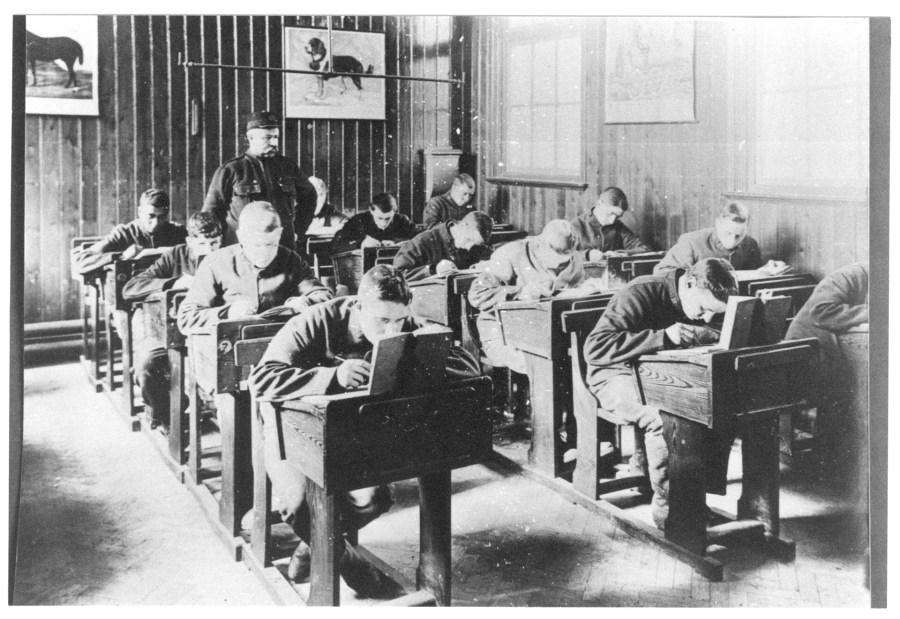
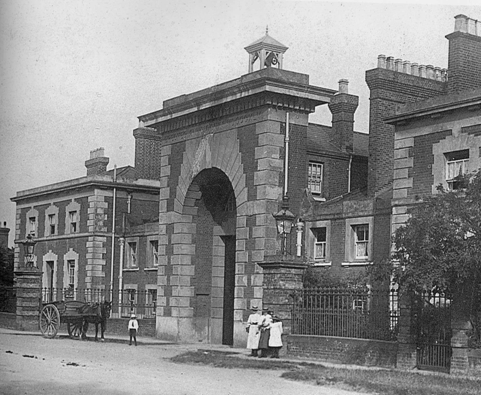
Postgate was privately educated in Finchley, North London and then boarding school in Devon…. Whilst studying at Kingston College of Art in 1942 he joined the Home Guard…. However, when he was called up to serve in World War 2 he declared himself a conscientious objector – (just as his father had done before him in World War 1) – which resulted in him serving 3 months in Feltham Prison…. He was eventually granted an exemption – but in return he had to work either on the land or in social service…. He worked as a farmhand for the remainder of the War – and then went to work for the Red Cross in occupied Germany….

1948 saw him back in England and enrolled in drama school – but following this he couldn’t quite settle into anything permanent…. In 1957 he began to work as a stage manager with Associated Rediffusion (later to become Rediffusion London) – the British ITV franchise holder…. Postgate became involved with children’s productions…. However, he thought children’s programmes of the time lacking…. Glove puppets and puppets on strings served a purpose – but he knew he could do better – and taught himself frame by frame animation…. Postgate had found his niche…. In 1958 he created ’Alexander the Mouse’ – about a mouse who sets out to find his royal roots and becomes king…. This was the beginning of his collaboration with puppeteer and animator Peter Firmin…. Together they formed their own production company – ‘Smallfilms’…. They set up at Firmin’s home , a farm in Blean, near to Canterbury – and later in a row of converted pigsties….

From this partnership came children’s programmes that many of us grew up with…. ‘The Journey of Master Ho’, 1958 – about a small boy and a water buffalo…. ITV’s ‘Ivor the Engine’, 1959-1964 (later revived in colour 1976-77) – the adventures of a little green steam locomotive, who lived in ‘the top left hand corner of Wales’ and longed to sing in a choir…. ‘The Saga of Noggin the Nog’, 1959-65 (once again revived in colour, 1982) – about the king of the Northmen and featuring flying machines, dragons and talking birds…. This was Smallfilms’ first production for the BBC….

‘Pingwings’, 1961 and ‘The Pogles’ and ‘Pogles’ Wood’, 1965-68 followed and then came the now cult TV series ‘The Clangers’, 1969-74…. The little creatures living on a small planet ‘far-far-away’….eating Blue String Pudding and Green Soup – courtesy of their friend the Soup Dragon….

Clangers and Iron Chicken puppets at the V&A Museum of Childhood (2016) – Photo credit : BennyOnTheLoose – own work – CC BY-SA 4.0

‘Bagpuss’ made his debut in 1973… The saggy old cloth cat that everybody still loves…. A little girl called Emily (who was played by Peter Firmin’s own daughter Emily) – who owned a shop that didn’t actually sell anything…. Instead the shop window would display lost and broken things – waiting for their rightful owners to come along and collect them…. Surprisingly only 13 episodes were ever made – but they were often repeated, fond memories for all of us…. In 1999 ‘Bagpuss’ was voted the favourite British children’s TV character of all time….

The original Bagpuss in the Beaney House of Art & Knowledge, Canterbury (June 2018) – Image credit : Jordy Schaap – own work CC BY-SA 4.0

During the 1970s and 80s Postgate was active in the anti-nuclear campaign – by addressing meetings and writing pamphlets…. He had married Prue Myers in 1957, becoming a stepfather to three children and then father to twins Stephen and Simon in 1959…. Another son, Daniel was born in 1964…. Prue died of cancer in 1982…. Postgate was to meet Naomi Linnell who was to become his partner until his death at a nursing home in Broadstairs on the 8th of December 2008…. His youngest son, Daniel, was to inherit Smallfilms….