On this day in history….30th October 1981

On this day in history : 30th October 1981 – Secretary to the pro-euthanasia group ‘EXIT’, Nicholas Reed, is jailed for two and a half years on three counts of aiding and abetting suicide….

He was also found guilty of a further count of conspiracy to aid and abet…. His co-accused, Mark Lyons, who provided the pills and alcohol to those wishing to end their lives, received a two year suspended sentence…. Judge, Mr. Justice Lawson, stated that on account of his age (70) a suspended sentence be appropriate as Lyons had already served 325 days in prison whilst awaiting trial….
img_4434
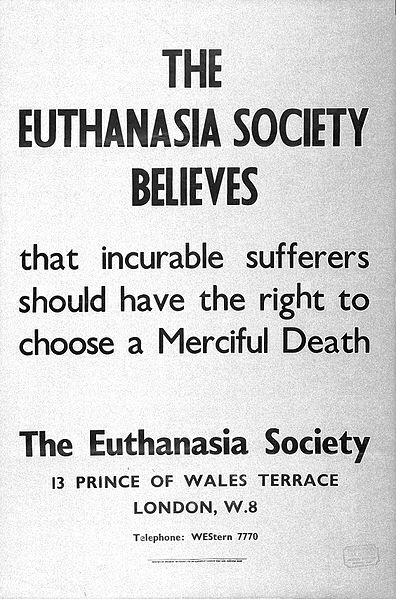
Voluntary Euthanasia Society poster – Image credit : The Wellcome Collection Cc BY-SA 4.0

‘EXIT’ : ‘The Society for the Right to Die with Dignity’ started in 1935 as the ‘Voluntary Euthanasia Society’…. It had been a relatively quiet, low-key organisation, conscious of staying on the right side of the law…. The name change to ‘EXIT’ was made to give more of an impact…. When Nicholas Reed, a dynamic young man in his early thirties, became Secretary of the group he transformed it….enabling it to give a loud, aggressive and controversial voice for the incurably ill and disabled…. He courted the media, held seminars, gave talks and interviews on radio and television…. He increased the membership of the London based group five fold; by the early 1980s it had more than 10,000 members…. The group’s activities spawned similar groups in many other countries, including the United States….

In 1979 EXIT had decided to publish a booklet entitled ‘Guide to Self-Deliverance’ – in which various methods of suicide were described…. The booklet was outlawed and so distribution was suspended in 1983…. Reed had already come to the attention of the police in 1980 when a raid on EXIT’s offices resulted in documents being seized and Reed being questioned…. However, it was after the death of a female multiple sclerosis sufferer that a case was finally brought…. A routine post mortem had revealed that she had taken barbiturates with alcohol…. Two women who had been at her house the day before she died told the inquest Mark Lyons had visited whilst they were there…. Police searched the flat where Lyons lived and found thousands of pills and tablets…. They also discovered diaries, full of appointments with people who wanted to end their lives…. Nicholas Reed denied he knew what Lyons was up to….saying he thought the appointments were for ‘comfort’ visits to those in need….

According to the prosecution, in one particular case Lyons had drugged a woman into an unconscious state and then tried to speed up the process of death by placing a polythene bag over her head…. The attempt was unsuccessful…. The prosecution also accused Lyons of gaining pleasure from his actions….

Reed for his part, refused to talk to the Press…. After an appeal his sentence was reduced to 18 months…. The Society changed its name to ‘VES’ – ‘Voluntary Euthanasia Society’….and later, in 2006, it became ‘Dignity in Dying’…. Holland was the first country to legalise euthanasia in 2002…. Of course, it continues to be a controversial subject here in the UK….

img_4435
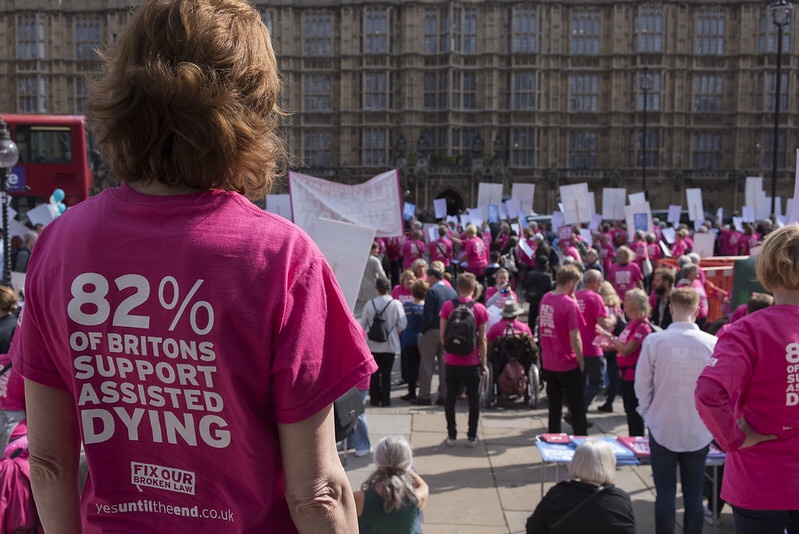
Dignity in Dying via Flickr
img_4433
Dignity in Dying logo CC BY SA 3.0

On this day in history….29th October 1863

On this day in history : 29th October 1863 – Eighteen official delegates from national governments, including Britain, meet in Geneva and agree to the formation of the International Red Cross….img_4427

The resolution was to establish national relief services for wounded soldiers, the neutrality and protection of wounded soldiers and a protection symbol for medicinal personnel in the field…. The symbol was to be a white armband bearing a red cross emblem (an inversion of the Swiss flag)….

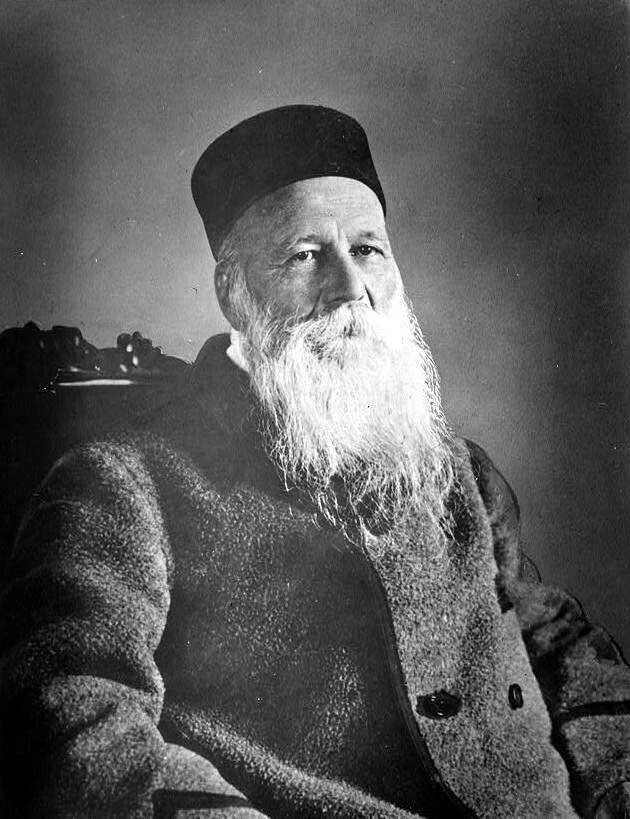
The International Red Cross and Red Crescent Movement were inspired by Swiss businessman Jean-Henry Dunant, a devout Reformed Christian…. Dunant had been present at the Battle of Solferino in Italy, between the armies of Imperial Austria and the Franco-Sardinian alliance in 1859…. Some 40,000 men were left dead or dying on the battlefield; there was a critical lack of medical attention for the wounded men…. Dunant did everything in his capability to organise local people to help bind the wounds and feed the wounded men…. The situation left an acute sense of despair upon him….

img_4426
Jean-Henri Dunant – Time Life Pictures – Public domain

On his return to Switzerland Dunant set about his aim to create a national relief service – he proposed it to be run by volunteers, trained during peace time to provide neutral help to all those wounded during times of war….

To help his cause he wrote a book, ‘A Memory of Solferino’ – which he published using his own money in 1862…. Copies were sent to leading political and military leaders and influential people throughout Europe…. When Gustavo Moynier, President of the Geneva Society for Public Welfare, received his copy he decided to set up a committee to test the feasibility of Dunant’s proposals…. The committee became known as ‘The Committee of Five’ and consisted of Jean-Henry Dunant, Gustave Moynier, Louis Appia (a renowned field surgeon), Theodore Maunoir (Appia’s colleague) and Guillaume-Henri Dufour (a Swiss Army general)…. Eight days later the five men renamed the committee ‘International Committee for Relief to the Wounded’…. An international conference was set up, which took place in Geneva between the 26th and 29th October 1863….at which the foundations of The International Red Cross were laid….

Dunant also proposed countries unite in an international agreement to recognise the status of medicinal services of the wounded on the battlefield…. This was to be the original Geneva Convention and was adopted in 1864….

img_4425
Original document of the first Geneva Convention, 1864 – Kevin Quinn, Ohio, US – CC BY 2.0

When war broke out in July 1870, between France and Prussia, Colonel Lloyd-Lindsay (later to become Lord Wantage) called for a National Society to be formed in Britain…. At a meeting held in London on the 4th of August 1870 the resolution was passed…. The ‘British National Society for Aid to the Sick and Wounded in War’ was formed – and under the emblem of the Red Cross gave aid to the wounded on both sides in the Franco-Prussian War…. It also gave aid in all other wars for the remainder of the 19th Century….

img_4431
Sorting and packing linen bandages at the London office of the Society, September 1870 – Illustrated London News, September 10, 1870 – Public domain

In 1905 the society was renamed the ‘British Red Cross’…. It was granted a Royal Charter in 1908 by King Edward VII – its President was Queen Alexandra….

img_4430
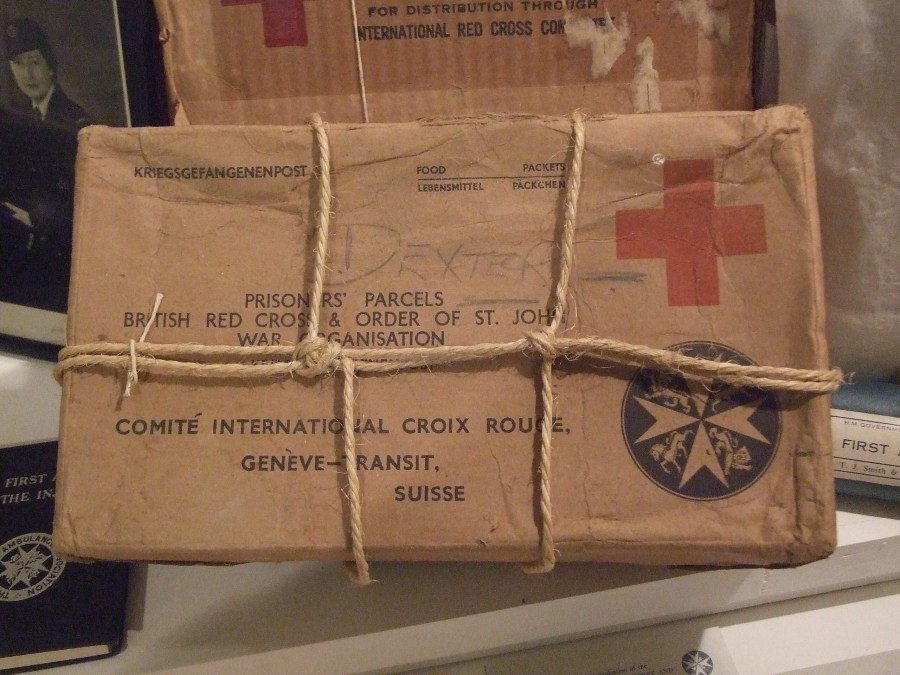
British Red Cross Parcel – Public domain

img_4429

On this day in history….28th October 1959

On this day in history : 28th October 1959 – The first British call from a car phone is made….

From outside the Lymm Hotel in Cheshire the Postmaster General, Reginald Bevins MP, put a call through to Lord Rootes, the automobile mogul, who was in London…. A number of technicians, positioned in exchanges and base stations in Manchester, Liverpool and Hardwick waited to relay the call….

img_4417
Reginald Bevins – Image : https://www.liverpoolhiddenhistory.co.uk

After WW2 radio phones – which were effectively two-way radios, began to appear in cars but didn’t actually arrive in Britain until the end of the 1950s…. One of the earliest known experiments occurred in 1920, when a radio enthusiast in Philadelphia constructed a transceiver which enabled him to speak to his wife from a moving car, some 500ft away…. It needed a massive aerial – made from a stove pipe….

The first commercial carphone service came from Motorola in the United States in 1946 – two-way radios that could be connected to landlines…. Only 3 calls at once could be handled by the service, meaning callers would often have a long wait in a queue….

After the initial trials in Britain by the GPO in 1959, transmitters fixed to the newly constructed Post Office Tower enabled the radio phone to arrive in London in 1965…. Prime Minister Harold Wilson made the first call….img_4418

Calls had to be manually connected by operators – a method simply known as ‘System 1’….and it could cope with up to 300 callers at a time…. By lifting a handset and selecting a free channel the caller would be put through to an operator (providing in range of a VHF – very high frequency – radio station) and a call could be connected to a landline…. From a landline users would ask the exchange to connect a car registered with the service….

img_4415
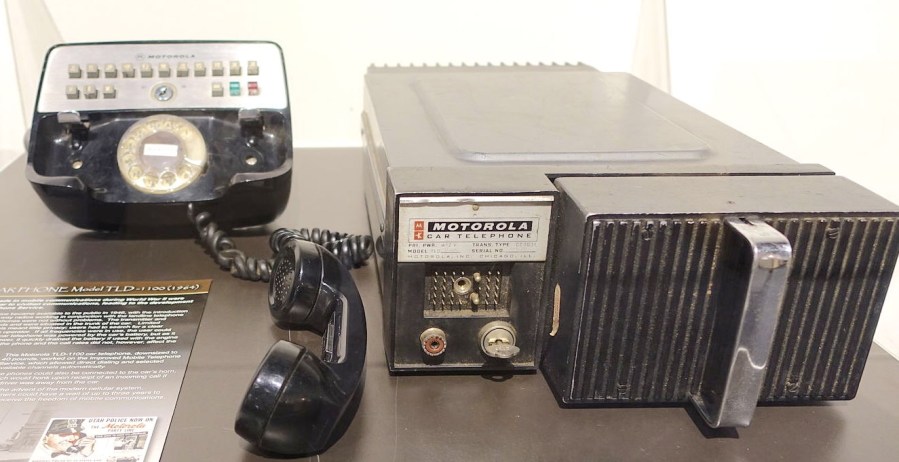
Motorola Car Telephone Model TLD-1100, 1964 – Image : Daderot CCO

During the 1970s improvements saw the launch of ‘Systems 2 and 3’…. Equipment was costly – and bulky; a handset and speaker – with a transceiver situated in the boot of the car, connected to a whip aerial…. Manufacturers included companies such as Marconi and Pye….

On the 14th of July 1981 BT’s ‘System 4’ first became available in London – a fully automated service…. It certainly wasn’t a cheap service, costing £100 per quarter plus the cost of calls – a considerable amount of money back then…. ‘System 3’, costing a mere £40 per quarter, was still operational, having some 3,000 users….many of whom preferred the operator service, finding it more ‘friendly’….

In 1985 cellular mobile networks were introduced – paving the way to the mobile world we know today…. In 1988 ‘System 4’ was switched off….

img_4416
Mobile Radio Telephone – Image : Hackgillam at English Wikipedia – Public domain

On this day in history….27th October 1914

On this day in history : 27th October – The birth of Dylan Thomas, perhaps the most legendary of 20th century poets – but also known for his hard drinking and boisterous behaviour….

img_4411
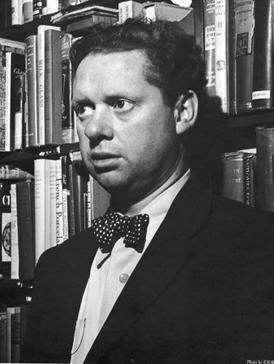
Dylan Thomas in New York, 1952 – Fair use

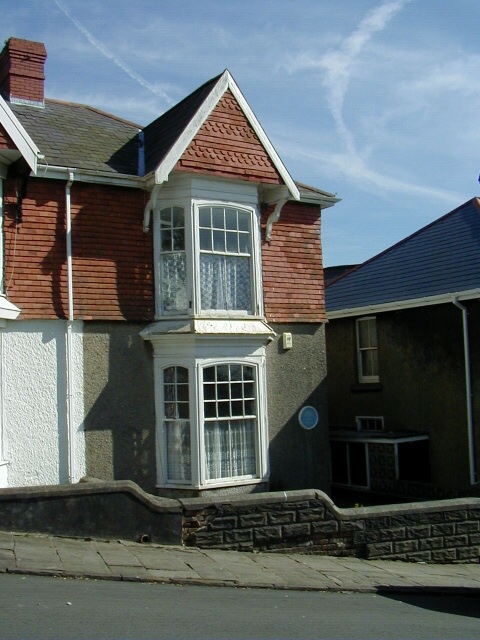
Born Dylan Marlais Thomas, in Swansea, Wales, his father an English teacher and his mother a seamstress, the young Dylan developed an interest in language at an early age…. His father would read Shakespeare to him at bedtime – Dylan loved the sound of the words, even if he was too young to understand them….

img_4412
5, Cwmdonkin Drive, Swansea – birthplace of Dylan Thomas – Photo credit : Hywel Williams CC BY-SA 2.0

On leaving school at 16 Dylan became a journalist for a while – but had his first poems published whilst still in his teens…. Dylan wrote hundreds of poems, short stories, a novel and a play during his lifetime…. He was a disciplined writer, often re-drafting his work to the point of obsession – his poetry having a musical, nostalgic tone, frequently focusing on childhood and death…. Some of his greatest work was produced in the 1940s, particularly his 1946 collection which was heavily influenced by war….

In 1936 Dylan met Caitlin Macnamara and they married the following year at Penzance Registry Office…. They moved to Laugharne, a Welsh fishing village, in 1938 – where they settled and raised their three children…. It was a stormy marriage, fuelled by alcohol, infidelity and money problems – but they remained together until Dylan’s death….

img_4413
The Boat House, Laugharne – where Dylan and Caitlin raised their family – Photo credit : GerritR CC BY-SA 4.0

In 1950 Dylan fulfilled an ambition to tour the United States, giving readings of his work – which attracted large audiences…. The very nature of the trip meant much socialising was done and Dylan returned home with very little money – he had effectively drank his profits…. Another two trips to the States ended the same way – not surprisingly this caused a rift between himself and Caitlin….

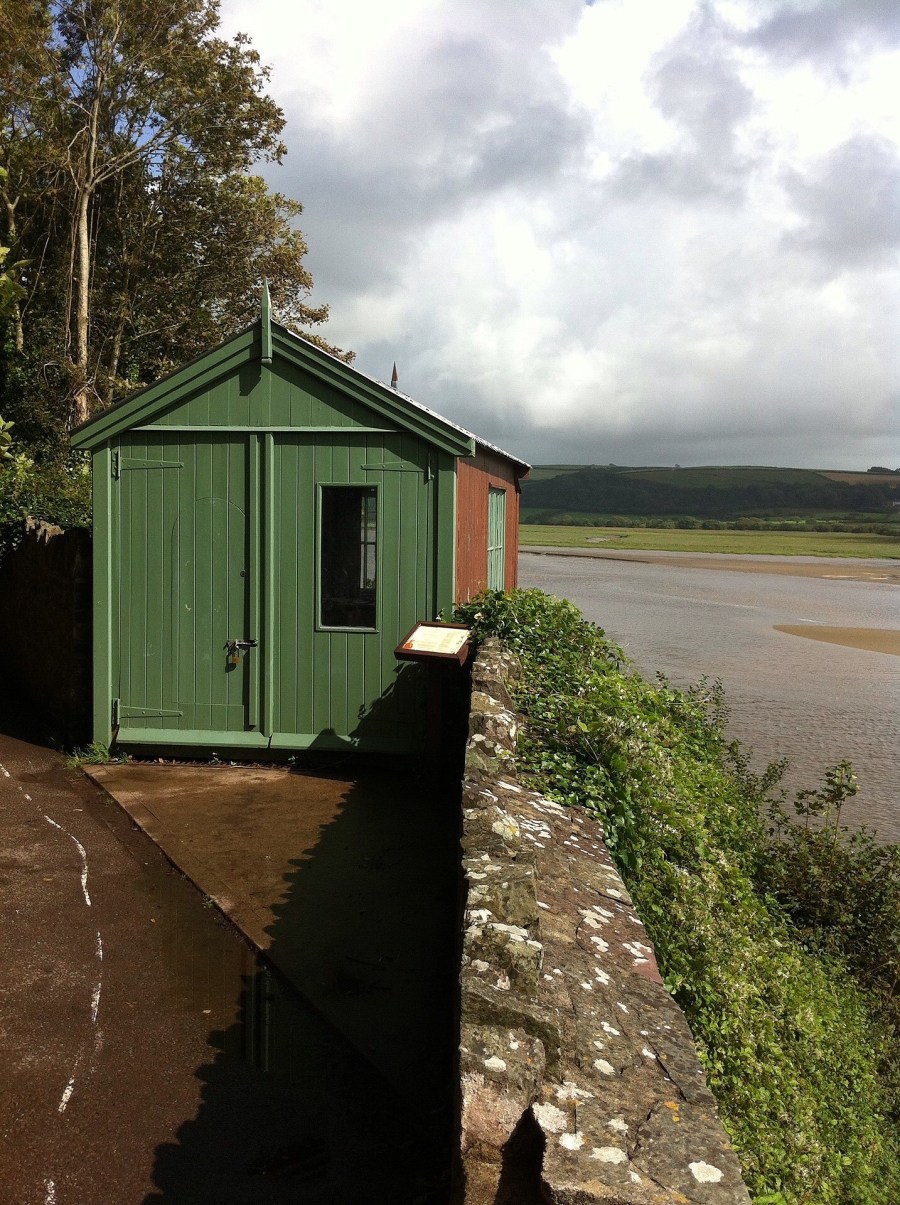
img_4414
Dylan’s writing shed at Laugharne – Photo credit : wardyboy400 CC BY 2.0

Dylan’s father died on the 16th of December 1952; as an English teacher at a grammar school he had been disappointed with his position in life – he had longed to be a poet; how proud he must have been of his son…. Dylan had great respect for his father and watching him succumb to the ravages of cancer would have torn him apart…. Indeed whilst his father lay on his deathbed, Dylan wrote one of his most emotive poems ~ “Do not go gentle into that good night”…. Little did Dylan know at that time that in less than a year he would face his own untimely death – at the age of just 39…. On a last fateful trip to New York in October 1953 and after several bouts of heavy drinking Dylan was taken ill at the Chelsea Hotel on the 4th of November…. He was admitted to St. Vincent’s Hospital where he died five days later – the cause of his death pneumonia and pressure on the brain – due to excessive alcohol…

"Do not go gentle into that good night,
Old age should burn and rave at close of day;
Rage, rage against the dying of the light.

Though wise men at their end know dark is right,
Because their words had forced no lightning they
Do not go gentle into that good night.

Good men, the last wave by, crying how bright
Their frail deeds might have danced in a green bay,
Rage, rage against the dying of the light.

Wild men who caught and sang the sun in flight,
And learn, too late, they grieved it on its way,
Do not go gentle into that good night.

Grave men, near death, who see with blinding sight
Blind eyes could blaze like meteors and be gay,
Rage, rage against the dying of the light.

And you, my father, there on the sad height,
Curse, bless, me now with your fierce tears, I pray
Do not go gentle into that good night,
Rage, rage against the dying of the light."
                              ~ Dylan Thomas

On this day in history….26th October 899

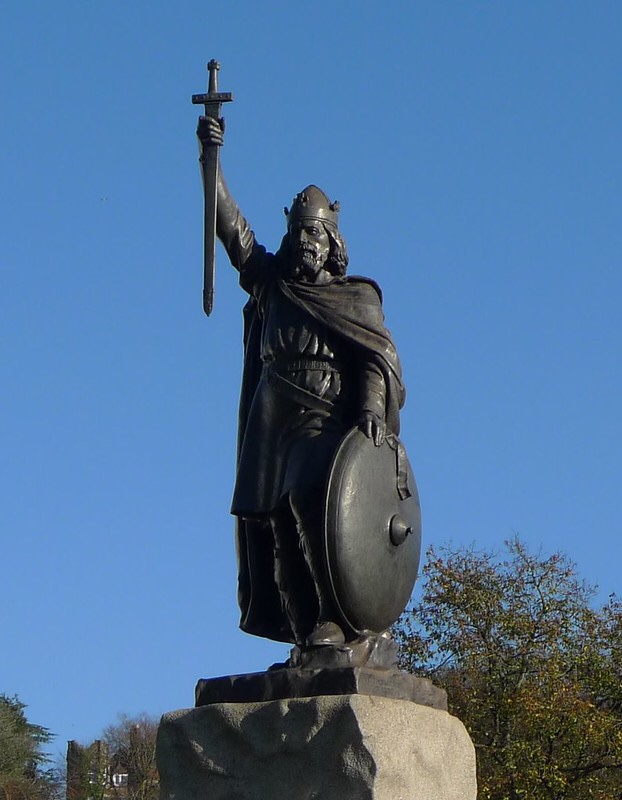
On this day in history : 26th October 899 – The death of Anglo-Saxon King, Alfred the Great….the only English monarch to be known as ‘the Great’….

img_4409
Statue of Alfred the Great – Henry Burrows via Flickr

Alfred has been revered in history not only for his military successes and eventual peace-making with the Vikings but also for his educational and social reforms….

The cause of his death (at the approximate age of 50 years) is unknown – but he had suffered an illness all his life…. He was buried at the Old Minster – an Anglo Saxon cathedral in Winchester…. This was a temporary burial – as 4 years later he was moved to the New Minster, a Benedictine Abbey, possibly built for the purpose of taking his body….

In 1110 the monks of the New Minster were relocated to Hyde Abbey, situated just outside the walls of Winchester City…. They took with them Alfred’s remains and those of his wife and children…. During the reign of King Henry VIII Hyde Abbey was dissolved and demolished….

img_4407
Hyde Abbey, gatehouse, Winchester – John Armagh CC BY-SA 3.0

It was in 1788 that a prison was built on the site…. Upon finding coffins, whilst digging around the altar area, the lead was stripped from them and the bones within were scattered and lost…. The prison was demolished some time between 1846 and 1850….

In 1866 John Mellor, an amateur antiquarian recovered a number of bones from the site, claiming them to belong to Alfred the Great…. They came into the possession of the vicar of a local church, St. Bartholomew’s…. The vicar reburied the remains in an unmarked grave within the churchyard….

img_4408
St. Bartholomew’s Church, Hyde, Winchester – Johan Bakker CC BY-SA 3.0

The Winchester Museums. Service excavated the Hyde Abbey site in 1999 and discovered a pit in front of where the high altar would have been and concluded this was probably Mellor’s excavation…. The Museum Service found the foundations of the original abbey buildings….and some bones…. But they turned out to be those of an elderly woman….

In March 2013 the Diocese of Winchester exhumed the bones from the unmarked grave at St. Bartholomew’s – because of the huge publicity surrounding the discovery of King Richard III’s remains they were concerned for their safety…. The bones were put into storage for future analysis….

The Diocese later gave permission to a local group, Hyde 900, to test the bones….but radio-carbon dating showed them to be from the 1300s….

In January 2014 a fragment of pelvis unearthed at the 1999 Hyde Abbey site excavation was carbon dated to the right period…. Suggestions have been made it could belong to Alfred or his son….but this is still unproven….

I have a feeling we will never know the final resting place of Alfred the Great – perhaps after having had his ‘sleep’ disturbed so many times over the centuries he would prefer not to be found….

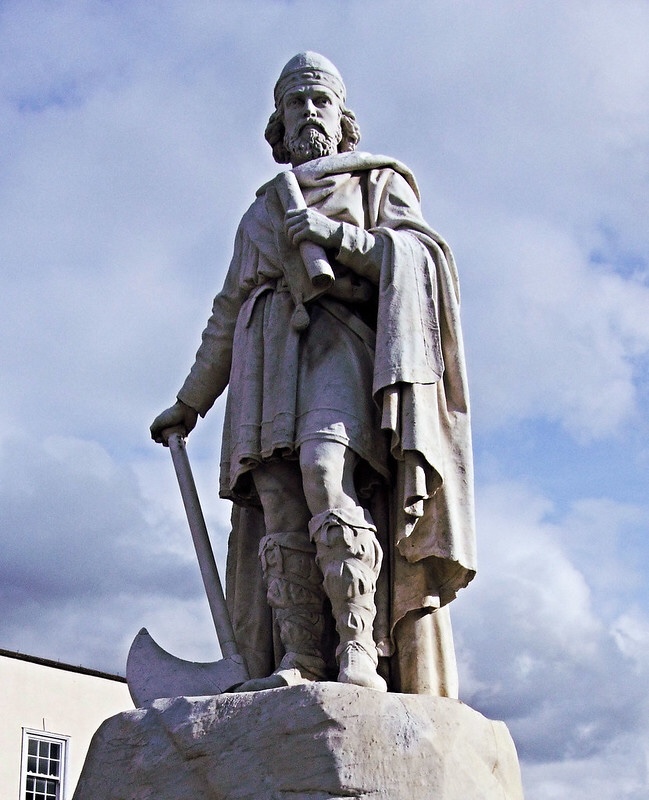
img_4410
Statue of Alfred the Great – Jim Linwood via Flickr