On this day in history: 7th November 1869 – The first bicycle road race is held, between the two French cities of Paris and Rouen – and is won by Englishman James Moore….
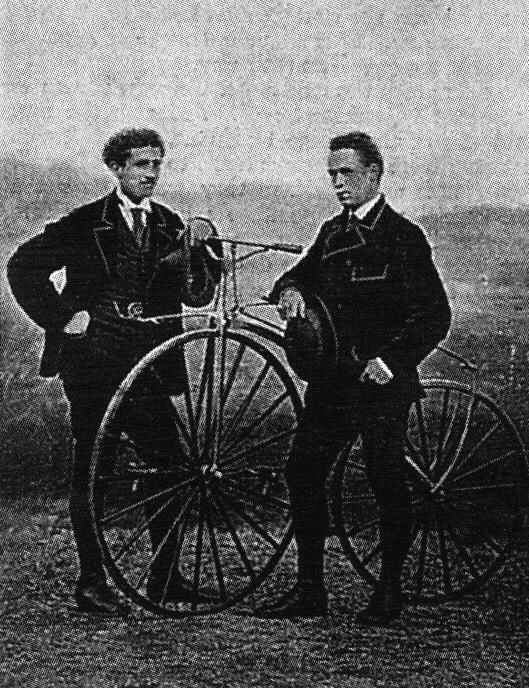
James Moore (right) – Public domain
20-year-old Moore, who lived in France, completed the course in 10 hours and 40 minutes – 15 minutes ahead of the next competitors to cross the finishing line…. The first prize was 1,000 gold francs and a bicycle….
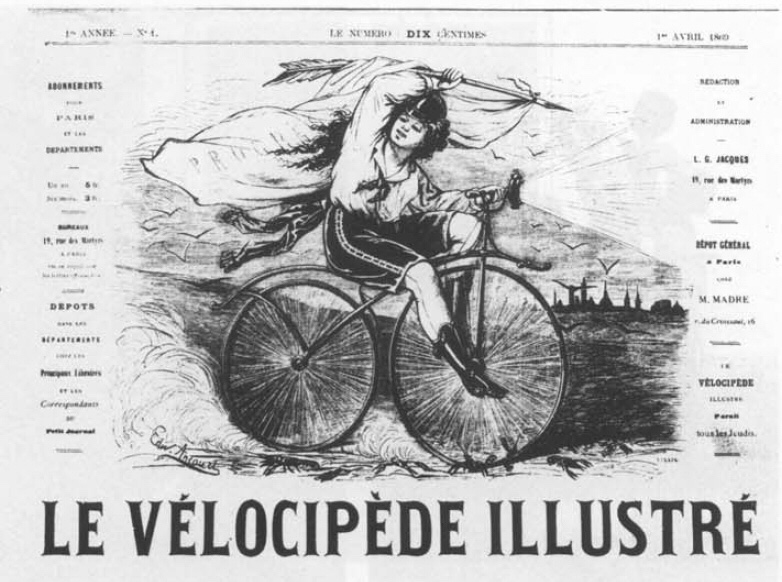
The race was organised by cycling magazine ‘Le Vélocipède Illustré’ and the Olivier brothers, owners of the Michaud Company – a bicycle manufacturing business…. 325 riders entered the event, including two women; there were so many entrants that the organisers feared for safety and the riders were split into groups…. Only 32 finished the race within 24 hours; the first woman to cross the finishing line, known as ‘Miss America’, finished in 29th place – 12 hours and 10 minutes after Moore….
Masthead of the first edition of Le Velocipede Illustre, 1st April 1869 – Public domain
The race took them through St. Germain, Mantes, Vernon and Louviers; it started at the Arc de Triomphe and ended in the centre of Rouen…. The rules stipulated bicycles were not allowed to be pulled along by dogs or use sails….
James Moore had only got his first bicycle four years previously, in 1865…. It was an old, heavy wooden ‘bone shaker’….
On this day in history : 6th November 1975 – The first public performance by The Sex Pistols – at St. Martin’s College of Art, London….
The gig was organised by the band’s bass guitarist, Glen Matlock, who was studying at the college…. They were supporting the headline act, Bazooka Joe – who loaned the Pistols the use of their equipment…. The Sex Pistols were to play just five songs – including covers of ‘I’m Not Your Stepping Stone’ by the Monkees, The Who’s ‘Substitute’ and ‘Whatcha Gonna Do About It’ by the Small Faces…. They also performed their own song ‘Seventeen’…. After less than twenty minutes the plug was pulled on them…. There is some discrepancy as to who called time to the proceedings but it is thought that Bazooka Joe were less than happy at seeing their equipment being smashed up – the evening ended with a fist fight….
The Sex Pistols, 1977 – Photographer : Koen Suyk – Nationaal Archief, Nederlands CC BY-SA 3.0 nl
Three of the band’s members :- Steve Jones, guitarist – Paul Cook, Drummer and Glen Matlock, bassist – had formed a band in 1972 and had called themselves ‘The Strand’…. They took their inspiration from groups such as The Who and The Small Faces…. They were managed by Malcolm McLaren – an artist, fashion designer and boutique owner (SEX) – along with his then girlfriend Vivienne Westwood…. McLaren had a vision – a way of creating a whole new sound and look…. John Lyndon (Johnny Rotten) joined the band as vocalist, the existing three had a new frontman and they became The Sex Pistols…. With their raw, unpolished loud music, the band were about to become one of the most influential groups in the history of popular music…. Although they only produced four singles and one studio album in their two and a half year career- they initiated Punk Rock….
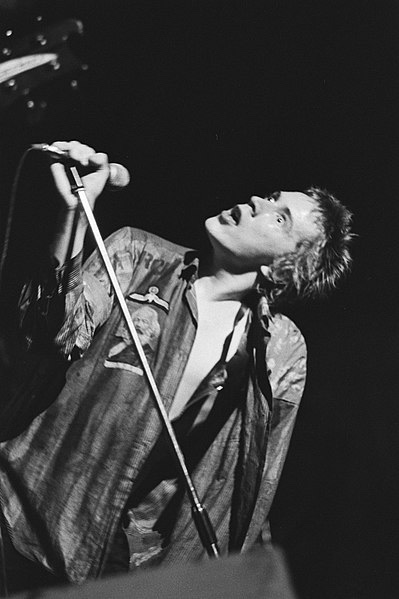
Sex Pistols in Paradiso – Johnny Rotten – Photographer : Koen Suyk – Nationaal Archief, Nederlands CC BY-SA 3.0 nl
On the 8th of October 1976 The Sex Pistols signed with EMI; their debut single ‘Anarchy in the UK’ was released the following month…. On the 1st of December 1976 their foul mouths and attitude on a TV appearance earned them the label ‘Rotten Punks’…. On the 6th of January 1977 EMI dropped them…. Glen Matlock departed the band in February ’77 and Sid Vicious took his place…. In May of the same year the band released their single ‘God Save the Queen’ – surrounded by controversy it was promptly banned by the BBC…. On the 7th of June, during the Queen’s Jubilee celebrations the Pistols attempted to perform on a boat on the Thames – but were stopped by the police….
Whenever The Sex Pistols performed it invariably ended in mayhem…. It was often difficult for them to get gigs in the first place – as organisers were reluctant to deal with them…. The Sex Pistols performed their final concert on the 14th of January in San Francisco….
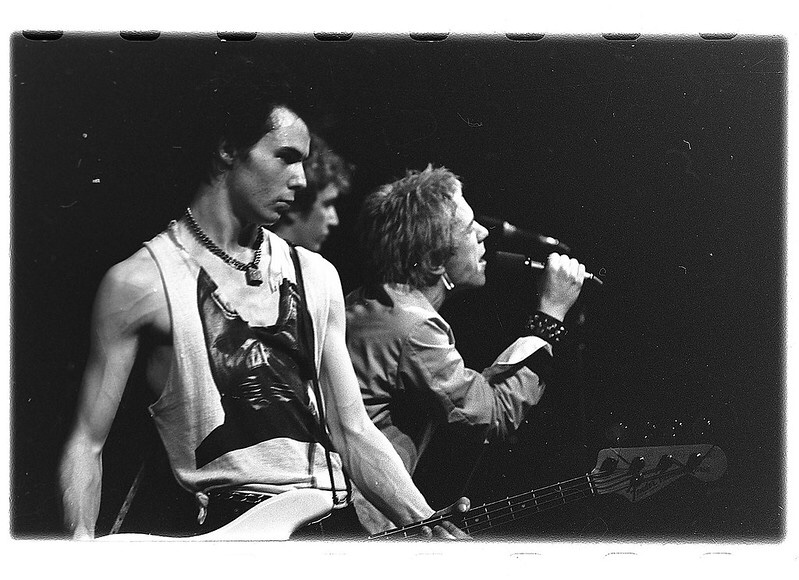
Sex Pistols, Norway 1977 – Photographer : Billedbladet NA / Arnes Nielsen via Riksarkivet (National Archives) on Flickr
So, on that rainy November night back in 1975 – when in front of an audience of apparently approximately just twenty….history was made…. As for Bazooka Joe – they never got far…. Although their bass guitarist, a guy named Stuart Goddard, went on to have some degree of success – when he changed his name to Adam Ant….
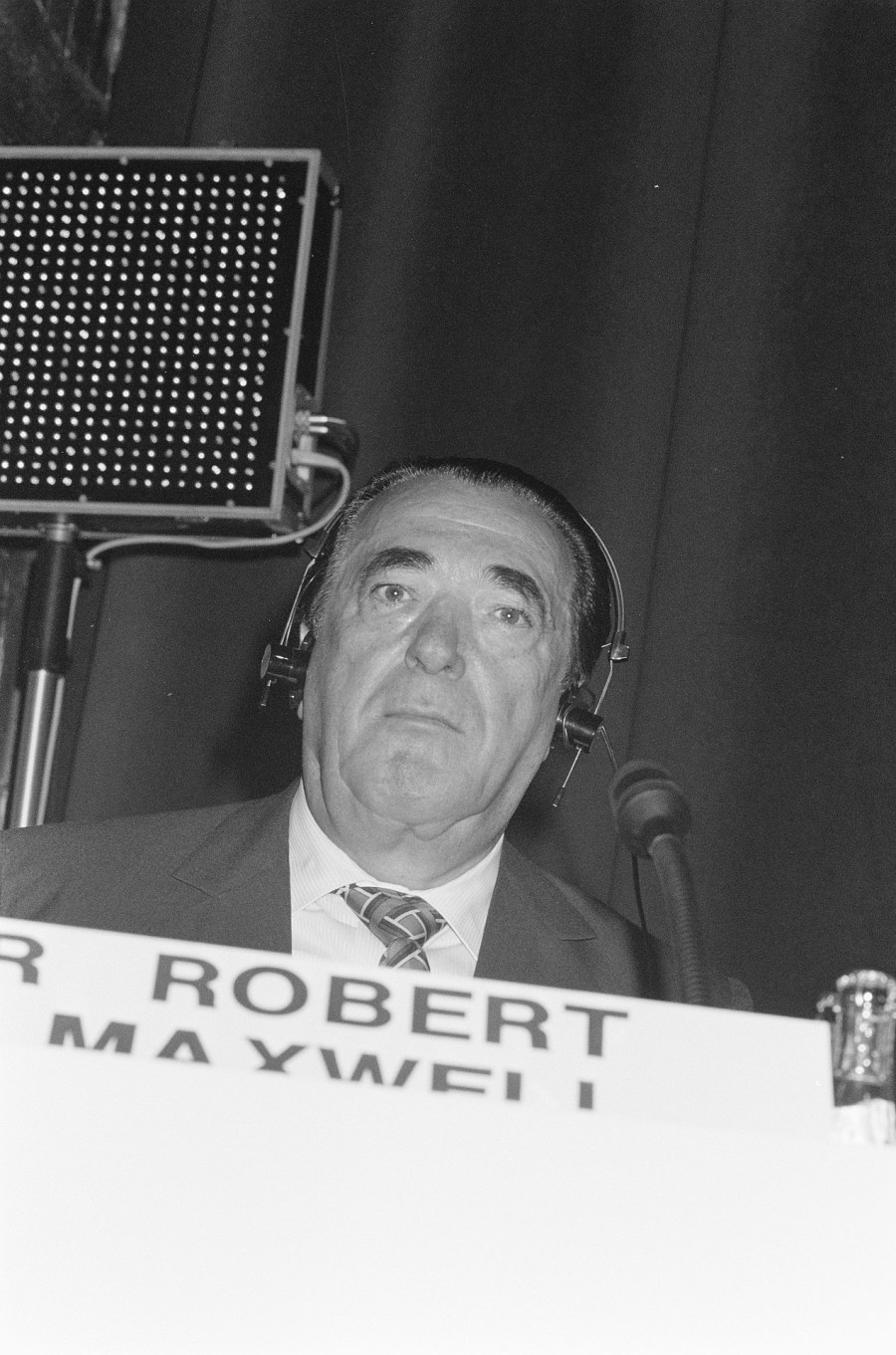
On this day in history : 5th November 1991 – The body of millionaire newspaper publisher Robert Maxwell is found at sea off the coast of Tenerife….
Robert Maxwell – Unknown photographer (ANEFO) CCO
Maxwell had been cruising the Canary Islands onboard his luxury yacht ‘Lady Ghislaine’…. His last contact with the crew had been at 4.25am local time – when he called to complain about the temperature in his cabin and ordered that the air conditioning be turned up…. It was about 11am the following morning that he was discovered to be missing – after he had failed to answer a phone call…. It was presumed he had fallen overboard….
The luxury yacht Lady Mona K (formerly Lady Ghislaine) in Cannes – Photo credit : Superyachtfan on Facebook
His naked body was spotted floating some 15 miles from his boat by a Spanish fisherman – at around 18.00 hrs…. Maxwell’s body was flown to Gran Canaria for identification….
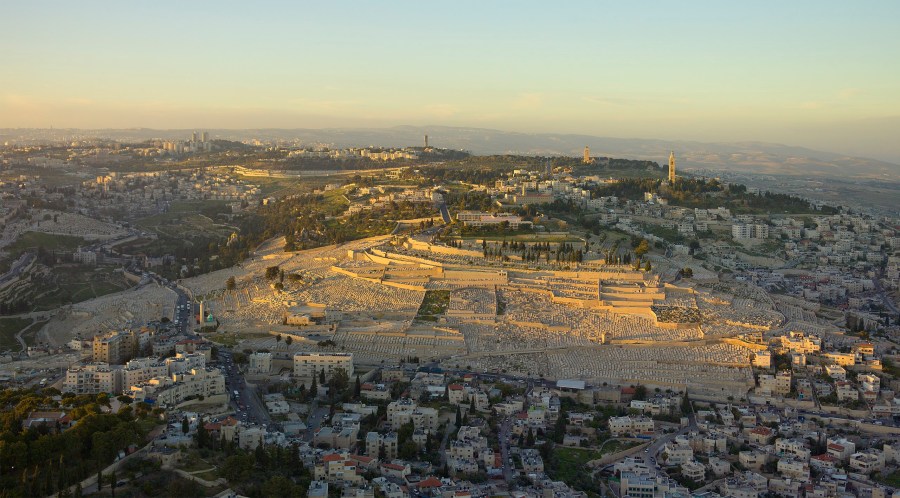
At least two post mortems were required to determine the cause of death; the conclusion being that he had suffered a heart attack – combined with drowning – this effectively ruled out murder or suicide…. Maxwell had been suffering a heart and lung condition….for which he had undergone operations and was taking medication for…. He was laid to rest on the Mount of Olives in Jerusalem….
Mount of Olives – Godot13 CC BY-SA 4.0
However, the speculation that he had committed suicide – or indeed had even been murdered – refused to go away…. His empire had been collapsing around him….only the Mirror group of newspaper publications was still profitable…. To try and ease the colossal debt problems he had plundered the entire pension funds of Maxwell Communications…. Thousands were about to lose their pensions….
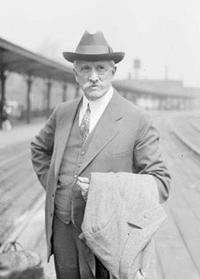
On this day in history : 4th November 1922 – The tomb of boy-king Tutankhamun is discovered by English archaeologist Howard Carter….
Howard Carter – Chicago Daily News Inc. photographer – Public doman
Pharaoh Tutankhamun died in 1323 BC at around 18-years-old…. His tomb was discovered in the Valley of the Kings, across the Nile from Luxor – where Pharaohs had been buried from the 16th-11th Centuries BC…. Most tombs had long been plundered and stripped of their riches – however, this time the tomb had been left undisturbed….
Tutankhamun’s golden mask – Roland Unger CC BY-SA 3.0
Many believed in the curse of the Pharaohs – anybody who disturbed the mummy of an Ancient Egyptian, especially a Pharaoh, would receive bad luck in the form of illness or death…. And it didn’t take long for the rumours of a curse to start circulating after the discovery of Tutankhamun…. Famous Egyptologist of the day, James Henry Breasted, who was part of the team that first entered the tomb, allegedly arrived home one day to find a cobra in the cage of his pet canary….the bird still hanging from its jaws…. The cobra is the symbol of the Egyptian monarchy – kings bore its symbol upon their headdresses to represent protection…. Not a good omen finding one has eaten your canary then….
James Henry Breasted, 1928 – Chicago Daily News Inc. photographer – Public domain
Whether or not you believe in curses – it has to be said a surprisingly large number of deaths occurred over the following decade….all directly or indirectly connected with either Howard Carter himself of the tomb of Tutankhamun….
The ‘curse’ first struck in April 1923…. Lord Carnarvon, a keen amateur Egyptologist and who had financed the project, was part of the team to first enter the burial chambers…. On the 5th of April he died from blood poisoning – having nicked a mosquito bite whilst shaving which subsequently became infected….
Lord Carnarvon, his daughter Lady Evelyn Herbert and Howard Carter on the steps leading to the tomb of Tutankhamun, November 1922 – Harry Burton, photographer – Public domain
The following month, on the 16th of May, George Jay Gould, aa financier who had visited the tomb, developed a fever and died in the French Riviera….
Sir Bruce Ingram was given a paperweight by his friend Howard Carter, which contained a mummified hand wearing a bracelet – supposedly inscribed with the words ‘Cursed be he who moves my body’…. Soon after Ingham’s house burned down….and when he rebuilt it – a flood destroyed it….
Prince Ali Kamel Fahmy Bey, an Egyptian aristocrat who visited the tomb, was shot by his wife on the 10th of July 1923…. The couple were holidaying in London and had been to see the opera ‘The Merry Widow’ one evening before returning to their suite at the Savoy…. They got into an argument – as they frequently did – and she shot him several times….he died in Charing Cross Hospital…. By claiming to be a victim of brutality and sadism she was acquitted on all charges….
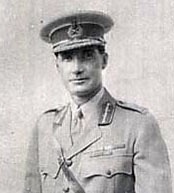
Colonel The Right Hon. Aubrey Herbert MP had never visited the tomb – but was related to Carnarvon as his younger half brother…. Having suffered with poor eyesight all his life he was almost blind by his early 40s…. Bad medical advice resulted in him having all his teeth extracted in an attempt to restore his eyesight…. He got blood poisoning and died on the 26th of September 1923….
The Right Hon. Aubrey Herbert – Public domain
Some six years later Herbert’s brother (and another half brother to Carnarvon caught malaria which in turn led to pneumonia – from which he died on the 26th of May 1929….
On the 15th of January 1924 Sir Archibald Douglas Reid, a radiologist who x-rayed Tutankhamun’s mummy, died from a mysterious illness three days after doing so….
Governor-General of Anglo Egyptian Sudan, Sir Lee Stack, was being driven from the Egyptian War Office in Cairo to his residence, when his car had to halt in traffic…. A group of students fired a volley of shots into the car….Stack was hit three times and died the following day….on the 19th of November 1924…. Seven men were convicted of the assassination and were hanged….
Sir Lee Stack – Fair use
American Egyptologist, Aaron Ember, was associated with many of those present when the tomb was opened…. In 1926 his house in Baltimore burned down…. He rushed to save a manuscript he had been working on…. He, his wife, son and maid all perished in the fire…. The title of his manuscript – “The Egyptian Book of the Dead’….
Captain The Right Hon. Richard Bethell was personal secretary to Howard Carter and was the first person behind him as he entered the tomb…. Bethell was found dead in his bed at his distinguished May Fair gentlemen’s club on the 15th of November 1929…. Cause of death – suspected smothering…. Three months later, on the 20th of February 1930, his father, Richard Luttrell Pilkington Bethell, 3rd Baron of Westbury, allegedly committed suicide by throwing himself from his 7th floor apartment….
Howard Carter claimed the rumours of the curse to be a load of ‘tommy rot’…. He himself died on the 2nd of March 1939 from Hodgkin’s disease…. He was 64-years-old, desperately unhappy and had suffered a long and lingering illness…. He died alone in his London flat….
So, do you believe in the curse of Tutankhamun….?
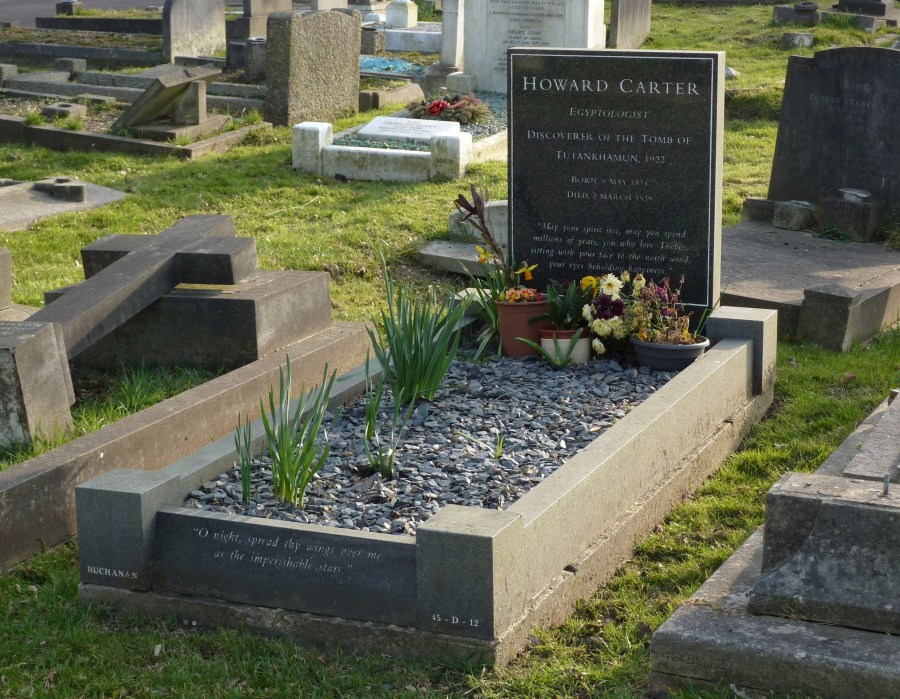
Carter’s grave at Putney Vale Cemetery, London – Image : Deeday-uk CC BY-SA 4.0
On this day in history : 3rd November 1534 – The Act of Supremacy is passed by Parliament, making King Henry VIII head of the newly formed Church of England….
Image credit : Ann Longmore-Etheridge via Flickr
The Act of Supremacy officially confirmed the split from Rome….leading to the seizure of Church property…. With a need to remove the power of the Catholic Church – and also to raise money for the continuous wars with Scotland and France – over 800 monasteries and convents were dissolved….being either demolished, reclaimed as Anglican Churches – or sold off….
King Henry VIII famously married six times….in search not only of marital happiness but also for political gain – and the desire for a male heir….
Henry was the second son of Henry VII; his older brother, Arthur, was destined for the throne – whilst Henry was being prepared for a life in the Church…. He was educated in music, poetry, languages, theology and sports…. Arthur married Catherine of Aragon (to whom he had been betrothed since the age of 2) in November 1501 – the pair were just teenagers – but tragically Arthur died of a sudden illness a few months later…. Henry became next in line to the throne and was betrothed to his dead brother’s widow….
Catherine of Aragon – attributed to Joannes Corvus – Public domain
Henry became King when he was 17-years-old and married Catherine of Aragon six weeks later…. Over the following 15 years she gave birth to 3 sons and 3 daughters….all died in infancy – except one daughter, Mary (later to become Queen Mary I)….
Henry – although he had fathered an illegitimate healthy son, Henry Fitzroy, in 1519 – wanted a son who could become his heir…. He was convinced his marriage to Catherine was cursed – because of an old myth about marrying a brother’s widow…. On becoming infatuated with one of his wife’s attendants, Anne Boleyn, he decided to seek an annulment – so that he could remarry…. Of course, his intentions were denied by the Pope – Henry’s response was to put himself in charge of the Church and effectively change the rule book….
Anne Boleyn – Public domain
In 1533 Henry and Anne Boleyn were married and they had a daughter, Elizabeth…. Mary was declared illegitimate and Elizabeth made heir to the throne in her place…. In January 1536 Henry had an accident whilst taking part in a jousting tournament…. On hearing the news a pregnant Anne miscarried a son…. Henry turned his attentions to another woman in his Court, Jane Seymour…. Within six months he had Anne executed for incest and treason….and he married Jane…. To his joy she gave him his son and heir, the future Edward IV – but at the cost of her own life – Jane died two weeks later….
Jane Seymour – Hans Holbein – Public domain
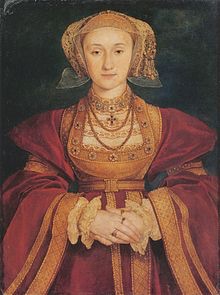
Henry then married Anne of Cleves – a political union – to strengthen an alliance with Anne’s brother, who was the ruler of a Protestant Duchy in Germany…. After only a few days Henry had the marriage annulled….
Anne of Cleves – Public domain
Catherine Howard was to become his next wife….but after two years he had her beheaded for adultery and treason….
Catherine Howard – Hans Holbein – Public domain
Henry’s final marriage was to Catherine Parr in 1543 – and it was she who managed to reconcile his daughters, Mary and Elizabeth…. Henry died on the 28th of January 1547, his 56th birthday…. His 9-year-old son, Edward VI came to the throne – but died six years later…. Catherine Parr remarried and at the age of 35 gave birth for the first time, to a daughter, Mary Seymour – only for Catherine to die from complications of childbirth 8 days later….











 Cottage Capers