On this day in history : 3rd October 1283 – Dafydd ap Gruffydd, Prince of Wales, is the first nobleman in Britain to be hanged, drawn and quartered….
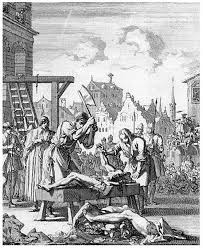
The execution of Dafydd ap Gruffydd – image via Facebook
As the last independent Welsh Kingdom falls and the English gain control of the country, Dafydd is the first person known to be tried on the charge of ‘high treason’…. The orders of King Edward I were that the death was to be slow and agonising….
Dafydd was dragged through the streets of Shrewsbury, attached to a horse’s tail…. He was then hanged, cut down and revived….disembowelled – his entrails burned before him and finally his body was cut into quarters….
Geoffrey of Shrewsbury was the executioner – for which he was paid 20 shillings….
On this day in history : 2nd October 1452 – The birth, at Fotheringhay Castle, Northamptonshire, of King Richard III – the last King of the House of York and the last of the Plantagenets….
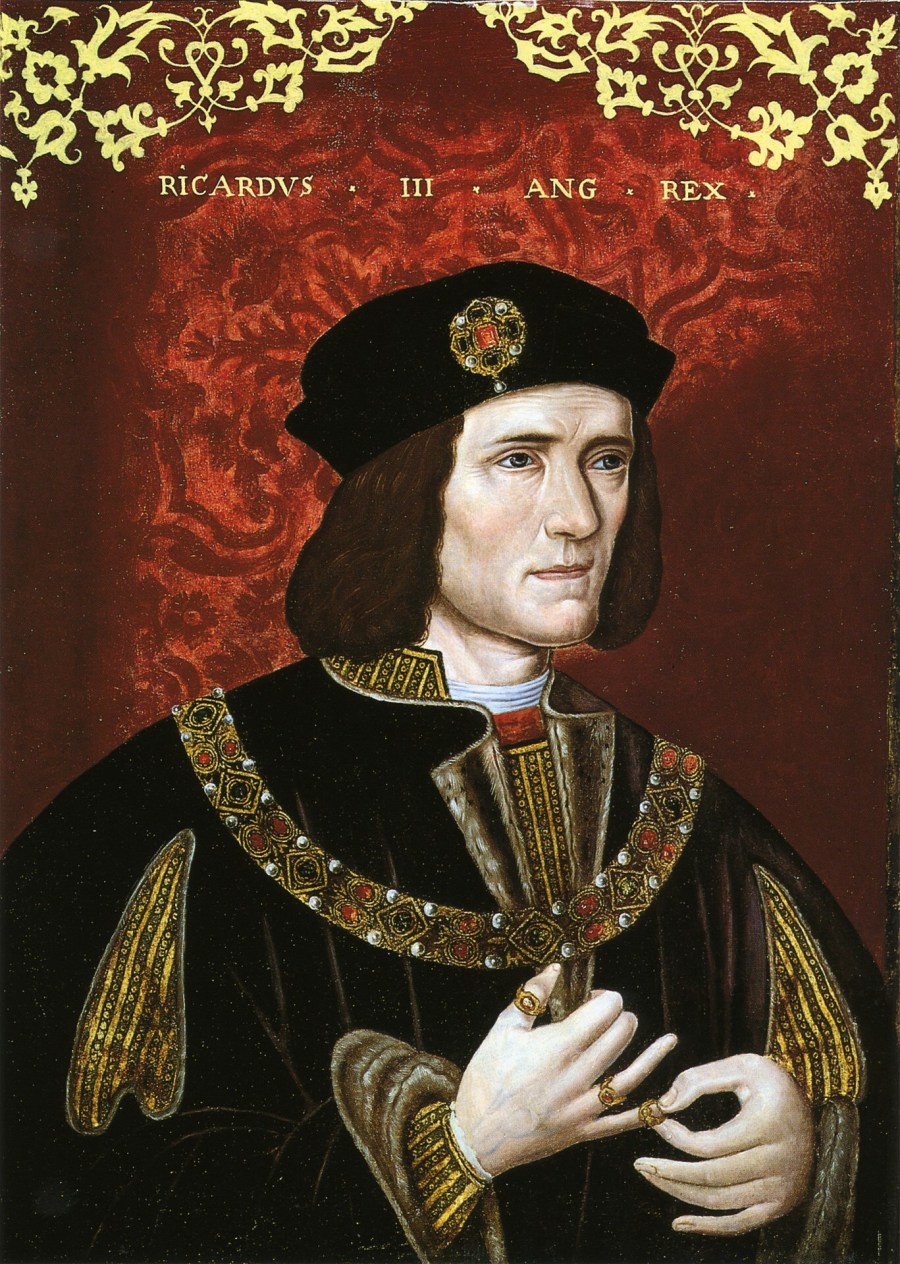
Late 16th Century portrait of Richard III – Public domain
Richard was the twelfth of thirteen children – his older brother was to become King Edward IV – to whom Richard remained loyal until Edward’s death in 1483 – unlike their middle brother, George, who plotted against Edward….
However, Richard was not without controversy himself…. Upon Edward’s death his 12-year-old son succeeded him to the throne…. Richard was named as Lord Protector and the young Edward and his brother were taken to live within the palace at the Tower of London – which was then a royal residence….
In the June of 1483 the marriage of the two young princes’ parents was declared illegal and therefore invalid – which made the boys illegitimate…. This meant young Edward was no longer the rightful heir to the throne and instead it passed to his uncle and protector, Richard….
Earliest surviving portrait of Richard III C1520 – Public domain
Richard wasted no time in securing his position as King, he was quickly crowned on the 26th of June…. Shortly after, the two princes disappeared, never to be seen again…. Many believe Richard had them murdered….
Richard himself was killed at Bosworth Field on the 23rd of August 1485 – he was the last English King to die in battle…. Henry Tudor succeeded him, as King Henry VII….
An 18th Century illustration of the death of Richard III at the Battle of Bosworth Field – Thomas Pennant – Public domain
Richard’s body was taken to a monastery in Leicester and buried beneath a fine alabaster tomb…. But after King Henry VIII’s dissolution of the monasteries the Franciscan friary disappeared and along with it all traces of Richard’s tomb….
In September 2012 archaeologists discovered a skeleton under a car park in Leicester and it was believed to be the remains of Richard….
The skeleton as it was discovered – Photo credit : Richard Buckley, Mathew Morris, Jo Appleby, Turi King, Dierdre O’Sullivan, Lin Foxhall – CC BY SA 4.0
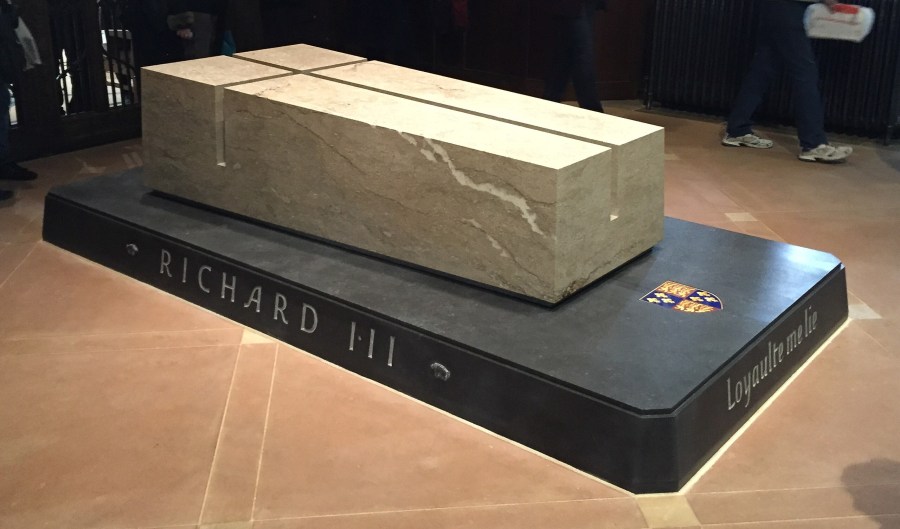
Using DNA and bone analysis, radio carbon dating and radiological evidence this was indeed proven…. King Richard III was finally reinterred at Leicester Cathedral in March 2015….
Tomb of Richard III – Photo credit : Isananni CC BY SA 3.0
On this day in history : 1st October 1861 – Mrs Beeton’s Book of Household Management (also known as Mrs Beeton’s Cookery Book) is published….
Title page of Mrs Beeton’s Book of Household Management – Public domain
Initially it had appeared as a series of 24 instalments in ‘The Englishwoman’s Domestic Magazine’ – a publication owned by her husband, the ambitious publisher and magazine editor Samuel Orchart Beeton….
The Englishwoman’s Domestic Magazine, September 1861 – Beeton & Co – Public domain
Isabella Beeton (nee Mayson) had started writing for her husband’s magazine when she was just 21-years-old, less than a year after they were married…. In the beginning she translated French fiction and wrote the cookery column – often using recipes sent in by readers…. In 1859 the husband and wife team launched the series of household management articles in the form of 48 page supplements – and then eventually bringing them all together in book form, which was published by Samuel’s Company S.O. Beeton…. In the first year it sold in excess of 60,000 copies….
Isabella in 1860 – Public domain
Tragically Isabella died of puerperal fever in February 1865, she was just 28-years-old…. At the time she had been working on a new version of her book – which was to have been titled ‘The Dictionary of Every Day Cookery’….
Samuel Orchart Beeton by Julian Portch, photograph of crayon drawing, (circa 1853) – Public domain
In 1866, a year after his wife’s death, Samuel hit hard times after a bad business deal – and sold the rights to the Book of Household Management to Ward, Lock & Tyler (who later became Ward, Lock & Co)…. For marketing purposes it wasn’t broadly publicised that Isabella had died – in a business sense it was important to keep the ‘Beeton’ name alive…. With each new edition the book continued to grow in size; by 1907 it had reached 74 chapters with over 2,000 pages…. In 1868 it sold over two million copies….it was arguably the most consulted cookbook of the late 1800s/early 1900s….
Isabella Beeton, nee Mayson by Maull & Polyblank, hand-tinted albumen print, 1857 – Public domain
On this day in history : 30th September 1938 – Neville Chamberlain arrives back in the UK with an agreement signed by Hitler…. He claims “I believe it is peace for our time” – he could not have been more misguided….
Chamberlain holds the paper signed by himself and Hitler on his return to Heston Airport – Ministry of Information Official Photographer – Public domain
The Prime Minister had met with the German leader three times in the last two weeks of September…. This last meeting had been at the Munich Conference – which involved talks between Britain, Germany, France and Italy, to decide the future of Sudetenland, part of Western Czechoslovakia…. The Czech government had been hoping Britain and France would come to its aid in the event of a German invasion…. However, it was Chamberlain’s main priority to avert war – British people were terrified of another conflict within Europe…. It was agreed that Germany would annex a large part of Czechoslovakia and Britain and France would not support any resistance put up by Czechoslovakia; in return a non-aggression pact was signed with Germany…. Czechoslovakia was forced to hand over Sudetenland, though it had not even been present at the conference….
Chamberlain arrives in Munich, September 1938 – Courtesy : Bundesarchiv, Bild 183-H12967 CC BY-SA 3.0
British Prime Minister Neville Chamberlain (left) and German Chancellor Adolf Hitler leave their meeting at Bad Godesberg, 23rd September 1938 – Courtesy: Bundesarchiv, Bild 183-H12751/CC BY-SA 3.0
Chamberlain, Daladier, Hitler, Mussolini and Italian Foreign Minister Count Galeazzo Ciano as they prepare to sign the Munich Agreement – CC BY-SA 3.0 de
Chamberlain arrived back at Heston Airport, West London, where a large crowd greeted him, eager to hear him read out the signed agreement…. He then went on to Buckingham Palace, where he appeared on the balcony with the King and Queen – and then went on to hold a further audience outside No.10 Downing Street…. The crowds were jubilant….but there were also many who believed Chamberlain had given in to the demands of Hitler….
Needless to say, Hitler did not adhere to his promise…. A year later he dismissed the agreement as a ‘scrap of paper’ and on the 1st of September 1939 Germany invaded Poland…. World War 2 was declared two days later…. Chamberlain was succeeded by Winston Churchill after being forced to resign in May 1940; he died the following November….
On this day in history : 29th September 1829 – The inauguration of the Metropolitan Police Service, London – giving England its first professional police force….
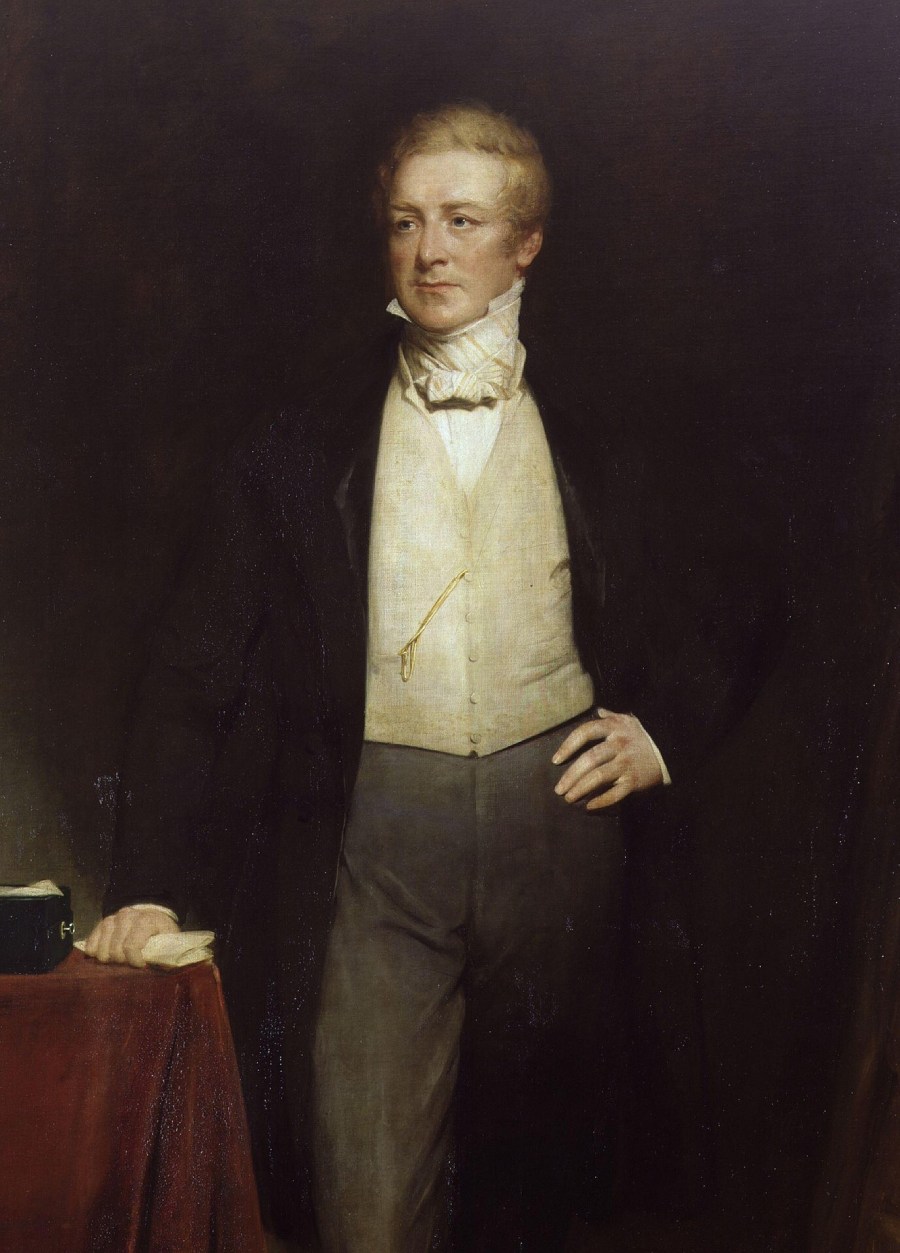
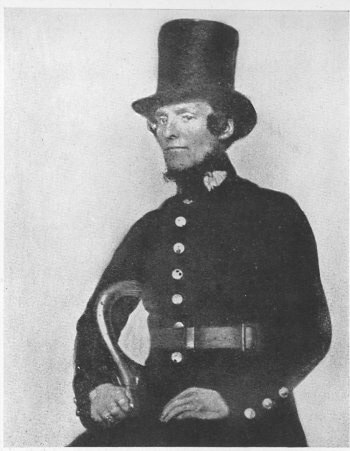
Set up by the then Home Secretary, Robert Peel, after ‘The Metropolitan Police Act 1829’, the policemen became known as ‘Bobbies’ and ‘Peelers’…. The headquarters, which was to become known as ‘Scotland Yard’ had 17 divisions, each with 4 inspectors and 144 constables – all answering to the Home Secretary….
Sir Robert Peel by Henry William Pickersgill – Public domain
It all got off to a bit of a ropey start…. Out of the 2,800 newly recruited policemen only 600 managed to meet the grade and keep their jobs…. The policeman given the unique identification ‘No.1’ (often called the ‘collar number’) was sacked after just 4 hours for drunkenness…. But things soon settled down and the Metropolitan Police went on to become amongst the finest police services of the world….
A ‘Peeler’ of the Metropolitan Police Service in the 1850s – Public domain






 Cottage Capers