On this day in history : 3rd September 1935 – Sir Malcolm Campbell breaks his own land speed record by reaching 304.331 miles per hour on the Bonneville salt flats in Utah….
Sir Malcolm Campbell – Public domain
This record made Campbell the first to drive an automobile over 300mph – and it was the ninth time he had topped his own land speed record…. He had first set a record of 146.6mph eleven years before at Pennine Sands in Wales – and in 1932 had reached over 250mph…. On the 7th of March 1935 he topped 275mph – just six months before his record at the Bonneville salt flats…. All of his cars were named ‘Bluebird’….
Campbell also set four water speed records, topping at just under 142mph…. His son, Donald, was to follow in his tracks….becoming the first to reach 400mph…. Only to be killed in an accident in 1967….
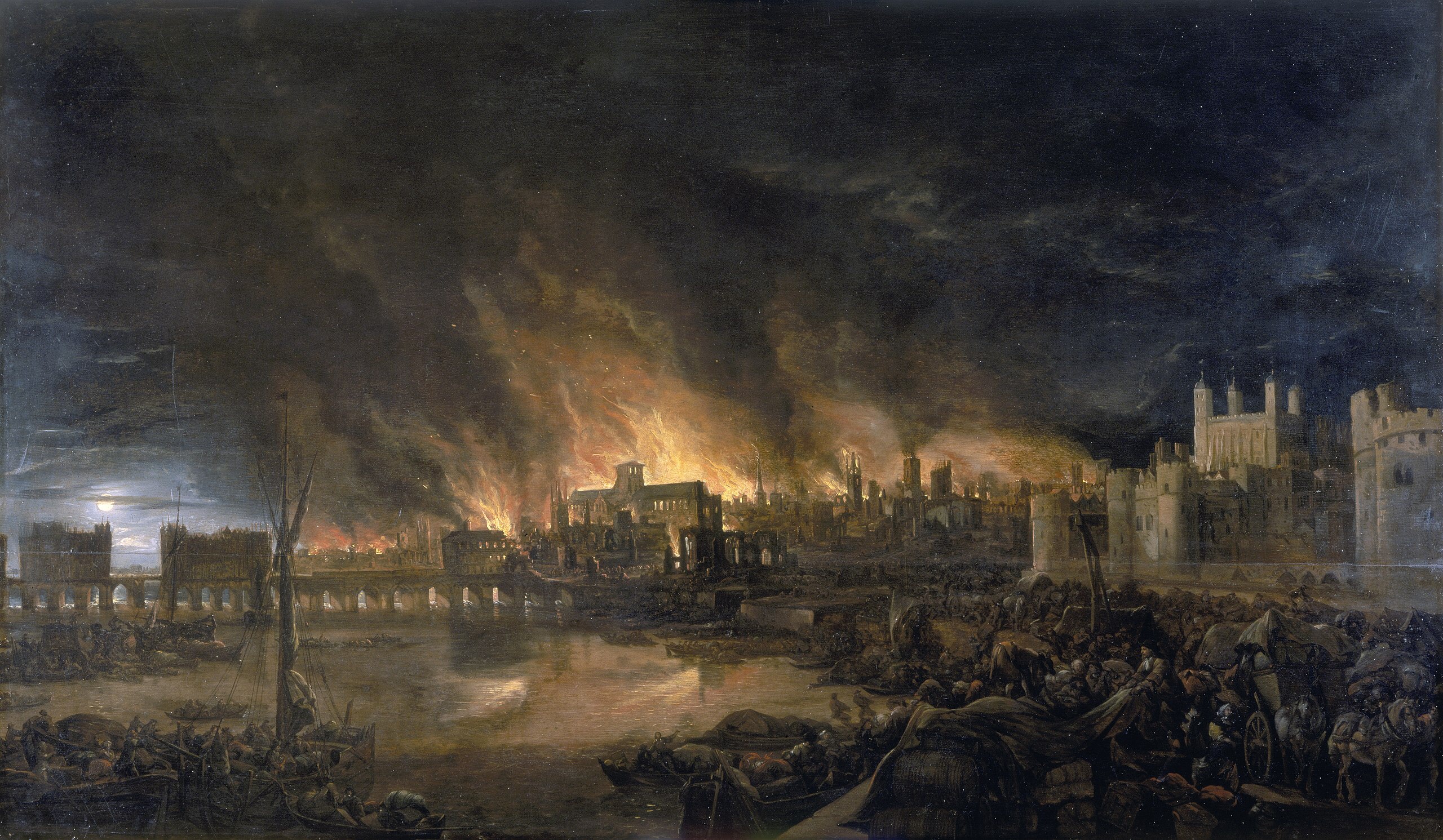
On this day in history : 2nd September 1666 – The Great Fire of London starts in a baker’s shop in Pudding Lane…. The fire blazes for four days and destroys over 13,000 buildings….
Unknown artist – Public domain
The fire started in the bakery of Thomas Farriner, shortly after midnight and rapidly spread across the old medieval city – the flames fanned by a strong easterly wind…. Fires were commonplace at the time and were usually quickly put out – but it had been a very hot summer and there had been no rain for weeks and the old timber and thatched roofs of the buildings were very dry and provided a ready fuel….
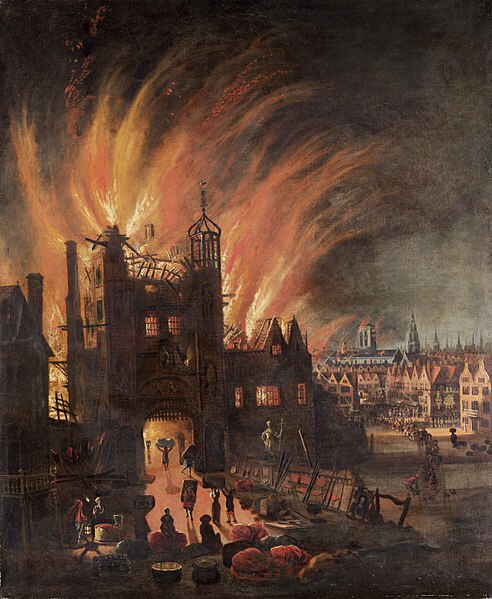
The main fire fighting technique of the time was to demolish buildings to create firebreaks…. However, hesitation by the Lord Mayor of the time, Thomas Bloodworth, who said -“Pish! A woman might piss it out!”- meant by the time demolition commenced it was too late to be effective….
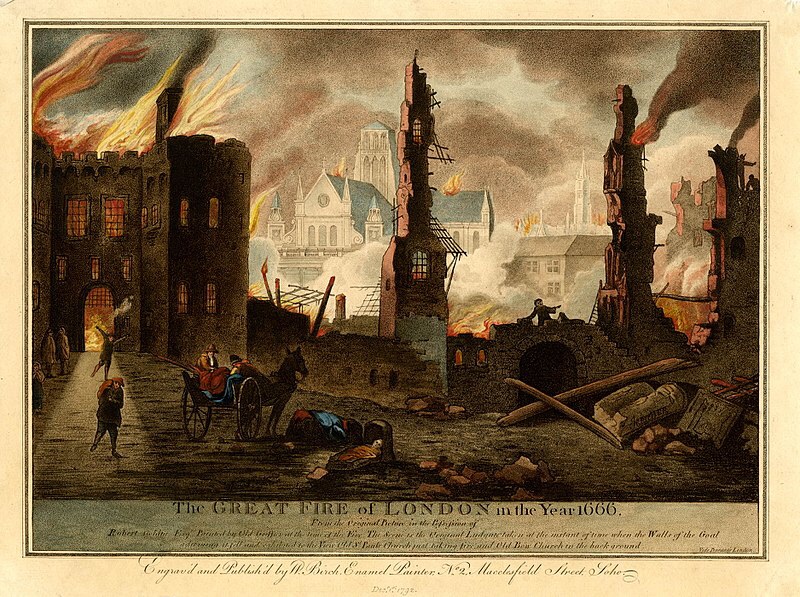
Ludgate and old St Paul’s – Unknown artist – Public domain
As a last resort gunpowder was used to blow up houses in the path of the fire to create a larger firebreak – which in turn started rumours circulating that the French were invading! By the time the fire had finally been put out only a fifth of the old city was left standing…. 13,200 houses had been destroyed, 87 churches, St. Paul’s Cathedral and most of the city authorities buildings…. Out of 80,000 inhabitants living in the city at the time it is estimated around 70,000 were made homeless…. Surprisingly the death toll, although officially unknown, is not thought to have been particularly high – only six deaths were recorded at the time…. However, it could be argued this figure is irrelevant and the true number may well have been much higher than believed, as deaths of the poor were not usually reported…. Such was the intensity of the heat many of the remains would have been cremated beyond recognition of even being human….
On this day in history : 1st September 1958 – A series of confrontations over fishing rights begins between Britain and Iceland and becomes known as the ‘Cod Wars’….
The term Cod Wars was coined by a British journalist in early September 1958; although they were hardly all out ‘wars’ there were certainly some very heated exchanges…. At the peak of hostilities a total of 37 Royal Navy warships were mobilised to protect British trawlers who were fishing in the disputed waters….
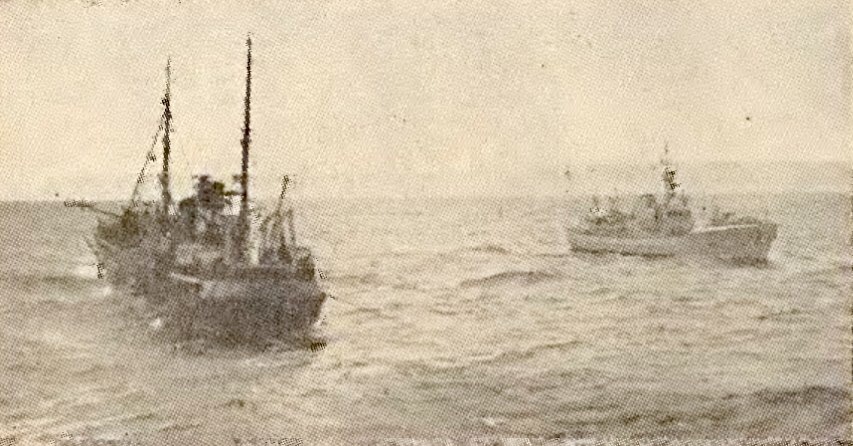
British trawler Coventry City passes Icelandic Coast Guard patrol vessel Albert off the Westfjords, 1958 – original uploader Kjallakr – Public domain
The first Cod War took place in the autumn of 1958 – the disagreement being over who could fish in the seas around Iceland – which then had the standard 4 mile zone around its shores…. Iceland was worried that foreign vessels were over-fishing – and so increased the zone to 12 miles…. Britain was unhappy about this and ignored the new restriction…. There were a number of skirmishes – with Icelandic patrol boats firing across the bows of British trawlers and the Royal Navy threatening to sink Iceland’s boats…. Eventually Britain backed down and an agreement was made between the two countries that any future disputes would be settled through the International Court of Justice….
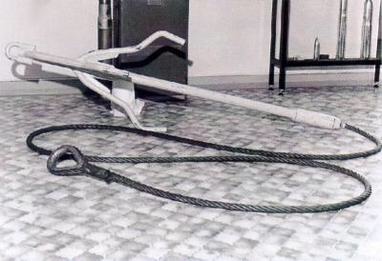
However, in 1972 Iceland conveniently ‘forgot’ about this agreement and extended the exclusion zone to 50 miles…. Once again Britain refused to recognise this and a second Cod War ensued – with Iceland’s patrol boats chasing British and German trawlers out of its newly claimed waters…. Iceland started to cut the nets of foreign trawlers and there were cases of Royal Navy ships being rammed by the Icelandic Coast Guard…. In March 1973 ‘Brucella’, a British trawler, refused to leave the zone and crew from an Icelandic vessel boarded her and began firing rifles, damaging the trawler’s lifeboats and bridge…. Thankfully nobody was hurt….
Example of a net cutter, as first used in the second Cod War CC BY-SA 3.0
An even more serious incident occurred in July 1974; a large British trawler, the C.S Forester, was seen fishing within the zone and an Icelandic patrol boat gave chase – pursuing the trawler for more than 100 miles…. The patrol boat then shelled the trawler (using non-explosive ammunition) – at least two of these shells hit and caused considerable damage…. The trawler was then towed to an Icelandic port, impounded and the skipper jailed…. Only after the C.S Forester’s owners paid a substantial amount of money was he released along with the trawler….
After negotiations between Iceland and Britain it was agreed British trawlers could fish in certain parts of the zone, sticking to an annual quota of fish…. This agreement was to last for two years, being set to expire on the 13th of November 1975….
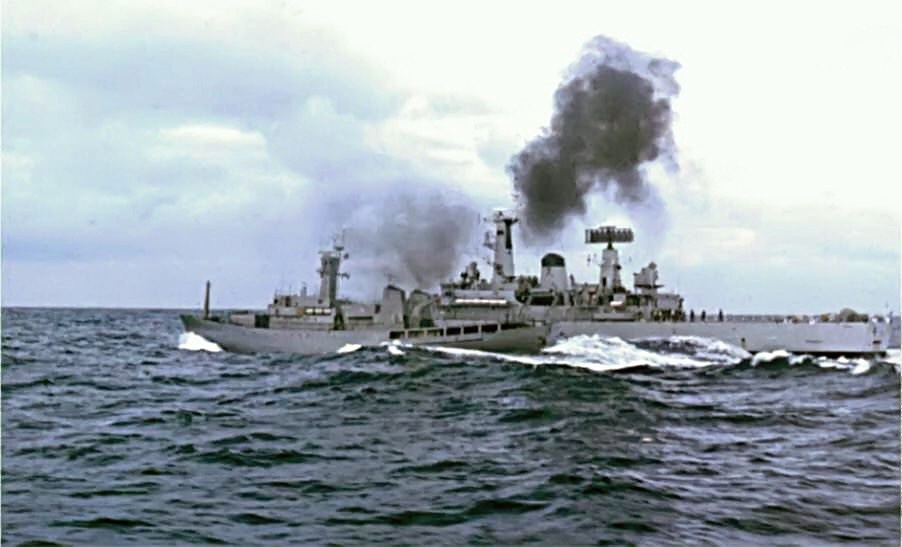
As soon as this date arrived the third Cod War began….as Iceland immediately extended the zone once more….to 200 miles! Britain was furious – as were many other European countries – and this time things got even more heated…. One incident involved an Icelandic patrol boat and three Royal Navy ships – the patrol boat was rammed and began to sink…. In retaliation it began to fire, first blank and then live ammunition…. A British ship, the Star Aquarius, was hit – but only minor damage occurred and there were no casualties….
The collision of British frigate HMS Scylla and Icelandic patrol boat Odinn during the third Cod War – Image credit : Isaac Newton CC BY-SA 2.5
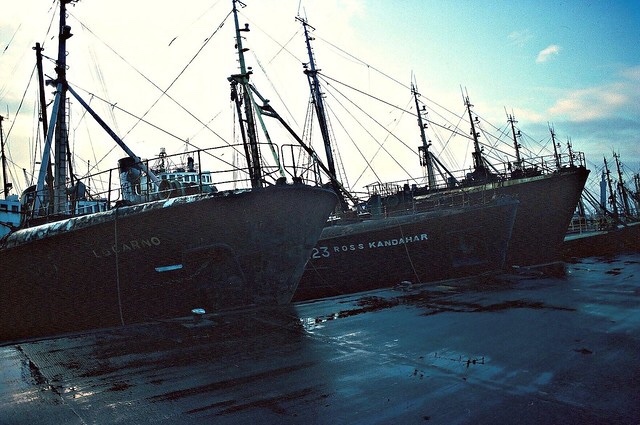
In total there were 55 cases of Royal Navy ships ramming Icelandic vessels in this third Cod War…. Things finally came to a head in the spring of 1976…. Near to the town of Keflavik in Western Iceland there was located a US-manned NATO naval air base – crucial to American operations…. The Icelandic government threatened to close it down and this led the US to put considerable pressure on Britain to back down and acknowledge Iceland’s self-imposed fishing territorial rights…. On the 28th of May 1976 an agreement was finally reached – one that definitely was not in Britain’s favour…. For the following six months a maximum of just 24 trawlers were allowed to fish in the zone with a total catch limited to 50,000 tons – after that period Britain had no right to fish within 200 miles of Iceland…. Britain’s already declining fishing industry was hit hard – ports such as Hull, Grimsby and Fleetwood were severely economically affected…. Thousands of fishermen and associated trades lost their jobs….
Laid-up trawlers at Grimsby Docks in the 1970s, after the Cod Wars – Photo credit : John Gulliver via Flickr
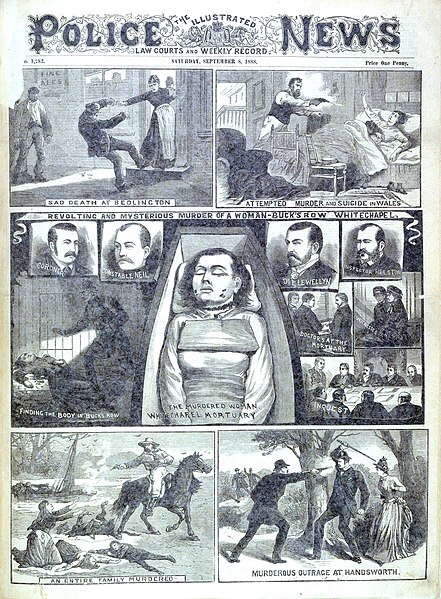
On this day in history : 31st August 1888 – Mary Ann Nichols, an East End of London prostitute, is found murdered and mutilated in Whitechapel…. She is the first victim to be attributed to Jack the Ripper….
The Illustrated Police News, 8th September 1888 – Public domain
Mary Ann was born to Caroline and Edward Walker, a locksmith, on the 26th of August 1845…. On the 16th of January 1864 she married William Nichols, who worked for a printing company and together they had five children…. Mary Ann had a problem with alcohol and left her husband several times before the marriage finally broke up in 1881…. At first William supported his estranged wife with an allowance of 5 shillings per week – but in 1882 these payments stopped when William learned of his wife’s prostitution…. The law at the time stated that a man was no longer obliged to provide for his wife if she was earning money through illicit means….
Spending the rest of her days between workhouses and cheap lodging houses Mary Ann made a meagre living on her earnings as a prostitute and on charitable handouts…. As an alcoholic she drank most of her money – she could expect to earn around threepence a time for her trade – the same price as a large glass of gin….
Mary Ann’s last place of residence was at a boarding house in Spitalfields, where she shared a room with Nelly Holland…. At 12.30am on the 31st of August Mary Ann was seen to leave a public house in Brick Lane…. She was then turned away from the lodging house as she did not have the fourpence to pay for her bed for the night…. She was last seen alive by Nelly at 2.30am, standing on the corner of Osborn Street and Whitechapel Road soliciting for ‘business’….
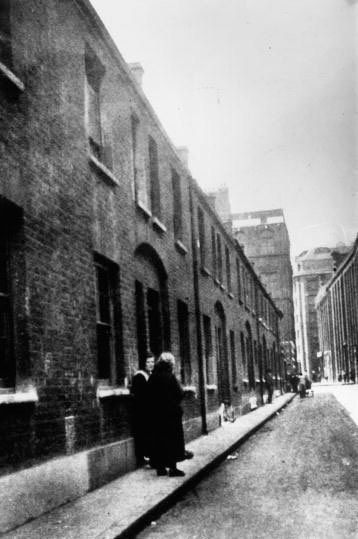
Bucks Row, site of the murder – Image courtesy Hulton Archive – Public domain
At 3.40am cart-man Charles Allen Cross came across Mary Ann and at first was unsure as to whether she was dead or unconscious…. Mary Ann’s skirts had been raised, so after adjusting them to give her some modesty, Cross and another passing cart-man summonsed the police…. A surgeon, Dr. Henry Llewelyn, was called and on his arrival, at around 4am, he pronounced that she had been dead for about half an hour…. Her throat had been cut twice, which would have killed her instantly – and then her abdomen had been mutilated….
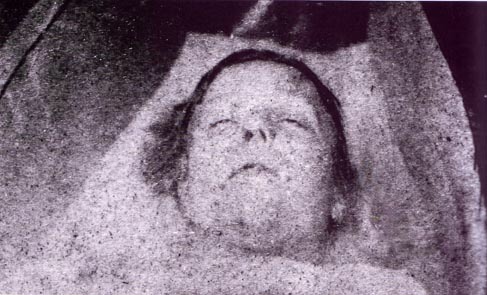
Mortuary photograph of Mary Ann Nichols – Public domain
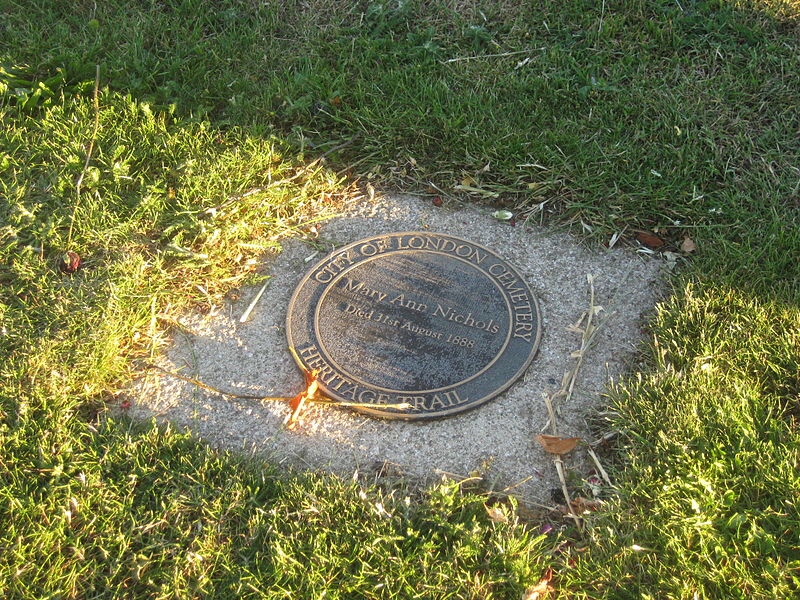
Mary Ann was buried at the City of London Cemetery in a public grave on Thursday the 6th of September 1888…. In 1996 the Cemetery authorities marked her grave with a plaque…. It is thought Jack the Ripper was responsible for the murders of 11 prostitutes between 1885 and 1891….
Mary Ann’s grave marker at City of London Cemetery – Image courtesy : Matt Brown CC BY-SA
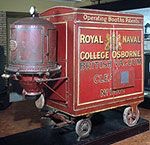
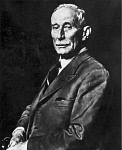
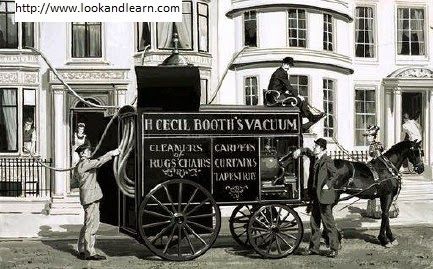
On this day in history : 30th August 1901 – Scottish inventor Hubert Cecil Booth patents the vacuum cleaner…. The first model, “Puffing Billy”, was a large, horse-drawn contraption….
Puffing Billy – via Pinterest
Before Booth introduced his version previous cleaning machines had worked on the principle of blowing or brushing dirt away…. Puffing Billy used suction….
The first machine was made for Osborne House on the Isle of Wight – which was then used as a naval officers training college…. The huge piece of apparatus measured 4’6″ x 4’10” x 3’6″ and had to be parked outside the building with its hoses having to be fed through the windows…. A five horsepower piston oil engine was used to drive a large suction pump….
Hubert Cecil Booth – Fair use
Booth founded ‘The Vacuum Cleaner Company Ltd’ to manufacture his cleaner, its head office being in Fulham, South West London…. To market the machine a team of men in white suits toured the streets…. To demonstrate to a potential customer dirt would be thrown on to their carpet, a hose from the big red beast parked outside reeled in and the petrol motor would be started…. The dirt would then be sucked into a container attached to the hose…. But a deep clean could not be expected, it typically only collected surface dirt….and the machine was also incredibly expensive, costing approximately £350….


 Cottage Capers