On this day in history….6th February 1958

On this day in history : 6th February 1958 – Seven Manchester United football players are among twenty killed as their plane crashed on take-off at Munich-Riem Airport….

The Manchester United team, known as the ‘Busby Babes’ after their manager Matt Busby, had won the hearts of the Nation…. In the previous two seasons they had won First Division titles and had just drew 3-3 against Red Star Belgrade ~ securing a place in the European semi finals for the second year running….

img_2342
Manchester United’s “Busby Babes” pictured in 1958, before their last match. Scanpix – Public domain

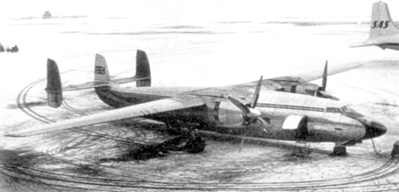
They were on their way back to Manchester from Yugoslavia and had stopped at Munich to refuel…. The team’s chartered six-year-old Airspeed AS-57 Ambassador had already made two aborted attempts at take-off from Munich, due to technical difficulties…. The pilot, James Thain, decided despite deteriorating weather conditions to try again – as they were already behind schedule…. Understandably the team members were feeling nervous as they boarded for the third time….
img_2343
The Airspeed Ambassador G-ALZU at Riem Airport shortly before the accident – Fair use

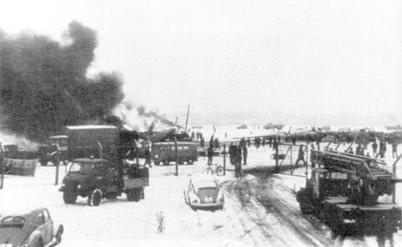
By now it had begun to snow heavily….a build up of slush on the runway meant the plane was unable to reach the full speed needed for takeoff…. The aircraft overshot the runway and hit a house and tree before smashing its way through a hut, which exploded…. Once the plane had come to a stop the pilot and surviving crew helped their passengers evacuate….with the help of Manchester United’s goal keeper, Harry Gregg, who had sustained only minor injuries….

Seven United players were killed in the crash; team captain Roger Byrne, 28 – Tommy Taylor, 26 – Geoff Bent, 25 – Mark Jones, 24 – David Pegg, 22 – Liam Whelan, 22 and Eddie Colman, 21…. Pegg and Taylor were both England international players….

Another player and England international, Duncan Edwards, died of his injuries in hospital 15 days later…. Two other survivors of the crash also died in hospital….
img_2344
The Airspeed Ambassador G-ALZU burning at Munich – Fair use

Three of United’s staff died; Walter Crickmer, Club Secretary – Bert Whalley, chief coach and Tom Curry, trainer….

Eight journalists on board the plane were killed; one being Frank Swift of the News of the World – a former goal keeper for Manchester City and who had played for England 19 times….

Two aircraft crew were also killed; co-pilot Captain Kenneth Raymond and steward Tom Cable…. Two other passengers also lost their lives….

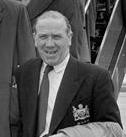
Matt Busby was severely injured and was read his last rites twice – but he recovered after two months in hospital….
img_2345
Sir Matt Busby. Credit: Kurt Nielsen @ Scanpix – Public domain

Ten years later his dream was realised when Manchester United won the European Cup in 1968…. Sir Matt Busby retired as Manager in 1969….


On this day in history….5th February 1953

On this day in history : 5th February 1953 – Sweet rationing finally comes to an end after over 10 years of restrictions – children flock to their nearest sweet-shop….

Rationing came into force on the 8th of January 1940 – shortly after the beginning of World War 2…. Initially it was just for petrol but it wasn’t long before it was introduced for food as well….with bacon, butter and sugar being the first…. By Summer 1942 this had extended to include tea, meat, cheese, eggs, lard, milk and jam….

img_2338
A shopkeeper cancels the coupons in a British housewife’s ration book for the tea, sugar, cooking fats and bacon she is allowed for one week. Most foods in Britain were rationed and some brand names given the designation ‘National’. Image : Library of Congress’s Prints and Photographs division – Public domain

Of course, it wasn’t just food and petrol that were rationed….pretty much everything was in short supply….coal, clothing, paper, furniture, frying pans, razor blades….even basic commodities such as soap….

The rationing of sweets and chocolate began on the 26th of July 1942….with an allowance of just 12oz every four weeks…. Generally de-rationing began in 1948 but it was a slow process…. An attempt was made to de-ration sweets in April 1949 – but demand far outweighed supply and it had to be reintroduced four months later….

img_2340
Image credit: Philip Howard via Flickr

Major Gwilym Lloyd-George, Minister for Food, had to reassure the House of Commons that measures were to be taken to deal with the anticipated surge in demand…. Manufacturers were to be allocated a one-off increased allowance of sugar in preparation – but even so, they still only had 54% of the sugar available to them before the war….

On the day of de-rationing it gave cause for celebration…. One company at Clapham Common gave 800 school children lollipops during their lunch breaks – and another London factory opened its doors and handed out free sweets to all….

img_2341
Image credit: Claire via Flickr

Queues formed outside sweet-shops, many popular brands sold out quickly…. Among the favourites were toffee apples, chocolates, liquorice, lollipops and nougat…. But whatever your fancied ~ lemon sherberts, barley sugar, jelly babies, gob stoppers, pear drops, liquorice allsorts….they were all available again…. Workers queued in their lunch breaks to buy boxes of chocolates to take home to their loved ones….and the BBC reported – “Children all over Britain have been emptying their piggy banks and heading for the nearest sweet shop”….

img_2339

However, there was no panic buying – possibly people were used to having a limited supply. Or perhaps another reason being the cost….the price of sweets and chocolates having nearly doubled since the beginning of the war….

As well as the de-rationing of sweets restrictions were also lifted on cheese, butter, margarine, cooking fats, eggs and cream…. Sugar itself was not de-rationed until September 1953 – and this was probably due to pressure from the confectionery manufacturers…. Bread rationing had ended in 1948, clothing in 1949 and petrol in 1950…. Rationing officially ended when meat was de-rationed in July 1954….

In the first year following the de-rationing of sweets spending on confectionery went up by approximately £100m to £250m per year…. Nowadays as a nation we spend in excess of £5.5bn…!


On this day in history….4th February 1963

On this day in history : 4th February 1963 – Britain’s worst ever learner driver is fined for erratic driving – after her instructor jumps out of the car shouting “this is suicide”….

Margaret Hunter may have terrified the wits out of her instructor, to the extent that he leapt from the passenger seat of the moving car – but I suspect there have been many far worse than Margaret since then….

img_2333

In 2016 a man finally passed his practical test on his 39th attempt…. Not far behind – a woman from Sutton Coldfield and a man from Weston-super-Mare, both of whom took 36 attempts….

The record for theory test failures is even greater…. A 30-year-old women from Ilford had failed the test 113 times by her last attempt in 2015….and a 40-year-old man has since racked up a fail score of 107 at exactly the same test centre….

Meanwhile, a female driving instructor has been identified as Britain’s worst instructor in recent years – with a pass rate of just 15% amongst her students (the national pass rate is above 40%) and one of her pupils failed the practical test 27 times….

According to the Drivers Standards Agency it takes an average of 47 lessons to pass…. Since the driving test was introduced in 1935 over 50 million tests have been taken….

img_2336

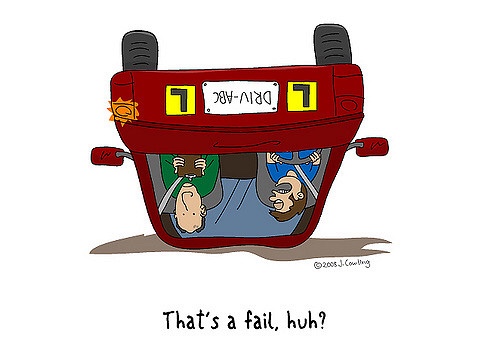
At first the test was on a voluntary basis – in an effort to reduce the anticipated flood of applicants when it became compulsory on the 1st of June 1935. A Mr.J.Beene was the first ever to pass the driving test, it cost him seven shillings and sixpence…. The authorities were right to expect a flood of applications – 246,000 applied to take their driving test – with a 63% pass rate…. It was also at this time that legislation was brought in requiring learner drivers to display a red L plate on the front and rear of their car….

img_2334

To start with there were no test centres; candidates would have to meet at an appointed location, often a car park or railway station…. Throughout the country 13 supervising examiners and 250 driving examiners were appointed. The test included:- general questions on the Highway Code, correct use of hand signals, emergency breaking on command, pulling away on a steep hill, a three-point turn and a reverse manoeuvre…. Little was to change within the driving test until more recent times….

In 1939 driving tests were suspended for the duration of World War 2 and resumed again in November 1946. They were suspended again ten years later during the Suez Crisis, resuming in 1957….

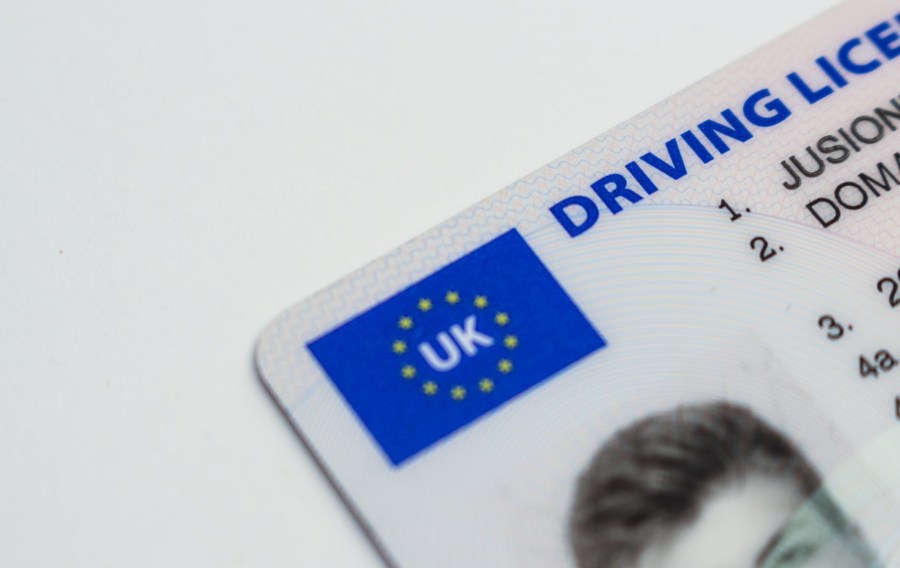
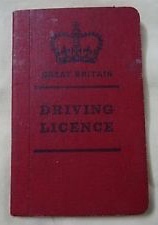
In 1965 a central licensing system was set up at a new centre in Swansea – the DVLA – taking over from individual councils…. From 1970 all driving instructors had to be officially registered and from March 1973 green computerised licenses were issued, replacing the old-style red booklet…. From 1975 onwards it was no longer a requirement to demonstrate hand signals….

img_2335

1996 saw the first major change to the driving test, with the introduction of the theory test, replacing the verbally asked questions on the Highway Code….and in 2000 the touchscreen theory test was introduced….

2017 brought an even bigger ‘shake-up’; with an increase from 10 to 20 minutes of independent driving time and the need to show the ability of following directions from a sat nav. The reverse-around-corner and turn-in-the-road manoeuvres were dropped from the test….candidates instead having to demonstrate parallel parking, parking in a bay or pulling up, reversing 2 car lengths and rejoining traffic….and finally the answering of safety questions….

Since the introduction of the new test the pass rate has slightly declined – but perhaps it is too early to know if this will be a continuing trend….

img_2332
Photo credit : Jason Cowling via Flickr

On this day in history….3rd February 1014

On this day in history : 3rd February 1014 – The death of Sweyn Folkbeard – England’s shortest-reigning king, with a reign of just 40 days….

img_2328
Sweyn Folkbeard, detail of a mid-13th-century miniature. Cambridge University Library. Public domain.

Sweyn was born around 960 AD and was the son of Harald Bluetooth, the first Scandinavian king to be baptised a Christian….

Sweyn Folkbeard – (known as such because of his long clefted beard) – grew up to be a brutal and violent man….but then – they were brutal and violent times…. During the mid 980s AD he led a revolt against his father and seized the throne…. Harald went into exile and died soon after….

img_2329
Sweyn and the Jomsvikings at the funeral ale of his father Harald Bluetooth. Painting by Lorenz Frolich c.1883-86. Public domain.

It was during the 990s AD that Sweyn began a campaign of fear and mass destruction in England…. King of England at the time – Ethelred the Unready – attempted to rid himself of the troublesome Dane by paying him off…. The ‘Danegeld Tax’ was intended to pay tribute to the Vikings and save the land from being ravaged. Only it did not work….the Danes continued to raid Northern England, albeit on a smaller scale…. Some Danes even began to settle here….

Ethelred was advised in order to save England he must get rid of the Danes once and for all…. On the 13th of November 1002 he ordered the complete massacre of all Danes in England – men, women and children (St. Brice’s Day Massacre)…. Among those to be slaughtered was Gunhilde, Sweyn’s sister….

Sweyn swore revenge…. In 1003 he arrived with a massive invading force….landing at Sandwich (Kent). From there he ravaged much of Southern England….terrifying the natives and forcing them into submission. He then proceeded north to the Humber – Northumbria surrendered…. Next Sweyn made his way to Winchester and finally turned his attention to London….

Ethelred resisted at first, putting up a fierce fight….but his subjects were terrified of the consequences. The English Earls, not happy with how their King was handling matters, reluctantly declared Sweyn King of England…. Ethelred fled to the Isle of Wight and from there to Normandy – where he joined his wife and children….

img_2331
Ethelred the Unready in an early thirteenth-century copy of the Abingdon Chronicle. Public domain.

Sweyn was made King of England on Christmas Day 1013 (although he was never crowned)…. He ruled from a fortification at Gainsborough, Lincolnshire…. On the 3rd of February 1014 he died suddenly…. Some say he had a fall from his horse, whilst others believe he died from apoplexy (stroke). He had reigned for just 40 days….

He was buried in England but later his remains were moved to Roeskild Cathedral, Denmark. He was succeeded as King of Denmark by his son, Harald II….

img_2330
Viking longboat ‘Hugin’ at Pegwell Bay, near to Sandwich Kent…. A gift from the Danish government in 1949….

On this day in history….2nd February 1650

On this day in history : 2nd February 1650 – The birth of Eleanor “Nell” Gwyn – who from selling oranges goes on to become an actress and the mistress of King Charles II….

img_2325
Eleanor ‘Nell’ Gwyn – Image credit : Smithsonian Institution via Flickr

Born Eleanor Gwyn – the early details of Nell’s life are sketchy….but it is thought her father died in Debtor’s prison and her mother ran a bawdy house….

When Nell was around 14-years-old a friend of her mother’s, Mary Meggs – a former prostitute also known as ‘Orange Moll’ – was granted a licence to sell fruit and confectionery at Drury Lane Theatre…. She hired Nell and her older sister, Rose, to sell oranges….the scantily clad ‘orange-girls’ would sell sweet ‘china’ oranges at sixpence each….

The girls were also used to act as messengers between men in the audience and the actresses backstage…. Female actors were a relatively new phenomenon – until recent years the roles of women had been played by men and boys…. With her vivacious wit, high spirits and pretty heart-shaped face Nell soon came to the attention of Charles Hart, a leading actor of the time…. At the age of 15 Nell made her debut on the stage….and she also became Charles Hart’s mistress….

Plays were written for Nell to bring out her comic talents….but as well as having the ability to make audiences laugh she was an excellent singer and dancer. Nell Gwyn became the leading comedienne of The King’s Company….

Nell was popular amongst the gentlemen and was mistress to a fair few….including Charles Sackville (Lord Buckhurst). When her relationship with King Charles II began she referred to the King as her Charles the Third….

img_2326
King Charles II of England by John Michael Wright – Public domain

Her love affair with the King began in April 1668, when she attended a performance of the play ‘She Wou’d if She Cou’d’ by George Etherege at the theatre in Lincoln’s Inn Fields…. The box alongside hers was occupied by King Charles II and they spent the entire evening flirting with each other….

Nell became the King’s mistress in 1669. She was actually one of many….the King was a busy boy…. As well as having a wife, the Portuguese Queen consort Catherine of Braganza, he liked to have several mistresses on the go at one time…. Frances Stuart, Lucy Walters, Louise de Kerouaille, Moll Davis and Lady Castlemaine were just a few Nell had to share him with….and other mistresses came and went….

The rivalry between the King’s women was great….all were needy and greedy – demanding houses, money and even titles….all except Nell. Perhaps this was a clever move on her part….she was given a house near to Pall Mall and an allowance of £4,000 per year – and then later a further £5,000 per year on top….

The King had 13 children that he acknowledged with his mistresses – and he provided for them all…. Nell gave birth to their first child, Charles, on the 8th of May 1670…. She herself had never received a title from the King – but managed to manipulate one for her child….by calling him a ‘little bastard’ in front of his father…. The King was shocked – but Nell responded by asking what else she should call him, for was it not true? The King immediately made his young son the Duke of St. Albans…. Nell gave birth to their second son, James, Lord Beauclerk in 1671….but he was to die in 1680….

img_2327
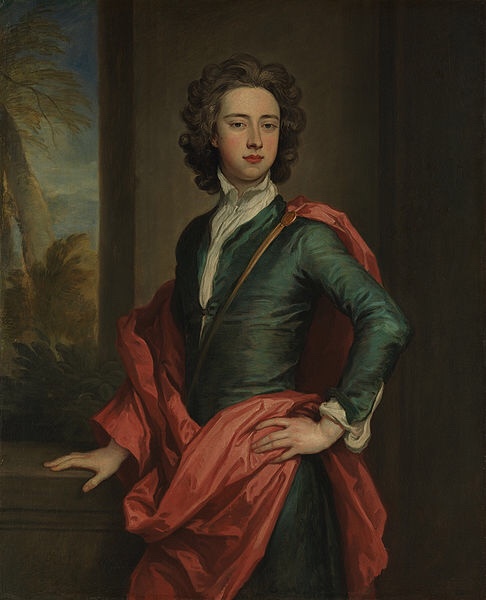
Charles Beauclerk, 1st Duke of St. Albans c.1690 – artist : Godfrey Knellor – Public domain
img_2324
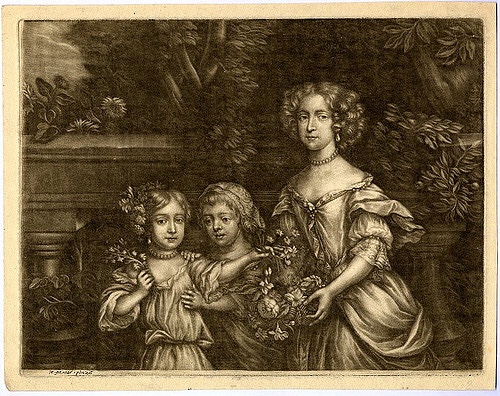
Nell Gwyn with her two sons. Image credit : Lisby via Flickr

King Charles II himself was to die 5 years later, on the 6th of February 1685…. On his deathbed he requested of his brother, James, who was to succeed him….“Let not poor Nelly starve”….

After the King’s death Nell found herself in considerable debt with the threat of Debtor’s prison hanging over her…. True to his word King James II settled her debts and gave her a pension of £1,500 per year….

However, just 2 years later Nell was to suffer a stroke – and 8 months later, on the 14th of November 1687, she died….she was just 37 years of age…. Nell Gwyn, favourite of the King, was to become a legend….out of all the King’s mistresses she was the only one who managed to win the affection of the people….

img_2323
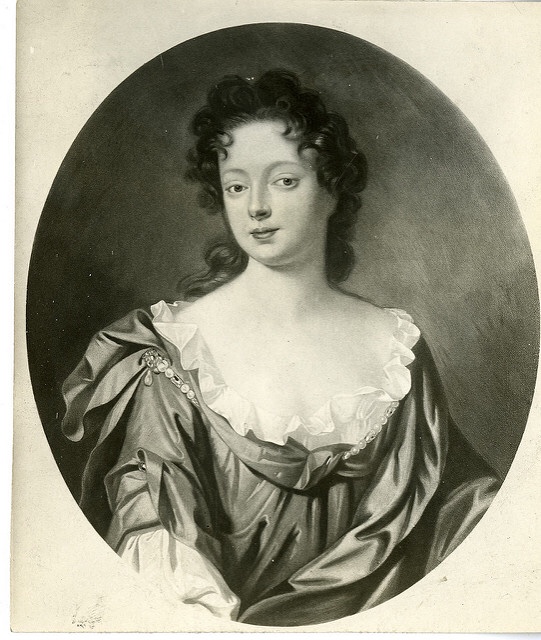
Nell Gwyn – artist Peter Lely c.1675 – Public domain