On this day in history….22nd March 1808

On this day in history : 22nd March 1808 – The birth of author, social reformer and feminist Caroline Norton, who campaigned for women’s rights in Victorian England….

Caroline Norton – Public domain

Born Caroline Elizabeth Sarah Sheridan in London, Caroline was the granddaughter of Irish playwright and poet Richard Brinkley Sheridan…. Her father was Thomas Sheridan, a soldier and her mother was Scottish novelist Caroline Henrietta Callender…. Tragically Thomas died in 1817 whilst serving in South Africa – he left his family virtually penniless….

Caroline was the second of three daughters, all known as beauties and sometimes referred to as ‘The Three Graces’…. Caroline herself was a high-spirited girl and quick of tongue…. Her mother, finding it difficult to control her, packed her off to boarding school in Shalford, Surrey when she was 16….

Some of the girls attending the school were invited to Wonersh Park, the home of local landowner William Norton, Lord Grantley…. It was here that Caroline caught the eye of Lord Grantley’s younger brother, George Norton…. He made up his mind there and then that he was going to marry her…. He wasted no time in writing to her mother….who whilst keen to see her daughter married off, insisted that they wait for three years…. The marriage took place in 1827, she was 19 and not overly happy about the union but agreed as she was all too aware of her family’s continuing financial difficulties….

The marriage was a disaster from the start…. He was somewhat dull, jealous – and a little dim…. She was bright, quick-witted and flirtatious…. They were also completely incompatible in their political views…. Norton was a hardline Tory – and MP for Guildford – whereas Caroline had liberal tendencies and like her grandfather she supported the Whigs…. Because she dared to voice her opinions she suffered regular, savage beatings at the hands of her husband….

Caroline buried herself in her writing…. She had shown a gift for verse from an early age…. It was two such pieces, ‘The Sorrows of Rosalie’ in 1829 and ‘The Undying One’ in 1830, that led to her being appointed editor of the publications ‘La Belle Assemblee’ and ‘Court Magazine’….thus giving her some financial independence…. She counted amongst her close friends influential people, such as Mary Shelley, Edward Bulwer-Lytton, Benjamin Disraeli, Edward Trelawney, Fanny Kemble and the then Home Secretary Lord Melbourne….

Portrait engraving of Caroline from one of her books – Tucker Collection – New York Library Archives – Public domain

Caroline finally left her husband in 1836…. Norton retaliated by accusing her of having an affair with Lord Melbourne…. It was a friendship he had initially encouraged – for his own gains…. Having lost his Conservative seat Norton had hoped that by using her friendship with Melbourne she could secure him a highly-paid government post…. Caroline and Melbourne, a widower who liked the ladies, were to become the subject of gossip – something Norton had in the beginning turned a blind eye to…. But once his wife had left him he sued Melbourne for seducing her…. He lost the case but Caroline’s reputation was in tatters…. To add to her misery Norton denied her access to their three young sons, Fletcher b.1829, Brinsley b.1831 and William b.1833…. Caroline’s battle against her husband for access to her boys eventually led to the Infant Custody Bill, 1839….

Norton then tried to claim the money she earned from her writing…. This prompted her to write to Queen Victoria, as part of a campaign to ensure women were supported after divorce…. The letter was published and became influential in helping the Marriage and Divorce Act 1857 succeed….

Watercolour sketch of Caroline by Emma Fergusson, 1860, National Portrait Gallery of Scotland – Image : Stephencdickson – own work CC BY-SA 4.0

Caroline herself was refused a divorce by her husband – she was not released from the legality of the marriage until his death in 1875…. Two years later, in March 1877, she married her old friend of 25 years, Sir William Stirling Maxwell, the Scottish historical writer and politician…. Sadly only three months later, on the 15th of June 1877, Caroline was to die….

Is feminism obsolete…?

At risk of putting myself in the direct firing line – I am going to ask a question…. Has feminism in Western society become obsolete? I ask this purely as a lay person – I am certainly no expert on the subject – but it is something that has had me pondering recently….

Before even beginning to try to make sense of what is going on in the Western world of feminism at this present time….it would perhaps be useful to remind ourselves why the feminist movement was even necessary in the first place…. Would the Suffragettes and Suffragists – those brave women of the late 1800s and early 1900s – be raising an eyebrow at what feminism has become? Would they be horrified that women are still struggling to achieve equality in so many areas of life – or would they shake their heads in disbelief that we appear never to be satisfied…?

img_0240
Waterloo Place. Leonard Bentley via Foter.com / CC BY-SA Original image URL: https://www.flickr.com/photos/31363949@N02/16348522018/

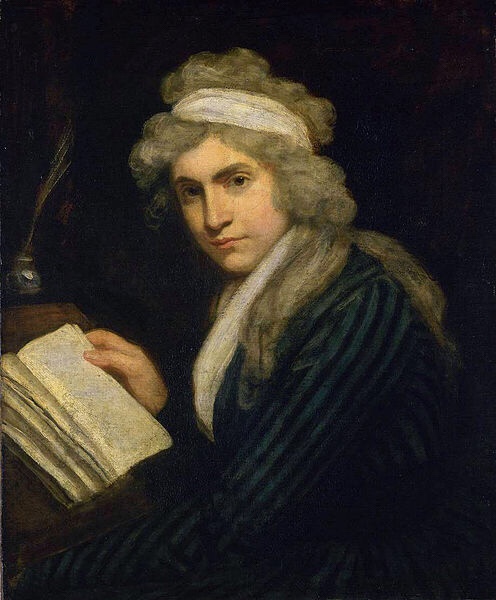
Perhaps the earliest feminist in Britain was the woman now referred to as ‘the grandmother of feminism’, Mary Wollstonecraft – with her book The vindication of the Rights of Woman in 1792…. A publication that was actually very well received in its time – but it was another century before women really began to fight for the Cause. After centuries of oppression and the ownership of women….it was the dawning of a new era….
img_0239
Wikimedia commons Mary Wollstonecraft – oil on canvas

Right up to the 20th Century there were three little words that sealed a woman’s fate – (or at least if she was married in the Church of England) – the moment she uttered ‘love, honour, obey’…. It is interesting to note the Catholic Church has never had ‘obey’ in its marriage service….

To ‘obey’ probably originated in Roman times, when daughters were the property of their fathers and then later the ownership passing to her husband – a practice to remain right up to the time of Women’s Suffrage…. For the lower Roman classes is was a case of ‘free marriages’ – the father giving his daughter to the groom…. Whereas, wealthy Romans would have had a contract, outlining property etc to be part of the dowry; this was the beginnings of legalised marriage….

The word ‘obey’ was introduced to the Church of England wedding service in 1549, when the first Book of Common Prayer was authorised by King Henry VIII. In biblical origins the wife should submit to the husband – just as the Church should submit to Christ…. Obey was taken literally within marriage – the wife and any children being the property of the man – his word was law…. Everything she owned belonged to her husband, everything she earned if she was working and any inheritance she was due….

img_0241
Smithsonian Institution via Foter.com / No known copyright restrictions Original image URL: https://www.flickr.com/photos/smithsonian/2583389217/

If she were to disobey she could expect to be punished – a good beating was often meted out….and was perfectly legal and accepted within a marriage…. Only when a woman’s life was endangered could a case be brought before the Courts – even then the sentences were often lenient. As only the most brutal cases made it as far as Court, so recorded trials of the time were just the very tip of the iceberg….

Edward Doyle murdered his wife…. He broke her ribs, beat her, scolded her with boiling water, thrust a red-hot poker into her abdomen – and then left her to die for two days; he got 15 years for man slaughter. Bearing in mind this was at a time when the sentence for stealing a sheep was 10 years transportation….and if he had killed a man he would have gone to the gallows….

Much domestic violence was fuelled by alcohol; lower classes tended to be more openly violent towards each other. Neighbours would seldom intervene, as it was seen as an everyday part of marriage. The middle classes had their share too, although in the face of respectability it more often happened behind closed doors. If a man was violent towards his wife, he was likely to be towards his children too….

A judge in the 19th Century actually deemed it was perfectly permissible for a man to beat his wife providing the stick he used was no thicker than his thumb…. Hence the saying ‘rule of thumb’….

So, a man could beat his wife senseless on a regular basis – but she was not at liberty to divorce him…. Marriage, being the ‘glue of society’ was to be preserved at all costs…. A wealthy woman, who could prove her spouse’s abuse or infidelity may have been able to obtain a legal separation (at a hefty cost, approx £1,500 – equate that to modern-day terms)….but neither would have been permitted to remarry. However, one little dalliance on her part and her husband could divorce her immediately – keeping any money, property or possessions she brought with her to the marriage – and stopping her from ever seeing her children again…. In any divorce case the children automatically stayed with the father….

In 1853 the Aggravated Assaults Act was passed in Parliament – after Mr Fitzroy, the MP for Lewes, pushed against inadequate penalties handed out to perpetrators…. Sentences and fines were increased but still after 1853 newspapers were full of reports of wife-beating….

In 1857 the Divorce and Matrimonial Clauses Act was passed – giving women the option of divorce on the grounds of cruelty…. In 1870 the Married Women’s Property Act gave women the right to the possession of their own earnings…. In 1882 married women were given the same rights as unmarried women with regards to property – meaning any possessions, money, land or property she owned before marriage did not automatically pass to her husband…. A further Act in 1893 gave married women control over any property acquired during the marriage; for example, an inheritance….

It was a start but there was still a long way to go…. It was no wonder women often regarded marriage as slavery…. By the late 1800s the situation was becoming a lot less tolerated and at the tail end of the Victorian era the Women’s Suffrage Movement began….
suff 5
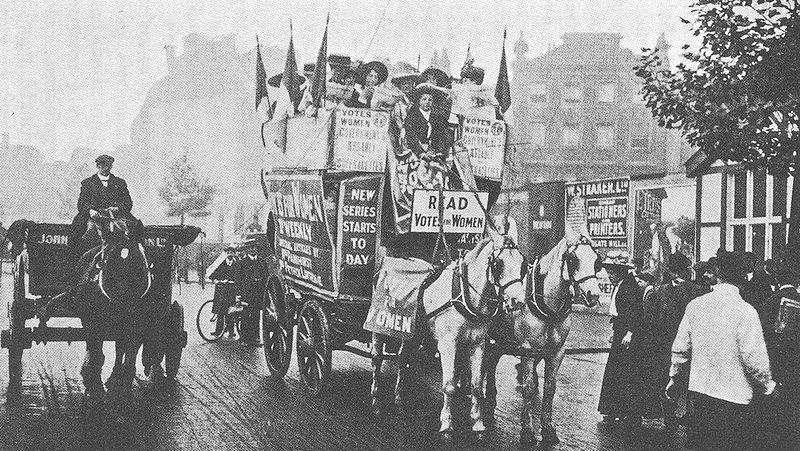
Members of the Women’s Social and Political Union campaigning for women’s suffrage in Kingsway circa 1911 Public domain https://commons.wikimedia.org/wiki/File%3AWSPU_in_Kingsway.jpg

Feminism is often divided into three ‘waves’…. The definition of feminism – ‘the advocacy of women’s rights on the grounds of the equality of the sexes’ – is exactly what the Women’s Suffrage Movement was all about….equality. The Victorian idea of women, in the home bringing up the children – whilst the men got on with earning the money and running the Country….did not sit well with all…. Women were no longer content to remain silent and let the menfolk decide what was right for them, their lives and the rules and regulations they had to live by….they wanted their say….they wanted a part in the decision making….they wanted the Vote….

suff 9
British suffragette with a poster, giving out newspapers Ch. Chusseau-Flaviens https://flickr.com/photos/george_eastman_house/2678367136/in/set-72157606224254056/

Finally, in 1918 women over the age of 30 and who were property owners were granted the Vote…. In 1928 women got the Vote at the age of 21 – the same age as men…. Equality, at least on this score, had been won…. Incidentally, it was also in 1928 that, prompted by the Suffrage Movement, the Church of England began to offer an alternative option in the marriage ceremony…. No longer was the bride required to promise to obey – both she and the groom could vow to love and cherish one another….

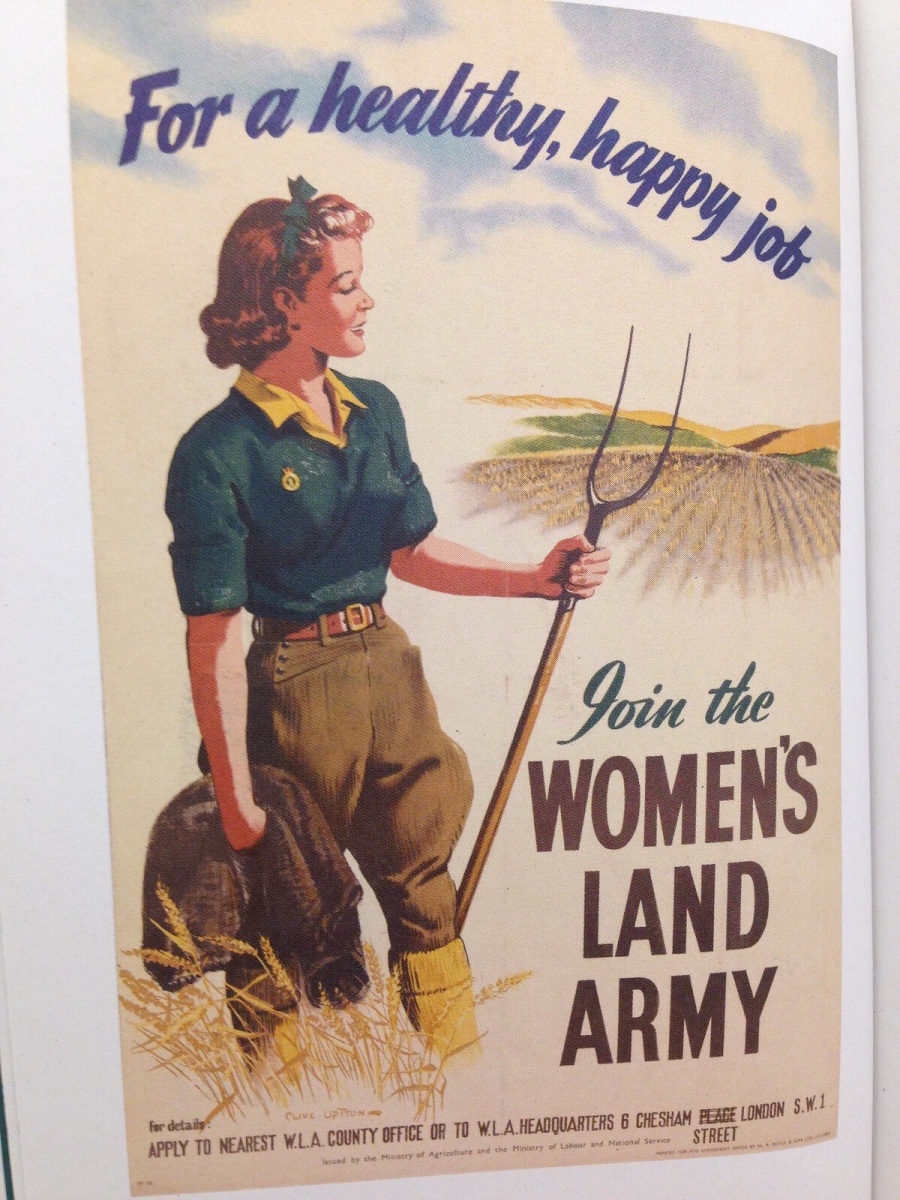
The 1930s was an era of progression for women – but it was the arrival of World War 2 that brought real employment opportunities for women….with so many men away fighting, jobs had to be filled.
img_0242
Women’s Land Army WW2 Melinda Young Stuart via Foter.com / CC BY-NC-ND Original image URL: https://www.flickr.com/photos/melystu/36500701432/

However, once the war years were over women were expected to beat a hasty retreat back to the kitchen to make way for their returning menfolk. Having had a taste of freedom and independence, understandably many were not willing to become submissive and reliant once again….

img_0247
We Can Do It! The U.S. National Archives via Foter.com / No known copyright restrictions Original image URL: https://www.flickr.com/photos/us national archives/3678696585/

So, in the 1950s a second wave of feminism ensued – the battle for equal rights in the form of the Women’s Liberation Movement (Women’s Lib for short). This wave lasted through to the 1980s; its focus being on equality in marriage, sex and sexuality and the workplace…. Equal pay and control over their own bodies….

It was during the 1960s and 70s that the Movement splintered into two groups; the equal rights feminism wanting equality with men on a political/social front and then the radical feminist – who wanted even bigger changes. Radical feminism tended to be advocated by younger women who wanted change to attitudes surrounding gender, race, sexuality and class…. The 1960s saw the sexual revolution – starting with the arrival of the contraceptive pill in 1961 – (in the beginning only available to married women)….

1964 saw a revision to the Married Women’s Property Act; allowing women to keep half of any savings made as a couple should the marriage break up….

img_0243
Abingdon Street Leonard Bentley via Foter.com / CC BY-SA Original image URL: https://www.flickr.com/photos/313633949@N02/11149517464/

In 1967 the Abortion Act legalised abortion for a pregnancy of up to 24 weeks. Available only to married women, two doctors had to consent that the pregnancy would be harmful to the mother’s physical or mental health – or that of her unborn child’s….

Women continued to make progress in politics; Barbara Castle became the first female Secretary of State in 1968 – meanwhile women were striking for equal pay…. 850 women machinists working for Ford in Dagenham walked out – disputing that their work was defined as ‘unskilled’ – they demanded the same pay as their ‘skilled’ male colleagues…. (Bearing in mind it was still perfectly legal when advertising a job to state whether the position was open to specifically male or female – women were often required to do ‘unskilled’ work)….

More radical feminists were turning their attention to events objectifying women – such as the Miss World Beauty Contest, which was first held in 1951. Stating that they found it ‘insulting and undermining that women were judged solely on looks’ – activists threw flour bombs at the 1970 contest being held at the Royal Albert Hall, London….

1975 was the United Nations International Year of Women – to raise global awareness of Women’s Rights. Since that year International Women’s Day has been celebrated every year on March the 8th by countries all around the World….

img_0246
Pyjama Party Parade Toban B via Foter.com / CC BY-NC Original image URL: https://www.flickr.com/photos/tobanblack/3341804527/

1975 also saw the formation of the National Abortion Campaign – defending women’s rights to make decisions about their own bodies….and the Sex Discrimination Act was passed in Parliament – protecting women (and men) from discrimination on the grounds of their sex and marital status in areas such as education, training and employment….

Margaret Thatcher became Britain’s first female Prime Minister in 1979 – to become known as the ‘Iron Lady’…. Eight years later Diane Abbott became the first black woman to be elected to the House of Commons….

Although the Women’s Rights Cause was heading in the right direction alarmingly one very sensitive and emotive area was slow to change – the matter of domestic violence, particularly the definition of rape within marriage….

“But the husband cannot be guilty of Rape committed by himself upon his lawful wife, for by their mutual matrimonial consent and contract the wife hath given herself up in this kind unto her husband which she cannot retract” – A principle which was established in 1736 by Chief Justice Hale….

No challenge to this was made in Court until 1949…. A woman had obtained a Separation Order from the Magistrates – after which she was assaulted by her husband – it was decided he could be charged with rape as she had in fact revoked her consent…. However, in 1954 another woman had petitioned for divorce but shortly afterwards was attacked and raped by her estranged husband, causing her actual bodily harm…. The Court refused to charge her husband – saying that by petitioning for divorce she had not revoked her consent…. It took until 1991 for rape within marriage to become a crime….

The first women’s refuge opened in Chiswick, West London in 1971 – providing a safe place for women and children who had been abused by husbands….

In 1981 Princess Diana married Prince Charles, bucking the trend and breaking the Royal precedent by not agreeing to obey in their wedding vows; instead she promised to ‘love, comfort, honour and keep’….

img_0256
The Wedding of Prince Charles & Princess Diana France 1978 via Foter.com / CC BY-SA Original image URL: https://www.flickr.com/photos/51764518@N02/16648236045/

In 2006 a Church of England report said traditional vows with obey were being used by some men to justify domestic violence…. The report urged Church ministers to emphasise to couples about to marry that men and women were equal in the eyes of God…. Part of the worry being that victims of domestic violence could blame themselves, thinking they were deserving of the abuse….

It could be said the 1980s were the turning point with regards to the attitude surrounding sexism in the workplace. No longer were women willing to tolerate being held back from advancing in their careers, any more than they were going to continue putting up with the stereotypical office ‘perv’, with his lecherous remarks and bottom pinching…. It was the dawning of political correctness as we know it now; women were becoming empowered in the workplace, more and more senior positions were being filled by females…. By venturing deeper into what had predominantly been a male World, women started to ‘play’ harder too…. The ‘ladette’ culture started to emerge – rowdy hen parties to rival the most raucous stag-dos…. Ladies Nights – screaming, laughing and heckling at the evening’s entertainment – often comprising of groups of oiled, well-toned young men, such as the Chippendales…. The role being reversed – women objectifying men…. After thousands of years of male dominance – the girls were letting their hair down and having fun….

img_0238
Meathead Movers on Foter.com / CC BY-SA Original URL: https://www.flickr.com/photos/meatheadmovers/6882982905/

Still the fight for women’s equality went on…. Challenging gender roles, highlighting freedom of choice over reproductive rights; birth control, abortion, and to choose when or even if to have a family…. Raising awareness of rape and violence towards women; seeking a way to stop oppression….stopping the sexual objectification of women….

When we look at our lives as we lead them today and compare them to those lives of women only 100 years ago – we realise what a long way we have come…. Of course, there are those who would argue it has taken too long and we still have a long way to go…. We are now in a third wave of feminism; one that is more radical….

img_0245
Radical Women ctrouper via Foter.com / CC BY Original image URL: https://www.flickr.com/photos/cecooper/6201405107/

It seems every time the radio or TV is turned on, a newspaper opened or the internet logged on to, there is at least one story hitting the headlines…. Sexual harassment and bullying in Westminster – Harvey Weinstein – Oxfam…. Women groped at a men-only charity event at the Dorchester by senior figures from politics and business…. Formula 1 to drop grid girls as from this coming season, as the image no longer fits in with modern-day society….

img_0244
F1 2012 Indian GP Grid Girls Yasunari Goto via Foter.com / CC BY-NC-ND Original Image URL: https://www.flickr.com/photos/got_got/8134262592/

A previous example of this: The Sun had topless Page 3 girls in its newspaper for 44 years – this stopped in 2015…. No more pictures of bare boobs at the breakfast table (yet women shunned for breast-feeding in public)….this must have been viewed as a victory by radical feminists…. On the other hand though – could it be said this was actually removing choice for women? What about those who choose to make a career from glamour modelling or other related work….is it the aim that this option be denied to them….?

Then there is the issue of the gender pay gap…. For nearly 50 years it has been law that men and women doing the same job should be paid the same…. The gender pay gap and equal pay are not the same thing…. The gender gap looks at the average hourly earnings between men and women. Figures released in April 2017 by the Office of National Statistics revealed across the UK men earned 18.4% more than women (this is down from 27.5% in 1997). Of those earning less than the living wage, 62% are women…. UK companies with 250 or more employees have to publish their gender pay gap by April 2018…this will effect about 9,000 companies, who will have to publish this information on a government website….

Of course, two people doing the same job, regardless of gender, should be paid the same hourly rate – there is no question about that….but there are other factors that should be taken into consideration…. There are fewer women in senior roles, most top jobs are still taken by men. Taking time out to have children often means women are slower to advance in their careers. Women are more likely to do part-time jobs, which are often lower paid…. These facts are going to have an impact on the average figures….
img_0252
Image via Pixabay

Tesco is at the moment facing a £4bn equal pay claim; a legal challenge by women working in Tesco stores, earning less than their male colleagues working in the warehouses. Their argument being the value of their work is comparable…. Also currently under the spotlight on equal pay is the BBC. A news correspondent having a salary some £10,000pa below that of her male colleagues doing the same job…. A National radio presenter paid one-third that of her male co-host…. Another BBC local radio station co-host breakfast presenter, paid half the salary her male counterpart receives….and the award-winning National radio presenter being told ‘the BBC doesn’t do equal pay’….

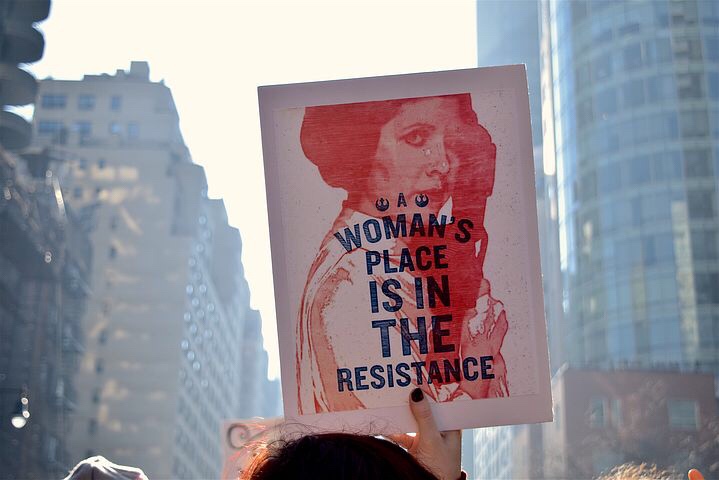
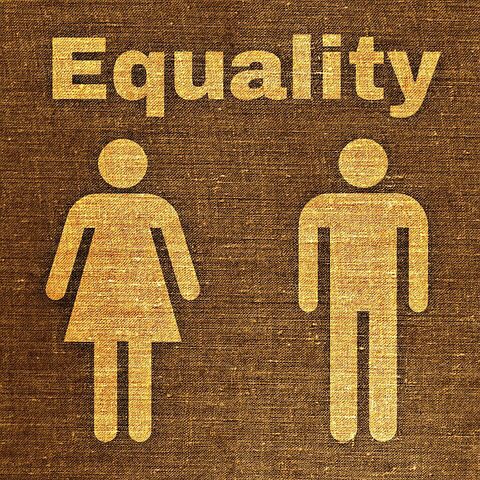
There is no denying that there are still many examples of women being discriminated against….and it’s only right each case is individually addressed. There is also no doubt feminism is doing a great job in raising awareness of rape, domestic violence and sexual harassment…. However, is there a danger of modern feminism becoming negative? Could it not be said we already have equality? What exactly is it we want….complete role reversal….supremacy in a unisex World? Are we becoming the gender of ball-breakers…? That’s a lot of questions, I know – but ones that will hopefully make us consider if what we are actually fighting for is actually now an outdated cause….

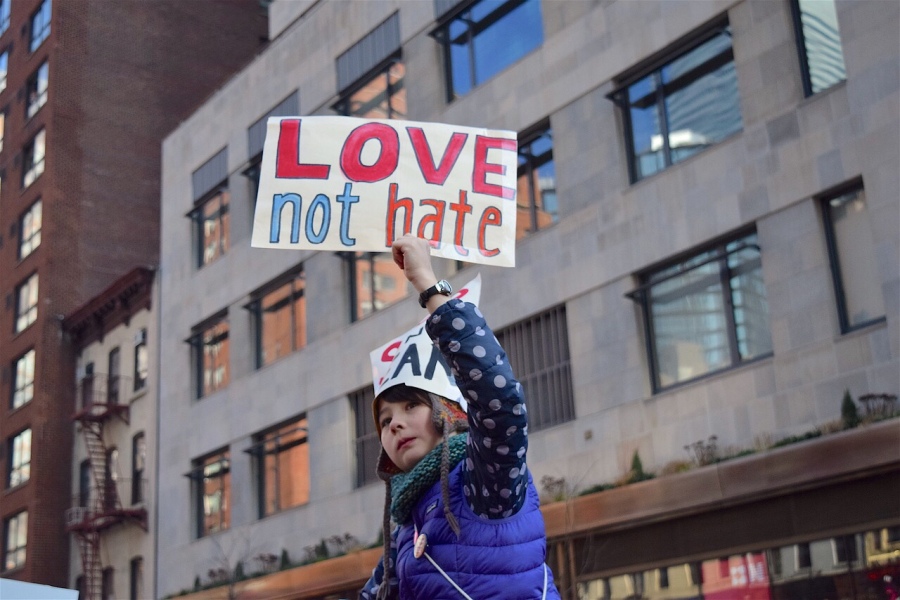
It would be a very under-educated view that feminists hate men; a real feminist cares just as much about men’s rights. Equality should be for all, regardless of gender, sexual preference or race…. What we should be focusing on is not just women’s rights – but human rights….
img_0250
Image via Pixabay

We owe so much to the Suffragettes and Suffragists – but their work is now done. Of course there are still sexist men out there – (sexist women too) – but they are a minority….most men abhor sexism and thoroughly support equality – they have proved that time and time again. It’s now time to move on; there is no getting away from the fact men and women are not the same….women bear the responsibility of childbirth – nothing is going to change that – it is what Nature intended…. For nearly every woman who decides to have a family this is going to have an impact on her career – what is important though, is this is not set in stone – at least in this day and age we have choices….

img_0251
Image via Pixabay

There is no doubt that men are, on the whole, physically stronger; there will always be jobs that are more suited to them….women just need to accept that – if she can demonstrate an ability to do the job just as well, then there is nothing stopping her…. The same goes for men choosing to do what in the past would have been viewed as a more feminine profession….there are fewer and fewer boundaries….. It’s about equality and getting on with doing what each and every one of us are individually best at….and as a united front….

img_0254
Image via Pixabay

Women are generally now no more oppressed than anybody else in Western every day modern society; opportunities are open to all…. One issue that does still keep rearing its ugly head is the sexual exploitation we are hearing so much about currently….it is dominating our news headlines…. Whilst it would be insensitive to generalise, as this is such a serious matter, it does have to be filtered…. Many historic accusations have been made – some appear to be quite insignificant and almost petty….the workplace 30 years ago was a very different place to now; a sleazy remark, a pat on the knee was quite normal behaviour back then….not right by today’s standards – but that’s how it was…. Of course more serious incidents did happen and those need to be dealt with – that said though, we have to let go of the past and move forward, looking after each other and fighting for equal rights for everyone…. We need to look to the future…. I personally am heartened, as I think this really is beginning to happen….
img_0253
Image via Pixabay

A stitch in time….

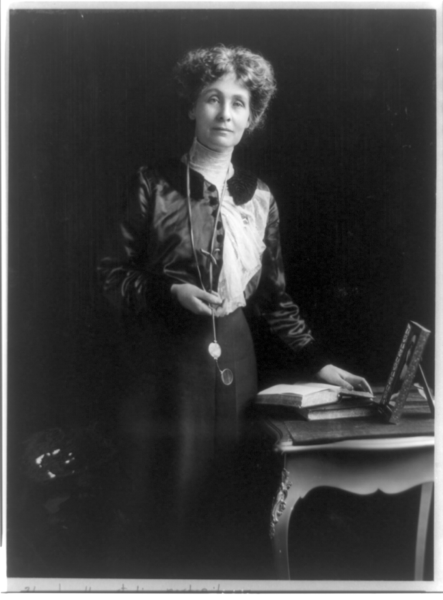
“We have to free half of the human race, the women, so that they can help to free the other half” – Emmeline Pankhurst

suff 3
Emmeline (Goulden) Pankhurst circa 1913 Public domain https://commons.wikimedia.org/wiki/File%3AEmmeline_Pankhurst_1.png

June the 8th is fast approaching – the day the British public go to the polls…. Being a woman of middling years, this is something I have done on numerous occasions in the past…. I recall the very first time I exercised my right to vote; I was in my late teens, I stopped off at the village hall on my way to work, I felt so very grown-up. That time and every subsequent time since, that I have pencilled my ‘X’ into the appropriate box, I have had no doubt as to which Party I wished to vote for; it has always been perfectly clear in my mind – until now…. For the first time in my life, I am questioning – to the point I have even asked myself whether I should bother to vote at all….

************************

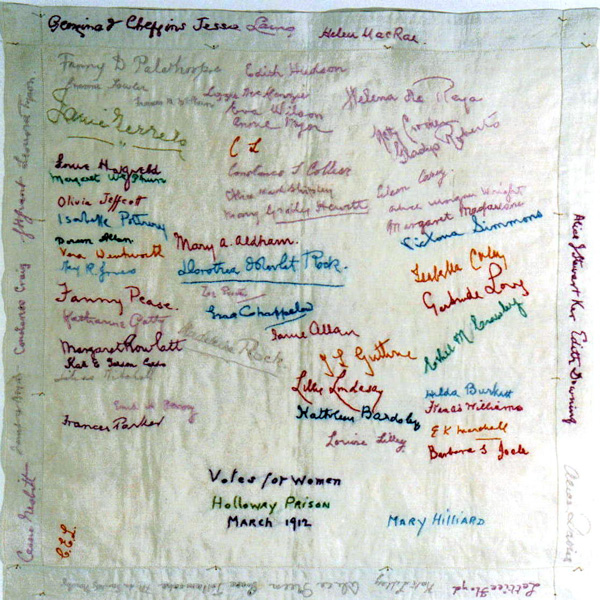
A couple of years ago, John and I visited the Priest House at West Hoathly in West Sussex; a traditional Wealdon hall house, situated on the edge of Ashdown Forest, it is a museum filled with some of the most amazing artifacts from life gone by. One particular item really caught my eye – a framed handkerchief covered with signatures. On closer inspection it became evident that each signature had been painstakingly embroidered. The delicate piece of linen is known as ‘The Suffragette Handkerchief’ and bears 66 signatures and 2 sets of initials; I was fascinated and bought myself a pamphlet explaining its history and meaning…. Last week, whilst doing a spot of spring cleaning, I came across this pamphlet….it seemed poignant that I should unearth it at this particular point in time…. The signatures are those of a group of women that were being held in Holloway Prison in 1912 – when the Women’s Suffrage Movement was at its peak….

suff 17
The Suffragette Handkerchief Image courtesy of http://www.hoathlyhub.info/PriestHouse/

After the industrial revolution many women were in the position of being in full-time employment. Although actively contributing to the Country’s workforce they had no voice in the running of the Nation – no representation in Parliament and indeed, were not even allowed to vote. Organised campaigns for women’s suffrage started to materialise in 1866 and by 1888 women were permitted to vote in many council elections – but that was as far as it went…. In 1867, Liberal MP, John Stuart Mill proposed an amendment to give women the vote on the same terms as those of men…. It was rejected by 194 to 73 – and so the ‘Cause’ gained momentum….by the end of the 19th Century the focus of women’s equality became that of their right to vote….
The National Union of Women’s Suffrage Societies (NUWSS), known as the ‘Suffragists’ (not to be confused with suffragettes) was founded in 1897. It was a merger of two groups that had both split up in 1888; the National Central Society for Women’s Suffrage and the Central Committee, National Society for Women’s Suffrage. The aim of the NUWSS was to lobby and obtain the vote for women through democratic, legal and peaceful means…. Its members were middle class and working class women, working together, alongside each other….and it wasn’t only confined to women, many men also actively campaigned for the Cause…. By 1914 it had over 100,000 members and 500 branches countrywide….

In 1903 the Women’s Social Political Union (WSPU) was founded by six women in Manchester. Dissatisfied with the results being achieved by the NUWSS, this new group decided more militant tactics were needed. The women  only group, under the leadership of Emmeline Pankhurst and her daughter, Christabel, fought for social reforms and became known as the ‘Suffragettes’….adopting the slogan “Deeds, not words”….

suff 1
Emmeline Pankhurst being arrested at King’s Gate in May 1914 Author unknown – public domain https://commons.wikimedia.org/wiki/File%3AEmmeline_Pankhurst_Arrested_1914.jpg

In November 1911, demonstrations in London saw the arrest of 223 women, after a spree of window breakages of government buildings in Whitehall and at shops in the Strand. March 1912 saw an even bigger demonstration, a second wave of window smashing in London, organised by the WSPU, meant a further 200 plus women were arrested. The leaders of the WSPU, including Emmeline Pankhurst, were sentenced to nine months in prison; other women received sentences averaging two months – many for refusing to pay fines levied in Court….

suff 16
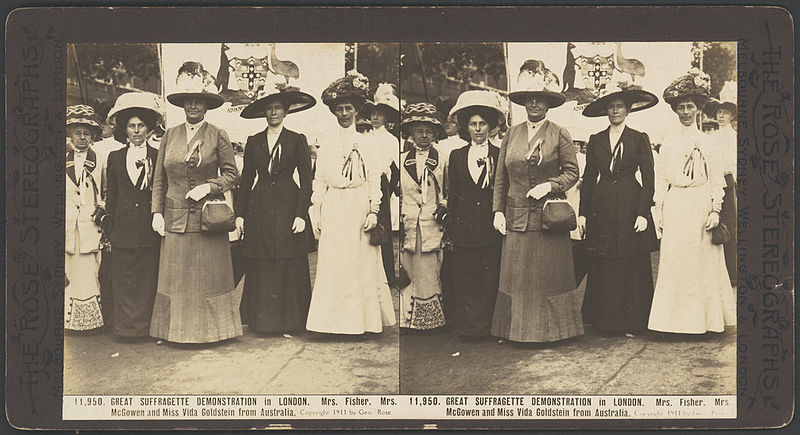
Great suffragette demonstration in London – Mrs. Andrew Fisher, Mrs. McGowan and Miss Vida Goldstein from Australia 1911 https://commons.wikimedia.org/wiki/File%3AGreat_suffragette_demonstration_in_London

suff 12
Postcard of a suffragette procession of 1911. Printed by H Searjent of Ladbroke Grove, London 1911 https://commons.wikimedia.org/wiki/File%3ASuffragette_procession_1911.jpg

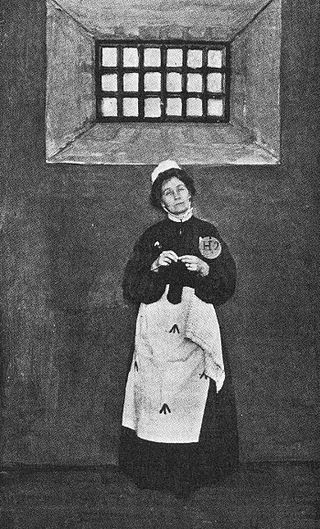
Soon, Holloway became full, so women were sent to other prisons in places such as Birmingham and Aylesbury. Overcrowding meant the conditions in the prisons were even poorer than usual. Denied the status of political prisoners and so not receiving the certain privileges that such were entitled to, many of the women resorted to going on hunger strike as a protest….

suff 4
Emmeline Pankhurst in prison dress circa 1911 public domain https://commons.wikimedia.org/wiki/File%3AEmmeline_Pankhurst_in_prison.jpg

The pamphlet I found whilst spring cleaning recites the story of how this particular group of women happened to be in Holloway at the time and the author had researched the women whose names appear on the handkerchief. They came from all over the Country and from all walks of life. After reading through the explanation and the information collected on each woman, it inspired me to find out a bit more about women’s suffrage closer to home….

suff 8
Anti Suffrage Postcard c.1910 TWL/2004/1011/55 LSE Library CC / no restrictions https://www.flickr.com/photos/lselibrary/22754363186/

Here in Surrey, the Movement appears to have become active in the 1870s. The first recorded meeting was held in Guildford during January 1871. Farnham had a branch of the NUWSS from 1908 and by 1909 the Godalming branch had been established. Godalming’s president was Mrs. Mary Watts, the widow of the artist G.F.Watts. Her secretary, Theodora Powell, went on to co-found the Guildford branch in 1910, (Cranleigh also got its own branch in this same year). Connected to the Godalming branch was a New Zealander by the name of Noeline Baker, who befriended famous garden designer, Gertrude Jekyll (who lived just outside of Godalming). Jekyll became a member of the NUWSS and designed banners for both the Godalming and Guildford branches….

The Church in Surrey provided sympathisers to the Cause. One clergyman in particular, involved in the League for Women’s Suffrage, was a Reverend Algernon Creed, vicar of Ewshot, near Farnham. This particular piece of information struck a chord with me; I spent my teenage years in Ewshot, living in a house opposite the church…. I got married in that church, my son was christened there and it is where we said ‘good-bye’ to my father after he passed away. A humble church in a small Surrey village, I had no idea such an advocate for women’s equality had once been such an important part of it….

By 1913 all areas of the Country had representation in organisations promoting the suffrage cause. Surrey saw its fair share of militant activism; one method was to sabotage male dominated organisations, golf courses and cricket grounds were popular choices. Sometimes more extreme measures were attempted, for example a bomb left at Haslemere Station (which failed to ignite)….

Many suffragettes had homes in the Surrey Hills, amongst them Emmeline and Frederick Pethick-Lawrence, who helped lead the WSPU. Their home, ‘The Mascot’, in South Holmwood, became the place where many women released from prison after being on hunger strike, went to recuperate….

suff 14
Emmeline Pethick-Lawrence, Jennie Baines, Flora Drummond and Frederick Pethick-Lawrence c.1906-1910 https://www.flickr.com/photos/lselibrary/22545429328/

Peaslake, a village in the Surrey Hills, was home to a surprisingly large number of activists, it was described in 1912 as being “rather a nest of suffragettes”….

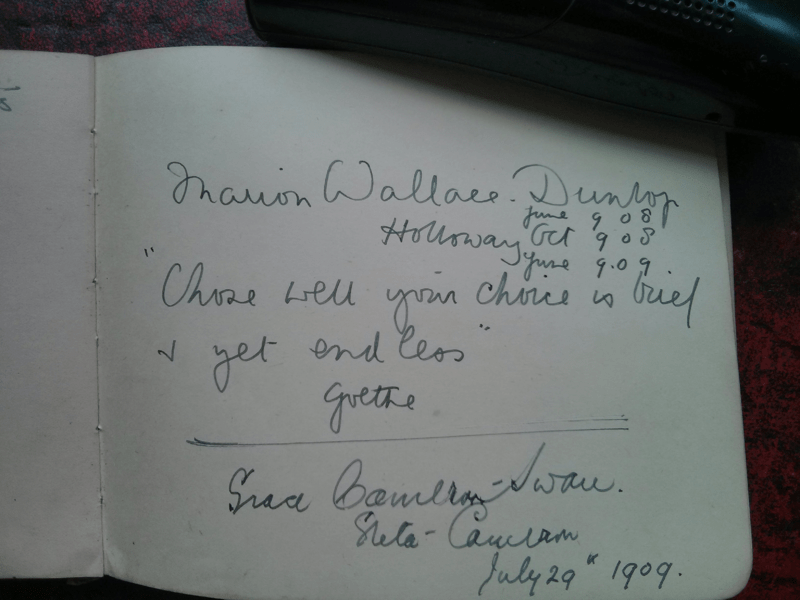
Hilda Brackenbury and her daughters Georgina and Marie also opened their home, ‘Brackenside’, in Peaslake, to women recovering from hunger strike….including Emmeline Pankhurst herself. In fact, it was a Peaslake resident, Marion Wallace Dunlop – an artist, sculptor and illustrator – who initiated the very first hunger strike….

Marion Wallace Dunlop, a member of the WSPU, was imprisoned for printing an extract from the bill of rights on the walls of St. Stephen’s Hall at the House of Commons. On the 5th July, 1909, she went on hunger strike, refusing all food as a protest that her rights as a political prisoner were not recognised. She claimed her actions were “….a matter of principle, not only for my own sake but for the sake of others who may come after me….refusing all food until this matter is settled to my satisfaction….” After three days of fasting….she was released….

suff 11
Entry in Mabel Capper’s scrapbook by Marion Wallace Dunlop June 1909 https://commons.wikimedia.org/wiki/File%3AMarion_Wallace_Dunlop_WSPU_prisoners_scrapbook_entry.png

suff 10
Memories of Winson Green Gaol – Mabel Cappers WSPU prisoner’s scrapbook – Forcible feeding illustration 18 September 1909 https://commons.wikimedia.org/wiki/File%3AForcible_feeding_illustration_from_WSPU_prisoners_scrapbook.png

Force feeding was a brutal procedure. The woman was either tied to a chair, which was then tipped back or she was held down on a bed. A rubber tube was then forced up the nose or down the throat, into the stomach. If administered via the mouth, a ‘gag’ was used, occasionally made of wood but more often steel. The steel option was particularly painful as it was pushed into the mouth to force open the teeth and then a screw was turned to open the jaws wide…. Sometimes the rubber tube would be accidentally forced into the windpipe, causing food to enter the lungs, thus endangering life…. Which ever method was used, damage to the nose or throat was pretty much inevitable….

suff 15
Force feeding – A suffragette on hunger strike being forcibly fed with a nasal tube. Source: The Suffragette by Sylvia Pankhurst circa 1911 https://common.wikimedia.org/wiki/File%3AForcefeeding.jpg

Some women had to endure being force-fed more than 200 times…. Two such women were Grace Roe and Kitty Marion….

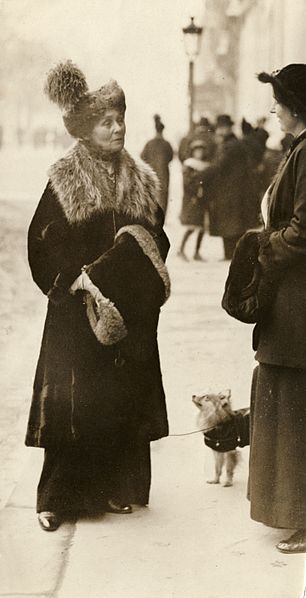
Grace Roe joined the WSPU after hearing Emmeline Pethick-Lawrence speak in October 1908. Grace was arrested for the first time after a demonstration held at the House of Commons on June 29th, 1909. She was appointed organiser of the East Anglia WSPU in 1910 and then in 1912 Emmeline Pankhurst made her deputy of the WSPU in London, under Annie Kenney. After Kenney’s arrest and imprisonment for ‘incitement to riot’ in April 1913, Grace became leader of the WSPU in London….

suff 13
Emmeline Pankhurst talking to Grace Roe, c.1912 – France https://www.flickr.com/photos/lselibrary/22937693496/

suff 2
Christabel Pankhurst (left) and Annie Kenney circa 1911 Source: The Suffragette by Sylvia Pankhurst Public domain https://commons.wikimedia.org/wiki/File%3AChristabel_Pankhurst_and_Annie_Kenney.jpg

Katherina Schafer was born in Westphalia, Germany in 1871. Her mother died when she was just two years old, her father remarried but lost his second wife when Katherina was only six; both women died of TB. Katherina’s father was very strict and by all accounts had an uncontrollable temper…. In 1886 the young Katherina moved to England to join her sister, Dora. She learnt English, changed her name to Kitty Marion and became an actress, enjoying a successful although modest career. In 1908 she joined the WSPU, moved to Hartfield, East Sussex and became an active member of the Brighton branch….

In June 1908 Kitty was arrested at a demonstration at the House of Commons. In July 1909 she was arrested once again; this time she was imprisoned. She immediately went on hunger strike which resulted in her being force-fed. In retaliation and protest she barricaded herself in her cell and set light to her mattress….

In November 1911, she was once again sent to prison, with a sentence of 21 days to be served in Holloway, she went on hunger strike yet again…. It has been calculated that Kitty endured some 232 force feedings during the times she spent on hunger strike in prison….

This account by Kitty Marion, from 1913, has been edited by Christabel Pankhurst. The excerpt is taken from ‘The Suffragette’ – the official weekly newspaper of the WSPU….

….”I was lying on my bed, and I immediately turned to the wall, but they wheeled the bed out into the middle of the room, and tried to get me into position for feeding. I struggled violently, but they sat on my legs and I was fed with the nasal tube. I was so exhausted at the end of the feeding that a wardress was left with me for some time”….

The following account is that of E.Sylvia Pankhurst (daughter of Emmeline). The excerpt is as published in McClure’s magazine, August 1913 pp 87-93…. Please be advised, it is quite graphic….

….”I struggled as hard as I could, but they were six and each one of them much bigger and stronger than I. They soon had me on the bed and firmly held down by the shoulders, the arms, the knees and the ankles.

Then the doctors came stealing in behind. Some one seized me by the head and thrust a sheet under my chin. I felt a man’s hands trying to force my mouth open. I set my teeth and tightened my lips over them with all my strength. My breath was coming so quickly that I felt as if I should suffocate. I felt his fingers trying to press my lips a part, -getting inside,- and I felt them and a steel gag running around my gums and feeling for gaps in my teeth.

I felt I should go mad; I felt like a poor wild thing caught in a steel trap. I was tugging at my head to get it free. There were two of them holding it. There were two of them wrenching at my mouth. My breath was coming faster and with a sort of low scream that was getting louder. I heard them talking : “Here is a gap”.

“No, here is a better one – this long gap here”.

Then I felt a steel instrument pressing against my gums, cutting into the flesh, forcing its way in. Then it gradually prised my jaws a part as they turned a screw. It felt like having my teeth drawn; but I resisted – I resisted. I held my poor bleeding gums down on the steel with all my strength. Soon they were trying to force the india-rubber tube down my throat.

I was struggling wildly, trying to tighten the muscles and to keep my throat closed up. They got the tube down, I suppose, though I was unconscious of anything but a mad revolt of struggling, for at last I heard them say, “That’s all”; and I vomited as the tube came up.

They left me on the bed exhausted, gasping for breath and sobbing convulsively. The same thing happened in the evening; but I was too tired to fight so long.

Day after day, morning and evening, came the same struggle. My mouth got more and more hurt; my gums, where they prised them open, were always bleeding, and other parts of my mouth got pinched and bruised.

Often I had a wild longing to scream, and after they had gone I used to cry terribly with uncontrollable noisy sobs; and sometimes I heard myself, as if it were some one else, saying things over and over again in a strange, high voice.

Sometimes – but not often; I was generally too much agitated by then – I felt the tube go right down into the stomach. It was a sickening sensation. Once, when the tube had seemed to hurt my chest as it was being withdrawn, there was a sense of oppression there all the evening after, and as I was going to bed I fainted twice. My shoulders and back ached very much during the night after the first day’s forcible feeding and often afterwards.

But infinately worse than any pain was the sense of degradation, the sense that the very fight that one made against the repeated outrage was shattering one’s nerves and breaking down one’s self control”….                  – E.Sylvia Pankhurst

The act of force feeding was highly controversial, causing a public outcry. In 1913 the government looked to other ways of dealing with the hunger strike issue and introduced the Temporary Discharge for Ill-Health Act, which became known as the Cat and Mouse Act. This in itself could be regarded almost as cruel as the force feeding itself…. It allowed the release of a hunger striker in order for her to recuperate and regain her health…. Once recovered, she would then be re-arrested and made to complete her sentence….

Between 1900 and the start of World War 1 approximately 1,000 people were imprisoned for crimes relating to suffrage. Most were sent to prison for refusing to pay fines imposed by the Courts as punishment….

The subject of women’s suffrage was debated in the House of Commons 18 times between 1870 and 1904. Many suffrage societies suspended their activities at the beginning of WW1. Two million women took up and worked in roles traditionally fulfilled by men; this was to become a key factor in women finally obtaining the vote….

suff 5
Members of the Women’s Social and Political Union campaigning for women’s suffrage in Kingsway circa 1911 Public domain https://commons.wikimedia.org/wiki/File%3AWSPU_in_Kingsway.jpg

In February 1918, the Representation of the People Act was passed awarding the vote to women aged 30 or over, if they were a householder or the wife of one. This excluded the majority of working class women and fell well short of the original aims of the suffrage campaign….

In November 1918 the Parliament (Qualification of Women) Act was passed, allowing women to stand for Parliament. The first ever elected female MP was Constance Markievicz for Sinn Fein but she did not ever take her seat. In 1919, Lady Nancy Astor became the first female MP to sit in the House of Commons….

On the 14th December, 1918, 8.5 million women were eligible to vote in a general election for the first time. It wasn’t until 1928 with the Representation of the People (Equal Franchise) Act that women were given the same equal voting rights as men: the general election of May 1929 saw 15 million women with the right to vote….

So, with all that in mind, I for one have been reminded why I have always felt it my duty as a woman to vote; in recognition of our sisters who fought so hard to secure it for us. Far be it for me to preach to anyone but I hope it’s given you food for thought, girls….as it has for me…. This Country may be facing difficult times and some of us may be having problems deciding which way to vote or whether to even bother….but don’t you think we owe it to these women to do so….? I’m glad I came across that pamphlet….

suff 9
British suffragette with a poster, giving out newspapers Ch. Chusseau-Flaviens https://flickr.com/photos/george_eastman_house/2678367136/in/set-72157606224254056/

Standing at the cross roads….

Ever found yourself at a cross-roads wondering which way to go? That’s where I am right now – hypothetically of course….

In 2008, I took a room in an antiques centre, located in a former mill. It is a rambling, quirky, centuries-old building – home to some 70 dealers, a real Aladdin’s cave, brimming with all manner of antiquities.

xroads 14
Photo credit: getsurrey.co.uk

I filled my room to the rafters with all sorts of vintage and antique goodies; china, linen, collectables, paintings, small items of furniture…. As far as I was concerned I was indulging my passion and earning a living at the same time….

It was November 2015, I was at home alone, working on some pieces for the Mill, with the radio on for company – when there was a news flash….a local antiques centre was on fire…. I knew instantly it was us….

I was incredibly lucky, my room was completely unscathed; unlike many of my fellow dealers who lost their entire stock, if not to the fire itself but through smoke and water damage. It was heart breaking….

What followed was a frantic few days of packing boxes and shifting furniture to clear the building. Being November, daylight hours were restricted, there was no electricity, it was cold, damp, with the smell of smoke thick in the air – safety measures required hard hats to be worn…. Still, resolve and morale remained high – we were all convinced we would be back in and trading again come Summer….

That was 18 months ago – due to complicated insurance issues work has not yet begun to repair the damaged building; meanwhile, my stock is in storage – waiting….

xroads 13
Photo credit: farnhamherald.com

I love the Mill, I find it hard to imagine trading from anywhere else. I have viewed another centre and I have dabbled at selling on-line….but I soon discovered that wasn’t for me…. So, up to this point I have simply chosen to ‘wait it out’. However, since it is now painfully apparent nothing is going to be resolved in the near future, decisions have to be made….

I could look for an alternative venue, continue to wait or dispose of my stock through auction and consider a new career challenge…. at least I have choices. Being a woman in the 21st Century I am free to make my own decisions, which is probably more than could be said for the womenfolk who have lived in this house before me….especially those in its very early days….

When this house was first built in the mid to late 1300s, life would have been ruled by feudal obligations. Possibly this cottage would have been the home of a lesser yeoman or more affluent villien and his family; it is not grand by any means but it is well constructed and in its time would have been quite substantial. Life for a yeoman or villien’s wife would have been tough….

Most people in Mediaeval Europe and Britain lived in small rural communities and made their living from the land. In some respects the life of a peasant woman was less restricted in the confines of her class than those in aristocracy. Generally, women had little control over the direction their lives took them in. Society in the  Middle Ages was heavily influenced by the Bible….women were deemed inferior to men, morally weaker and likely to tempt men into sin….all this stemming from Eve. Women were conditioned to remain silent, letting their menfolk make decisions on their behalf. Fathers arranged marriages for their daughters, who were usually married off as teenagers and then became responsible for managing their new home, whether a castle or a hovel….

xroads 7
Photo credit: Medieval Village, WA Tuzen via Foter.com / CC BY-ND Original image URL: https://www.flickr.com/photos/tuzen/14551399513/

A peasant woman’s day may have typically started at 3am. She would have been expected to work in the fields alongside her husband; ploughing, sowing, harvesting, haymaking….

xroads 1
Photo credit: Image from page 273 of “Mediaeval and modern history” (1905) Internet Archive Book Images via Foter.com / No known copyright restrictions Original image URL: https://www.flickr.com/photos/internetarchivebookimages/14758267726/

There may have been livestock to raise – lambing in the Spring, shearing mid-June. Poultry needed tending (nearly always a woman’s job)….and of course, she also needed to manage the household chores too. There would have been cheese, butter and bread to make, food to be preserved ready for the Winter, the vegetable plot would have needed maintaining – growing vegetables for the family’s pottage…. A certain amount of time would have been spent foraging for nuts, mushrooms, berries and fruit…. Floors had to be swept and straw replaced, rush lights needed to be made. She would have sewed new clothes for the family, washed and mended when necessary…. Then she would have to have found time for her spinning and quite possibly weaving too…. Unless living as a free-woman and hence excused, she would also have been expected to help with the harvest of her lord as well as that of her own family’s land…. On top of all that, she probably had a tribe of children to bring up….

xroads 2
Photo credit: Image taken from page 267 of ‘English Wayfaring Life in the Middle Ages-XIV.Century… Translated from the French by Lucy T.Smith…Illustrated’ The British Library via Foter.com / No known copyright restrictions Original image URL: https://www.flickr.com/photos/britishlibrary/11199869396/

Knowledge of a trade could have made a girl a good marriage prospect, especially if it happened to be one that could be run from home, such as weaving, brewing or baking. Extra income for the household was always welcome….

xroads 4
Photo credit: “Middle Ages” spinner P Torrodellas via Foter.com / CC BY-NC Original image URL: https://www.flickr.com/photos/ptorrodellas/143041021/

Cottage industries were small businesses where people produced their own goods and sold them either from home or by ‘hawking’ them in the streets, possibly using a mobile cart. A small business would have been eligible to join a guild, an association of artisans or merchants. Most small businesses were owned and registered with the guild by a man – his wife, daughters, sisters and mother were his ‘workforce’. Women connected to a family business would have been allowed to join the guild via their fathers or husbands. By learning the family trade, very often a woman would have been permitted to continue the business in the event of her father or husband’s death. Sometimes, although it was the man of the house registered as the owner, it could be the woman who ran the entire business….

xroads 8
Photo credit: Medieval tincaster hans s via Foter.com / CC BY-ND Original image URL: https://www.flickr.com/photos/archeon/7481668890/

Even if a woman was a member of a guild, generally she was still very restricted. For example, a pastry maker was only permitted to carry one box of biscuits at a time in order to sell from….and of course, women were paid less than their menfolk even if they were doing the same job. Many widows inherited property and businesses and were able to carry on and run them very successfully, sometimes they became very financially well-off; if this were the case it was often not in her best interest to remarry…. Some widows ran the financial side of their deceased husband’s business but would have had employees to carry out the work….

After the black death new opportunities arose for women wishing to prosper. Due to a shortage in the skilled workforce a woman with a trade could rent premises, take on apprentices and run a business; she could even write a will to determine what would happen to it in the event of her death…. Married women could choose to trade separately from their husbands, they were known as ‘femme soles’. In order for a woman to do so, she had to make a public declaration of her sole status and to be able to trade her application had to be approved and granted. Those in urban areas may have become shop or inn keepers. London’s population halved after the plague, opportunity was everywhere for women. In the early 15th Century one third of brewers paying dues to the Brewers Company were women, some were single, some married, some widowed. However, there is little evidence of women being in public office, where they may have had authority over men….and as the population recovered and increased women faded back into the background, once again it became a man’s World….

Many women had multiple jobs to help make ends meet….very often she would have had her children in tow; as soon as they were old enough they would have been expected to help out….

Some women may have held the position of a domestic servant to a wealthier family. There were other employment options as well of course, prostitution was one…. Although frowned upon by the Roman Catholic Church and regarded as a sin, it was tolerated to a degree as the belief was that it helped curb rape and sodomy; towns and cities had designated areas where prostitutes could ply their trade…. Midwifery was solely a female occupation; although English universities barred female medical practitioners, midwives delivered babies and attended to other women’s health matters, as men were terrified of childbirth…. Midwives had no formal training as such, they relied purely on experience….

Childbirth in the Middle Ages was an extremely risky business, both for mother and infant; in fact childbirth was the greatest hazard a Mediaeval woman faced…. If a woman survived her childbearing years she was likely to outlive her husband. There was no real medical help available if problems arose, no procedures or techniques when dealing with breech births. If the pelvic opening was too small for the baby’s head nothing could be done; Caesarean sections were only performed if either mother or child had died and were carried out without anesthetic….

Any mother will tell you giving birth is no picnic but when we consider the horrors that childbirth in the Middle Ages often entailed, it is hardly surprising to learn that many women found the thought of becoming a nun a more attractive prospect than becoming a mother…. Nearly 10% of women in Mediaeval England and France never married in the traditional sense – many opted to marry the Church instead. Indeed it had its benefits….it gave the opportunity to gain an education; many writers, artists, educators, healers and botanists gained their knowledge through the Church….

xroads 3
Photo credit: Image from page 207 of “The story of the middle ages; an elementary history for sixth and seventh grades” (1912) Internet Archive Book Images via Foter.com / No known copyright restrictions Original image URL: https://www.flickr.com/photos/internetarchivebookimages/14797864713/

Although women were restricted in what was essentially a World run by men, there is little doubt that without the sheer gutsiness of our Mediaeval sisters, the World at that particular time would have come to a grinding halt…. There is that familiar saying: ‘behind every successful man stands a strong woman’….which appears to have its origins in the 1940s – but I wonder if it was inspired by women of the Middle Ages….

I, for one, am thankful I am a woman of now, rather than then…. I can make my own decisions, follow the career path of my choosing – my destiny is not determined by my husband’s trade…. Good job really, I can’t imagine myself wielding a chainsaw….


The global celebration of women….

As Mother’s Day approaches in the UK, it seems every shop on the high street is vying for our custom. Having been in the gift trade myself, I understand only too well how important this period is to the retailer, as in terms of lucrativeness it is second only to Christmas….

mday 1
Photo credit: Happy Mother’s Day Joe Shlabotnik via Foter.com / CC BY Original image URL: https://www.flickr.com/photos/joeshlabotnik/497340279/

There are those who would argue Mother’s Day has become far too commercialised, a fair point when the true meaning and its origins are considered. All around the World, it is celebrated in varying ways and at different times of the year but the under-lying message remains the same, to show appreciation and gratitude to the maternal figures in our lives….and in many cultures, to celebrate womankind in general….

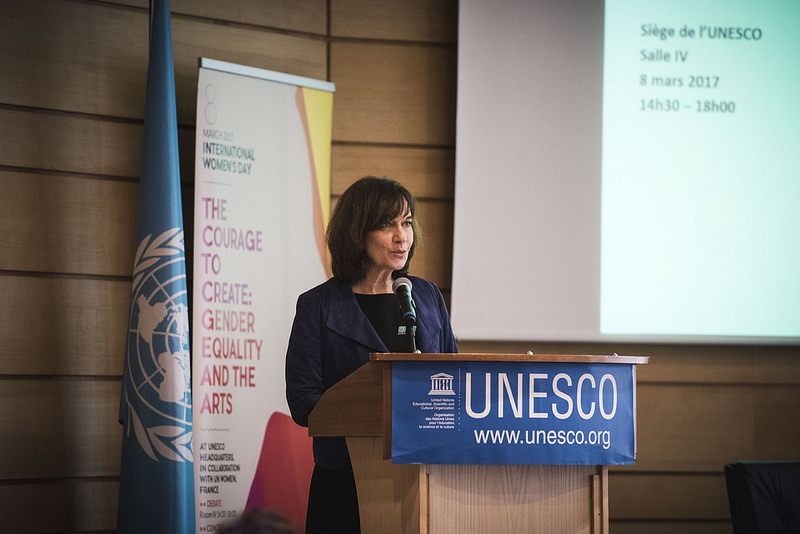
For some countries, such as Romania and Bulgaria, Mother’s Day is combined with International Women’s Day, which falls on the 8th of March every year, globally. International Women’s Day celebrates the achievements of women all over the World, be it in politics, leadership, business or peace-making….it also calls for equality between the genders. Events held around the World bring together governments, charities, corporations and women’s organisations; conferences, talks, rallies and marches are held to raise awareness of women and their rights….

mday 3
Photo credit: International women’s day preview_06 We Make IT Possible! via Foter.com / CC BY-NC-ND Original image URL: https://www.flickr.com/photos/131897504@N08/33355011225/

The earliest such gathering was held on 28th February 1909, in New York and was organised by the Socialist Party of America. The following year Clara Zetkin, leader of the Women’s Office for the Social Democratic Party in Germany, came up with the idea for International Women’s Day. Her aim was that every country should celebrate women on one day every year, striving for their demands. In 1911 International Women’s Day was marked for the first time, by over a million people in Germany, Austria, Denmark and Switzerland – demanding equal rights and the vote for women….

mday 4
Photo credit: Clara Zetkin (left) & Rosa Luxemburg on their way to the SPD Congress. Magdeburg 1910 Public domain Original image URL: https://commons.wikimedia.org/wiki/File:Zetkir

Russia held its first International Women’s Day in 1913. Four years later, on 8th March 1917, a demonstration of female textile workers in Petrograd, (the then capital of the Russian Empire), helped spark the beginning of the Russian Revolution. This resulted in the abdication of Nicholas II and the collapse of the government. The Provisional Government was established  and women were granted the right to vote; March the 8th was declared an official holiday (although still remained a working day until 1965). Until 1975, when it became adopted by the United Nations, International Women’s Day remained mainly only observed in Communist countries. China began to acknowledge it from 1922, with Chinese women being given a half day holiday. In 1977 the United Nations General Assembly invited its member states to declare March 8th as the UN day for women’s rights and World peace….

The original aim, to achieve full gender equality for all women of the World, is still far from being realised; a persisting pay gap and a female minority in business and politics continues. Globally, education and health still lags behind that of men and violence towards women is still prevalent. If things continue the way they are today, it is predicted the gender gap will not close until 2186…. International Women’s Day raises awareness and forces the World to look at these issues, at the same time it celebrates the achievements of  women of the World….

Orange Your World in 16 days
Photo credit: Orange Your World in 16 days UN Women Gallery via Foter.com / CC BY-NC-ND Original image URL: https://www.flickr.com/photos/unwomen/10967876646/

Each year the United Nations comes up with a theme to focus on. This year has just seen the 106th International Women’s Day, the theme was ‘Women in the changing World of work’. The UN Secretary General called for change “by empowering women at all levels, enabling their voices to be heard and giving them control over their own lives and over the future of our World” – as a way of combating the widening economic gap between the genders and to address the balance between men and women in leadership positions….

2011 saw the 100th anniversary of International Women’s Day, more than 100 countries held events to mark it. In the USA, President Obama declared March as ‘Women’s History Month’ – Australia issued a new commemorative 20 cent coin…. However, not everywhere experienced such positive celebrations on the day…. In Egypt women came out to march for their rights, on arriving at Cairo’s Central Tahrir Square, they were chased away by crowds of angry men, not in agreement with the women’s demands for equality….

This only highlights the fact there is still a long way to go before women’s rights are recognised globally – but women’s determination is unabated…. In Pakistan, for example, despite cultural and religious opposition, women celebrate International Women’s Day as part of an ongoing struggle to gain equal rights….

In many countries International Women’s Day is an official holiday, in others – although not an actual public holiday – it is widely observed. Some countries celebrate by the menfolk giving the women in their lives, be it wives, mothers, daughters, even friends and work colleagues, gifts and flowers. In Italy it is the custom to give mimosa, the symbol chosen in 1946 for International Women’s Day by Teresa Mattei (an Italian partisan and politician), as the usual symbols of violets and lily-of-the-valley were too scarce and expensive in Italy. Mimosa, (along with chocolate), is now often favoured in Russia…. Italy and Portugal are among some of the countries where women often come together on the evening of the 8th to celebrate at all female dinners and parties….


mday 11
Photo credit: Mimosa Kikimri via Foter.com / CC BY-ND Original image URL: https://www.flickr.com/photos/kikimri/5626310151/

In 2005 there was a call for the day to become a public holiday in Britain but to date this has not yet happened. However, each year events and rallies are held in London and around the Country….

**********

For much of the World, Mother’s Day is a completely separate event to International Women’s Day, for some it is combined with it and there are those who do not recognise Mother’s Day at all…. For the Western World the theme is pretty much the same all over – families get together to share some quality time, Mum is spoilt and pampered (hopefully), often receiving cards, flowers and gifts…. Being a special time of celebration it is surprising to learn there have been governments in the past (and quite possibly still some today) who have tried to use Mother’s Day to enforce their own ideals and policies in order to control women….

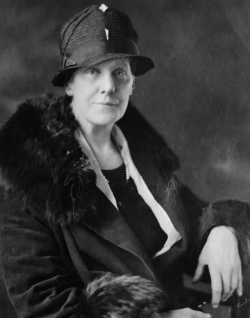
Mother’s Day, as we know it now, is a relatively new celebration in the scheme of things….it only really first came about, in any significance, during the 1920s. Many countries choose to mark the day by following the date set by the United States, the second Sunday in May. Anna Jarvis (1864-1948) was a social activist and she lobbied the American Government to set a date in May to celebrate the occasion, (May being the month of her own mother’s death). President Wilson formalised the date and as time went on it became more popular and thus more commercialised, much to the dismay of Jarvis – “I wanted it to be a day of sentiment, not profit” ~ “a poor excuse for the letter you are too lazy to write”, was her response to the cards and gifts people opted to give….

mday 5
Photo credit: Anna Jarvis By Olairian (Own work) [Public domain]. via Wikimedia Commons Original image URL: https://commons.wikimedia.org/wiki/File%3AAnna_jarvis.jpg
Some of the 40+ countries who also observe Mother’s Day on the second Sunday in May include:-

Australia: whose own tradition was started by Janet Heyden in 1924, after visiting a patient in a state home for women. There she came across many lonely, forgotten mothers; wanting to do something to acknowledge these women, she persuaded local businesses and school children to visit them, taking along gifts. The idea spread and Mother’s Day became adopted; chrysanthemums, (‘mum’ being an affectionate, abbreviated term for mother), are traditionally given, as May is Autumn in Australia and these blooms are in season; men often wear chrysanthemums in their lapels in honour of their mothers….

mday 6
Photo credit: Chrysanthemums JuniperJungle via Foter.com / CC BY-NC-ND Original image URL: https://www.flickr.com/photos/avjenbob/5843453820/

Belgium: children often make presents at school; traditionally the father will serve the mother breakfast in bed, usually croissants or similar and she is given the day off from the usual chores and gets to be pampered…. However, there are those, particularly around the Antwerp area, who celebrate the day on the 15th of August, to them the ‘classic’ Mother’s Day; they consider the May date to have been invented purely for commercial reasons….

Brazil: although not an official holiday, Mother’s Day is widely observed, by giving gifts and spending time with Mum. As with so many countries nowadays, the consumerism is second only to Christmas….

Canada: again, not an official holiday but celebrated much the same as the majority of the Western World, with cards, gifts and flowers being given to mothers, grandmothers and all important maternal female figures within the family….

mday 10
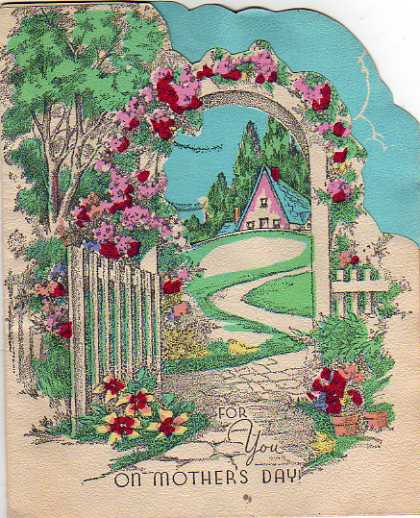
Photo credit: vintage mother’s day card Sea Dream Studio via Foter.com / CC BY-NC-SA Original image URL: https://www.flickr.com/photos/seadreamstudio/1403977982/

China: Mother’s Day is becoming increasingly popular. In 1997 it started to be promoted as a way of helping poorer mothers in more rural areas, such as the western region. The Chinese welcome the day as it ties in well with their high regard and respect for the elderly….

Japan: The Japanese also adopted the second Sunday in May as the official day, recognising it by giving mothers flowers, particularly red carnations or roses….

mday 7
Photo credit: Carnations e.mcclay via Foter.com / CC BY Original image URL: https://www.flickr.com/photos/emcclay/4588289250/

Maldives: traditionally girls give their mothers cards and handmade gifts, while boys give gifts and flowers….

Germany: In the 1920s, Germany had the lowest birthrate in Europe, due to women working. In 1923 ‘Muttertag’ was imported from the States. It became a holiday to promote motherhood but in a different sense to most other countries. The German government of the time used it to encourage women to have more children and there was a wish to eliminate the rights of the working woman. ‘Die Frau’ – the newspaper of the federation of German Women’s Associations, rejected the holiday…. During the 1933-45 period, under the Nazi Party, there was an emphasis on women giving Germany healthy children, of pure ‘Aryan’ race. Mothers were told the death of a son was the ‘highest embodiment of patriotic motherhood’. The Nazis declared Mother’s Day an official holiday; in 1938 the ‘Mother’s Cross’ was issued by the government – it was awarded on Mother’s Day to those who had four children or more….

The Bolivian government passed a law in 1927 stating the date of 27th of May was to acknowledge Mother’s Day. It commemorates the Battle of Coronilla which happened 27th May 1812 during the Bolivian War of Independence; women fighting for Bolivia’s independence were slaughtered by the Spanish army. It is not a public holiday but schools hold activities throughout the day…

Spain and Portugal both celebrate Mother’s Day on the first Sunday in May. It is a family day, with gifts often made at school by the children. In Spain especially, it is also a religious day, as the month of May is dedicated to the Virgin Mary. Hungary has also celebrated on this day since 1925. Romania originally only celebrated International Women’s Day but since 2010 has adopted this day and it is an official holiday….

Mexico celebrates as a family day on May the 10th. Time is spent with Mother, with the family bringing gifts of food to share together, or maybe they will visit a restaurant. Initially, from 1922, the day was marked on the second Sunday, the same as the States; the then government used it to try to promote a more conservative role in the family for women. A change of government then tried introducing new morals to Mexican women, reducing the influence of the Church. Despite efforts to promote the holiday as an important time to lay down foundations for the development of the nation, the people still saw it as a religious observance; eventually the government gave up their ideals….

France celebrates its Mother’s Day on the last Sunday in May. Attempts in 1896 and 1904 were made to create a national celebration, honouring the mothers of large families because of the worrying issue of France’s low birthrate. During World War 1, American soldiers stationed in France, brought with them the tradition of America’s Mothering Sunday, making it popular in France. So much mail was sent home by US soldiers a special postcard was made for the occasion. The French adopted this date but once again aimed it at mothers of larger families, the government made the date official in 1920. In the 1950s it became commercialised; nowadays, at a family dinner, mothers are often presented with a cake, resembling a bouquet of flowers….

mday 8
Photo credit: Mother’s Day Cake Vrysxy via Foter.com / CC BY Original image URL: https://www.flickr.com/photos/vrysxy/3521512458/

Sweden first celebrated Mother’s Day in 1919, when it was initiated by the author Cecilia Baath-Holmberg. It took several decades for it to become fully recognised, as generally the Swedish people disliked the commercialism that accompanies it. The later date of the last Sunday in May was chosen as it meant plenty of flowers would be in bloom, ready to be picked. Norway, on the other hand, celebrates the second Sunday in February; the day has been embraced since 1919. Although originally recognised as a religious day , over the years it has become family orientated and more commercialised. Some children do still make gifts at school but typically mothers are served breakfast in bed and are given cards and presents….

Thailand acknowledges the day on the 12th of August, the birthday of Queen Sirikit. It was first celebrated in the 1980s as part of a campaign by Prime Minister Prem Tinsulanonda to promote the Royal Family….

In North Korea, Mother’s Day has been a public holiday since 2015; it is held on the 16th of November. A significant date, as in 1961 it was the day of the first National Meeting of Mothers, when Kim II-Sung published ‘The Duty of Mothers in the Education of Children’….

Indonesia celebrates on the 22nd of December and has done so since it was made an official holiday in 1953 by President Soekarno. Originally it celebrated the spirit of Indonesian women and was aimed at improving the condition of the nation. Then, during President Suharto’s New Order (1965-98), the government used Mother’s Day to try to instill the idea that women should stay at home and act in a docile manner. Its propaganda aimed at the feminist groups, inspired by Indonesian heroines of the 19th Century, who had been active in the country since 1912….

In India Mother’s Day is not observed by the majority, although in some urban areas it is becoming popular but not as a religious event. Ethiopia celebrates in mid fall, at the end of the rainy season, for a whole 3 days! A feast, ‘Antrosht’, is prepared, where a traditional hash dish is served; the children bring the ingredients, the girls supplying spices, cheese, butter and vegetables; whilst the boys bring the meat, either lamb or beef. After feasting, the mother and girls cover their faces and chests with butter and the menfolk sing….

Iran celebrates on 20 Jumada al-thani, which is the sixth month in the Islamic calendar. Generally, Mother’s Day is celebrated at the time of the Spring Equinox in the Arab World. It was first introduced to Egypt in 1956 by Mustafa Amin, a writer and journalist and has since been adopted by many Arab countries….

This is just a small sample of some of the varying celebrations and traditions held by the different cultures and countries of the World, to recognise their womenfolk. Of course, it would be impossible to mention them all here…. Somewhere in the World, nearly all year round, there are those preparing to honour their mothers…. In the UK, it is our turn this coming Sunday…. I for one, as a mum, am looking forward to a day of rest and pampering but above all, a little peace and quiet, (I should be so lucky)! Right now though, my appetite has been whetted …. I’m off to learn more about the origins of our own Mother’s Day, here in the UK….

mday 9
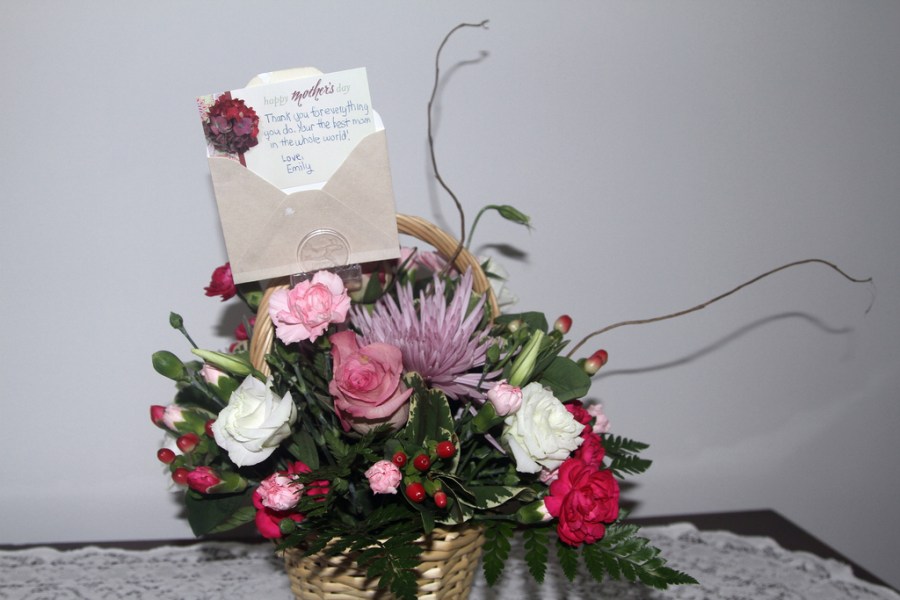
Photo credit: Mother’s Day Bouquet from Emily Jim, the Photographer via Foter.com / CC BY Original image URL: https://www.flickr.com/photos/jcapaldi/5704512119/