On this day in history….24th December 1914

On this day in history : 24th December 1914 – The first aerial bomb to be dropped on British soil lands on a rectory lawn in Dover, after being launched from a German Friedrichshafen FF 29 Seaplane….

Friedrichshafen FF 29 seaplane (on the deck of a German WW1 submarine) – Public domain

It landed in a garden near to Taswell Street, Dover – blowing the windows out of the house, a gardener out of a tree and leaving behind a 10ft crater….

It is believed the bomb had been intended for Dover Castle, which was nearby and being used as a military base during World War One….

On hearing the massive explosion residents of Dover believed the port town was being shelled – as only a few days before such attacks had been carried out on Scarborough, Whitby and Hartlepool on the north east coast….

People had not even been aware that bombs could be dropped from aeroplanes…. By the end of the War 184 bombs had been dropped on Dover, killing 23 people and injuring a further 71….

A fragment of the first bomb is now held by the Imperial War Museums – after it had been presented to King George V….

A variety of the bombs used by the Germans in WW1 – Public domain

On this day in history….16th December 1914

On this day in history : 16th December 1914 – German warships attack the seaside resort of Scarborough; Hartlepool and Whitby are also targeted…. 137 people, mostly civilians, are killed….

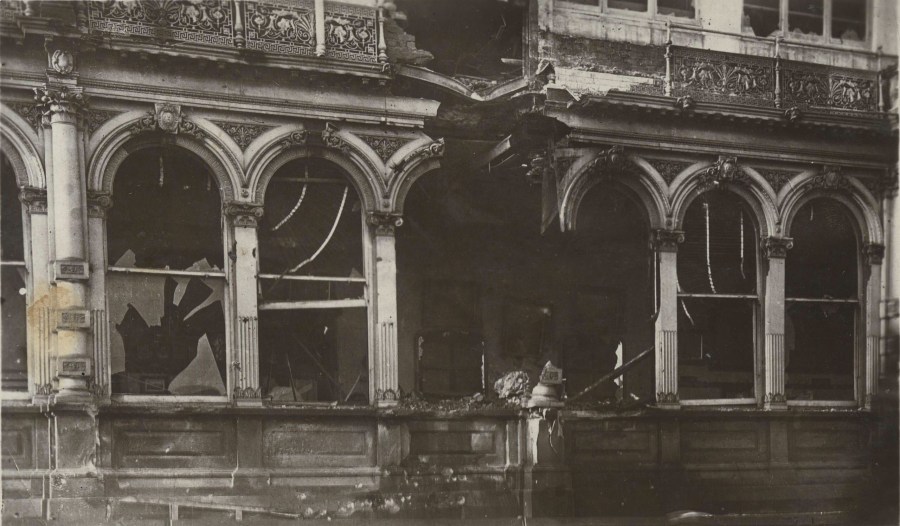
Damage to the Grand Hotel, Scarborough – Public domain

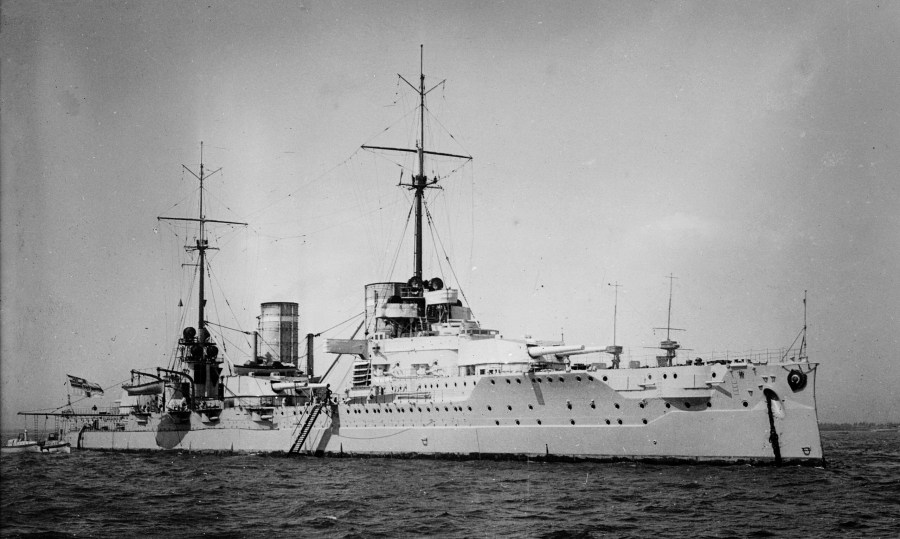
The bombardment of Scarborough began at 8am and lasted for half an hour…. Two German battleships, Von den Tann and Derfflinger, fired 500 shells – hitting the town and castle…. The townsfolk thought it must herald the start of the German invasion….

SMS Von der Tann – Public domain
SMS Derfflinger – Public domain

The medieval castle was seriously damaged, as were the 18th century barracks, which were shelled repeatedly…. It seems the Germans had mistaken Scarborough for a major military port – whereas in fact the barracks had not been occupied by troops for many years…. In all 17 people were killed in the attack, hundreds were injured and many had their homes destroyed….

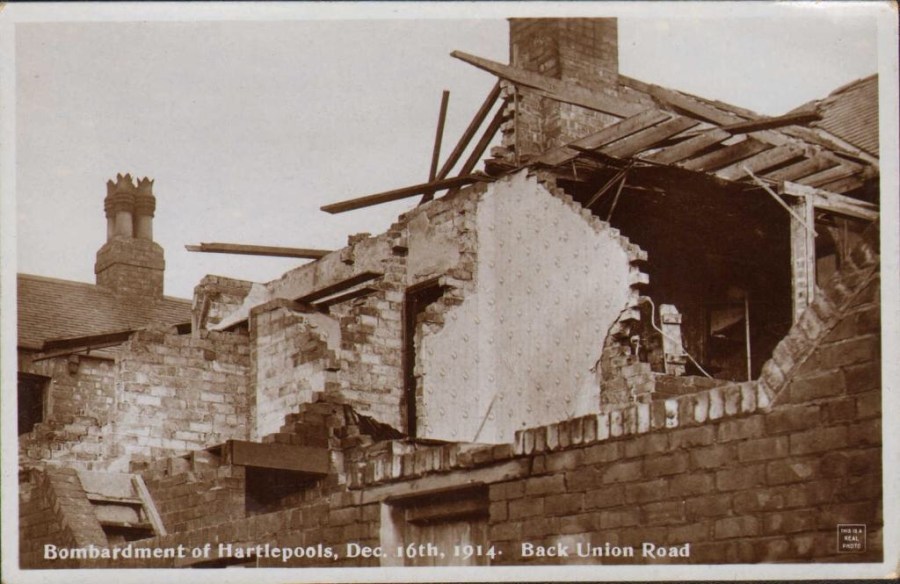
At 8.30am the two ships left, headed north and shelled Whitby…. At the same time another German naval force attacked Hartlepool…. These attacks caused even more death and destruction than what had already occurred in Scarborough…. Hartlepool with its extensive civilian dockyards and factories received some 1,150 shells – hitting steelworks, gasworks, railways, 7 churches and over 300 homes…. In total 86 civilians were killed and 424 more wounded…. In addition 14 soldiers were injured and 7 lost their lives…. It also saw the first death in 200 years of a British soldier from enemy action on British soil when 29-year-old Private Theophilus Jones of the Durham Light Infantry was killed….

Ruins of a church in Whitby – Public domain
Damaged house, Hartlepool – Public domain

The raids had an enormous effect on the British public and prompted the propaganda campaign Remember Scarborough…. It also caused an outcry from other nations – neutral America cited – ‘This is not warfare, this is murder’….

Recruitment poster – Public domain

On this day in history…. 27th October 1917

On this day in history : 27th October 1917 – The death of Arthur Rhys-Davids – flying ace of the First World War and the victor of one of the most famous dog fights of the War….

Portrait of Lieutenant Arthur Rhys-Davids – From the collections of the Imperial War Museums – Public domain

As soon as he had finished his schooling Arthur deferred his entry to Oxford University and joined the Royal Flying Corps…. He first reported for duty on the 28th of August 1916 as a 2nd Lieutenant in the Royal Flying Corps Special Reserve in Oxford and began his training…. He was then to join 56 Squadron at London Colney….

At the beginning of April 1917 the Squadron flew to France and were to based at Vert Galand…. Arthur was to get his first taste of aerial combat on the 7th of May…. He was to encounter a German pilot far more experienced than he was; despite being shot down he lived to tell the tale…. Others were not so lucky; it was a disastrous day for the Squadron, only five aircraft returned to Vert Galand….

Royal AircraftFactory S.E.5 – the type of aircraft Rhys-Davids would have flown – Public domain

On the 23rd of May Arthur scored his first victory – shooting down an Albatross D.111 fighter…. The following day he had three more victories – in just one hour…. And on the 25th he succeeded in bringing down another aircraft – with five victories to his name Arthur was now a flying ace…. On the 25th of June 1917 he learned that he had been awarded the Military Cross….

During an evening flying patrol on the 23rd of September 1917 several members of 56 Squadron, including Arthur, encountered German flying ace Werner Voss…. Credited with 48 victories Voss was much feared but also much admired…. Only at this stage Arthur and his comrades were unaware of who it was they had come across….

The six aircraft of Arthur’s patrol had become involved in a dog fight involving large numbers of aircraft from both sides – when suddenly Voss appeared amidst them…. “The German triplane was in the middle of our formation, and its handling was wonderful to behold. The pilot seemed to be firing at us all simultaneously, and although I got behind him a second time, I could hardly stay there for a second. His movements were so quick and uncertain”…. ~ James McCudden – (one of the most highly decorated airmen in British history and who was flying in the same patrol as Arthur that particular evening…. McCudden was eventually killed in action on the 9th of July 1918)….

The German made no attempt to escape and the six British pilots were now engaged in a ferocious battle with him…. Voss fired and hit McCudden in the wing, then forced two more of the British aircraft out of the fight with hits to their engines…. More British and German planes joined in but still Voss in his Fokker triplane managed to evade them…. Eventually he made a flat turn and Arthur saw an opportunity and managed to get on his tail…. Arthur fired and the Fokker dived towards German lines with the young British pilot still behind him…. But then Voss made an error…. Arthur made a turn away – and the German, mis-reading the situation, turned with him – bringing his aircraft back into Arthur’s firing line – who let him have it full pelt, taking the Fokker down….

When the patrol returned to base it was still unknown to them who the mystery pilot was…. When the Germans announced that their ace pilot Werner Voss was missing in action jubilation broke out in the ranks of 56 Squadron, with showers of congratulations for Arthur….who was later to say…. “If only I could have brought him down alive”….

Werner Voss – a card from the private collection by Scinke, Berlin 1917 – PD-US

On the 27th of October 1917 Arthur was promoted to Lieutenant, backdated to the 1st of September…. Later that same day he took off on a routine patrol and was last seen chasing after a group of German Albatross fighters…. It was just a month after his 20th birthday – he was never found….

On this day in history….21st August 1914

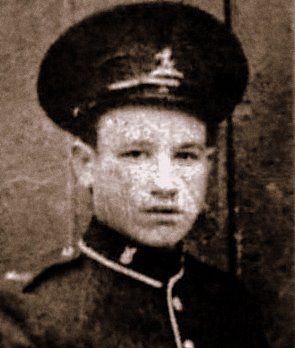
On this day in history : 21st August 1914 – Private John Parr becomes the first British soldier to be shot and killed during World War One….

The grave of Private John Parr, Saint Symphorien Military Cemetery – Image credit : http://www.smg-authie.co.uk/graphics/photos/cwgc_sz/st_symph_06.jpg – CC BY-SA 2.5

Parr had joined the 4th Battalion of the Middlesex Regiment in 1912, after lying about his age; he claimed to be the required age of 18 whereas in truth he was only 14…. He was trained to be a reconnaissance cyclist – a scout riding ahead of the marching battalion on a bicycle to check the way ahead for enemy activity….

In August 1914 the 4th Middlesex was one of the first British Army units to be mobilised and sent to Northern France…. 1,100 men left Southampton destined for Boulogne-sur-Mer – just as the Germans were advancing into Belgium….

On the 21st of August Private Parr and another cyclist were despatched to the village of Obourg, just over the border into Belgium…. Their mission was to pinpoint the exact location of the German troops…. Nobody knows for sure exactly what happened next…. It is believed that Parr and his companion came across a German patrol engaged in a similar task to that of their own…. Whilst his companion returned to report to the commanding officer of the Middlesex Regiment Parr remained behind to try and head off the enemy patrol…. It was thought he died in an exchange of rifle fire with the Germans….

However, later research carried out in 2014 unearthed the possibility that Parr was actually killed by friendly fire…. Whatever the circumstances, British troops almost immediately retreated from the area and Parr’s body was left behind…. His grave was later found in a battle graveyard, where he was most likely buried by the Germans…. He now lies in St. Symphorien Military Cemetery, south east of Mons – in a grave that faces that of George Edwin Ellison, thought to be the last British soldier to be killed in World War One…. The age on Parr’s headstone reads as ‘20’ – not the 17 he really was….