On this day in history….25th February 1939

On this day in history : 25th February 1939 – The first Anderson shelter is erected in a garden in Islington, London…. 1.5 million are distributed before the outbreak of World War II….

Designed in 1938 by William Paterson and Oscar Carl Kerrison, the shelter was named after Sir John Anderson, the politician responsible for air-raid precautions and who initiated its design….

img_2467

Made from corrugated galvanised steel, six curved panels would be bolted together at the top and then straight panels fixed to form four walls, with a door at one end…. The whole construction would then be half-buried and the roof covered with at least 15 inches of soil….


The shelters were issued free of charge to those families with an income of less than £5 per week (£300 in today’s terms)…. Higher earning families could buy one for £7…. The shelter would be supplied in kit form – everything required to build it would be included along with an instruction guide – but it was up to the family to erect it….

At 6ft high, 4.5ft wide and 6.5ft long the shelters were designed to accommodate up to six people…. How comfortable they were inside was up to the individual family – although incredibly strong, which gave reassurance, they were cold, damp and cramped inside….

img_2465
Children in an Anderson shelter during frequent night-time German bombing raids on Bournemouth in 1942. Image credit: TheBrit CC BY-SA 4.0

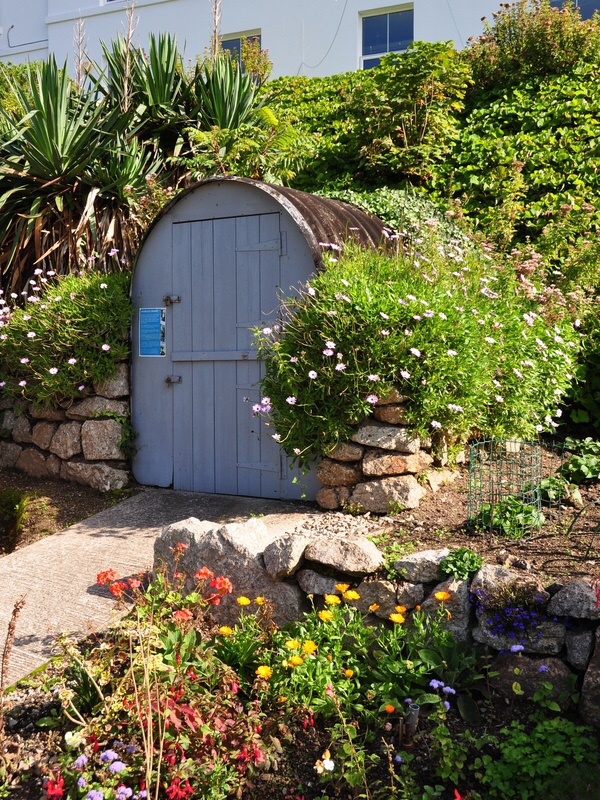
It was possible to make the outside to look quite attractive, flowers and vegetables could be planted over them…. In fact some neighbourhoods held competitions for the prettiest shelter….

img_2470
Porthcurno Telegraph Museum – Photo credit: Robin Stevens

Throughout the war period over 2.5 million Anderson shelters were erected. At the height of production John Summers & Sons Ironworks in Deeside were producing 50,000 per week….

For a small fee families were allowed to keep their shelter after the war – and indeed many were dug up and used for sheds….


On this day in history….12th December 1939

On this day in history : 12th December 1939 – HMS Duchess sinks after colliding with HMS Barham off the coast of Scotland; 136 lives are lost….

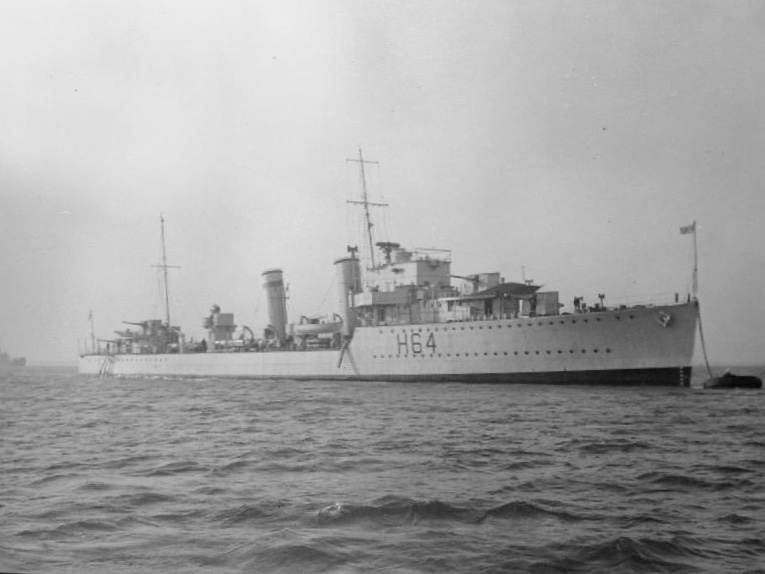
HMS Duchess – Public domain

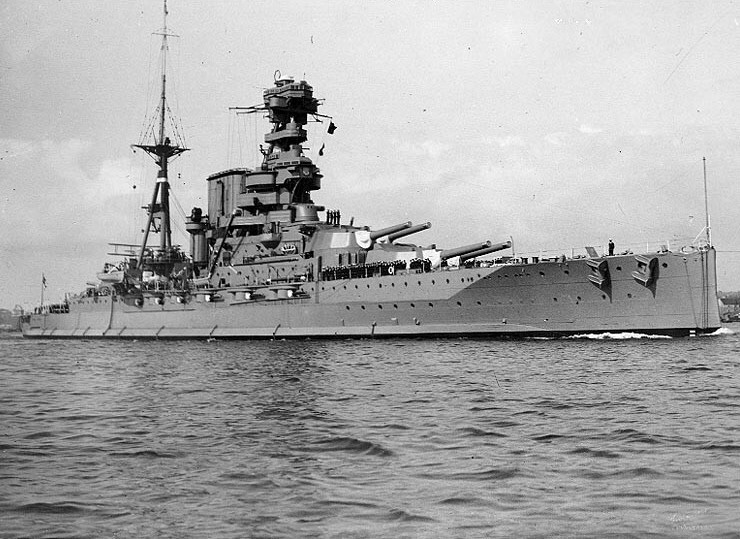
HMS Duchess, a D-class destroyer, had been built in the 1930s…. In December 1939 she was ordered, along with her sister ships, HMS Delight, HMS Duncan and HMS Dainty, to escort HMS Barham back to the UK from Gibraltar…. Barham was a Queen Elizabeth-class battleship that had been built in the early 1910s…. She had served in World War One and then after a major refit in the 1920s was to serve in World War Two…. She had been part of the Mediterranean fleet but as of the 1st of December 1939 had become a private ship and so was heading to join the home fleet…. The convoy departed on the 6th of December….

The voyage went well but arrived off the coast of Scotland on the morning of the 12th of December in dense fog…. Nine miles west of the Mull of Kintyre HMS Barham accidentally rammed HMS Duchess due to the poor visibility…. Duchess capsized and her depth charges exploded…. 136 of her crew were lost, including her commanding officer, Lieutenant Commander Robert C.M. White – who was trapped in his cabin as his sliding door had jammed….

HMS Barham – Public domain

HMS Barham herself was to sink two years later, on the 25th of November 1941 – after being torpedoed…. At the time her sinking was censored from the news by the Board of Admiralty, in an effort to conceal the sinking from the Germans – but also to protect the British morale…. It was several weeks before the next of kin of the 862 crew who had died onboard Barham were informed…. Even then they were requested to keep it secret….

The sinking was officially announced on the 27th of January 1942…. The explanation for the delay was given as…. ‘It was clear at that time that the enemy did not know that she had been sunk, and it was important to make certain dispositions before the loss of this ship was made public’….

The sinking of Barham was caught on film by a cameraman from Pathe News who had been onboard HMS Valiant….

On this day in history….2nd October 1942

On this day in history : 2nd October 1942 – British cruiser HMS Curacao sinks after colliding with the liner RMS Queen Mary off the coast of Donegal…. 337 lives are lost….

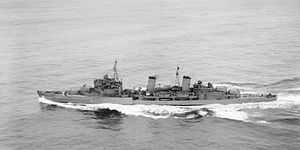
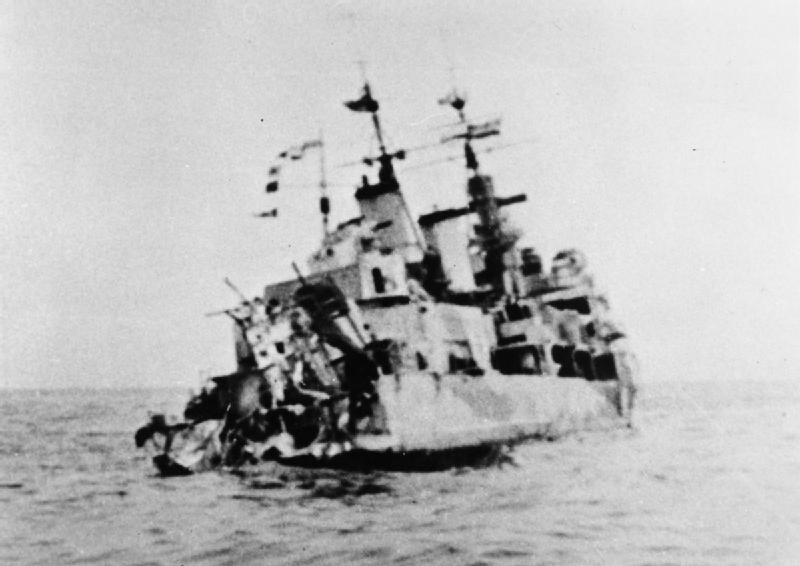
HMS Curacao – Public domain

HMS Curacao was part of a convoy escorting the RMS Queen Mary – which was carrying 10,000 American troops of the 29th Infantry Division…. The liner was travelling at a speed of around 26 knots on a zig-zag course – to avoid attack from German submarines…. HMS Curacao, an elderly cruiser built during WW1, was travelling on a straight course (to make it easier to defend the liner against enemy aircraft attack) and was moving at around 25 knots….

Problems began to arise as both Captains believed that they had right of way…. Commodore Sir Cyril Gordon Illingworth of the Queen Mary expected Curacao to give way as the liner crossed its path…. Whereas Captain John Wilfred Boutwood kept Curacao on its straight path believing the Queen Mary would accommodate it….

At 13.32pm it became obvious that the two ships were going to come too close…. Queen Mary’s watch officer began to alter course but Illingworth intervened, saying : “Carry on with the zig-zag. These chaps are used to escorting; they will keep out of your way and won’t interfere with you”….

RMS Queen Mary, New York Harbour, June 1945, carrying US troops from Europe – Public domain

At 14.04pm Queen Mary started a starboard turn, she was around 366m behind the cruiser…. Too late it was realised that a collision was inevitable and there was no time to do anything about it…. The Queen Mary hit Curacao amidships at full speed – the cruiser was cut clean in half…. The rear section sank immediately, followed by the front end a few minutes later….

The Queen Mary continued on with a damaged bow to avoid the risk of a U-boat attack – but reported the collision to the rest of the escort group who were about eight miles away…. HMS Bramham and another ship arrived at the scene an hour or so later and picked up 101 survivors, including Captain Boutwood…. 337 officers and crew were lost….

Those who witnessed the illusion were sworn to secrecy due to national security…. The incident was not made public until after the War had ended….

On this day in history….26th September 1938

On this day in history : 26th September 1938 – The first gas masks are issued to British citizens as concerns over the prospect of war with Germany grow….

The government issued some 35 million ‘General Civilian respirators’…. During World War One chlorine gas and then mustard gas had been used for the first time…. It is estimated some 88,000 were killed by gas and 1,200,000 injured….

As World War Two loomed the UK government planned for tens of thousands of deaths in London alone…. They had been advised to expect 250,000 deaths from gas in Britain in the first week of the war….

Masks were issued in a cardboard box, with the instructions printed inside the lid…. Adults had ones made of plain black rubber; children had ‘Mickey Mouse’ masks – in an attempt to make them seem a little less scary…. Babies had a mask ‘suit’ which completely enclosed them, leaving only their legs exposed….

AIR RAID PRECAUTIONS ON THE BRITISH HOME FRONT: MOTHER AND BABY IN GAS MASKS, C 1941 (D 3918) Copyright: � IWM. Original Source: http://www.iwm.org.uk/collections/item/object/205198677

People were instructed to carry their masks with them at all times – and to practice putting them on and wearing them…. Many found the masks awkward and cumbersome whilst others found the small of the rubber made them nauseous….

British couple wearing their gas masks at home in 1941 – Image : Ministry of Information – Public domain

It was to be almost a year before war eventually broke out…. Whilst the government had prepared the public for what it feared would be Hitler’s secret weapon thankfully the masks were never needed….

On this day in history….3rd January 1946

On this day in history : 3rd January 1946 – The execution for treason of William Joyce – the Nazi propaganda broadcaster, known to the British public as ‘Lord Haw-Haw’….

img_5345
Photograph of Joyce taken some time between 1939 & 45 – No known copyright restrictions – Archives of the Law Society via Flickr

‘Haw-Haw’ was a term first coined by Jonah Barrington of the Daily Express…. It actually referred to a number of announcers, with their exaggerated English accents, broadcasting during WW2 to the United Kingdom from the German radio station ‘Reichssender’, in Hamburg…. However, in time the name was to become primarily associated with Joyce….

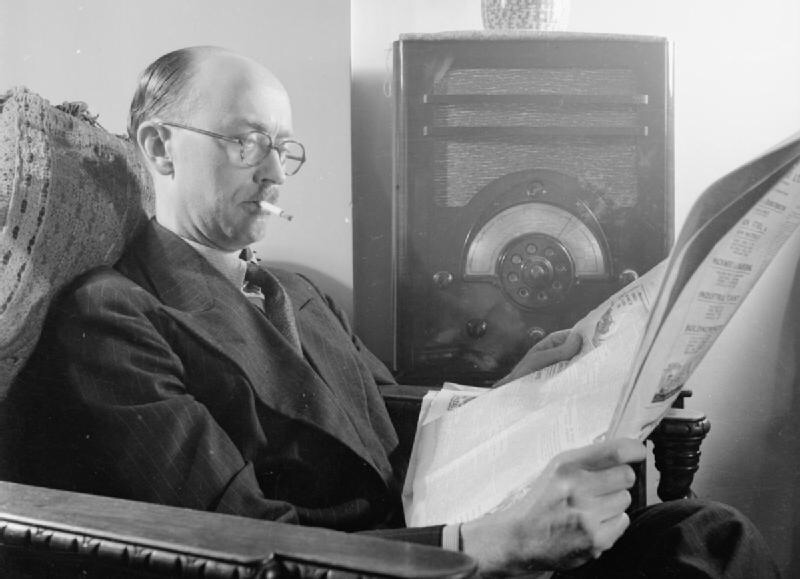
Broadcasts would always start with “Germany calling, Germany calling”…. The aim was to attempt to break the morale and spirit of the British people – along with that of the allied troops…. Inaccurate reports of the sinking of ships and the shooting down of aircraft…. Urging the British to surrender – attacking the government and the British way of life…. Of course, most people knew it was propaganda – but at a time of heavy censorship it was often used as a way to try and find out information as to what may have become of a missing loved one…. Whilst not illegal to listen to the broadcasts it was discouraged – despite this some 18 million people in Britain are believed to have listened on occasion….

img_5347
From the collections of the Imperial War Museums

So, how did the likes of Joyce come to be working for the Germans during the war? To understand this it is necessary to learn more about the background of the man….

William Brooke Joyce was born on the 24th of April 1906, in Brooklyn, New York…. He was the son of immigrants – his father was Irish and his mother Anglo-Irish…. When Joyce was 3-years-old the family returned to live in Galway, Ireland….

In 1921, during the Irish War of Independence, Joyce was recruited as a courier by Captain Keating of British Army Intelligence, in the fight against the IRA…. After an attempted assassination on him Joyce was taken to England for his safety…. He was recruited into the Worcester Regiment – but soon discharged after it was discovered he was underage….

Joyce remained in England and finished his education at Kings College School, Wimbledon…. He then studied at Birkbeck College – part of the University of London – graduating with a first-class honours in English…. After being turned down for a position with the Foreign Office he took a job as a teacher….

He began to take a keen interest in Fascism…. It was on the 22nd of October 1924, whilst attending a meeting for Jack Lazarus, Conservative candidate for North Lambeth, that Joyce was attacked by Communists…. He received a deep razor slash across his right cheek, leaving him with a prominent scar from his ear lobe to his jaw….

Joyce took a paid job in the British Union of Fascists (BUF), under Sir Oswald Mosley – and in 1934 he was made Director of Propaganda…. It was after being sacked by Mosley in 1937 that he joined a splinter group, the National Socialist League…. On learning that the British authorities intended to arrest him Joyce fled with his wife in August 1939 to Germany – just before the outbreak of WW2…. He became a naturalised German citizen in 1940 and managed to get a job at the Rundfunkhaus (the German equivalent of Broadcasting House)…. Here he made radio announcements and wrote scripts – but he was to go on to become the best-known of the propaganda broadcasters….

img_5346
Still frame from 1943 – Allied propaganda cartoon – ‘Tokio Jokio’ – depicting Joyce as Lord Haw-Haw – ‘Lord Hee-Haw, Chief Windbag’

His final broadcast was made on the 30th of April 1945, during the Battle of Berlin…. He finished the broadcast with “Heil Hitler and farewell” – the following day Radio Hamburg was seized by the British – but Joyce had managed to make his escape….

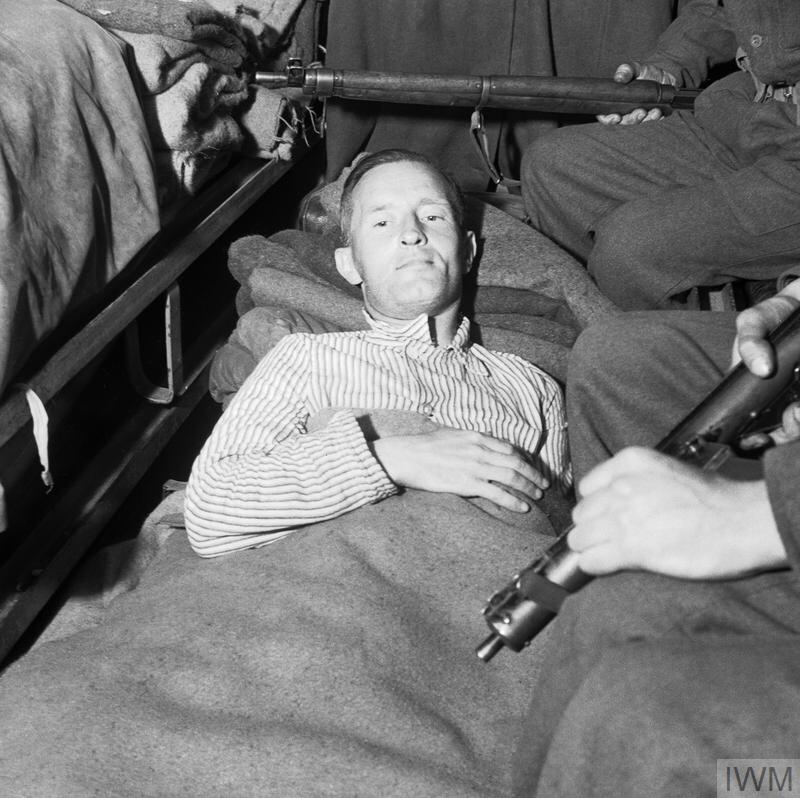
Nearly a month later, on the 28th of May, Joyce was captured at the German/Danish border by British intelligence officers…. During his arrest he was shot through the buttocks – as he had gone to his pocket to produce his false passport but the officers had believed him to be armed….

THE CAPTURE OF WILLIAM JOYCE, GERMANY, 1945
THE CAPTURE OF WILLIAM JOYCE, GERMANY, 1945 (BU 6910) William Joyce lies in an ambulance under armed guard before being taken from British 2nd Army Headquarters to hospital. He had been shot in the thigh at the time of his arrest. Copyright: � IWM. Original Source: http://www.iwm.org.uk/collections/item/object/205192927

Initially it was thought that due to his American nationality Joyce would have to be acquitted – it was reasoned that he could not be convicted of treason against a country that was not his own…. However, at his trial it was successfully argued that since he had obtained a British passport, by not revealing his true nationality, he had in fact had allegiance to the King and country whilst the passport was valid – and this happened to be the period of time during which he was working for Germany…. Joyce was convicted and sentenced to death on the 19th of September 1945….

The sentence was upheld on the 1st of November 1945 after an appeal – and he was executed at Wandsworth Prison on the 3rd of January 1946 by hangman Albert Pierrepoint…. As he went to the gallows Joyce was unrepentant – as he fell the pressure from the drop split the old scar on his face wide open….

Joyce was buried in an unmarked grave within the prison walls but – after a long campaign by his daughter – in 1979 his body was reinterred in Galway, Ireland….