On this day in history….3rd October 1916

On this day in history : 3rd October 1916 – The birth of James Alfred Wight – better known by his pen-name James Herriot and the author of the much loved All Creatures Great and Small….
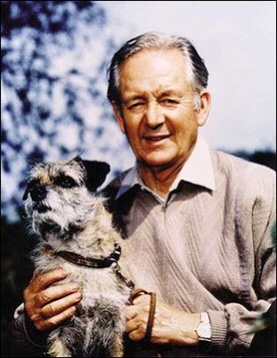
James Alfred ‘Alf’ Wight – James Herriot – Fair use

James ‘Alf’ Wight was born in Sunderland and while he was still a young child the family moved to Glasgow…. After graduating Glasgow Veterinary College at the age of 23 he briefly worked at a practice in Sunderland before moving to a rural practice in the town of Thirsk, Yorkshire….

In 1941 James married Joan Danbury and they were to have two children, Jim and Rosie…. He joined the Royal Airforce in 1942 but was discharged after being declared unfit to fly following a surgical operation…. He and Joan then lived with her parents for a while before returning to Thirsk in 1946….

The original practice at 23 Kirkgate, Thirsk – Image credit : Peter K Burian – own work – CC BY-SA 4.0

James had always had a desire to write but his busy schedule as a veterinary surgeon meant there was never enough time…. It was his wife who managed to persuade him, once he had turned 50, to put pen to paper…. He wrote several stories which were rejected by publishers – and then he wrote All Creatures Great and Small…. It was followed by If Only They Could Talk, which was published in 1970…. Sales were slow – but then both books were published as one volume in the United States, under the title All Creatures Great and Small and became a massive success on both sides of the Atlantic…. A sequel of books followed, as did two films – All Creatures Great and Small in 1975 and It Shouldn’t Happen to a Vet in 1976…. And then came the hugely popular television series….

The BBC series All Creatures Great and Small ran from 1978 – 1980 and then again a sequel 1988 – 1990…. In all a total of 90 episodes were made – with the characters played by Christopher Timothy (as James), Robert Hardy, Peter Davison, Mary Hignett, Carol Drinkwater and later Lynda Bellingham….

The cast of All Creatures Great and Small (TV series) – Fair use

In 1977 James and his family moved to the small village of Thirlby, about four miles from Thirsk…. Such was the popularity of All Creatures Great and Small – and with so many fans now visiting Thirsk – a move was required to gain a little more privacy….

James was awarded with an OBE in 1979….and in 1989 he retired from veterinary work, passing his practice on to his son Jim, who had also qualified as a vet…. His daughter, Rosie, became a GP doctor….

In 1991 James was diagnosed with prostate cancer…. He died on the 23rd of February 1995….

On this day in history….2nd October 1942

On this day in history : 2nd October 1942 – British cruiser HMS Curacao sinks after colliding with the liner RMS Queen Mary off the coast of Donegal…. 337 lives are lost….

HMS Curacao – Public domain

HMS Curacao was part of a convoy escorting the RMS Queen Mary – which was carrying 10,000 American troops of the 29th Infantry Division…. The liner was travelling at a speed of around 26 knots on a zig-zag course – to avoid attack from German submarines…. HMS Curacao, an elderly cruiser built during WW1, was travelling on a straight course (to make it easier to defend the liner against enemy aircraft attack) and was moving at around 25 knots….

Problems began to arise as both Captains believed that they had right of way…. Commodore Sir Cyril Gordon Illingworth of the Queen Mary expected Curacao to give way as the liner crossed its path…. Whereas Captain John Wilfred Boutwood kept Curacao on its straight path believing the Queen Mary would accommodate it….

At 13.32pm it became obvious that the two ships were going to come too close…. Queen Mary’s watch officer began to alter course but Illingworth intervened, saying : “Carry on with the zig-zag. These chaps are used to escorting; they will keep out of your way and won’t interfere with you”….

RMS Queen Mary, New York Harbour, June 1945, carrying US troops from Europe – Public domain

At 14.04pm Queen Mary started a starboard turn, she was around 366m behind the cruiser…. Too late it was realised that a collision was inevitable and there was no time to do anything about it…. The Queen Mary hit Curacao amidships at full speed – the cruiser was cut clean in half…. The rear section sank immediately, followed by the front end a few minutes later….

The Queen Mary continued on with a damaged bow to avoid the risk of a U-boat attack – but reported the collision to the rest of the escort group who were about eight miles away…. HMS Bramham and another ship arrived at the scene an hour or so later and picked up 101 survivors, including Captain Boutwood…. 337 officers and crew were lost….

Those who witnessed the illusion were sworn to secrecy due to national security…. The incident was not made public until after the War had ended….

On this day in history….1st October 1870

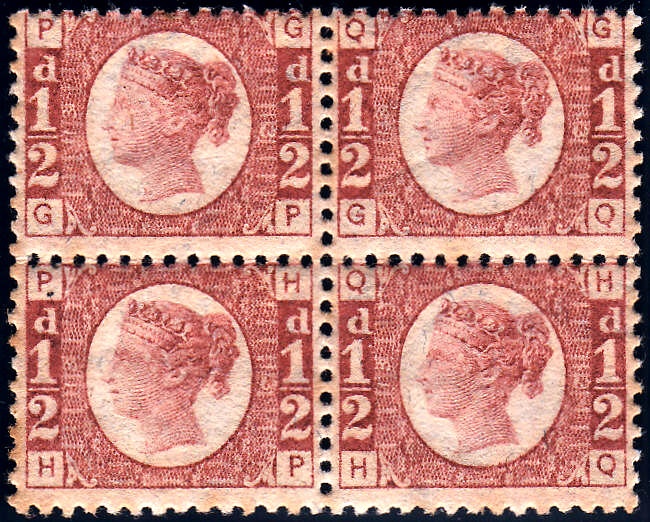
On this day in history : 1st October 1870 – The first Halfpenny Rose Red postage stamp is introduced – it is the smallest UK postage stamp ever to have been issued….

Image : British Government – Public domain

The new stamp was introduced due to the reduction in the postal rate for newspapers and the introduction of the postcard….

Printed in sheets of 480 the stamps soon became known as ‘bantums’, as they were half the size of the Penny Red…. The plan had been to issue them in a light green colour but experiments to produce a suitable ink had proved too time consuming – so instead it was decided to print them in a rose-red shade….

In 1880 they were eventually replaced by a light green stamp…. This time the new Halfpenny stamp, printed by De La Rue, was a full size version….

On this day in history….30th September 1630

On this day in history : 30th September 1630 – John Billington, one of the original pilgrims to set sail on the Mayflower to the New World, becomes the first settler to be executed in the English Colonies….

The Mayflower at Sea – copyrighted and published by A S Burbank – Public domain

Believed to be from Lincolnshire Billington, along with his wife Eleanor and two sons, John and Francis, set sail with the Mayflower when it departed on the 16th of September 1620…. They were soon to become known as the trouble-making family onboard…. On one occasion young Francis got hold of his father’s musket and shot it close to an open barrel of gun powder – nearly blowing the whole ship sky-high….

Billington himself was foul-mouthed and bullish and had soon made plenty of enemies…. The family were not part of the Puritan group who were travelling to the New World – the Billingtons were actually making the voyage to escape creditors in England….

Pilgrims at prayer during their voyage to North America – 1844 painting by Robert Walter Weir – Public domain

In the March of 1621 Billington was convicted of contempt after insulting Captain Myles Standish…. His punishment was to be having his heels tied to his neck…. However, as it was his first convicted offence and because he begged for humble forgiveness, he was spared the sentence….

Things did not improve once the settlers had arrived and established themselves in Plymouth, Massachusetts…. The family were regularly involved in disputes and civil disobedience…. Even Eleanor got herself into bother and spent a spell in the stocks accompanied by a whipping after being accused of slander against church deacon and politician John Doane….

Then in September 1630 Billington got into a dispute over hunting rights with fellow colonist John Newcomen…. Billington shot him dead with a blunderbuss…. Once he had been tried and convicted Governor William Bradford felt he had no alternative but to order capital punishment…. Billington was hanged in Plymouth….

Mayflower II – replica of the original Mayflower at Plymouth, Massachusetts – Image credit : Gma.Joli – own work – CC BY-SA 4.0

On this day in history….29th September 1258

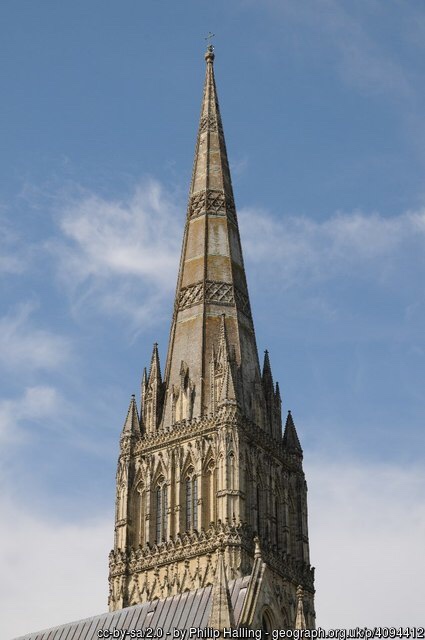
On this day in history : 29th September 1258 – The Consecration of Salisbury Cathedral…. At 123m (404ft) it has the tallest church spire in the United Kingdom….

Salisbury Cathedral was built in a style we now call early English Gothic…. The foundation stones were laid on the 28th of April by William Longspee, the 3rd Earl of Salisbury and his wife, Ela of Salisbury…. Many powerful people of the time helped to provide the materials used to build the Cathedral…. King Henry III donated trees from his estates in Wiltshire and Ireland for the timber – whilst Alice Brewer supplied marble from her Purbeck quarry for the columns and bases…. The Bishop, Dean and 52 Canons all contributed financially….

The main body of the Cathedral had been completed by the consecration date but there was still much to be done…. The West Front, Cloisters and the Chapter House were all still to be built…. Salisbury now has the largest Cloister and largest Cathedral Close in Britain….

The spire was added between 1300 and 1320….Its height was not unusual at that time – the old St. Paul’s in London and Lincoln Cathedral both had spires even taller…. However, being made from timber and lead neither lasted; Salisbury is now the only one surviving and since the late 1500s has been the tallest in Britain….

Not long after the spire’s completion problems began to arise…. The original builders of the Cathedral had not planned for such a spire – the weight, pressing down on the centre of the building began to distort it by pushing the columns out of alignment…. There was a serious threat of the Cathedral collapsing…. In the mid 1300s work began to reinforce the structure – iron ties and buttresses were added, along with arches across both sets of transepts….

The spire has undergone repair work several times over the centuries – most famously when Christopher Wren was commissioned to undertake an architectural survey…. He discovered the spire to be leaning by 30 inches – and iron rods were inserted to strengthen the structure…. Hundreds of years later, when this work was inspected, it was found that the spire had not budged another inch….