The restoration and living in of an English country cottage
Author: cottagecapers
Hi, I'm Hazel....
I write purely for pleasure; I love to delve in history, customs, traditions and nature....or whatever else grabs my attention at the time....
I am in no way an expert on what I choose to write about - I simply love to find out about things.... Whilst I always endeavour to get the facts right - occasionally I may get things wrong.... I guess you could call this my disclaimer....
I hope you enjoy reading my blog posts.... If so please give me a follow on Twitter or sign up via email for future posts.... If you are on Facebook Cottage Capers has a page with lots of ‘mini blogs’ and snippets.... It’s where we ‘like-minded’ folk can interact.... Hope to meet you again soon....
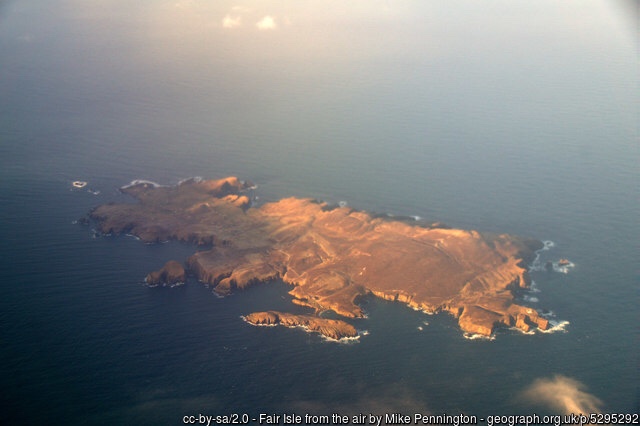
On this day in history : 3rd September 1954 – The National Trust buys Fair Isle, the remote island situated between Shetland and Orkney, in a bid to help secure its future….
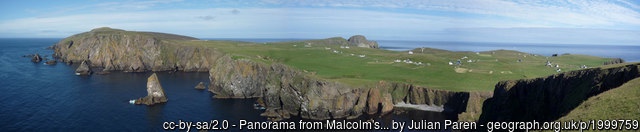
Fair Isle, which is just 3 miles long and 1.5 miles wide, is probably the most remote inhabited island of the British Isles…. and is located 24 miles from the Shetland mainland…. The population of around 60 mostly live on the south end of the island; there is a shop, a community hall, a fire station and a primary school – which typically has between 5 and 10 pupils at any one time…. Older children generally tend to receive their secondary education off the island….
Fair Isle is not connected to the National Grid – but has its own Fair Isle Electricity Company…. From the 1980s this consisted of two diesel generators and two wind turbines…. Since 2018 24-hour electricity has been supplied by three wind turbines, solar panels and batteries….
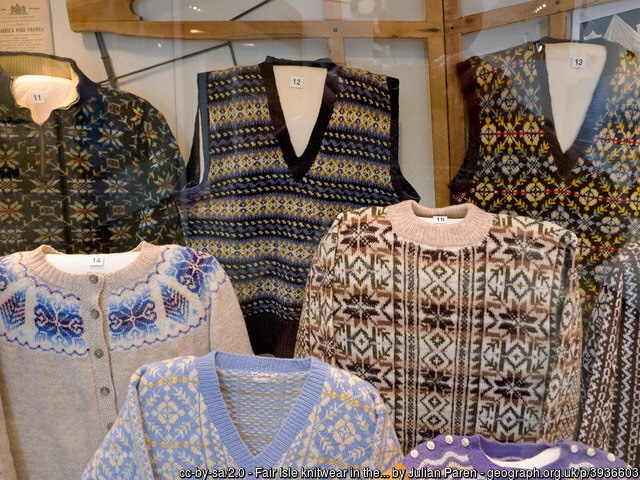
The main occupations of the islanders include fishing and crofting – and of course the island is famous for its Fair Isle knitwear….which was made popular in the 1920s by the Prince of Wales, who frequently wore a Fair Isle jumper whilst playing golf….
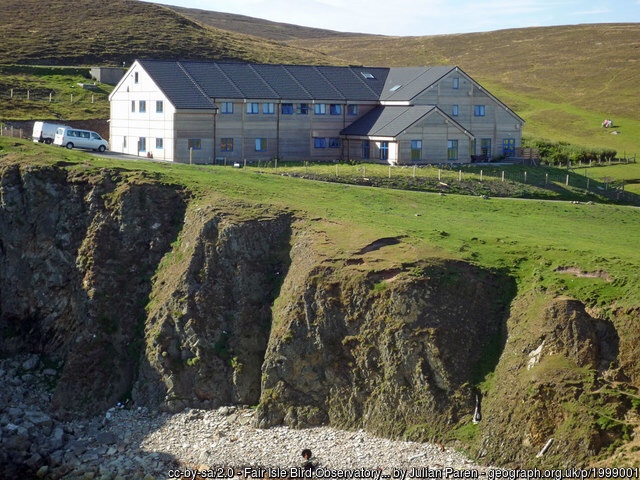
Ownership of the island had changed hands many times over the centuries; in 1900 it had a population of around 400 – but this number was to dramatically dwindle…. From 1948 Fair Isle belonged to George Waterson, an ornithologist from Edinburgh – and it is he who set up a bird observatory, which became recognised worldwide…. Fair Isle is home to many rare species of birds…. Using a grant of £5,000 from the Dulverton Trust the National Trust bought the island with plans to continue research into migratory bird life…. At the time of the National Trust taking on ownership the population of Fair Isle had fallen to an all-time low, with just 45 inhabitants…. In 1956 a conference organised by the National Trust was held on the island to discuss ways of saving its economy…. Nowadays tourism plays a major part….
In 2010 a new observatory was built at a cost of £4m, consisting of a two-storey wooden lodge, capable of accommodating 30 guests…. It even boasted a small bar for the evenings – no doubt proving popular as there is no public house on the island…. Tragically this new observatory was destroyed by fire on the 10th of March 2019…. But the people of Fair Isle are resilient – plans are already well underway and all efforts are being made to reopen in 2021….
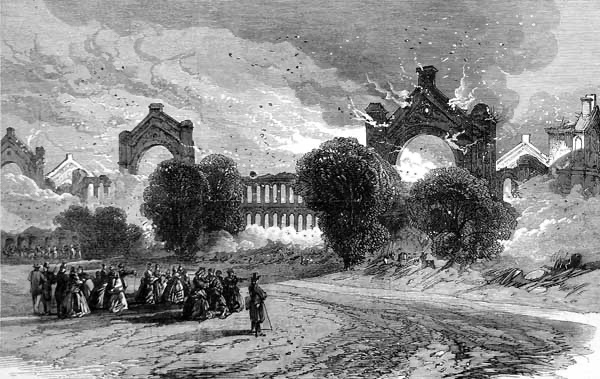
On this day in history – 9th June 1873 – Alexandra Palace, often referred to as the ‘Ally Pally’, is burned to the ground – just sixteen days after being opened to the public….
Original Alexandra Palace on fire – Illustrated London News – Public domain
In an idea conceived by architect Owen Jones in 1859, the intention was to build a counterpart to South London’s Crystal Palace…. It was to be North London’s centre of recreation, entertainment and education – ‘The People’s Palace’….
By 1860 The Great Northern Palace Company had been established – however, it was unable to raise the required finances to start work immediately…. The building materials were eventually acquired and recycled from the 1862 International Exhibition which had been demolished in South Kensington….
In 1863 the company managed to secure Tottenham Wood Farm as land on which to build its Park…. The Park opened to the public on the 23rd of July 1863 and was named after Alexandra of Denmark, the Princess of Wales and wife of the future King Edward VII….
The building of the Palace began and in 1871 construction started on the Edgware, Highgate & London Railway – to connect the site with Highgate Station…. The work on the Palace was undertaken by Kelk & Lucas – who also built the Royal Albert Hall around the same time…. Both Palace and railway were completed in 1873…. On the 24th of May 1873, just in time for Queen Victoria’s birthday, the Palace and Park officially opened to the public…. Some 120,000 people gathered for a performance by Victorian operatic singer Sims Reeves, to listen to recitals and watch a spectacular firework display….
Sixteen days later, at around lunchtime, workmen were working on the roof of the dome – when a burning ember escaped from a brazier they were using…. At first it was thought the fire could be contained – and so there was a delay in calling the fire service…. But the fire was to spread rapidly – staff rushed from room to room, tearing valuable paintings and tapestries from the walls and gathering up books and artefacts….
At 1.30pm the roof collapsed – falling on to the £30,000 organ below which had been designed by Henry Willis…. It is said the crash could be heard six miles away…. Three members of staff were killed and a priceless collection of some 4,700 pieces of historic English pottery and porcelain on loan to the Palace was destroyed….
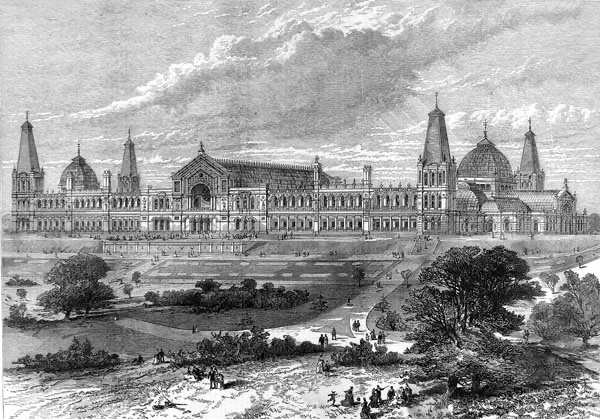
All that was left of Alexandra Palace were the outer walls…. Never-the- less, in true Victorian form, the Palace was rebuilt and reopened on the 1st of May 1875….
Rebuilt Palace 1875 – Illustrated London News – Public domain
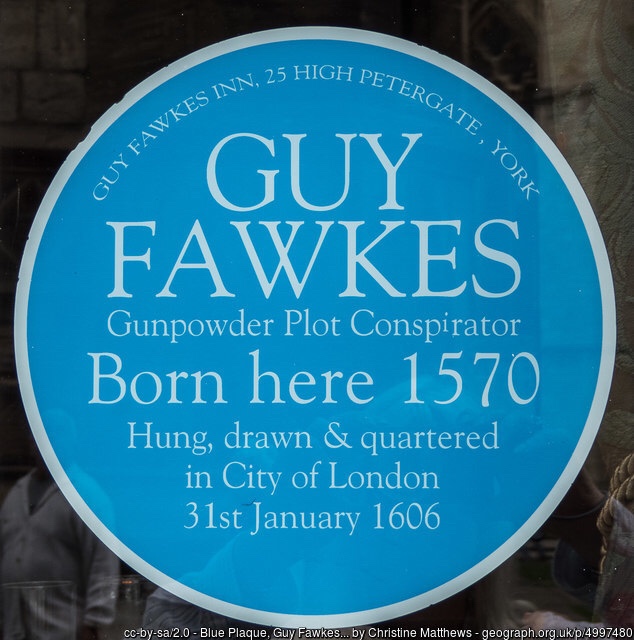
On this day in history : 13th April 1570 – The birth of Guy Fawkes – who as a member of a provincial group of English Catholics was to take part in the failed Gunpowder Plot of 1605….
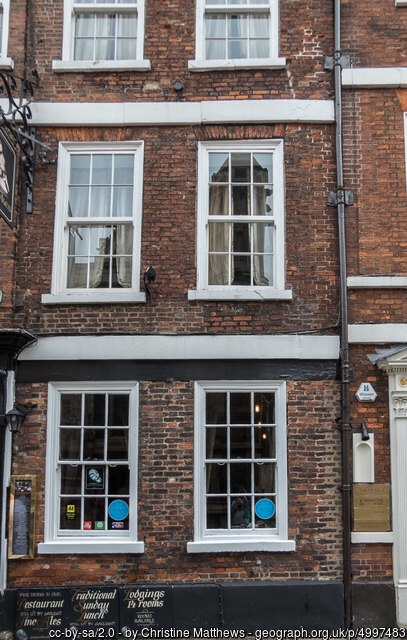
Birthplace of Guy Fawkes – 25, High Petergate, York – now the Guy Fawkes Inn public house
Guy was born in Stonegate, York – the second of four children, one of whom died – but he had two sisters, Anne and Elizabeth, who survived into adulthood…. His father, Edward Fawkes, worked as a Proctor for the Church and although his mother, Edith, came from a recusant Catholic family she too attended Church of England services….
When Guy was just 8-years-old his father died, leaving his son an estate in Clifton, York as an inheritance…. Edith remarried a few years later, this time to a Catholic, Dionis Bainbridge; it was around this time a now teenage Guy converted to Catholicism…. Although undoubtedly influenced by his step father it is likely that Guy was encouraged at school in his Catholic beliefs…. He attended St. Peter’s School in York where the Head Master, John Pulleyn, came from a family of strong Yorkshire recusants…. Also a governor at the school had spent 20 years imprisonment for recusancy…. It was a crime to be a Catholic in the time of the reign of Queen Elizabeth I….although there were those who refused to attend Anglican services and stayed loyal to the Pope….
On leaving school Guy went into service, working for Anthony Browne, 1st Viscount Montagu….but who took a dislike to the young Fawkes and so dismissed him…. In October 1591 Guy decided to sell his inherited estate and travel to the continent to fight for Spain in the Eighty Years War against the Dutch Republic….
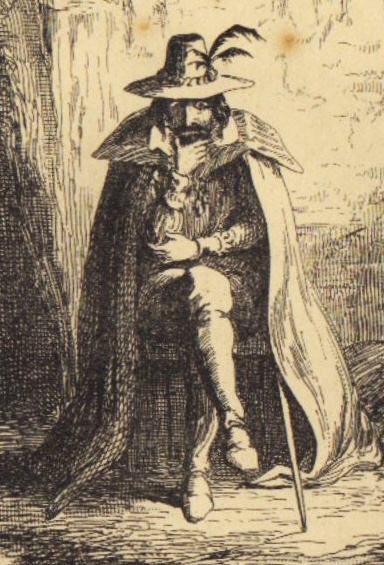
Guy Fawkes as depicted by George Cruickshank – Public domain
He was to join Sir William Stanley, an English Catholic who had formed an army in Ireland to fight in the Netherlands…. Guy became a junior officer, taking part in the Siege of Calais in 1596 – and worked his way up through the ranks to gain a Captaincy…. Whilst in Flanders he met a disgruntled Englishman by the name of Thomas Wintour, who persuaded him to join a small band of angry Catholics planning a rebellion….
It was around this time that Guy became known as ‘Guido’ – the Italian version of his name….
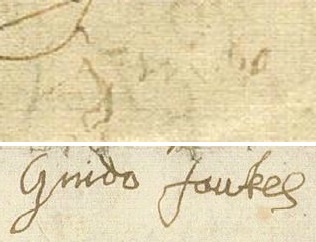
Signature of “Guido” Fawkes – note the top example – this was made soon after his being tortured after the failed Gunpowder Plot…. Public domain
He travelled to Spain in an attempt to gain support for the English Catholic rebellion – and managed to secure an audience with the Spanish King…. Whilst politely listening to what ‘Guido’ had to say – that the newly crowned King James I was a heretic (and he also denounced Scotland plus all those favoured by the King) – Philip III offered no help; Spain was not going to declare war on England….
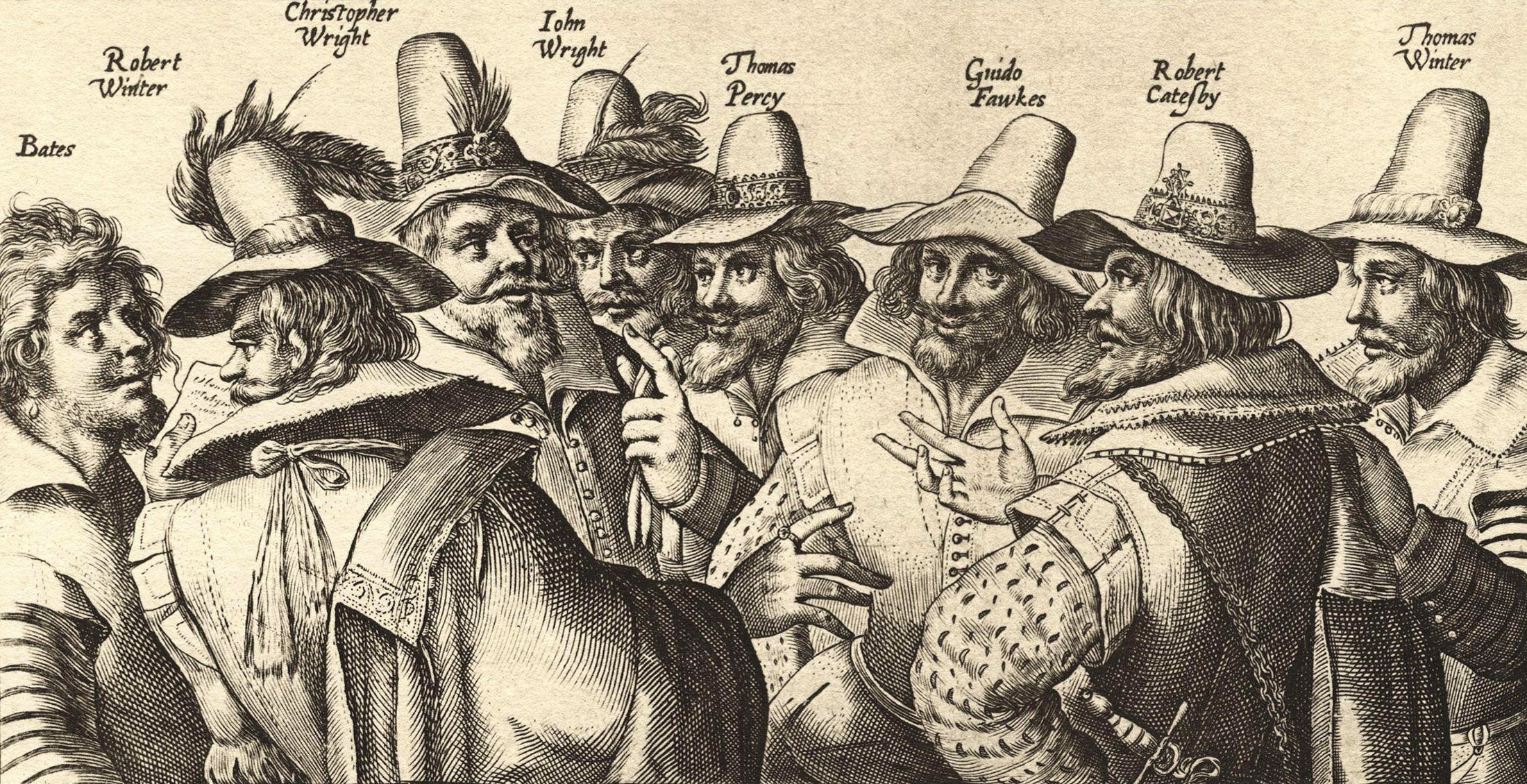
Contemporary engraving of 8 of the 13 conspirators – Crispijn van de Passe the Elder – Public domain
In 1604 as part of a group of 13 English rebellious Catholics, led by Robert Catesby, who conspired to assassinate the Protestant King James, Guy helped hatch the plans for the Gunpowder Plot – and we all know where that led….
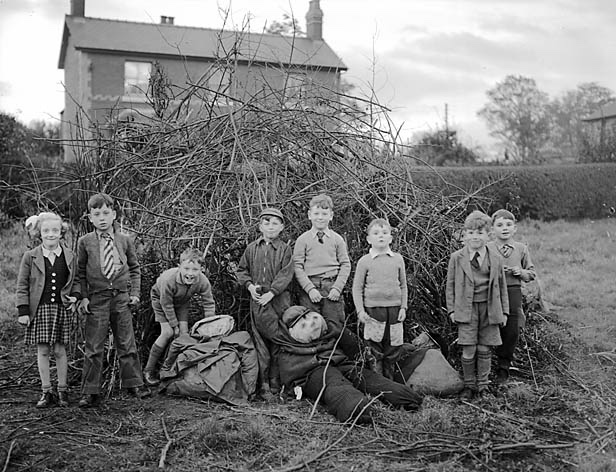
Children preparing for Guy Fawkes night celebrations (1954) – Geoff Charles CCO
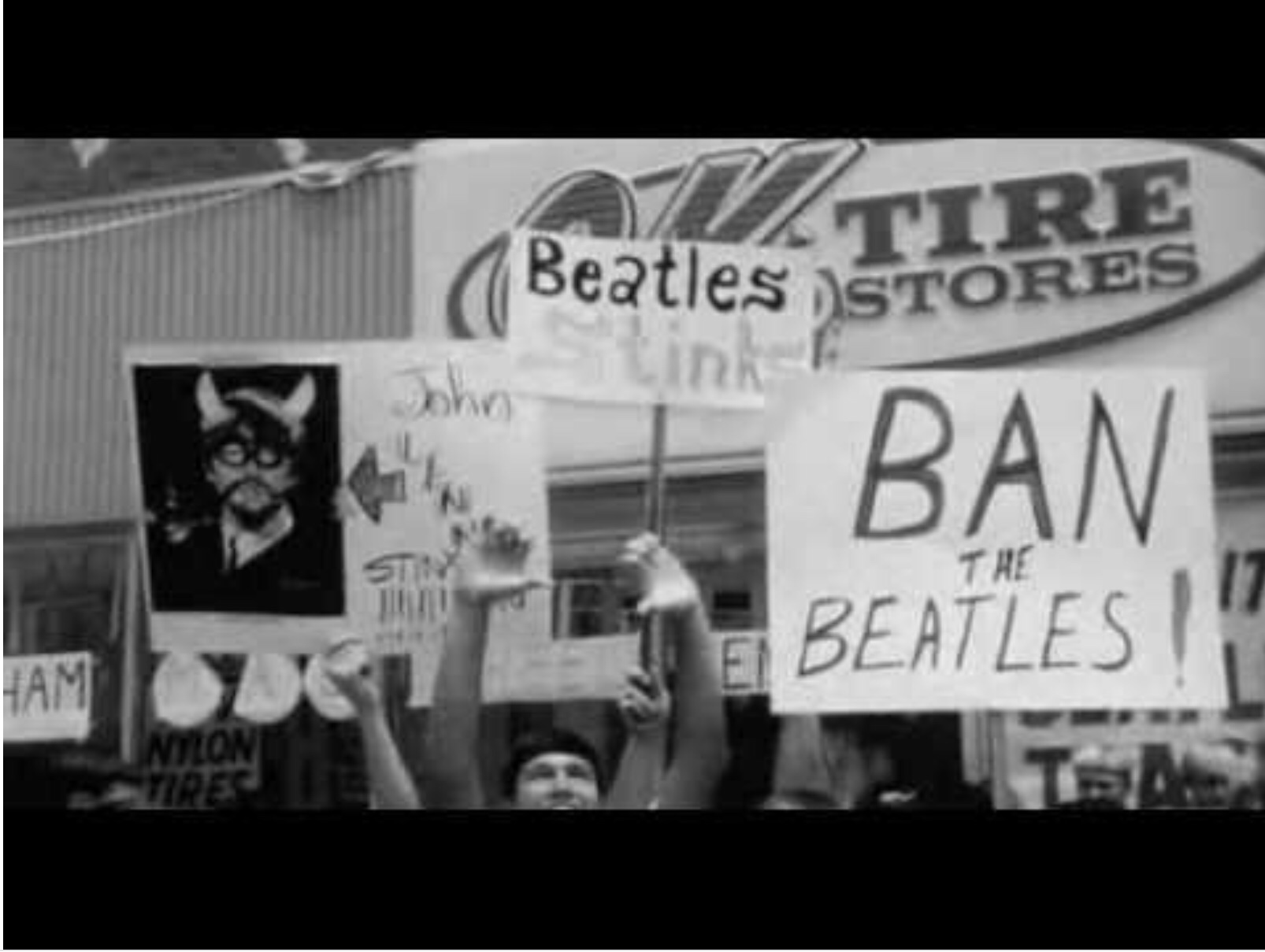
On this day in history : 4th March 1966 – John Lennon gives an interview in which he states the Beatles are more popular than Jesus Christ – it causes outrage in the United States….
Image : YouTube
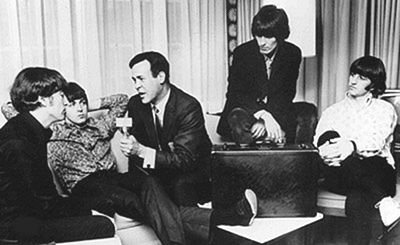
The interview was for the Evening Standard….it was the first in a series of articles entitled “How Does a Beatle Live?” Each member of the group was individually interviewed – starting with John Lennon at his home in Weybridge….
“Christianity will go. It will vanish and shrink. I needn’t argue about that; I’m right and I’ll be proved right. We’re more popular than Jesus now; I don’t know which will go first – rock ‘n’ roll or Christianity. Jesus was all right but his disciples were thick and ordinary. It’s them twisting it that ruins it for me”….
His words provoked no reaction from the public in the UK…. However, in July 1966 it was quoted in a US teen magazine and was received in America in a very different manner….
The publication that had been granted rights to all four interviews was a magazine called ‘Datebook’. Being broad minded – covering topics such as the legalisation of marijuana and inter-racial relationships – it was considered the most suitable for publishing the interviews…. Datebook teased its readers with the snippet “I don’t know which will go first – rock ‘n’ roll or Christianity” printed on the front cover….
Tommy Charles a DJ for WAQY, a radio station in Birmingham, Alabama heard of the comments – and was furious…. “That does it for me. I am not going to play the Beatles any more”…. The listeners were asked for their opinions – and they were less than favourable….the people were beginning to show their contempt….
The ball started to roll….more than twenty other radio stations followed suit and banned Beatles music…. The public were keen to show their anger – in the South especially – demonstrations were held, bonfires lit, Beatles memorabilia and records burned…. Soon the protests crossed over to Mexico and on to other particularly religious countries – such as Spain and South Africa…. The Vatican issued a public denouncement of Lennon’s comments….
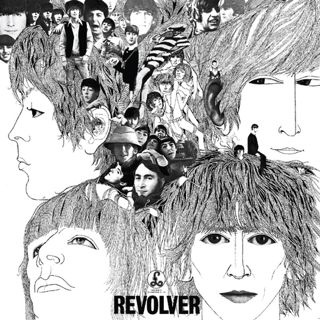
Unfortunately the controversy coincided with the upcoming US tour scheduled for August and the recent release of the album ‘Revolver’….
Fair use
Lennon apologised for his comments, cheekily saying “If I had said television was more popular than Jesus, I might have got away with it”…. The Press were somewhat sympathetic….
However, it was touch and go as to whether the tour would go ahead – but it was decided that it should…. Overshadowed by disturbances and protests – even being picketed by the Ku Klux Klan – some dates were cancelled, such as Memphis – because the Beatles were not welcome in town….
There was some support for the Beatles though…. One Kentucky radio station said it would play Beatles music in order to show its “contempt for hypocrisy personified”…. And a Jesuit magazine – ‘America’ – wrote that “Lennon was simply stating what many a Christian educator would readily admit”….
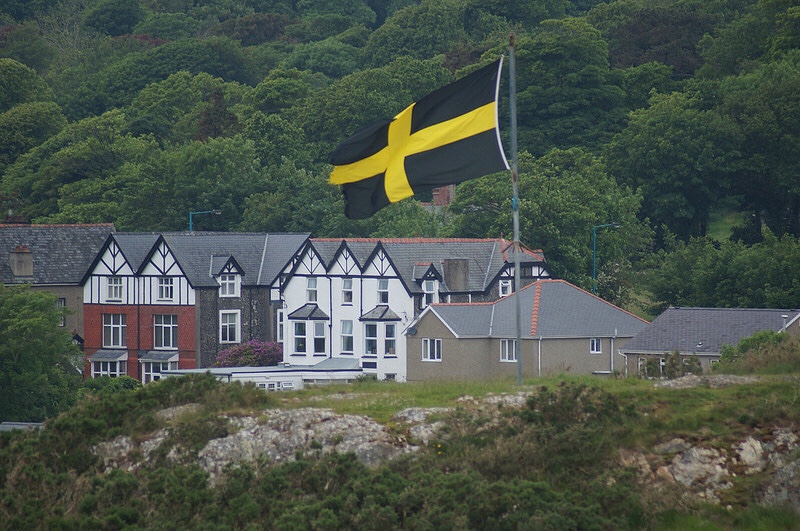
March the 1st is the National Day of Wales – Saint David’s Day – and has been celebrated since the 12th Century….
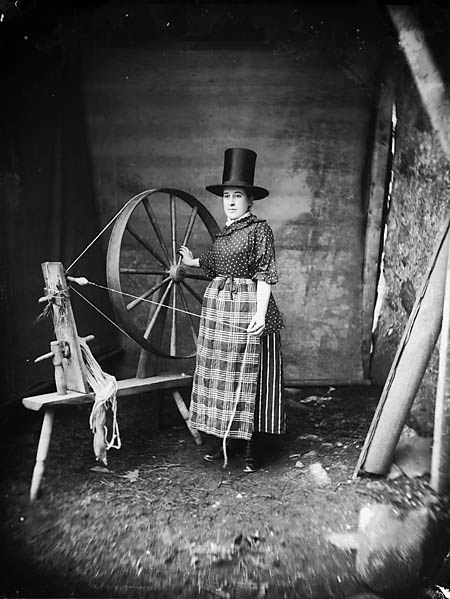
Although not a public holiday many events take place across Wales; festivals and parades, usually with a dragon theme – the biggest being the National St. David’s Parade in Cardiff…. Many people attend special church services and recitals of Welsh literature (Eisteddfod)…. National costume is often worn, especially by school children….and traditional songs are sung. Many heritage sites offer free admission on this day….
The traditional meal of the feast day is Cawl, a soup made with meat, root vegetables and of course, leeks…. Other foods enjoyed are Bara Brith (Welsh fruit bread), Tiesen Bach (Welsh cakes) and Welsh Rarebit….
So…. Who was David, Patron Saint of Wales? It’s hard to know for sure, so many stories and theories have emerged over the years…. In Medieval times it was believed he was the nephew of King Arthur; it does appear he may have been born to Royal parentage….
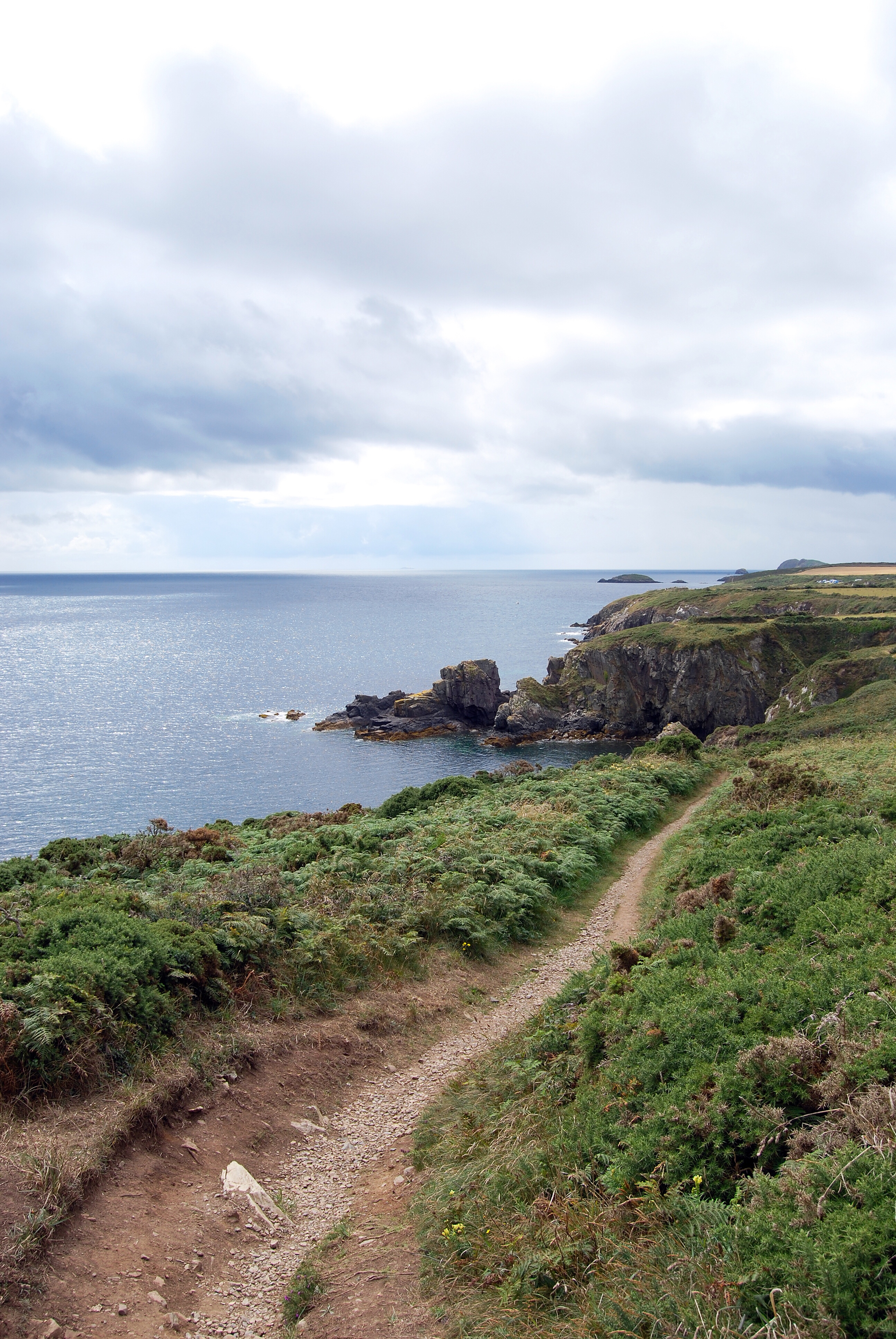
It is said David was born on a cliff top one night during a raging storm – some time around 500 AD in Pembrokeshire, on the South West coast of Wales. Some say he was the son of Sandde – Prince of Powys – and ‘Non’ – the daughter of a Chieftain…. Others say his parents were Sanctus, King of Ceredigion and a nun (Nonnita). St. Patrick, Patron Saint of Ireland, is reputed to have been born in the same region some years before and he is said to have had a ‘vision’ of the birth of David…. At the site of David’s birth there stands an 18th Century chapel, dedicated to Non….also the ruins of a tiny ancient chapel and a holy well….
The young David was brought up by his mother at Llanon, a village in Ceredigion…. He was then possibly educated at Hen Fynwy – a monastery – and tutored by St. Paulinus. It seems he was always destined to be a priest….
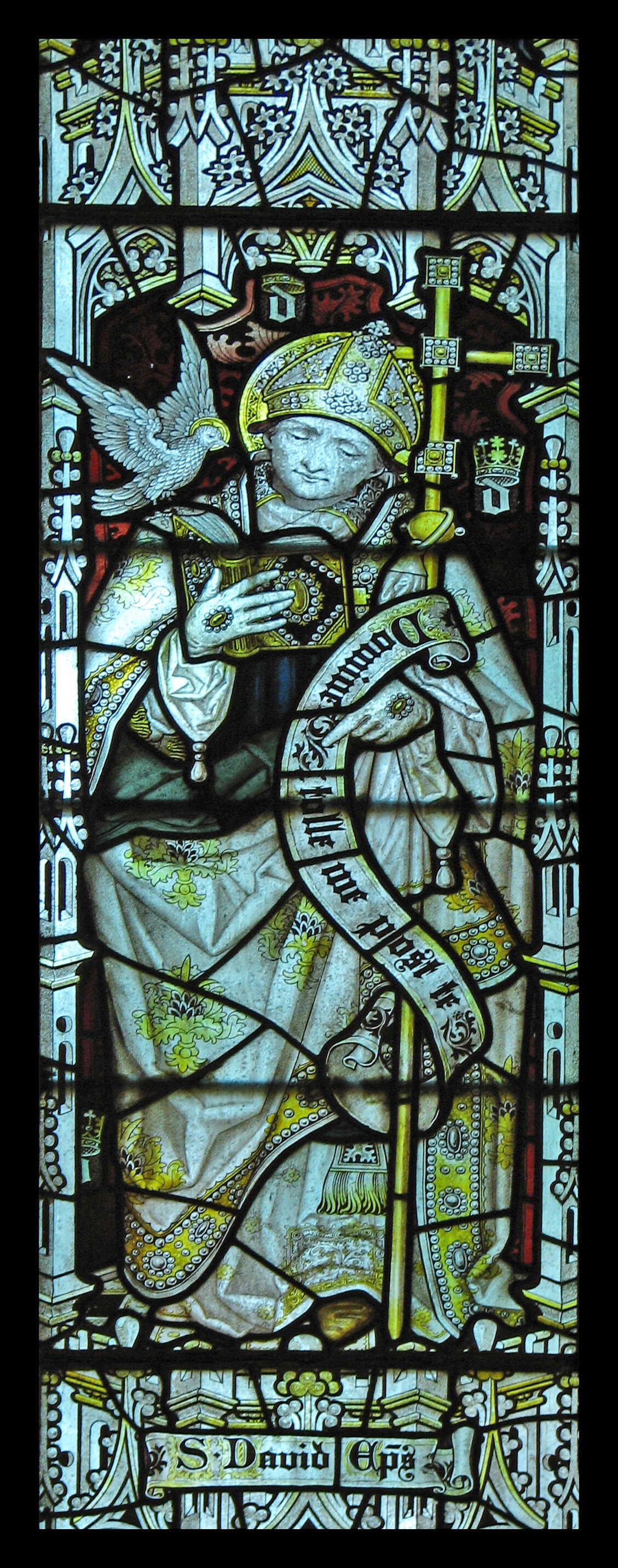
David became a missionary – spreading the Christian word throughout the British Isles – he even made a Pilgrimage to Jerusalem, where he was made a Bishop…. During his life he is supposed to have performed several miracles: he restored the sight to his tutor, St. Paulinus….he brought a child back to life with his tears…. But perhaps his most famous miracle is from the time he was preaching to a crowd out in the open air – some cried out from the back that they were unable to hear him…. Suddenly a white dove landed on his shoulder and the ground beneath his feet rose to form a small hill….and then everybody could hear what he had to say…. The white dove became the emblem of St. David; he is often depicted in pictures and stained glass windows with one on his shoulder….
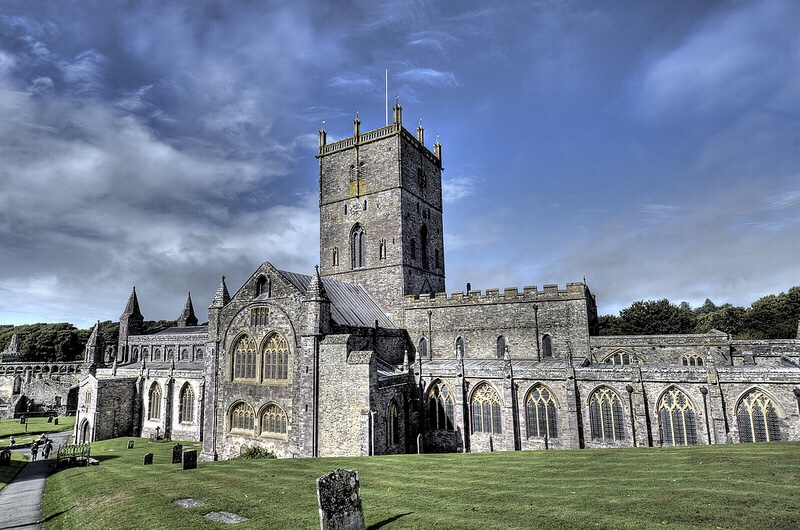
David was made Archbishop of Wales in 550 and founded 12 monasteries altogether, including Glastonbury – but the one he chose to make his base was the one close to his birth place, which he founded around 560 and is now the location of St. David’s Cathedral and St. David’s Bishops Palace – having been built by the Normans on the site of the original monastery…. In fact there is a stone which sits within an altar in the Cathedral which is believed to have been carried back by David himself on his return journey from his Pilgrimage to Jerusalem….
David’s monastery and church was built at Rose Vale (Glyn Rhosyn) on the banks of the River Alun. A settlement grew around the monastery and became known as David’s House – (Tyddewi)…. Life was tough in a monastery and David ran a particularly strict Order…. All were expected to work hard; ploughing the land by hand without the use of animals, to provide food with which to feed themselves and the travellers they gave shelter to…. They undertook many crafts, including beekeeping….but one of their main tasks was to look after the poor and needy by clothing and feeding them…. Their diet was vegetarian – David himself reputedly ate just bread and herbs and he was known as Dewi Ddyfrwr (the Water Drinker) because this was all he ever drank…. He was also very harsh on himself and was not beyond self-imposing penances such as standing up to his neck in freezing cold water – reciting the Scriptures….
David died on the 1st March 589 AD, rumoured to having been over 100 years old…. He was buried in a shrine in the 6th Century cathedral he had founded…. During the 11th Century the Vikings plundered the site repeatedly, murdering two Bishops in the process – in 1087 it was finally burned to the ground….
After his death David’s influence spread throughout Great Britain, eventually crossing the channel to Brittany, France…. In 1120 Pope Callistus II made him a Saint – (St. David is the only Welsh Saint to be canonised by the Catholic Church) – it was the Pope who declared two Pilgrimages to the shrine of St. David were worth one to Rome, three Pilgrimages would equate to one to Jerusalem….
St. David’s (as the settlement that had grown from David’s House became known) was given city status because of its cathedral in the 16th Century – but this status was lost in 1888…. In 1994, at the request of Queen Elizabeth II, it was granted the status again, making it Britain’s smallest city…. In 2011 it had a population of just 1,841 – compared to the capital Cardiff with 358,000…. In 1996 bones were found in St. Davids Cathedral which are said to be those of St. David…. Some 50 churches in South Wales are named for him…. The affectionate (if somewhat cheeky) nickname we often give to somebody of Welsh descent – ‘Taffy’ – originates to the 17th Century and comes from the Welsh for David – ‘Dafydd’….
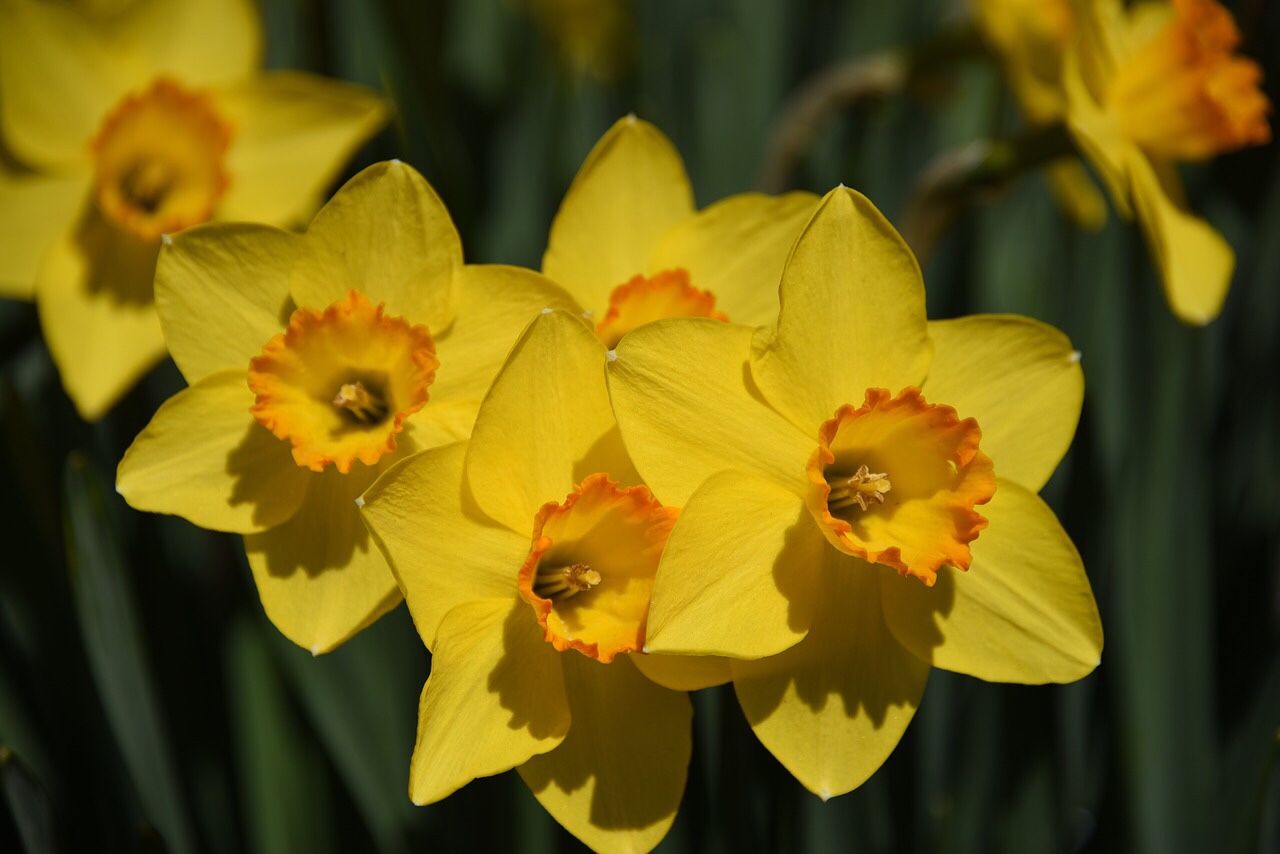
But what of the emblems for Wales – the leek and the daffodil? The leek is the original emblem; there are various stories to how this came to be…. One being that David advised Welsh troops to wear a leek in their hats whilst in battle with the Saxons, so they could be distinguished from the enemy…. This is doubtful, as apart from this story not being recorded before the 17th Century, David lived a peaceful life and was unlikely to have been involved with warfare….
Photo via Pixabay
Another more plausible theory comes from 1346, when the Prince of Wales, ‘Edward the Black Prince’, defeated the French at the Battle of Crécy. The long and bloody battle was fought in a field of leeks….to remember the bravery and loyalty of the Welsh archers, people began to wear leeks in their hats every St. David’s Day. This is the legend reflected in Shakespeare’s play Henry V….Act V Scene I : Fluellen insists Pistol eats a leek after insulting the vegetable on St. David’s Day…. “If you can mock a leek, you can eat a leek”….
The Welsh for leek is ‘cenhinen’, whereas the Welsh for daffodil is ‘cenhinen pedr’ – so it is possible over the years the two have become confused…. The wearing of a daffodil is a fairly recent custom….probably really coming about in 1911 after being encouraged by David George Lloyd at the investiture of the Prince of Wales…. You’ve got to admit a daffodil does smell sweeter than a leek when you are wearing it….
Photo via Pixabay
In the words of Dewi Sant (Saint David)…. “Gwnewch y pethau bychain mean bywyd” ~ “do the little things in life”….












 Cottage Capers