The restoration and living in of an English country cottage
Author: cottagecapers
Hi, I'm Hazel....
I write purely for pleasure; I love to delve in history, customs, traditions and nature....or whatever else grabs my attention at the time....
I am in no way an expert on what I choose to write about - I simply love to find out about things.... Whilst I always endeavour to get the facts right - occasionally I may get things wrong.... I guess you could call this my disclaimer....
I hope you enjoy reading my blog posts.... If so please give me a follow on Twitter or sign up via email for future posts.... If you are on Facebook Cottage Capers has a page with lots of ‘mini blogs’ and snippets.... It’s where we ‘like-minded’ folk can interact.... Hope to meet you again soon....
Not my normal sort of post, I know – but it’s not been a normal sort of week….
The half term holiday, a welcome break from routine…. Time to recharge the batteries, to be able to fall into bed at night without setting the alarm, a chance to have a little lie in each morning – bliss! Well, that was the plan anyway….
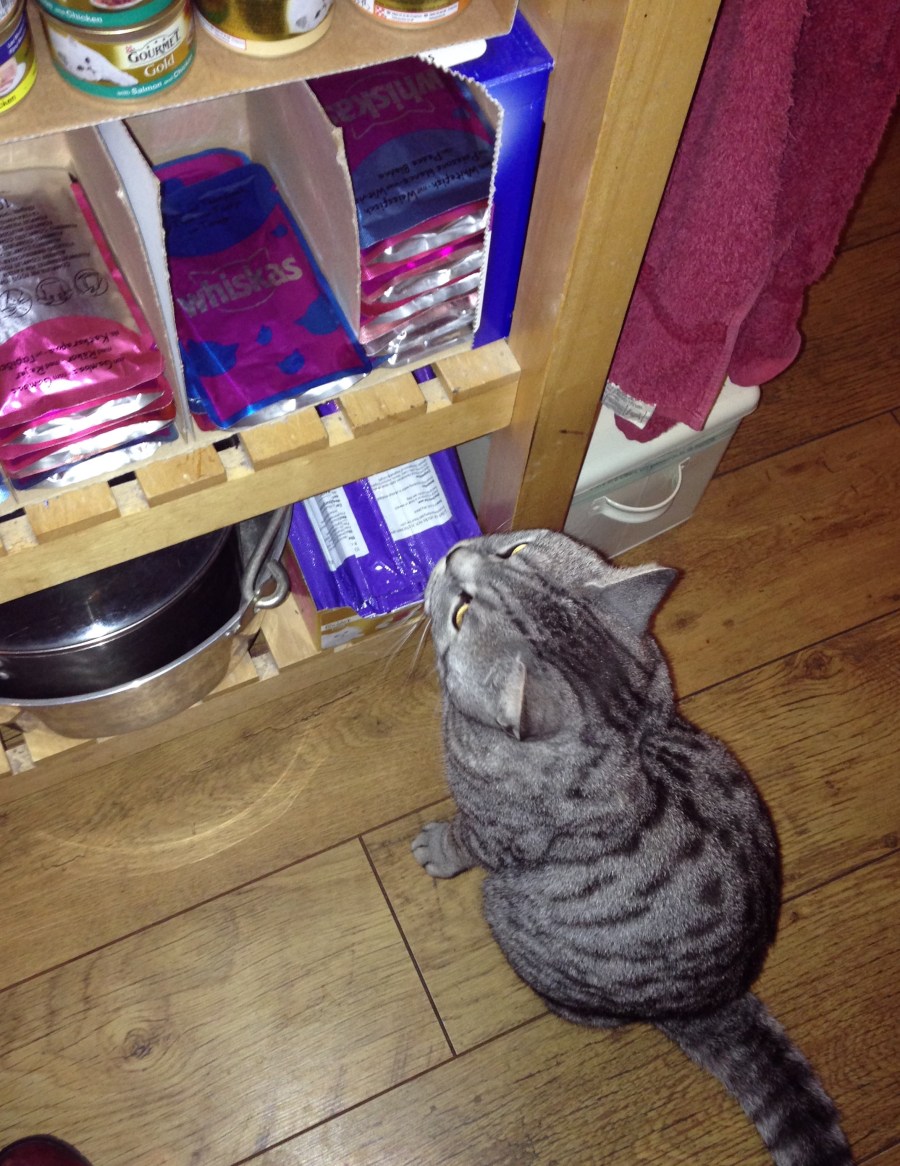
So, last Saturday morning, being the first day of the holidays, I did just that…. By the time I eventually padded downstairs, taking care not to awaken the rest of the still slumbering household, it was quite a bit later than the usual 5.45 am and already daylight outside…. I wandered into the kitchen with coffee on my mind…..only to be greeted by the sight of two extremely grumpy cats staked out by their food bowls. The fact that the bowls were still half full of the late supper they had wheedled out of me the previous evening didn’t seem to make any difference; they were holding out for the gourmet stuff they have every morning. Breakfast is a big deal for these two moggies, having ‘posh nosh’ first thing is, for them, a matter of ‘principle’ – theirs not mine; they simply refuse to eat anything else. I let them get away with it in the mornings but the rest of the time, they get pouches like normal cats….
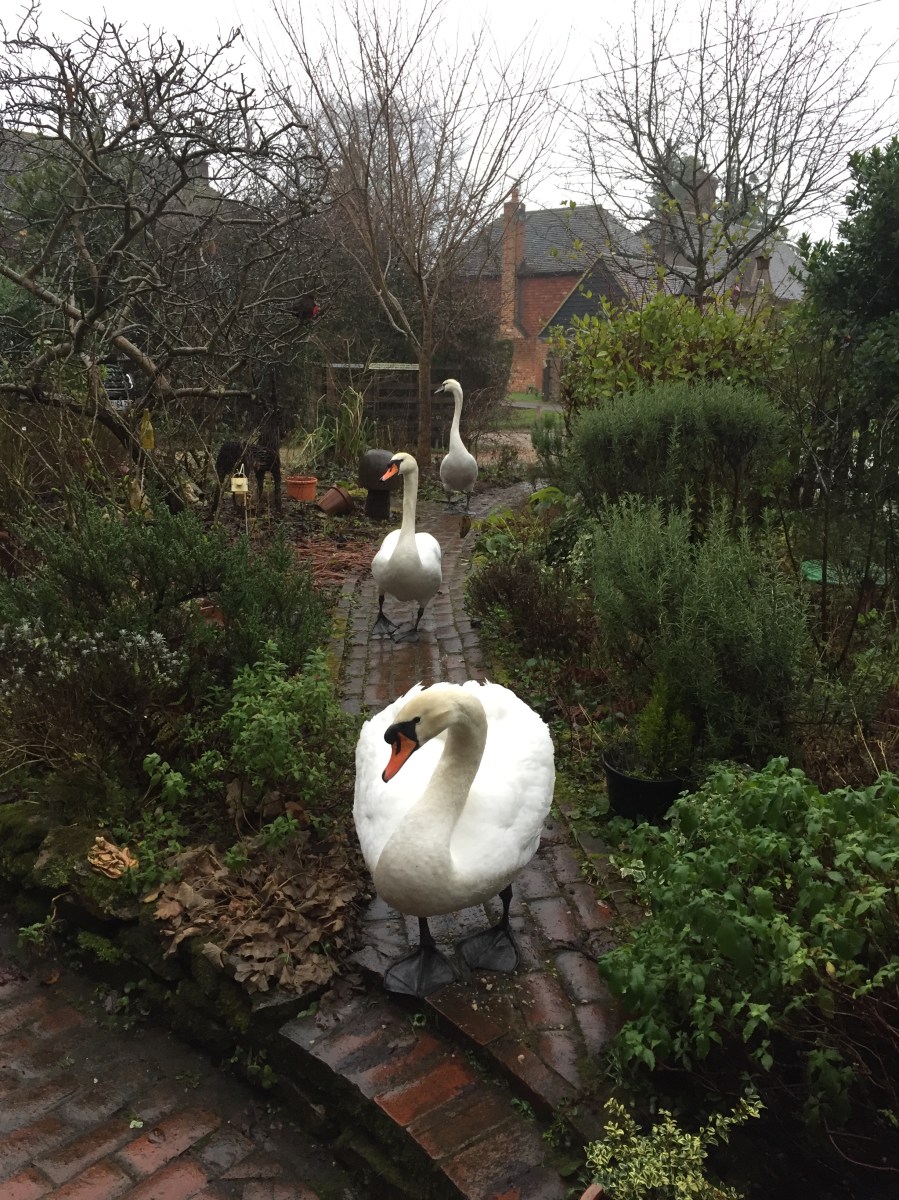
So, feeling guilty, I busied myself tending to their feline needs…. It was at this point I glanced out of the window, to spy three angry swans glaring back at me…. Now I felt doubly guilty, it was becoming blatantly obvious that I was not the most popular human that morning. So, avoiding the venomous stares, I hurriedly got myself sorted to face the day, (there was no way I was going outside to feed swans in my jim-jams, it was snowing!). By the time I was ready, the disgruntled trio had already stomped off back to the pond. Now feeling trebly guilty, I ventured out to give them their bread and grain – they did nothing to alleviate my guilt, I was definitely the errant human – a theme that was to remain with me throughout the rest of the day….
Having already upset cats and swans, I think I already knew the bunnies were going to be equally unhappy with me…. Cookie likes to show his authority at the best of times; this particular morning he lunged at me the moment I lifted the lid to his run. He is a rabbit who is King of his domain; he has a large outside run which is connected to his hutch by a twelve-foot tunnel. He is very much an outdoors bunny, even in sub-zero temperatures he prefers to be outside. In fact, he only retreats to his hutch when sulking, or when he has the urge to ‘trash’ it – he can sometimes behave like a spoilt rock star wrecking a hotel room….
‘Cookie’
My two girl bunnies are of a gentle nature, they are usually delighted to see me and greet me affectionately. Not so this morning – as soon as I lifted the blanket that covers their hutch at night, it was apparent I was getting the ‘cold shoulder’….
Things didn’t particularly get any better during the rest of the day. Lola, evidently worried that her brother wasn’t getting the required nutrition to meet his needs, went off to hunt. She came back with an appropriate rodent hanging from her jaws, emitting that ‘yowling’ that alerts us to her arrival bearing ‘gifts’….this is my cue to sprint and bolt the cat flap to stop the offering from being brought indoors. Successfully managing to prevent ‘grand entrance with gift’, I later opened the back door to be confronted by a disemboweled, headless rat….
So, the day progressed…. Evening feed for the swans – I’m used to them coming to look for me when they are ready – not this time though, I had to go and find them. They grumpily scoffed their food, turned their backs on me and ungratefully waddled off…. The bunnies, they were still sulking…. As for the cats, well, I was to pay….dearly! Every night since, I have been woken at regular intervals to be reminded that they are there and it will be breakfast time in a few hours; Lewes has actually taken to demanding an extra meal at the unthinkable hour of 2 am!
I think Lewes is hungry….again!
I for one, am glad half term is almost over…. I am hoping things get back to normal next week….I need a break !!
As Valentine’s Day approaches, many of us are quietly hoping (or noisily hinting) at the possibility of being surprised with a gorgeous bouquet of flowers; roses would be nice….
Ever thought about the significance of the rose? They have a language all of their own….
Take the colour; each has its own meaning:
Red – for love and beauty
White – purity and innocence; a new start (why they are so often used in bridal flowers)
Yellow – friendship, joy, delight; good health
Orange – desire and enthusiasm
Pink – appreciation; gratitude and love
Lavender – enchantment
Photo credit: ‘Red roses in garden’ – Foter.com / CCO
A single stem, of any colour, shows utmost devotion
Two stems entwined, poses the question ‘will you marry me?’
Six, indicates a need to be loved….
Eleven, assures the recipient they are loved deeply
Twelve, the ‘classic’ number, shows love and appreciation
Thirteen, depicts a secret admirer!
The rose – always a favourite – but did you know, there are over 30,000 different varieties? All originating from the humble and beautiful, wild rose….
Take our native Dog Rose (Rosa Canina), the thorny climber found growing in hedgerows and woodland; with its simple five petaled, lightly scented flower, ranging from white to deep pink. The Dog Rose flowers late Spring through to mid Summer and then produces an abundance of red rose hips. Loved by wildlife, it is an invaluable source of food; nectar for the insects and the hips for the birds, especially blackbirds and redwings. In years gone by the flowers were widely used to make rose water and scented oils; the hip, being high in Vitamin C, used to make syrup and tea. Even today it is still used for medicinal purposes. Do you remember as a child, ever making ‘itching powder’ from the tiny hairs found inside the rosehip? Nowadays, the Dog Rose is used for stabilising soil on land reclamation sites and as root stock for grafted, cultivated roses….
Photo credit: ‘Wild rose’ – Foter.com / CCO
Photo credit: ‘Wild rose’ – Foter.com / CCO
Photo credit: ‘Wild rose’ – Foter.com / CCO
Photo credit: ‘Wild rose hips’ – Foter.com / CCO
The wild rose is one of the true symbols of our heritage, represented by the Tudor Rose. The War of the Roses was a series of wars between 1455 and 1487, to claim the English throne. The House of York, with the white rose as its emblem and the red rose for the House of Lancaster. Eventually, Henry VII won the Battle of Bosworth Field in 1485, taking the Crown from Richard III and thus claiming victory for the Tudors….
So, what are the origins of our very own English rose? Well, in the beginning it came to us from Central Asia; it is estimated that its origin dates back between 60-70 million years! Fossil evidence has been found that is 35 million years old. There are some 150 natural species of wild rose, which gradually spread across the Northern Hemisphere. Cultivation began roughly 5,000 years ago, probably by the Chinese although the Egyptians, Greeks and Romans all grew cultivated roses as well. It wasn’t until the late 18th Century that cultivated roses as we know and love today were properly introduced into Europe; having said that, long before then, it was Alexander the Great, ruler of Macedonia, who has been given credit for first introducing a form of cultivated rose to Europe….
During the 12th and 13th Centuries, soldiers returning from the Crusades in the Middle East, brought back samples and tales of ostentatious rose gardens. As travel began to increase, merchants and scholars began to exchange different plant species, amongst them roses….
In 1597, the English herbalist, John Gerard, recorded in his book, ‘Herball’, some fourteen different types of roses. In 1629, John Parkinson, pharmacist to James I, noted 24 types growing in his herb garden. In the early 1700s, Mary Lawrence, in her book ‘A Collection of Roses from Nature’, illustrated 90 different varieties….
During the 18th and 19th centuries, Europe saw a kind of ‘revolution’ in the breeding and growing of roses. A certain variety, the Chinese Rose (Rosa Chinensis) had attracted the attention of European growers.
Photo credit: China Rose. Rosa Chinensis [as Rosa indica] Choix des plus belles fleurs – et des plus beaux fruits par P.J. Redoute (1833) – Swallowtail Garden Seeds via Foter.com / CC BY Original image URL: https://www.flickr.com/photos/swallowtailgardenseeds/15202765926/It was in 1752 that the very first Chinese variety arrived in the West, when a rose named ‘Old Blush’ was introduced to Sweden. Then, sometime in 1789, a captain of the British Navy carried the first flowers to England. 1793 saw the introduction of more specimens, brought in by the Director of the East India Company, Dr. William Roxburgh….
It was during the early 1800s that Josephine, the wife of Napoleon Bonaparte, helped to make roses so popular in Europe, she was passionate about them. In her rose garden, near to Paris, she accumulated some 250 specimens, collecting until her death in 1814. To encourage his wife, Napoleon ordered all the captains of his ships to look for new roses in every land they visited. The English, who were at war with France at the time, not only allowed roses bound for Josephine to freely cross the borders but also granted permission for her chief gardener to travel through the Channel, unrestricted. It was because of Josephine’s enthusiasm and the reputation of her rose garden that rose growers were encouraged to hybridize the rose species : the result, the so many different roses we know today….
Back in the Spring of last year, we (as a family) took part in a Bird of Prey Experience Day. It was the end of March and an unseasonable, bitterly cold day but this did not spoil the absolutely delightful time we had….
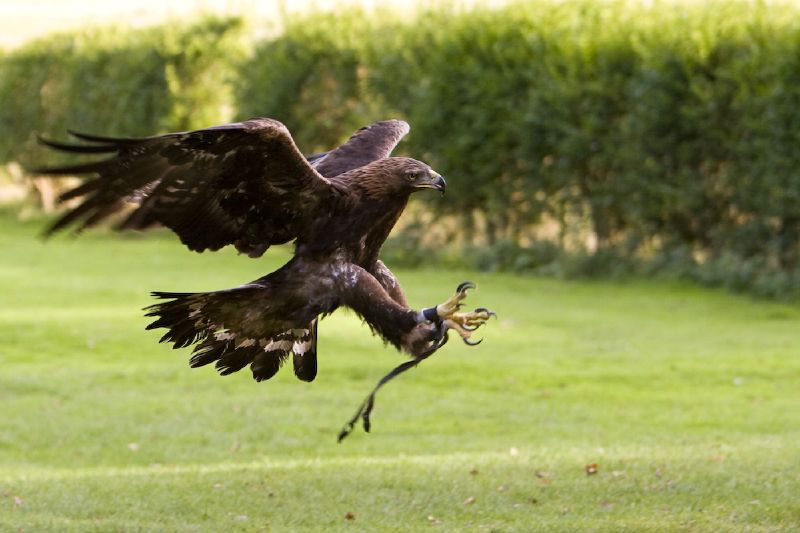
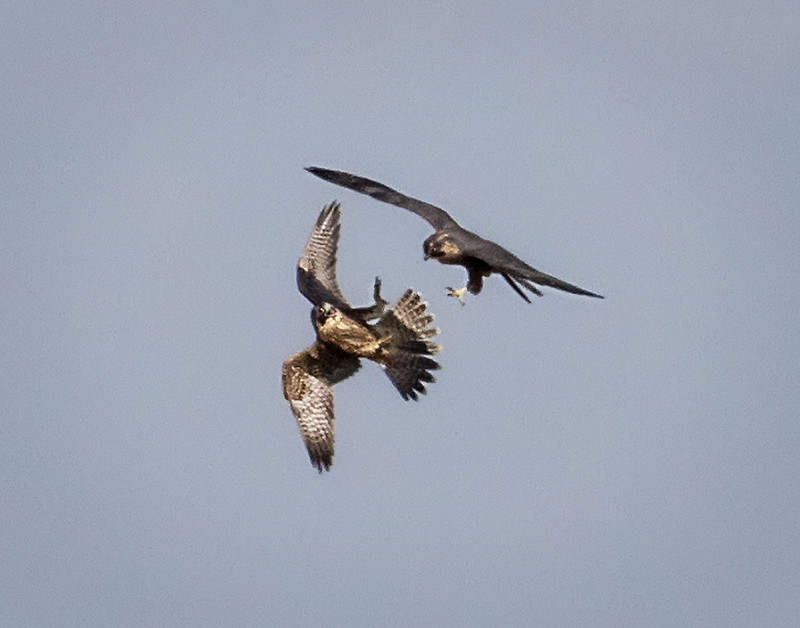
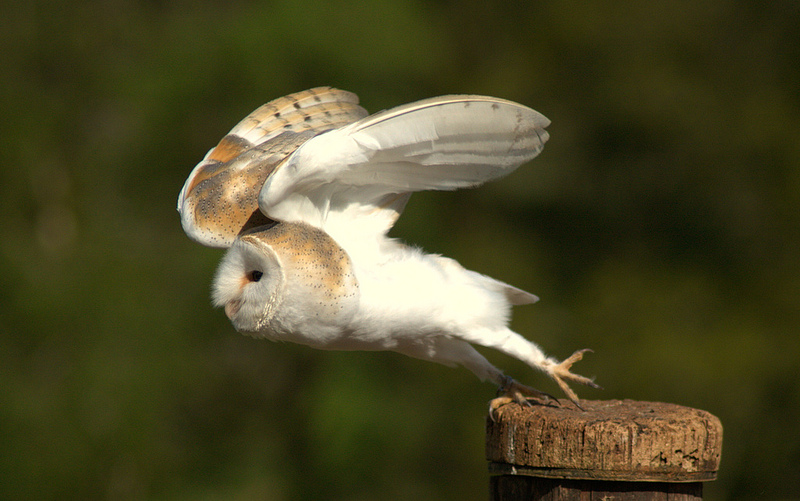
We were part of a small group, six in total. Sally, our hostess and falconer introduced us to her many birds; European Eagle owls, Barn owls, Harris hawks, Peregrine falcons to name but a few…. She showed us the equipment every falconer needs to use; hoods, jesses and lures….and then we got the opportunity to handle the birds and fly them….
British birds of prey are protected under the Countryside and Wildlife Act 1981. In the UK it is permitted to carry out hunting with raptors without having a special licence, although it is a stipulation that the birds must be bred in captivity. The Secretary of State for the Environment can issue licences enabling birds to be either taken from the wild or imported but very few are ever issued. To import or remove birds (or eggs) from their natural habitat without a licence is a criminal offence. Birds must be ringed and registered to help combat the black market….
Captive breeding began in the early 1970s. Peregrines especially, were suffering a decline in the wild due to pesticides being used in agriculture.
Broadwings; Golden eagle, Buzzard, Harris hawk
Longwings; Peregrine falcon, Lanner falcon, Gyrfalcon
Shortwings; Goshawks
(Raptors are identified by their wing and body shape).
Owls are sometimes used but are less common. They rely on sound more, as they see in black and white and are long sighted….(a raptor’s sight is ten times greater than a human’s)…. When owls are used, it is more likely to be the European Eagle owl, Barn owl or Great Horned owl….
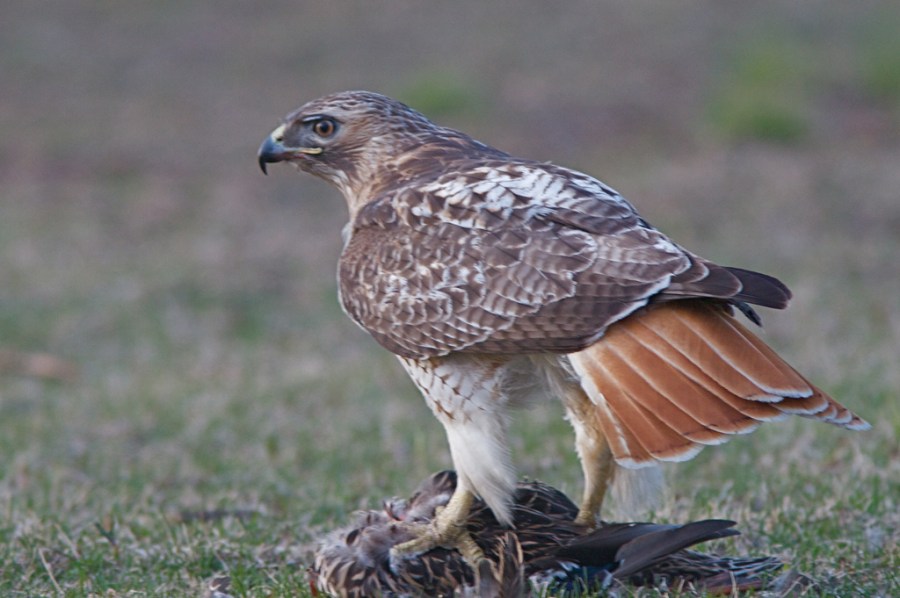
When starting out in falconry it is strongly recommended training is sought from an experienced falconer…. Most beginners start out with Harris hawks and Red Tailed hawks….
The Red Tail hawk is easy to breed in captivity. They are known for their brick red coloured tail feathers. Native to the USA, they are North America’s most common hawk, they are also found in the West Indies. They are very adaptable to their surroundings, living in environments as diverse as tropical rain forests and mountains alike, quite happily. These keen eyed birds of prey are efficient hunters of rabbits, hares, squirrels, ducks, pheasants and geese….
The Harris hawk, also from the USA, originating in Texas, Arizona and northern parts of South America, is once again a keen, efficient hunter. It is unique amongst its raptor counterparts because it lives in packs in its natural habitat. Being used to social hierarchy, it makes it easier to train….
Raptors need considerable human contact on a daily basis or they will soon revert back to their wild state. ‘Manning’ is an essential part of training, acclimatising the bird to live and work with humans, involving all areas where human and bird lives cross – this even includes housing, car, pets etc…. The better manned they are, the calmer they will be and easier to train and fly….
The trainer wears a gauntlet on which the bird will be taught to perch upon, by being fed with morsels of food, (food becomes an important bond between bird and human). Once used to ‘sitting on the fist’, the bird will then be encouraged to fly between the perch and fist, always with the reward of food. A creance can be used at this stage – a long, light line that attaches to the bird’s jesses….
The jesses are strips of strong leather, (or often kangaroo hide these days, used because of its softness), that attach to the raptor’s legs. The jesses need replacing regularly to ensure they still fit and are comfortable….
Bells are also fitted to the legs, with leather strips called ‘bewits’. The bells can be heard from a considerable distance and enable the falconer to locate the bird when on flying exercises. Nowadays, it is not uncommon for a transmitter to be fitted incase the bird gets lost….
Also, raptors are trained for the ‘lure’; usually made from leather, with feathers attached, the lure is a representation of prey…. The falconer swings the lure around on a cord for the bird to chase for exercise, or to ‘call’ it in. There are at least three types of lure used; short line, long line and pole line….
Another necessity for successful training and flying is a hood…. They are used to keep the raptor calm. Not being used to sudden movement or change in light, they can be easily startled and may attempt to jump from the fist and harm themselves; similarly, they may get over excited about the prospect of going out…. Not being able to see makes a bird think it’s safe and calms it down. The falconer needs the bird to be alert and ready when it is required to fly….
The hood is made from kip leather or kangaroo hide: there are two main types of hood:- The Anglo Indian, which is made from one complete piece and the Dutch hood, which is made from three separate pieces. This second hood is made on a special mould, to fit the raptor’s head, allowing space for the eyes and a good fit at the neck. The hood must be a good, comfortable fit – or the bird will reject it, making training difficult….
************
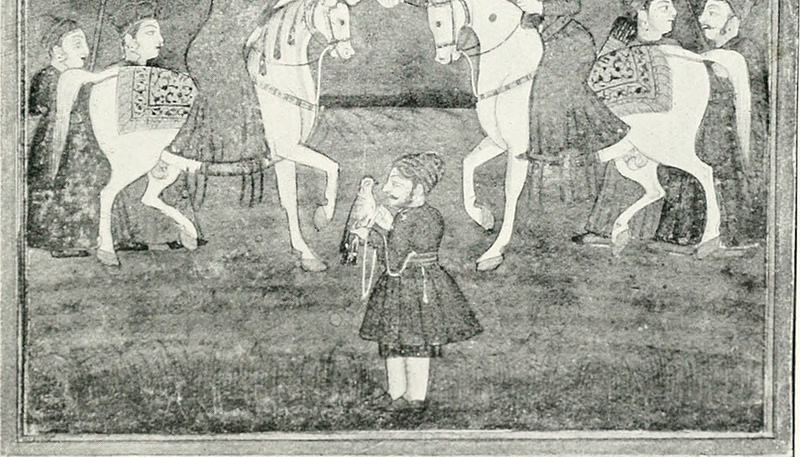
It is thought falconry began in Mesopotamia some 4,000 years ago. Tradition says the first falconer was the King of Persia. It is said the King was entranced by the beauty of a wild falcon capturing a passing bird. He ordered that the falcon be caught and he then kept it at his side at all times….
As trade began to increase between Arabia, Europe and the Far East, so did the interest in falconry. It had reached the Mediterranean by 400AD and by 875AD was practised widely throughout Western Europe and Saxon England.
Photo credit: Image taken from page 196 of ‘Artour de la Mediterranee…. Illustrations par A. Chapon, etc.’ – The British Library via Foter.com / No known copyright restrictions Original image URL: https://www.flickr.com/photos/britishlibrary/11301621276/
In fact, it was something of a craze – a way of life for many – one that was to last for centuries, the peak of interest being between 500AD and 1600AD. In Mediaeval society, as well as being a very popular sport, it was a status symbol with strict hierarchy for raptor ownership:-
Emperor; Eagle, Merlin
King; Gyrfalcon & the tercel* of
Prince; Falcon gentle & tercel gentle
Duke; Falcon of the Loch (Peregrine)
Earl; Peregrine
Baron; Bustard (Peregrine)
Knight; Sacre and Sacret
Esquire; Lanere, Laneret
Lady; Marylon
Young man; Hobby
Yeoman; Goshawk
Poor man; Tercel
Priest; Sparrowhawk
Knave or servant; Kestrel *’Tercel’ or ‘tiercel’ refers to a male hawk or falcon
Photo credit: Image from page 206 of ‘The poetical works of Sir Walter Scott, baronet; ed. with a careful revision of the text’ (1888) – Internet Archive Book Images via Foter.com / No known copyright restrictions Original image URL: https://www.flickr.com/photos/14597458847
Photo credit: Image from page 440 of ‘The comedies, histories, tragedies and poems of William Shakespeare’ (1851) – Internet Archive Book Images via Foter.com / No known copyright restrictions Original image URL: https://www.flickr.com/photos/internetarchivebookimages/14782175074/
Photo credit: Image from page 462 of ‘Library of the world’s best literature, ancient and modern’ (1902) – Internet Archive Book Images via Foter.com / No known copyright restrictions Original image URL: https://www.flickr.com/photos/14577700129/
Such was the class system in Mediaeval times, that to own a bird above social rank could result in the offender’s hands being cut off!!
The first documented English falconer was Ethelbert II, Saxon King of Kent (followed by Alfred the Great). Until 1066 only native birds had been used in the UK but after the Norman Conquest new species were introduced. Falcons became so highly valued, they were quite literally worth their weight in gold. They were used as peace offerings. In 1276 the King of Norway sent eight gyrfalcons to Edward I as a sign of peace. In 1552 Czar Ivan IV of Russia and Queen Mary I exchanged a gyrfalcon and a pair of lions, when the two countries established diplomatic relations. Ancient tradition has it that the English Monarch is presented with a falcon, by the Duke of Athol, Lord Derby and the Officer of the Royal Falconry (Master of the Mews), at the time of coronation; a tradition that still continues today….
Because of their extreme value (in Mediaeval times), strict laws came into force in England, to protect birds of prey. To take eggs from a nest would mean a year’s imprisonment; to steal a bird could result in the thief’s eyes being poked out as a punishment! It could be said these laws were the origins of wildlife conservation….
The majority of birds used were caught in bow nets which were set along the migration routes of the birds of prey in Holland. Valkenswaard, the Dutch town (which was then still a village), became solely reliant and prospered upon trapping birds and manufacturing falconry accessories. Every autumn a bird auction was held, with visitors attending from far and wide. It was a trade that did not die out completely in Valkenswaard until 1937.
During Mediaeval times falconry was viewed as a sport, art and a way of hunting for food; for many households it was one of the main ways of obtaining meat. Gyrfalcons were used for catching rook and herons, which were considered delicacies centuries ago and so were reserved for Royalty and the upper classes.
Tercels were employed to catch snipe or partridge and Goshawks for hare, rabbit, pheasants and other large game birds. Much of Mediaeval life was governed by custom and tradition; permission of the land owner had to be sought in order to hunt. If, for example, some one was caught illegally hunting on the Monarch’s land, it could result in death….
For the upper classes, falconry was used as a social excuse to host hunting parties. The Kings of England and France, the Russian Czars and Holy Roman Emperors all had huge falconry establishments and employed hundreds of the finest falconers. Higher nobility spent little time training the birds themselves, this was left to the Master falconers, who were capable of earning a very high wage…. Training could be a very cruel affair. Raptors often had their eyes ‘stitched up’. The thread would then be tied back over the bird’s head so the trainer could pull the eyes open and shut; this temporary blinding supposedly made it easier for training….
Even after the decline of using birds of prey to hunt for food, the social standing of falconry remained; it had become an ingrained way of life….The Clergy was particularly fond of the art, even a nun would often have been seen with a bird on her wrist. Bishops complained about the frequency of raptors being taken into Services, as they interfered with concentration….
Gradually, by the 17th and 18th Centuries the popularity of falconry began to die out. With the collapse of the feudal system in Europe and the invention of the shot gun, these majestic birds no longer held such high esteem in society. In time, they became seen as vermin, nests were destroyed and birds killed. This escalated, coming to a head in the first half of the 20th Century, when they became seen as direct competition for prey, by hunters with guns….
Nowadays, because of careful conservation, it is becoming an increasingly familiar sight to see birds of prey in the wild….
Falconry as a pastime is also enjoying huge interest, helped by the popularity of ‘experience days’. It is possible to get a ‘taster’ of what the sport entails, maybe encouraging people to train and take up the activity themselves – or at the very least learn about and become more aware of these wondrous creatures….
Eager to use every inch of available space in No.3, our attention turned to the area under the stairs, that for some reason had been ‘bricked up’ – literally, it was inaccessible. As we set about removing the bricks, I jokingly remarked to John, “I hope we don’t find a body under here….”
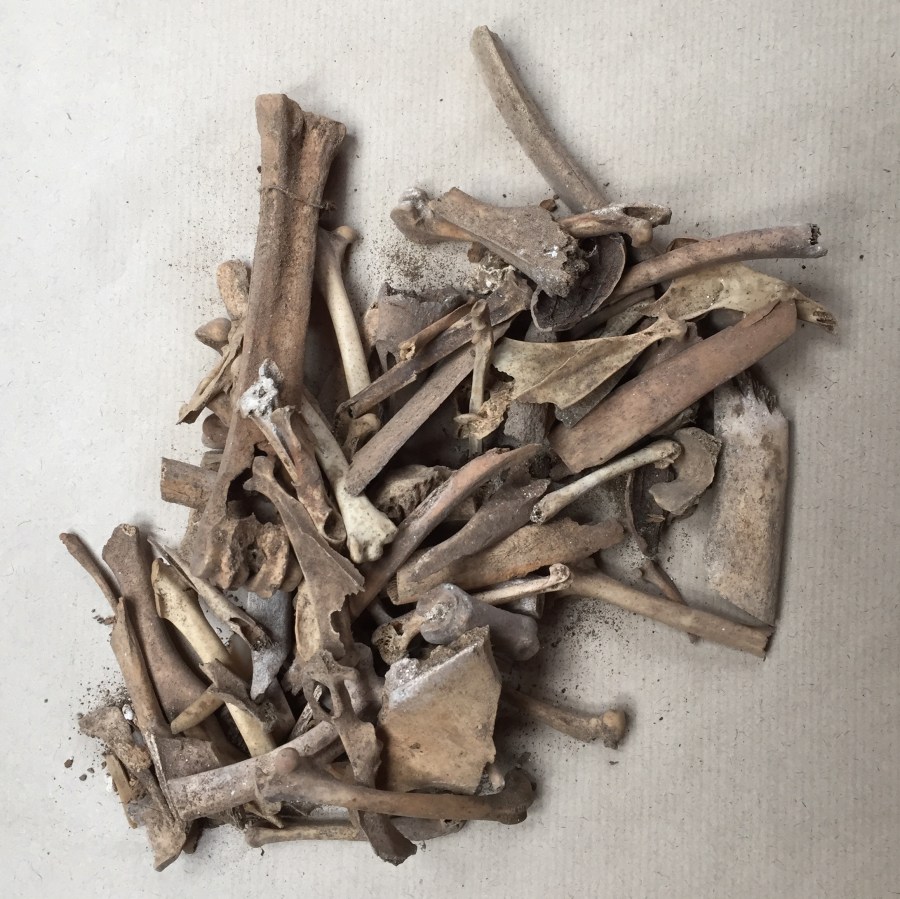
John made a hole big enough to poke his head through and using a torch, peered into the darkness…. Inside could only be described as resembling a ‘midden’ – and there on top of a mound of earth, lay a bone! Slightly nervous of what we were about to find, we continued to break our way in…. What we found was an assorted pile of rubbish and a quantity of animal bones, we can only assume what we had unearthed was a very old rat’s lair….
Bones found under the stairs of No.3….
Oddly though, amongst the debris were a collection of marbles and another of old bottle tops…. We never did get to the bottom of why the under stairs had been bricked up (perhaps it really had been a midden and previous occupants, long gone by, couldn’t be bothered to clear it out – who knows) ; it now serves as a very useful cupboard space….
As this was one of the last areas to be explored, I think we were secretly hoping we were going to find something like a ‘concealed shoe’….or perhaps some other ‘offering’ hidden away….protecting the house from evil spirits. We had gone over just about every other inch of the place and all we had found were a few hairgrips under a window sill, a magazine from the 1950s under the bath and a few giant acorns stashed in a hole in a beam….
‘Caches’, the correct term for offerings, (from the French ‘cache’ – meaning to give), are items that have been concealed somewhere in a building; under floors, above ceilings, up chimneys, around windows and doors, plastered into walls….
They were believed to protect the inhabitants from evil influences; witches, ghosts, demons and the like. It was a custom that was with us for centuries, only really dying out at some point in the last century (may be the advent of burglar alarms made people feel safer?!)…. It is not a custom that was confined just to the UK, by any means; such offerings have been found in buildings all over Europe, parts of Scandinavia, North America, Australia, even China….
Shoes are the most common; nearly always a single shoe, usually well worn and often repaired. In days gone by, as much use as possible would be gleaned from possessions, unlike the throw away society we know today….
Photo credit : Edmund Patrick – CC BY-SA 3.0 Collection of concealed shoes from East Anglia held by St. Edmundsbury Heritage Service
About half of the shoes recorded have been those of children; it was believed the innocence and purity of children would over power evil spirits…. The earliest shoe that has been found to date was discovered behind the choir stalls in Winchester Cathedral, the stalls were originally built in 1308; it is thought the shoe may have been there since that time….
It is assumed many shoes are found and simply thrown away, never to be recorded. Northampton Museum has a ‘Concealed Shoe Index’ that it has been compiling since the late 1950s; it has approximately 2,000 entries. Shoes have been found in a large variety of buildings : monasteries, churches, hospitals, theatres, schools, even army barracks. They have been discovered in pubs and breweries, museums, factories and of course private dwellings, from tiny cottages to manor houses, even the likes of Hampton Court Palace….
The shoe is the only item of clothing that truly takes on the form of the wearer, it shapes itself to the foot…. It was believed that the spirit of a deceased person would be trapped in the shoe – a ‘spirit trap’…. It is thought this belief comes from the 14th Century, when it is said John Schorn, the Rector of Marston, Buckinghamshire, cast the Devil into a boot, thus entrapping him….
The largest cache found in the UK was in a 400 year old cottage, which was being renovated in Snowdonia, Wales. Here, building contractors found nearly 100 single shoes buried under a chimney stack. The nearest recorded example of a concealed shoe being found to here, was in the neighbouring village of Hascombe. A house was undergoing repair work and from the rafters fell an 18th Century child’s shoe….its heel broken down where the child had continuously pulled it on and off….and the toe was worn through.
Although many think the ‘concealed shoe’ was to keep away evil influences, there are also others who believe shoes were hidden as a fertility offering. Shoes have long been associated with fertility. In Lancashire, there is an old custom called ‘smickling’ – it involves trying on the shoes worn by a woman who has recently given birth, supposedly this brings luck in conceiving…. Casting a shoe after a bride departing for her honeymoon was another old tradition, even today we still tie shoes to the car of a newly wed couple….
Some think the connection between shoes and fertility is reflected in an old English nursery rhyme from Mother Goose :
There was an old woman who lived in a shoe;
She had so many children she didn’t know what to do;
She gave them some broth without any bread;
Then whipped them all soundly and sent them to bed….
Photo credit : Internet Archive Book Images “Mother Goose’s Melodies : or songs for the nursery” (1879) via Foter.com/No known copyright restrictions : Original image URL: https//www.flickr.com/photos/internetarchivesimages/14583156277/
This rhyme dates to 1794 and there are some that think it refers to King George II, who’s wife, Caroline, had eight children. George II had the nickname ‘Old Woman’ and it was widely believed that Caroline was the one with the real power….
Of course, it wasn’t just shoes that were used as caches. Other items of clothing have often been found; gloves, hats, belts, breeches, jackets. In a thatched cottage, in Pontarddulias, South Wales, a mid 18th Century corset was found in a wall…. It is not just clothing that has been found; objects such as coins, spoons, knives, books, goblets, pots, pipes, children’s toys and dolls and more macabre things, horses skulls and mummified cats….
Dried cats have been found on numerous occasions. It was thought the presence of the cat would deter vermin, such as rats. However, there was another reason cats were hidden within the house, cats were believed to be highly susceptible to detecting evil spirits : and because of their connection to witches, it was the belief that they would provide protection from such….
Photo credit : Radarsmum67 via Foter.com / CC BY Mummified cat, found between floorboards in the attic of a Victorian house, built 1879, being renovated in Seaforth…. Original image URL: https://www.flickr.com/photos/radarsmum67/27029137971/
Witchcraft was greatly feared in centuries gone by. Witches bottles are also regularly found, no where more so than in East Anglia, where the belief in witches was very strong indeed…. Very often they are discovered buried under a fireplace, the floor or plastered into a wall. It was believed that as long as the bottle was kept well hidden and remained unbroken, the ‘spell’ contained within would keep on working…. The origins go back to the 1500s and they are particular to the Elizabethan period….
The earliest bottles to be found were typically ‘Bartmann jugs’ – made from salt glazed stone. During the 1500s and 1600s, Bartmann jugs were made throughout Europe but most especially in Germany. Shaped in the form of a bearded man, their intended use was to store food and drink. They were also manufactured in England, either by copycat potters or German immigrants. Because of the malevolent face of the bearded figure, it became adopted by many as the perfect vessel for a witch’s ‘spell’….
The contents were usually prepared by the local ‘witch’ or folk healer. The spells would be used not only to ward off evil but very often in an attempt to cure an affliction, condition or illness. Earlier spells would contain something personal of the person it was intended for, usually urine but sometimes hair or nail clippings….
Later witches bottles were often made of glass…. They would be filled with red wine, rosemary, pins and needles. The bottle would be buried and it was believed evil spirits would be caught on the pins and needles, drowned in the wine and then banished by the rosemary….
Other ‘ingredients’ could be added to the bottle; depending on the requirements of the particular spell – sea water, stones, earth, ashes, feathers, shells, vinegar….
Sometimes, instead of burying the bottle it would be hurled into the fire, causing it to explode; so if someone was thought to be ‘cast under a spell’, it would be broken….
Generally though, it was customary to bury the bottle, especially under the fireplace….
Now, there’s somewhere we’ve never looked…. Any one got a spade….?
Photo credit : The British Library via Foter.com / No known copyright restrictions – From the Ingoldsby Legends. Illustrated by Cruickshank, Leech and Tenniel (People’s edition) [A selection] Original image URL: https://www.flickr.com/photos/britishlibrary/11276749235/
When I look in the mirror these days, it’s with a certain amount of trepidation…. Every time I do, it seems another line has appeared and I’m sure if I were to stop highlighting my hair, I would find it has turned completely grey…. At least I’m spared that particular consternation….
What took the biscuit though, was a recent comment from my 16 year old son…. Having just returned from a school trip to Iceland, he was full of enthusiasm for what they had experienced there; glacier walking, lava tubing, visiting geysers, swimming in thermal pools….
It really sounds like they had the time of their lives….”You should go, Mum, you’d love it…. Don’t leave it too long though, there’s a lot of walking involved….”
Now, I know I’m on the wrong side of 50 but hang on a minute…. I don’t need a Zimmer frame just yet…. Cheeky young pup….
It got me thinking though – about age. When I was 16, what did I consider ‘old’? Probably anything over 30…. 50 would have seemed positively ‘ancient’. It’s funny, now that I have officially reached ‘ancient’, I feel as though I am still 16….
By coincidence, the next time I logged on to check my emails, an article popped up. According to recent research, one third of the over 50s feel ‘more empowered and adventurous’ than they did ten years ago. They want to challenge themselves and have a ‘once in a lifetime’ experience. Being in your 50s and 60s is, apparently, the ideal time for adventure travel; getting off the beaten track, exploring, discovering new cultures…. EXPLORE – (the adventure travel experts) – say, that in 2016 the average age of their customers was 54. People are generally staying healthier and fitter nowadays and want to make the most of it….
For a majority of the over 50s, it is a time when life becomes more settled; finances are more secure, the family has flown the nest or is about to, some may even be thinking about early retirement…. Hold on! STOP! Rewind….
Each week in the UK, three babies are born to mothers who are aged over 50…. In March 2016, Sharon Cutts, a grandmother from Lincolnshire, became the World’s oldest mother of triplets at the age of 55. A couple of weeks ago, Dame Julia Peyton-Jones, former co-director of the Serpentine Gallery, gave birth to her first child; she is 64. Where as it used to be that a woman in her 30s was considered to be an ‘older’ mum, nowadays it seems normal to become a parent in later life. Women are often putting having a family on hold in order to pursue their careers and with advancements in fertility treatment there are more and more possibilities. Last year, a woman who is thought to be the World’s oldest mother gave birth at 70, after two years of IVF treatment….
If the thought of sleepless nights and dirty nappies doesn’t quite ‘cut it’ for you, don’t worry, you don’t have to look far for inspiration when it comes to accepting a challenge….
How about climbing Everest? The oldest person to climb Mount Everest is Yuichiro Miura, from Japan; he was 80 years old at the time. He reached the summit (his third conquest of the mountain) in 2013, having just endured three heart operations and extensive surgery for a shattered pelvis. Currently, he is training to ski down Cho Oyu, the World’s sixth highest mountain, which he intends to do when he is 85. For his 90th year, he plans to conquer Everest for a fourth time….
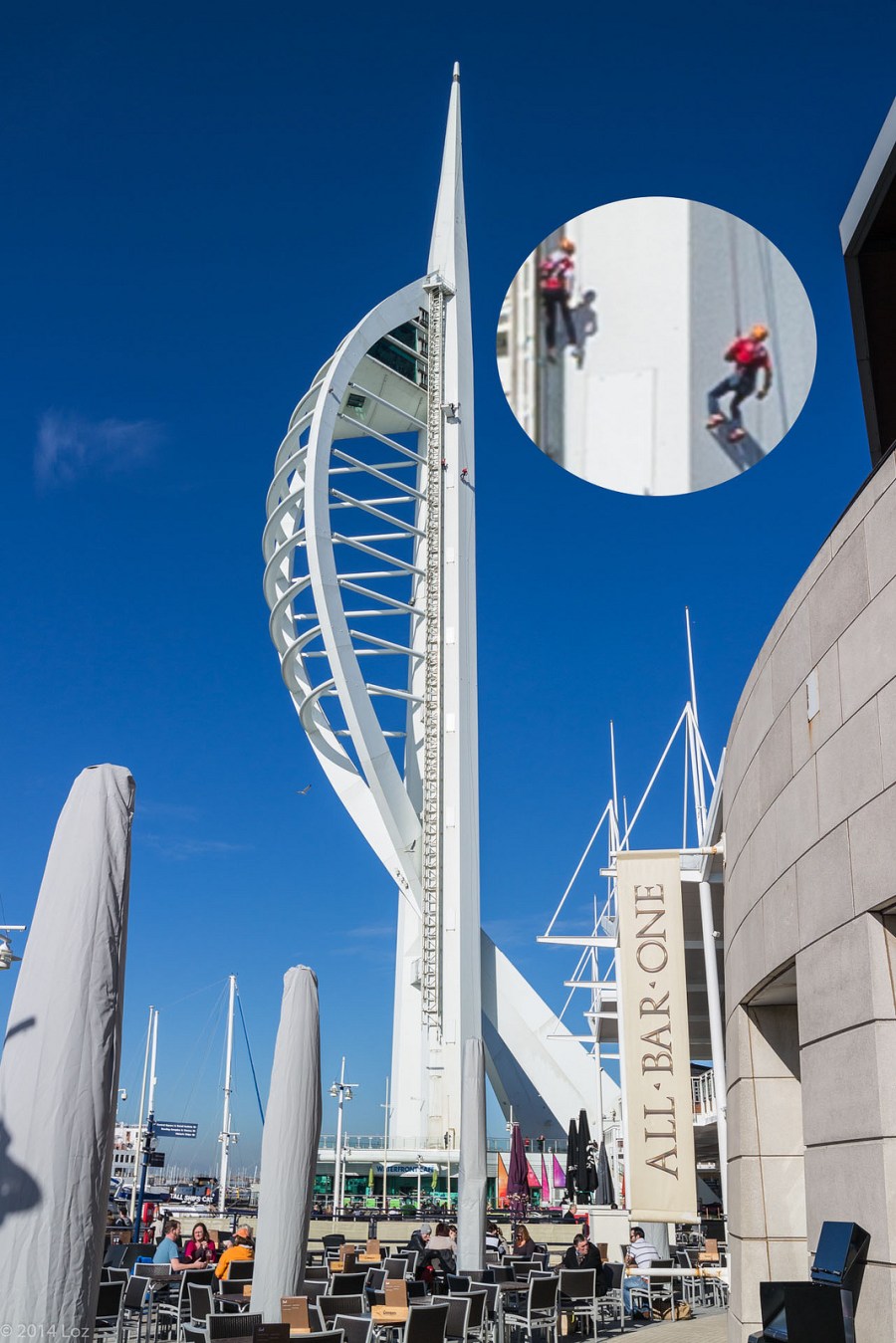
If climbing is your thing but you don’t fancy tackling a mountain, what about abseiling? In July 2015, at 101, Doris Cicely Long became the World’s oldest abseiler, when she abseiled down Portsmouth’s Spinnaker Tower….
If swimming is more your style, the oldest person to swim the English Channel was 73 year old Otto Thaning. While the record for the oldest person to row across the Atlantic goes to a British woman, Diana Hoff, at the age of 55….
Photo credit: Kyle Taylor, Dream It. Do It via Foter.com / CC BY https://www.flickr.com/photos/kyletaylor/
If you prefer to keep your feet on dry land, there’s always marathon running. Fauja Singh was 89 when he ran his first marathon; at the age of 101 he ran the London Marathon, completing it in 7 hours and 49 minutes….
If all that sounds like too much physical exertion but you crave adventure, Space travel could be an option. The oldest astronaut was John Glenn of the USA at 77; whilst the oldest woman to go into Space is Barbara Morgan, also of the USA, who was 55 at the time….
Photo credit: NASA’s Marshall Space Flight Center via Foter.com / CC BY-NC Orion
So, at the ripe old age of 51, next time my teen hints that I may be approaching my ‘sell by’ date – I have ammunition…. There’s still plenty of time to break records…. and I know which one I’m going to have a crack at….
The oldest person on record to have lived, was a French woman by the name of Jeanne Louise Calment. She was born in 1875 and died in 1997 – aged 122 years and 164 days….
If I’m going to beat that record, it looks like I’m going to be around for a bit longer yet….






















 Cottage Capers