The restoration and living in of an English country cottage
Author: cottagecapers
Hi, I'm Hazel....
I write purely for pleasure; I love to delve in history, customs, traditions and nature....or whatever else grabs my attention at the time....
I am in no way an expert on what I choose to write about - I simply love to find out about things.... Whilst I always endeavour to get the facts right - occasionally I may get things wrong.... I guess you could call this my disclaimer....
I hope you enjoy reading my blog posts.... If so please give me a follow on Twitter or sign up via email for future posts.... If you are on Facebook Cottage Capers has a page with lots of ‘mini blogs’ and snippets.... It’s where we ‘like-minded’ folk can interact.... Hope to meet you again soon....
I think it must be time to bring the story up to date with regards to our resident swan family…. It wont be that long (hopefully) before we will be seeing this year’s family coming along….
Last time, we left them having just raised their first brood and turning their attention to preparing for the second….
This time around, the pair knew exactly what they were doing…. The nest building went smoothly, all went according to plan and six cygnets arrived. Once again, I had the formal introduction and as we all knew what we were doing this time, the normal feeding regime resumed. Sadly, two babies were lost within the first few weeks, to Mr Fox….
‘Class of 2014’….
It soon became apparent Mum and Dad were to be far more relaxed with their parenting skills this particular year, may be a little too relaxed…. They did not seem to put much effort into teaching this brood to fly and they ‘saw them off’ much earlier than the previous family – well before Christmas…. Once more all four found their way down to the same pond that their older brothers and sisters had made a temporary home the year before. Eventually, they too took off, to start their adult lives….
Waiting for tea….….treating the place like their own….
Floppy and Lady settled down for Winter with us and as Spring approached, began preparations to become parents again…. This time five cygnets hatched and at first it looked as if things would fall into the same rountine as before….
When the babies were just a few days old, for whatever reason, only known to them, Mum and Dad decided to take their young family ‘walkabout’. The careless pair managed to leave one of their youngsters behind, on the pond…. As it transpired, that was actually a stroke of luck for this particular little fella as tragedy was about to strike…. Mr Fox had obviously been awaiting his chance. Floppy and Lady lost all four cygnets on that fateful ‘walk’. It was a very sad day….
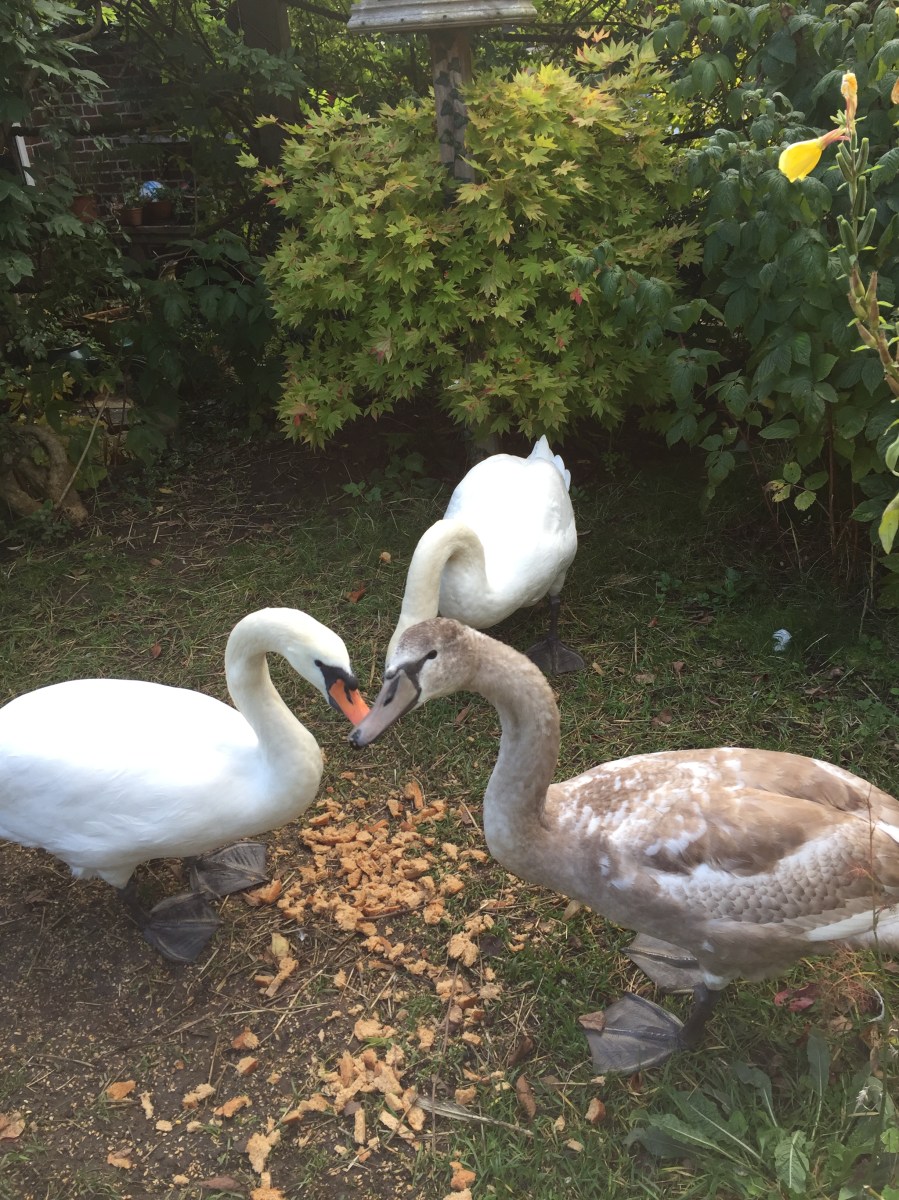
The remaining cygnet, who we named ‘Precious’ has thrived…. I believe it to be a male, although my track record at determining swan gender is not great! He is a cheeky individual and he is not ‘backwards at coming forwards’…. When I approach with food, he doesn’t wait to be fed but comes hurtling towards me and if I give him the chance will grab the food from my hand; although I am pleased to note he is wary of people in general….
His parents have been somewhat neglectful in teaching him to fly – although I have been told that last weekend he discovered the art for himself. Unfortunately, I wasn’t around to see his ‘maiden’ flight but have witnessed a few practise flights since…. I am actually surprised he is still with his parents, his feathers are predominantly white and he is already larger than his mother….he is going to be a big bird! Mum and Dad did try one sneaky trick a couple of months ago, whether it was a deliberate attempt to ‘off load’ him, I don’t know….
The family went on a visit to the pond down the road – the same one the previous broods had ended up on…. Mum and Dad conveniently ‘forgot’ to bring Precious back with them…. The poor soul was down there for a whole week, with just a couple of ducks for company. He eventually found his way back to his parents, who were none too pleased to see him and spent the next few days trying to chase him off…. Precious is a determined little guy though and persevered, eventually the adults relented and to this day he remains with them….
Helping in the garden….
So, that is where we are right now… When Precious does finally ‘fly the nest’, I will be really sad to see him go….and I have a feeling it wont be long before he does. When I went out to feed them this morning, for the first time ever I was wary of him, as he showed signs of aggression towards me…. Dad is beginning to chase him, so I am sure his departure is imminent…. However, I am confident he is more than capable of looking after himself…. and fingers crossed, come Spring, we’ll be doing all this again….
The family this morning, enjoying a little Winter sunshine….
To say I wasn’t the happiest bunny in the warren last week, is perhaps an understatement….
Living in the ‘sticks’, we have no mains gas and so rely on an LPG tank. This works just fine – until someone forgets to check the levels and the gas runs out…. I am a miserable moo at the best of times during the winter months, I detest the cold – to have no heating or hot water equals a total disaster for me. So, when total disaster struck last week, I was not happy at all and I let everybody know about it! Eventually, a certain member of the household snapped back at me – “For goodness sake! It’s only been a couple of days, imagine what it used to be like….”
This got me thinking…. If this house could talk, what would it have said to me? I’m certain something like – “You lightweight wimp! I could tell you a tale or two….”
Now, I can only try to imagine what it must have been like for the first occupants of this house….pretty grim I should think. I looked around my kitchen and attempted to visualise what it would have looked like some 650 years ago….
The ‘cooker’ doubling up as the ‘central heating system’ would have been an open fire in the middle of the floor – fireplaces with chimneys hadn’t been invented yet. The place would have been thick with wood smoke, most of it being drawn up into the rafters to eventually find its way out but still permeating into everything. Having no windows as such (draughts had to be kept at bay and glass was a rare, expensive commodity), meant it would have been very dark….
Rush lights, a simple form of lighting, would have been readily available. Wild rushes were gathered and then dried, enabling the skin to be stripped off to reveal a firm inner pith, which would be soaked in animal fat. This produced a ‘torch’ that could be fixed to the beams to provide light. They did not last for long and needed a watchful eye to prevent nasty accidents from happening. If I look closely at some of the beams in here, I can see evidence of scorch marks where rush lights had been left to burn too low…. If a household was wealthy enough, tallow candles may have been used instead….
Scorch marks on the beams in the kitchen of No.3, caused by rush lights being allowed to burn too low….
Cooking was probably a fairly simple affair. Meat was a rarity; if it was available, it was most likely to be pork. Rabbits would have been plentiful for the lucky ones, who were granted permission to catch them, by the Lord of the Manor. If the family owned a pig, it was normal to slaughter it at the beginning of Winter, to provide for the coming months and because it was impractical to feed such livestock over this period….
Generally, the family’s daily diet consisted of one main meal per day ; coarse barley bread and ‘pottage’ – a type of stew made from grain and vegetables (that had been grown in the vegetable patch)….
Modern day example of ‘pottage’ – post Sir Walter Raleigh !!
Photo credit: jean louis mazieres via Foter.com / CC BY-NC-SA IMG_3081D Hendrick Terbrugghen. From 1588-1629. Utrecht.’ Esai bought his birthright to his eldest for a mess of pottage’ – Old Testament. Berlin Gemaldegalerie : Original image URL: https://www.flickr.com/photos/mazanto/14502159278/
Nuts would have been gathered in the Autumn. As would acorns, to fatten the pig. Cheese would have been made from goats milk (or cow if the family was wealthy enough to have one). Chickens scratched around the yard, providing a supply of eggs, perhaps they would have been accompanied by the odd goose. It is highly likely sheep would have been kept, for their wool…. The most prized beast to own would have been an ox – to help work the land….
Bears and wolves still roamed the English countryside in those days, as well as the occasional chancing ‘rustler’. Keeping the animals at such close quarters brought its problems, a part from the obvious of not being house trained, (which in its turn attracted flies), there were the fleas; the house would have been a haven for all kinds of creepy crawlies….and vermin! Rats and mice would have been in abundance….
I am often to be heard complaining about mud on the floor – (my lot aren’t very well house trained either) – but back in the day, these floors would have been made of mud, with straw strewn across them…. Contrary to belief, people in Mediaeval times did attempt to keep their homes relatively clean – the straw was periodically swept out and replaced….
They also made an effort to keep themselves clean, although bathing would have been a warmer weather activity, when rivers and streams could be used…. Clothes would have been changed and washed on a fairly frequent basis. Of course, there was no running water – that had to be brought in daily – the ‘loo’ would have been a bucket, that needed emptying every day into a nearby stream….
Most likely, the first occupants of this house were a yeoman and his family. A yeoman had a slightly higher standing than a foot soldier but lower than a knight or nobility. He would have owned and worked land but at the same time served his Lord. He would have been trained to use the bow and quite possibly a sword and dagger, he would have taken part in fighting on behalf of his Lord….
His home would have been more substantial than that of a peasant or ‘serf’ – its size depending on his wealth. This particular one probably belonged to a fairly modest yeoman but was well constructed for its time. Furniture would have been sparse – benches and stools (as opposed to chairs), with a wooden table and a chest in which to keep clothes and valuables. Possibly, a simple bed or two but more likely, straw matresses on the floor. Various hooks would have been situated around the place from which possessions and provisions were hung…. The whole family and any servants they had (if affluent enough), probably all lived together in one room….
The lady of the house had many tasks to attend to on a daily basis, possibly with a servant to help; although, in a house of this size, that is unlikely to have been the case…. Keeping the house clean (as best she could) and making rush lights were part of the day to day routine. She would have been responsible for feeding the family, making the pottage, cheese, bread etc : Milking the cow or goats, collecting eggs, feeding the animals, tending the vegetable plot….
The sheep needed shearing, the wool washing and carding. Then it was her job to spin it and quite possibly weave the resulting yarn to make cloth, from which she made clothing for the family. Breeches and tunics for the men; an ankle length gown or two for herself. She also wore a surcoat (a type of over dress), a smock, maybe a cape and being married, a wimple (a drape covering the head, tucking around the neck and chin)….
She was also in charge of all the laundry and any mending or patching that needed doing….
Being a yeoman’s wife, her clothing would have been of better quality than that of a peasant. The family probably would have had enough money to be able to buy linen and dyes to colour the wool. Greens and blues were favoured (reds and purples being kept for the upper classes and royalty). Wearing yellow was discouraged, as this was the colour worn by women of ill repute! Certain fabrics, such as silk were not allowed, as these were reserved for the higher classes….
She would, almost certainly, have had several children to look after. Education was extremely rare, so generally children would have been set to work as soon as they were old enough….
As if she didn’t have enough to do already, the housewife would have been expected to help her husband on the land; sowing, reaping, threshing, even ploughing….
A typical yearly calendar for a yeoman would entail :
January/February : Plough and harrow the land. Spread manure. Plant trees and hedges. Prune fruit trees. March/April : Sow wheat, rye, oats and barley. Scour the ditches and maintain coppices. May : More of the same. Wean the lambs. June : Wash and shear the sheep. Manure the fields ready for summer ploughing.
July : Make hay. Get wood in ready for Winter. August : Harvest, probably using hired help. September/October : Sow rye, then wheat. Make cider. Prune hedges and trees. Plant rose bushes. Attend local fairs selling produce, buying and bartering for required provisions. November : Slaughter animals. Put straw out to rot, ready for next years manure. Bring in any animals intended to overwinter. Cover asparagus and strawberry beds.
December : Plough land ready for beans. Gather fuel.
Then at the end of the year, a few days would have been taken off (just tending to absolutely necessary tasks, such as the animals), to feast and celebrate Christmas. Then the cycle would begin all over again, bearing in mind life expectancy was just mid forties, that was if they were lucky….
I often joke that we live in a house made of ‘cow poo’…. OK, so that’s not strictly true but wattle and daub does often incorporate soiled animal bedding which may contain dung – (why use the expensive, good stuff – especially when it has already been well trod down?)….
Wattle and daub has been used for thousands of years, pretty much ever since man started building shelters. It is one of the most common infills for timber framed buildings….
Daub refers to the clay mixture, which is made by treading the materials beneath the feet…. (Crumbs!! Weren’t grapes crushed this way once when making wine? I do hope they washed their feet first!)…. The clay is combined with water (or perhaps animal urine in days long gone by) and straw, or other vegetation matter. Daub is still made in very much the same way today as it was centuries ago…. Thank goodness for wellies….
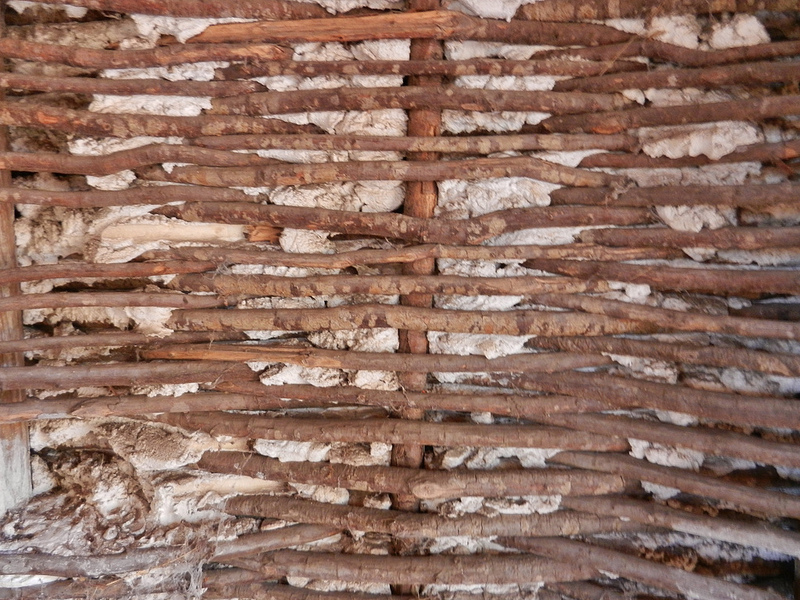
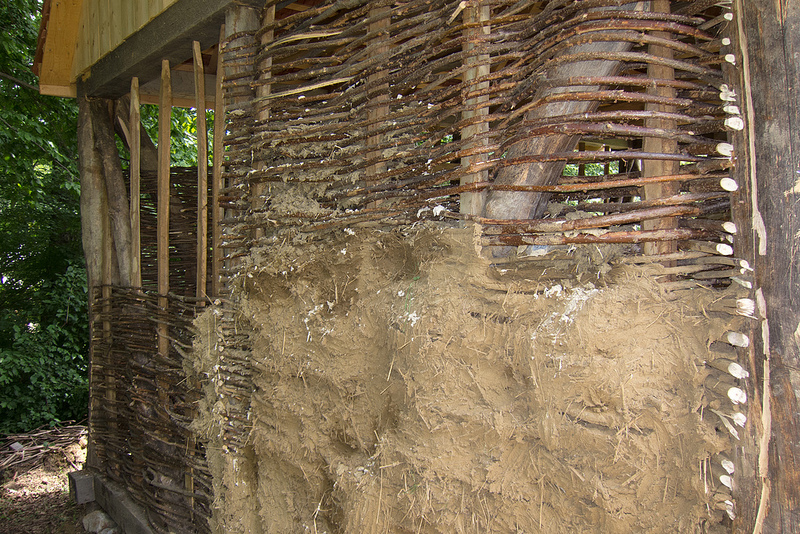
The wattle is the mesh of small timbers (usually hazel but sometimes oak laths are used), which are woven or tied between a supporting framework of larger timbers or ‘staves’. The wood used needs to be in its green state and so is put to use almost as soon as it is ‘coppiced’….
Coppicing is an ancient form of woodland management which goes back to Neolithic times. Once common, copses would of been found throughout the countryside – however, with the advent of modern day materials, the practice went into decline in the middle of the last century. Nowadays, it is beginning to be revived due to its sustainability. Coppicing involves cutting down young trees, such as hazel, willow or sweet chestnut, to almost ground level. These broad leaf trees will then send shoots up from the stump again, thus regenerating themselves….
These shoots are then harvested periodically – anywhere between five to thirty years, depending on the size of the required poles. A part from providing the timber for wattle, coppice product useage is varied; anything from smaller items, such as pea/bean sticks, charcoal, firewood, baskets, tool/broom handles to larger products – furniture, fencing and even ships planking….
Once the timber framework and wattle has been constructed, the daub is applied to the panels on both sides, (usually simultaneously, often two people working together, on opposite sides). The daub is formed into balls called ‘cats’, which are then carefully pushed between the gaps of the wattle and surrounding frame, then building it up until the surfaces are covered.
Mis-shapen, bowing walls are associated with wattle and daub constructions, so often this adds to the ‘charm’ but the daub can be surprisingly pliable. Some grander homes would have had decorative panels where the clay had been moulded into attractive patterns.
A section of daub infill in an unrestored part of the outshot of No.3
The outshot of No.3, awaiting restoration… Here a section of wattle can be seen, along with oak laths which have not had daub applied….
Examples of No.3’s wattle and daub – still awaiting restoration work….
Once the daub has completely dried out, if it is not the intention to plaster it, the normal practice is to limewash it. This should generally be repeated every Spring, as limewash acts as a disinfectant due to its caustic properties, helping to prevent rot. It is not applied purely for asthetic reasons but helps with preservation too….
Timber framed buildings because of their very nature, are subject to a certain amount of movement. Wattle and daub is very good at accomodating this, although the odd gap or crack will appear, it is not difficult to remedy this, (another reason for regular lime washing, as this helps to fill in any minor cracks). If well maintained, a wattle and daub panel can last for centuries. Although it is porous and absorbs water in wet conditions, daub effectively acts like blotting paper. Moisture is dispersed and quickly evaporates keeping the building relatively dry. Sometimes, to protect from the elements, outside walls may be tile hung or clad with weather boards….
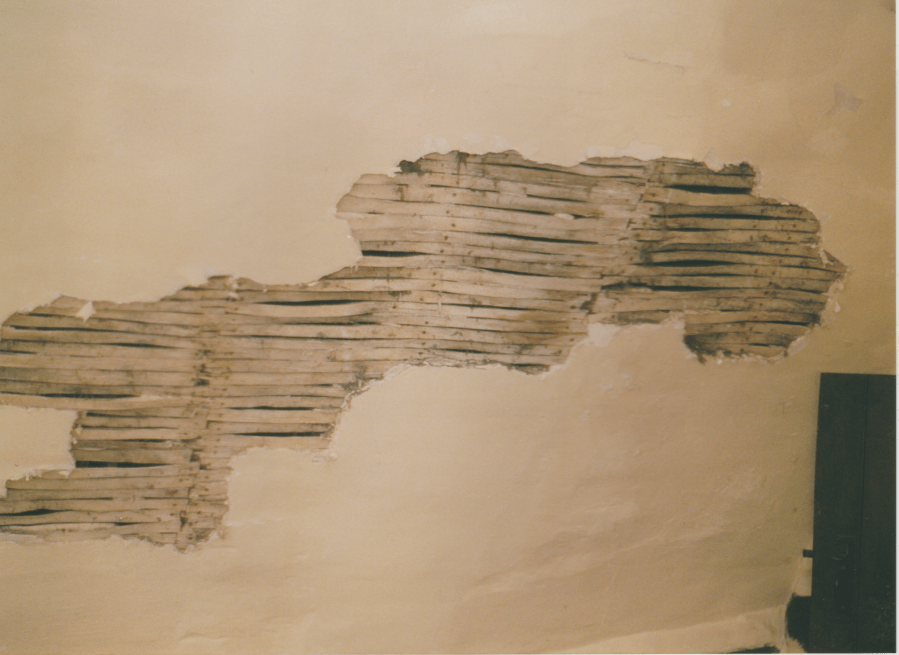
Internal walls are often plastered, usually using the lath and plaster technique. Laths (generally oak) are long, thin strips of green wood. These are nailed flat to the wall or ceiling, ready for the plaster to be applied. The plaster would usually be made from lime and sand, then animal hair (such as horse) added for reinforcement….
A section of plaster in the process of being removed, showing the laths underneath – (during the restoration of No.3)
The lime for mortar and plaster is obtained by extracting limestone from a quarry and processing it in a lime kiln, where it is heated to form a powder substance called Quick Lime (Calcium Oxide). Sometimes, when lime was not available, they would have used oyster shells instead, as when heated they produce a very similar material….
It is important when doing repair work to buildings constructed with wattle and daub, to use traditional materials. Daub may have shrinkage as it dries, this is perfectly normal, gaps may occur; similarly, as green timbers season, this too may cause gaps. This can easily be remedied by filling in with lime mortar. When larger areas of daub have failed, with careful preparation they can be repaired or replaced with new daub. Timbers can be prone to rot or insect attack, especially woodworm. Staves can be replaced and if necessary, stainless steel meshing can be used to strengthen weak areas of wattle. Each case needs to be assessed and treated individually, sometimes specialist help may be required….
What is necessary, is to consider the nature of the fabric of older buildings, due to the fact the material needs to ‘breathe’. Modern day cements, renders and impermeable paints are unsympathetic to this and their useage can cause a building to decay. Rain water will soak into cracks and soon rot timbers and soak into daub. Therefore, it is absolutely essential to use flexible, porous materials such as limeplaster and limewash on wattle and daub….
With a little love and care (and the right treatment when a problem does arise)….there are very few reasons as to why these old buildings, that have stood for so many centuries, shouldn’t stand for many more….
Being in the very fortunate position of having two homes between us, we were able to sell one to secure the purchase of No.3 and live in the other, while all the renovations were underway…. Well, this was the plan anyway – but as so is often the case, the time allowed for such a project was greatly under estimated….
John sold his property in December 2003 and work on the cottage commenced in the Spring of 2004. We already had an architect lined up and he drew up plans for a two storey extension, comprising of additional downstairs living space and providing a third bedroom and family bathroom upstairs. What we considered a perfectly reasonable proposal was, unfortunately, not so agreeable to the listed buildings section of the local planning department. We were refused permission for two storeys and eventually, after much negotiation, were granted a small, single storey extension, to the side of the building. Undeterred by this set back, we commenced to plan as best we could with the somewhat now limited space we had to work with. It was all going to be a little cosier than we had originally envisaged… However, before alterations of any kind could commence, there was the question of the basic fabric of the building. Every inch of plaster was in need of replacement and a plasterer willing to apply his trade the old fashioned way, using lime and horsehair, had to be found…. Firstly though, it was our job to remove all the old plaster from the ceilings and walls and in the process replace any laths that were in need….
Sourcing materials became a project in itself, several trips around the country ensued; laths from Bath, lime from Winchester, hand made clout nails from Oxfordshire was just the start if it….
Before commencing with the removal of the plaster, we got a specialist in to sandblast all the beams in the house. This was actually against the wishes of the Listed Buildings Officer assigned to our case; he wanted us to sand the beams down by hand, as he was concerned sandblasting would be too harsh and may inflict damage to the beams. If we had adhered to his wishes, we could well still be in the process of sanding down beams today! So, we found a sandblaster with an excellent reputation, who had worked on many important, historical buildings (including Windsor Castle after the fire in 1992). We were confident he would do a sympathetic job and we were certainly not to be disappointed….
Afterwards we gave the beams a good coat of liquid wax, to help protect them. Getting rid of centuries worth of grime and layers of paint from those beams, gave the whole place an instant transformation….
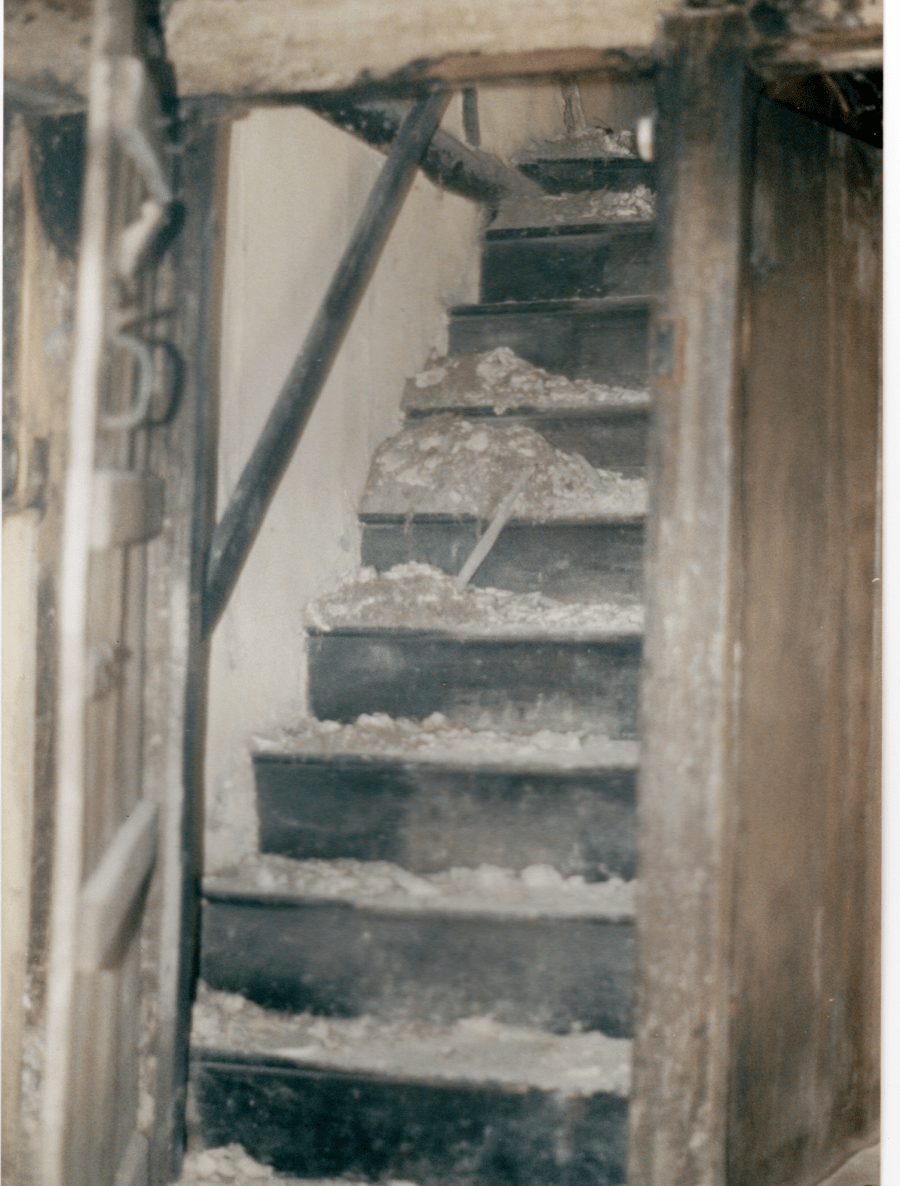
So, then the dirtiest, dustiest, most gruelling task of all could begin….stripping the house back virtually to its wattle and daub. Each night we would return home caked from head to toe in lime plaster dust – it would be in our hair, eyes, everywhere! Even though we wore protective masks, we both developed nasty coughs that would take months to clear….
At last this unpleasant task was completed and we were able to bring in the plasterer…. Finally, we were beginning to see progress….
Today I am going to talk about the weather – because I am British and that’s what we Brits do…. In fact, we are rather good at it, it is ingrained into us, we are obsessed with it…. We talk about it at least once every six hours, 70% of us check the weather forecast daily….
Why?
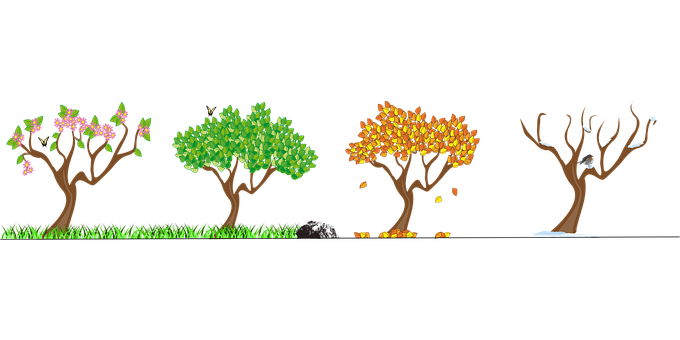
Actually, contrary to Worldwide belief, our weather is not that bad, it’s usually temperate…. It’s just that when extreme conditions do come along, we are unprepared and ill equipped. Here’s the problem : it is unpredictable…. Where else can you experience four seasons in one day….?
It is hardly surprising our weather behaves so unpredictably…. We are a nation where war is constantly raging – a clashing of the fronts…. Being a group of islands we are battered by winds from all directions:-
Artic Maritime from the North – cold ;
Polar Continental, North East – cold and dry ;
Polar Maritime, North West – cold and damp ;
Tropical Continental, South East – warm and dry ;
Tropical Maritime, South West – warm and wet….
No wonder our weather gets confused!
Britain lies at the edge of the Atlantic. Storms feed on the temperature difference between the Poles and the Equator. As the cold and warm air rush towards each other and meet, cyclones are formed. Being at the end of the storm track, we get the tail end of them. Sometimes, there can be a sting in that tail….
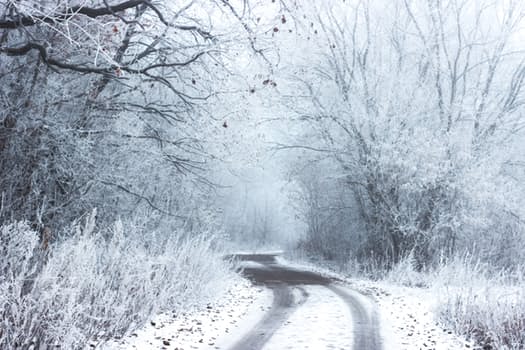
Today, we are being warned to expect one of our rarer phenomenons, we have the possibility of ‘thundersnow’. This occurs when very cold air moves over a relatively warm sea, causing powerful upward air currents. Cumulonimbus clouds form, those that are associated with thunderstorms – if it is cold enough the clouds can produce snow….
We are all aware of the chaos snow can bring to this country ; schools shut, roads become impassable, trains stop running, airports close….
Today a severe weather warning is in place, as is a public health alert for cold conditions…. Are we over reacting? Quite possibly – but we simply are not used to these extremes! A friend, who lives in Russia, recently told me they have been experiencing temperatures of -35 degrees centigrade. As a Brit, I cannot get my head around that! I find it impossible to imagine what that must be like – that really is extreme! It is no wonder why the rest of the World finds our weather obsession amusing…. All this fuss over a few degrees below freezing and a bit of the white stuff….but it’s just not normal for us!!
It’s the same when the mercury shoots up the other way….we can’t do heat either. We run out of water and hose pipe bans are enforced. Torrential rain means too much water and we have flooding. High winds, we loose our power supplies….and so on….
So, it is hardly surprising that we complain about our weather so much….but in the next breath we can be equally defensive….and nostalgic! We have a tendancy to look back on summers gone by – the ones of our childhood – filled with long, sunny days. Were they really that perfect? Or is it just that this is how we choose to remember them? The same for Christmas…. Each year we ask the question – “are we going to have a white one?” In reality, we have only had four true white Christmases in the last 51 years….! Ah, nostalgia….!
Anybody who works outside will obviously have a vested interest in what the weather has in store for us….livelihoods depend on it. We have a very good weather forecasting service in this country – we have plenty of notice when severe weather is expected…. It becomes news worthy – the media feasts upon it and brings it to our attention, which makes us talk about it even more….and talking about the weather helps us to over come our social inhibitions….
How many times has a complete stranger asked you a weather related question, whilst at the same time stating the obvious? “Cold today, isn’t it?” It is an invitation to start a conversation – an ‘ice-breaker’ (no pun intended). Or it might be used to fill an awkward silence, perhaps it may divert away from an uncomfortable subject…. If we start to analyse this and look at social interaction on a deeper level, it brings us to the ‘Politeness Theory’. Developed in the 1970’s and 80’s by researchers at Stanford University, California, the Politeness Theory assumes politeness has ‘faces’ and we in turn have a ‘face’ (wants and needs) :
‘Positive face’ – the desire to be liked and admired, not to be ignored and to maintain a consistent self image.
‘Negative face’ – the desire not to be imposed upon, to protect personal space, be in control, make own decisions….
Britons tend to belong to the ‘negative face’ group; we will play safe when initiating conversation, choosing an unobstrusive topic (such as the weather), it maintains distance, doesn’t give too much away…. Ask a Brit how they are feeling and they will often answer “not bad”…. Ask an American the same question and being of ‘positive face’ you are likely to get a more direct and detailed reply…. The same goes for American ‘ice-breaking’ questions – they will probably entail a more personal enquiry…. “How old are you?” or “what do you do for a living?” This is why the British often find the Americans rude and too forward – where as we can come across as aloof and reserved. Neither side wishes to appear rude to the other – we just have different ways….different ‘faces’….
So, after just hearing the latest weather report on the radio, this Brit is going to go and dig out her snow boots….
That is if she is to believe all the media hype….
Cynicism – now there’s another truly British trait….













 Cottage Capers