The restoration and living in of an English country cottage
Author: cottagecapers
Hi, I'm Hazel....
I write purely for pleasure; I love to delve in history, customs, traditions and nature....or whatever else grabs my attention at the time....
I am in no way an expert on what I choose to write about - I simply love to find out about things.... Whilst I always endeavour to get the facts right - occasionally I may get things wrong.... I guess you could call this my disclaimer....
I hope you enjoy reading my blog posts.... If so please give me a follow on Twitter or sign up via email for future posts.... If you are on Facebook Cottage Capers has a page with lots of ‘mini blogs’ and snippets.... It’s where we ‘like-minded’ folk can interact.... Hope to meet you again soon....
On this day in history : 23rd February 1874 – A new outdoor game is patented by Major Walter Clopton Wingfield ~ he calls it ‘Sphairistike’…. We now know it as lawn tennis….
Major Walter Clopton Wingfield
Major Wingfield was a Welsh inventor and an officer in the British Army – he was also a bit of an entrepreneur…. When, in the latter part of the 19th century, there came a demand for new outdoor pursuits and entertainment from the middle classes he rose to the challenge….
Real tennis had all but died out – due to the expense of erecting courts and the difficulties of the game – something Major Wingfield bemoaned…. So he came up with a different type of racquet game – one that could be played outside…. It was particularly ideal for those who had a croquet lawn – and in those days many did….
For approximately £6 (that’s actually over £600 in today’s terms) a set could be purchased – consisting of : a net, posts, four racquets, vulcanised rubber balls (from Germany), a mallet, line brush and an instruction booklet…. Over 1,000 sets were sold in the first year….mainly to the aristocracy….
Major Wingfield – inspired by the athletics of the ancient Athenians – called his game ‘Sphairistike’, coming from the Greek ‘sphairos’ meaning ball…. However, many were unkeen on the name, finding it difficult to pronounce – people started to call it ‘sticky’…. It was actually future Prime Minister Arthur Balfour – who was a friend of Major Wingfield’s – who suggested the name ‘Lawn Tennis’….
In 1877 the All England Lawn Tennis and Croquet Club launched the Wimbledon Championships…. Just imagine – that could have been the Wimbledon Sphairistike Championships, what a mouthful….
On this day in history : 22nd February 1797 – The last invasion of Britain unfolds at Fishguard, southwest Wales and lasts for just 2 days – as the invaders get too drunk to continue fighting….
Ask most people when they think the last invasion of Britain was and they will answer 1066….but actually the French had one last pop at us 700 years later….
Napoleon was doing his best to conquer Europe…. Whilst he was busy doing his ‘thing’ the newly formed French revolutionary government – the ‘Directory’ – thought they would have a little foray over to these shores….
Of course there was a little more to it than just a mere ‘whim’ – the idea was to create a diversion and attract the British Navy’s attention whilst a simultaneous attack took place on the southern parts of Ireland…. Only the Irish plans never came to fruition….but since the Directory already had in place an army (of sorts) – the ‘Legion Noire’ – they thought they may as well go ahead and invade anyway….
The Legion Noire – and here is where the problems begin….Napoleon had commandeered all of the best men…. Colonel William Tate, a 70-year-old American-Irish mercenary soldier, had been installed as commander of the invasion of Britain…. The trouble was he had been left with all the riff-raff with which to form an army…. Many of his 1400 strong rag-bag force were ex-cons and those rejected by Napoleon….
The plan was to land at Britain’s second largest city (of the time) – Bristol – and annihilate it….then head over to Wales and do a bit of damage there…. Next would be a march up to Chester and Liverpool, causing mayhem and carnage on the way…. Only things didn’t quite work out that way….
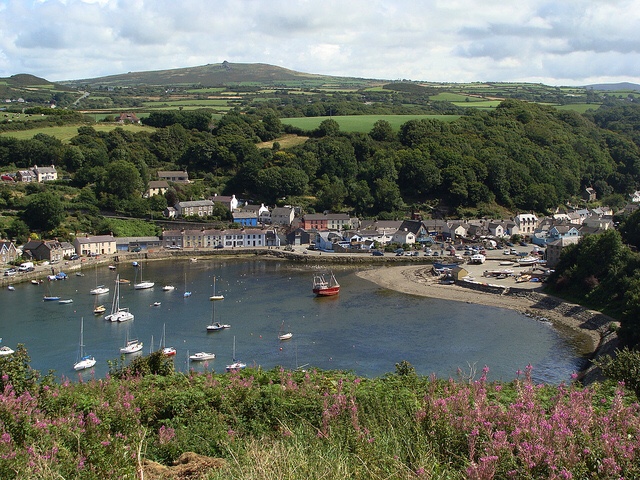
Stormy weather meant the French warships were unable to get anywhere near to Bristol – but ‘ho-hum’, never mind – their thoughts being ‘we’ll skip that part of the plan and carry on around the coast to Wales’…. On Wednesday the 22nd of February they sailed into Fishguard Bay….
Fishguard. Photo credit Nick via Flickr (nicksarebi)
Of course their arrival was not to go unnoticed….they were met with a single cannon shot…. The French panicked and beat a hasty retreat – little did they know the shot was intended to simply alert the townsfolk of an impending attack….
The fleet sailed on and came across a small sandy beach, close to the village of Llanwnda…. Thinking they had found the perfect spot (its beginning to sound like a picnic isn’t it….but bear with – for them it gets much better than that) they started to off-load – men, arms and gun powder….and then the warships pottered off and left them to it…. By 2am on Thursday the 23rd of February the French invasion of Britain was done….but not entirely dusted….
French troops landing at Carregwastad on 22 February 1797. From a lithograph first published in May 1797 and later coloured. Baker, James 18th Century – Public domain
The villagers had recently helped themselves to the cargo of a Portuguese ship that had run aground – and had stashed away a considerable quantity of gourmet food and fine wine…. The invading Frenchmen – many of whom were half-starved after having survived on prison rations for so long – soon sniffed this out…. The temptation was just too much – so off they went on a looting frenzy….and by the time they’d had their fill they were too intoxicated to continue the task at hand…. So pie-eyed were they – they were even incapable of standing up to the wrath of the Welsh womenfolk….
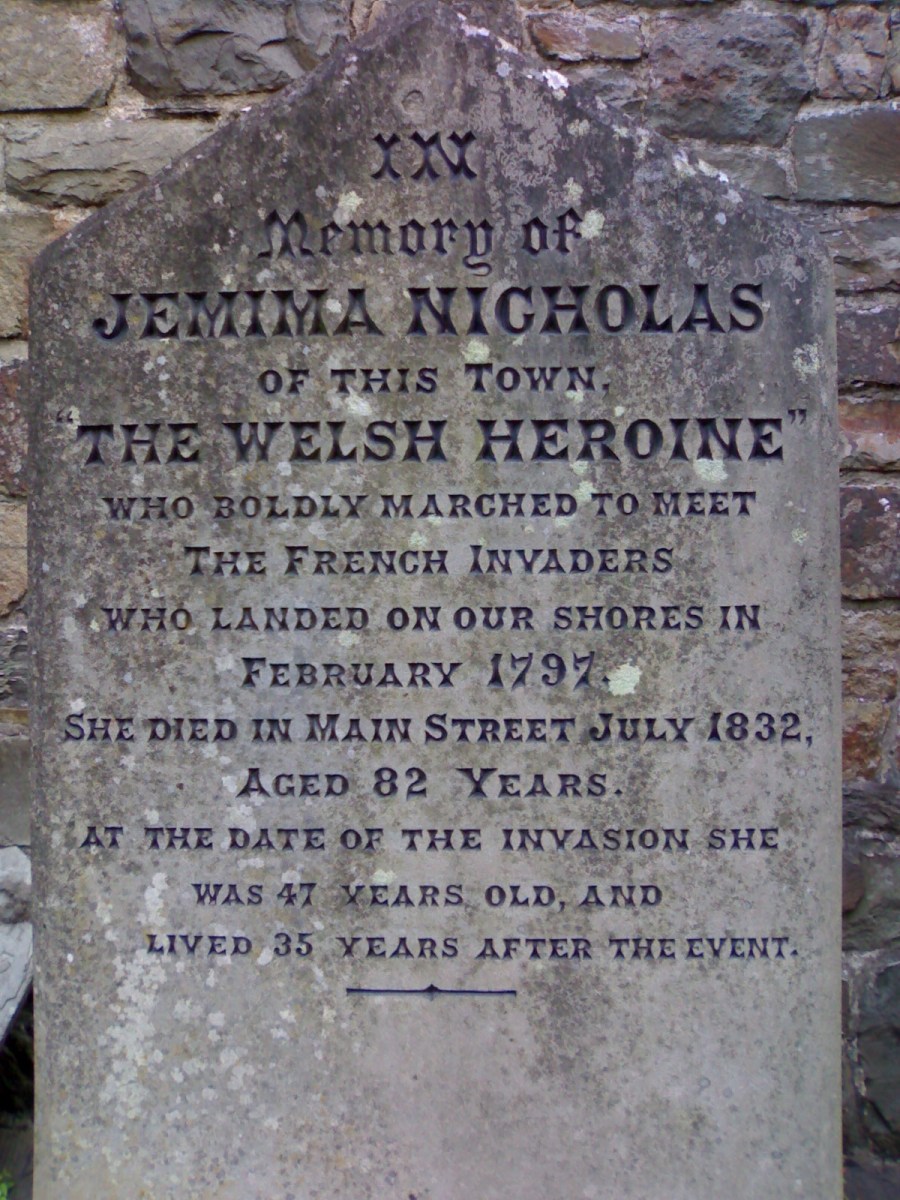
One of these women was Jemima Nicholas – the 47-year-old wife of a Fishguard cobbler…. So cross was she on hearing of the French invasion that she grabbed a pitchfork and marched off to Llanwnda to find herself some Frenchmen…. And find some she did….Jemima rounded up 12 drunken soldiers and herded them back to town – and locked them in the church…. She then headed back to catch some more…. Her bravery earned her the name Jemima Fawr – ‘Jemima the Great’….
Gravestone of Jemima Nicholas outside St. Mary’s Church, Fishguard. Flapdragon – Public domain
William Tate was faced with a mutinous drunken rabble of an army…. At midday on the 24th of February the Legion Noire surrendered to the local militia….
However, the French version of events differs slightly…. British troops had come at them in their thousands – they were completely outnumbered – and they didn’t stand a chance…. That’ll be because they were seeing double then – on account of all the alcohol they’d consumed…. What they had actually seen – with their blurred vision – was a rather large number of womenfolk in their traditional regional dress – of crimson tunic and tall black hat – who had gathered to watch the spectacle…. Let’s be charitable here – anyone in such an inebriated state could easily mistake such a vision for British soldiers….couldn’t they? Ah, those French, they just couldn’t hold their vino….
Carregwastad Head, the landing site for Tate’s forces. RATAEDL CC BY-SA 2.0
On this day in history : 21st February 1958 – Gerald Holtom designs the ND peace symbol adopted by the Campaign for Nuclear Disarmament…. It is later to become an international peace symbol….
Gerald Herbert Holtom (1914-1985) was a British artist and designer, having studied at the Royal College of Art….
During World War II he had been a conscientious objector and was invited by the Direct Action Committee to design artwork for use on their first Aldermaston march during the Easter of 1958 – the 4th – 7th of April…. The Direct Action Committee (DAC) was a pacifist organisation against nuclear war and existed between 1957 and 1961….
Holtom presented his sketches at a DAC meeting at the Peace News offices in North London on the 21st of February 1958…. The design incorporates the semaphore signals for ‘N’ and ‘D’ (standing for nuclear disarmament)….
‘N’ – Two arms outstretched, pointing 45 degrees downwards
‘D’ – One arm raised over the head
The symbol made its first public appearance on Good Friday in Trafalgar Square – where the march to Aldermaston began…. Several thousand people marched for 4 days to the Atomic Weapons Establishment….
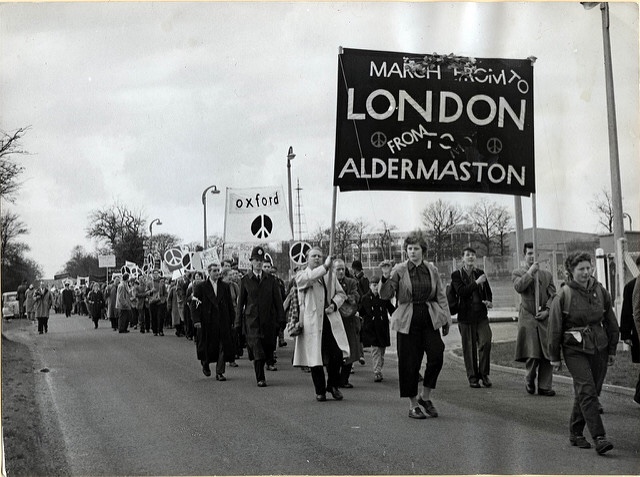
From 1959 an annual Easter march from Aldermaston to London was organised by the Campaign for Nuclear Disarmament – (CND)….
1959 march…. Photo credit: Carl Guderian via Flickr
CND was founded in November 1957, at the height of the Cold War…. The ND peace logo had not been copyrighted and once adopted by CND became recognised as their symbol – and later as a general-purpose peace symbol throughout the world….
On this day in history : 20th February 1673 – The first ever recorded auction – ‘by the candle’ – of wine is held at a coffee house in London….
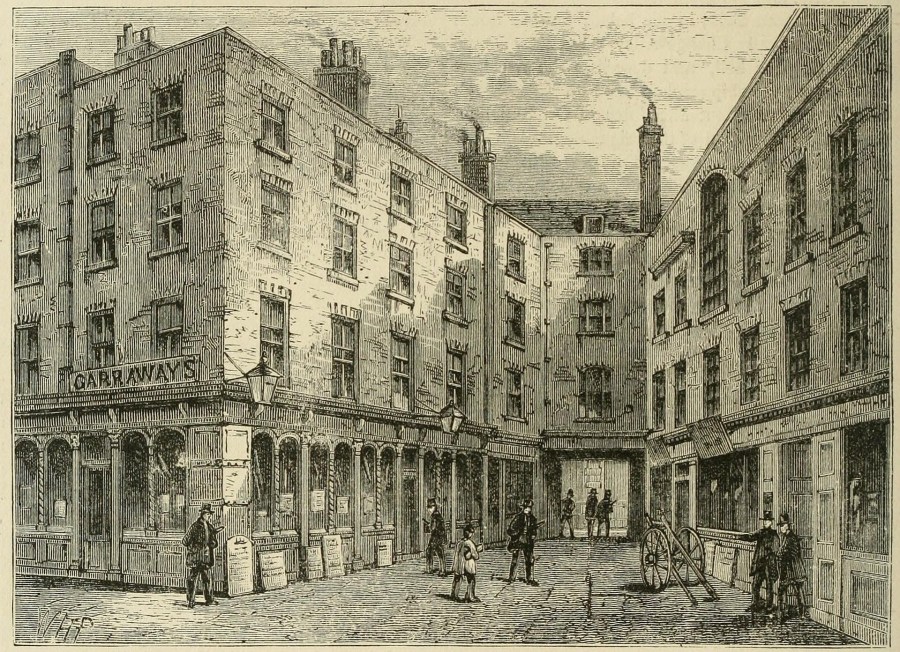
Garraway’s Coffee House, City of London
During the 17th century coffee houses became the ‘in-place’ to be seen…. Previously socialising and indeed many a business deal had taken place in the nation’s inns and ale houses – but these were now being viewed as too rowdy and boisterous…. Coffee houses offered an alternative; it wasn’t that the coffee tasted particularly good, the early form of the beverage really didn’t – but the caffeine ‘buzz’ would have been quite addictive…. Soon coffee houses became centres of business with each establishment associated with its different trades and professions…. Whereas one might be frequented by artists or actors another might be where merchants would gather and a further one a place for medical men to congregate…. By 1702 it is thought that over 500 coffee houses had sprung up in London alone and by 1800 this number had risen to over 8,000….
One such establishment was Garraway’s Coffee House, which was opened by Thomas Garway in the 1650s…. Garway was a tobacconist and coffee merchant by trade – and before opening his coffee house is believed to have been the first to sell tea – as a ‘cure of all disorders’ – to the public in England…. He began to sell the commodity at Garraway’s in 1657 – in those days tea sold at between 80p – £2.50 per pound in weight….that’s well over £500 in today’s terms, making an extremely expensive cuppa!
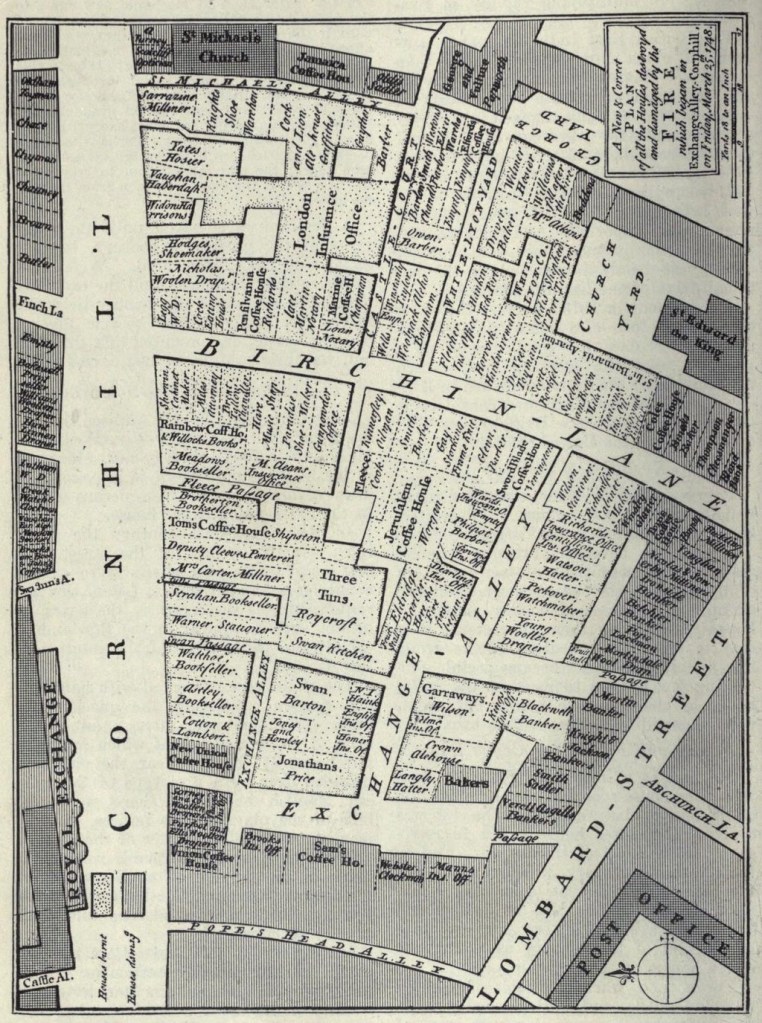
Garraway’s was situated in Exchange Alley, a shortcut between Cornhill and Lombard Street, the hub of the City’s financial world…. It was built on a corner and had various entrances into the building – with small rooms on the ground floor along with a kitchen and on the upper floor a large coffee room…. Just ten years later it was destroyed by the Great Fire of London and had to be rebuilt…. Exchange Alley became known as ‘Change Alley’ and Garraway’s was one of three celebrated coffee houses in the immediate area – all of which were patronised by traders in shares and commodities…. Both Charles Dickens and Daniel Defoe referred to Garraway’s in their works….
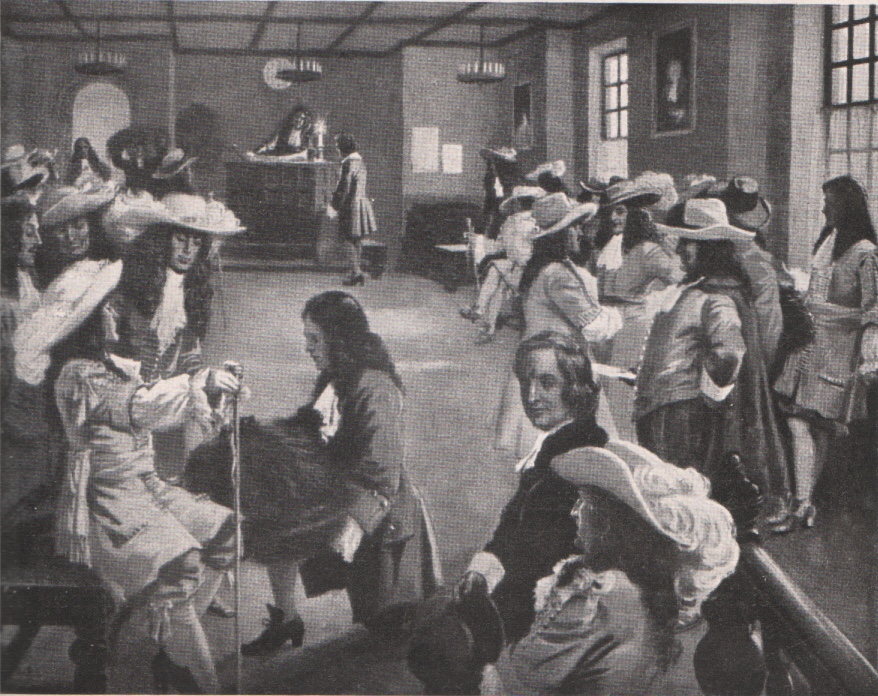
As the business grew Garraway’s began to hold auctions…. A small rostrum was installed in the upstairs room for the auctioneer and rough settles were provided for the bidders…. The windows and walls of the lower floor were adorned with placards advertising upcoming sales…. Up to thirty sales a day could take place, selling everything from furs to drugs, timber to tea….and then in 1673 wine…. As well as becoming famous for its wine sales, both by the bottle and crate, it was also to become well-known for its auction of fine brandy….
Auction room at Garraway’s
Auctions then were not as we know them today – they were conducted ‘by the candle’…. At the commencement of the sale, after the auctioneer had read out the description of the goods and the terms and conditions of the sale, a length of candle (typically an inch) would be lit…. He who placed the last bid before the candle had burned out would be deemed the winner….
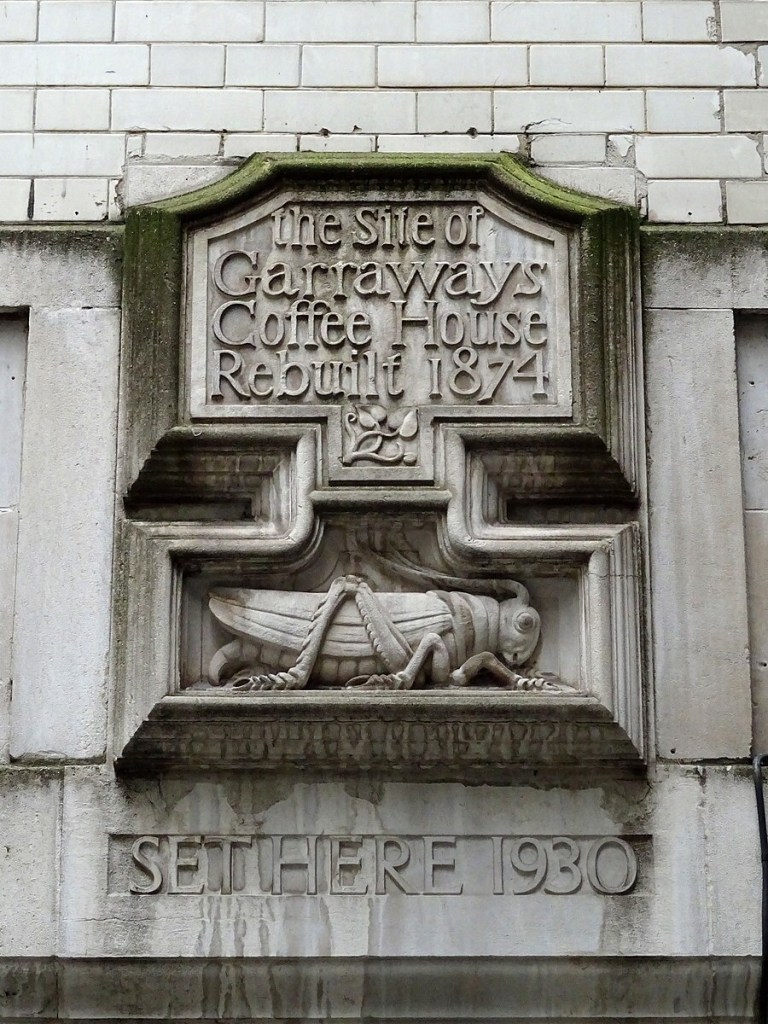
Garraway’s Coffee House has now long gone…. It was to develop to become a famous drinking establishment and sandwich shop…. Then in 1748 the building was once more to be destroyed by fire and had to be rebuilt again…. However, by the mid 1800s coffee houses were declining in popularity – and Garraway’s eventually closed on the 11th of August 1866 – and the premises became home to a bank…. All that remains as a reminder of the once great coffee house is an ornate stone plaque on the wall where it once stood and a mahogany panel at 32 Cornhill which reads “Place of great commercial transaction and frequented by people of quality”….
On this day in history : 18th February 1969 – The marriage of Lulu and Maurice Gibb (of the Bee Gees) in a Buckinghamshire church – thousands of fans flock to see….
Lulu and Maurice had met in a BBC canteen whilst filming for Top of the Pops…. Lulu was 20 and Maurice 19…. In a whirlwind romance they moved in together in Highgate, north London and were married soon after….
The marriage took place at St. James’ Church, Gerrard’s Cross…. It was thought of as the ‘showbiz wedding of the year’….
Lulu had tried to keep the wedding plans quiet – it was to be a small family affair…. She and the three Gibb brothers were the only celebrities present…. However, word got out and thousands of fans, mostly women, clamoured to see the pop stars….
Lulu in 1965 on the set of Fanclub, Dutch TV. Photographer: R.Frings CC BY-SA 3.0 nl
The Bee Gees performing on Dutch television Twien in 1968
Lulu arrived 20 minutes late in a green Rolls Royce….as she did so the crowd surged forward, some – including children – were hurt…. The police had to form a cordon in order to allow her to reach the church…. She wore a long, white, fur-trimmed coat with a fur hood over a white silk mini-dress….
Inside the church waiting were Maurice and his best man, brother Robin…. Barry was also at the wedding – although he had raised concerns about the marriage as he believed the couple to be too young….
After the service, which was conducted by the Reverend Gordon Harrison, the newly weds found themselves trapped in the church for a further 10 minutes whilst a path could be cleared to their waiting car…. They were then whisked away to a reception in London….
Four years into the marriage Maurice was frequently out night-clubbing, drinking heavily and indulging in mammoth spending sprees…. On one notorious 4-day splurge he bought an Aston Martin, a Bentley and a Rolls Royce…. Lulu could take no more – the couple separated and in 1975 she divorced him – although they remained on good terms…. Maurice died of a heart attack in January 2003….










 Cottage Capers