On this day in history….5th October 1917

On this day in history : 5th October 1917 – ‘Chequers Court’, a 16th century Manor House in Buckinghamshire, is donated to the nation by Sir Arthur Lee as a country retreat for British Prime Ministers….
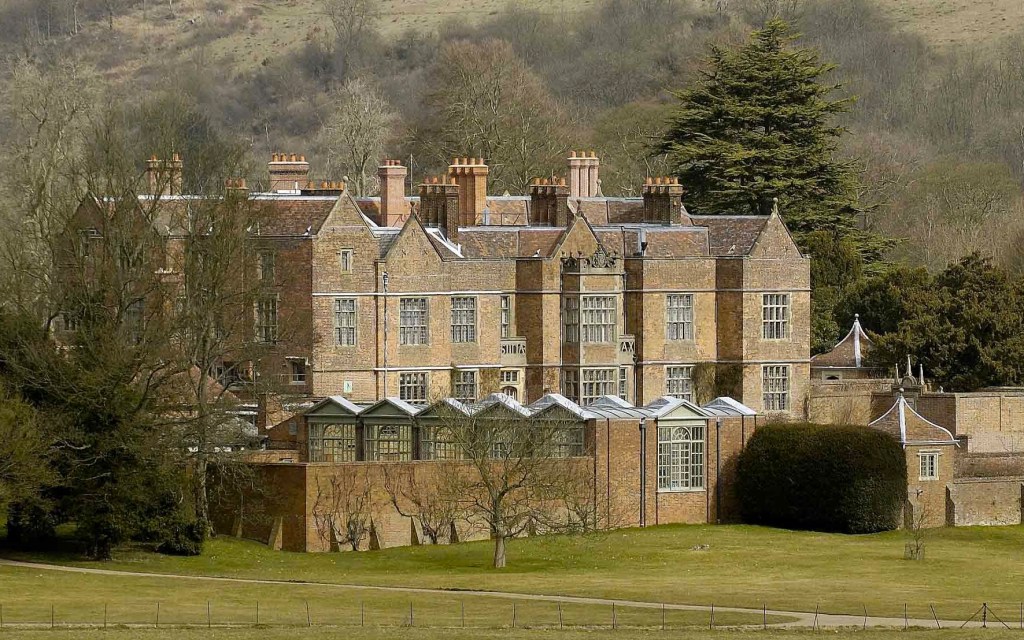
Chequers Court – Photo credit : Stephen Simpson – own work – Public domain

Chequers is located near the village of Ellesborough at the foot of the Chiltern Hills and is about 40 miles northwest of London…. It is Grade 1 listed and was built by William Hawtrey in 1585, although it may have been the reconstruction of an even earlier building…. Soon after its completion it became the custodial home of Lady Mary Grey, granddaughter of King Henry VII and younger sister of Lady Jane Grey – the ‘Nine Days’ Queen’…. Mary had married without the consent of Queen Elizabeth I and was banished from Court…. She remained at Chequers for two years, from 1565 – 1567; her room remains just as she left it….

The house passed through several families and in 1715 the owner married the grandson of Oliver Cromwell – which explains why so much Cromwell memorabilia can be found there…. During the 19th century Chequers underwent extensive renovations to make it into the Gothic style so favoured by the Victorians…. The Tudor panelling and windows were removed and battlements and pinnacles were installed…. But then the house came into the Astley family at the turn of the 20th century and it was restored to its Elizabethan state….
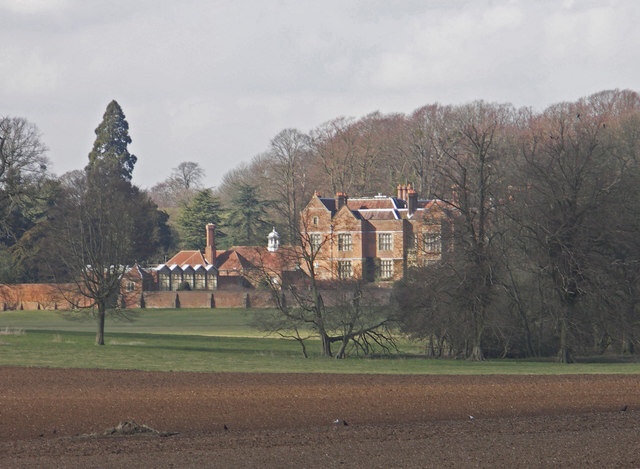
Rear view of Chequers in 2006 – Photo credit : David Ellis CC BY-SA 2.0

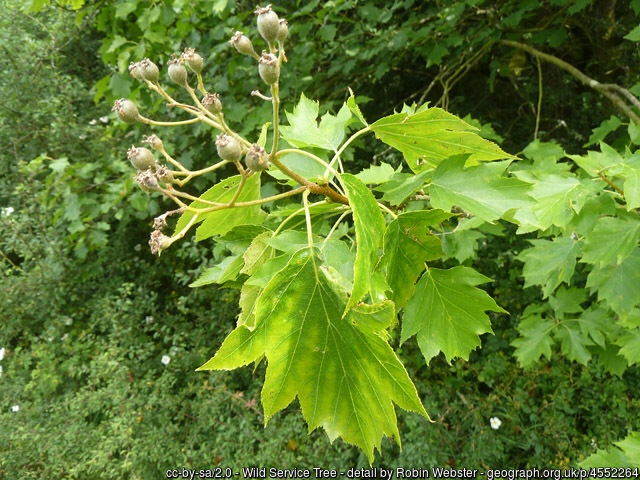
The name ‘Chequers’ may come from Elias Ostiarius, an early owner of the manor of Ellesborough, dating to the 12th century…. ‘Ostiarius’, meaning ‘usher of the Court of the Exchequer’…. Elias was also known as Elias de Scaccario – scacchiera means ‘chessboard’ in Italian and a chessboard – or chequerboard – did feature in his coat of arms…. Another possibility for the name could come from the amount of chequer trees, or wild service trees (Sorbus torminalis) that grow in the grounds…. Native to the UK the tree is related to the mountain ash and rowan…. It is not commonly seen nowadays – but can be a pointer to identifying ancient woodland…. It bears small berry-like fruits, called chequers, which in days gone by were given to children as a sweet treat…. The fruit needs to be bletted (taken from the tree and allowed to ripen further) – but when eaten it has a taste similar to that of dates…. The wild service is a lovely tree and vastly overlooked….

In 1909 Chequers came into the ownership of Arthur Lee – diplomat, politician, soldier and patron of the arts – and his American heiress wife, Ruth…. During World War 1 it became a hospital and then a convalescent home for officers – becoming a private house once more after the War had ended….

After the War there was a noticeable change in British politics…. Previously Prime Ministers had invariably come from privileged backgrounds – but now a new breed of senior politician was coming through…. Men from ordinary backgrounds, without spacious country estates they could retreat to…. The Lees (now Lord and Lady Lee of Fareham) came up with an idea…. They had no children to inherit their wealth and so decided to leave Chequers to the nation…. Talks began with then Prime Minister David Lloyd George and Chequers was given to the nation under the Chequers Estate Act 1917….as a country home where serving Prime Ministers could escape for a bit of tranquility….but also a place to entertain visiting dignitaries….

A stained glass window in the long gallery, commissioned by the Lees, bears the words : “This house of peace and ancient memories was given to England as a thank-offering for her deliverance in the Great War of 1914 – 1918 as a place of rest and recreation for her Prime Ministers for ever”….

After a final dinner held at the house the Lees left Chequers to the nation on the 8th of January 1921….

On this day in history….4th October 1983

On this day in history : 4th October 1983 – Scottish entrepreneur Richard Noble sets a new world land speed record of 663.5mph in his jet powered car Thrust 2, at Nevada’s Black Rock Desert….

Richard Noble (left) – Photo credit : Ian McWilliams CC BY 2.0

At the age of 6, whilst on a family holiday near Loch Ness, Noble had seen John Cobb’s Crusader jet boat being prepared for the water speed record…. It became his dream to attain the land speed record….

His dream was finally realised in 1983, on the parched earth of a dried up lake in the desert of Nevada…. His car, 27ft 4in in length, 8ft wide and 4ft 3in high, with a ground clearance of 5 inches, was designed by John Ackroyd…. It was powered by a Rolls Royce engine from an English Electric Lightning fighter jet….

A straight line was scorched into the hard earth using a propane torch, along the 12 mile long dried lake bed for Noble to follow…. Driving Thrust 2 at an average speed of 633mph over two runs he broke the previous record which had been held by Gary Gabelich for 13 years in his Blue Flame…. Each of Noble’s runs, at 10.5 miles long, took an average of 110 seconds…. The car took approximately 9 seconds to reach 200mph and 40 seconds to reach 600mph – using 60 gallons of fuel per minute….

Noble held the record until September 1997 – when it was broken by another of his cars, Thrust SSC…. This time the driver was Royal Air Force fighter pilot Andy Green – who reached a speed of 763mph….

Thrust 2 can now be seen at Coventry Transport Museum – after a fund raising effort to keep it in the UK when it came up for sale in 1991 – at a cost of £90,000….

Thrust 2 at Coventry Transport Museum – Photo : AJB83 at English Wikipedia – own work – Public domain

On this day in history….3rd October 1916

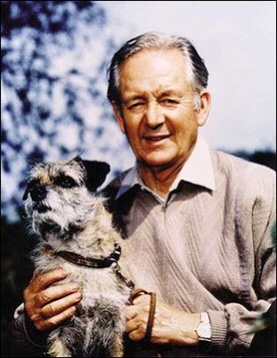
On this day in history : 3rd October 1916 – The birth of James Alfred Wight – better known by his pen-name James Herriot and the author of the much loved All Creatures Great and Small….

James Alfred ‘Alf’ Wight – James Herriot – Fair use

James ‘Alf’ Wight was born in Sunderland and while he was still a young child the family moved to Glasgow…. After graduating Glasgow Veterinary College at the age of 23 he briefly worked at a practice in Sunderland before moving to a rural practice in the town of Thirsk, Yorkshire….

In 1941 James married Joan Danbury and they were to have two children, Jim and Rosie…. He joined the Royal Airforce in 1942 but was discharged after being declared unfit to fly following a surgical operation…. He and Joan then lived with her parents for a while before returning to Thirsk in 1946….

The original practice at 23 Kirkgate, Thirsk – Image credit : Peter K Burian – own work – CC BY-SA 4.0

James had always had a desire to write but his busy schedule as a veterinary surgeon meant there was never enough time…. It was his wife who managed to persuade him, once he had turned 50, to put pen to paper…. He wrote several stories which were rejected by publishers – and then he wrote All Creatures Great and Small…. It was followed by If Only They Could Talk, which was published in 1970…. Sales were slow – but then both books were published as one volume in the United States, under the title All Creatures Great and Small and became a massive success on both sides of the Atlantic…. A sequel of books followed, as did two films – All Creatures Great and Small in 1975 and It Shouldn’t Happen to a Vet in 1976…. And then came the hugely popular television series….

The BBC series All Creatures Great and Small ran from 1978 – 1980 and then again a sequel 1988 – 1990…. In all a total of 90 episodes were made – with the characters played by Christopher Timothy (as James), Robert Hardy, Peter Davison, Mary Hignett, Carol Drinkwater and later Lynda Bellingham….

The cast of All Creatures Great and Small (TV series) – Fair use

In 1977 James and his family moved to the small village of Thirlby, about four miles from Thirsk…. Such was the popularity of All Creatures Great and Small – and with so many fans now visiting Thirsk – a move was required to gain a little more privacy….

James was awarded with an OBE in 1979….and in 1989 he retired from veterinary work, passing his practice on to his son Jim, who had also qualified as a vet…. His daughter, Rosie, became a GP doctor….

In 1991 James was diagnosed with prostate cancer…. He died on the 23rd of February 1995….

On this day in history….2nd October 1942

On this day in history : 2nd October 1942 – British cruiser HMS Curacao sinks after colliding with the liner RMS Queen Mary off the coast of Donegal…. 337 lives are lost….

HMS Curacao – Public domain

HMS Curacao was part of a convoy escorting the RMS Queen Mary – which was carrying 10,000 American troops of the 29th Infantry Division…. The liner was travelling at a speed of around 26 knots on a zig-zag course – to avoid attack from German submarines…. HMS Curacao, an elderly cruiser built during WW1, was travelling on a straight course (to make it easier to defend the liner against enemy aircraft attack) and was moving at around 25 knots….

Problems began to arise as both Captains believed that they had right of way…. Commodore Sir Cyril Gordon Illingworth of the Queen Mary expected Curacao to give way as the liner crossed its path…. Whereas Captain John Wilfred Boutwood kept Curacao on its straight path believing the Queen Mary would accommodate it….

At 13.32pm it became obvious that the two ships were going to come too close…. Queen Mary’s watch officer began to alter course but Illingworth intervened, saying : “Carry on with the zig-zag. These chaps are used to escorting; they will keep out of your way and won’t interfere with you”….

RMS Queen Mary, New York Harbour, June 1945, carrying US troops from Europe – Public domain

At 14.04pm Queen Mary started a starboard turn, she was around 366m behind the cruiser…. Too late it was realised that a collision was inevitable and there was no time to do anything about it…. The Queen Mary hit Curacao amidships at full speed – the cruiser was cut clean in half…. The rear section sank immediately, followed by the front end a few minutes later….

The Queen Mary continued on with a damaged bow to avoid the risk of a U-boat attack – but reported the collision to the rest of the escort group who were about eight miles away…. HMS Bramham and another ship arrived at the scene an hour or so later and picked up 101 survivors, including Captain Boutwood…. 337 officers and crew were lost….

Those who witnessed the illusion were sworn to secrecy due to national security…. The incident was not made public until after the War had ended….

On this day in history….1st October 1870

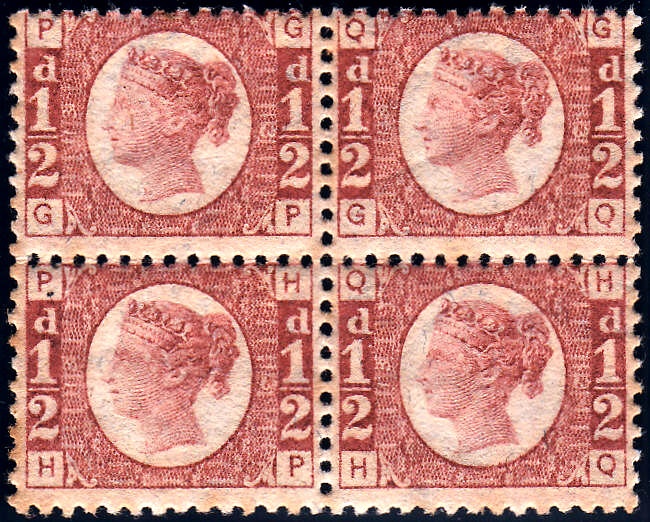
On this day in history : 1st October 1870 – The first Halfpenny Rose Red postage stamp is introduced – it is the smallest UK postage stamp ever to have been issued….

Image : British Government – Public domain

The new stamp was introduced due to the reduction in the postal rate for newspapers and the introduction of the postcard….

Printed in sheets of 480 the stamps soon became known as ‘bantums’, as they were half the size of the Penny Red…. The plan had been to issue them in a light green colour but experiments to produce a suitable ink had proved too time consuming – so instead it was decided to print them in a rose-red shade….

In 1880 they were eventually replaced by a light green stamp…. This time the new Halfpenny stamp, printed by De La Rue, was a full size version….