On this day in history….2nd August 1100

On this day in history : 2nd August 1100 – King William II of England is killed by an arrow while hunting in the New Forest – after supposedly being mistaken for a deer….
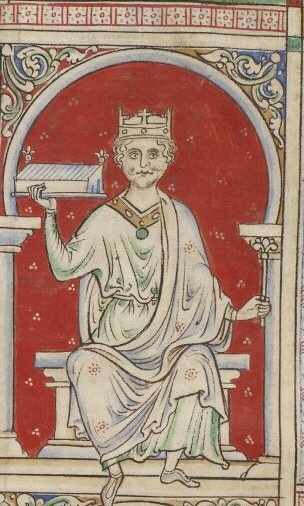
William II of England – Public domain

William was the third son of William the Conqueror and was often known as William Rufus on account of his ruddy complexion and red hair…. He was not a popular king; as well as levying heavy taxes on his subjects he was considered as a harsh, severe and ruthless monarch….a barbarian, with no respect for his people…. He wasn’t on particularly good terms with the Church either….

The story goes, according to Malmesbury in his circa 1128 book ‘Chronicle of the Kings of the English’, something like this…. William had an ominous dream, which filled him with trepidation…. But nevertheless, the following afternoon he went into the forest, near to Brockenhurst, on a hunting expedition…. Whilst most of the party went on the chase William remained, attended by Frenchman Walter Tyrrell, Lord of Poix…. As the sun began to go down a stag ran through the trees nearby – the King took up his bow and fired an arrow – but only managed to slightly wound the stag…. As the King stood, with his hand shielding his eyes against the sun to watch the stag run, Walter attempted a shot…. But the arrow struck William – and Walter jumped on his horse and fled….

Whilst it had always been widely accepted that William’s death was an accident there has also always been the niggling question as to whether he was actually assassinated…. Some believe Walter was acting on behalf of William’s younger brother, Henry, who had a wish to claim the throne….

Indeed, when looking at the story that emerges from what the historians have pieced together, it does seem to be a little more than simply a tragic accident…. The hunting party consisted of William Rufus, Walter Tyrrell, Gilbert and Roger de Clare and William’s younger brother Henry…. The party divided into two groups in order to chase the deer and wild boar…. Walter, who was the King’s best archer, paired with the King – and it does appear that he fired the fatal arrow…. Some accounts say he saw a movement in the trees and fired, thinking it to be a deer…. Others say he fired an arrow to finish off the stag that the King had wounded – only for it to hit an oak tree, bounce back and strike William in the chest, piercing his lung…. By breaking off the arrow William managed to speed up his own death…. Walter, fearing the consequences, fled to France never to return….
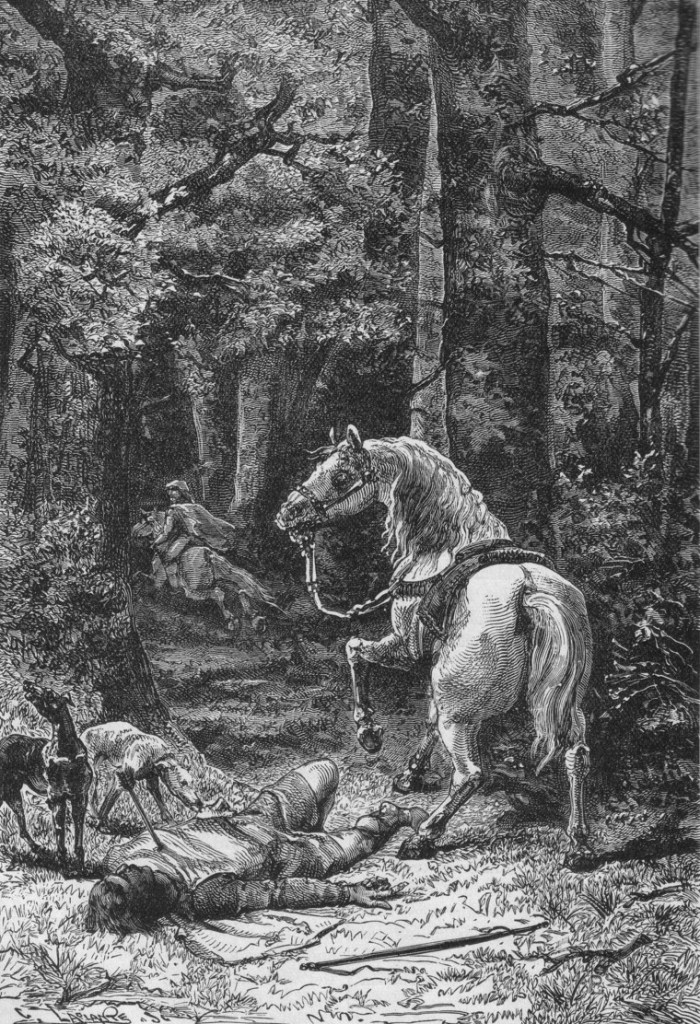
Death of William II – Lithograph 1895 – Public domain

Henry’s reaction was a little suspicious…. Instead of claiming his brother’s body he dashed off to the Treasury at Winchester to declare himself the new King of England…. The de Clares, being loyal supporters of Henry, were rewarded handsomely for their loyalty…. Nobody went after Walter…. William Rufus’s body was found by a charcoal burner – and it was he who carried the dead king back to Winchester….

In recent years there has been some doubt cast on the exact location of William’s death – some think it may have actually happened in the Beaulieu area…. But at the place where legend says it occurred stands the Rufus Stone….and inscribed upon it….

‘Here stood the oak tree, on which the arrow shot by Sir Walter Tyrrell at a stag, glanced and struck King William the Second, surnamed Rufus, on the breast, of which he instantly died, on the second day of August, anno 1100’….

A mature oak tree stands alongside….not the original one of course – but perhaps from one of its acorns?
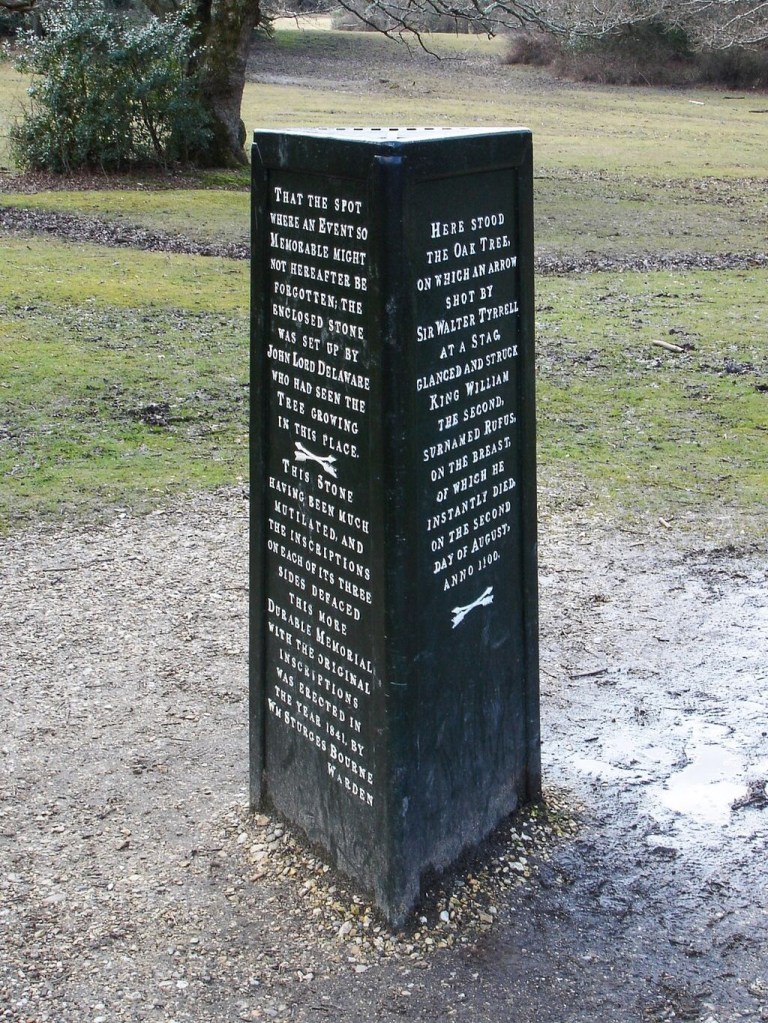
The Rufus Stone – Image credit : David Hunt – own work – Public domain

On this day in history….1st August 1831

On this day in history : 1st August 1831 – King William IV opens the New London Bridge…. In 1968 it was sold, dismantled and then rebuilt in Arizona, USA….

London Bridge at Lake Havasu, Arizona – Image credit : LongLiveRock CC BY-SA 2.0

The Americans purchased the bridge for £1.78m…. Popular belief at the time was that the Americans thought they were buying the iconic Tower Bridge – though this has always been ardently denied by all those involved….

In 1799 a competition was held to design a replacement for the old medieval London Bridge…. Entrants included Scottish civil engineer Thomas Telford, who proposed a single iron arch span…. However, a more conventional design, of five stone arches, by another Scottish civil engineer, John Rennie, was chosen instead….

The new bridge was built 100ft upstream of the old one, by Jolliffe and Banks, of Mertsham, Surrey…. The foundation stone was laid on the 15th of June 1825…. The old bridge was demolished after the opening of New London Bridge in 1831 by King William IV and Queen Adelaide – which involved a banquet laid on in a pavilion especially erected on the bridge…. The bridge, at 928ft (282m) long and 49ft (15m) wide had been constructed from Haytor granite….

Demolition of the Old London Bridge – Image credit : Stephencdickson – own work CC BY-SA 4.0

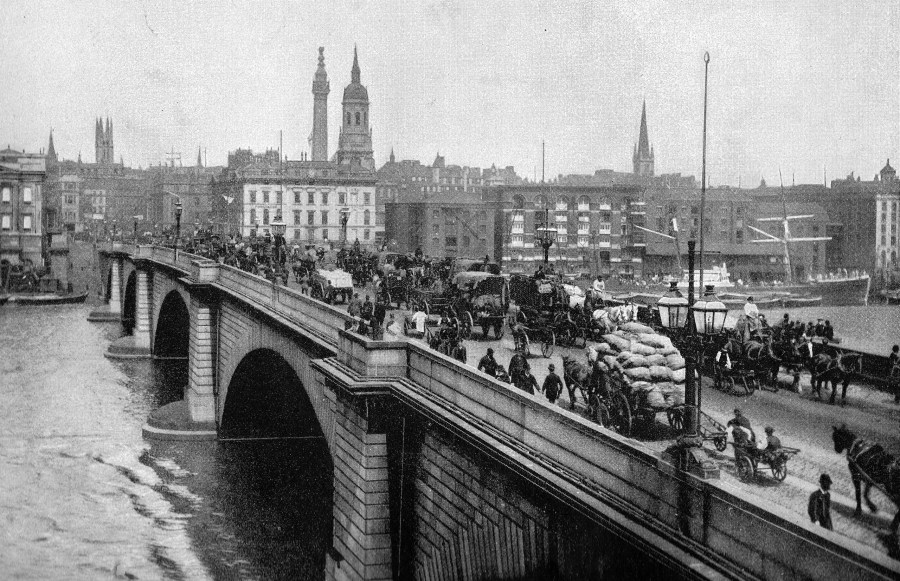
By 1896 it was the busiest point in London, with some 8,000 pedestrians and 900 vehicles per hour…. By the 1960s it was beginning to become deserved of the nursery rhyme that its predecessor had inspired : ‘London Bridge is falling down, falling down….London Bridge is falling down, my fair Lady’…. because it too was becoming very dilapidated….

Circa 1900 – Public domain

In 1967 the Council of the City of London decided it was time to replace the bridge…. Ordinarily such a project would involve simply demolishing the defunct structure once a replacement was in situ…. However, the Council happened to have a particularly resourceful PR man in their midst – in the form of Ivan Luckin…. He suggested the bridge could be sold to America as a tourist attraction…. The idea was pooh-poohed at first – but eventually the Council agreed to put the bridge on the open market….

Luckin flew to New York to promote the idea and on the 18th of April 1968 Robert P. McCulloch, an entrepreneurial oil company owner, formally bought the bridge for $2,460,000 at London’s Guildhall….

At a cost of $7m the bridge was transported to the United States – each granite block numbered so it could be rebuilt at a resort that McCulloch owned on the shore of Lake Havasu in Arizona…. It is now the biggest tourist attraction in Arizona after the Grand Canyon….and McCulloch soon more than made his money back…. He knew exactly what he was doing….

London Bridge in 1973 – Image credit : Uli Elch CC BY-SA 4.0

On this day in history….31st July 1947

On this day in history : 31st July 1947 – The birth of English actor Richard Griffiths – perhaps best known for his role as Vernon Dursley in the Harry Potter series of films….

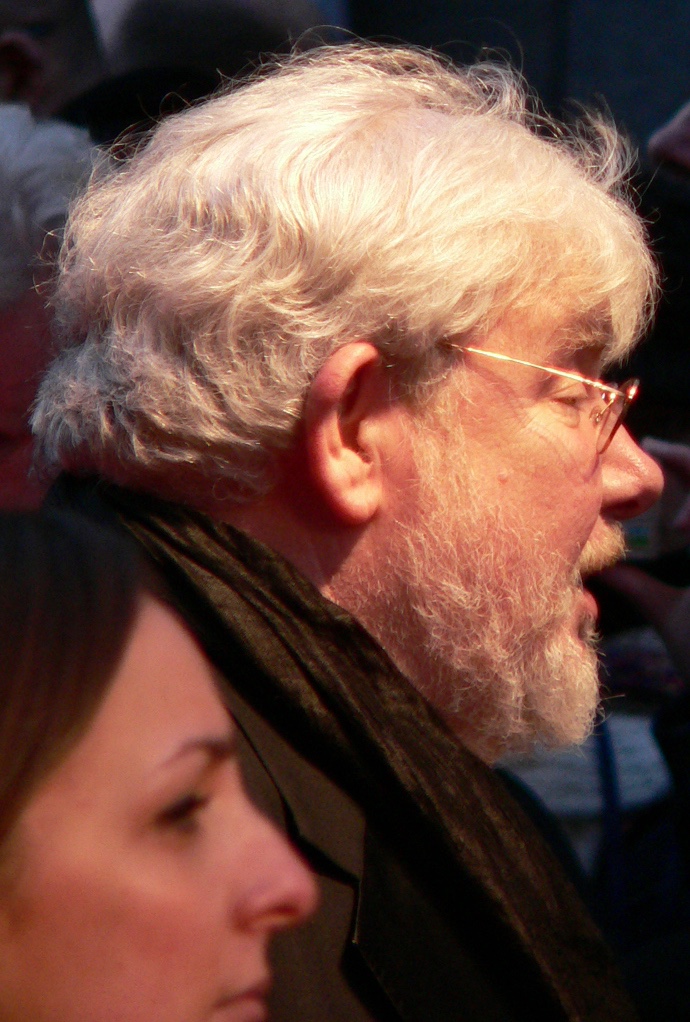
Richard Griffiths at the 61st British Film Academy Awards, 2007 – Image credit : S Pakhrin CC BY 2.0

Richard was born in Thornaby-on-Tees, in the North Riding of Yorkshire…. His father was a steel worker who also took part in paid fights in pubs…. He and Richard’s mother had three other children, a daughter and two sons but all had died before Richard came along…. Richard’s parents were both deaf and mute, he grew up adept in sign language…. There was no TV or radio in the house – his was a very quiet childhood….

Richard left school at 15 – but returned to education to study drama at Stockton and Billingham College…. He then went on to the Manchester Polytechnic School of Drama…. Initially he kept all this a secret from his father – who was furious when he did eventually find out….

Following his graduation Richard landed a contract with the BBC for their Radio Drama Company…. He was then to join the Royal Shakespeare Company and was a natural in the comic roles, such as Falstaff…. He came to the attention of Trevor Nunn, the then RSC artistic director….

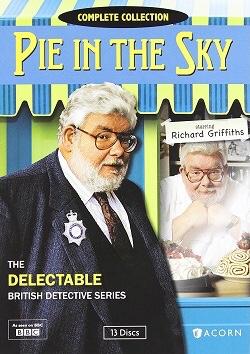
Richard’s early TV career saw him with small roles in ‘Minder’, ‘The Sweeney’, ‘Bergerac’ – amongst others…. He also had small parts in films such as ‘Chariots of Fire’, ‘Superman II’ and ‘Gandhi’…. His breakthrough came as Uncle Monty in 1987’s ‘Withnail and I’….Another of his best known characters was that of the disillusioned Inspector Henry Crabbe, a role made especially for him…. ‘Pie in the Sky’ ran between 1994-1997 and was about a policeman who was rather discontent with his work and between getting into scrapes and solving cases had a sideline of being the most amazing pie chef in his wife’s restaurant….

fair use

A role as a ‘foodie’ suited Richard – as he was known for his rotund girth…. But he had actually started out skinny and underweight…. At the age of 8 he had been given treatment for his pituitary gland – and within a year had gained 60% more body weight…. He was picked on by his school mates but was more than capable of standing up for himself….

Richard met Irish actress Heather Gibson in a production of ‘Lady Windermere’s Fan’ – and they were married in 1980…. They were to have no children – but Richard was Godfather to comedian Jack Whitehall….

Many will associate Richard with the Harry Potter films…. He played the part of Uncle Vernon, married to Harry’s aunt Petunia and having grudgingly raised Harry from an early age was certainly not very nice to him…. He never explained to the boy how his parents had died or told him about the magical world….

When performing on stage Richard was not adverse to showing his displeasure towards the audience if his performance was disturbed – especially by a mobile phone…. In 2005 he ordered a man out of London’s National Theatre after his phone rang for a sixth time during a performance of Alan Bennett’s ‘The History Boys’ (a role for which Richard was awarded with a Tony Award in 2006)…. In November 2005, whilst he was on stage in London’s Wyndham Theatre, a woman’s phone kept ringing – after the third time Richard stopped and had her ejected, to a loud applause from the audience…. Again, during a performance of History Boys, this time in New York’s Broadhurst Theatre he thundered at a member of the audience after their phone rang for a third time….

Richard was awarded an OBE in 2008…. He died on the 28th of March 2013 at University Hospital, Coventry after complications following heart surgery….

Richard Griffiths and Danny DeVito in The Sunshine Boys, Savoy Theatre, London, July 2012 – Image credit : Chris Beckett via Flickr

On this day in history….30th July 1991

On this day in history : 30th July 1991 – To celebrate thirty years in opera, Italian tenor Luciano Pavarotti gives a massive free concert in Hyde Park….

It was set to be the biggest outdoor music event in Hyde Park since the Rolling Stones had performed there in 1969…. Some 250,000 people were expected to attend Pavarotti’s celebratory concert…. Some had camped overnight to get the best vantage points in the 50 acre site…. Although billed as a free concert it was possible to purchase VIP tickets at £400 each….

Luciano Pavarotti – Image credit : Pirlouiiiit CC BY-SA 2.0

However, the weather was not on the side of the concert goers…. Between 100,000 and 150,000 turned up and stood in the pouring rain to watch and listen to Pavarotti’s performance of twenty arias, including Verdi, Puccini, Bizet and Wagner…. The VIPs, among them Diana Princess of Wales, Prime Minister John Major and Michael Caine, got just as wet as everybody else…..

By the end of the evening 193 people had received treatment from St. John’s Ambulance after suffering the effects of the wet and cold….

On this day in history….29th July 1976

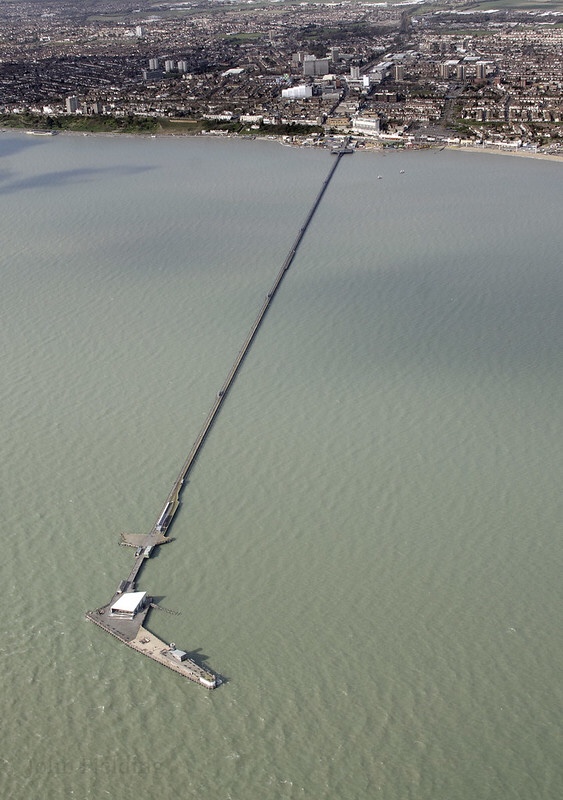
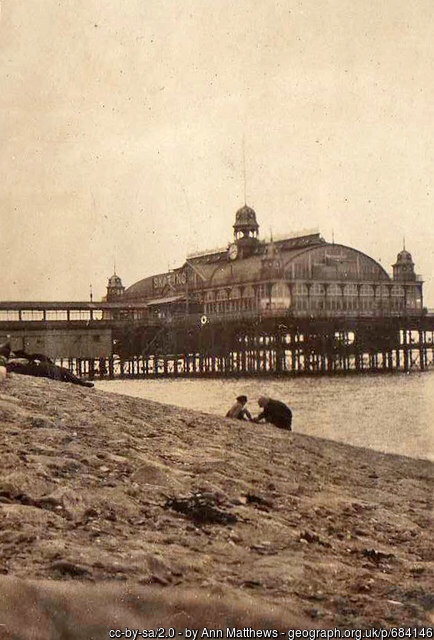
On this day in history : 29th July 1976 – Fire destroys the famous pier head of Southend Pier…. Extending 1.34 miles into the Thames Estuary it is the longest pleasure pier in the world….

Aerial view 2014 – Image credit : John Fielding via Flickr

The iron pier, designed by James Brunkes, had been completed in 1889 and was a replacement for the old wooden pier…. A further extension was added in 1897 and an upper deck added to the pier head itself in 1907….with yet another further extension to the pier in 1927….

1923

During WW2 the pier was closed to the public and taken over by the Royal Navy – it was renamed HMS Leigh…. It became the Naval control for the Thames Estuary and an assembly point for convoys….

The period following the War was to become the pier’s heyday…. During 1949/50 some 5 million passengers were carried by the train that ran the length of the pier….

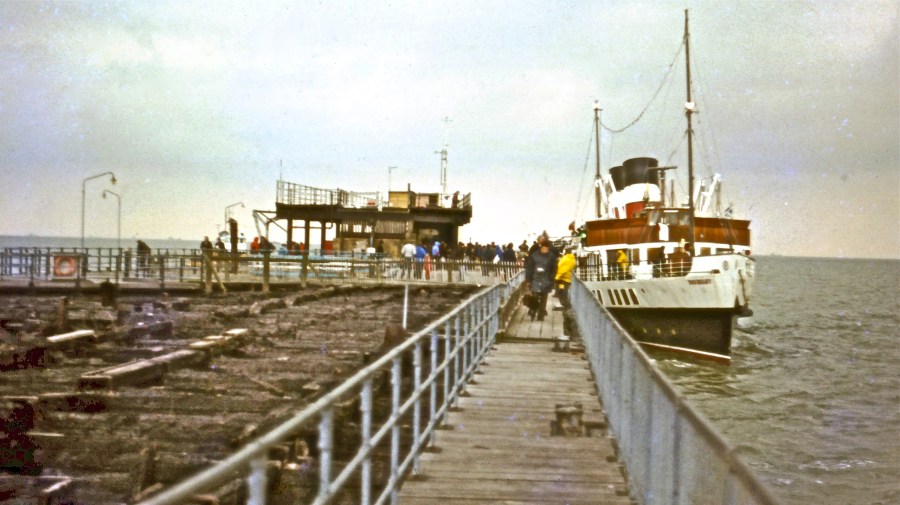
The 1976 fire was not the first fire in the pier’s history (nor was it to be the last)…. In 1959 fire broke out in the pavilion and 300 people had to be rescued by boat….

In 1970 the council leased out entertainment franchises on the pier….restaurants, nightclub, cocktail bar and an amusement arcade…. Thursday the 29th of July 1976 had been a busy day at the Southend resort – the pier had been packed all day…. By 7.30pm things were beginning to quite down – but there were still plenty of people around enjoying an evening out….

Southend Pier 1975

Suddenly the cry of “Fire!” rang out…. Staff working in the Sovereign Bar on the eastern side of the pier head were the first to spot the flames and had attempted to douse them with buckets of water…. But the fire was soon spreading out of control, fanned by the strong south-westerly wind….

Some 500 people were still on the pier and an evacuation began using the train and boats…. 11 fire engines arrived along with 2 fire tugs from Tilbury Docks – and these were later joined by 5 more fire boats from Chatham Dockyard…. But this was still not enough to bring the fire under control…. With flames leaping 150ft into the air a crop spraying plane tackled the fire from above, dropping 400 gallons of water at a time….

It took 4 hours and over 100 fireman to bring the blaze under control; 2 fireman were injured…. The next day the pier head was a smouldering ruin…. However, just 3 days later, on the 1st of August, the pier was back in business – with people paying 15p to view the charred wreck that had been the pier head…. It was eventually established that the cause was a cigarette that had been dropped between the planks close to one of the restaurants….

A year later another fire was to break out in the bowling alley and in 1978 the railway was forced to close for safety reasons….

Burnt section – photo taken in 1983 – Image credit : Johnragla – own work CC BY-SA 3.0

After years of local campaigning the pier was rebuilt in 1984 and a new railway opened in 1986…. In 1989 a ship crashed into the pier and in 1995 there was yet another fire in the bowling alley, closing the railway again…. Then on the 9th of October 2005 another severe fire damaged much of the old pier head including the railway station, pub, food outlets and gift shops…. No official cause was recorded…. Is this not only the world’s longest pier but also the most jinxed? But never fear…. On the 21st of July 2012 the pier reopened…. Rising like a Phoenix once more – it was back…. I have a feeling this time the ‘jinx’ is broken….

Panoramic view of pier head 2016 – Image credit : Romazur – own work CC BY-SA 4.0