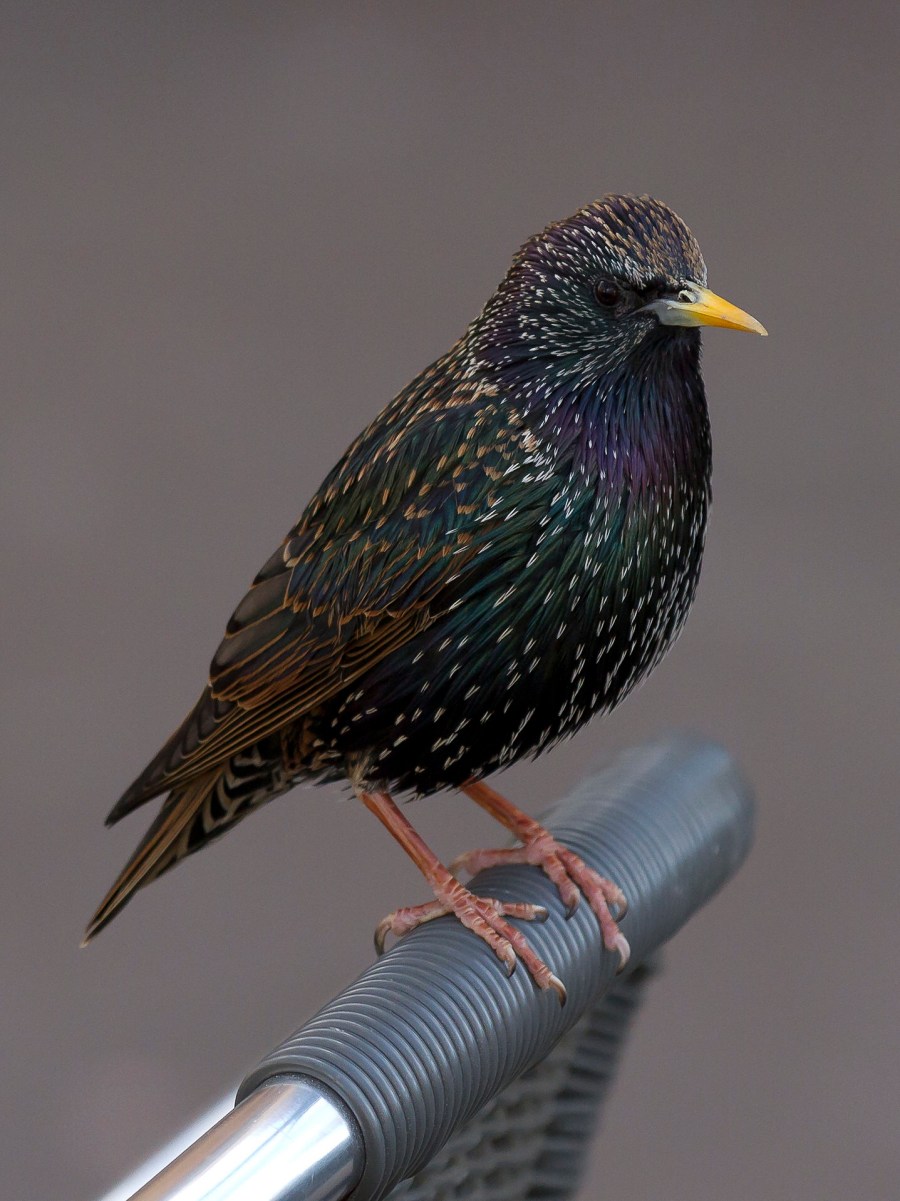
On this day in history : 12th August 1949 – A flock of starlings take roost on the minute hand on one of the clock faces of Big Ben, slowing it down by four and a half minutes….
Photo credit : Pierre Selim CC BY-SA 3.0
Listeners to the BBC’s 9 O’Clock News were surprised to hear the bullet-in start without the customary chimes of Big Ben…. Later in the broadcast the BBC announced that “swarms of starlings are sitting on the hands holding them back”….
That evening the flock had decided the clock hand would make a good perch for the night and their combined weight had slowed the clock down so it was unable to chime at the correct time…. However, by midnight everything was ‘back to normal’….
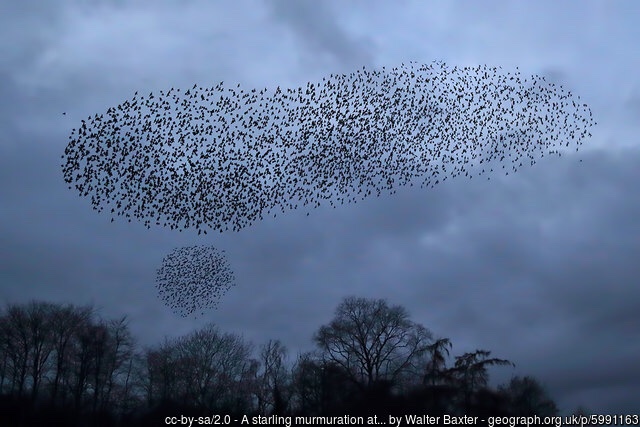
There was a time when the Capital was home to many flocks of starlings – who gave an impressive show with their murmurations…. To see starlings take to the sky in this way is one of nature’s most spectacular wonders…. The numbers were at their largest in the winter months when the birds joined forces to keep warm at night….
Starling murmuration
Sadly the starlings left London and in fact numbers across the whole of the UK are down by 70%…. Once such a common bird they are now on the critical red list…. Loss of permanent pasture, an increase in the use of chemicals, a shortage of food and nesting sites are all contributing factors…. The expansion of London itself pushes the birds further and further afield….
Incidentally, Big Ben was to run slow once again on New Year’s Eve 1962…. Snow jammed the north face clock and ice coated the minute hand….causing New Year to be rung in 10 minutes late…. To think Big Ben survived the Blitz – yet can be hampered by a bit of snow or a flock of birds….
On this day in history : 11th August 1897 – The birth in East Dulwich, South London of much-loved, best-selling children’s writer Enid Blyton….
Fair use
Enid Mary Blyton was the eldest of three children, having two younger brothers…. It was shortly after the family moved to Beckenham, which was then still a village in Kent, that Enid caught whooping cough and nearly died…. She was nursed back to health by her father, Thomas Carey Blyton….
Enid adored her father, the pair were very close…. It was he who got her interested in nature, being passionate about wildlife himself…. He would take her on long nature walks and also shared with her his love of gardening, art, literature and theatre…. This was all much to her mother’s disapproval, with whom she did not share the same loving relationship…. Enid was devastated when her father left the family to live with another woman; she was only 13 at the time…. When her parents eventually died Enid did not go to either funeral….
Between 1907 and 1915 Enid attended St. Christopher’s School in Beckenham…. She was particularly good at sport, was a tennis champion and captain of the lacrosse team…. She was not a keen academic scholar but had a natural gift for writing…. She finished school as head girl….and upon finishing her education she moved out of the family home and went to live with a friend…. Not long after she moved to Suffolk, to Seckford Hall near to Woodbridge…. She trained as a teacher and in January 1919 secured a teaching position at Bickley Park, a school for boys in Kent…. In 1920 she moved to Surbiton in Surrey as a governess to the four sons of architect Horace Thompson…. Soon other children joined them; there was a lack of local schools in the area and before long the house, Southernhay, in Hook Road, housed a little school in its own right…. These were very happy days for Enid….
Southernhay
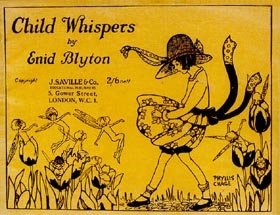
Enid began writing in her free time; after winning a writing competition it didn’t take long for poplar publications to begin taking an interest in her poems and short stories…. Her first book, ‘Child Whispers’, was published in 1922 and in 1923 she had poems published alongside Rudyard Kipling, Walter de la Mare and G.K. Chesterton….which increased her popularity….
‘Child Whispers’ (1922) – credit Phyllis Chane – Public domain
The 1930s saw her develop an interest in writing about myths and legends…. The first of her 28 book ‘Old Thatch‘ series was published in 1934 and ‘The Enchanted Wood’, the first in ‘The Faraway Tree’ series came in 1939…. By the 1940s she was a prolific author and went on to bring us ‘The Famous Five’, ‘The Secret Seven’ and of course ‘Noddy’….who first appeared in the Sunday Graphic on the 5th of June 1949….
Image credit : Shekhar Sahu via Flickr
Enid married Major Hugh Alexander Pollack on the 28th of August 1924 and the couple had two daughters, Gillian and Imogen…. However, the marriage became troubled and ended in divorce…. She then married London surgeon Darrell Walters, with whom she had been having a long-term affair, on the 20th of October 1943…. She suffered a miscarriage after a fall – but for Enid and Darrell there were to be no children….
In 1957 Enid’s health began to decline and by 1960 she was showing the first signs of dementia…. Her husband died in 1967 and Enid herself passed away the following year, on the 28th of November, in Hampstead, London….
On this day in history : 10th August 1889 – Dan Rylands, of Barnsley, Yorkshire, patents the screw-top bottle; a simple way of closing bottles which had previously relied on cork stoppers….
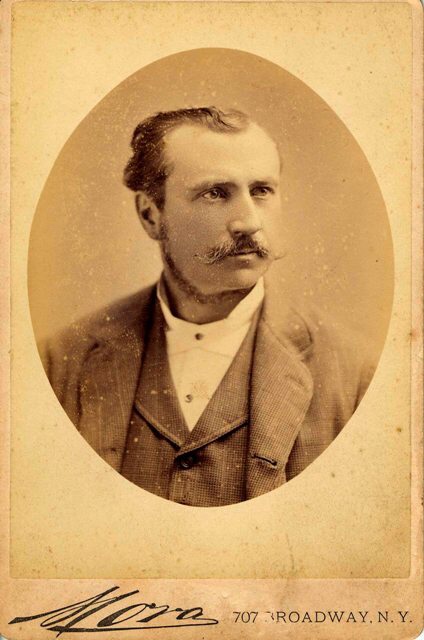
Dan Rylands had taken over as Partner at the Hope Glass Works in Stairfoot, Barnsley after the death of his father, Ben Rylands, in 1881…. His relationship with his new business partner, Hiram Codd, was difficult from the start….
Hiram Codd – Jose Mora – Public domain
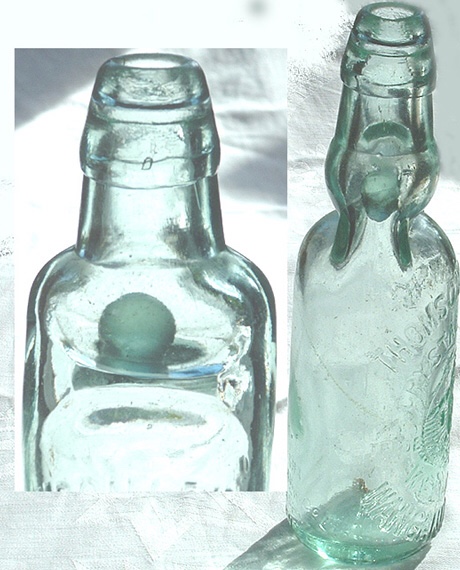
Codd had invented the famous ‘Codd Bottle’ in 1872….with its glass marble sealing the bottle neck, allowing the ‘fizz’ to be kept inside the liquid within…. Despite their differences the partners managed to work together and the success of the business continued…. It was when Rylands sought to make improvements to Codd’s marble neck design that things turned really sour between them…. Codd resented the younger man’s interference and eventually the partnership was dissolved with Rylands buying Codd out….
Codd Bottle – Moriori – public domain
However, the conflict did not stop there…. Codd took Rylands to court for patent infringement, over a groove making tool…. The court ruled in Codd’s favour – but Rylands responded by registering a similar tool of his own…. Over the next decade he went on to patent over 90 designs relating to the glass-making industry….including the screw-top bottle…. Incidentally, the screw-top wine bottle did not appear until much later; the acidity of wine made it impractical – and remained a problem until it was solved in the 1960s….
Hope Glass Works became the largest Codd bottle producer – but then things began to go wrong for Rylands…. A fire at the factory, a major strike across the glass-works industry and bad investments in a coal mine and a brickworks meant he was declared bankrupt in 1893….with business liabilities to the tune of £300K…. His assets were sold off; this was all too much for Rylands and he attempted to take his own life….
Loyal employees raised £300 so that the family could hold on to their personal possessions; Rylands moved to London and worked in the mineral water industry…. However, he continued to have mental health issues and in 1910 he committed suicide….
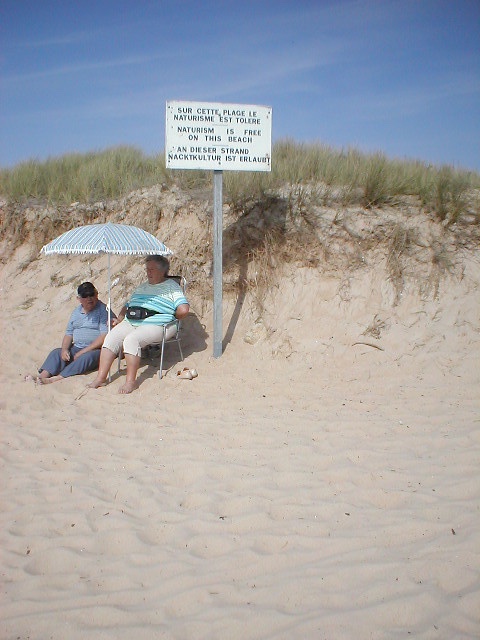
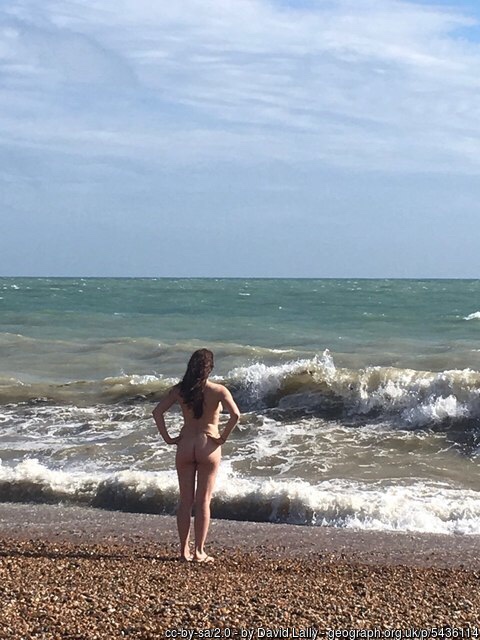
On this day in history : 9th August 1979 – Black Rock Beach on Brighton’s seafront is established as Britain’s first official nudist beach – despite fierce opposition from those who disapproved….
The campaign for a part of the seafront to be set aside for naturists was led by 47-year-old grandmother and local councillor Eileen Jakes – who being a landlady on the seafront believed it would encourage tourism…. The opposition believed it would attract perverts; opposing councillor John Blackman thought it would be a “flagrant exhibition of mammary glands”…. His belief was that people would be offended and he added “People naively believe what is good enough for the Continent is good for Britain”….
A 200yd stretch of beach, situated to the east of Palace Pier, officially opened on the 1st of April 1980…. Brighton was the first major resort to have a designated nudist beach – and there were those who were determined it would be the last…. In 1983 a majority Conservative group in Brighton Council promised to close it down, calling it a “disgrace to the town”…. However, it remains today as the best known naturist beach in the country….
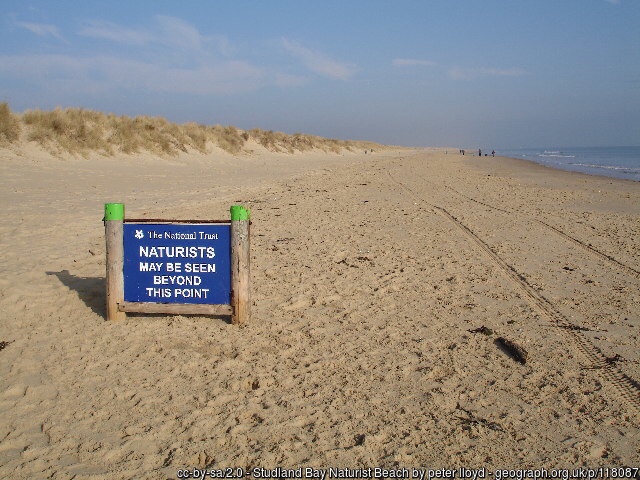
The law on nudity in Britain is a grey area…. It is perfectly legal as long as nobody is alarmed, distressed or harassed by it…. There are currently around forty locations in the UK that are considered naturist beaches (but bare😊in mind this does not necessarily mean the whole of the beach)….
Nude bathing originated in Germany over a century ago, with the Free Body Culture Movement – encouraging people to get closer to nature – hence ‘naturism’…. However, whilst many places on the Continent have a relaxed, tolerant view on it, naturism is still regarded with distaste by many in this country…. Naturists can often expect to put up with B-list, windswept beaches….
If sunbathing as nature intended is your ‘thing’ – don’t forget the sunscreen!
On this day in history : 8th August 1963 – The robbery of £2.6m from a Royal Mail train travelling to London from Glasgow at Bridego Railway Bridge…. It was to become known as The Great Train Robbery….
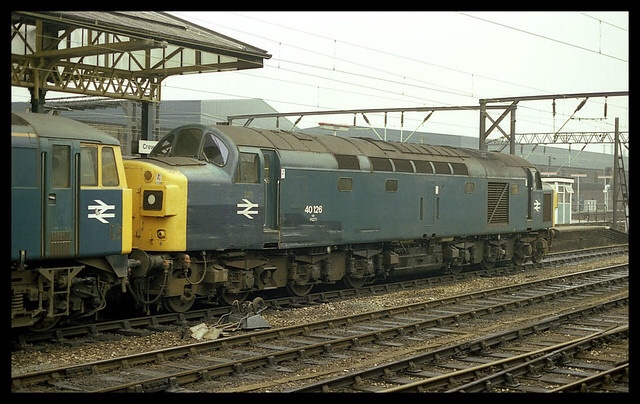
The locomotive 40126 (ex D326) from The Great train Robbery – Image credit: JohnGreyTurner via Flickr
The train had left Glasgow Central Station at 18.50pm on Wednesday the 7th of August and was due to arrive at London Euston at 3.59am the following morning…. On board the 12-carriage mail train were 72 Post Office employees who had the job of sorting the mail, which was collected at stops en route….
One of the carriages, the second nearest to the engine, carried high value packages and a large quantity of money…. Ordinarily the mail train would carry a sum averaging around £300k; however, because the previous weekend had been a bank holiday the amount onboard was considerably more….between £2.5-£3 million….
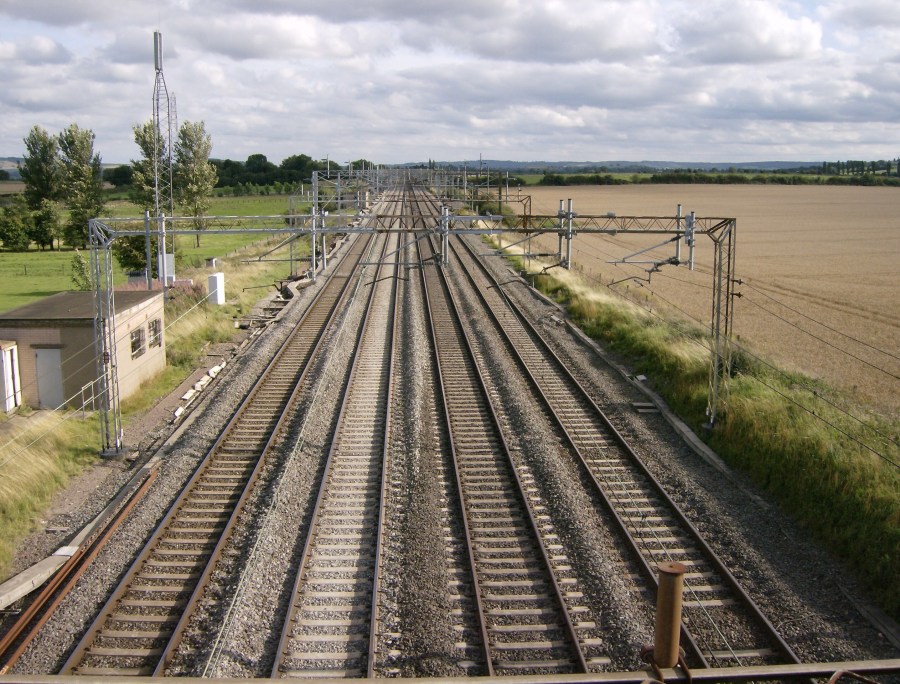
Just after 3am the train had to stop at a red signal light at Sears Crossing, Ledbury – which lies between Leighton Buzzard and Cheddington on the West Coast Main Line…. Unbeknown to the train crew the signal had been tampered with…. The fireman, 26-year-old David Whitby, climbed down from the cab to investigate as it was not normal to be stopped at this location at this time in the early morning…. On approaching the line-side telephone to call the signalman he found the wires had been cut; it was then that he was overpowered by one of a gang of robbers….
View towards ‘Sears Crossing’ – Image credit: Sealman CC BY-SA 3.0
The other gang members climbed into the cab of the waiting engine…. The driver, 58-year-old Jack Mills, struggled with one of them before being struck over the head by another with a cosh…. He was left semi-conscious….
The gang had in their midst a retired train driver, the plan was that he would drive the train to nearby Bridego Bridge…. However, it soon became apparent he was unable to fathom out how to drive this newer, more modern train to what he had been used to…. The gang’s only option was to force poor Jack Mills to drive the mail train to their chosen destination….
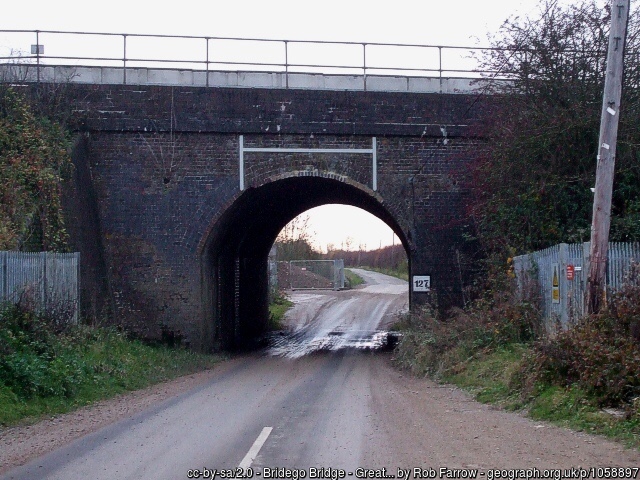
Bridego Bridge (now renamed Mentmore Bridge)
On arriving they were met by more members of the gang, who were waiting with a truck…. There were no police or security guards on the train and the Post Office employees were unable to put up any resistance…. The gang removed all but 8 of the 128 sacks within the HVP carriage of the train; forming a human chain they loaded their vehicle – taking about 15-20 minutes to do so…. Within 30 minutes of their first stopping the train they were on their way to escape….
15 criminals made up the gang:- Bruce Reynolds, Charlie Wilson, Gordon Goody, Buster Edwards, Roy James, Roger Cordrey, Jimmy White, John Daly, Bob Welch, Tommy Wisbech, Jim Hussey, Ronnie Biggs, Harry Smith, Danny Pembroke and one other who remains unknown…. They were also accompanied by their hired train driver, known as ‘Pops’…. Out of the gang 11 were caught and convicted….







 Cottage Capers