On this day in history….23rd June 1940

On this day in history : 23rd June 1940 – To help relieve the tedium of workers in the munitions factories and to increase their productivity, the BBC’s ‘Music While You Work’ programme is introduced….

img_3415
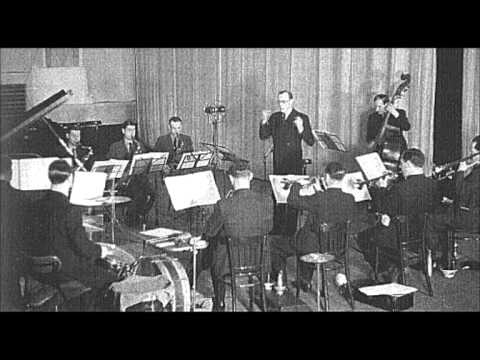
Music While You Work – Jack White and his Band – YouTube

The first show was announced in the Radio Times as a ‘half hour’s music meant specially for factory workers to listen to as they work’…. The programmes were scheduled for 10.30am, mid-afternoon and for a period a night shift slot at 10.30pm…. The first day featured Dudley Beavan at the theatre organ in the morning and The Organolists – an organ trio – in the afternoon….

The programme was piped to the workers through a tannoy and there were strict rules as to what could and could not be performed…. By playing non-stop popular music with an even tempo morale lifted and work output increased…. Mainly it was familiar music that workers could sing or whistle to…. Brass bands, military bands and dance bands were all featured – along with performers such as Joe Loss, Victor Silvester and Mantovani…. From October 1940 the programme always began and ended with ‘Calling All Workers’ by Eric Coates….

img_3413
Eric Coates c.1925 – Fair use

The music had to be cheerful; there had to be no over-loud drumming – as this could sound like gunfire! Nothing lethargic was allowed and nothing that would make people want to clap or bang tools in time…. Certain songs, such as ‘Deep in the Heart of Texas’ were banned for this reason….

In 1941 orchestra leader Winford Reynolds was appointed ‘Music While You Work Organiser’…. His task was to tour the factories of the country to get feedback on the programmes from the workers….

The night shift slot was reintroduced between 1947 and 1950…. Apparently during the time the programme aired production increased by around 13%…. Up until 1963 the music was performed live – but to free up BBC studios during the day they began to pre-record the shows – usually on a Sunday evening…. The programme ran until the 29th of September 1967….

img_3414
Music While You Work – Anton and his Orchestra – YouTube

On this day in history….22nd June 1611

On this day in history : 22nd June 1611 – English navigator and explorer Henry Hudson is cast adrift, along with his son and seven others by his mutinous crew – into the bay which is later to be named after him….

img_3410
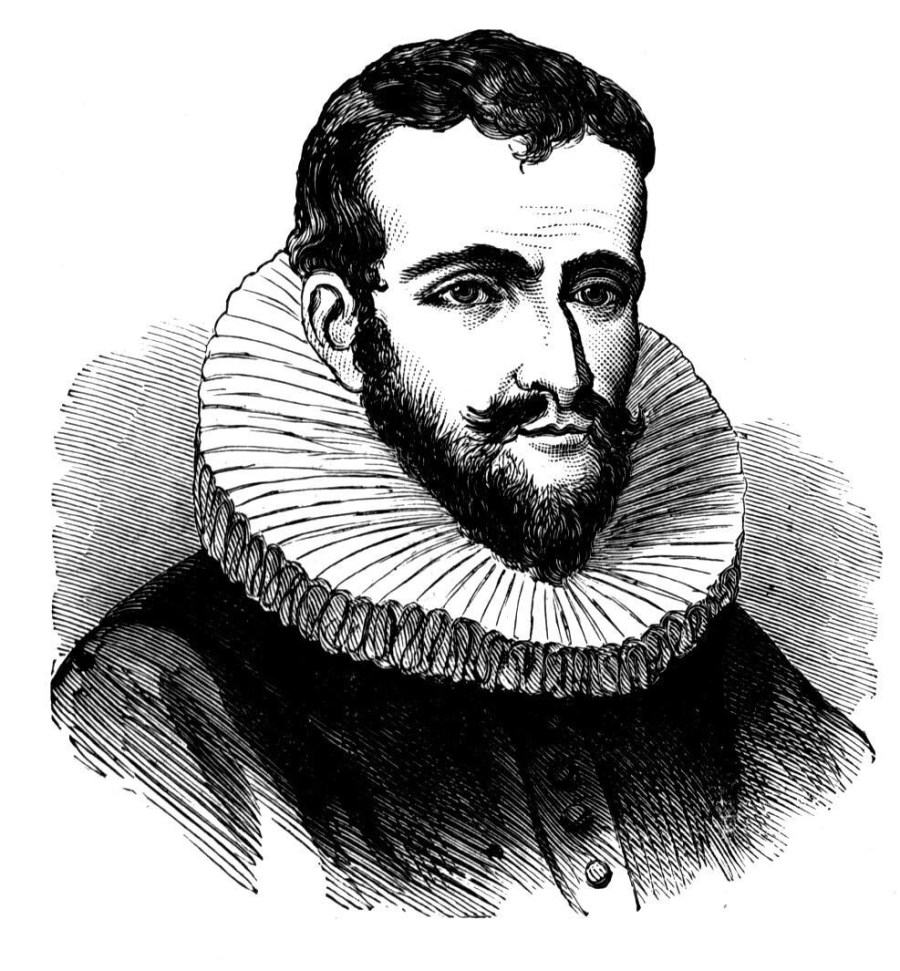
Henry Hudson – Public domain

Hudson is best known for his exploration of the area which is now known as Canada and the northeastern region of the United States…. In 1607 and 1608 he made two attempts to find a passage through to China which had been rumoured to exist….

In 1610 he got to have a third attempt after being commissioned by the British East India Company and the Virginia Company…. Setting off in his new ship ‘Discovery’ he and his crew had reached Iceland by the 11th of May and then the south of Greenland on the 4th of June…. They headed into what was to become known as the Hudson Straight, at the northern tip of Labrador, on the 25th of June and eventually sailed into Hudson Bay on the 2nd of August….

There was much excitement among the men as they believed they really may have found the passage…. However, after a few months of exploring and mapping no way through was found….

In the November the ship became trapped in the ice of the James Bay….and it was decided to move ashore to wait out winter…. Once the ice had melted in the spring of 1611 Hudson was ready to set off exploring again – but most of his crew, having had enough, wanted to return home…. Tensions began to rise until eventually matters came to a head….

img_3411
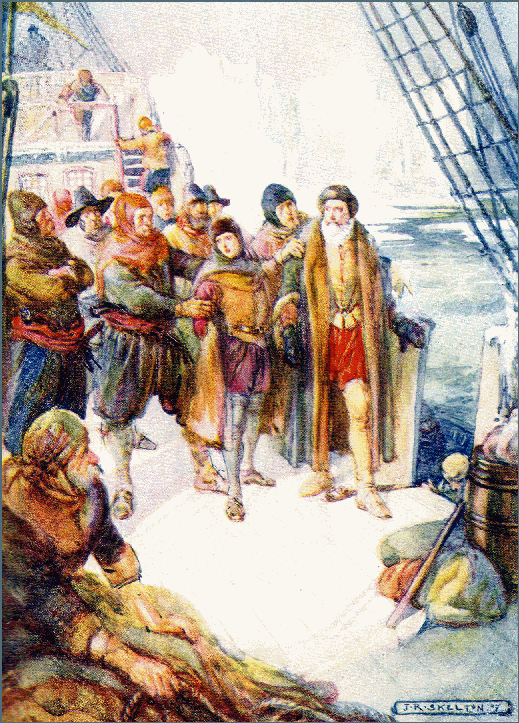
The sailors turn against the Hudsons – Henrietta Elizabeth Marshall – Public domain

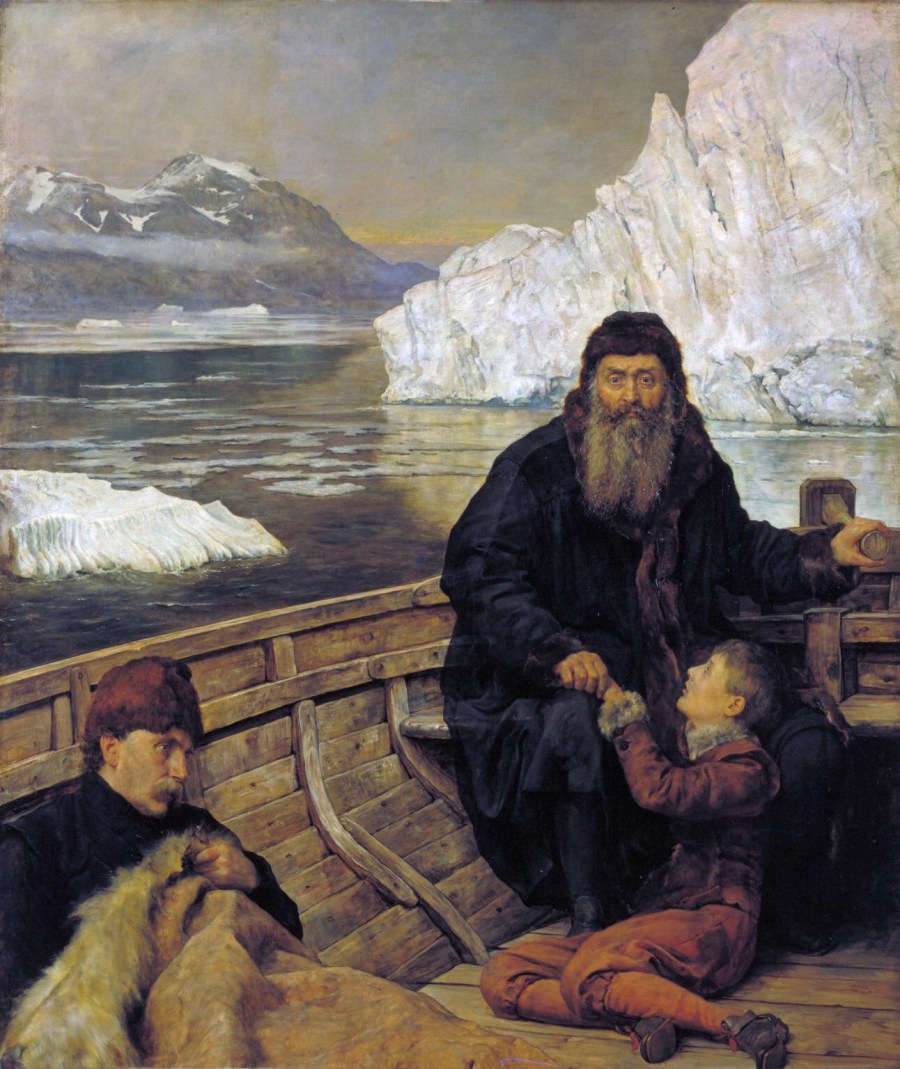
Discovery’s navigator, Abacuk Pricket, kept a detailed account of what happened…. According to him the mutiny was led by two men, Henry Greene and Robert Juet…. Captain Hudson, his teenage son John and seven crew members – those sick, infirm or fiercely loyal to Hudson – were ordered into a shallop – an open boat about 30ft long, with oars and mast with one or two sails…. They were provided with clothing, food, an iron cooking pot, powder and shot, pikes and other necessities – and then cast adrift….

At first Hudson’s shallop attempted to keep up with Discovery – but finally the mutineers unfurled a couple more sails, enabling them to pick up speed – and they left the shallop behind, marooned in Hudson Bay…. Captain Hudson and his men were never seen again and it is unknown what became of them….

The Last Voyage of Henry Hudson exhibited 1881 by The Hon. John Collier 1850-1934
Henry Hudson and his son cast adrift – John Collier – Public domain

Only eight out of the thirteen mutineers survived the voyage back to England…. On arrival they were arrested and put on trial – but no punishment was brought against any of them…. Possibly their information on the New World was too valuable…. Or perhaps Pricket’s account gave them the benefit of the doubt – although it has often since been criticised for being biased….

On this day in history….21st June 1898

On this day in history : 21st June 1898 – The launch of HMS Albion in the River Thames ends in disaster when an old wooden bridge collapses and 36 people are drowned….

HMS Albion, a 12,900 ton pre-dreadnought battleship had been built for service in Eastern Asia; it had been laid down on the 3rd of December 1896 by The Thames Iron Works of Leamouth, London….

img_3409
HMS Albion – Symonds & Co, public domain

Approximately 30,000 people attended the launch at Blackwall by the Duchess of York – Lady Elizabeth Bowes-Lyon, the future Queen Mother…. For the workers of the shipyard and their families it was a holiday; the banks and quaysides were packed and a flotilla of boats took to the water…. Also present were the Duke of York, the First Lord of the Admiralty, Sir William Vernon Harcourt (leader of the opposition) and many other dignitaries and MPs….

It took the Duchess four attempts to successfully break the bottle on the side of the ship…. As HMS Albion entered the water a huge wave was created – which in turn caused an old wooden bridge structure, on which stood some 200 people, mostly women and children, to collapse into the water of a side creek….

The noise from the horns on the boats drowned out the screams and cries of the people in the water – so the now departing crowds were unable to hear them…. Several workmen did dive in from the quayside and survivors were pulled into boats which came to the rescue…. One boat took at least fifty onboard and one single sailor saved six people…. It was a scene of total chaos and confusion….in all thirty-six people drowned…. Many of them were women – dragged down by the weight of the cumbersome clothing they wore at the time…. It remains one of the worse peacetime disasters in the history of the Thames….

At the inquiry that followed it was concluded that nobody was to blame for the catastrophic incident other than the crowd itself…. Those on the bridge had been warned of the danger but had ignored orders to get off and had even mocked and jeered at the police…. The accident was a result of the stupidity of the crowd and the old dilapidated bridge that simply could not take their weight….

On this day in history….20th June 1906

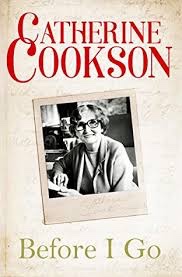
On this day in history : 20th June 1906 – Dame Catherine Cookson, one of Britain’s most widely read novelists, is born in Tyne Dock, South Shields….


Registered as Catherine Ann Davies but known as Kate as a child, Catherine was born at 5, Leam Lane in Tyne Dock, East Jarrod – close to the mouth of the River Tyne…. She was the illegitimate daughter of Kate Fawcett, an alcoholic barmaid who had fallen on hard times…. Catherine grew up thinking that her mother was her sister and she was brought up by her grandparents, Rose and John McMullen; she was 7-years-old before she found out that her ‘sister’ was in fact her mother….

Catherine left school around the age of 14 and went into service as a maid for a while, before going to work as a laundry checker at the Harton Workhouse…. In 1929 she moved to the South Coast to run the laundry at Hastings Workhouse….

She worked hard, saved every penny she could and in 1933 managed to get a £1,000 mortgage….with which she bought a large 14 bedroom Victorian house – ‘The Hurst’…. She turned this into a lodging house/old-peoples’ home/nursing home….

In June 1940 Catherine married Tom Cookson, a teacher at Hastings Grammar School…. They could not have been more like ‘chalk and cheese’…. Whereas Catherine was strong-willed and of a dominant nature, Tom was shy and softly-spoken…. Catherine came from a working-class, poverty-stricken background…. Tom, the son of a verger, was an Oxford graduate…. Catherine was 34 when they married, senior to Tom by 6 years….

Their first child, a boy, was born three months premature and was still-born; during the Second World War years Catherine suffered a further three miscarriages…. It was also discovered she had telangiectasia – a rare vascular disease which causes bleeding…. She had a breakdown which was to take the best part of 15 years to recover from….


As part of the therapy for her depression Catherine took up writing…. She had been an avid reader as a child and had written her first short story ‘The Wild Irish Girl’ at the age of 11…. She had sent it to the local newspaper – but it had been returned unpublished….

She joined the Hastings Writers’ Group and started her first novel ‘Kate Hannigan’ in 1946 and it was published in 1950…. But her writing career really took off in the late 1960s; her first major success ‘Our Kate’, published in 1969, took her 12 years to write….


Catherine Cookson wrote 103 books, often two a year, selling over 123 million copies – and her work has been translated into nearly 20 languages…. She was also published under the pseudonyms of Catherine Marchant and Katie McMullen…. For 17 years she was the most borrowed author from British libraries…. Many of her books have been adapted for film, radio, stage and particularly TV…. Between 1990 and 2001 some 18 of her books had been adapted for the small screen….

img_3408

Most of her novels were set in a run-down North East, reflecting the poverty of her early life; Tyneside was then one of the poorest parts of the Country…. But in later life the North East was where she and Tom were to return…. After living in several locations they finally settled in 1989 in the Jesmond area of Newcastle-upon-Tyne…. Catherine’s health had deteriorated considerably and she spent the last few years of her life bedridden….her final novels were written whilst she was in her sickbed….

Catherine died at home 16 days before her 92nd birthday, on the 11th of June 1998…. She had vascular disease, had suffered five heart attacks and was almost blind…. Her husband died just 17 days later…. After their deaths the couple’s £20m fortune was donated to charities…. Catherine had done much for charity in her lifetime; in 1985 she had given £800,000 to the University of Newcastle….who in gratitude set up a lectureship in haematology….

Catherine was awarded an OBE in 1985 and became a Dame of the British Empire in 1993…. In 1997 she was appointed Honorary Fellow of St. Hilda’s College, Oxford….
img_3407

On this day in history….19th June 1997

On this day in history : 19th June 1997 – Fast-food chain McDonald’s wins a two-year libel case in London against two environmental campaigners; it is known as the ‘McLibel Case’….img_3398

McDonald’s brought the case against Helen Steel and David Morris, who became known as the ‘McLibel Two’….

A leaflet had been published claiming that the Company had caused environmental damage, with allegations it was responsible for the destruction of rainforests and causing starvation in the Third World…. It was alleged McDonald’s had treated animals cruelly, exploited workers and served unhealthy food….

Whilst a win for McDonald’s it was in reality a partial victory; Judge Mr. Justice Bell decided that the fast-food chain had treated animals with cruelty and its low paid workers had kept wages down across the catering trade…. He also ruled that it was true that McDonald’s targeted its advertising at children who pressurised their parents into taking them to the restaurants….

Unemployed activists Steel and Morris were ordered to pay £60K in damages…. They had represented themselves in the 314 day trial – one of the longest, if not the longest trial in British legal history…. The pair complained that they had not been able to claim legal aid, as it was not available for libel cases….

In March 1999 the damages were reduced from £60K to £40K by the Court of Appeal…. McDonald’s claimed it had sued in order to protect its reputation….the lawsuit cost it £10M….img_3397