On this day in history….21st November 1936

On this day in history : 21st December 1936 – The world’s first television gardening programme – In Your Garden, With Mr Middleton – is broadcast by the BBC….
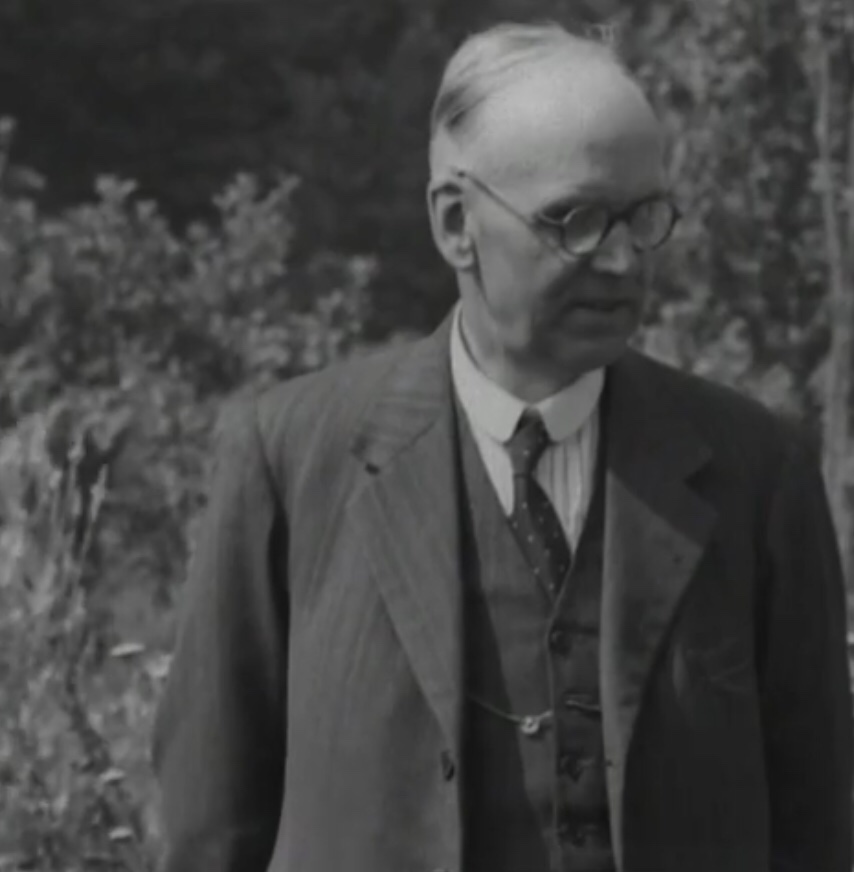
Cecil Henry Middleton

The programme was presented by Middleton from a purpose-built plot at Alexandra Palace in the first month of television broadcasting…. Cecil Henry Middleton was already well-known to the British public, his broadcasting career having started on the 9th of May 1931 when he gave a talk on gardening on BBC radio…. From 1934 his programme In Your Garden began regularly being aired on a Sunday afternoon at 2.15pm – and by 1940 some 3.5 million listeners were tuning in to listen to his 15 minute talks…. His style was informal and chatty and peppered with humour…. He talked to his audience as if addressing friends, whereas so many other BBC voices of the time were formal, stilted and stuffy….

In 1939 his gardening series was relaunched on the BBC World Service – in an effort to encourage people to grow their own food…. Working with the Ministry of Agriculture the BBC extended the series to give the public advice on what became known as the Dig For Victory campaign…. A 1942 survey suggested that 70% of those who owned a radio tuned in to get gardening advice….

From Middleton’s 1945 gardening guide – Image credit : NewquayZooArchive1969 – own work – CC BY-SA 3.0

Middleton was the first of the celebrity gardeners; others followed, including Percy Thrower, Geoff Hamilton and Alan Titchmarsh…. He also wrote several books and regularly for the Daily Express…. After he died of a heart attack, on the 18th of September 1945, flowers and tributes poured in from all over Britain….
On this day in history….20th November 869

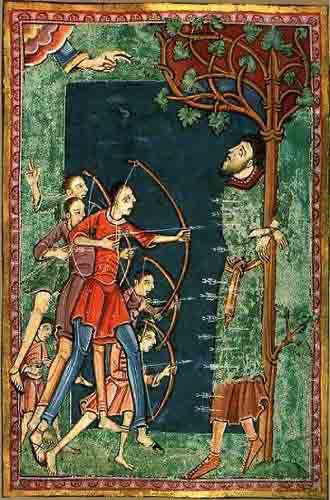
On this day in history : 20th November 869 – Edmund the Martyr, Saxon King of East Anglia, is slain by the Vikings…. The town of Bury St. Edmunds in Suffolk is named for him….

A medieval illumination depicting the death of Edmund the Martyr – Public domain

Little is known about Edmund as the Vikings destroyed all evidence of his reign…. He was king from around 855 and thought to have been East Anglian in origin….

The Great Heathen Army had advanced and captured his land in 869…. It is possible that Edmund was killed in battle – but legend has it that he was brutally executed…. After refusing to renounce Christianity he was beaten, then tied to a tree – shot at with arrows and then beheaded…. His head was thrown into the forest – but was later found by those loyal to him and along with his body was buried in a wooden chapel close to where he had died…. He was later moved to a monastery at Beodericsworth, which is now known as Bury St. Edmunds….

Depiction of St. Edmund’s Shrine (destroyed 1539) – Public domain

The monastery, which became his burial place in 903, was reputedly where miracles would happen at the shrine of the Martyr King – and it became a pilgrimage site…. The town grew up around the monastery and Edmund became venerated as a Saint…. By 925 the tale of St. Edmund had spread far and wide – and the name changed to Bury St. Edmunds….

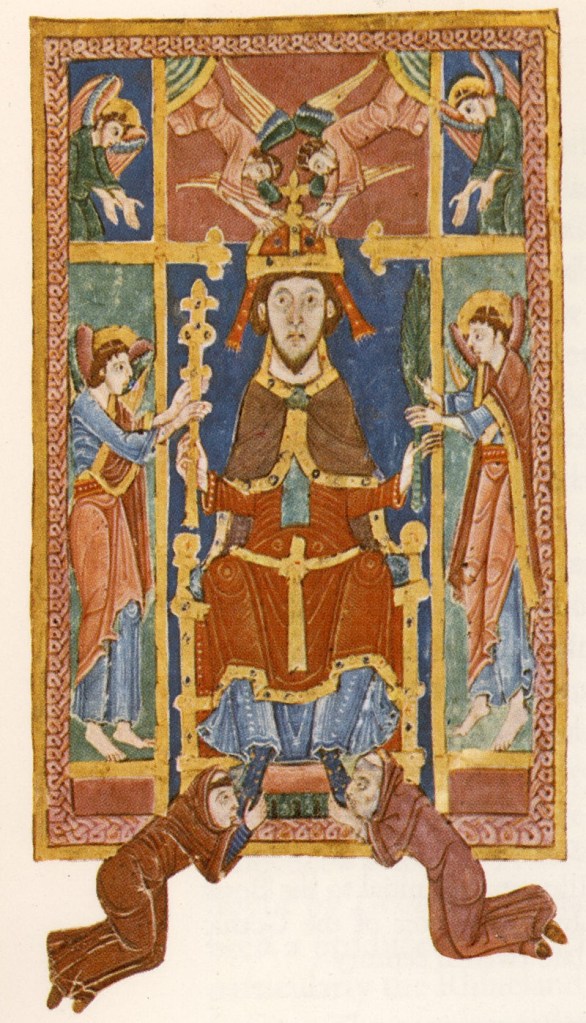
St. Edmund the Martyr crowned by angels – from a manuscript of Bury St. Edmunds circa 1130 – Public domain

On this day in history….19th November 1911

On this day in history : 19th November 1911 – Two ships are lost in one day on the notorious sandbank Doom Bar, in the Camel Estuary, Cornwall….

Doom Bar at high water – Image credit : Worm That Turned – own work – CC BY-SA 3.0

Doom Bar, previously known as Dunbar Sands – or Dune-bar – lies at the mouth of the River Camel Estuary where it meets the Celtic Sea off the north coast of Cornwall…. During storms the sands are prone to dramatic shifting, making the narrow channel between Doom Bar and the cliffs at Stepper Point very difficult for ships to navigate…. Until the 20th century this was the only access available to Padstow Harbour…. The channel is regularly dredged by the Padstow Harbour Commission – but despite being made safer the RNLI still has to deal with incidents at Doom Bar….

Tractor and trailer dredging – Image credit : Paul Harvey – CC BY-SA 2.0

Since records began in the early 19th century there have been over 600 reported wrecks, capsizings and beachings…. The largest is believed to have been the 1118 ton barque Antoinette – which sank on New Year’s Day 1895; thankfully all onboard were rescued…. The only warship ever lost on the sands was HMS Whiting, a 12-gun schooner which had been captured from the French in 1812…. The ship had been involved in the pursuit of smugglers when it hit the sandbank…. Following the incident the captain lost a year of his seniority – and three crewmen who deserted after the sinking were later caught and each received 50 lashes….

The two ships to be lost on the 19th of November 1911 were The Island Maid, all of her crew were rescued – and The Angele, who lost her entire crew, except for the captain….

Doom Bar at low tide, river channel on far side – Image credit : Andy F – CC BY-SA 2.0

On this day in history….18th November 1906

On this day in history : 18th November 1906 – The birth in Smyrna of Sir Alec Issigonis – who came to Britain in 1922 and after starting work in the motor industry went on to design the Morris Minor and the Mini….

Alec Issigonis photographed at Austin, Longbridge standing next to the very first Mini (left) and a new 1965 Mini (right) – Photo credit : Birmingham Museums Trust CC BY-SA 4.0

Sir Alec was the son of a Greek merchant, who had become a British citizen whilst studying engineering in Britain in 1897…. The family had moved to London during the war between Greece and Turkey…. Alec himself was to study engineering and then joined Morris Motors at Cowley in 1936…. He was also to successfully compete in motor racing….

In 1948 he designed the Morris Minor, which during its production between 1948 – 1971 became the first British car to sell more than a million….

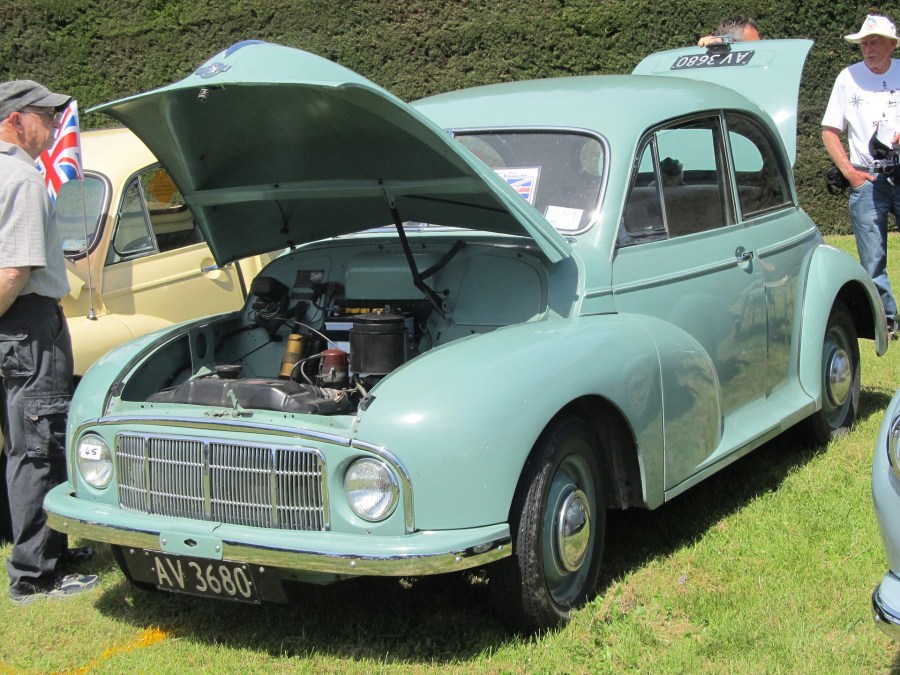
1949 Morris Minor – Image credit : Riley CC BY 2.0
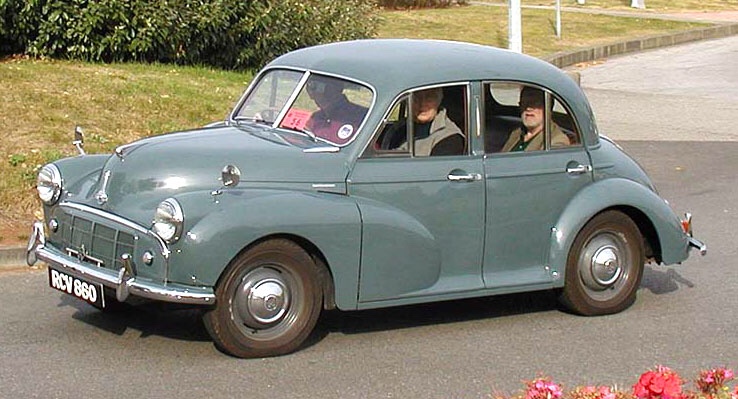
Morris Minor II Series – Image credit : Arpingstone – Public domain
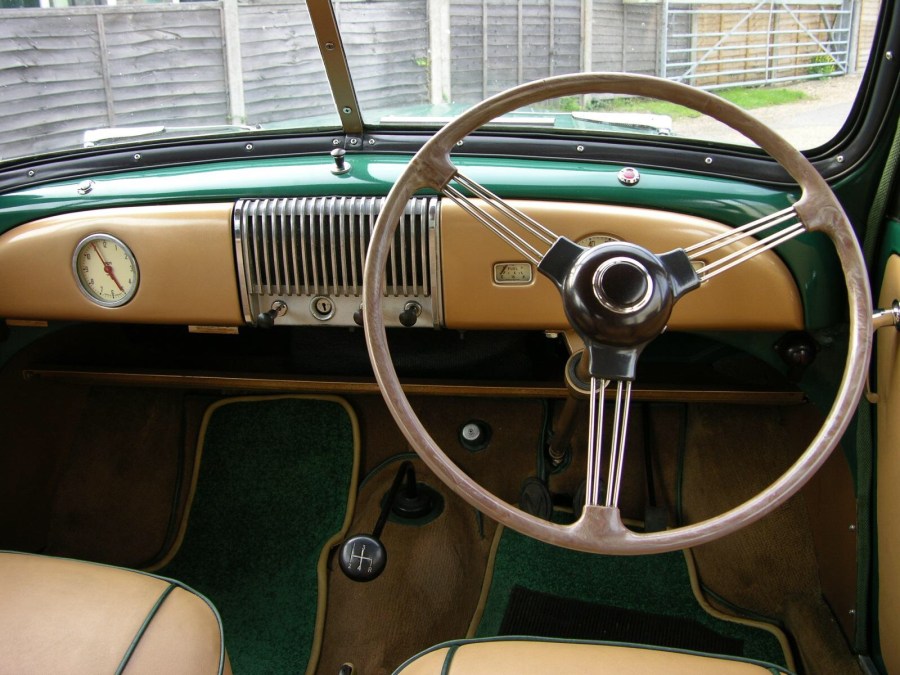
Morris Minor interior – Image credit : The Car Spy CC BY 2.0

Morris and Austin merged in 1952 to form the British Motor Corporation – and at this point Alec went to work briefly for Alvis Cars…. He returned to BMC in 1955, this time working at the Austin plant, in Longbridge…. Then in 1959 he was asked to design an economical, around town, small car in response to the Suez energy crisis and fuel rationing – it was also aimed at rivalling the popularity of Volkswagen’s Beetle…. Alec’s resulting design was the Mini….

The first 1959 Morris Mini-Minor – Image credit DeFacto own work – CC BY SA 2.5
1959 Mini interior – Image credit : De Facto – own work CC BY-SA 2.5

Launched as the Morris Mini Minor and Austin Seven the little car soon became known as the Austin Mini – and later just as the Mini…. It was to go on to become Britain’s best ever selling car, 5.3 million were produced in its lifetime…. Alec received his knighthood in 1969…. He officially retired in 1971 but carried on with his work from home until shortly before his death on the 2nd of October 1988….

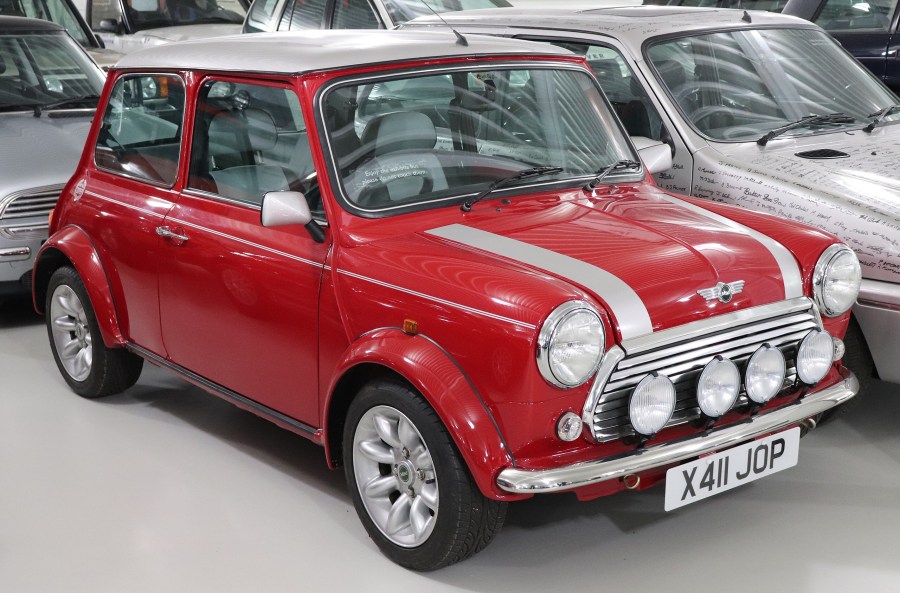
Production of the Mini ended on the 4th of October 2000 and ownership of the Mini name passed to BMW…. The last ever British Mini, a red Cooper Sport, was presented to the British Motor Industry Heritage Trust….

The last Mini produced, October 2000 – Image credit : Vauxford – own work CC BY-SA 4.0

On this day in history….17th November 1882

On this day in history : 17th November 1882 – Walter Maunder, the Royal Astronomer, witnesses an unidentifiable flying object from the Greenwich Observatory….

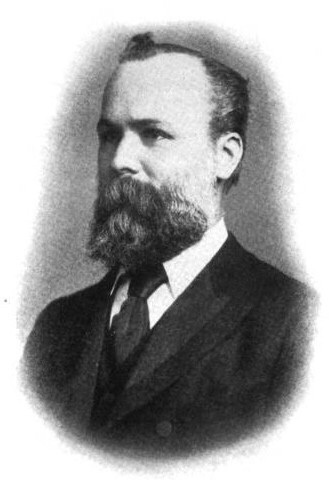
Walter Maunder – Public domain

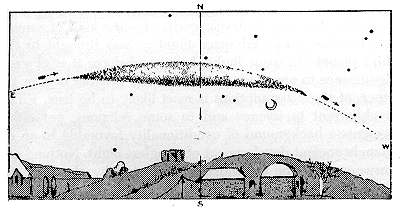
Maunder is best remembered for his study of sunspots – but on this particular evening was observing the night-time sky over London…. He was accompanied by some other European astronomers, including John Rand Capron, an amateur scientist, astronomer and photographer…. All were to witness the disc-like object, glowing green, which travelled at a rapid speed across the sky in a north-easterly direction….

Maunder was later to describe the experience in the June 1883 edition of The Observatory publication – of which he was editor…. He referred to the sighting as an ‘auroral beam’ and a ‘strange celestial visitor’…. As there had been intense auroral activity at the time it was assumed the UFO was connected to that…. He never witnessed anything like it again….

Drawing from ‘Philosophical Magazine’, May 1883 – Public domain

However, he wasn’t the first to record such a sighting (and I’m sure he wasn’t the last)…. In 664 a group of nuns saw a strange green light that appeared above Barking and headed over London…. In 764 ‘dragons’ were seen over the UK, including London – and in 1593 a report of a ‘flying dragon surrounded by flame’ was recorded over London…. In 1741 a fireball seen above Kensington by Lord Beauchamp supposedly measured just 8 inches in diameter…. The following year a rocket-like ship was seen by a Fellow of the Royal Society – it apparently ‘stayed around for many minutes’….