On this day in history….27th March 1963

On this day in history : 27th March 1963 – The Beeching Report is published….signalling the end for approximately one-third of Britain’s rail network and the loss of thousands of jobs….

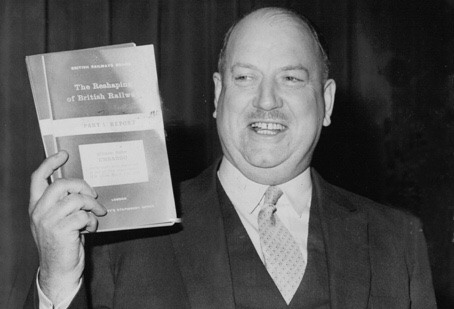
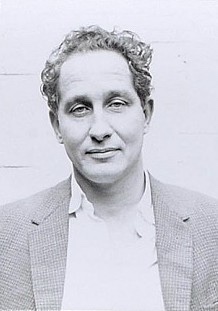
Dr. Richard Beeching, physician and engineer, was recruited by the government to make Britain’s railways profitable again…. He left his very successful career at ICI to do so….

img_2657
Dr. Richard Beeching – Image credit: James via Flickr

Beeching’s report, entitled ‘The Reshaping of British Railways’ declared large parts of the network were uneconomic and underused…. Only half of the railway system carried enough traffic to cover the cost of operating it…. Beeching recommended axing 6,000 miles of track – including hundreds of branch lines – and the closure of 2,363 stations, with the loss of tens of thousands of jobs…. He argued improved bus services would replace trains and placed an emphasis on faster rail links between cities…. At the time the railway network was running at a loss of £140m per year; Beeching claimed his axing of services would make a net saving of £18m per year…. He stated the first closures would likely be made in the coming autumn, he predicted the loss of 70,000 jobs and fare increases of at least 10% in London….

Closure of railway between Aviemore & Forres (via Dava) and Aviemore & Craigellachie on 18 October 1965, issued by British Rail
Image credit: mikeyashworth via Flickr

This did not make Dr. Beeching a popular man…. Pressure groups throughout the Country formed, launching campaigns to try and save their railway lines…. Although he had said cuts were to be made as soon as possible it was actually a very slow process…. In 1965 Beeching published a second report – reiterating the conclusions from the first report….

The closures began to pick up at a much faster pace during the mid 1960s…. By the time the reshape had finally finished Beeching’s axe had chopped 2,128 stations and 67,700 jobs….

The images below show a train in the station at Cranleigh, which would have been the nearest station to us here in Dunsfold – and some scenes from the now defunct Guildford to Horsham line…. As you can see, in some places such as Bramley, original features of some of the stations can still be seen….. It is in fact now a very a pleasant trail used by walkers and cyclists….

This slideshow requires JavaScript.

On this day in history….26th March 1885

On this day in history : 26th March 1885 – The first official British cremation takes place at Woking Crematorium in Surrey…. It is the first of only three cremations in this year….

img_2655
Woking Crematorium – Image courtesy of PicturePrince via Wikimedia

With the arrival of Christianity came the belief that cremation was a Pagan practice that made resurrection after death totally impossible…. However, by the late 19th century attitudes were changing – albeit very slowly…. Burial grounds were fast filling up – and there were those who raised concerns about the hygiene of burials…. Victorian funerals were elaborate, extremely expensive affairs – and for many, unaffordable….cremation offered a cheaper alternative to burial…. However, there were plenty who were terrified of the idea – of not actually being dead and being burned alive….

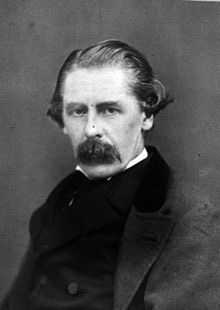
Woking Crematorium was founded in 1878 on land purchased by Sir Henry Thompson, Physician to Queen Victoria and a founder and President of the Cremation Society of Great Britain…. Seven years later the first cremation was to take place – that of a woman identified in The Times only as ‘a well-known figure in literary and scientific circles’….

img_2656
Sir Henry Thompson

The woman in question was writer and painter Jeanette Pickersgill…. Born Jeannette Caroline Grover in Amsterdam around 1814, she had married Henry Hall Pickersgill, an English artist, on the 20th of July 1837, in Soho, London…. Jeanette was an accomplished artist herself, her work being exhibited at the Royal Academy between 1848 – 1863….

Her cremation took place six days after her death – which had been certified by two doctors to be on the ‘safe side’ – and the cremation process was completed within an hour and a quarter…. Hers was the first of three cremations performed in 1885 – a year that saw a total of 597,357 recorded deaths in the United Kingdom….

In 1892 a further crematorium was established in Manchester, followed by Glasgow in 1895 and Liverpool in 1896…. By 1901 there were six functioning crematoriums – but even so, out of 551,585 deaths that year only 427 bodies were cremated…. London’s first crematorium, at Golders Green, came into operation in 1902…. Nowadays over 70% of those who die are cremated….

On this day in history….25th March 1969

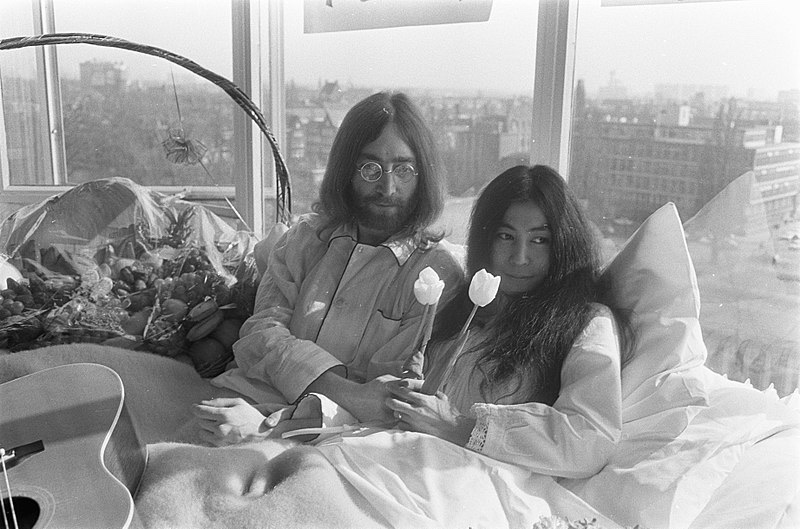
On this day in history : 25th March 1969 – Newly married John Lennon and Yoko Ono begin their ‘bed-in’ at the Hilton in Amsterdam – to convey a message of Peace to the World….

img_2647
Dutch National Archives – Public domain

John and Yoko had married five days before; they knew only too well that their ‘tying the knot’ would cause much interest amongst the media and public – and so decided to use this publicity to promote world peace…. War was raging in Vietnam at the time and the Cold War was ongoing….

Their idea for a ‘bed-in’ was inspired by the ‘sit-ins’ often used by protesters….literally sitting in an establishment or outside it to cause obstruction – until their demands are met or they are forcibly removed….

The couple booked into the Honeymoon Presidential Suite (Room 702) of the Hilton and invited the world’s Press to join them everyday, for a week, between 9am and 9pm….

At first the Press had probably been expecting to find John and Yoko making love…. Controversy had surrounded the release of their album ‘Two Virgins’ in November 1968…. Both had posed naked on the cover and had caused outrage…. So much so, that EMI refused to distribute it….other distributors were found for both the UK and US but the album had to be sold in a plain brown wrapping…. As for the title, that came about as the couple felt they were ‘two innocents in a world gone mad’….

img_2650
Image credit : Vinylmeister via Flickr

So the Press may have been a little disappointed to find John and Yoko sitting up in bed wearing pyjamas….in John’s words ‘like angels’…. Above their heads were signs reading ‘Hair Peace’ and ‘Bed Peace’ – when asked about the ‘hair’ John replied that they both intended to grow their hair even longer for the Peace Cause….and that everybody should do the same…. He also added that the world needed to laugh more…. When questioned as to why Amsterdam his answer was simple “it could have been anywhere really”….

img_2648
Dutch National Archives – Public domain

John and Yoko flew to Vienna to give a press conference on the 31st of March….a further bed-in was arranged. The original intention was to hold it in New York – but because John had a cannabis conviction from the previous year he was denied access to the US…. So instead it was decided to hold it at the Sheridan Oceanus Hotel in the Bahamas…. John and Yoko arrived on the 24th of May 1969 – but because of the intense heat after just one night the couple left for Montreal. Here they set themselves up at the Queen Elizabeth Hotel and invited the Canadian Broadcasting Company to conduct interviews from their room….. They received a very mixed reaction from the American Press….

img_2649
Dutch National Archives – Public domain

On this day in history….24th March 1981

On this day in history : 24th March 1981 – Coast Guards from Barbados ‘rescue’ Great Train Robber Ronnie Biggs after his kidnapping from a bar in Rio de Janeiro….

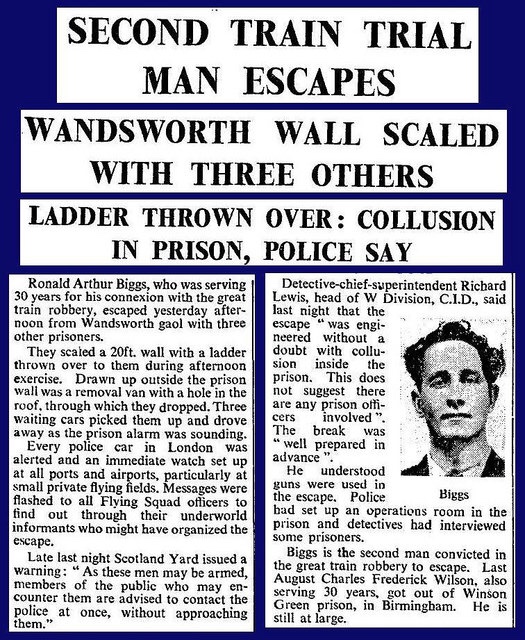
Biggs had been given a 30 year jail sentence for his part in the Great Train Robbery…. He had served just two years before managing to escape from Wandsworth Prison and fleeing to Brazil – which has no extradition treaty with the United Kingdom….

img_2631
8th July 1965 Ronnie Biggs escapes from Wandsworth Prison – Image credit: Bradford Timeline via Flickr

On the 18th of March 1981 Biggs had a pre-arranged meeting with some men in a bar in Rio – they had contacted him on the pretext of making him into a film star…. In reality they were British ex-soldiers working for a security company – rather than the film crew they claimed to be…. The mastermind behind the plot was 52-year-old former Scots Guard John Miller….

Biggs was bundled into a car and taken to the coast where a yacht was waiting…. With him drugged, bound and gagged the boat set sail – the idea was to take him to Barbados, where he would be handed over to the authorities…. However, the yacht ran into mechanical difficulties 7 miles off of Barbados and Biggs and his 5 kidnappers were left stranded…. They had to be towed into Port by the Barbados Coast Guard Service….

After their identities had been checked and confirmed the kidnappers were released…. Miller refused to reveal who had paid for the ‘citizen’s arrest’ of Biggs….he claimed it was just a paid job – that had been completed…. Biggs was held in jail at the request of the immigration authorities whilst Britain attempted to secure his extradition…. At the same time Brazil were asking for him to be returned there….

img_2632
Ronnie Biggs – Buckinghamshire Constabulary mug-shot 1964. Fair use

It was a legal loop-hole which allowed Biggs to make his escape yet again…. It turned out that Barbados had no valid extradition treaty with the UK either….and Ronnie Biggs was able to return to Brazil….

On this day in history….22nd March 1744

On this day in history : 22nd March 1744 – The first book of English nursery rhymes, called ‘Tommy Thumb’s Song Book’ is published – featuring many rhymes that are still well-known today….

The full title of the book was actually ~ ‘Tommy Thumb’s Song Book for all little Masters and Misses; to be sung to them by their Nurses ’till they can sing themselves…. By Nurse Lovechild’….

The book was published by Mary Cooper of London. She was the widow of publisher Thomas Cooper – and after his death she continued the business…. A few weeks after the book was published a sequel followed – ‘Tommy Thumb’s Pretty Song Book’….

img_2607
The first page of ‘London Bridge is Falling Down’ – from an 1815 edition

No copy of the first volume remains – but a copy of the second is held at the British Library….for years it was thought to be the only one in existence…. However, in 2001 another copy surfaced – it sold for £45,000….

The book contains forty nursery rhymes, many of which we still teach to our children today….

‘Baa Baa Black Sheep’, ‘Little Tommy Tucker’, ‘Who Killed Cock Robin’….img_2608

‘Hickory Dickory Dock’, ‘Little Robin Redbreast’, ‘Ride a Cock Horse to Banbury Cross’….

img_2609

‘Sing a Song of Sixpence’, ‘Boys and Girls Come Out to Play’, ‘London Bridge is Falling Down’….

img_2610

‘Ladybird Ladybird’, ‘Mary Mary Quite Contrary’, ‘Oranges and Lemons’….

img_2611
Internet Archive Book Images via flickr

Such lovely childhood memories…. Ironically, the engraver who did the illustrations for Tommy Thumb’s Pretty Song Book, was one George Bickham Jnr….who was sued by the government of the time for selling pornographic prints….