On this day in history….7th January 1928

On this day in history : 7th January 1928 – The River Thames bursts its banks and floods much of Central London…. Fourteen people lose their lives and thousands more are made homeless…. The Tower of London, Houses of Parliament and Tate Gallery are all swamped….

During Christmas 1927 heavy snow had fallen in the Cotswolds, where the Thames has its source…. A sudden thaw on New Years Eve, followed by excessive heavy rain meant there was double the usual volume of water coming down river…. This coincided with a high spring tide – but at the same time a storm surge, caused by a cyclone in the North Sea meant water levels were raised in the Thames Estuary….
img_2095
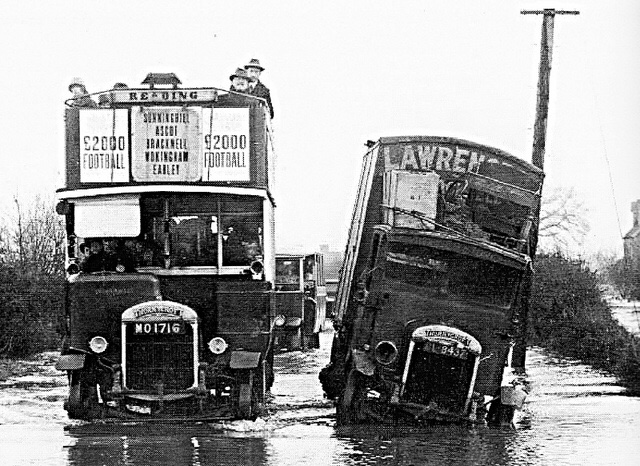
Floods at Reading in January 1928 – showing the impact of the Thames flooding even further down river…. Image credit : Alan Farrow via Flickr

The situation was made even worse by dredging work that had been carried out in the Capital between 1909 and 1928 to deepen the river channel – to allow easier access for shipping in to the Port of London….

The river burst its banks just after midnight – when most Londoners were in their beds…. The first section to break was a 75ft stretch at Millbank – opposite the Tate Gallery…. Water poured into the gallery, up to 8ft deep on the ground floor….18 paintings were damaged beyond repair, 226 badly damaged and a further 67 received minor damage…. Many were by renowned artist J.M.W. Turner….

Westminster Hall and the House of Commons were flooded, as were most underground stations close to the river…. The Blackwall Tunnel was submerged, as was the Rotherhithe Tunnel…. The moat surrounding the Tower of London, which had been empty for over 80 years, was filled…. The flooding extended from the City of London and Southwark right to Putney and Hammersmith….
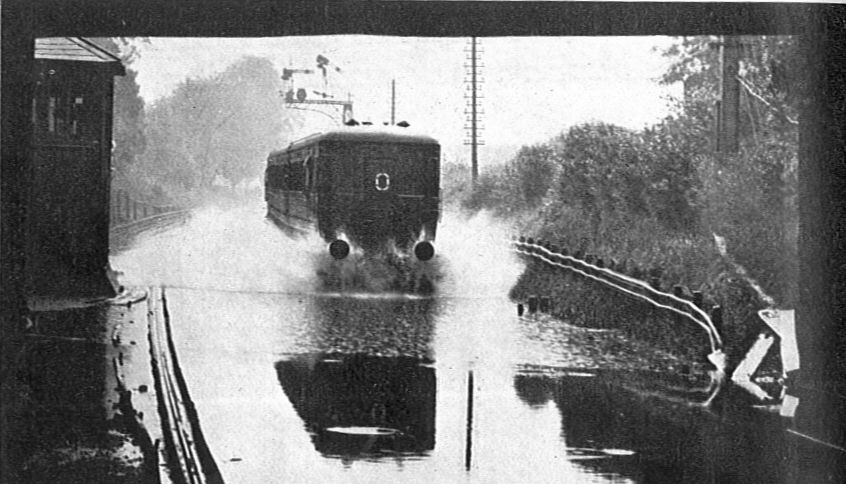
img_2090
A Southern Railway electric multiple unit tackles floods at Kew Bridge railway station Credit : Andy Dingley (scanner) – Public domain

However, the most devastating part of the disaster has to be the human cost…. As the embankment near to Lambeth Bridge broke floodwaters gushed onto the streets of the run-down working-class area between Southwark and Blackfriars, which backed on to the river…. Water poured into the basements….which were the homes of so many of London’s poorer people….

There was little time to escape; police went from door to door, urging people to leave….many did, wearing just their nightclothes….but for some it was too late….

As the water poured into these basements nine people drowned – and another died from a heart attack brought on by the shock…. Alfred Harding later had to identify the bodies of 4 of his daughters:- Florence Emily, 18 – Lillian Maude, 16 – Rosina, 6 and Doris, who was only 2-years-old….

Two more died in Hammersmith, domestic servants Evelyn Hyde, aged 20 and Annie Masters Moreton, aged 22 – who shared a basement room…. Another two people died in Fulham…. 4,000 were made homeless….

The flood peaked at 1.30am, at a level of over 18ft above the Ordnance Datum line….the highest water level ever recorded in the Thames at London…. The water had subsided by the end of the day – but it took a month to pump all of it away…. The damage took several years to repair….many of the old slum areas had to be demolished, Millbank and the surrounding area had to be virtually rebuilt…. Political rows broke out over who should pay for the clean-up operation – was it the responsibility of local or central government…. Arguments also occurred amongst authorities and politicians over the role the dredging work had played in the disaster….

img_2093
Thames flood level markers at Trinity Hospital, Greenwich

The embankments had once been marshland but were reclaimed during the Victorian era and had been developed for housing and commercial purposes…. As a result of the 1928 flood the river’s embankments were raised…. Thankfully it was the last major flood to occur in the city – but it came close again in 1953 – when the river almost broke the embankment – and did cause some flooding at Bermondsey and other low-lying areas…. A further flood occurred on the Lower Thames in 1959….

At last the government were prompted to consider flood defence – once again there were disagreements over who should foot the bill…. Plans were made in the mid 1960s for a flood barrier – and in 1974 work finally got underway…. The Thames Barrier officially opened in 1984….


On this day in history….27th December 1836

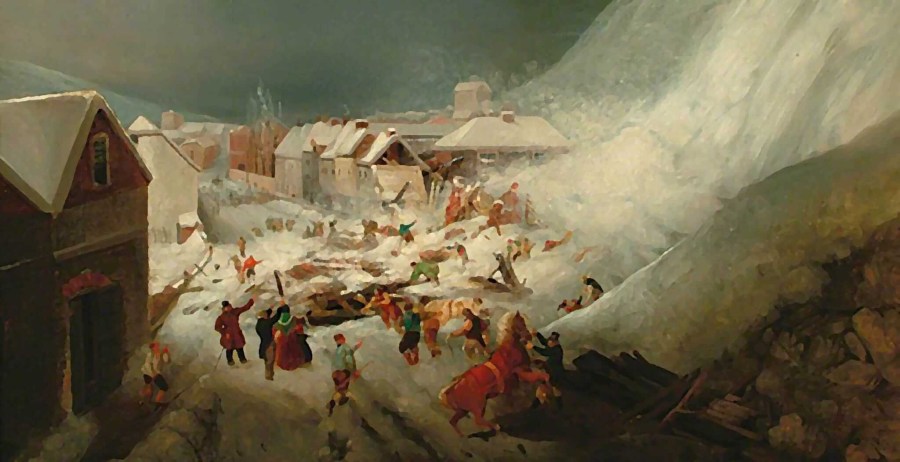
On this day in history : 27th December 1836 – The deadliest avalanche to be recorded in the United Kingdom occurs – not in Scotland or Wales, as would be expected – but in the South East of England….

img_5040
Oil painting in the Anne of Cleves House Museum

The West Sussex market town of Lewes is situated in a gap within the South Downs, on the River Ouse…. It is surrounded by hills – including to the east Cliffe Hill, rising to 164 metres above sea level….

At the foot of Cliffe Hill lies South Street….and at the time upon which lay ‘Boulder Row’ – a row of workers’ cottages – or ‘poor houses’, owned by South Malling Parish….

The winter of 1836-37 was very severe throughout the whole of the United Kingdom, with heavy snow and freezing temperatures, accompanied by gale force winds…. It had started snowing in the Southeast on Christmas Eve and was particularly heavy over the South Downs…. The snow persisted for the whole of the Christmas period – along with strong winds, which caused snowdrifts – some over 10ft high…. A huge snowdrift, reported as being over 20ft deep, formed on the top of Cliffe Hill, with an overhanging ledge – or ‘cornice’ – at the cliff edge….

Worried passers-by informed the inhabitants of Boulder Row and advised them to leave their homes…. But for reasons only known to them the residents chose to stay….most likely they had no other place to go in the sub-zero temperatures…. Even when on the 26th of December a large mass of snow fell from the cliff top on to a timber yard below – destroying it – they refused to leave….

The inevitable happened at 10.45 am on Tuesday the 27th of December…. The cornice collapsed – causing an avalanche of snow to crash towards Boulder Row beneath…. Witnesses reported that the cottages appeared to be struck at the base by the avalanche – which then broke above them like a huge white wave, completely burying them….

A rescue operation lasting several hours was mounted by the townsfolk…. Seven survivors were pulled from the snow and wreckage – and taken to the local workhouse for treatment…. Among them was a two-year-old child, Fanny Boakes; the white dress she wore that day can be seen in the Anne of Cleves House Museum, in Lewes…. A further eight people lost their lives, having died from suffocation or hypothermia….

The victims were buried in an unmarked, communal paupers grave in South Malling Parish Churchyard…. A fund was set up by the townsfolk to raise money for the families of those killed – and also for a memorial plaque – which is situated on the north wall of the church….

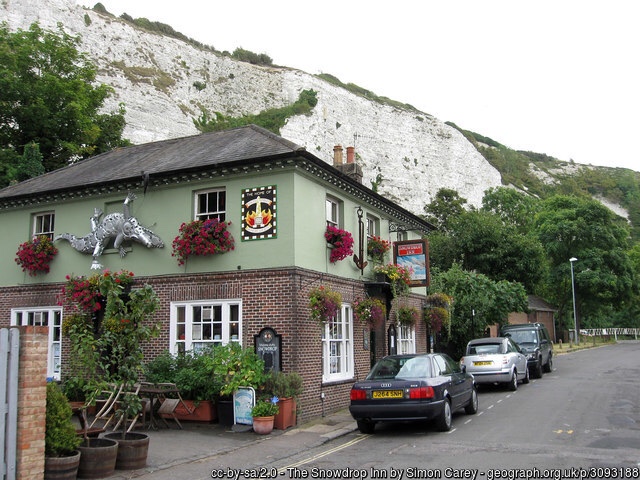
Where the Boulder Row cottages once stood a public house can now be found…. Built in 1840 ‘The Snowdrop Inn’ was named in commemoration of the disaster….

img_5039
The Snowdrop Inn, showing the cliff behind

On this day in history….5th December 1952

On this day in history : 5th December 1952 – ‘The Great Smog’…. A terrible killer fog descends on London and causes the death of thousands of Londoners….

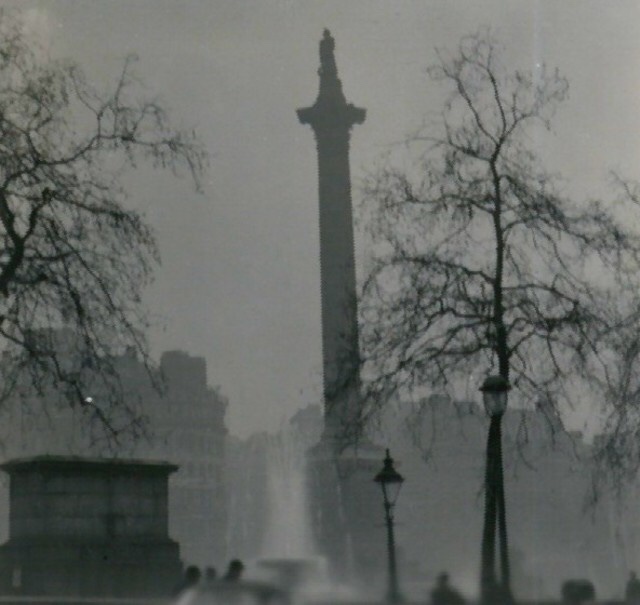
A high pressure weather system had stalled over the South of England, causing a ‘temperature inversion’ – meaning the cold air at ground level becomes trapped by a layer of warmer air at a higher level…. A thick fog had formed – and with no breeze to disperse it – was unable to escape…. It was soon to turn a sickly yellowy-brown colour, as it filled with sulphur pollutants and soot, mainly from the many coal fires as people tried to keep their houses warm in the cold snap…. Smoke from factories and fumes from vehicles also contributed….

img_4811
Nelson’s Column during the Great Smog – N T Stobbs CC BY-SA 2.0

Londoners were used to ‘pea-soupers’ – but this was like nothing before…. Visibility was so poor that the transport system (other than the underground) ground to a halt…. Even the ambulance service stopped…. School children were kept home, sporting events called-off…. The smog seeped into buildings….theatre performances were cancelled and cinemas closed as people were unable to see the screens…. Criminals had a field day, as looting, bag snatches and burglaries became epidemic….

But by far the worse impact the fog was to have was on people’s health…. Most at risk were the young, elderly and those with respiratory problems – heavy smokers were particularly vulnerable…. It is estimated 4,000 died during the period and immediate aftermath – although experts claim the number to be more like 8,000 lives lost due to the smog – the most common causes of death being pneumonia and bronchitis…. Well into the summer of 1953 the death rate remained well above normal levels…. With that taken into consideration the final smog-related death toll could amount to as high as 12,000…. A further 100,000 are estimated to have been made ill….25,000 Londoners claimed sickness benefit during the period….

The smog finally lifted on Tuesday the 9th of December, the sulphurous cloud drifting out over the North Sea…. A government investigation resulted in the Clean Air Act of 1956 being passed by Parliament – authorising authorities to set up smoke-free zones and the restriction of burning coal in urban areas….

The Great Smog of 1952 is recorded as the tenth deadliest disaster ever to have hit Britain….


On this day in history….27th November 1703

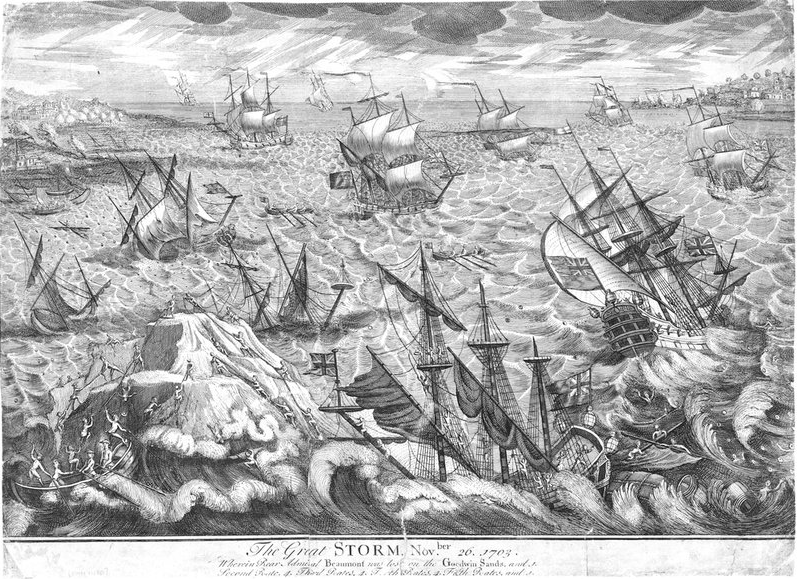
On this day in history : 27th November 1703 – The Great Storm of 1703 wreaks havoc across Southern Britain…. Hurricane strength winds and flooding kill between 10,000 and 30,000 people – hundreds of ships are lost….

img_4703
Unknown author – Public domain

Unusual weather had begun a couple of weeks before with strong winds from the Atlantic battering Wales and the South of England…. But the really serious damage began to occur on the 26th of November, with winds reaching over 80mph….

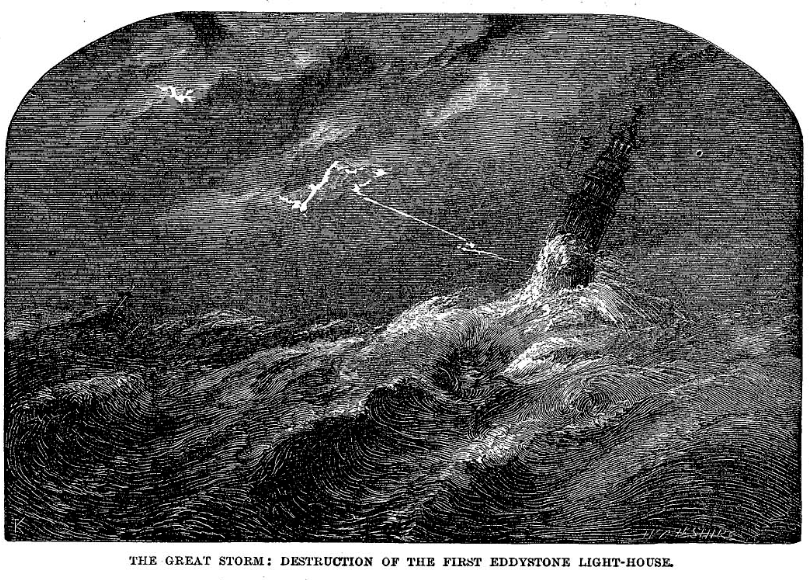
Coastal towns such as Bristol, Plymouth, Portsmouth and Cowes were devastated…. The Eddystone lighthouse, off of Plymouth, was felled and all those inside killed…. 300 Royal Navy ships anchored off the South Coast were lost, with 8,000 crew on board them…. 1,000 seamen died on the Goodwin Sands alone….

img_4702
Destruction of the first Eddystone lighthouse in the Great Storm – Robert Chambers – Public domain

5,000 homes along the River Thames were destroyed as huge waves were sent up the river…. 2,000 chimney stacks were lost in London – the lead roofing blown from Westminster Abbey…. 400 windmills were destroyed when wind blew their sails so fast that their wooden gears burst into flames…. 4,000 oak trees were lost in the New Forest…. Hundreds drowned in floods on the Somerset Levels – a ship was found 15 miles inland….

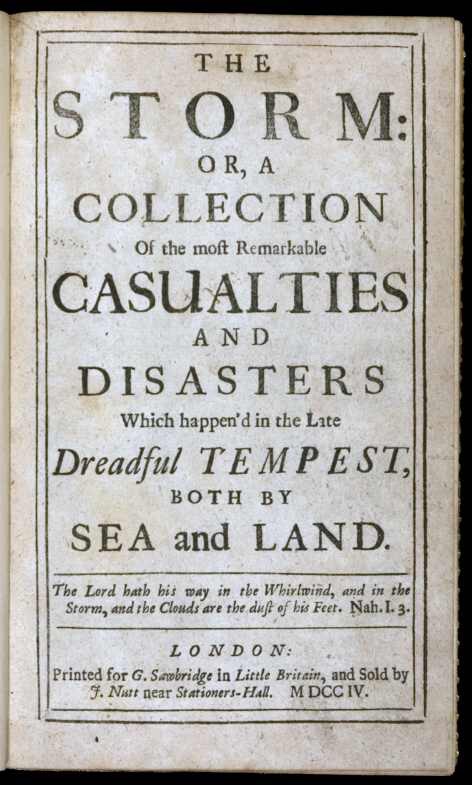
The storm of 1703 inspired Daniel Defoe’s first published book ‘The Storm’ – as he had witnessed it….describing it as an “Army of Terror in its furious march”….

img_4704
Daniel Defoe – Public domain

On this day in history….11th February 1895

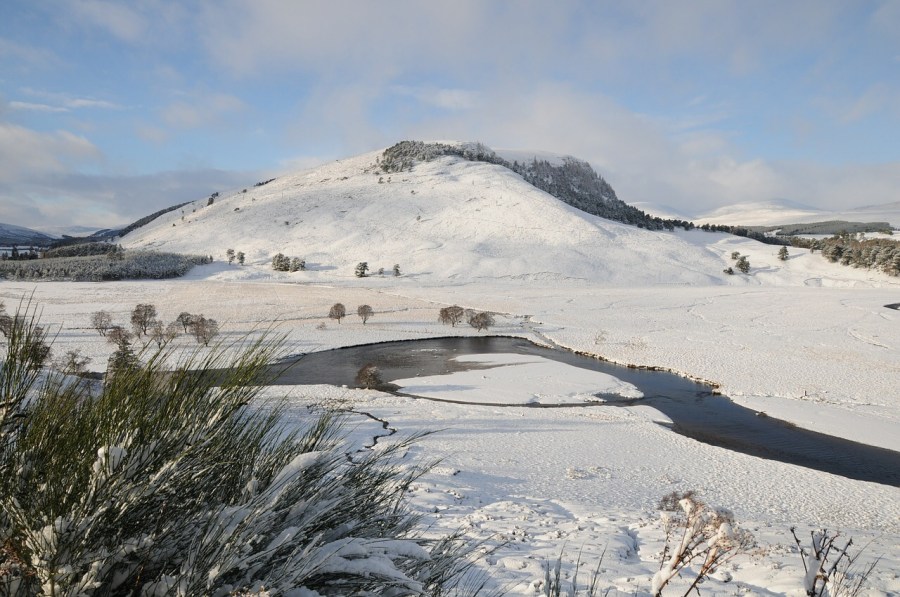
On this day in history : 11th February 1895 – The lowest UK temperature on record ~ minus 27.2 degrees Celsius ~ is recorded at Braemar in Aberdeenshire….

img_2394

Nearly a century later, on the 10th of January 1982, the record was equalled – again in Braemar but accompanied by Altnaharra in Sutherland too…. The coldest temperature ever recorded in England was on the 11th of January 1982 in Newport, Shropshire at a very chilly -26.1°C…. Whereas the highest ever temperature was 38.5°C, at Faversham, Kent on the 10th of August 2003….

We British do love to talk about the weather…. In fact, on average we discuss it at least once every six hours….and 70% of us check the forecast on a daily basis…. Actually, contrary to worldwide belief, our weather is not that bad – it’s usually temperate…. It’s just that when extreme conditions do come along, we are unprepared and ill-equipped. Here’s the problem….it’s unpredictable – where else can you experience all four seasons in one day…?

weather-5

It is hardly surprising our weather behaves so unpredictably….we are a nation where war is constantly raging – a clashing of the fronts. Being a group of islands we are battered by winds from all directions….

Artic Maritime from the North – cold;

Polar Continental, North East – cold and dry;

Polar Maritime, North West – cold and damp;

Tropical continental, South East – warm and dry;

Tropical Maritime, South West – warm and wet….

No wonder our weather gets confused…!

Britain lies at the edge of the Atlantic. Storms feed on the temperature difference between the Poles and the Equator. As the cold and warm air rush towards each other and meet, cyclones are formed…. Being at the end of the storm track we get the tail end of them – and sometimes there is a sting in that tail….

img_2395