The second part of this blog takes a brief look at some of the more ‘modern day’ diet ‘fads’…. In case you missed part one of Resolutions or revolutions, here is a link…. Resolutions or revolutions….? Part one….
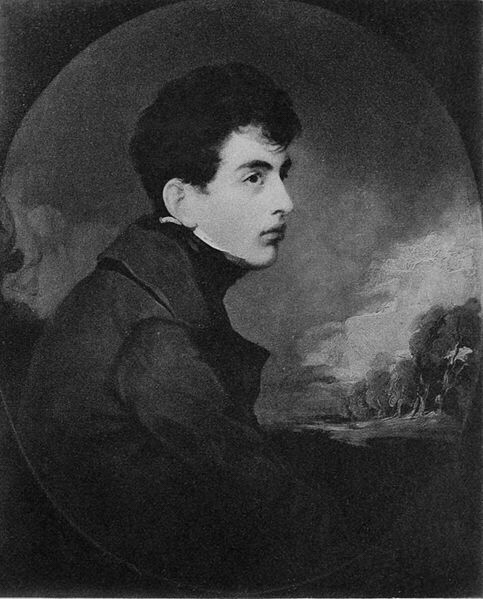
In 1800 the Romantic poet, Lord Byron was driven by the desire to be ‘pale and interesting’…. To maintain his gaunt appearance he is rumoured to have survived on a diet of soda water, dry biscuits and vinegar…. This became popular among the fashion conscious – and so perhaps Byron can be attributed for the first ‘fad’ diet….
Lord Byron June 1804. Wikimedia Commons
“Fashion has joined hands with superstition….through fear of looking gross or healthy….ladies live all their growing girlhood in semi-starvation”…. George Beard, Physician, 1871….
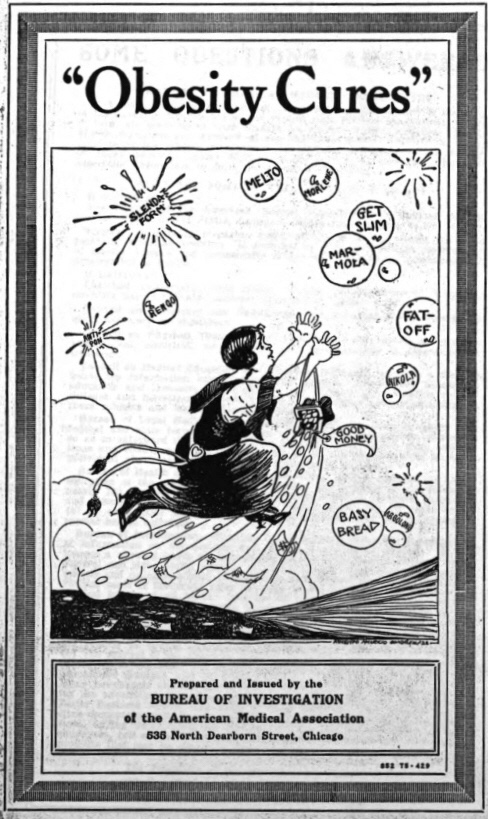
The Victorians were obsessed with image above health; diet drugs, marketed as ‘miracle cures’ became big business. Miracle cures were usually nothing more than laxatives but there were those that caused health issues, such as heart problems and even death…. At a time when it was not a legal requirement to list the active ingredients in a medicine, all manner of substances were used; from Dinitrophenol (an industrial chemical which raises the body temperature and can cause blindness), even to arsenic….
In 1863 William Banting, an undertaker by trade, wrote what is thought to be the first official diet book – ‘Letter on Corpulence, Addressed to the Public’. He claimed lots of protein and less carbohydrates to be the secret to weight loss – perhaps a very similar concept to the Atkins Diet of more recent times….
William Banting. Wikimedia Commons
During the early 1900s Horace Fletcher, also known as ‘The Great Masticator’, came up with the theory that you can eat as much as you like as long as you chew each mouthful 100 times…. Perhaps there’s something in this – you’d soon get bored after a few mouthfuls, not to mention developing a severe jaw ache….
In 1918 Dr. Lulu Hunt Peters wrote ‘Diet and Health’ – concentrating on calorie intake; in her book she advised women to have no more than 1,200 calories a day…. The book sold millions of copies during the 1920s….
Dr. Lulu Hunt Peters. Wikimedia Commons
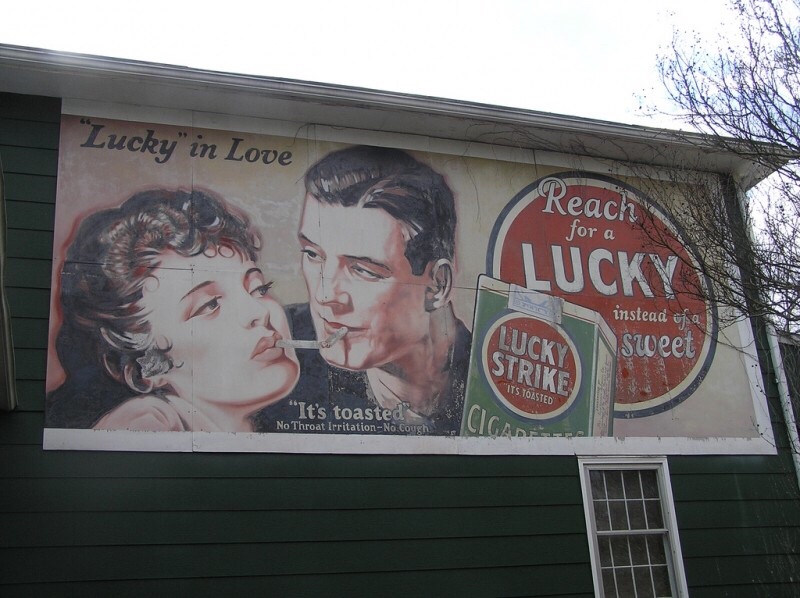
The 1920s also saw companies claim their products could help with weight loss; chewing gum and laxative manufacturers amongst them…. One advert, that would certainly cause controversy today, was that used by the Lucky Strike Cigarette Company….stating ‘reach for a Lucky instead of a sweet’….
By the 1930s the ‘fad’ diet was really beginning to take off…. The Grapefruit Diet was born, in which grapefruit is eaten with every meal…. It was also the decade that gave us ‘The Hay Diet’; devised by William Hay, an American doctor, who separated foods into three groups: protein, starch or neutral…. His belief being protein and starch should not be eaten together at the same meal….
Courtesy Max Pixel
The 1950s craze was for cabbage soup; by eating it every day it was claimed 10-15 lbs a week could be lost…. Other soup diets, such as watercress, became popular too….
Courtesy Pixabay
It was also in the 50s that the tapeworm made a reappearance….when the opera singer Maria Callas reportedly lost 65 lbs by deliberately ingesting one….
In 1961 Jean Nidetch, a New York housewife, set up a group to help her over-weight friends lose weight…. In 1963 it became known as ‘Weight Watchers’ – and was launched in the UK in 1967…. Run on a points system (SmartPoints), a value is given to food and drink. A daily allowance for protein, carbohydrates, fat and fibre is given; fruit and most vegetables having no limit. With its group support providing motivation, the plan is that up to 2 lbs a week can be lost….
The 1970s and 80s saw a succession of diets come and go…. In 1972 Dr. Atkins’ ‘Diet Revolution’ was published, selling millions of copies. Thirty years later a revised ‘New Diet Revolution’ sold millions more….
1975 gave us the Cookie Diet; (now, that sounds more like it)….cookies made with a blend of amino acids (perhaps not then)…. 1977 Slim Fast was launched; milk shakes as a meal replacement for breakfast/lunch and a proper dinner in the evening…. In 1982 Jane Fonda released her first exercise video – with the motto ‘no pain, no gain’…. Also during the 80s the diet pill Ayds was introduced – only to be withdrawn because of the arrival of AIDS…. 1981 saw the Beverly Hills Diet; devised by Judy Mazel, who was inspired by the Hay Diet. Her belief being the enzymes in our bodies that digest food were getting confused…. For the first ten days only fruit should be eaten – other foods then to be gradually introduced….
In 2000 Gwyneth Paltrow became known not only as one of our favourite actresses but also for her following of the Macrobiotic diet….consisting of whole grains and vegetables…. 2012 – the 5:2 Diet was brought to us….the idea being to eat normally for 5 days and then on two non-consecutive days limited calorie intake to 500 for women and 600 for men….
And so the diets continue to come and go…. One that springs to mind which is popular at the moment is the ‘Paleo Diet’ or ‘Caveman Diet’…. Basically foods that can be hunted, fished or gathered…. This includes meat and seafood obviously but also eggs, nuts, seeds, vegetables, fruit, herbs and spices are all allowed… However, no wheat, dairy, potatoes, refined sugar, salt and strictly no processed foods….
There are no accurate records as to the health of our Stone Age ancestors; this is all based on educated guesswork – but the thinking has to be based on going back to ‘grassroots’….
There is no doubt weight gain can cause many health issues, such as diabetes, heart disease and cancer…. Since 2007 our NHS has been referring patients to slimming clubs, such as or similar to Weight Watchers; the thought being this is one of the most effective ways of controlling weight. The UK diet industry is worth £2 billion (£60 billion in the US) – and like our waistlines, this is still expanding….despite all this, 64% of us are still overweight…. Perhaps this gives an incentive to keep up those New Year’s resolutions that an apparent 44% of us have made…. X
We’re nearly a fortnight into the New Year ~ so how are the resolutions going? The top three this year being: to eat more healthily – exercise more and spend less money…. Also included on the hit-list: get more sleep – learn a new skill – make new friends and improve appearance…. So, whether it’s one of the above or perhaps to quit smoking, cut down on the booze/chocolate or just become more organised – the general aim is to improve lifestyle….
A poll by BUPA asked 2,000 people if they were confident that they would stick to their 2018 goal – half answered ‘yes’…. A previous 2015 BUPA poll revealed 43% of Brits failed in the first month…. A 2007 study found 88% of those who took the ‘New Year Oath’ eventually dropped off the wagon….
Experts advise us, to have the best chance of success make only one resolution and then break it down into smaller, more manageable goals. Another tip : plan in advance – don’t make rash decisions to metamorphosis into a ‘super-being’ on New Year’s Eve….especially after half a bottle of the bubbly stuff….
New Year’s resolutions are made the World over but are most common in Western Society. For Christians January the 1st became a day to reflect on past mistakes and resolve to become a better person in the future; this has since evolved into us trying to better our lifestyles – whether it’s health wise, our spiritual well-being or financial status….
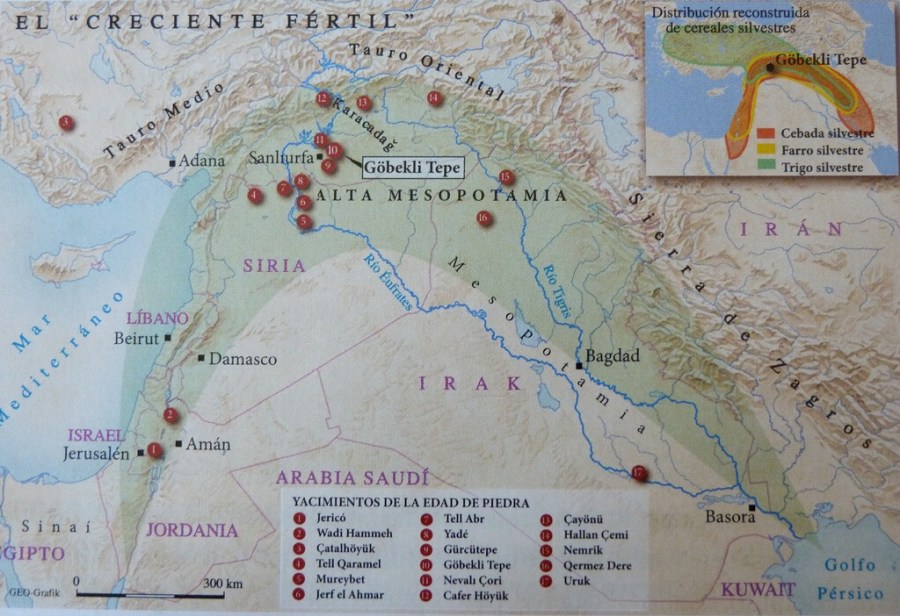
It appears people have been making New Year’s resolutions in one form or another for some 4,000 years…. The Ancient Babylonians are believed to have been the first; they are also, incidentally, the first recorded to have celebrated New Year….only their New Year fell in mid-March – with the planting of new crops…. A twelve day ceremony – known as ‘Akitu’ – was held, during which barley would have been sown for the coming year…. The ceremony played an important part in laying down the foundations of religions to come – both ritual and mythical…. Akitu celebrated the renewal of life; it was the time a new king was crowned or loyalties renewed to an old one…. Any debts owed were repaid and any borrowed items returned to their rightful owners – all in an effort to appease the gods….
The Babylonians dominated Mesopotamia (the part of Western Asia where Iraq, Kuwait, Eastern Syria and South Eastern Turkey now lie) from the beginning of written history (circa 3100 BC) right up to the fall of Babylon in 539 BC. In 332 BC it was taken by Alexander the Great and became part of the Greek Empire….
The Ancient Egyptians held their own rituals; their New Year beginning in July – at the time when the River Nile would flood its plains – bringing fertility to the land…. The people would make sacrifices to Hapi – god of the Nile; in return asking for good fortune, a fruitful harvest and military success….
The Romans originally only had ten months in their calendar; starting in March with the Spring Equinox. Around 700 BC two more months were added and in 46 BC Julius Caesar re-established the calendar making January the official beginning of the year – thus giving us the Julian Calendar. January was chosen as it was the time newly elected Roman Consuls began their tenure. It became fitting as a time of reflection, as the god for January was the two-faced Janus; one face looking back into the year gone by – the other looking ahead to the future…. Sacrifices were made to the god and promises made to behave in a better manner….
Bust of the god Janus, Vatican Museum, Vatican City. Public domain. Wiki commons
Now, we all know what the Romans were like….with their lavish feasts to show off their wealth…. It’s probably doubtful that healthy eating was ever on their agenda…. The Greeks, however, frowned upon gluttony…. They believed it to be their moral duty to maintain a healthy society and understood the need to have a plain but varied diet, whilst at the same time taking moderate exercise in order to sustain an acceptable weight…. “You should eat to live, not live to eat”…. Ancient Greek saying….
Medieval times were once again a time for the rich to flaunt their wealth…. Huge banquets, tables laden with every meat and fowl dish conceivable at the time – it’s hardly surprising that the nobility got fat….whereas, the poor, with their limited staple diet of pottage, beans and bread – combined with their lifestyle of hard manual labour – remained skinny…. ‘Portly’ became associated with ‘wealthy’….
Richard II dines with dukes – Chronique d’Angleterre. Late C15th. Wikimedia Commons
In 1558 Luigi Cornaro, a Venetian merchant, made the connection between healthy eating and a long life…. In his book ‘The Art of Living Long’ he recommended a diet high in fat and low in carbohydrates…. He lived until he was 100 – and his book is still in print today….
By the time the 1700s had arrived, thanks to an improving infrastructure the variety of food available to the general population had vastly increased; this in turn led to lass healthy diets for the masses…. As more and more sugary and fatty foods were being consumed, doctors began to advise eating little and often; small quantities of meat, plenty of vegetables and bran….and taking moderate exercise….
Now, where have we heard that advice before? In the up-coming second part of this blog we’ll have a little look at some of the ‘fad’ diets we have been familiar with in more odern times…. In the meantime – keep up the good work with those resolutions….
Every New Year’s Day the same question arises in this household…. “Is it too early to take down the Christmas decorations?”….
So, is it unlucky to remove them before the Twelfth Night? Certainly it’s bad luck to leave them up after…. Right? Then, there’s those who believe they should be gone before the stroke of midnight on New Year’s Eve – for to leave them in place would mean dragging all the negativity of the old year through to the new….
When exactly should we be taking down the tinsel and dismantling the tree then….?
In all honesty, there is a little leeway to be had here…. It all depends on whether the Twelfth Night or Epiphany is observed as the official end to Christmas….
In 567 AD, Councils of the Roman Catholic Church declared that the whole period between Christmas Day and Epiphany should become part of the celebration – and so hence the twelve days of Christmas came to be….the last night being the Twelfth Night and the eve of Epiphany….
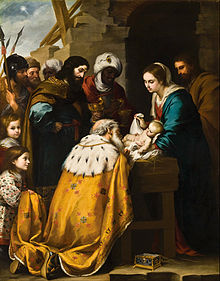
Epiphany : from the Greek ‘epiphania’, meaning the visit of a god to Earth – or in this case, the manifestation of Jesus as the Son of God. A Christian Feast Day celebration – ‘The Feast of The Three Kings’ – falling on the 6th of January; a date that marks two important events in the life of Jesus Christ…. The first being that it was on this day the Magi (the Three Wise Men) visited the Baby Jesus; the second, it was also the date – some thirty years later – that Christ was baptised by St. John the Baptist….
Epiphany (holiday) Adoration of the Magi by Bartolome Esteban Murillo, 17th Century via Wikipedia
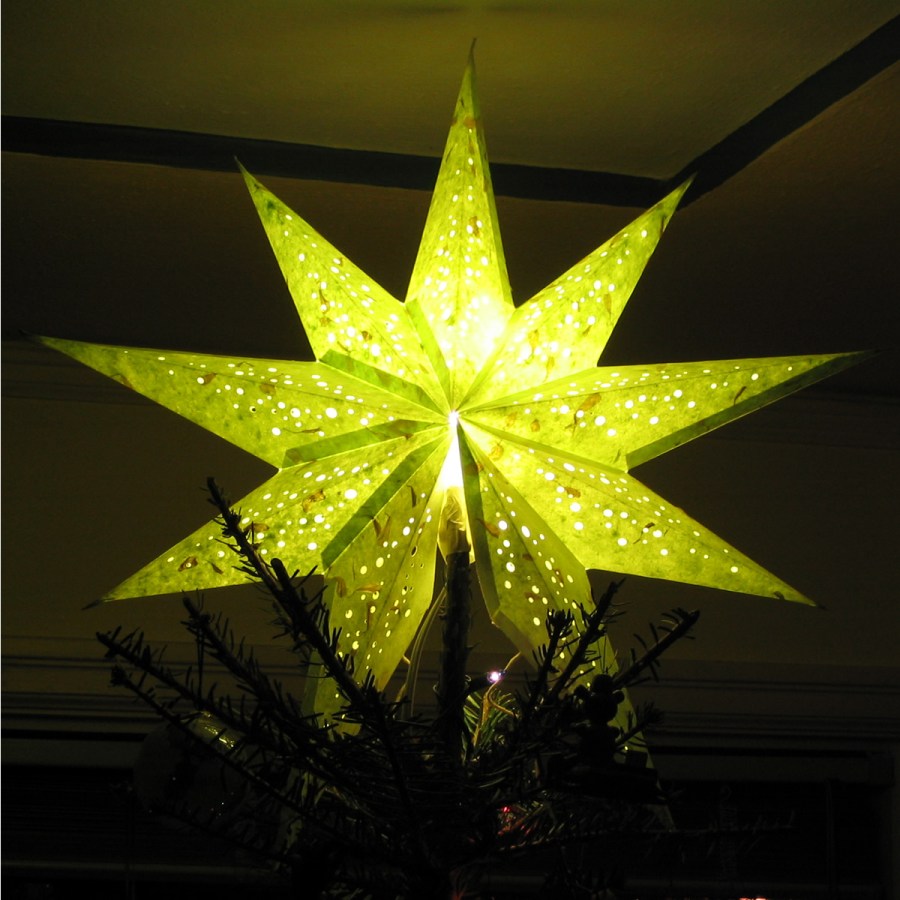
Children were once told that taking the tree down too early meant the Three Wise Men wouldn’t be able to find their way to the stable….as they needed the star on the top of the tree to guide them….
Twelfth Night comes with its own set of customs and traditions; such as the singing of carols and ‘chalking the door’….
Chalking the door derives from the Israelites in the Old Testament – marking their doors with lamb’s blood to save themselves from illness and death – ‘The Passover’…. The modern belief being that the chalked marks on the door protect from evil spirits; sometimes the chalk used is blessed by a priest….
“20 + C + M + B + 18”
The numbers refer to the calendar year; C M B represents the names of the Magi – Caspar, Melchior and Balthasar – it is also an abbreviation of the blessing “Christus mansionem benedicat” – “may Christ bless this house”…. The ‘+‘ s depict Christ….
Another custom, going back to the beginnings of Christianity, is ‘House Blessing’…. A priest will visit the house and sprinkle holy water in every room, (sometimes also using incense and blessed salt) – whilst praying for the household occupants….
Throughout the Christian World Epiphany is celebrated in different ways. Here in the UK however, it very often tends to be over-looked; the majority of people having returned to work after the festive season. There are obviously some who attend special church services and perhaps even a few who enjoy a Twelfth Night cake…. In Victorian times it was far more recognised and we might have all partaken in an Epiphany Tart; essentially a jam tart – but rather a special one…. A pastry ‘star’ shape would be formed inside the outer crust of the open pie, making a total of thirteen sections – each would then be filled with a different type of jam….it was supposed to resemble a stained glass window. Considered a delicacy at the time, housewives would compete with each other to see who could create the best looking tart….
Many parts of the World do still celebrate Epiphany; in some European countries, such as France and Spain, special cakes and pastries are baked for the occasion…. In Belgium children might dress up as The Three Kings and go from door to door, to sing songs and be rewarded with sweets or money; Polish children often do something similar…. Whereas, some Italian youngsters hang up stockings ready to be filled with gifts….
I particularly like the idea of a custom they have in Ireland…. ‘Nollaig na mBan’ -or, ‘Women’s Christmas’…. It’s essentially a day off for women, when the menfolk do all the cooking and housework – now there’s a thought…. Sadly, in England generally the day is just marked as being the time to get those decorations down….
In days gone by, when we were festooning our homes with fresh greenery, decorations didn’t usually go up until Christmas Eve…. Nowadays, with artificial trees and such, we tend to put the decorations up earlier….many Brits choosing the beginning of Advent to do so and some Americans put theirs up straight after Thanks Giving….
Me, I’m one of those who leaves it until the last possible minute….and yes! – Our tree is down again first thing New Year’s Day…. It’s not because I’m ‘bah-humbug’ (my humbugs have usually all long-gone by then) but – in my defence – I’m considering the welfare of the tree….
We always have a real tree in this house; a potted one, with roots…. We are in the fortunate position that, because of the nature of John’s work, we have somewhere to plant them afterwards; (we now have a nice little grove of Christmas trees thriving down his yard)…. I’m sure once all the baubles, tinsel and lights have been removed and the tree gets back out into the fresh air it lets out an audible sigh of relief….
There once used to be a thought that tree spirits living within our Christmas trees needed to be released…. During the festive period they would happily live in the sanctuary offered by the greenery brought into our homes – the holly, ivy etc – as well as the actual tree…. But on the Twelfth Night these spirits had to be set free; to keep them captive would bring bad luck….the greenery would not return with the Spring – and the crops in the fields would fail….
Before Christmas trees were brought indoors, trees outside were often decorated – usually with strips of cloth…. It was thought that as all the leaves had been lost the spirits had abandoned the trees. To try to entice them back, it was deemed necessary to make the trees look beautiful again….and guess what…. Surprise! Surprise! Every year it worked – the spirits returned, bringing with them the leaves….
Therefore, evergreen trees and plants must have had special powers to ward off evil brought by the darkness of Winter…. To the Pagans evergreen represented the continuation of life…. Wreaths of holly and ivy and whole fir trees were brought indoors to honour the Norse god Jul and the Yuletide festival….
Christmas wreath via Foter.com
However, there is another story as to why we bring a tree indoors every Christmas time….
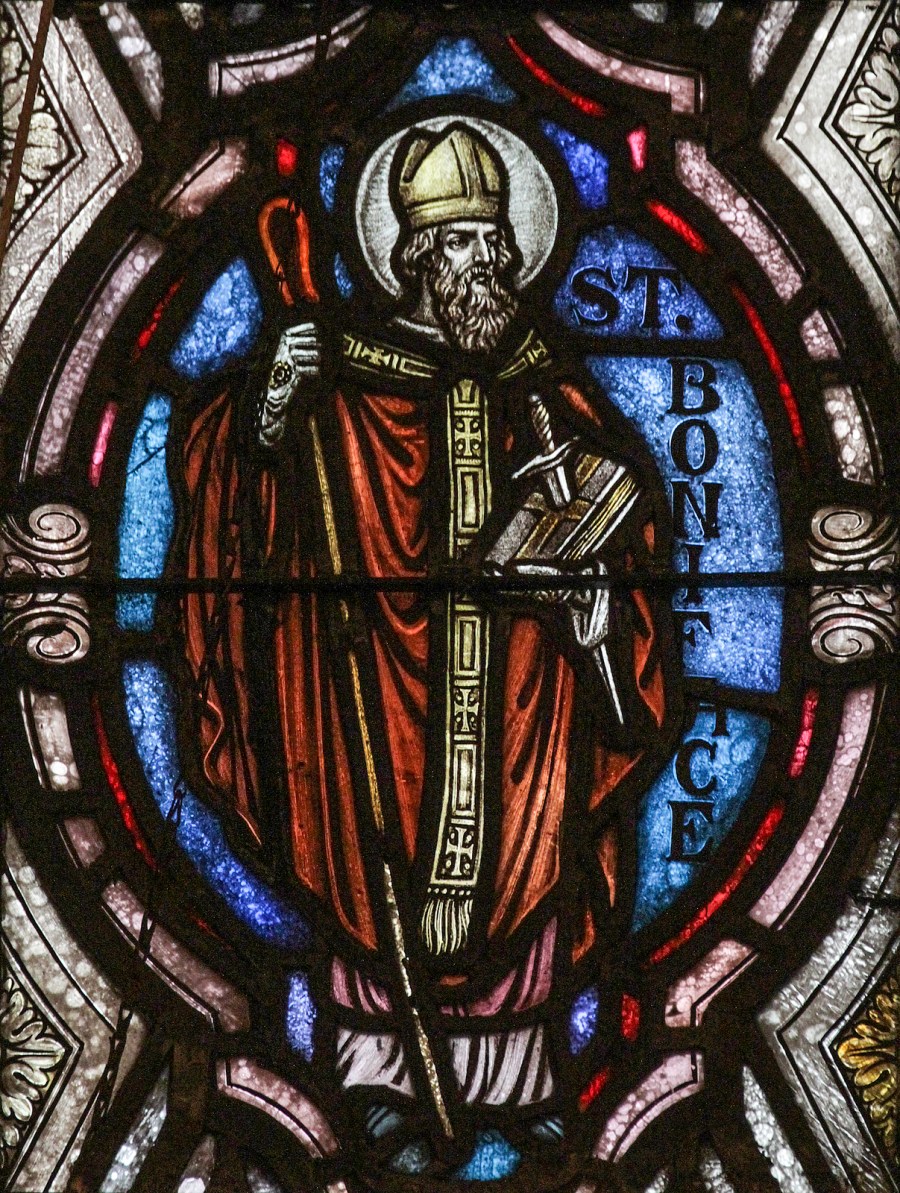
St. Boniface of Credition was a missionary of the Catholic Church during the 8th Century…. He traveled across Northern Europe trying to convert Pagans to Christianity….
It was whilst in the village of Geismar in Germany that St. Boniface witnessed a human sacrifice…. The Pagan villagers had gathered at the foot of their sacred ‘Thunder Oak’ – dedicated to their god, Thor – in order to make their annual offering….the life of a young child….
Enraged and horrified, St. Boniface seized an axe and felled the mighty oak…. Behind it was growing a small fir-tree…. Pointing to it St. Boniface exclaimed….
“This little tree, a young child of the forest, shall be your holy tree tonight. It is the wood of peace…. It is the sign of an endless life, for its leaves are evergreen. See how it points upward to Heaven. Let this be called the tree of the Christ-child, gather about it, not in the wild wood, but in your own homes; there it will shelter no deeds of blood, but loving gifts and rights of kindness”….
However astounded the Pagans may have been at what St. Boniface had done to their sacred tree, they obviously paid heed…. During the centuries to follow the tradition of bringing an evergreen tree indoors spread through Germany – and eventually the rest of the World….
Evergreen via Foter.com
So, yes! I do believe in the spirit of the tree….and it is only an act of kindness to release it back to the environment it is at its happiest in, as soon as possible….
OK – there is another reason too – I must confess…. I am always a little glad to get some normality restored to the household – (perhaps there is one humbug left over after all)…. However, there are those who leave their decorations up until Candlemas….and some even believe that if the decorations are still up after the Twelfth Night they should remain so for the whole year…. Perish the thought..!!
Mistletoe….that little bunch of greenery with its white waxy berries….that you may have suspended over your door during this festive season – in anticipation of a quick peck or perhaps a full-blown ‘snog’ – with whoever happens to cross the threshold…. One of our more fun traditions over the Christmas and New Year period….
As much as we love it, as a plant it could be argued that mistletoe is a bit of a rogue – being a parasite it steals the nutrients it needs from its host – (it has leaves purely to photosynthesize)…. In small amounts it causes no real harm but a large infestation can kill the tree or shrub supporting it – and so ultimately it could also kill itself….
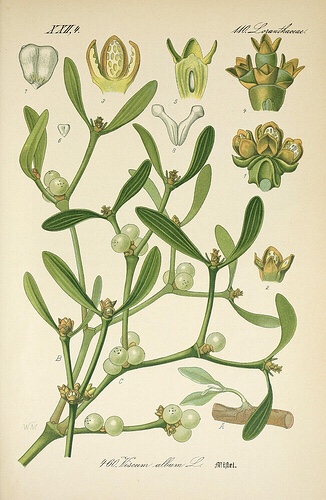
European mistletoe, ‘Viscum album’, is the only type to be found growing naturally in the UK. It can be recognised by its smooth-edged, oval-shaped, evergreen leaves, which grow in pairs on a woody stem with a cluster of 2-6 berries.
Whereas, its cousin, ‘Viscum cruciatum’, found in South-West Spain, Southern Portugal, North Africa, Asia and Australia, has broader, shorter leaves and larger clusters of 10 or more berries….
European mistletoe utilises a wide variety of host plants; it can often be spotted growing in the upper boughs of, for example, our willow, apple and oak trees….
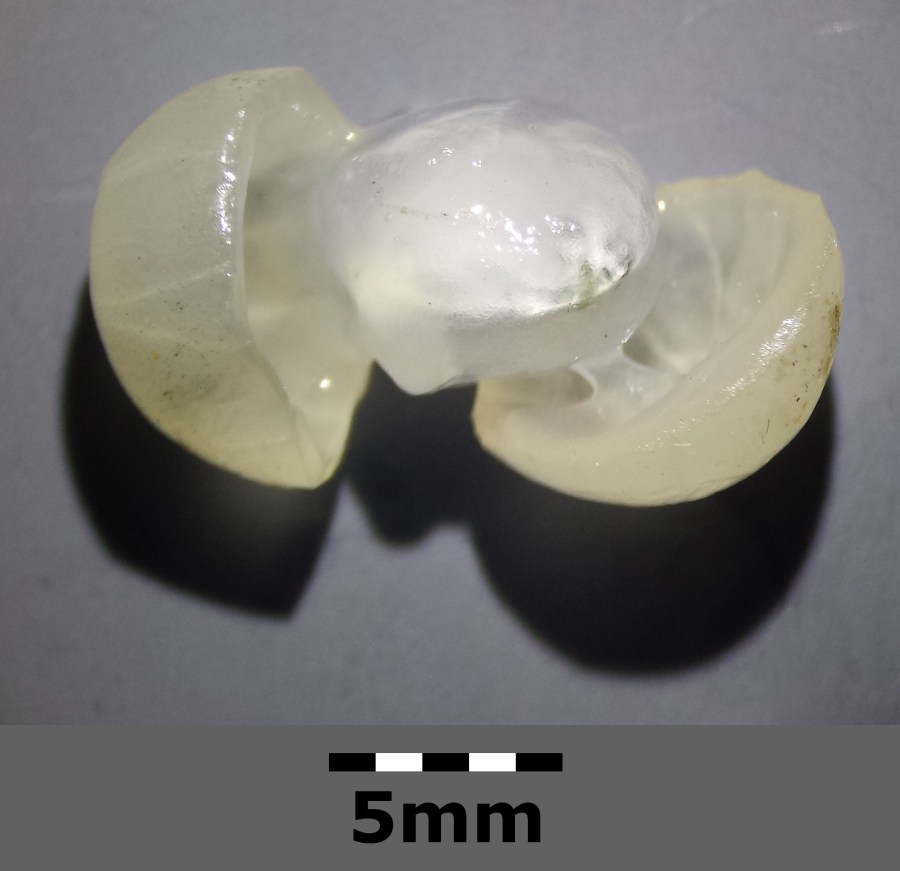
To begin with a seed germinates upon the branch of a tree, at first it is completely independent…. Usually 2-4 embryos are present, each producing its own Hypocotyledonous, (the lead stem of a germinating seedling); this will then begin to penetrate the bark of the branch and will start to root. Eventually it will tap into the host’s conductive tissue and the young mistletoe plant will form its Haustorium, (the name given to the part of a parasitic plant that enables it to attach itself and draw nutrients from its host). This whole process can take up to a year….
Mistletoe after germination, fixed to substrate : epiphyte stade Auteur : Denis MICHEL Lieu et date de realisation : France – Lozere; Mai 2006 CC BY-SA 2.5Fruit cut open Stefan.lefnaer – own work – via Wikimedia Commons CC BY-SA 4.0Seeds Stefan.lefnaer – own work – via Wikimedia Commons CC BY-SA 4.0
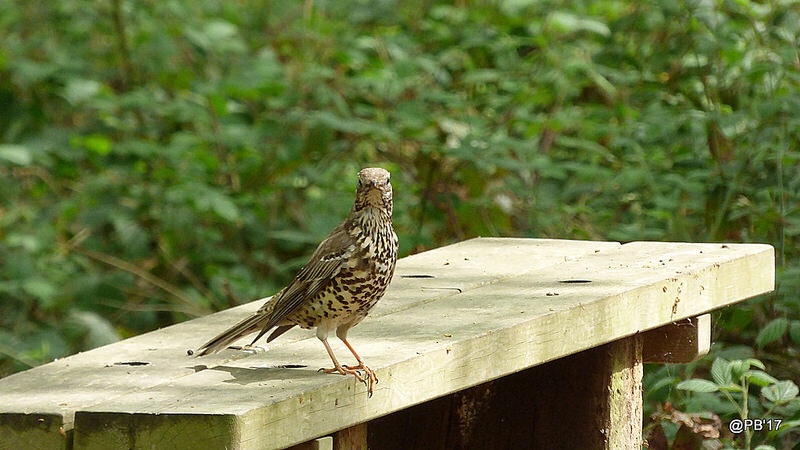
Come across a clump of mistletoe and you might be lucky enough to spy a Mistle Thrush, ‘Tardus viscivorus’, or ‘devourer of mistletoe’…. With its pale grey-brown, black-spotted underparts, this large (slightly bigger than a blackbird) thrush adores the berries produced by mistletoe and will guard a horde ferociously….(it also loves holly and yew berries and will defend these too). It returns the favour of a free feast by spreading the plant’s seeds (through its poo) as it travels from tree to tree – hence earning its given name ‘Mistle Thrush’….
Another name it (or at least the male) is sometimes known by is the ‘Storm cock’. Even in bad weather he sings his loud flutey song from the tree tops from late January onwards; to hear him is a sign that Spring is approaching. One of the earliest breeders of the year, the Mistle Thrush may lay eggs as early as the end of February and before the end of June could raise up to three broods….
As well as the previously mentioned berries the Mistle Thrush will eat blackberries, elderberries, cherries, hawthorn and rosehips. It is known to take fallen fruit, such as apples and plums and will eat worms, slugs, snails and insects….
Although once commonly widespread across the UK – being found in woodland, parks and gardens – since the 1970s this bird has been declining in numbers and is now on the official ‘red list’. Between 1995 and 2010 one third of the population was lost; it is thought due to its young not surviving through to adulthood. Although we still have a lot to learn as to why the exact reasons for its decline, removal of hedgerows and the use of pesticides will not have helped. One thing we do know for sure is that we must be extremely concerned for its future….
Myths surrounding mistletoe, along with the customs and traditions involving it, far pre-date the advent of Christianity. The tradition of hanging it indoors and the belief that it brings good luck, whilst warding off evil spirits, stems from Pagan origins; in Norse mythology it is a sign of love and friendship….
Baldur the Beautiful was the son of Frigg (the goddess Friday is named after) and Odin. Baldur had reoccurring dreams of his own death; to pacify him his mother made every living thing on Earth – each animal and every plant growing in the soil – promise never to cause him any harm. Baldur became invincible – nothing could hurt him – but he remained very good-natured with it…. So much so, the other gods began to good-naturedly take advantage – and used him as ‘target practice’. However, there was one god – ‘Loki’ – who was not a particularly pleasant character….he was jealous and vindictive…. Loki discovered that mistletoe had been over-looked when it came to promising not to harm Baldur, as its roots were not placed in the soil…. He persuaded Baldur’s blind brother, ‘Hod’, to fire an arrow made from mistletoe at the young god. Baldur died instantly from the single shot; Hod was blamed and all of the gods mourned. Such was her grief, that Frigg’s tears formed the berries bourne by mistletoe – but rather than punish the plant she declared it to become the symbol of peace and friendship for evermore….
In days long gone by, if enemies met beneath it, a truce would be declared and arms laid down until the following sunrise…. In France, mistletoe is given at New Year as a gift to bring good luck – a tradition coming from the ‘Peace of Baldur’….
A soldier of the Machine Gun Corps in a sheepskin coat kissing a French farm-girl under a sprig of mistletoe, near Hesdin, 20 December 1917. Jared Enos via Foter.com / CC BY-NC-ND Original image URL: https://www.flickr.com/photos/jenoscolor/16023174195/
During the Roman occupation, Britons worshipped ‘Daron’ – a goddess of the oak tree. In Britain’s folklore there are 3 magical trees: ash, thorn and oak…. Oak is the king of trees; to cut down a sacred oak would be sacrament…. In the Celtic language ‘mistletoe’ means ‘all heal’; to the Druids it is one of the most sacred plants – healing diseases, rendering poisons as harmless, giving fertility (to both humans and animals), protecting against witchcraft, banishing evil spirits and bringing good luck….
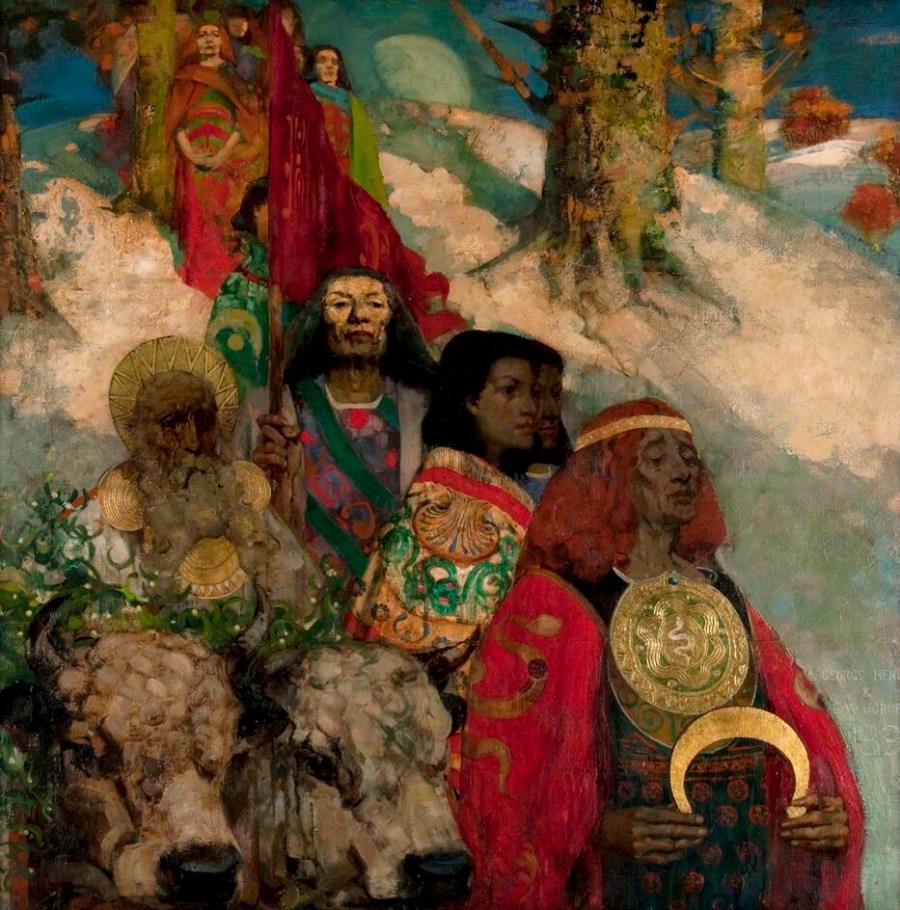
Five days after the new moon following the Winter Solstice, mistletoe would be cut from the boughs of the sacred oak, using a golden sickle. Although it was allowed to naturally fall, it had to be caught in a cloak or out-stretched hide before it hit the ground – for if it did so, its magical powers would be lost. The ancient Druid priests would then separate the mistletoe into sprigs and divide them among the people, to protect them from evil…. In order for the magic to work, the bunch of mistletoe hung inside the house had to remain for the whole 12 months until a replacement was brought in – the old bunch would then have been burned with much ceremony….
George Henry & Edward Atkinson Hornel – Druids, Bringing in the Mistletoe [1890] Gandalf’s Gallery via Foter.com / CC BY-NC-SA Original image URL: https://www.flickr.com/photos/gandalfsgallery/ gandalfsgallery-blogspot.com/2011/09/george-henry-edwardSometimes it would have been used as a medicine to aid fertility. Being evergreen and whilst its deciduous host appeared to be dead during the sleeping months of Winter, mistletoe gave the impression of the life cycle continuing – especially important in regards to the sacred oak…. The paired leaves of mistletoe, along with its succulent berries full of sticky juice made it a symbol of the sexual organs…. Young women were given sprigs as a charm to help them find a husband.
Foter.com
From the remains of this fertility ritual comes the custom of kissing beneath it – a custom that originates in England and dates back to the Middle Ages. A ‘kissing bough’ would be brought into the house; five wooden hoops formed into a ball shape and placed inside it a red apple suspended on a (usually red) ribbon. A candle would also be either placed inside or attached to the exterior; the whole of the outside would then be decorated with evergreen, such as holly, ivy, fir, rosemary, bay….and finally a large bunch of mistletoe hung from underneath….
Wikimedia Commons Under the Mistletoe Public domain
As mistletoe was closely associated with Pagan rituals it was frowned upon by the Church and banned from the decorations used at Christmas time to decorate churches. This is still often the case today….
During Victorian times there became a renewed interest in certain Pagan customs – particularly those involving fun and frivolity….like kissing; the hope being things would lead to romance and marriage among the young folk…. Originally a berry would be picked from the sprig before the kiss – when all the berries had gone there would be no more kissing! Although originating in England, these ‘games’ soon became popular in the USA, Canada, Australia, New Zealand….in fact just about in any English-speaking nation….
“Young men have the privilege of kissing girls under (mistletoe), plucking each time a berry from the bush. When the berries are all plucked the privilege ceases….” – Washington Irving – early 19th Century writer – regarded as ‘The Father of American literature’….
Under the Mistletoe circa 1898 CC BY-SA 3.0 Library of Congress’s Prints and Photographs division
Such became the demand for mistletoe during the mid 19th Century, that an organised harvest and the trading of it began. The key areas being Herefordshire, Worcestershire, Gloucestershire, Wales and lowland Gwent. (Herefordshire still boasts the best mistletoe in the UK and has the plant as its County flower)…. Being known as a fruit-growing region, the area’s orchards provided a perfect habitat and mistletoe was abundant; it would be cut and sent all around the Country….
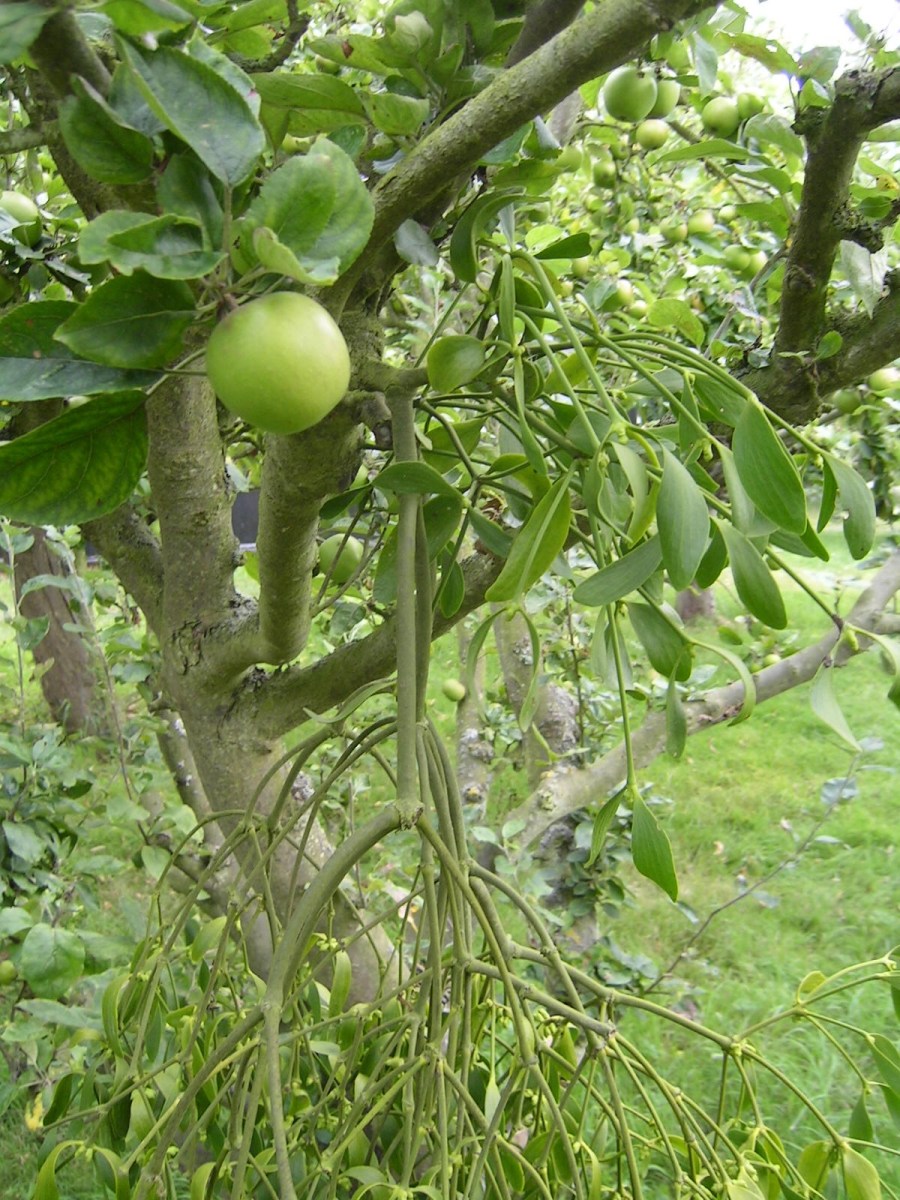
Mistletoe, growing in an apple tree. Chilepine – public domain Wikicommons
Soon the focus became centred on the ancient market town of Tenbury Wells, in the extreme northwest of the Malvern Hills district of Worcestershire. Tenbury was to become the English capital of mistletoe and for over 100 years its cattle market would be totally given over to an annual auction of mistletoe, holly and later, Christmas trees. Auctions, being held the last Tuesday in November and the first two in December, were open to retailers, florists, market stall holders and the public, from all over the UK. These auctions were held at Tenbury until 2006, ceasing after the cattle market was sold in 2005 for redevelopment; it was then that the Tenbury Wells Mistletoe Festival was formed to keep the tradition alive. This year the auctions were held at Burford House Garden Store, in Worcestershire; it was a bumper crop and depending on quality fetched a price of between £1 – £2 per kg….
During Victorian times England’s growers found it too hard to keep up with the demand for mistletoe and so imports began to arrive from Europe – particularly France; where it would be harvested from the orchards of Normandy and Breton. It would be imported into the docks at Southampton and then taken to be sold at Nine Elms Market in London….
Mistletoe in France.jpg – Wikimedia Commons
Nowadays, with farming methods changing, many of our traditional orchards have disappeared – not just here in the UK but in Northern France too…. Perhaps this should emphasise even more just how important it is that we look after our little friend the Mistle Thrush – especially if we want to carry on the tradition of kissing under the mistletoe….
To me it seems such a short time ago that we moved into what was then a ‘building site’…. It was the beginning of September 2005; I had always been adamant we were not going to live in a half completed house and that the renovations had to be finished before Jordan started school….but so often these things don’t go according to plan…. That is how we found ourselves frantically moving into a semi-derelict cottage the day before Jordan took his place in the reception class of a local primary school…. A rather chaotic and stressful beginning to his academic life….
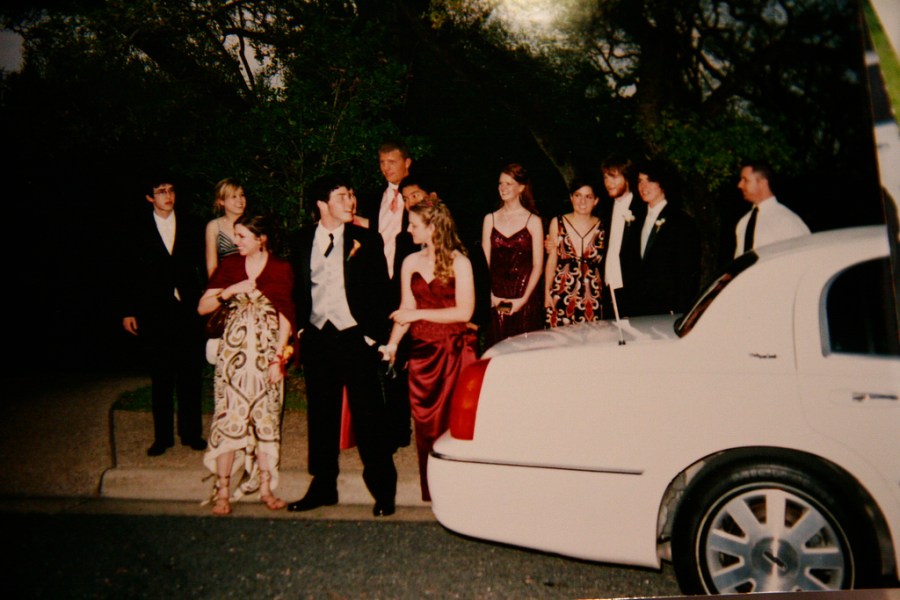
How the time has flown – this week Jordan’s school year will be celebrating the end of the exam season and their final year at secondary school, in the way that has become customary in the UK – with their school prom….
I have to admit, the school prom is a completely new experience for me too…. A fairly recent tradition that has taken the best part of a century to cross the Atlantic from the States…. I left school in the early 80s – I can’t remember if we even had a leaver’s disco, let alone a prom! How things have changed…. On Thursday evening Jordan and his school friends will be attending a formal dinner dance at a rather plush wine estate in Dorking…. His new suit, bought for the occasion, is hanging on the back of his bedroom door; he has a new shirt, tie, pocket-chief and shoes, to complete the ensemble…. I perhaps ought to think myself lucky I have a son, I can only imagine the preparations (and expense) for those with daughters….
With over 85% of schools now holding leaver’s proms in the UK, it is a massive business; over £100 million a year is collectively spent countrywide on the occasion – prom dresses/suits (hair, makeup, nails, accessories etc), transport, the venue…. Then there’s year books, leaver’s hoodies…. so it goes on…. Some parents can expect to fork-out up to £1,500! It is now a huge industry and this year is set to be the biggest yet….
It is hard to think, that less than 150 years ago it was not even a legal requirement to attend school at all….
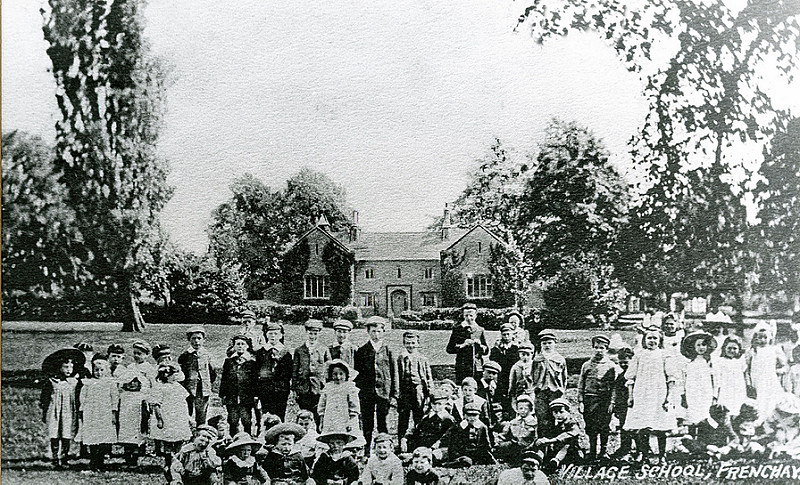
The oldest school in the UK, Kings School, Canterbury, was founded in Saxon times, in 597. During the Middle Ages schools were established to teach Latin grammar to boys from aristocratic families, mainly for those being prepared to enter the Clergy. During Tudor times, under Edward IV’s reign, the system was reformed, to provide ‘free grammar schools’. Theoretically, these were open to anyone – but the majority of poorer families could not spare their children, they were needed for work, their labour bringing in much-needed income to the family….
Up until the late 19th Century the majority of education was organised by the Church, concentrating mainly on religious studies and the teaching of Latin and Greek. The University of Oxford was set up in affiliation with the Church, shortly followed by Cambridge…. For many a child, the only education received was in the form of Sunday school; by 1831 some 1,250,000 children attended Sunday school – this is often seen as the beginning of the British school system as we know it….
Children in wealthier families may have had a governess who would have taught them at home until they were 10 years old. Boys would usually have gone on to public school, whilst girls might have continued education at home. Other children may have attended ‘charity schools’, (informal village schools); or they may have gone to ‘dame schools’. These were run by school mistresses and were basically private schools at the lower end of the scale – they were often very basic, teaching only spelling, occasionally maths and grammar, depending on the mistress’s own abilities…. Many of these lessons were conducted in the school mistress’s own home….sometimes a purpose-built building was available ( a few of these still survive today – a nearby village to here, Thursley, has one within its churchyard)…. Although given the name ‘charity schools’, they were not exactly that, they were not free of charge. In 1870 the Education Act stated schools could charge no more than 9 pence per week per child; it wasn’t until 1891 that free education became available….
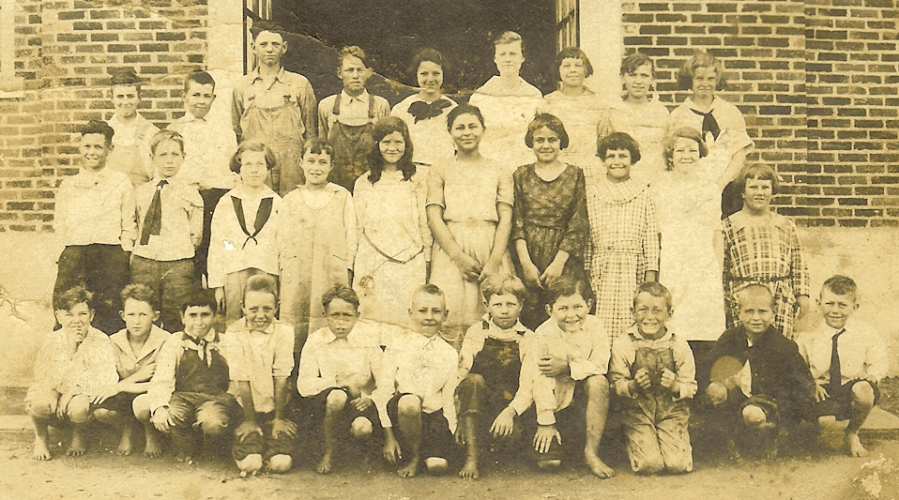
It was actually in August 1833 that the State became involved in education, allocating money for schools to be built for poorer children in England and Wales – (Scotland had begun its programme in the 17th Century)…. In 1837 a bill for public education was presented to Parliament…. In 1880 the Elementary Education Act made it compulsory for 5-10 year olds to be educated (with the exception of blind or deaf children). This was not popular amongst many poorer families; tempted to keep their youngsters out earning, they risked a visit from the ‘Attendance Officer’…. Only when a child had reached the required satisfactory level of educational standard were they issued with a School Certificate, enabling them to work. If this certificate could not be produced by any working child under the age of 13, the employer in question could face heavy penalties….
In 1893, the Elementary Education (School Attendance) Act raised the minimum leaving age to 11, this time including blind and deaf children on a voluntary basis, (by now specialist schools were being introduced). An amendment in 1899 raised the age to 12, a further amendment raised it to 13 and made attendance compulsory for blind and deaf children…. During the late Victorian era the grammar school curriculum was brought up to date but Latin was still taught….
In 1944 the school-leaving age became 15 and on 1st September 1972 it increased to 16…. Of course, things have changed again recently….unless taking up an apprenticeship, it is now a legal requirement to remain in full-time education until the age of 18….
The first exams for schools were introduced in 1858, the schools themselves demanding them as a way of determining achievement levels. Universities, such as Oxford and Cambridge were asked to produce them so boys could sit exams in their home towns (they may have been sat at the school or somewhere like a church or village hall)…. Girls were not permitted to sit exams until 1867….
The first exams took place on the 14th December 1858. There were 2 levels; Junior (for the under 16s) and Senior (for 16s to 18s). Subjects included: English Language and Literature, History, Geography, Geology, Greek, Latin, German, French, Political Economy, Mathematics, Arithmetic, Music, Physical Sciences, Chemistry, Zoology and Religious Knowledge (although parents had the right to withdraw their child from this particular one)….
Examiners would arrive wearing full academic dress, carrying a locked box containing the exam papers. Nowadays, the papers are sent in advance, schools appoint their own invigilators and the papers are returned for marking. Even that is changing though; with the advent of ‘e-testing’, exam papers could well become a thing of the past….
In 1944 the 11 plus exam was introduced, determining whether a child should attend a grammar, technical or secondary modern school for their senior education. It wasn’t until 1964 that comprehensive schools (a school for mixed abilities serving a specific catchment area) were proposed by Harold Wilson’s Labour government….
A General Certificate of Education (GCE), O-levels and A-levels were introduced in 1951 (replacing the School Certificate) – but these were mainly for those attending grammar schools. Some education authorities brought in their own exams for those not eligible to take GCEs and in 1965 the CSE was introduced as an alternative. O-levels and CSEs were then replaced by the GCSE in 1988. In 1995 a further set of tests, often referred to as SATs, were introduced for children aged 7, 11 and 14….
Back in those early days, exams took place over the period of a week….papers were sat morning, afternoon and evening. Nowadays, the exam season extends over 2 months in early Summer. Expectations of students were also very different in the beginning, vast amounts of information had to be learnt off by heart…. A more flexible approach now means students are allowed to demonstrate they can analyse information and show they can apply knowledge and understanding….
Modern day thinking takes the view that children should be encouraged to ask questions in order to learn. In days gone by this was not the case; the belief was that children had to be taught to behave in a correct manner; “children should be seen and not heard” – “spare the rod and spoil the child”. This ‘reasoning’ stemmed from religious views, the Christian belief that mankind was born with a tendency to sin and do wrong. Discipline in Victorian schools probably had to be tough due to large class sizes. Any form of physical punishment today is viewed as abuse; Victorians certainly had no such view – slipper, belt, cane – sometimes it really must have been a severe case of abuse, cruel adults unable to show restraint….both in school and at home…. Poland was the first country to abolish corporal punishment in schools, in 1783. It took English state schools until the late 1980s to follow suit (2000 for Scotland, 2003 for Northern Ireland) and in Britain’s private/public schools right up to 1999. Nowadays corporal punishment is not practised in any European country (although some parts of the World still use it)….
There are those who would argue the cane should be brought back, a little discipline should be instilled. I don’t know, perhaps it is just good fortune – but having just had a child go through the state education system, up to the point of starting college, it has been nothing but an exceptionally positive experience. I have always admired the level of respect both teachers and pupils have shown to each other and there has been a genuine desire from the students to learn and do well…. The kids have worked so damned hard towards these exams; now they are over and prom night is upon us. I hope every single one of them has a fantastic time….they deserve it….X






























 Cottage Capers