On this day in history….27th February 1907

On this day in history : 27th February 1907 – The Old Bailey, London’s main criminal court, is officially opened – having been built on the site of the old Newgate Prison….

img_2488

The original medieval court-house, next door to Newgate Prison, was destroyed in the Great Fire of London….it was rebuilt in 1674. Originally, the court was intended for the prosecution of crimes committed in the City of London and Middlesex…. However, it was in 1856 that concerns were raised in the case of William Palmer – a doctor accused of being a poisoner and murderer…. Such was public revulsion that it was feared he would not get a fair trial in Staffordshire, his home county…. Allowing his trial to take place at the Old Bailey set a precedent for future serious crimes….

img_2491
An Old Bailey trial circa 1808. Thomas Rowlandson and Augustus Pugin – Public domain

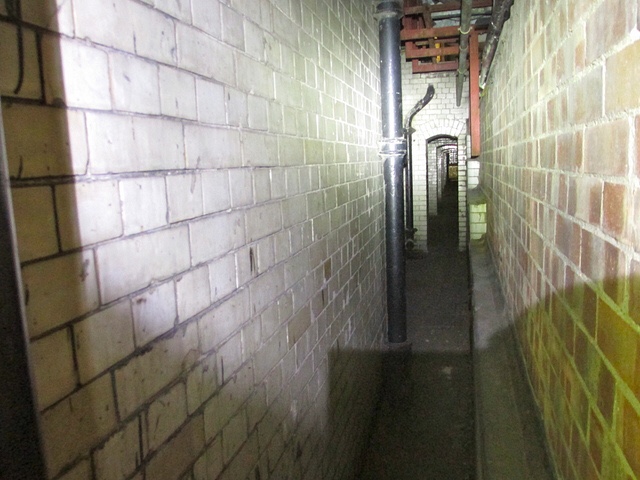
Up until May 1868 the death penalty would be carried out in public…. Hangings took place in the street outside of the Old Bailey and Newgate Prison…. Huge crowds would gather to watch; stones, rotten fruit and vegetables would often be hurled at the condemned…. In 1807 the crowd was so unruly that a pie-seller’s stall over-turned, crushing 28 people to death…. As a result a covered tunnel was built between the prison and St. Sepulchre’s Church, opposite….it was known as ‘Dead Man’s Walk’. The condemned prisoner could be taken to be attended by the chaplain before the death sentence was carried out without facing the crowds….
img_2490
Dead Man’s Walk – Old Bailey. Image credit: Matt Brown via Flickr

Towards the late 1800s more and more trials were being held at the Old Bailey and there were many people who wanted to watch….the building had become inadequate. Newgate Prison next door had become dilapidated as since the 1860s it no longer held long-term prisoners…. So, in 1877 it was decided to demolish both buildings to make room for a larger court….

img_2489
Newgate Prison – pulled down in 1902 to make way for the Old Bailey. Image credit: Victor Keegan via Flickr

There were many delays but finally a new building, designed by E.W. Mountford in the neo-Baroque style – at a cost of £392,277 – was built and officially opened by King Edward VII…

img_2492
Lady Justice statue – Old Bailey. Image credit: Lonpicman via Wikimedia CC BY-SA 3.0

On this day in history….20th February 1673

On this day in history : 20th February 1673 – The first ever recorded auction – ‘by the candle’ – of wine is held at a coffee house in London….

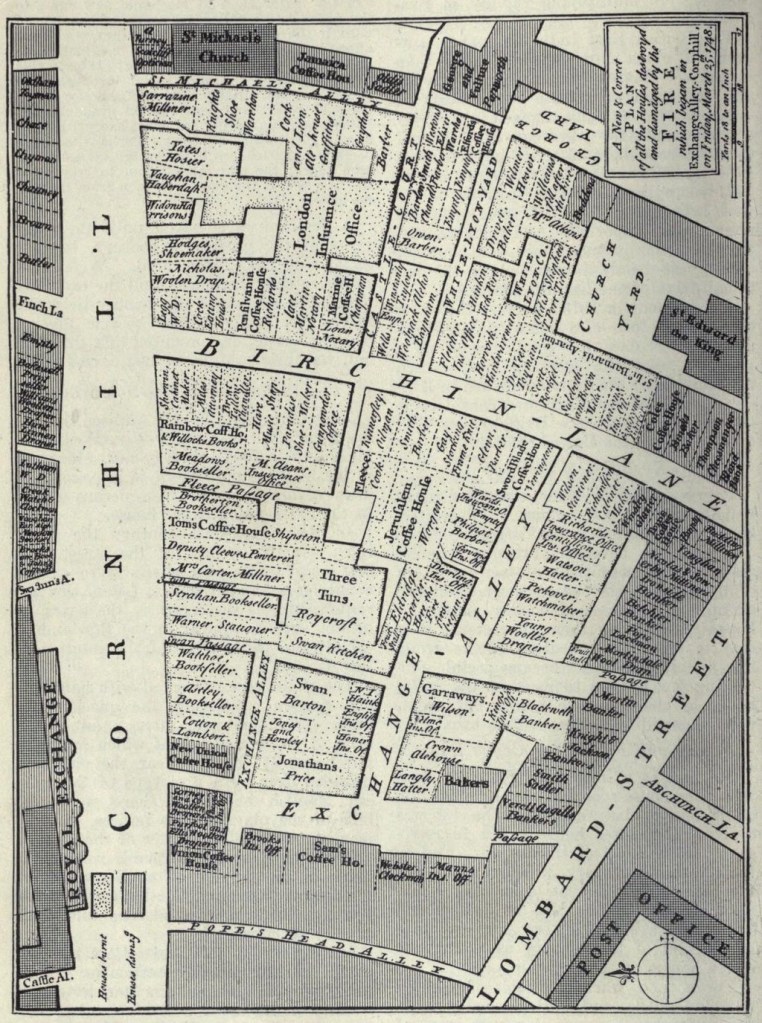
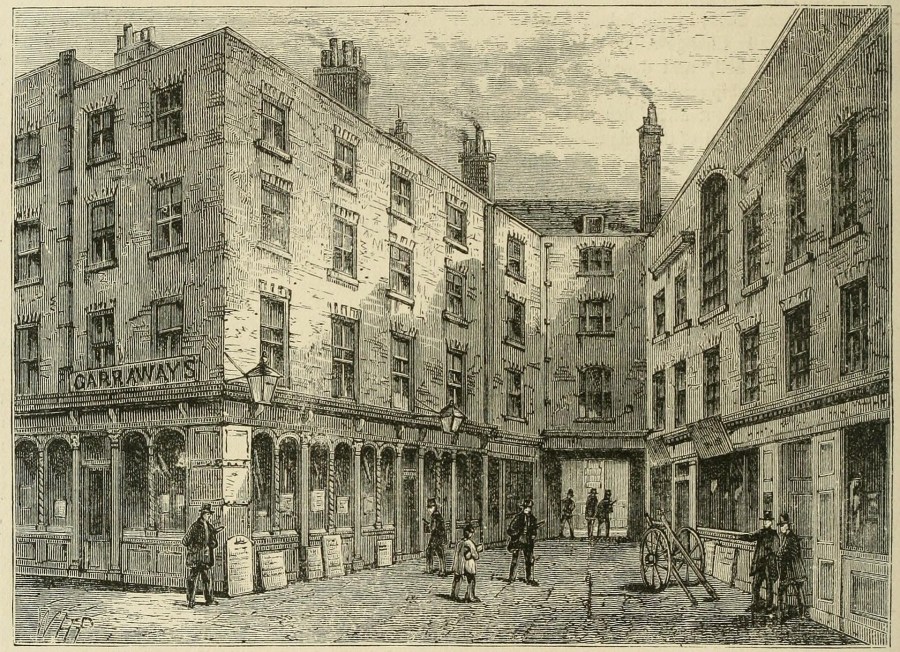
Garraway’s Coffee House, City of London

During the 17th century coffee houses became the ‘in-place’ to be seen…. Previously socialising and indeed many a business deal had taken place in the nation’s inns and ale houses – but these were now being viewed as too rowdy and boisterous…. Coffee houses offered an alternative; it wasn’t that the coffee tasted particularly good, the early form of the beverage really didn’t – but the caffeine ‘buzz’ would have been quite addictive…. Soon coffee houses became centres of business with each establishment associated with its different trades and professions…. Whereas one might be frequented by artists or actors another might be where merchants would gather and a further one a place for medical men to congregate…. By 1702 it is thought that over 500 coffee houses had sprung up in London alone and by 1800 this number had risen to over 8,000….

One such establishment was Garraway’s Coffee House, which was opened by Thomas Garway in the 1650s…. Garway was a tobacconist and coffee merchant by trade – and before opening his coffee house is believed to have been the first to sell tea – as a ‘cure of all disorders’ – to the public in England…. He began to sell the commodity at Garraway’s in 1657 – in those days tea sold at between 80p – £2.50 per pound in weight….that’s well over £500 in today’s terms, making an extremely expensive cuppa!

Garraway’s was situated in Exchange Alley, a shortcut between Cornhill and Lombard Street, the hub of the City’s financial world…. It was built on a corner and had various entrances into the building – with small rooms on the ground floor along with a kitchen and on the upper floor a large coffee room…. Just ten years later it was destroyed by the Great Fire of London and had to be rebuilt…. Exchange Alley became known as ‘Change Alley’ and Garraway’s was one of three celebrated coffee houses in the immediate area – all of which were patronised by traders in shares and commodities…. Both Charles Dickens and Daniel Defoe referred to Garraway’s in their works….

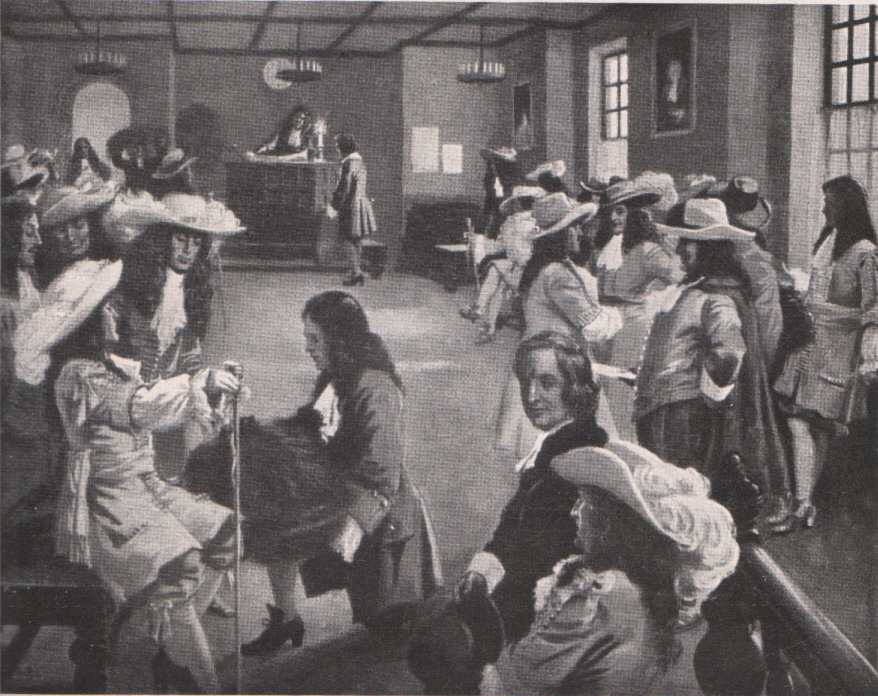
As the business grew Garraway’s began to hold auctions…. A small rostrum was installed in the upstairs room for the auctioneer and rough settles were provided for the bidders…. The windows and walls of the lower floor were adorned with placards advertising upcoming sales…. Up to thirty sales a day could take place, selling everything from furs to drugs, timber to tea….and then in 1673 wine…. As well as becoming famous for its wine sales, both by the bottle and crate, it was also to become well-known for its auction of fine brandy….

Auction room at Garraway’s

Auctions then were not as we know them today – they were conducted ‘by the candle’…. At the commencement of the sale, after the auctioneer had read out the description of the goods and the terms and conditions of the sale, a length of candle (typically an inch) would be lit…. He who placed the last bid before the candle had burned out would be deemed the winner….

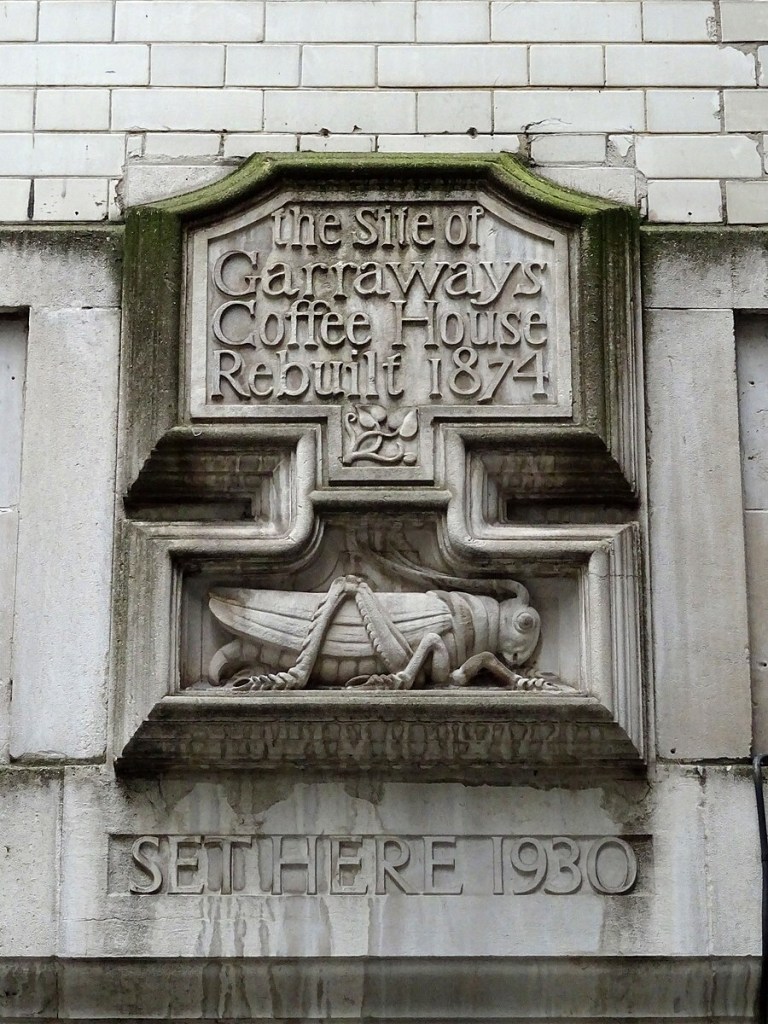
Garraway’s Coffee House has now long gone…. It was to develop to become a famous drinking establishment and sandwich shop…. Then in 1748 the building was once more to be destroyed by fire and had to be rebuilt again…. However, by the mid 1800s coffee houses were declining in popularity – and Garraway’s eventually closed on the 11th of August 1866 – and the premises became home to a bank…. All that remains as a reminder of the once great coffee house is an ornate stone plaque on the wall where it once stood and a mahogany panel at 32 Cornhill which reads “Place of great commercial transaction and frequented by people of quality”….

Image credit : Spudgun67 – own work

On this day in history….13th February 1987

On this day in history : 13th February 1987 – At the height of London’s property boom a converted broom cupboard in Knightsbridge is sold for £36,500….

The tiny flatlet, hardly big enough to fit a fully grown adult measures just 5ft 6in x 11ft….(so that made the price over £600 per square foot)…!

Situated on the 6th floor within a luxury apartment building on the Brompton Road, opposite Harrods, Flat H boasts two rooms…. The main, cleverly designed living area and a lavatory/shower room measuring 2.5 sq ft….

It was bought by a secretary and when it was sold again in 2006 fetched £120K…. In 2010 it was valued at up to £200K….

With London’s house prices more than 10 times the average salary and rents amongst the highest in the world, property developers think micro-flats ~ at almost half the size of the recommended minimum habitable space ~ could be the answer for young professionals….

But is this such a new concept? Compare it to Britain’s smallest house….Quay House in Conwy, Wales…. Built in the 16th century this minuscule end of row terrace is just 10ft high and has a floor space of 10ft x 5.9ft….

img_2404

Nowadays it is a tourist attraction but was lived in up until May 1900 by – wait for it – 6ft 3in fisherman Robert Jones…. Before that it was home to an elderly couple….

The fisherman was forced to move out by the council as the property was deemed unfit for human habitation….although it is still owned by the family…. The authorities intended to demolish the quaint little cottage as they had done to others like it…. However, local people put up a fight and this particular one was saved….

Recognised by the Guinness Book of Records as Britain’s smallest house it can fit only four people in at a time…. Inside is an open fire, a settle, a table and water tap…. A ladder type staircase leads to the tiny bedroom, which is just 6ft x 8ft….

But looking on the bright side….think how quickly you could get the house work done….

img_2403

On this day in history….30th January 1969

On this day in history : 30th January 1969 – The Beatles play an impromptu concert on the rooftop of Apple Records in London…. It is to be their last public performance….

img_2309
Via Photo Community Site

It was a bitterly cold Thursday lunchtime, many were on their lunch break when they were surprised by the loud music coming from the rooftop of No.3 Savile Row – the home of Apple Records…. At first there was some confusion – but then as word spread crowds gathered in the street, five storeys below….and people climbed out on to the rooftops of neighbouring buildings….

The Beatles had been recording their album ‘Let it Be’ in the basement studio at Apple Records and had been planning a live performance since earlier in the month….but the idea of performing on the roof had only come about a couple of days before….

img_2308
Image credit: Jan via Flickr

George, Ringo, John and Paul – accompanied by a young Billy Preston on keyboards – treated their delighted audience to a 42 minute set which included songs such as “Don’t Let Me Down”, “I’ve Got a Feeling” and “Get Back”…. It was their first ‘gig’ since they had stopped touring in 1965 – and it was to be their last, as by September 1969 the Beatles had unofficially disbanded….

Unfortunately, not everybody was happy about the unexpected entertainment…. The Metropolitan police were concerned about safety, traffic issues and noise disturbance…. Policeman Ken Wharfe later said that he had been ordered by his superiors to “turn that noise off”….

img_2298
3, Savile Row, London, the location of the concert – public domain – Misterweiss via English Wikipedia

On arriving at Apple Records the police were initially refused entry into the building by staff – but when threatened with arrest they had to back down…. As the police reached the rooftop the Beatles realised their concert was about to be brought to an end – but managed to carry on for several more minutes. Paul McCartney changed the lyrics to “Get Back” to something more fitting for the situation….

“You’ve been playing on the roofs again, and you know your momma doesn’t like it, she’s gonna have you arrested”….

img_2297
Fair Use

John Lennon finished up by saying…. “I’d like to thank you on behalf of the group and ourselves and I hope we’ve passed the audition”….

On this day in history….19th January 1917

On this day in history : 19th January 1917 – An explosion in a munitions factory in Silvertown, West Ham, London kills 73 people and injures 400 more…. It also destroys the nearby fire station and a gasometer….

img_2194
Memorial to the Silvertown Explosion in its new location in the middle of the Royal Wharf development. 2016. Author: Neddyseagoon via Wikipedia CC BY-SA 3.0

The factory, belonging to Brunner-Mond had been built in 1893 to produce soda crystals and caustic soda…. By 1912 the production of caustic soda had ceased and so the factory was not running to full capacity….

At the time there were strict controls in place in the City of London as to where dangerous explosives and substances could be processed and manufactured…. However, Silvertown, although heavily populated fell outside of this main central area – and being over half way through the war Britain was running low on ammunition…. With this in mind the War Office decided to take over the vacant part of the factory – even though it was opposed by Brunner-Mond….

The factory in Silvertown was used to purify TNT – an extremely dangerous process…. The manufacture of TNT is a risky enough procedure in itself – but to purify it carries even more risk…. It was, perhaps, an accident waiting to happen….

And happen it did…. A fire broke out in the factory – and although every effort was being made by fireman from the nearby fire station – at 6.52pm 50 tonnes of TNT (much of which was being stored in railway trucks, awaiting transportation) ignited…. The factory was destroyed instantly….as were many of the surrounding buildings; some 900 were immediately destroyed or had to be demolished – and a further 70,000 were damaged…. Many of the buildings were nearby warehouses – but also included were people’s homes and the Silvertown fire station…. A gas holder containing 200,000 cubic metres of gas was damaged – causing a massive fireball to erupt…. The gasometer was later repaired….and remained in situ until 1986….

img_2192
The Millennium Mills in the aftermath of the Silvertown Explosion Author: Avery, John, 1917-01-25 Fair Use

The death toll, in one of the worst disasters in Britain during World War 1, could have been much higher…. 69 people died instantly (including the firemen attending the original fire) and 4 more died of their injuries later….over a further 400 people were injured…. However, because of the time of day, being almost 7pm on a Friday evening, the warehouses and factory were mainly empty…. Had it of been during the working day many, many more people would have lost their lives….

img_2193
Image credit: Gordon Joly via Flickr

The blast could be heard 100 miles away, as far as Sandringham, Norfolk – and fires could be seen from Guildford and Maidstone…. An investigation could find no single cause but did conclude that the TNT had not been stored safely enough…. Although most of London could not have failed to notice the explosion happening – it took the Press three days to report it….