On this day in history….23rd March 1861

On this day in history : 23rd March 1861 – Horse drawn tramcars begin operating on London’s streets for the first time…. They were introduced by an American, Mr. George Francis Train…

America had been introduced to tramcars (streetcars) by George Francis Train some thirty years before he brought them to Britain…. The very first line he opened here was at Birkenhead in 1860…. Three demonstration lines were then installed in London; one along the Bayswater Road between Marble Arch and Porchester Terrace, another at Victoria and a further one between Westminster Bridge and Kennington….

The trams proved popular with many; thousands attracted by their novelty came to see them and ride upon them…. However, not everybody was happy….

Train had chosen fashionable, elite parts of London to trial his trams…. The wealthy residents had no need for public transport, as most owned their own carriages…. They complained of the crowds who got in their way, the noise and having to share the roads with this new form of transport…. Then there was the problem with the actual rails, which stood proud to the road surface causing difficulties for other road vehicles….

(London Tramways two-horse tram circa 1890)

The ‘sticking-up’ rail – or ‘step-rail’ – was actually designed in a way (with a wide bottom plate some 5 inches wide) to take any width of carriage wheel….which at the time came in several different gauges…. The idea was that they could accommodate all vehicles, not just Train’s trams…. Unfortunately many carriages had accidents trying to use them…..numerous complaints were made to the transport commissioners, so that eventually on the 4th of October 1861, after six months in operation, Train was told to remove his tramway….

The advantages of the tramway had not gone unnoticed by the planners…. Nine years later, in 1870, the first tram service began between Brixton and Kennington…. This time the steel rails lay flush to the road surface….

Being on rails meant the tramcars were easier than the omnibuses for the horses to pull…. This in turn meant more passengers could be carried at one time using the same amount of horses…. As a result the fare, which worked out at 1d per mile, was cheaper than that of the buses…. With the addition of the railways’ cheaper early morning workers’ tickets public transport became accessible to everyone…. Another advantage was that the tram travelled slightly faster at 6mph, compared to the bus at 4mph…. Workers began to travel further to work, many moved out of the crowded city to the suburbs…. The tramway network had grown considerably, connecting new housing developments on the outskirts to the city centre….

Initially tram services were operated by private companies, such as the Pimlico, Peckham and Greenwich Street Tramways or the North Metropolitan Tramways…. London County Council could see the social benefits of the system, the cheap fares, accessibility and reliability…. The council saw it as an important part of their policy and during the 1890s made compulsory purchases on many of the horse tram routes….

The tramways still had their problems; the installation and maintenance of the lines caused disruption, derailments were a hazard….and then there was the horsepower….

A single bus or tram needed a team of twelve horses to keep it on the road for twelve hours a day…. Horses were rotated every 3-4 hours….they needed stabling, feeding, watering, veterinary and blacksmith services…. 55% of the operators’ fees went on the cost of caring for the horses – an average of £20,000 was collectively spent per year on horseshoes alone…. 50,000 horses were used to keep the public transport system going on London’s streets….horses that ate the equivalent of a quarter of a million acres worth of foodstuff and produced 1,000 tonnes of droppings per year…. Much of this was collected up and dumped in poorer areas of the city….

Eventually the electrification of trams and the arrival of the motor bus just before World War I meant the demand for the working horse became less and less…. The last horse drawn trams were withdrawn in 1915….

On this day in history….18th March 1925

On this day in history : 18th March 1925 – Fire destroys two floors of Madame Tussaud’s in London and many of the waxworks melt – leaving a grotesque scene….

The fire was discovered at 10.30pm and by 11.30pm the top floor was a raging inferno. One eyewitness, as reported by the Guardian at the time said flames leapt 50 feet high from the roof of the building – “The wax models could be distinctly heard sizzling themselves to death”…. Those waxworks represented world leaders, members of parliament, historical characters, sports personalities….and infamous criminals. A macabre scene of melted faces, charred twisted limbs and broken torsos…. Also lost was an important collection of Napoleonic relics, including Napoleon’s deathbed and carriages….

img_2591
via imgur.com

Dozens of fire engines attended…. The fire chief, Mr. A.R. Dyer had been enjoying a night out at a nearby theatre and arrived to start tackling the fire in full evening dress…. It took and hour and a half to bring the blaze under control and by midnight it was out…. The whole top floor was destroyed, the roof had collapsed, leaving the Planetarium dome a mere skeleton. Lower floors of the building suffered severe water damage….

Thankfully nobody was injured…. One survivor was a parrot in a cage – at first nobody was sure if it was a waxwork or real…. However, a few moments after being brought outside into the ‘fresh’ air it fully revived…. Evidently it was a talking parrot because apparently on recovery its first words were “This is a rotten business”….

Luckily the Baker Street attraction of Madame Tussaud’s was insured. In 1928 it reopened – complete with new cinema and restaurant…. Thankfully all the moulds for the waxworks were stored at a separate site….


On this day in history….3rd March 1982

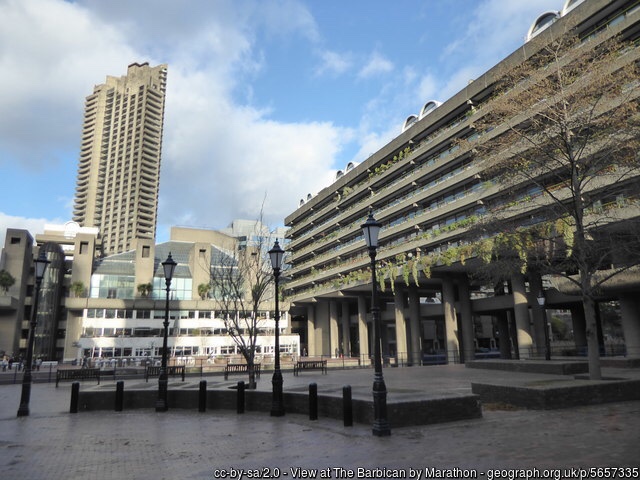
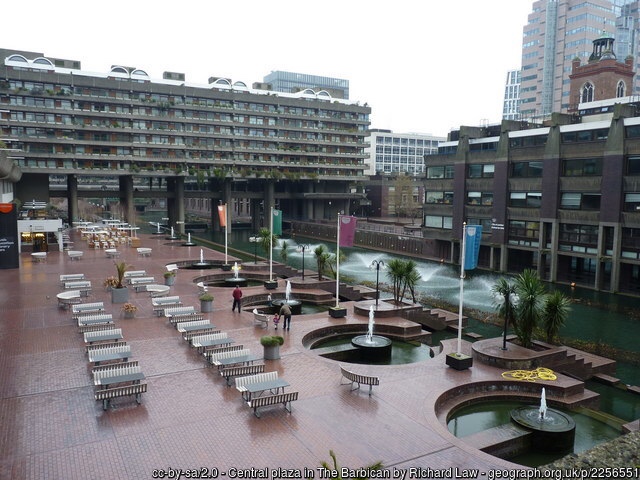
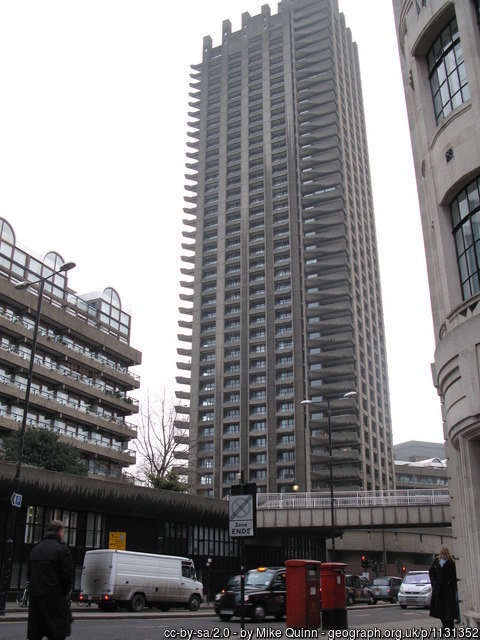
On this day in history : 3rd March 1982 – The opening of the Barbican Centre in London, by Her Majesty the Queen Elizabeth II…. It is Western Europe’s largest arts centre ….

img_2507

‘Barbican’ was the name of one of the streets in a busy commercial part of the Cripplegate ward…. At the end of the 19th Century it was the centre of London’s rag trade – bustling with fabric and leather merchants, furriers, glove makers and milliners….

It was during the Blitz that the area was to become completely destroyed…. On the 29th of December 1940 it was flattened by German bombers….fire swept through the warehouses…. By the end of World War II only a few buildings remained….one of which, although badly damaged, was the Church of St. Giles’ Cripplegate….

After the war plans were made to rebuild the stricken area – The Town and Country Planning Act 1947 gave local authorities the power to buy up large areas of land for redevelopment….

img_2509

In 1955 the first proposals for the Barbican Centre were submitted to the Corporation of London – the regeneration of five and a half acres of land in Cripplegate…. Four years later a design by architects Chamberlain, Powell & Bon was accepted…. The following year the Royal Shakespeare Company and the London Symphony Orchestra became involved in the planning as the centre was to become their new home….

Construction began in 1971 – with a proposed cost of £17m and an estimated six-year completion time…. It was finally finished in 1982 and had cost £153m to build…. With a concert hall to accommodate 2,000 people, 2 theatres, a cinema, library, conference centre and several galleries it was to become the largest cultural centre for the arts in Western Europe. By its 20th anniversary the Barbican had received more than 27 million visitors. It is a leading venue for classical music – and was home to the Royal Shakespeare Company until May 2001….

On unveiling the commemorative plaque when opening the centre in 1982 the Queen remarked – “What has been created here must be one of the wonders of the modern world”….

In 2003 a survey commissioned by the advertising agency Grey London named the Barbican as London’s ugliest building….

img_2508

On this day in history….27th February 1907

On this day in history : 27th February 1907 – The Old Bailey, London’s main criminal court, is officially opened – having been built on the site of the old Newgate Prison….

img_2488

The original medieval court-house, next door to Newgate Prison, was destroyed in the Great Fire of London….it was rebuilt in 1674. Originally, the court was intended for the prosecution of crimes committed in the City of London and Middlesex…. However, it was in 1856 that concerns were raised in the case of William Palmer – a doctor accused of being a poisoner and murderer…. Such was public revulsion that it was feared he would not get a fair trial in Staffordshire, his home county…. Allowing his trial to take place at the Old Bailey set a precedent for future serious crimes….

img_2491
An Old Bailey trial circa 1808. Thomas Rowlandson and Augustus Pugin – Public domain

Up until May 1868 the death penalty would be carried out in public…. Hangings took place in the street outside of the Old Bailey and Newgate Prison…. Huge crowds would gather to watch; stones, rotten fruit and vegetables would often be hurled at the condemned…. In 1807 the crowd was so unruly that a pie-seller’s stall over-turned, crushing 28 people to death…. As a result a covered tunnel was built between the prison and St. Sepulchre’s Church, opposite….it was known as ‘Dead Man’s Walk’. The condemned prisoner could be taken to be attended by the chaplain before the death sentence was carried out without facing the crowds….

img_2490
Dead Man’s Walk – Old Bailey. Image credit: Matt Brown via Flickr

Towards the late 1800s more and more trials were being held at the Old Bailey and there were many people who wanted to watch….the building had become inadequate. Newgate Prison next door had become dilapidated as since the 1860s it no longer held long-term prisoners…. So, in 1877 it was decided to demolish both buildings to make room for a larger court….

img_2489
Newgate Prison – pulled down in 1902 to make way for the Old Bailey. Image credit: Victor Keegan via Flickr

There were many delays but finally a new building, designed by E.W. Mountford in the neo-Baroque style – at a cost of £392,277 – was built and officially opened by King Edward VII…

img_2492
Lady Justice statue – Old Bailey. Image credit: Lonpicman via Wikimedia CC BY-SA 3.0

On this day in history….20th February 1673

On this day in history : 20th February 1673 – The first ever recorded auction – ‘by the candle’ – of wine is held at a coffee house in London….

Garraway’s Coffee House, City of London

During the 17th century coffee houses became the ‘in-place’ to be seen…. Previously socialising and indeed many a business deal had taken place in the nation’s inns and ale houses – but these were now being viewed as too rowdy and boisterous…. Coffee houses offered an alternative; it wasn’t that the coffee tasted particularly good, the early form of the beverage really didn’t – but the caffeine ‘buzz’ would have been quite addictive…. Soon coffee houses became centres of business with each establishment associated with its different trades and professions…. Whereas one might be frequented by artists or actors another might be where merchants would gather and a further one a place for medical men to congregate…. By 1702 it is thought that over 500 coffee houses had sprung up in London alone and by 1800 this number had risen to over 8,000….

One such establishment was Garraway’s Coffee House, which was opened by Thomas Garway in the 1650s…. Garway was a tobacconist and coffee merchant by trade – and before opening his coffee house is believed to have been the first to sell tea – as a ‘cure of all disorders’ – to the public in England…. He began to sell the commodity at Garraway’s in 1657 – in those days tea sold at between 80p – £2.50 per pound in weight….that’s well over £500 in today’s terms, making an extremely expensive cuppa!

Garraway’s was situated in Exchange Alley, a shortcut between Cornhill and Lombard Street, the hub of the City’s financial world…. It was built on a corner and had various entrances into the building – with small rooms on the ground floor along with a kitchen and on the upper floor a large coffee room…. Just ten years later it was destroyed by the Great Fire of London and had to be rebuilt…. Exchange Alley became known as ‘Change Alley’ and Garraway’s was one of three celebrated coffee houses in the immediate area – all of which were patronised by traders in shares and commodities…. Both Charles Dickens and Daniel Defoe referred to Garraway’s in their works….

As the business grew Garraway’s began to hold auctions…. A small rostrum was installed in the upstairs room for the auctioneer and rough settles were provided for the bidders…. The windows and walls of the lower floor were adorned with placards advertising upcoming sales…. Up to thirty sales a day could take place, selling everything from furs to drugs, timber to tea….and then in 1673 wine…. As well as becoming famous for its wine sales, both by the bottle and crate, it was also to become well-known for its auction of fine brandy….

Auction room at Garraway’s

Auctions then were not as we know them today – they were conducted ‘by the candle’…. At the commencement of the sale, after the auctioneer had read out the description of the goods and the terms and conditions of the sale, a length of candle (typically an inch) would be lit…. He who placed the last bid before the candle had burned out would be deemed the winner….

Garraway’s Coffee House has now long gone…. It was to develop to become a famous drinking establishment and sandwich shop…. Then in 1748 the building was once more to be destroyed by fire and had to be rebuilt again…. However, by the mid 1800s coffee houses were declining in popularity – and Garraway’s eventually closed on the 11th of August 1866 – and the premises became home to a bank…. All that remains as a reminder of the once great coffee house is an ornate stone plaque on the wall where it once stood and a mahogany panel at 32 Cornhill which reads “Place of great commercial transaction and frequented by people of quality”….

Image credit : Spudgun67 – own work