On this day in history : 13th March 1764 – The birth of Charles Grey, 2nd Earl Grey – future British Prime Minister and for whom Earl Grey tea is named….
The Right Honourable The Earl Grey – Portrait by unknown artist
Earl Grey is a blend of traditionally black tea, flavoured with oil of bergamot…. The oil is extracted from the peel of the bergamot orange, supposedly a hybrid of lemon and bitter orange plants – which mainly grow in France and Italy….
Legend has it the tea was presented as a gift to Lord Grey by a Chinese Mandarin-speaking man….who was grateful to the lord as one of his men had saved the Mandarin’s son
Earl Grey tea blend – Photo credit: Sebastian Stabinger CCO
According to the Grey family the tea was specially blended for them to suit the lime found in their local water source…. Lady Grey would entertain with it in London and so popular was it people asked it if could be purchased…. This is how Twinings came to market it….
However, Jacksons of Piccadilly claim they were the original company to make it…. They say the recipe was given to Robert Jackson in 1830 and they have used it unchanged ever since….
It was once thought of as a tea enjoyed mainly by the upper classes – but nowadays it is one of our most popular brews….
On this day in history : 12th March 1969 – Paul McCartney marries US photographer Linda Eastman at Marylebone Registry Office….
Linda McCartney – Image courtesy: Kristine via Flickr
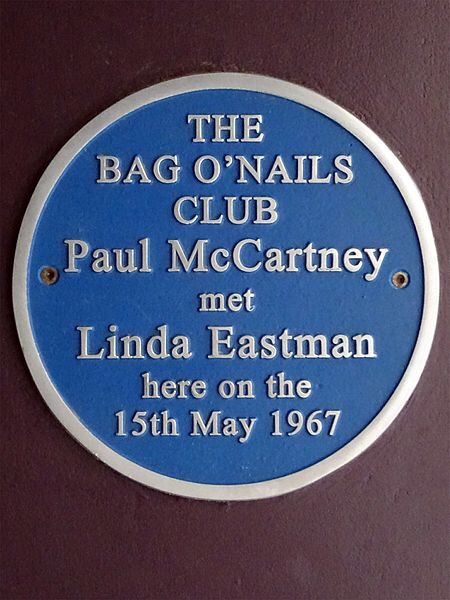
Paul and Linda had first met on the 15th of May 1967, in Soho nightclub ‘Bag O’ Nails’…. Linda was in the UK to take photographs for a book called ‘Rock and Other Four-Letter Words’…. A few days later she met him again at a photo shoot of the Beatles….but was soon afterwards to return home to the States and her own life with young daughter, Heather – from a previous marriage…. Paul, meanwhile, was to become engaged to long-term girlfriend, Jane Asher…. However, a year later, in May 1968 the pair met up again in New York – and Paul invited Linda and her daughter to London…. A romance was to blossom….
Photo credit: Spudgun67 CC BY-SA 4.0
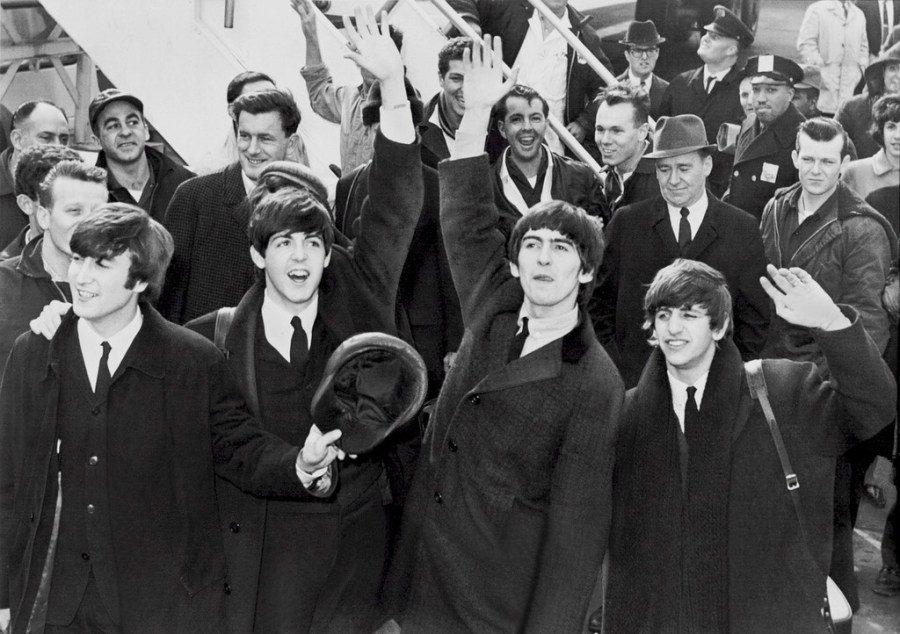
The wedding was supposed to be a secret – but these things have a habit of leaking out…. Even though the registry office had only been booked the day before reporters and photographers were waiting outside it, in the rain, from 7am…. So were the fans….hundreds of them, many visibly distraught…. Paul was the last bachelor Beatle….their teenage dreams of becoming Mrs Paul McCartney shattered forever….
The couple arrived at 10am, entering the building via a side door to avoid the crowds; the other members of the Beatles did not attend…. Paul wore a dark suit, with a floral shirt and yellow kipper tie….whilst Linda wore a fawn coloured dress with a yellow coat…. Heather carried a posy of freesias….
The ceremony was delayed for an hour…. Paul’s brother, Michael, who was best man and acting as a witness, was travelling down from Birmingham – but his train had broken down…. On arriving in London he headed to the registry office assuming he was too late – but the wedding party had waited for him…. The other witness was the Beatles’ assistant, Mal Evans….
After the ceremony the newly wed Mr and Mrs McCartney made their way down the steps to their waiting car….throwing freesias to the crowd as they went….
On this day in history : 11th March 1818 – Mary Shelley’s Frankenstein is published – it is often referred to as the world’s first true work of science-fiction….
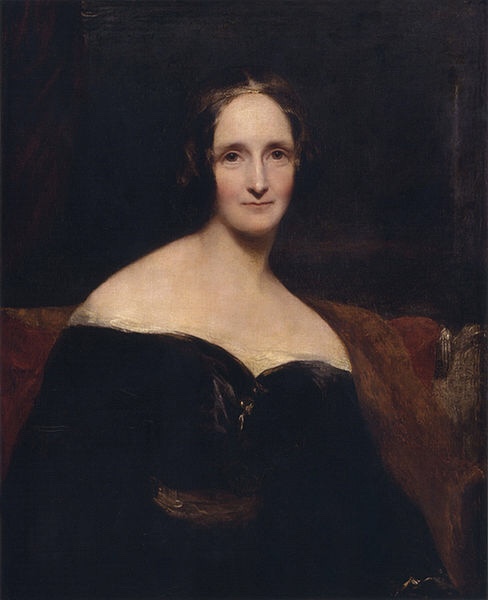
Mary was born on the 30th of August 1797 in Somers Town, London…. Her mother, who died a few days after her birth, was the well-known defender of women’s rights, Mary Wollstonecraft…. Her father, William Godwin, was a radical philosopher….
Portrait of Mary Shelley – housed in the National Portrait Gallery – London – Public domain
Godwin had got himself into considerable debt…. One of his followers, a young poet by the name of Percy Bysshe Shelley, was in-line for a large inheritance – and promised to help him….
Although young, around 21, Percy was a married man…. However, he and Mary – who was just 16 – found they had a strong attraction to each other….and they began to meet in secret at her mother’s graveside…. On the 26th of June 1814 they declared their love for one another….
Percy Bysshe Shelley by Alfred Clint – housed in the National Portrait Gallery – London – Public domain
Mary’s father did not approve….he was also extremely angry because Percy had informed him that he was unable to gain access to his future inheritance and so could not help him…. On the 28th of July Percy and Mary ran off to France together, taking with them Mary’s stepsister, Claire Clairmont…. The trio made their way to Paris, leaving behind them all that they knew – including Percy’s now pregnant wife….
From Paris they travelled through a war-torn France to Switzerland…. Mary and Percy kept a joint journal and both continued to keep up their own individual writing whilst on their travels…. But eventually they ran out of money and had to make their way home….arriving the 13th of September 1814…. Mary was pregnant….
Godwin refused to have anything to do with his daughter…. Mary, Percy and Claire moved in to lodgings…. Percy would disappear for long lengths of time to avoid people he owed money to…. This must have been a miserable time for Mary…. Pregnant (and often poorly with it), penniless and Percy – who believed in free-love – was most certainly ‘carrying-on’ with Claire…. To make her feel even worse, Harriet – Percy’s wife – had given birth to a boy and Percy was over-the-moon….
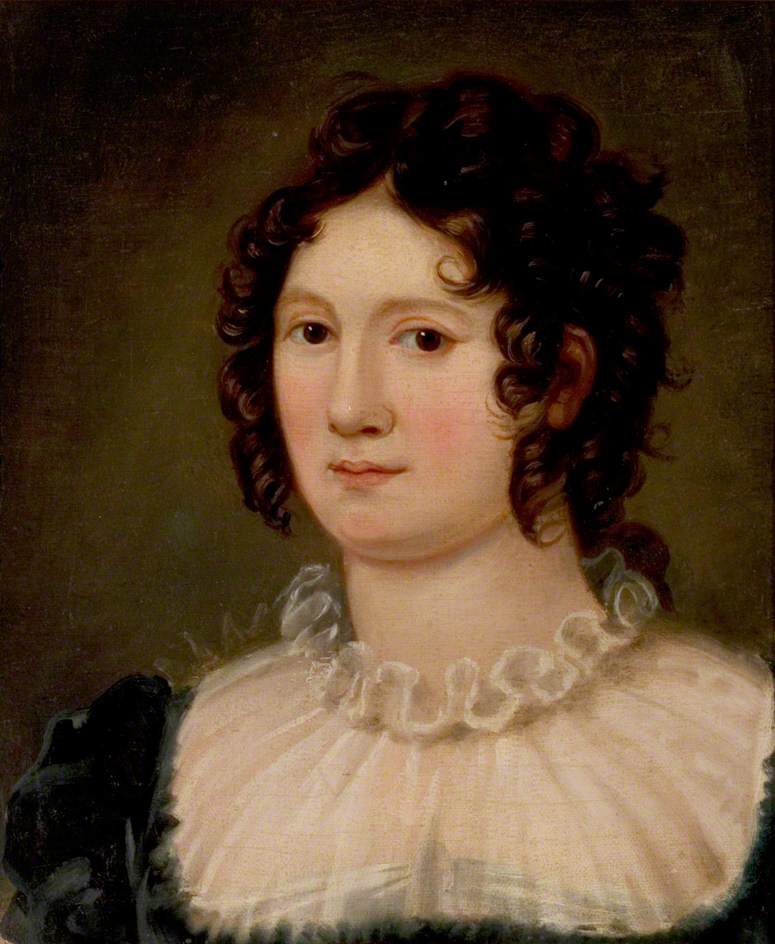
Claire Clairmont – portrait by Amelia Curran – Public domain
On the 22nd of February 1815 Mary gave birth two months prematurely to a girl…. Sadly she was not to live – but Mary was soon to fall pregnant again and on the 24th of January 1816 she had a son…. They called him William, after her father – although he quickly gained the nickname ‘Willmouse’….
In May 1816 Mary, Percy, their young son and Claire travelled to Geneva to spend the summer with Lord Byron…. He and Claire had indulged in an affair – and she was now pregnant…. They stayed with him at his villa near to Lake Geneva….
It was a particularly wet and stormy summer and the constant rain kept them confined indoors much of the time…. During the times when they were not writing the party amused themselves by telling ghost stories…. One night Lord Byron challenged his guests to a ghost story writing competition…. It was this that inspired Mary’s ‘Frankenstein’…. What started out as a short story became ‘Frankenstein; or, The Modern Prometheus’….her first novel….
A draft by Mary Shelley – Public domain
They returned to England in the September….and settled in Bath – hoping to keep Claire’s pregnancy a secret…. On the 10th of December Harriet was found dead in the Serpentine, Hyde Park – she had committed suicide…. To try and gain custody of his two children by Harriet, Percy was advised to get married…. He and Mary married on the 30th of December 1816…. The marriage ended the rift between Mary and her father, he attended the ceremony…. Mary was also pregnant again….
Percy did not manage to gain custody of his children…. He and Mary had several more in their marriage….but only one survived….
In 1822, just before his 30th birthday Percy was drowned in a storm whilst sailing his schooner in Italy…. Mary returned to London and pursued a very successful writing career…. She was a novelist, biographer and travel writer…. In their time together Mary and Percy had always encouraged each other’s writing…. After his death Mary also edited and promoted her husband’s poetry and writing….
Miniature portrait of Mary Shelley by Reginald Easton – Public domain
On this day in history….10th March 1988 – Prince Charles narrowly escapes death when an avalanche hits the royal ski party at Klosters, Switzerland….one of his close friends is killed….
Prince Charles via Wikimedia – Public domain
The royal party consisted of the Prince of Wales, Major Hugh Lindsay, Mr and Mrs Palmer-Tomkinson, a Swiss policeman and Bruno Sprecher, one of the best local guides…. The Princess of Wales and Duchess of York were also on the holiday but were back at the royal party’s chalet in Davos….
Klosters – image credit: Florian343 via Wikipedia CC BY-SA 4.0
Prince Charles and his friends were skiing ‘off piste’ – on one of the most difficult runs in the area – the Wang Run….on the steep slopes of Mount Gotschnagrat – which are among some of the steepest in Switzerland. This particular day was the first time the run had been opened that season….as it was rarely opened and considered to be suitable only for the most experienced of skiers…. Prince Charles being such a skier – having started to ski at the age of 14….
Mount Gotschnagrat via Twitter
The previous day had seen a fresh snowfall and snow had built up on the mountain….but there had been no avalanche warnings issued…. At 2.45pm the avalanche started some 100 feet above where the party were skiing…. Prince Charles and most of the others managed to ski to safety – but Major Lindsay and Patti Palmer-Tomkinson were caught in it….and plunged 400m down the mountainside….
Once the avalanche had passed the party including the Prince of Wales desperately tried to help them – digging at the snow with their hands frantically trying to free them…. Both were airlifted by helicopter to Davos hospital….where Major Lindsay was pronounced dead…. Patti Palmer-Tomkinson suffered severe leg injuries….
Prince Charles had lost one of his close friends…. Major Hugh Lindsay was 34-years-old and former equerry to the Queen…. Having accompanied Her Majesty on many official engagements he was one of her favourites…. He had been married only two years and his wife was expecting their child in May…. Prince Charles, the Princess of Wales and Duchess of York flew back to RAF Northolt with Major Lindsay’s coffin…. The Queen sent a private message of sympathy to his widow….
On this day in history : 9th March 1946 – Barriers collapse at an overcrowded football match at Burnden Park, home to Bolton Wanderers…. 33 fans are killed and hundreds more are injured….
The match was between Bolton Wanderers and Stoke City…. At 2.40pm the decision was taken to close the turnstiles as the ground had already filled to over-capacity…. But still the crowds came in, climbing over the turnstiles…. Then somebody – wanting to escape the crush – pricked the lock of a gate….as it opened more and more people poured in…. It is estimated 85,000 were packed into the ground – which should have had no more than 70,000….
A quarter of an hour after the game had started the crowd began to spill onto the pitch – play was temporarily stopped whilst the pitch was cleared…. It was just after then that two barriers collapsed and the crowd surged forwards….those knocked to the ground were crushed….
Women and children being passed over the heads of the crowd during the crush – Fair use
The game had restarted – but a police officer went to speak to the referee, George Dutton, to explain there had been fatalities…. At that point the players returned to the dressing rooms….
The injured were removed from the crowd and the dead were lain along the touch-line and covered with coats…. A new touch-line was marked out with sawdust – and less than half an hour after leaving the pitch the players returned to restart the game! Just a line of sawdust separating them from the bodies….
At the end of the first half the teams swapped ends and immediately started the second half…. The match ended goalless…. Stanley Matthews, who was on the Stoke team, later said he was sickened that the game was allowed to continue….
Until the Ibrox Park disaster in 1971 Burnden Park was the deadliest stadium disaster in British history…. 33 dead, including one woman and over 400 injured…. Bolton played their last game there in 1997, before moving to a new stadium…. It was demolished in 1999 and the site is now occupied by a supermarket….








 Cottage Capers