On this day in history….8th July 1822

On this day in history : 8th July 1822 – The death of poet Percy Bysshe Shelley – who drowned in a sudden storm whilst sailing his schooner in Italy….
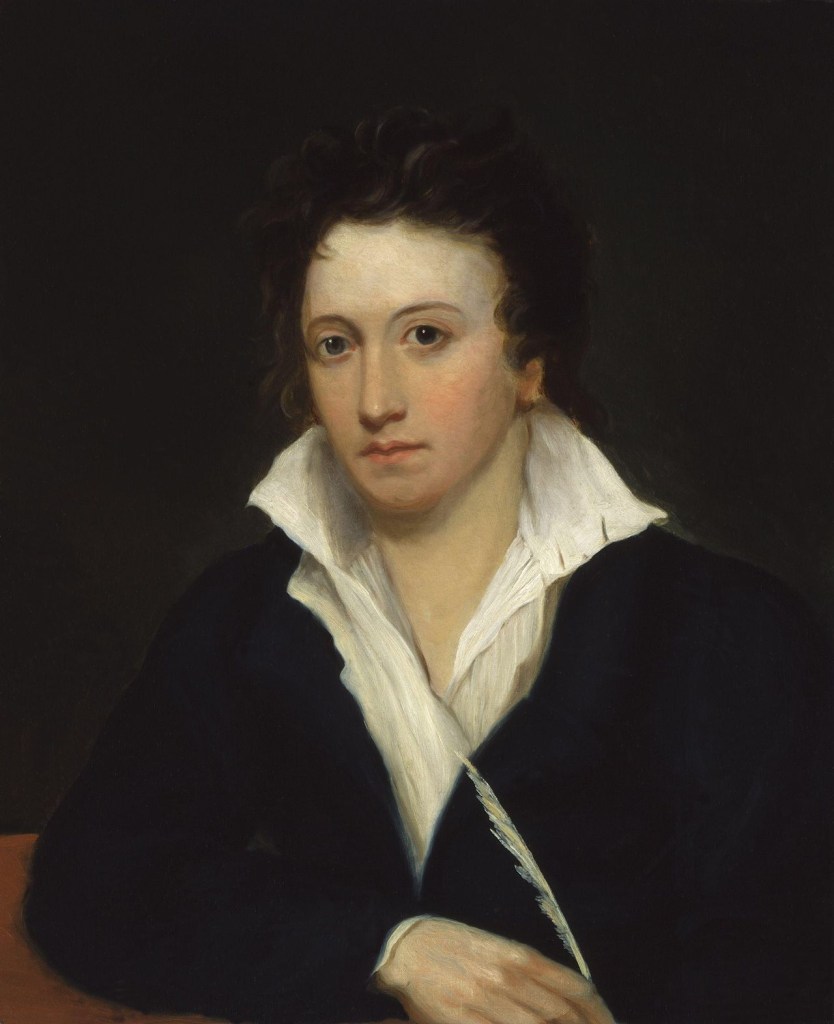
Portrait of Shelley by Alfred Clint – Public domain

The small schooner, ‘Don Juan’, was an open boat that had been custom built for Shelley in Genoa…. He was sailing from Livorno and was returning home to Lerici, when whilst in the Gulf of La Spezla, 10 miles from shore, a sudden violent storm struck – and the boat sank….

Although there was some suggestion that the boat had possibly been rammed, by a larger vessel, the accident was put down to the severe weather and the poor seamanship of the three men onboard…. As well as Shelley ‘Don Juan’ had been carrying retired naval officer Edward Elleker Williams and boat-boy Charles Vivien….

However, there were those who believed the sinking of ‘Don Juan’ was not an accident – and the stories began to circulate…. They ranged from Shelley having committed suicide on account of suffering from depression to the more fanciful idea of having been attacked by pirates…. It is said an Italian fisherman later confessed on his deathbed to having rammed the boat in order to rob it….

Shelley was having financial difficulties at the time; he owed a substantial sum after leaving his former home in wales without paying any rent – as well as having other debts – so he certainly had his enemies…. There was also a theory, which had some supporting evidence, that he may have been murdered by one of his enemies – some think by an intelligence agent who strongly disagreed with Shelley’s political views…. He had indeed been attacked by such a person in the past….and the supposed ramming of his boat fuelled the speculation….

Shelley’s body washed ashore a few days later – and would have already been in a state of decomposition…. As in keeping with quarantine regulations he was cremated on the beach near to Viareggio…. He had died just a month before his 30th birthday….

The funeral of Shelley by Louis Edouard Fournier (1889) – Public domain

His ashes were interred in the Protestant Cemetery in Rome – with the Latin inscription ‘Cor Cordium’ – meaning ‘Heart of Hearts’…. And then followed with a few lines from Aerial’s song from Shakespeare’s ‘The Tempest’…. Eventually a memorial to Shelley was created at Poet’s Corner in Westminster Abbey….
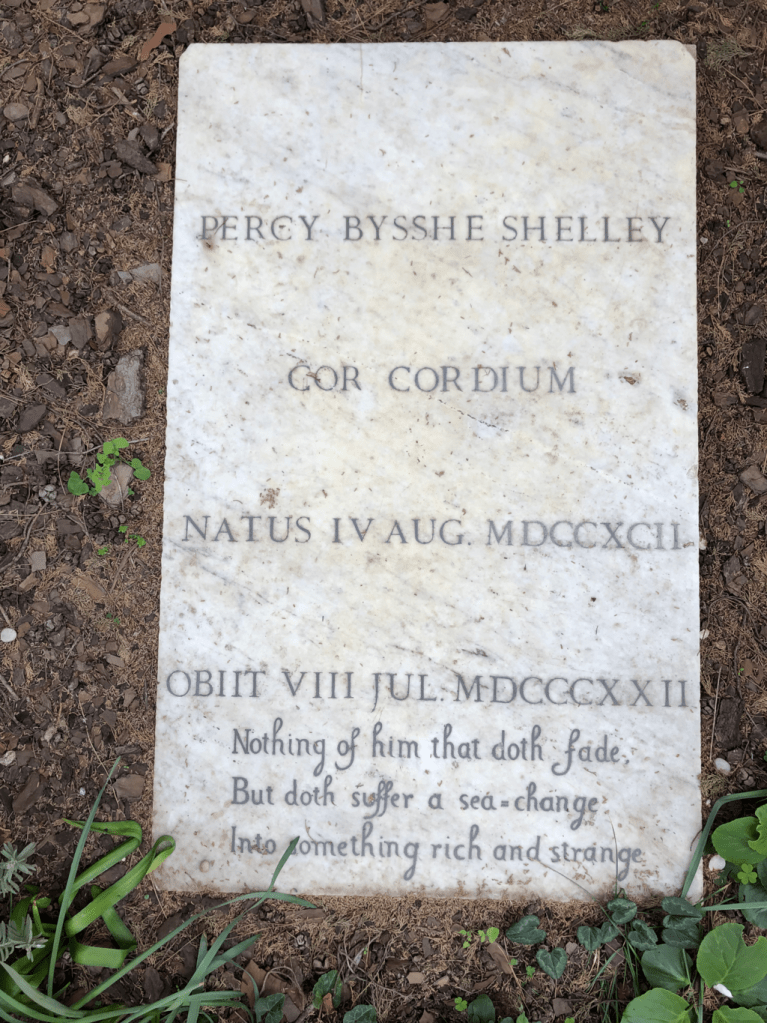
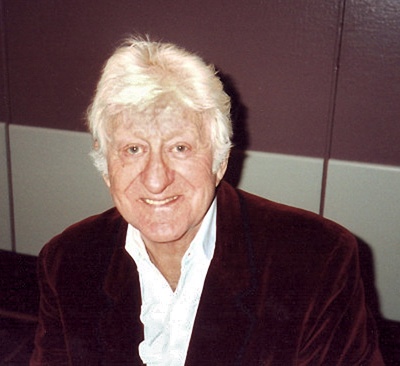
Photo credit : RubyEmpress – own work – CC BY-SA 4.0

On this day in history….7th July 1919

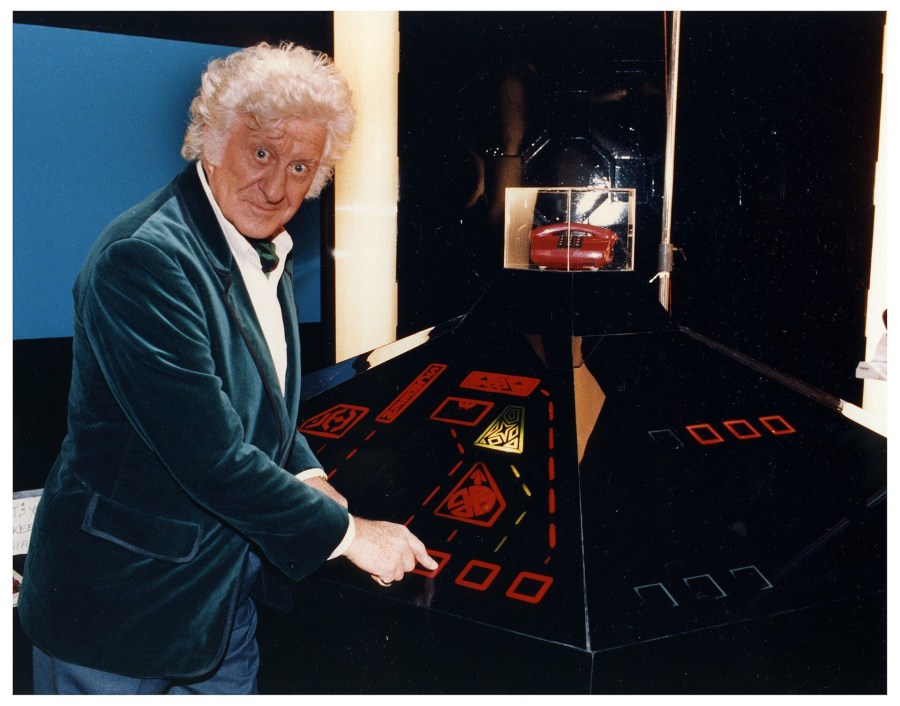
On this day in history : 7th July 1919 – The birth of Jon Pertwee – best known for his portrayal of the Third Doctor in Dr Who – and for his role as Worzel Gummidge….

Photo credit : Mark (Carlisle Who Fan) – CC BY-SA 2.0

Born in Chelsea, London, John Devon Roland Pertwee – ‘Jon’ – came from a theatrical family…. (The ‘h’ in his name was dropped in the 1930s after a playbill incorrectly spelt his name)…. His father, Roland Pertwee, was an actor, playwright and screenwriter – and his mother, Alice Schultz, an actress…. He was also a distant cousin of actor Bill Pertwee, known for his role as ARP Warden Hodges in the sitcom ‘Dad’s Army’….

Jon’s parents separated when he was very young and although his father remarried he was mainly raised by his paternal grandmother…. He was educated at Frensham Heights School, in Farnham, Surrey – which is where he had his first taste of the theatre, in a school stage production of Shakespeare’s ‘Twelfth Night’…. He then went to Sherborne School, Dorset – after a few intermediate Schools in between, from all of which he was expelled….

Young Jon was rebellious in nature – but from an early age he had been encouraged by his family to pursue an acting career…. This was despite being told several times by his teachers that he would never be successful as an actor on account of his partial lisp….

In 1936, on finishing school, he was accepted into RADA – only to be expelled again…. His refusal to play the part of a Greek ‘wind’ – because he thought it a waste of time – coupled with his writing rude things about his tutors on the lavatory walls earned him his marching orders….

Nevertheless, at the age of 18 he was contracted to the BBC and had a varied career in the repertory theatre and music hall – mainly as a comic actor…. During WW2 he was to serve in the Royal Navy, which in turn was to help his own career after the War…. In December 1945 he joined the BBC armed forces radio comedy ‘Mediterranean Merry-Go-Round’ which went on to have a spin-off show ‘Waterlogged Spa’ in 1948…. This saw him awarded his own radio series ‘Puffney Post Office’ in 1950 – but his biggest radio success came in 1959 with ‘The Navy Lark’…. Acting alongside several others who were already – or about to become – household names, such as Lesley Philips, Ronnie Barker, Dennis Price and Michael Bates, the series ran for 18 years….

Meanwhile his stage and film career was doing well and in 1955 he had married actress Jean Marsh…. However, they divorced in 1960 and in the same year he married Ingeborg Rhoesa with whom he had two children, a daughter, Dariel and son, Sean – both of whom went on to have successful acting careers….

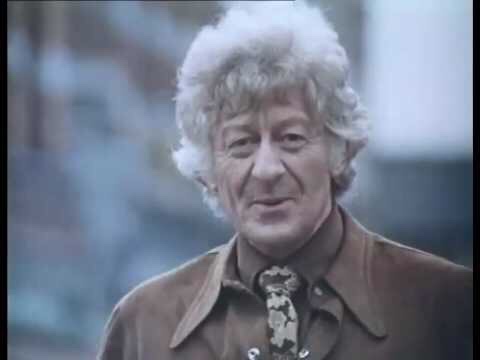
In 1969 Jon was approached to take over from Patrick Troughton as Dr Who…. He played the role of the Third Doctor as a suave, dapper man of action – who was rather ‘tech savvy’…. In an era influenced by James Bond he was seen to love working on his gadgets in the TARDIS – and drove a vintage yellow roadster called ‘Bessie’ – which reflected Jon’s own love of cars…. As the Third Doctor he was the first Doctor to be broadcast in colour….

Jon Pertwee as Dr Who – Photo credit : Archives New Zealand – CC BY-SA 2.0

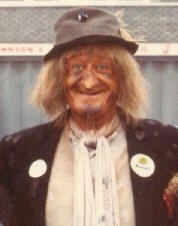
In early 1974 he announced that he was stepping down from Dr Who and for a while he returned to his stage career…. Then in 1979 he took on the starring role of Worzel Gummidge in the ITV children’s sitcom based on the books by Barbara Euphan Todd…. The antics of the loveable scarecrow who could come to life ran for four series until 1981 and also starred Una Stubbs, Bill Maynard and Joan Sims…. It even made Jon a ‘popstar’ when ‘Worzel’s Song’ reached No.33 and stayed in the UK music charts for seven weeks in 1980….

Jon Pertwee as Worzel Gummidge – Photo credit : West Midlands Police – CC BY-SA 2.0

Jon continued to work on stage, in film and even advertisements…. His last formal TV appearance was on Cilla Black’s ‘Surprise Surprise’ in April 1996…. On the 20th of May 1996 he died suddenly from a heart attack in his sleep at his home in Connecticut…. His sudden death came as a shock to everyone…. He was aged 76….

He was cremated at Putney Vale Crematorium – and as were his wishes, a toy Worzel Gummidge was fixed to his coffin…. Ironically his very last film appearance, made just a week before his death, was as Dr Who for an advertisement for Vodafone….

On this day in history….6th July 1978

On this day in history : 6th July 1978 – A fire breaks out on the Penzance to Paddington sleeper train…. Twelve people are killed and a further fifteen are injured….

The train had left Penzance at 9.30pm and had arrived at Plymouth at 11.50pm, where it was coupled-up to two sleeper cars…. Around 12.15am the electric train’s heating system was turned on and the journey resumed at 12.30am, making stops at Newton Abbot and Exeter….

Train carriage similar to the one involved in the Taunton sleeper train disaster – Photo credit : Dave Coxon, English Wikipedia – Public domain

On older trains used bed linen would have been transported in the guard’s compartment – but on these newer trains it was carried in plastic bags and placed in the vestibule (the enclosed chamber at the end between two carriages)…. On the Penzance to Paddington train these bags had been stacked against the heater…. The bags began to heat up and as they started to smoulder toxic gases, including carbon monoxide were given off…. As the ventilation system drew its fresh air from the vestibule the now poisonous air was pumped into the sleeping booths….

Before long a major fire had broken out…. The train stopped at Silk Mill signal box, about a mile from Taunton, at 2.41am – after the communications cord had been pulled…. Some passengers were already dead from carbon monoxide poisoning – others awoke and although hampered by smoke and heat managed to escape….

Fire fighters arrived within four minutes and local residents living nearby rushed to help…. Rescuers were hindered further as doors had been locked…. Many passengers chose to lock their doors whilst sleeping – and although against the rules carriage doors were locked as guards wanted to keep intruders out of the carriages…. This certainly made the rescue operation difficult but was not cited as the main cause of death…. Eleven people were killed immediately, through poisoning and smoke inhalation – the victims and injured were taken to nearby Musgrove Park Hospital…. A twelfth, Belgian passenger died in hospital the following month having never regained consciousness….

On this day in history….5th July 1954

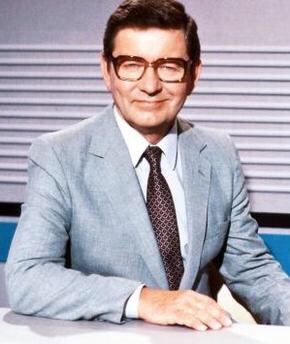
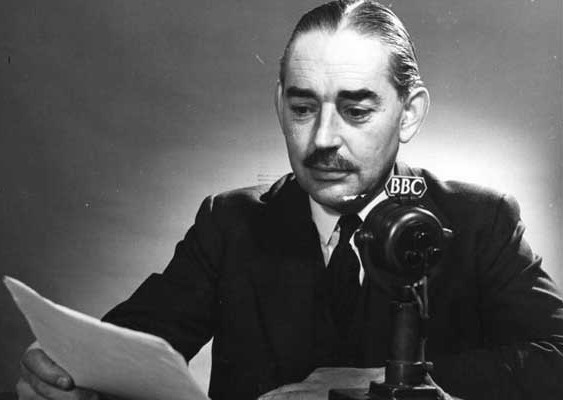
On this day in history : 5th July 1954 – The BBC broadcasts its first television news programme…. The twenty minute bullet-in is introduced by Richard Baker….

Richard Baker – Fair use

We are all very familiar with the format of today’s TV news programmes; the presenters, news stories from around the world and closer to home – and the film footage that almost always accompanies them…. But how different things were back then…. Richard Baker narrated the news story whilst a supporting relevant still photograph was broadcast for viewers to look at…. It was really like an illustrated summary of the news…. A customary news reel would be shown, usually with recorded commentary from John Snagge or occasionally Andrew Timothy….

John Snagge reading the news in 1944 – Public domain

The BBC’s new news programme certainly wasn’t popular with all…. Some described it as ‘absolutely ghastly!’ and ‘as visually impressive as the fat stock prices’…. BBC Radio 4 were also doubtful about this newfangled way of delivering news to the nation and insisted on keeping control over the editorial of the headlines and the programme content….

The very first programme to be broadcast included a story on French troop movements in Tunisia and covered the truce talks being held near to Hanoi…. The service was intended to be more up to date, as the previous ‘Television Newsreel’ programme often contained news stories several days old….

In 1955 other news readers were introduced, such as Kenneth Kendall – who was the first news presenter to be visually seen – and Robert Dougall…. Television news time also doubled during this period…. Shortly after this expansion by the BBC, on the 21st of September 1955, ITN launched their news programme….

On this day in history….4th July 1840

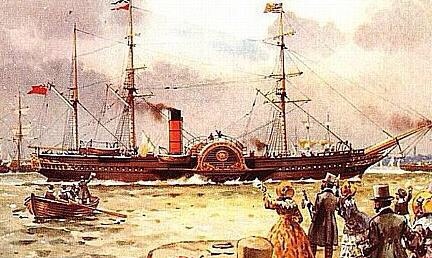
On this day in history : 4th July 1840 – The Cunard Shipping Line begins its first Atlantic crossing, when Paddle Steamer Britannia departs Liverpool, bound for Boston, USA….

RMS Britannia – Public domain

Britannia was built by Robert Duncan & Co, Glasgow, for the British & Northern American Royal Mail Steam Packet Co – which was to become the Cunard Line not long after…. She was launched on the 5th of February 1840….

At 1150 tonnes and 270ft long, nearly a quarter of the length of the wooden paddle steamer was taken up by her engines, which were designed by Robert Napier of Glasgow…. She could travel at an average speed of 8.5 knots per hour and consumed some 38 tons of coal per day….

The journey to Boston took 2 weeks, after departing Liverpool on the 4th of July she arrived on the 19th…. She was contracted to carry mail between England and America but was also designed as a troop ship should the need arise…. She had been built strong enough to carry an armament of guns for her own protection and to protect other merchant ships…. She was followed into service by her three sister ships….

Britannia took part in the first transatlantic race between British and American steamships…. In 1847 she competed against the newer and more powerful American steamer ‘Washington’…. Both ships departed New York on the same day, Britannia bound for Liverpool and Washington for Southampton…. Britannia arrived at her destination two days ahead of Washington reaching Southampton….

RMS Britannia – Public domain

The steamships were soon competing with conventional sailing ships – and not just for cargo, they also carried passengers…. In January 1842 Charles Dickens and his wife sailed onboard Britannia to Nova Scotia, Halifax – and he kept a diary of the voyage…. Provisions would have been made wherever possible for fresh food supplies onboard ship…. Britannia, for example, carried poultry in coops on her deck for eggs and meat and there was even a ship’s cow for daily milk….

Britannia served with Cunard for nine years before being sold to the North German Federation, to be converted into a warship…. She was renamed ‘Barbarossa’….