On this day in history….2nd January 1971

On this day in history : 2nd January 1971 – Disaster strikes at Ibrox Park at the end of an ‘Old Firm’ football match between the two Glaswegian giants – Rangers v Celtic…. Sixty-six spectators are crushed to death and over 200 are injured….

The match had looked as if it were going to be a 0-0 draw….when in the 89th minute Celtic scored – only for Rangers to equalise with only a few seconds of the game remaining…. The 80,000 strong crowd went wild….only tragedy was about to happen on the East terrace, at the Rangers end of the stadium….

As the massive crowd surged to exit the ground some fans stumbled on the steep steps of stairway 13…. Others around them, not realising what was happening, still moved forwards – and a crush developed….the steel barriers on the stairway crumpled and gave way….

Sixty-six people lost their lives – 31 of which were teenagers….five school friends from Fife, 4 of whom lived on the same street, were among them…. One woman, Margaret Ferguson, aged 18 died…. The youngest victim was Nigel Pickup, from Liverpool….he was just 9-years-old…. Over 200 further people were injured….

At the official inquiry, which followed the disaster, it was concluded that someone – possibly a child being carried on his father’s shoulders – fell…..causing a chain reaction….

This was the worse football disaster in British football history until the Hillsborough disaster in 1989…. However, it was not the only catastrophe to have happened at Ibrox Park (now Ibrox Stadium)…. Ten years previously two had died and 44 were injured on the very same stairway…. In 1902 old wooden terraces gave way under the weight of too many spectators….25 died and 587 were injured….

The 1971 incident prompted the UK government to look into safety at sports venues…. As for the Ibrox ground – it underwent a huge redevelopment program taking three years to complete…. Three quarters of the spectating area was replaced by all-seated stands….
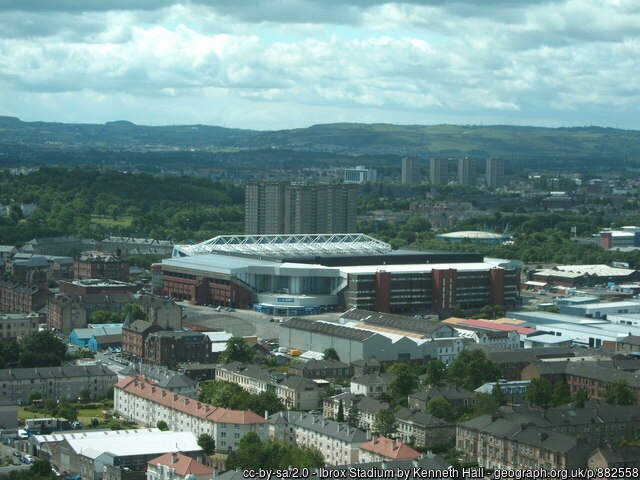
In the immediate aftermath of the Ibrox disaster supporters on both sides were united in grief….and now every year those who lost their lives are remembered….
On this day in history….31st December 1695

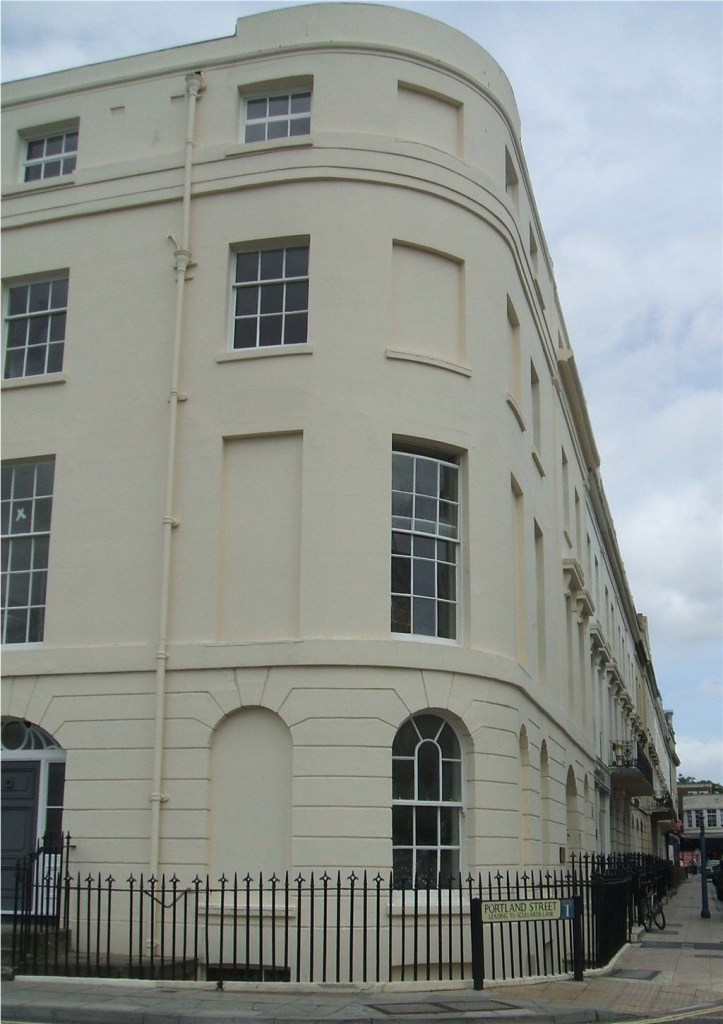
On this day in history : 31st December 1695 – King William III imposes the window tax in Britain – resulting in many windows in houses being bricked up….

Property in Portland Street, Southampton with blocked up windows due to the window tax – Image : Whilesteps – own work CC BY-SA 3.0

At the time the idea of income tax was a controversial matter; many people opposed it, seeing it as an intrusion into their privacy and private matters – they saw it as a threat to personal liberty…. So under William III a window tax was introduced – designed to relate to the wealth of an individual based on the size of property they owned…. The new tax was brought in to offset losses caused by the practice of clipping coinage…. Coins were then made of pure silver and gold – and their edges would frequently be clipped or shaved to obtain fragments to melt down…. Bars would then be produced to either sell to jewellers or to make counterfeit coins…. It was a common practice and would undermine the currency of a country….

King William III – Portrait by Godfrey Kneller – Public domain

The introduction of the window tax came in two parts…. A two shilling flat rate was imposed on every house and then a variable rate of tax applied for every window over the number of ten…. Ten to twenty windows were levied at four shillings each and for properties with more than twenty windows these were levied at eight shillings…. The union of England and Scotland saw both countries’ taxes harmonised – the top rate of twenty windows was also used for houses with more than thirty windows, creating a ceiling level…. Between 1747 and 1808 the tax was raised six times and by 1808 the lowest band became applicable for properties with six or more windows – however, this was raised to eight in 1825…. The window tax was easy enough to apply as the windows could be counted from outside….

House in Brentford – Image credit : Maxwell Hamilton via Flickr

However, as early as 1718 a decline in the revenue brought in by the tax was becoming noticeable as windows were being blocked up – and new houses were being built with fewer windows…. Campaigners argued that the tax was a tax on health, light and air – and an unfair and unequal tax with the burden falling on the middle and upper classes…. Finally the window tax was repealed on the 24th of July 1851 – it was replaced by a tax on inhabited houses…. Income tax had already been introduced in 1842….

On this day in history….30th December 1983

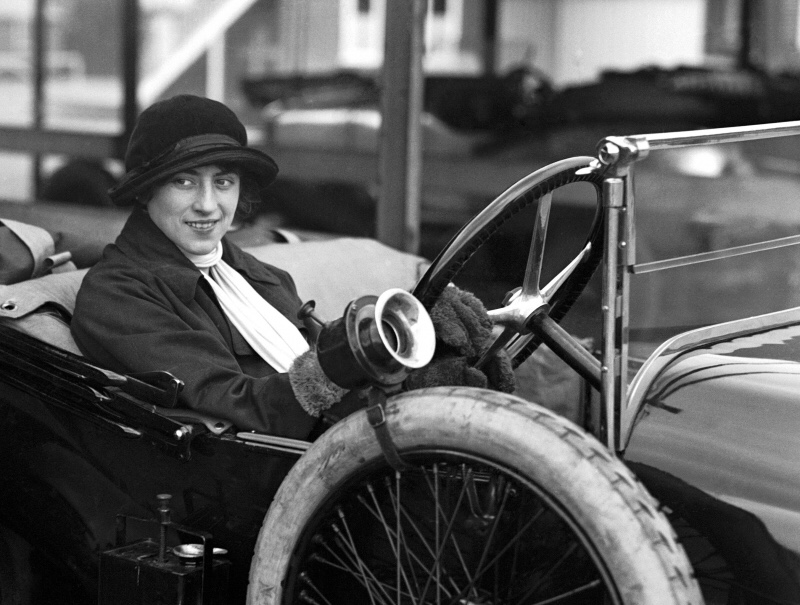
On this day in history : 30th December 1983 – The death of British racing driver and long distance record breaker Violette Cordery – who was known as ‘The Long Distance Lady’….

Violette Cordery, 1919 – Public domain

Violette was born in London on the 10th of January 1900…. As a young woman she was employed as a driver for Captain Noel Macklin of the Royal Naval Volunteer Reserve based at Dover…. Macklin was also her brother-in-law as he was married to her elder sister, Lucy….

Macklin had his own automobile manufacturing company, Silver Hawk Motors in Cobham, Surrey…. In 1920 he produced his Silver Hawk car, which Violette drove in the 1500cc ‘light cars’ class of the South Harting Hill Climb…. She was then to go on to compete in other motoring events…. In May 1921 she won the ladies’ race at the Junior Car Club meeting, averaging at a speed of 49.7mph throughout the race….

Her racing career continued and in 1925 she broke records in Macklin’s new Invicta car…. She won the West Kent Motor Club’s mile sprint in the 2.7 litre Invicta at Brooklands…. Then in 1926 she set a long distance record in Italy, where she drove another Invicta for 10,000 miles at an average 56.47mph…. She set another record in July 1926 in Paris, where she drove 5,000 miles averaging at 70.7mph…. This saw her win the Royal Automotive Club’s Dewar Trophy – making her the first woman to do so….

Violette Cordery, July 1927 in a touring Invicta – Image source : National Library of France CCO

In 1931 Violette and her younger sister Evelyn completed a long distance challenge at the Brooklands Circuit in Surrey…. They drove 30,000 miles in 30,000 minutes at an average speed of 61.57mph – this equated to approximately 20 days and 20 hours of driving…. The sisters won a second Dewar Trophy….

Violette married racing driver and aviator John Stuart Hindmarsh on the 15th of September 1931 in Stoke D’Abernon, Surrey…. They went on to have two daughters – but on the 6th of September 1938 she was to become widowed…. John had been test flying a Hawker Hurricane at Brooklands when the aircraft crashed, killing him…. After this Violette retired from public life; she died in December 1983 in Oxshott, Surrey….

On this day in history….29th December 1675

On this day in history : 29th December 1675 – King Charles II orders the closing of all coffee houses, as he believes they are a hub of malicious gossip about the Government…. It causes a national outcry….

17th century London coffeehouse – Image : Bodleian Library, University of Oxford – Public domain

Coffee had only relatively recently arrived in Europe from Turkey and had quickly become a fashionable drink – not because it tasted good, as this early coffee really did not – but because of the buzz the caffeine gave…. People were soon addicted to it…. The first coffee house opened in Oxford in 1652, with London following in the same year with one in Cornhill…. Soon coffee houses were everywhere….

The non-alcohol serving, men only establishments became lively meeting places both for social and business purposes…. Aside from general chit-chat of the day deals would be struck, current affairs debated and pamphlets distributed…. Each coffee house would have its own particular clientele, often defined by a profession or occupation – politicians, merchants, bankers, authors and poets, artists and musicians…. Some establishments were rather more shady, favoured by criminals and pimps….

King Charles II became nervous; he was convinced that the population was plotting treason; he believed the peace of the realm was at stake with the establishments promoting rumour mongering – and that they made people idle…. And so he issued a proclamation to make coffee houses illegal – but he didn’t stop there….He also banned the selling of coffee and for good measure added to the ban the sale of tea, chocolate and sherbet….

King Charles II – by John Michael Wright – Public domain

His law to ban coffee houses was passed on the 29th of December 1675 – set to become active from the 10th of January 1676…. The law was so unpopular, including among members of his own government, that he finally backed down and the law was withdrawn on the 8th of January….

On this day in history….28th December 1879

On this day in history : 28th December 1879 – The central section of the Tay Rail Bridge, Dundee, Scotland, collapses in a violent storm, as a train is passing over it…. All onboard are killed….

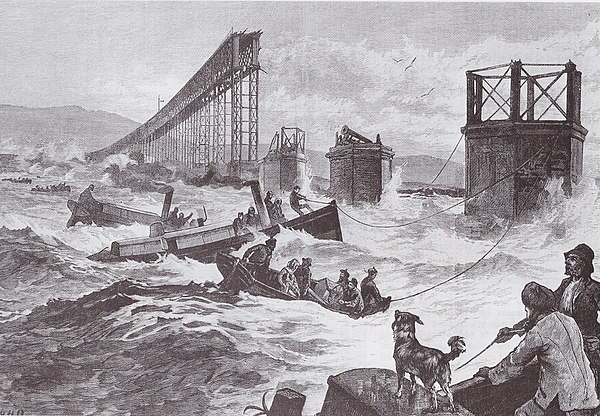
Illustration of the Tay Bridge disaster – unknown artist – Public domain

It was a Sunday evening at around 7.15pm and a storm estimated at 10 or 11 on the Beaufort Scale was raging…. Trains crossing the Tay Bridge, across the Firth of Tay, were restricted to one at a time…. It was the turn of the train from Burntisland in Fife – a train that consisted of one locomotive, its tender, five carriages and a luggage van…. Onboard were around 75 people….

The gale was blowing down the Tay Estuary at right angles to the bridge – suddenly without warning the central navigation spans, which the train was travelling over at the time, collapsed into the Firth below – taking the train with them…. All onboard were lost….

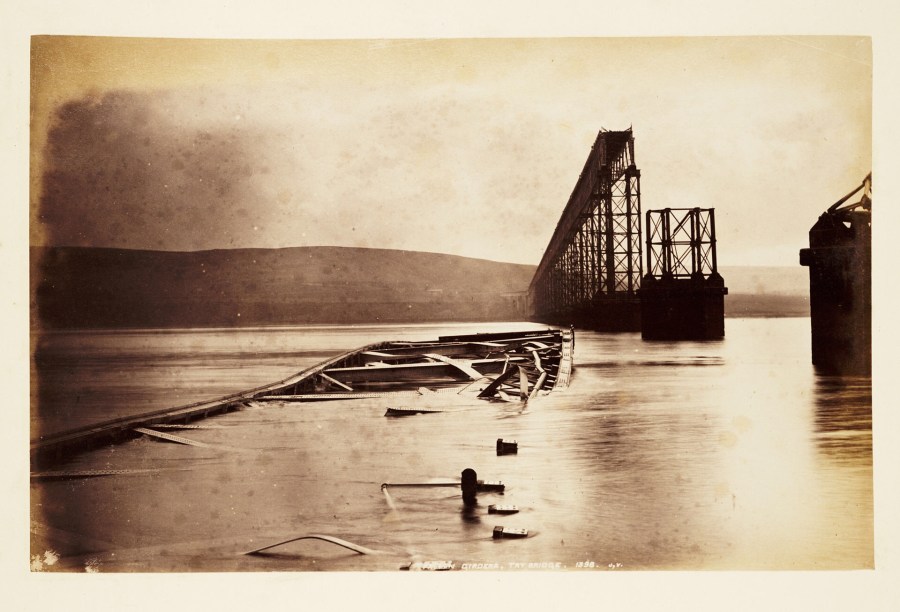
Fallen girders – Image : National Library of Scotland – Public domain

The disaster was to shock Victorian engineers – and it is still today regarded as one of the worst structural engineering failures….

The original Tay Bridge had been designed by Thomas Bouch; he was a well-respected engineer, having much experience…. As well as the design he was also responsible for the construction and maintenance of the bridge…. Having opened in February 1878 it had only been operational for 19 months – its design had won Bouch a knighthood…. So, what went wrong?

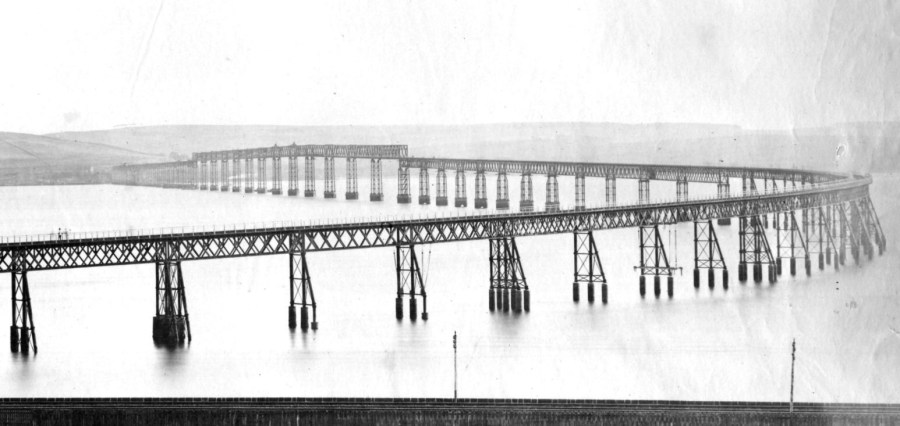
The bridge, at nearly two miles long, consisted of 85 spans – making it the longest bridge in the world at the time…. 72 of the spans were supported on spanning girders below the track – whereas the remaining 13 spans, forming the centre section, were above the track and consisted of bridge girders above the pier tops forming a through tunnel…. This gave an 88ft clearance above the water surface, enabling ships to pass beneath…. It was these high girders that fell….

Original Tay Bridge looking from the north – Unknown author – Public domain

At the following inquiry it was concluded : “The fall of the bridge was occasioned by the insufficiency of the cross bracing and its fastenings to sustain the force of the gale”…. The report went on to say if the wind bracing had been properly constructed and maintained the bridge could have withstood the storm…. All of the blame was placed on Bouch….

Fallen girders with remains of a wooden carriage – Image : National Library of Scotland – Public domain
The locomotive – which was recovered and returned to service – Image : Dundee Central Library – Public domain

Bouch died less than a year after the disaster, his reputation in tatters…. A second Tay Bridge opened on the 20th of June 1887 – this time a straight forward pier and lattice girder construction….

The current Tay Bridge – Image credit : Ross2085 via Flickr CC BY 2.0