On this day in history : 13th April 1570 – The birth of Guy Fawkes – who as a member of a provincial group of English Catholics was to take part in the failed Gunpowder Plot of 1605….
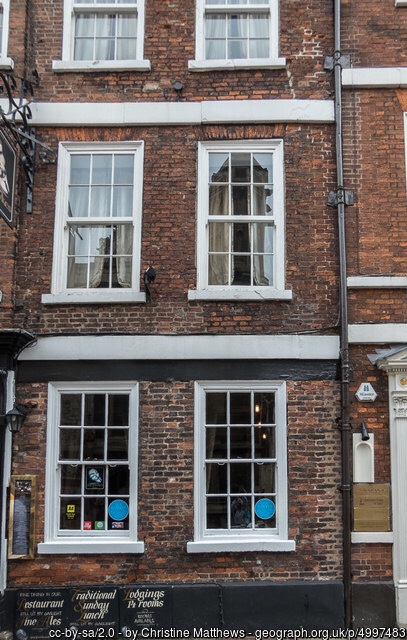
Birthplace of Guy Fawkes – 25, High Petergate, York – now the Guy Fawkes Inn public house
Guy was born in Stonegate, York – the second of four children, one of whom died – but he had two sisters, Anne and Elizabeth, who survived into adulthood…. His father, Edward Fawkes, worked as a Proctor for the Church and although his mother, Edith, came from a recusant Catholic family she too attended Church of England services….
When Guy was just 8-years-old his father died, leaving his son an estate in Clifton, York as an inheritance…. Edith remarried a few years later, this time to a Catholic, Dionis Bainbridge; it was around this time a now teenage Guy converted to Catholicism…. Although undoubtedly influenced by his step father it is likely that Guy was encouraged at school in his Catholic beliefs…. He attended St. Peter’s School in York where the Head Master, John Pulleyn, came from a family of strong Yorkshire recusants…. Also a governor at the school had spent 20 years imprisonment for recusancy…. It was a crime to be a Catholic in the time of the reign of Queen Elizabeth I….although there were those who refused to attend Anglican services and stayed loyal to the Pope….
On leaving school Guy went into service, working for Anthony Browne, 1st Viscount Montagu….but who took a dislike to the young Fawkes and so dismissed him…. In October 1591 Guy decided to sell his inherited estate and travel to the continent to fight for Spain in the Eighty Years War against the Dutch Republic….
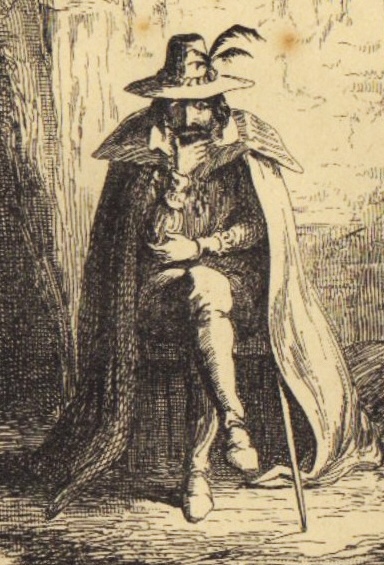
Guy Fawkes as depicted by George Cruickshank – Public domain
He was to join Sir William Stanley, an English Catholic who had formed an army in Ireland to fight in the Netherlands…. Guy became a junior officer, taking part in the Siege of Calais in 1596 – and worked his way up through the ranks to gain a Captaincy…. Whilst in Flanders he met a disgruntled Englishman by the name of Thomas Wintour, who persuaded him to join a small band of angry Catholics planning a rebellion….
It was around this time that Guy became known as ‘Guido’ – the Italian version of his name….
Signature of “Guido” Fawkes – note the top example – this was made soon after his being tortured after the failed Gunpowder Plot…. Public domain
He travelled to Spain in an attempt to gain support for the English Catholic rebellion – and managed to secure an audience with the Spanish King…. Whilst politely listening to what ‘Guido’ had to say – that the newly crowned King James I was a heretic (and he also denounced Scotland plus all those favoured by the King) – Philip III offered no help; Spain was not going to declare war on England….
Contemporary engraving of 8 of the 13 conspirators – Crispijn van de Passe the Elder – Public domain
In 1604 as part of a group of 13 English rebellious Catholics, led by Robert Catesby, who conspired to assassinate the Protestant King James, Guy helped hatch the plans for the Gunpowder Plot – and we all know where that led….
Children preparing for Guy Fawkes night celebrations (1954) – Geoff Charles CCO
On this day in history : 4th March 1966 – John Lennon gives an interview in which he states the Beatles are more popular than Jesus Christ – it causes outrage in the United States….
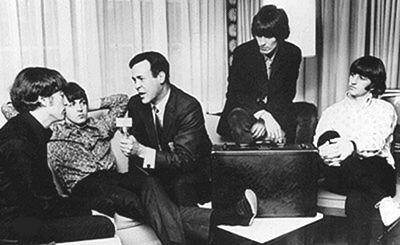
Image : YouTube
The interview was for the Evening Standard….it was the first in a series of articles entitled “How Does a Beatle Live?” Each member of the group was individually interviewed – starting with John Lennon at his home in Weybridge….
“Christianity will go. It will vanish and shrink. I needn’t argue about that; I’m right and I’ll be proved right. We’re more popular than Jesus now; I don’t know which will go first – rock ‘n’ roll or Christianity. Jesus was all right but his disciples were thick and ordinary. It’s them twisting it that ruins it for me”….
His words provoked no reaction from the public in the UK…. However, in July 1966 it was quoted in a US teen magazine and was received in America in a very different manner….
The publication that had been granted rights to all four interviews was a magazine called ‘Datebook’. Being broad minded – covering topics such as the legalisation of marijuana and inter-racial relationships – it was considered the most suitable for publishing the interviews…. Datebook teased its readers with the snippet “I don’t know which will go first – rock ‘n’ roll or Christianity” printed on the front cover….
Tommy Charles a DJ for WAQY, a radio station in Birmingham, Alabama heard of the comments – and was furious…. “That does it for me. I am not going to play the Beatles any more”…. The listeners were asked for their opinions – and they were less than favourable….the people were beginning to show their contempt….
The ball started to roll….more than twenty other radio stations followed suit and banned Beatles music…. The public were keen to show their anger – in the South especially – demonstrations were held, bonfires lit, Beatles memorabilia and records burned…. Soon the protests crossed over to Mexico and on to other particularly religious countries – such as Spain and South Africa…. The Vatican issued a public denouncement of Lennon’s comments….
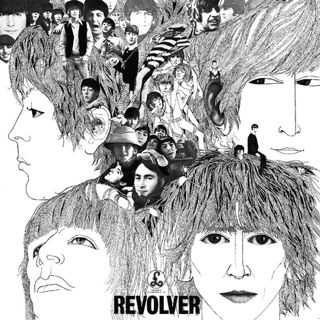
Unfortunately the controversy coincided with the upcoming US tour scheduled for August and the recent release of the album ‘Revolver’….
Fair use
Lennon apologised for his comments, cheekily saying “If I had said television was more popular than Jesus, I might have got away with it”…. The Press were somewhat sympathetic….
However, it was touch and go as to whether the tour would go ahead – but it was decided that it should…. Overshadowed by disturbances and protests – even being picketed by the Ku Klux Klan – some dates were cancelled, such as Memphis – because the Beatles were not welcome in town….
There was some support for the Beatles though…. One Kentucky radio station said it would play Beatles music in order to show its “contempt for hypocrisy personified”…. And a Jesuit magazine – ‘America’ – wrote that “Lennon was simply stating what many a Christian educator would readily admit”….
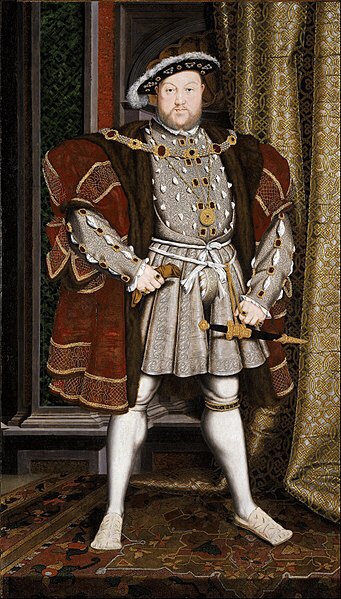
On this day in history : 6th January 1540 – King Henry VIII marries Anne of Cleves….a disastrous union from the start….and one that was to last just a few months….
Henry had always preferred to choose his own wives…. It was shortly after the death of his third wife, Jane Seymour, that the suggestion was made that an alliance with the House of Cleves would be a good proposition. It was at a time when Henry needed new allies in Europe – two of his greatest rivals, the Holy Emperor Charles V and King Francis I of France had forged a treaty…. Henry, having made himself head of the Church of England had expelled Catholicism – and certainly had no friend in the Pope….which gave him common ground with the Duke of Juliers-Cleves, who had also broken all ties with the Catholic Church in his domain…. An alliance would have suited them both….and Henry would have gained political power in Europe…. His chief minister, Thomas Cromwell, was particularly keen on the idea as it would have strengthened the Reformation in England…. All Henry had to do was marry one of the Duke’s daughters – besides he desired another heir….
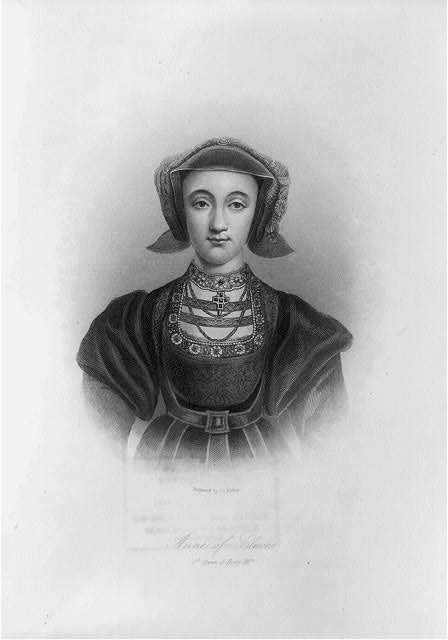
Crowell praised Anne’s reputed beauty to reassure Henry – but he needed more convincing…. Therefore, Hans Holbein the Younger, a renowned German painter and printmaker was commissioned to paint portraits of Anne and her sister Amalia….Henry required the portraits to be as accurate as possible; the artist was not to ‘flatter’ his subjects – they had to be true to life, as Henry was going to use the likenesses to determine which of the sisters were to become his wife….
Anne of Cleves by Hans Holbein the Younger – public domain
Amalia by Hans Holbein the Younger – public domain
Henry was delighted when he saw the portrait of Anne….and was finally persuaded to agree to a betrothal….and so Anne began her journey to England – to become Queen….
Anne was born on the 22nd of September 1515, in Düsseldorf…. Henry liked his women to be well-educated and to be culturally sophisticated…. Anne was neither of these, she had received little education – she could read and write but only in German – however, she was accomplished in needlework….
Anne was 24-years-old when she arrived on British soil – her husband-to-be twice her age…. On route to London Anne and her escort party rested at Rochester Castle….she was expecting to meet her future husband for the first time at Greenwich, where the wedding ceremony was to take place…. However, in the English court there was a tradition, that was essentially meant to be a bit of fun, before a betrothed couple ‘officially’ met….and King Henry was quite the traditionalist….
Anne had retired to her chamber – when Henry in disguise and accompanied by five of his friends, made a surprise visit to her…. He embraced her, brazenly gave her a kiss and presented her with a New Year’s gift…. Anne, who knew nothing of this custom, must have been a little ‘taken aback’…. She was polite but cool….
Henry was slightly affronted – but as he had been in disguise and they had not even met before – he assumed she had not recognised him and so gave her the benefit of the doubt…. He dined with her that evening and again the following morning – having revealed his true identity…. But the ‘spark’ was not there – there was no chemistry between them – they were so different in culture and didn’t even speak the same language…. Henry later complained Anne looked nothing like her portrait, he did little to hide his disappointment….
Henry tried to get the wedding stopped….he wanted to ‘call the whole thing off’ – but this would have caused a major diplomatic incident….he had to go through with it – and he was furious….
Henry and Anne were married on the 6th of January 1540 at the Palace of Placentia, Greenwich, London – in a ceremony conducted by Archbishop Thomas Crammer….and then, of course, followed the wedding night….
She was young, 24, innocent, unworldly…. He was impatient, twice her age, grossly overweight and increasingly immobile after a jousting injury…. After four nights of trying to do what was required of him – and failing miserably – he attempted to save his pride by blaming her ‘ugliness’ and physical repulsiveness…. He confided to his man-servant that she was “indisposed to excite and provoke any lust” and that he “could never be stirred to know her carnally” and that he “left her as good a maid as I found her”…. More likely he was impotent – perhaps confirmed by the fact he had not taken a mistress for a while….most unlike Henry….
By Hans Holbein the Younger – public domain
Their marriage was never consummated…. For six months they endured each other’s company….publicly putting on ‘a brave face’ – but by the spring of 1540 Henry had fallen in love with Anne’s lady-in-waiting, Catherine Howard….
On the 24th of June 1540 Anne was ordered to leave court and on the 6th of July was informed of her husband’s intent to have the marriage annulled…. She did not make a fuss….
But there is a twist….one that would perhaps deem Anne the most successful of Henry’s six wives….
It seems that over the six months of their marriage they had actually come to quite like one another….and had come to refer to each other as ‘brother’ and ‘sister’….
On the day the annulment was announced Henry wrote to her…. “You shall find us a perfect friend, content to repute you as our dearest sister. We shall, within five or six days….determine your state minding to endow you with £4,000 of yearly revenue…. Your loving brother and friend…. Henry”….
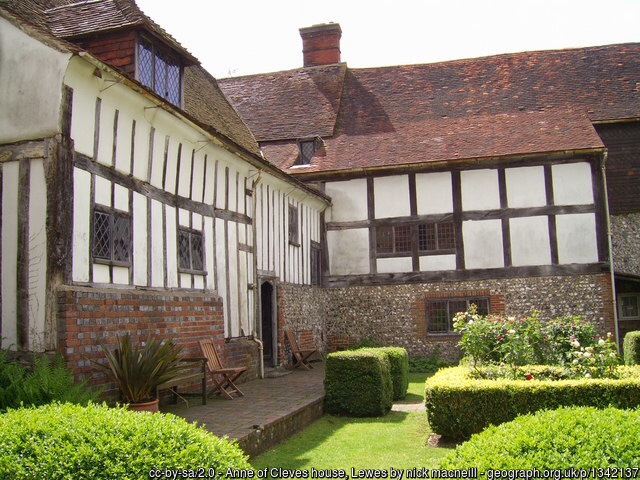
Anne was given not only a generous annual allowance but property too….namely Richmond Palace and Hever Castle in Kent – she also owned Anne of Cleves House in Lewes, East Sussex….
Henry went on to marry Catherine Howard – but Anne was still very much included in the family – often being invited to court and even spending the Christmas period….
Anne outlived Henry by nearly ten years – and also outlived all of his other five wives…. She was remembered by those who had served her as being generous and easy-going…. She died in 1557, eight weeks before her 42nd birthday, probably from cancer…. She was buried in Westminster Abbey on the 3rd of August 1557….
On this day in history : 28th October 1986 – Jeremy Bamber is jailed for life for the White House Farm murders – where he killed five members of his own family….
Bamber shortly after his arrest – Fair use
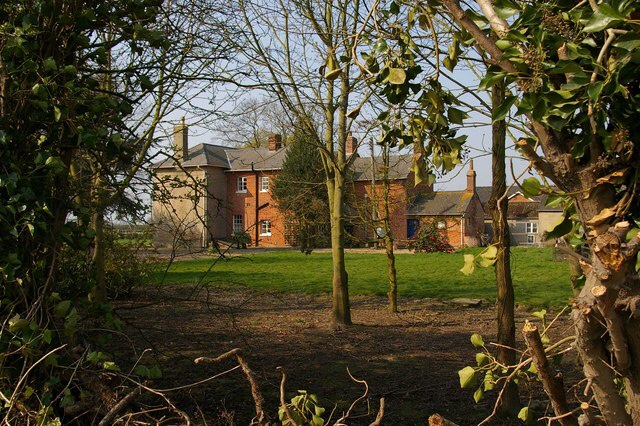
The Bambers were a wealthy farming family, living at White House Farm, a large Georgian property near to Tolleshunt D’Arcy in Essex…. Jeremy was legally adopted by the family as a baby…. Four years previously they had also adopted a baby girl, Sheila….
White House Farm (in 2007) – Image credit : Glyn Baker CC BY-SA 2.0
After leaving school Bamber’s adoptive father paid for him to travel to Australia and New Zealand…. Here he reputedly became involved in drug smuggling – and also broke into a jewellery shop, stealing two valuable watches….
Once he had returned to the UK and after a few casual jobs, Bamber began to work for the family farm…. However, he was resentful of the low wage – despite living rent free in one of the family’s cottages and having been given a car…. He further showed his lack of appreciation by committing a robbery at the caravan park owned by his family….
Bamber’s adoptive parents Neville and June Bamber – Fair use
Bamber’s adoptive sister, Sheila, had been treated in hospital for schizophrenia…. On the 7th of August 1985 at 3.30am 24-year-old Bamber phoned the police to say his father had phoned him and told him that Sheila had got hold of his gun and had gone berserk with it…. When the police arrived at the house they found her dead, with the gun lay on her chest – along with a Bible…. Her mother lay dead in the same room, her father was found dead in the kitchen and Sheila’s 6-year-old twin boys lay dead in their beds upstairs….
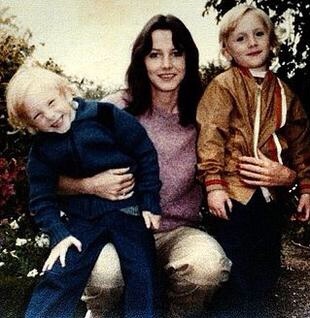
Sheila and her twin boys, Daniel and Caffell (around 1984) – Fair use
At first police believed that Sheila had killed them all before turning the gun on herself…. But when Bamber’s girlfriend came forward and said that he had talked about killing his parents forensic tests were carried out and revealed his fingerprints on the gun…. Bamber had been set to inherit £436,000….
As the guilty verdict was read out at Chelmsford Crown Court Bamber showed little reaction…. Judge Mr. Justice Drake described him as “Warped and evil beyond belief”…. He then handed down five life sentences….
Bamber has always protested his innocence…. In July 2001 an inquiry was launched into the case and it was referred back to the Court of Appeal…. In December 2002 Bamber lost his appeal….
On this day in history : 10th October 1580 – After the three day Siege of Smerwick, in Ireland, the English Army behead over 600 Irish civilians and Papal soldiers….
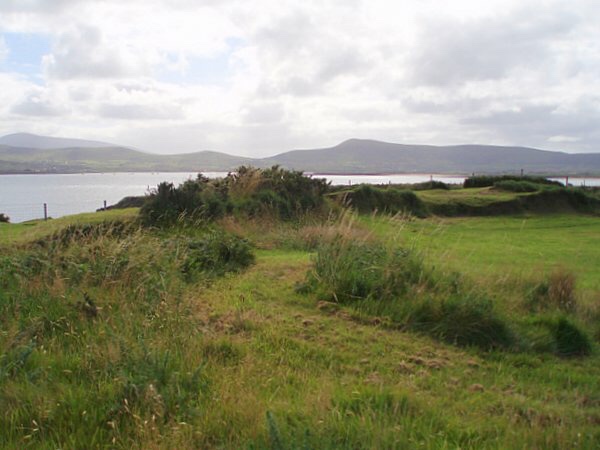
The massacre site today – Image credit : Sharon Loxton CC BY SA 2.0
On the 10th of September 1580 some 600 Italian and Spanish Papal troops landed in Smerwick under the command of Sebastiano di San Guisseppi…. They had been sent by Pope Gregory to help with the ongoing rebellion…. English forces were quick to respond and blockaded the Papal ships into Smerwick Bay…. The Papal troops had little choice but to take refuge in the fort at Dun an Oir….
In October 4,000 English troops arrived led by Grey de Wilton and laid siege to the garrison – the Papals had no way of escaping…. After three days of negotiations San Guisseppi ordered his men to surrender…. It is unknown if de Wilton offered clemency as part of the deal….
But what is known is that de Wilton callously ordered the massacre of the Papal troops along with scores of Irish civilians – sparing only between 20 and 30 Papal commanders…. The Italian and Spanish troops and Irish men and women were slaughtered by beheading – their bodies then thrown into the sea and their heads thrown into a field, now known as Gort na gCeann – Field of the Heads….
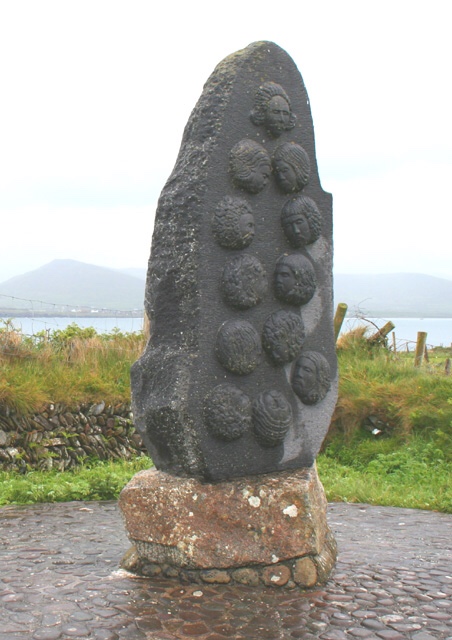
Memorial monument at the Field of the Heads – Image credit : Expresso Addict CC BY-SA 2.0
Irish folklore tells of how the massacre took two days to complete – the condemned lined up in a field to await their turn…. The field is now known as Gort a Ghearradh – Field of the Cutting…. One of those ordered to carry out the executions was Sir Walter Raleigh….