On this day in history….1st April 2000

On this day in history : 1st April 2000 – An Enigma machine, used by the Germans in WW2 to encode messages, is stolen from Bletchley Park Museum in broad daylight….

img_2689
Bletchley Park – image credit: Magnus Manske CC BY-SA via Wikimedia

Bletchley Park, the stately home in Buckinghamshire that was known as Station X in the war, was where British agents managed to crack the Enigma code…. The Germans had thought the code unbreakable but 10,000 mathematicians, linguists and even chess champions had worked at Bletchley decoding up to 18,000 messages per day….

img_2688
Women dutifully working in Bletchley Park – image: UK Government CC BY-SA 4.0

Station X remained a secret until 1967 but nowadays it is a popular tourist attraction…. The day the Enigma machine was stolen was a day that Bletchley was open to the public; it disappeared from a secure, alarmed glass case, which showed no signs of forced entry….

The machine’s whereabouts remained a complete mystery until September 2000…. Police began to receive letters from a person saying that they were acting on behalf of someone who had bought it…. A £25K ransom was demanded for its return, which the museum agreed to pay…. The machine is special in that it is one of only three in the World of a higher standard than the everyday Enigma machines used in the field – as it had been used by the SS…. The value of this particular machine being over £100,000…. However, the 6th of October deadline for the ransom payment was not met….

img_2687
ENIGMA machine at Bletcley Park – image credit: _dChris via flickr

Two weeks later TV presenter Jeremy Paxman received a parcel at his BBC Television Centre office….inside was the missing machine…. Three of its four encryption rotor wheels were missing but these too were later returned safely….

In November 2000 Dennis Yates, a 58-year-old antiques dealer from Derbyshire, was arrested. He admitted sending the letters to the police and the machine to Paxman…. It appears he had got himself caught up in something and found himself out of his depth…. He had received death threats from those he was working for – and never revealed who the mystery buyer was…. Those that had originally stolen the Enigma machine were never caught; Dennis Yates was sentenced to ten months in prison for his part….
On this day in history….31st March 1855

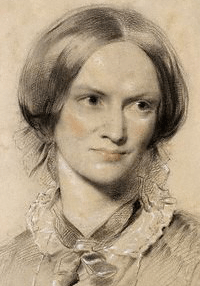
On this day in history : 31st March 1855 – English novelist Charlotte Brontë, author of Jane Eyre, dies during her pregnancy – three weeks before her 39th birthday….

img_2683
Charlotte Bronte – George Richmond Public domain

Charlotte, the daughter of an Irish-Anglican priest, had received an unexpected marriage proposal from her father’s curate, Arthur Bell Nichols…. Arthur had loved her from a far for a long time….but Charlotte’s father thought it an unsuitable match, partly due to Arthur’s financial status – and so Charlotte declined the proposal….

However, her good friend, fellow writer Elizabeth Gaskell (who was later to become Charlotte’s biographer) urged her to reconsider….pointing out the advantages of being married….

Charlotte found herself becoming more and more attracted to Arthur – and in January 1854 she agreed to become his wife…. It took until April to finally get her father’s begrudging approval but once he had reluctantly agreed plans were made and the couple married in June. Charlotte’s father had been due to give his daughter away – but at the last minute decided he was unable to do it, leaving Charlotte to walk down the aisle alone….

She became pregnant soon after the wedding – but her health was quickly to decline…. Elizabeth Gaskell described the symptoms of her illness as “sensations of perpetual nausea and ever-recurring faintness”…. Charlotte became weaker and weaker and eventually she and her unborn child passed away….

img_2686
Portrait by J.H. Thompson at the Bronte Parsonage Museum – Public domain

The cause of death stated upon her death certificate is that of tuberculosis…. However, there are several other possibilities as to the illness that claimed her life…. Typhoid is one such possibility – servant to the Brontë family, Tabitha Ackroyd, had died from the disease a few weeks before – so this could have been very likely…. Another thought is that Charlotte may have contracted pneumonia after getting soaked on a moorland walk – at the time pneumonia was almost impossible to recover from…. ‘Jail Fever’ – or Epidemic Typhus – has been another suggestion put forward; a bacterial infection very common in those more unsanitary times and passed to humans by fleas or lice…. Or it could have been an infection from contaminated water….

But one of the possible causes most favoured by the experts is that she died from dehydration and malnutrition brought on by Hyperemesis Gravidarum – or chronic morning sickness….

Charlotte is buried in the family vault in the church of St. Michael and All Angels in Haworth, West Yorkshire….

On this day in history….30th March 1964

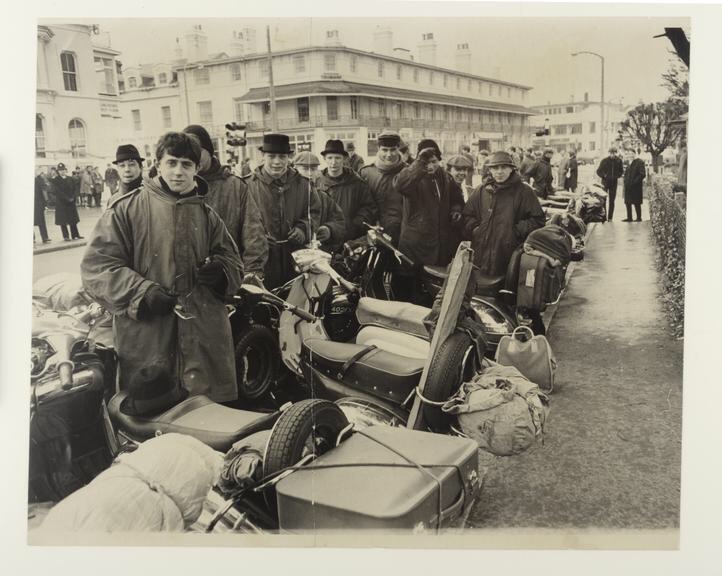
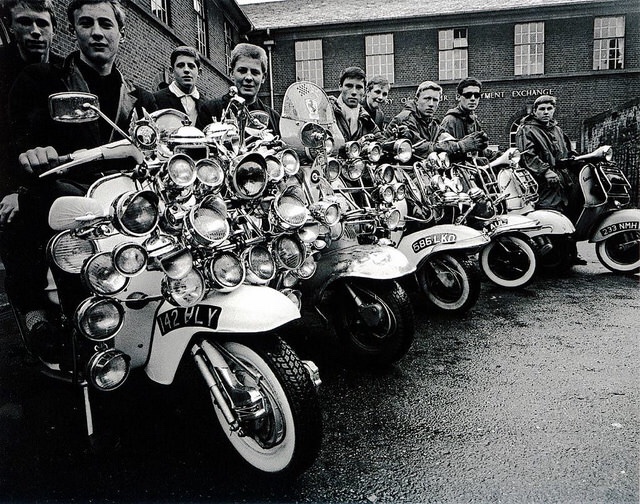
On this day in history : 30th March 1964 – Pitched battles are fought in the seaside resort of Clacton-on-Sea, Essex – between gangs of rival ‘Mods’ and ‘Rockers’….

img_2682
‘Clacton Disturbances’. A photograph of a group of Mods near the seafront at Clacton-on-Sea, Essex on 30 March 1964 – Image Credit: National Science and Media Museum – Photographer: C. Smith – Mirrorpix

At least that is how the Press conveyed it at the time…. All out rioting and warfare between two groups hell-bent on killing each other…. The Mods, in their sharp suits and parkas, riding on their scooters against the leather-clad Rockers, roaring around on their motorbikes…. But just how bad was it really…?

It was the Easter weekend – Clacton Council had gone to great lengths to attract the youngsters – who had money in their pockets to burn…. They laid on attractions – Freddy and the Dreamers were playing the Blue Lagoon on the Pier, Shane Fenton and the Fentones were booked for the Princess Theatre and the Westcliff Hotel was the venue for Johnny Pilgrim and the Classics….

img_2681
Freddie and the Dreamers performing in the film ‘Seaside Swingers’ – Public domain

Large campsites had been organised in anticipation of the vast crowds expected to descend on the town for the weekend….

Good Friday….and a trickle of young people began to arrive…. It wasn’t long before word got out that Clacton was the place to be…. By Saturday afternoon a steady stream was arriving from all around, including London…. On Saturday evening around 1,200 watched Freddie and the Dreamers – it was then that the first ‘aggro’ kicked off…. Fists flew, bottles were thrown, batons swung and the boot put in…. But the police were on hand and soon stepped in to separate the two groups….only for themselves to become the target…. No matter how much the two warring tribes detested each other – they were both united in that they hated the police more….

img_2679
1960s Scooter Mania! – Image credit: Paul Townsend via Flickr

The fighting continued into the night but stopped around dawn…. However, just after breakfast-time things erupted again when someone decided to smash the windows of the Pavilion…. Extra police had to be drafted in….

During Sunday afternoon a crowd of around 1,000 gathered in the Pier area….dozens of arrests were made but the police maintained control and the crowd began to disperse…. By Monday there was still the odd skirmish but on the whole things had calmed down….

This was not quite how the National Press portrayed it…. Some reports suggested the town had been practically obliterated…. An enquiry was held by the Council; out of the thousands of youths who had descended on Clacton for the weekend there were just 60 arrests….only 12 of these ended in prosecution – with fines amounting to a combined £243…. The damage inflicted on the town by the rampaging ‘yobs’ totalled up to £213….and the police emphasised that they were never out of control of the situation….

img_2680
(Hastings) – Image credit: Phil Sellens via Flickr

On this day in history….29th March 1871

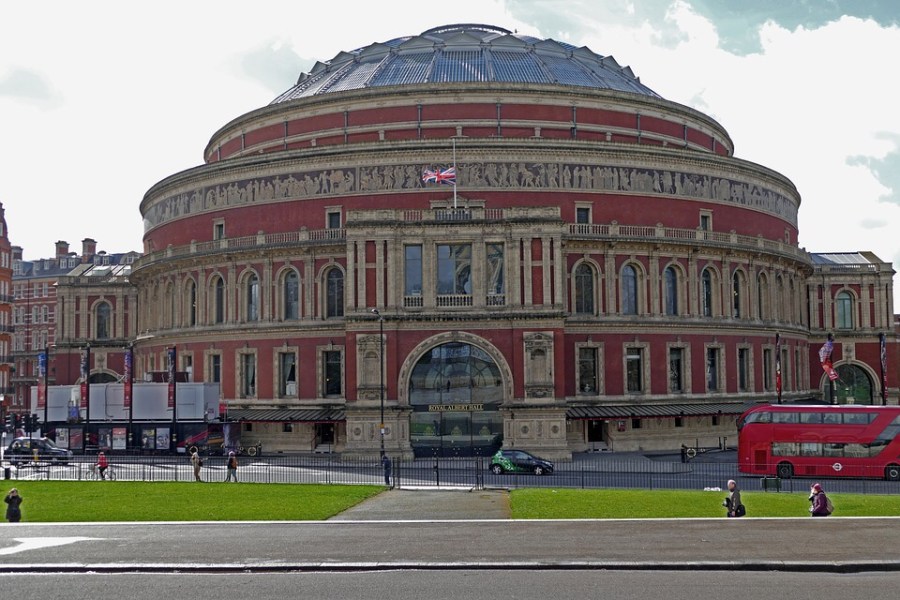
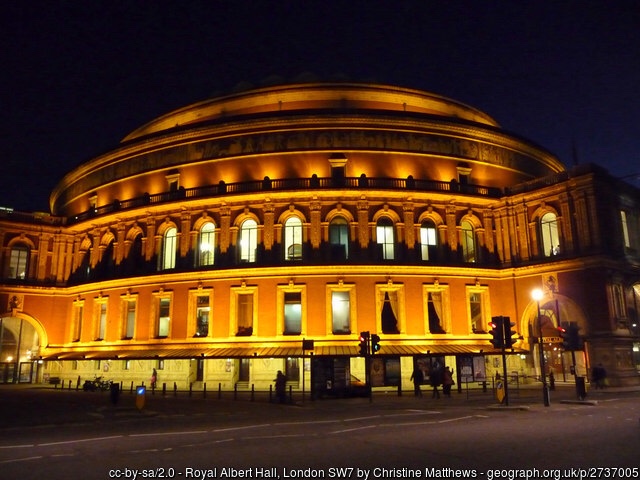
On this day in history : 29th March 1871 – The Royal Albert Hall in London is opened by Queen Victoria…. Originally it was to be called The Central Hall of Arts and Sciences….img_2677

Prince Albert, husband of Queen Victoria, had a vision borne from the success of the Great Exhibition of 1851 – a venue to promote the understanding and appreciation of the arts and sciences…. After his death from typhoid fever in 1861 the plans were shelved – but later revived by his collaborator on the Great Exhibition, Henry Cole…. Inspired by the ancient Roman amphitheatres Cole’s original intention had been for an establishment to hold 30,000 people – but this was revised to 7,000 for financial and practicality reasons; nowadays, due to safety regulations it has a capacity of 5,500….

On the 20th of May 1867 Queen Victoria laid the foundation stone…. A special marquee designed to accommodate 7,000 was erected – but it was more like 10,000 who packed in to witness Her Majesty lay the red Aberdeen granite block…. Beneath the stone was placed a time capsule which has lain undisturbed ever since…. Inside we know are some gold and silver coins and an inscription from Prime Minister Edward Smith-Stanley…. Of what else lies in the capsule little is known; the foundation stone is now located in the K stalls, row 11, under seat 87 in the main auditorium….img_2676

Queen Victoria, who was still in mourning and wearing all black, was rarely seen in public…. As the stone was laid she said “It is my wish that this Hall should bear his name to whom it will have owed its existence and be called The Royal Albert Hall of Arts and Science”…. The Archbishop of Canterbury gave the benediction and a composition by Prince Albert ‘Invocation to Harmony’ was performed by an orchestra…. The ceremony was closed by a 21 gun salute from Hyde Park and a trumpet fanfare by Her Majesty’s Life Guards….

img_2674
The Hall at the opening ceremony, seen from Kensington Gardens. Public domain

At the opening ceremony of the Royal Albert Hall, some four years later, Queen Victoria was so overcome with emotion that her son, Edward Prince of Wales, had to make a speech on her behalf…. Her only recorded words of the day being that it reminded her of the British constitution….img_2678

On this day in history….28th March 1941

On this day in history : 28th March 1941 – English novelist Virginia Woolf, whilst suffering from depression, commits suicide by drowning herself in a river near to her Sussex home….

img_2667
Virginia Stephen (Woolf) 1902 – Photo: George Charles Beresford

Born Adeline Virginia Stephen on the 25th of January 1882 Virginia suffered with her mental health throughout her life…. Her first breakdown occurred in 1895, after the death of her mother….

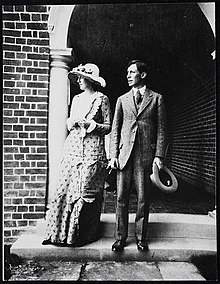
Virginia met her future husband, Leonard Woolf, in November 1904 – they eventually married on the 10th of August 1912…. However, she continued to suffer periods of mood swings, manic excitement and psychotic episodes; she attempted suicide on more than one occasion. Psychiatrists today consider her illness to have been bipolar disorder….

img_2666
Virginia and Leonard Woolf – 1912

Her diary indicates she had become obsessed with death after the beginning of World War II…. After the Woolfs’ London home was bombed during the Blitz they moved to another house nearby – only for that to be made un-inhabitable in the same way…. It was at this point they moved to their country home near to Lewes, Sussex….

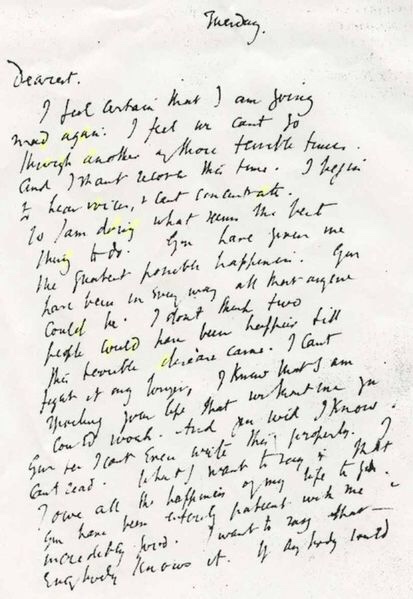
After completing the manuscript for what was to be her final novel ‘Between the Acts’, which was published posthumously, Virginia fell into a deep depression…. It was on a Friday that she decided to take a walk, along the banks of the River Ouse, which lay close to her home….it was a walk she was never to return from…. She left behind two notes; one for her sister, Vanessa Bell – who lived nearby – and the other for her husband…. It read….

img_2670
Public domain

“Dearest. I feel certain that I am going mad again. I feel we can’t go through another of those terrible times. And I shan’t recover this time. I begin to hear voices, and I can’t concentrate. So I am doing what seems the best thing to do. You have given me the greatest possible happiness. You have been in every way all that anyone could be. I don’t think two people could have been happier ’til this terrible disease came. I can’t fight any longer. I know that I am spoiling your life, that without me you could work. And you will I know. You see I can’t even write this properly. I can’t read. What I want to say is I owe all the happiness of my life to you. You have been entirely patient with me and incredibly good. I want to say that — everybody knows it. If anybody could have saved me it would have been you. Everything has gone from me but the certainty of your goodness. I can’t go on spoiling your life any longer. I don’t think two people could have been happier than we have been. V”….

img_2668
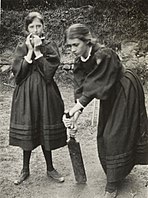
Virginia and Vanessa 1894 – Public domain

Without a doubt the letter stated her intention, it was a suicide note – but gave no indication as to where or how she meant to carry it out….she simply did not come home. Her hat and walking cane were discovered on the river bank but this was the only evidence the family had as to what may have happened to her…. Newspaper reports said that she was missing – but stated that at this stage the police were not investigating her disappearance…. The hope was that she would turn up alive – having been ill for some time perhaps she had just needed some time alone – but as time went by this hope diminished….

Eventually, three weeks later on the 18th of April the gruesome discovery was made by some children…. Her body washed up near to the bridge in the village of Southease….the Press announced the story the following day….

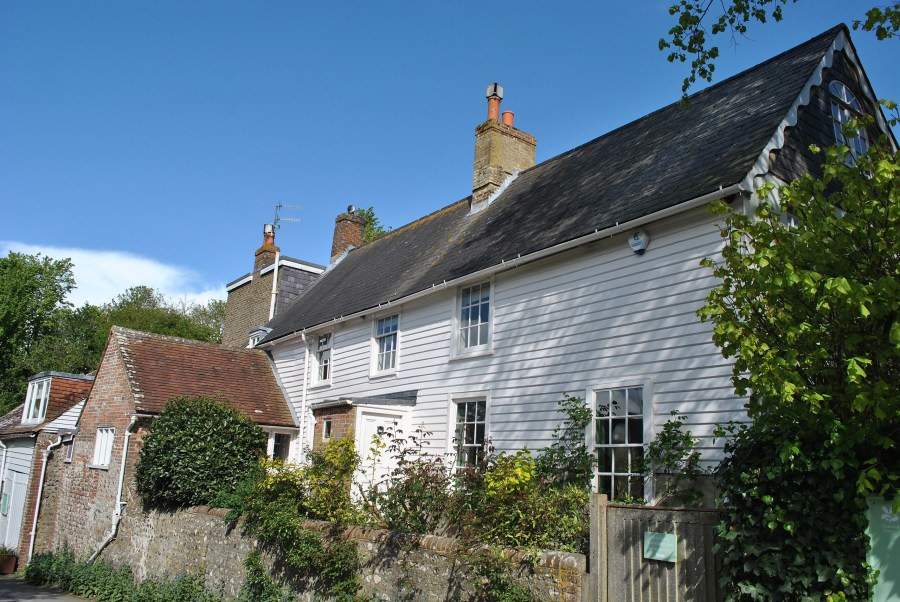
Virginia Woolf had drowned herself by filling the pockets of her overcoat with stones and walking into the River Ouse…. She is considered to be one of the most important modernist writers of the 20th Century…. Leonard buried her cremated ashes beneath an elm tree in the garden of Monk’s House, their home in Rodmell, Sussex – which is now owned by the National Trust….

img_2669
Monk’s House – image credit: Elisa.rolle CC BY-SA 4.0