On this day in history….9th June 1873

On this day in history : 9th June 1873 – After only being open to the public for 16 days Alexandra Palace in London is destroyed by fire…. Less than two years later a new Palace opens….

img_3347

The ‘Palace of the people’ had been an idea conceived in 1859 by Owen Jones, an English-born Welsh architect…. Designed to compliment South London’s Crystal Palace it was to provide the Victorians with a place of recreation, entertainment and education….

Alexandra Palace was built by Kelk and Lucas (who also built the Royal Albert Hall around the same time) – and many of the building materials used were recycled from the 1862 International Exhibition building in South Kensington, after it was demolished…. In 1871 work started on the Edgware, Highgate and London Railway to connect the site to Highgate Station…. Both Palace and railway were completed in 1873….

The grand opening took place on the 24th of May 1873, Queen Victoria’s 54th birthday….with concerts, recitals and fireworks…. In its first couple of weeks over 120,000 people were to visit….but then sixteen days after it opened disaster struck…. A fire in the dome quickly caught hold and all that was left standing were the outer walls…. Three members of staff lost their lives – and a loan exhibition of some 4,700 pieces of historic English pottery and porcelain was destroyed….

img_3349
Original Alexandra Palace on fire in 1873 – Illustrated London News – PD-US

However, the Victorians were never ones to hang around…. Within two years, on the 1st of May 1875, a new Palace opened…. Covering 7.5 acres, the new Palace and surrounding Park boasted many features….centred around the Great Hall with its new Henry Willis organ – one of the largest in Europe at the time…. As well as the Hall a museum, lecture hall, library, banqueting room, a large theatre and art galleries were all included…. The grounds held a Japanese village, boating lake, nine-hole pitch and put golf course – and even the Alexandra Palace Racecourse….London’s only racecourse from 1868 until its closure in 1970….

img_3350
Rebuilt Palace in 1875 – Illustrated London News PD-US

Of course the Ally Pally continues to be a leading venue for arts, sport and entertainment….but not without having to be largely rebuilt once again after being ravaged by fire…. In 1980 much of the building was destroyed when a fire broke out under the Henry Willis organ….

img_3348
Image: John Bointon CC BY-SA 2.0

On this day in history….5th April 1847

On this day in history : 5th April 1847 – The opening of Birkenhead Park, Merseyside…. Designed by Sir Joseph Paxton it is the first publicly funded park in the World….

img_2721
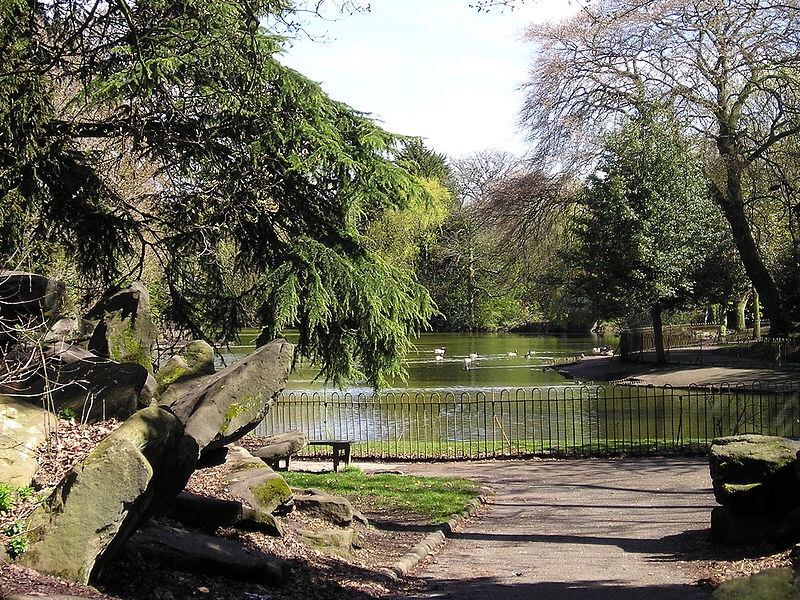
Birkenhead Park – Image credit: Benkid77 via flickr

The idea was to create a countryside landscape of open meadows, lakes and woodland – a green oasis in an urban landscape…. It was a turning point in social development at a time of poor health conditions as a result of the industrial revolution…. With its Roman Boathouse and Swiss Bridge it was meant as a ‘Park for the People’….

Public money was used to buy 226 acres of marshy grazing land….plots around the edge of the proposed park were sold off to help fund the project…. It took five years to complete – the design by Joseph Paxton but the building work supervised by Edward Kemp – both of whom had worked on the redesigning of the gardens at Chatsworth House…. The entrances, gateways, lodges and other structures were designed by architects Lewis Hornblower and John Robertson….

img_2723
The Grand Entrance – ReptOn1x CC BY-SA 3.0

It was opened by Lord Morpeth, 7th Earl of Carlisle and around 10,000 people attended the opening…. The Park inspired the design of Central Park in New York….

Having been designated a conservation area in 1977 this was then upgraded by English Heritage to a Grade 1 listed historic landscape and conservation area in 1995…. By the end of the 20th century it had become rundown and neglected – and underwent an £11.5m renovation project which was completed in 2007…. Paths were improved, trees and shrubs replanted and the lakes emptied, cleaned and reshaped – restoring the Park to its former Victorian magnificence….

img_2724
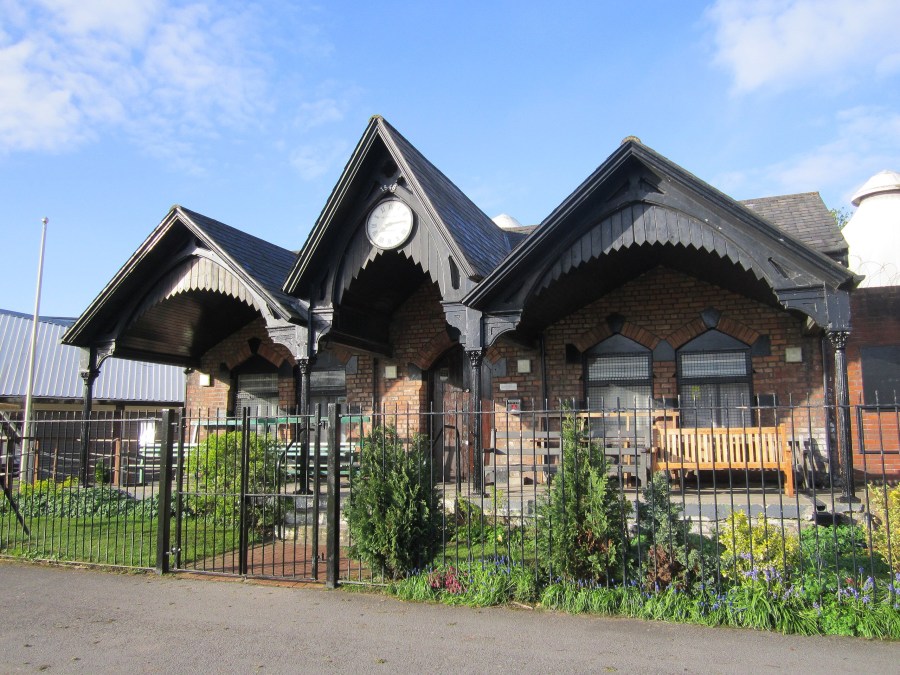
The Gabled Cricket Pavilion – ReptOn1x CC BY-SA 3.0

A new visitor’s centre and cafe were built and a children’s play area added…. It is home to two cricket clubs, a rugby club and has tennis courts, football pitches, bowling greens, two fishing lakes, a fitness trail and woodland walks…. Still a green oasis in an urban landscape….

img_2722
Map of Birkenhead Park

On this day in history….29th March 1871

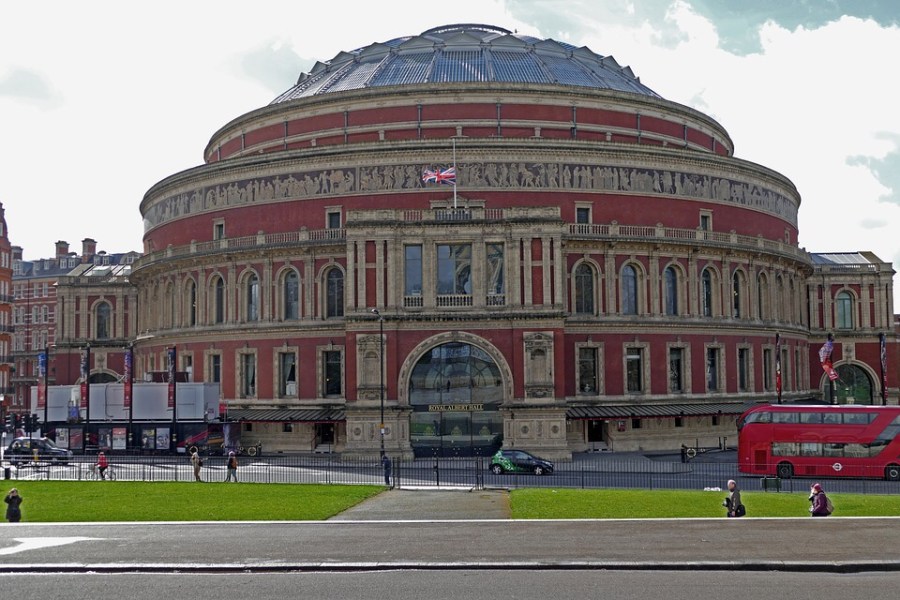
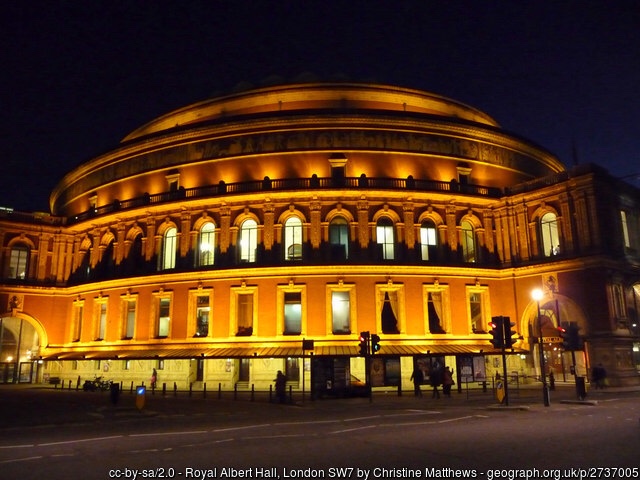
On this day in history : 29th March 1871 – The Royal Albert Hall in London is opened by Queen Victoria…. Originally it was to be called The Central Hall of Arts and Sciences….img_2677

Prince Albert, husband of Queen Victoria, had a vision borne from the success of the Great Exhibition of 1851 – a venue to promote the understanding and appreciation of the arts and sciences…. After his death from typhoid fever in 1861 the plans were shelved – but later revived by his collaborator on the Great Exhibition, Henry Cole…. Inspired by the ancient Roman amphitheatres Cole’s original intention had been for an establishment to hold 30,000 people – but this was revised to 7,000 for financial and practicality reasons; nowadays, due to safety regulations it has a capacity of 5,500….

On the 20th of May 1867 Queen Victoria laid the foundation stone…. A special marquee designed to accommodate 7,000 was erected – but it was more like 10,000 who packed in to witness Her Majesty lay the red Aberdeen granite block…. Beneath the stone was placed a time capsule which has lain undisturbed ever since…. Inside we know are some gold and silver coins and an inscription from Prime Minister Edward Smith-Stanley…. Of what else lies in the capsule little is known; the foundation stone is now located in the K stalls, row 11, under seat 87 in the main auditorium….img_2676

Queen Victoria, who was still in mourning and wearing all black, was rarely seen in public…. As the stone was laid she said “It is my wish that this Hall should bear his name to whom it will have owed its existence and be called The Royal Albert Hall of Arts and Science”…. The Archbishop of Canterbury gave the benediction and a composition by Prince Albert ‘Invocation to Harmony’ was performed by an orchestra…. The ceremony was closed by a 21 gun salute from Hyde Park and a trumpet fanfare by Her Majesty’s Life Guards….

img_2674
The Hall at the opening ceremony, seen from Kensington Gardens. Public domain

At the opening ceremony of the Royal Albert Hall, some four years later, Queen Victoria was so overcome with emotion that her son, Edward Prince of Wales, had to make a speech on her behalf…. Her only recorded words of the day being that it reminded her of the British constitution….img_2678

On this day in history….26th March 1885

On this day in history : 26th March 1885 – The first official British cremation takes place at Woking Crematorium in Surrey…. It is the first of only three cremations in this year….

img_2655
Woking Crematorium – Image courtesy of PicturePrince via Wikimedia

With the arrival of Christianity came the belief that cremation was a Pagan practice that made resurrection after death totally impossible…. However, by the late 19th century attitudes were changing – albeit very slowly…. Burial grounds were fast filling up – and there were those who raised concerns about the hygiene of burials…. Victorian funerals were elaborate, extremely expensive affairs – and for many, unaffordable….cremation offered a cheaper alternative to burial…. However, there were plenty who were terrified of the idea – of not actually being dead and being burned alive….

Woking Crematorium was founded in 1878 on land purchased by Sir Henry Thompson, Physician to Queen Victoria and a founder and President of the Cremation Society of Great Britain…. Seven years later the first cremation was to take place – that of a woman identified in The Times only as ‘a well-known figure in literary and scientific circles’….

img_2656
Sir Henry Thompson

The woman in question was writer and painter Jeanette Pickersgill…. Born Jeannette Caroline Grover in Amsterdam around 1814, she had married Henry Hall Pickersgill, an English artist, on the 20th of July 1837, in Soho, London…. Jeanette was an accomplished artist herself, her work being exhibited at the Royal Academy between 1848 – 1863….

Her cremation took place six days after her death – which had been certified by two doctors to be on the ‘safe side’ – and the cremation process was completed within an hour and a quarter…. Hers was the first of three cremations performed in 1885 – a year that saw a total of 597,357 recorded deaths in the United Kingdom….

In 1892 a further crematorium was established in Manchester, followed by Glasgow in 1895 and Liverpool in 1896…. By 1901 there were six functioning crematoriums – but even so, out of 551,585 deaths that year only 427 bodies were cremated…. London’s first crematorium, at Golders Green, came into operation in 1902…. Nowadays over 70% of those who die are cremated….

On this day in history….23rd March 1861

On this day in history : 23rd March 1861 – Horse drawn tramcars begin operating on London’s streets for the first time…. They were introduced by an American, Mr. George Francis Train…

America had been introduced to tramcars (streetcars) by George Francis Train some thirty years before he brought them to Britain…. The very first line he opened here was at Birkenhead in 1860…. Three demonstration lines were then installed in London; one along the Bayswater Road between Marble Arch and Porchester Terrace, another at Victoria and a further one between Westminster Bridge and Kennington….

The trams proved popular with many; thousands attracted by their novelty came to see them and ride upon them…. However, not everybody was happy….

Train had chosen fashionable, elite parts of London to trial his trams…. The wealthy residents had no need for public transport, as most owned their own carriages…. They complained of the crowds who got in their way, the noise and having to share the roads with this new form of transport…. Then there was the problem with the actual rails, which stood proud to the road surface causing difficulties for other road vehicles….

(London Tramways two-horse tram circa 1890)

The ‘sticking-up’ rail – or ‘step-rail’ – was actually designed in a way (with a wide bottom plate some 5 inches wide) to take any width of carriage wheel….which at the time came in several different gauges…. The idea was that they could accommodate all vehicles, not just Train’s trams…. Unfortunately many carriages had accidents trying to use them…..numerous complaints were made to the transport commissioners, so that eventually on the 4th of October 1861, after six months in operation, Train was told to remove his tramway….

The advantages of the tramway had not gone unnoticed by the planners…. Nine years later, in 1870, the first tram service began between Brixton and Kennington…. This time the steel rails lay flush to the road surface….

Being on rails meant the tramcars were easier than the omnibuses for the horses to pull…. This in turn meant more passengers could be carried at one time using the same amount of horses…. As a result the fare, which worked out at 1d per mile, was cheaper than that of the buses…. With the addition of the railways’ cheaper early morning workers’ tickets public transport became accessible to everyone…. Another advantage was that the tram travelled slightly faster at 6mph, compared to the bus at 4mph…. Workers began to travel further to work, many moved out of the crowded city to the suburbs…. The tramway network had grown considerably, connecting new housing developments on the outskirts to the city centre….

Initially tram services were operated by private companies, such as the Pimlico, Peckham and Greenwich Street Tramways or the North Metropolitan Tramways…. London County Council could see the social benefits of the system, the cheap fares, accessibility and reliability…. The council saw it as an important part of their policy and during the 1890s made compulsory purchases on many of the horse tram routes….

The tramways still had their problems; the installation and maintenance of the lines caused disruption, derailments were a hazard….and then there was the horsepower….

A single bus or tram needed a team of twelve horses to keep it on the road for twelve hours a day…. Horses were rotated every 3-4 hours….they needed stabling, feeding, watering, veterinary and blacksmith services…. 55% of the operators’ fees went on the cost of caring for the horses – an average of £20,000 was collectively spent per year on horseshoes alone…. 50,000 horses were used to keep the public transport system going on London’s streets….horses that ate the equivalent of a quarter of a million acres worth of foodstuff and produced 1,000 tonnes of droppings per year…. Much of this was collected up and dumped in poorer areas of the city….

Eventually the electrification of trams and the arrival of the motor bus just before World War I meant the demand for the working horse became less and less…. The last horse drawn trams were withdrawn in 1915….