On this day in history….3rd January 1911

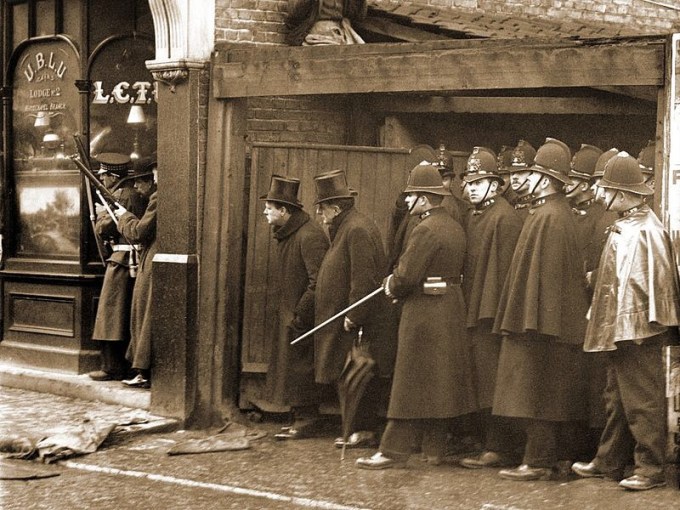
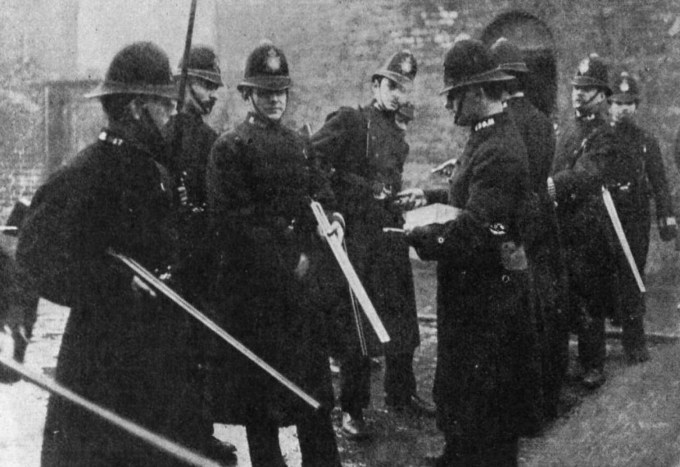
On this day in history : 3rd January 1911 – The Siege of Sidney Street takes place….a gun battle is waged on the streets of London as two Latvian anarchists hold out in an East End tenement for several hours – against over 200 armed police and a detachment of soldiers….

img_2059

The drama had begun to unfold three weeks previously, on the 16th of December 1910. A gang of Latvian revolutionaries had attempted to rob a jeweller’s shop in Houndsditch. The gang, calling itself ‘Leesma’, meaning ‘flame’, consisted of approximately thirteen people, including two women….their purpose was to commit robberies to raise money to help fund fellow activists in Latvia and Russia, who supported Lenin and the Bolshevik Movement….

The gang had rented rooms in a building annexing the back of the jeweller’s shop….the plan was to break through the common wall between the two adjoining properties. They chose to carry out their planned robbery on a Friday night….but being a predominantly Jewish neighbourhood – and Friday being the Jewish Sabbath – it was a particularly quiet time. Alerted by the noise the gang were making whilst attempting the robbery local residents called the police….

Eight unarmed police officers arrived, three sergeants and five Constables….the gang opened fire on them. Three policemen were killed and two were injured – the gang then made their escape…. One Latvian was injured – having been shot accidentally by another member of the gang. He was carried away by his friends but later died from his injuries – and was found dead in his lodgings the following morning….

The police immediately mounted a search and by the end of December had most of the gang in custody…. They then received a tip-off that two members, Fritz Svaars and William Sokolow, were hiding at 100 Sidney Street, which is located at the heart of Stepney. A room at the address was being rented by Betsy Gershan, the girlfriend of Sokolow. Being the East End of London the area was very overpopulated and the property itself overcrowded….fourteen people were registered at the address, two families with young children….

At midday on the 2nd of January two horse-drawn vehicles arrived in Sidney Street; concealed inside were armed policemen – and the building was placed under observation….

During the early hours of the 3rd of January a long snaking line of over 200 policemen made their way to 100 Sidney Street. Some were armed – but their weapons, such as revolvers, shotguns and tube guns, were old and antiquated. The men had not been briefed as to the nature of the task at hand – but they knew it was dangerous, as married men had been excluded from the operation….

img_2063

By dawn all was in place and the police were ready to take action. Somehow they managed to evacuate 100 Sidney Street and the surrounding properties without alerting Svaars and Sokolow, who were on the second floor…. The pair were Continue reading “On this day in history….3rd January 1911”

On this day in history….20th August 1940

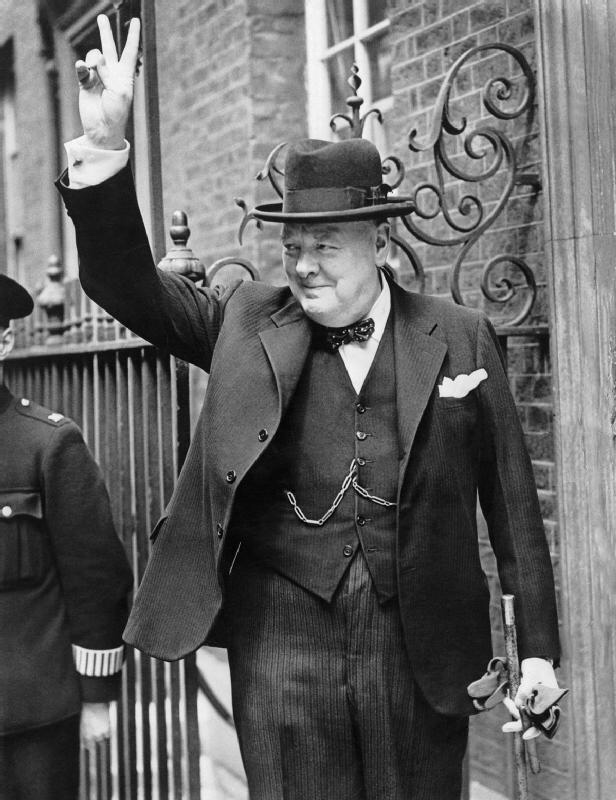
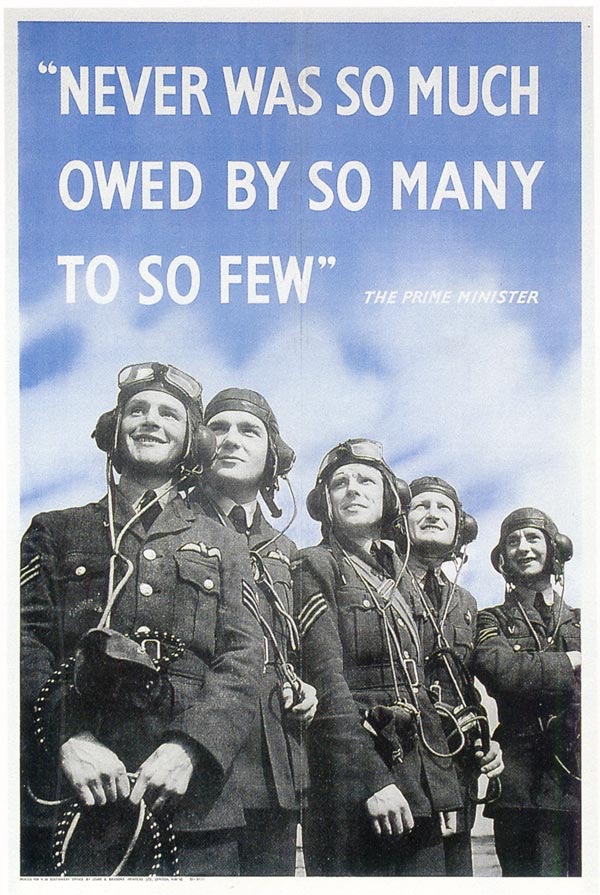
On this day in history : 20th August 1940 – The speech “Never in the field of human conflict was so much owed by so many to so few” was made by Prime Minister Winston Churchill….

img_3585
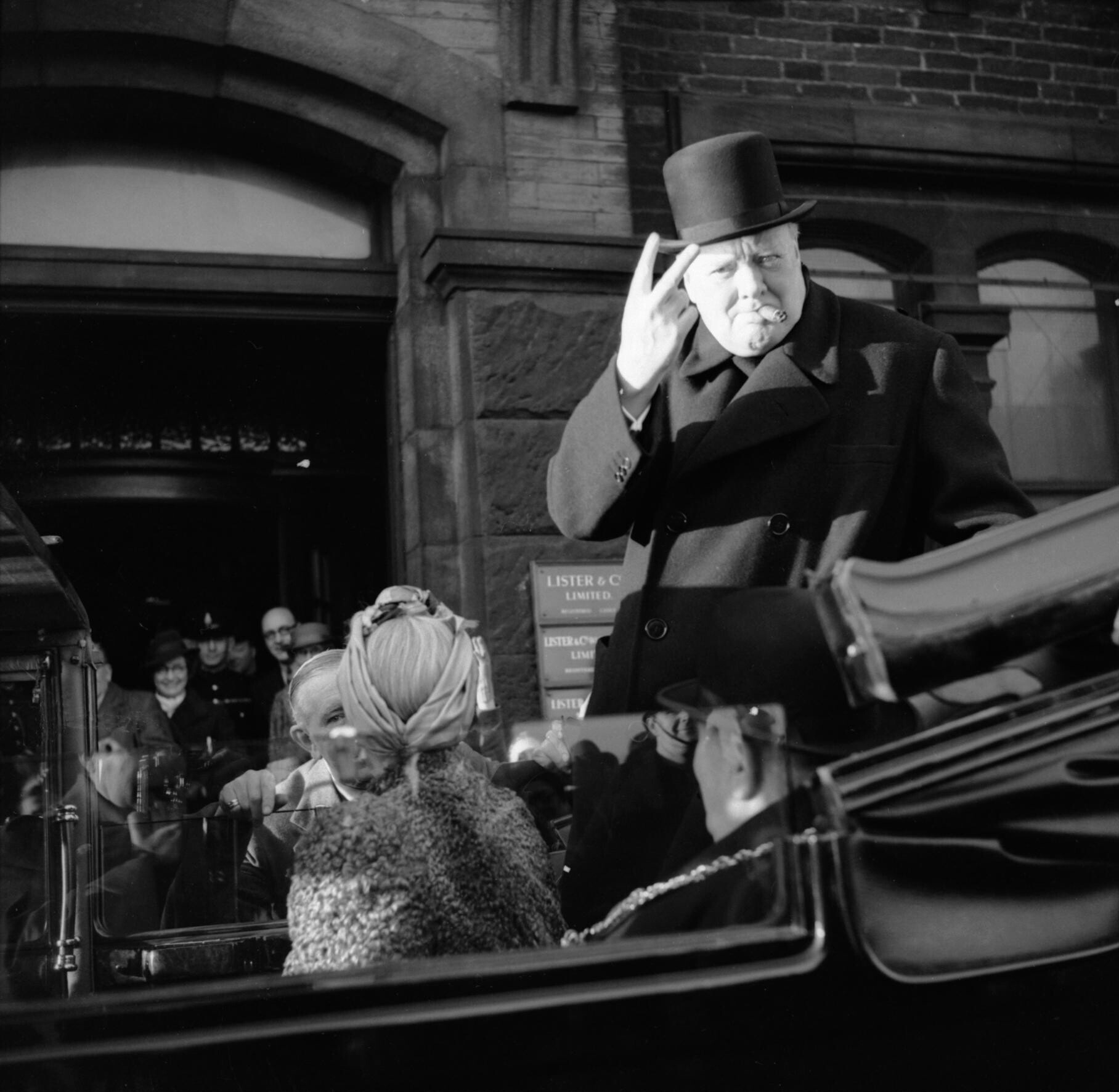
Winston Churchill, British Prime Minister, giving a V sign in 1943 – British Government, public domain

It was in recognition of the efforts of the Royal Air Force, who were in the midst of the ongoing Battle of Britain, fighting against the German Luftwaffe – as Britain was anticipating an imminent invasion….

Churchill had apparently first said the words during a visit to the No.11 Group RAF Operations Room – during a particularly harrowing day of battle; it was an experience he found emotionally moving…. He was then to use the words as a basis for his House of Commons speech, in an attempt to inspire the Country…. He pointed out that although in the previous months the Allies had seen monumental defeats, the situation now was much better…. He was right, not long after Britain had won the Battle – the first major defeat of the Luftwaffe….

To this day, pilots who fought in the Battle of Britain are known as ‘The Few’….

img_3744
HM Stationery Office – Public domain

On this day in history….14th August 1941

On this day in history : 14th August 1941 – Prime Minister Winston Churchill and American President Franklin D Roosevelt sign the Atlantic Charter, laying out their plans for a post-war world….

img_3722
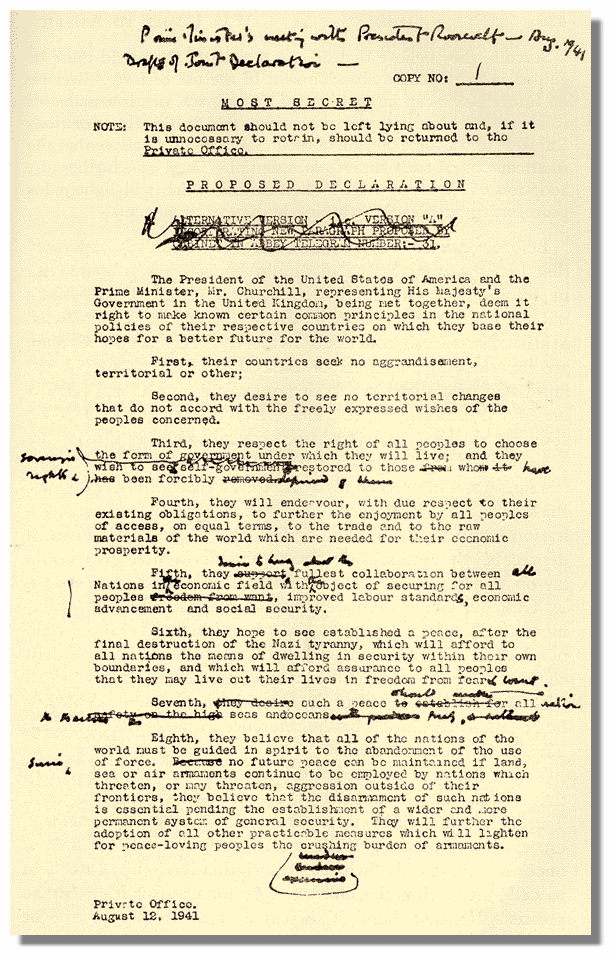
Winston Churchill’s edited copy of the final draft of the Charter – Churchill blue, public domain

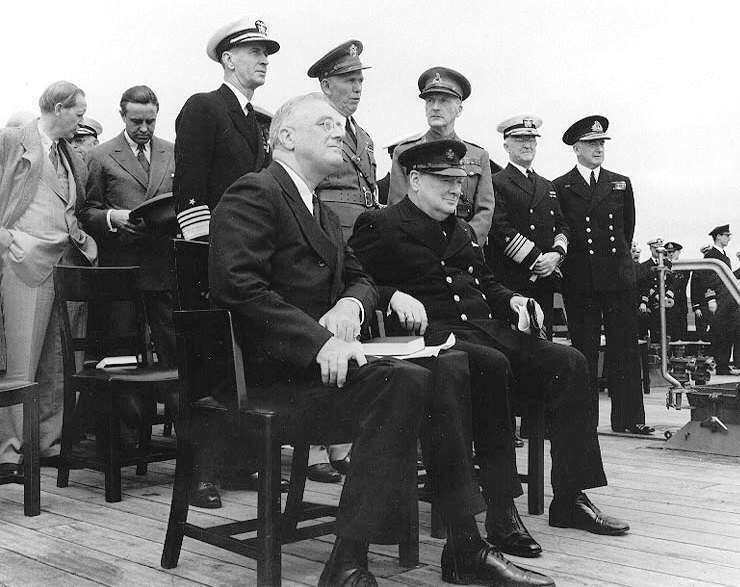
The announcement ended speculation as to the whereabouts of the Prime Minister, who had noticeably been absent from the House of Commons for a number of days…. Similarly Roosevelt had done a disappearing act too, along with several other top officials…. The pair had been involved in secret talks onboard American Cruiser USS Augusta and British Battleship HMS Prince of Wales, in Placentia Bay, Newfoundland…. A joint declaration had been made setting out the basic principles for after the war had ended….sealing an alliance between Britain and America….in anticipation of Hitler’s downfall….

img_3721
Franklin D Roosevelt and Winston Churchill aboard HMS Prince of Wales in 1941 – US Navy, public domain

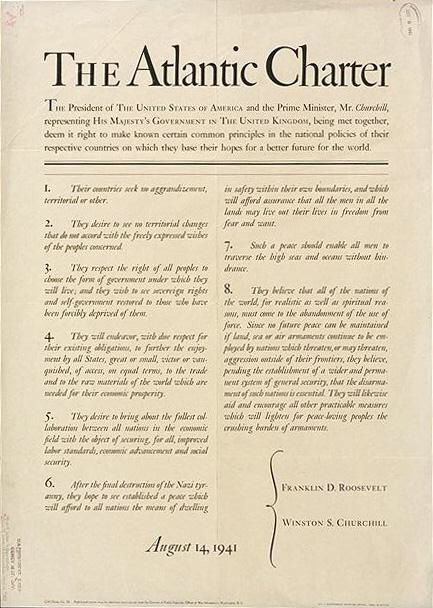
The Charter had eight main objectives:- that Britain and America seek no territorial gains from war and any change to a country’s territory had to be with the agreement of its people…. Nationals would also have the right to choose their own government….with self-government being restored to those countries that had already lost it…. There was to be free trade for all nations – with improvement to economies and to living standards…. The aim was for peace at the end of the Nazi tyranny and for freedom of movement around the world….the belief being that aggressive nations must be disarmed to ensure world peace….

img_3723
Printed version – Winston Churchill, public domain

As it stood the Charter was to lay foundations for granting independence to Britain’s own Empire….starting with Indian Independence Day in 1947….

On this day in history….19th July 1941

On this day in history : 19th July 1941 – Winston Churchill adopts the ‘V for Victory’ hand sign – after referring to the Victory campaign, which had spread through Europe, with approval in a speech….

img_3585
Winston Churchill, British Prime Minister, giving a V sign in 1943 – British Government, public domain

On January the 14th 1941 Victor de Lavelaye, former Belgian Minister of Justice and director of the Belgian French-language broadcasts on the BBC (1940-44) suggested that Belgians adopt a ‘V’ for ‘Victoire’ – in an attempt to raise morale during World War 2…. In a BBC broadcast de Lavelaye claimed “the occupier, by seeing this sign, always the same, infinitely repeated, would understand that he is surrounded, encircled by an immense crowd of citizens eagerly waiting his first moment of weakness, watching for his first failure”…. Within weeks chalked ‘V’ signs were appearing on walls across Northern France, Belgium and the Netherlands….

The BBC started a ‘V for Victory’ campaign….with assistant news editor Douglas Ritchie taking on the persona of ‘Colonel Britton’…. Ritchie suggested the BBC should use an audio ‘V’ – using the dot-dot-dot-dash Morse Code for the letter ‘V’…. Beethoven’s Fifth Symphony has the same rhythm – so this was used by the BBC as a call-sign for its foreign language broadcasts to occupied Europe for the rest of the War….

img_3587
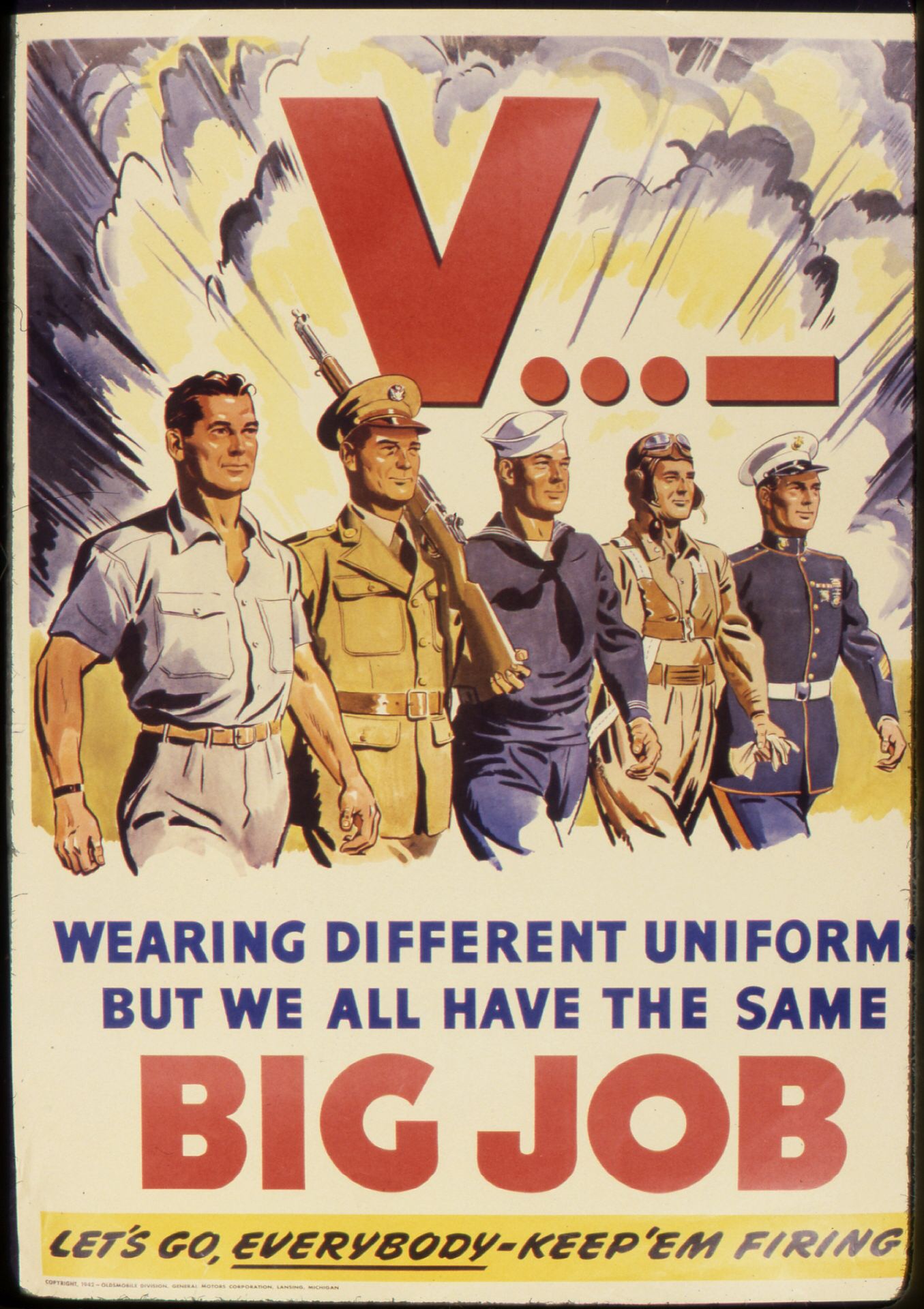
American V for Victory campaign – showing the dot-dot-dot-dash of Morse Code – public domain

Churchill – and other allied leaders too – adopted the ‘V’ sign hand signal…. Sometimes Churchill gestured with a cigar between his fingers…. In the beginning he used the sign with his palm facing towards him – and his Aides had to explain to him what this version meant! So, later he used it with his palm facing out…. However, one can’t help thinking that perhaps it was his misuse that made it so popular….

img_3586
Churchill, initially unaware of the meaning of this particular gesture! – War Office official photographer, Horton (Capt.) – Public domain

On this day in history….15th November 1899

On this day in history : 15th November 1899 – Winston Churchill, whilst working as a war reporter for the Morning Post, is captured in South Africa by the Boers…. He escapes a few weeks later….

Churchill in the dress uniform of the 4th Queen’s Own Hussars at Aldershot, 1895 – Public domain

25-year-old Churchill had arrived in Cape Town on the 30th of October 1899…. A couple of weeks later the armoured train he was travelling on, accompanying a scouting expedition into Boer-occupied territory, was ambushed and partially derailed….

Churchill was captured – (it is rumoured by Boer Louis Botha – later to become Prime Minister of South Africa) – and although a civilian he was sent to a prisoner of war camp for British officers, in a converted school in Pretoria…. Churchill was considered a good catch and a significant bargaining tool for the Boers….

Four weeks later, on the 12th of December 1899, Churchill made his dramatic escape by managing to climb over a wall…. He had with him £75 and some chocolate…. He managed to get onboard a coal train and by hiding among the coal sacks got out of the area…. However, once he left the train he found himself walking for miles and miles without a clue of where he was heading…. Eventually hunger and thirst got the better of him and he banged on the door of a house he was passing to ask for food…. As luck would have it he chose the home of one of the only Englishmen in the neighbourhood, John Howard, the manager of a local colliery…. Howard agreed to help Churchill and hid him in the mine and then with the aid of another Englishman, Mr. Dewsnap, Churchill was smuggled on to a wool train….

The train took him to Portuguese occupied East Africa – from here he made his way back to Durban…. By now there was a £25 reward on his head – ‘dead or alive’….

Churchill returned to the battle front and took part in the Battle of Spion Kop and the relief of Ladysmith…. Towards the end of the war he and his cousin, the Duke of Marlborough, returned to Pretoria to demand the surrender of the guards at the prisoner of war camp where he had been held….and the release of the British officers being held there….

Churchill in 1900 – Public domain