
On this day in history : 30th December 1887 – A petition, signed by more than a million women, is sent to Queen Victoria, calling for public houses to close on Sundays….

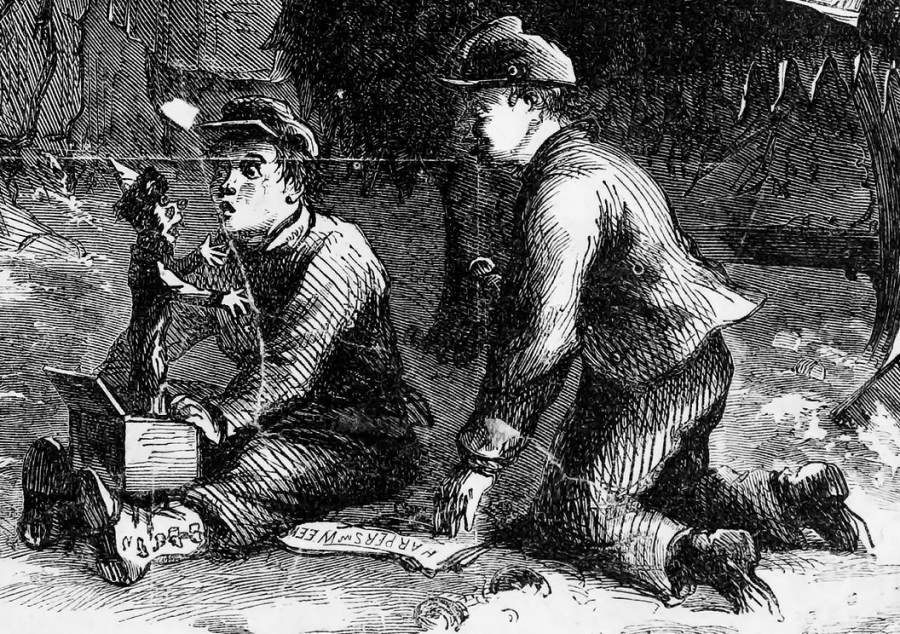
(From ‘Street Life in London’ – 1877)
Women would have had a variety of valid reasons for putting their name to such a petition…. Many were fed up with their menfolk spending much of their free time in the pub – an establishment that generally did not welcome women – and since the 1830s alcohol consumption had been linked with many social issues….
Then there were those who supported the Temperance Movement…. A fierce movement against the consumption of alcohol which had begun in America during the late 1700s and in time was to spread to Britain and Ireland…. A great British global expansion had taken place during the 19th century and in the latter part of the 1800s there was a fear that this ‘greatness’ would drown in a sea of alcohol…. Of course, even with the signatures of over one million women, the petition was never going to get far…. In fact it got no further than Henry Mathews – the then Home Secretary….
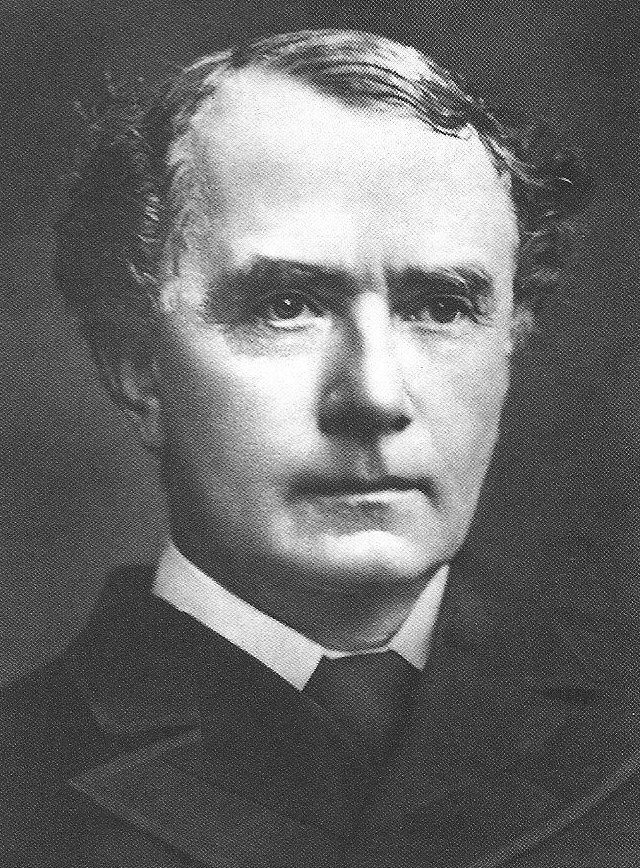
The Beer House Act of 1840 required public houses to close at midnight….generally opening at 5 or 6am it was pretty much possible to get a drink at any time of the day…. It was the advent of World War 1 that eventually brought changes to the licensing laws – restrictions were put in place limiting the hours publicans could serve alcohol…. Ironically many of these restrictions were aimed at women….
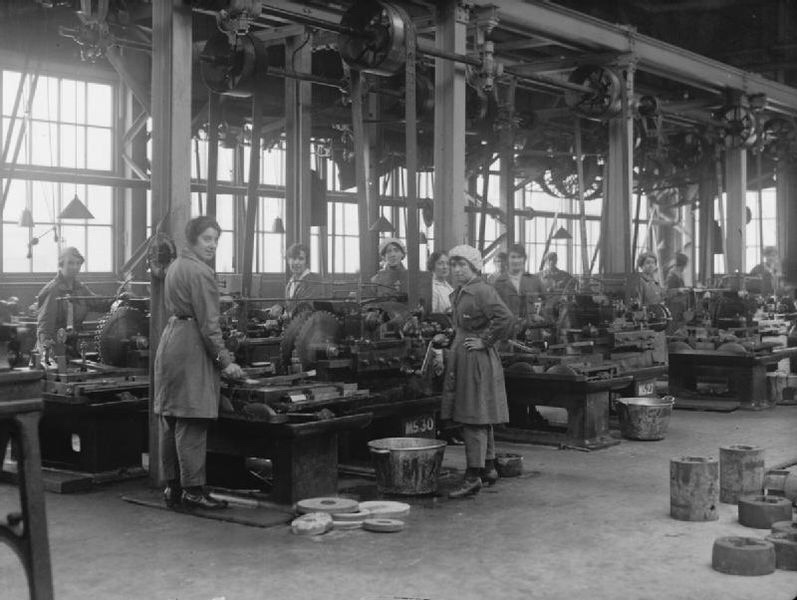
The Government became concerned about the amount of alcohol being consumed by female munition workers…. With their menfolk away fighting and combined with increased spending power – the girls were out to have a good time…. With unrestricted opening it meant more drinking hours in the day….and productivity in the munitions factories was not as high as the government desired…. David Lloyd George, the then Minister for Munitions (but also to serve as Chancellor of the Exchequer and then Prime Minister during the war years) said at a speech in Bangor – “drink is doing us more damage in the war than all the German submarines put together”…. In another speech, given to the Shipbuilding Employers Federation he is known to have said Britain was “fighting Germans, Austrians and Drink, and as far as I can see the greatest foe is Drink”….
Lloyd George initiated a campaign for complete abstinence for the duration of the war…. He had support in the highest of places – having managed to persuade King George V to promise that no alcohol would be consumed in the Royal Household until the war was over…. A statement was put out….“no wines, spirits or beer will be consumed in any of His Majesty’s houses after today; Tuesday April 6th 1915″….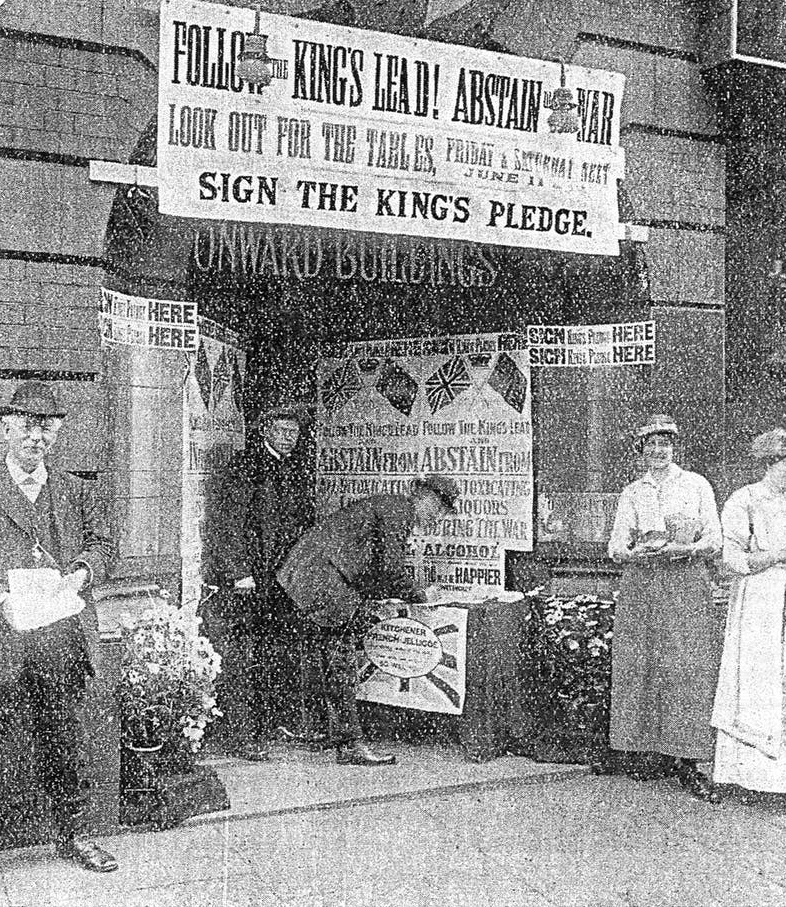
Others who lent their support and followed the King’s example were Lord Kitchener – the Secretary of State and Richard Haldane – the Lord Chancellor…. However, Herbert H Asquith, Prime Minister at the time and a some what heavy drinker, refused…. Asquith was regularly under the influence when he addressed the House of Commons – his reaction to Lloyd George was that he had “completely lost his head on drink”….


In cities, towns and industrial areas a change in the law meant public houses could only serve between 12 noon and 2.30pm and in the evenings from 6.30pm to 9.30pm…. Most rural areas were unaffected and could still open throughout the day….
Laws were introduced reducing the strength of alcohol and taxes were increased, making it less affordable…. In 1918 a bottle of whisky typically cost £1 – five times more than it had before the outbreak of the war…. Other measures were put into place, such as to where alcohol could no longer be consumed – for example drinking on trains was banned….
One of the more unpopular laws was the ban on buying a round of drinks…. The ‘No Treating Order’, introduced in October 1915, meant it became illegal to buy an alcoholic drink for another person – the maximum penalty for breaking this law was six months imprisonment…. Licensing authorities had the power to close pubs who allowed treating….
A report in ‘The Morning Post’ on the 14th of March 1916:- “At Southampton yesterday Robert Andrew Smith was fined for treating his wife to a glass of wine in a local public house. He said his wife gave him sixpence to pay for her drink. Mrs Smith was also fined £1 for consuming and Dorothy Brown, the barmaid £5 for selling the intoxicant, contrary to the regulations of the Liquor Control Board”….
Unsurprisingly, this combination of tough measures worked…. By the end of WW1 Britain’s alcohol consumption had dropped by nearly 60%…. Beer consumption in 1914 was 89 million gallons, whereas in 1918 it was just 37 million…. In 1914 London 67,103 people were charged with drunkenness – in 1917 that number had fallen to 16,567….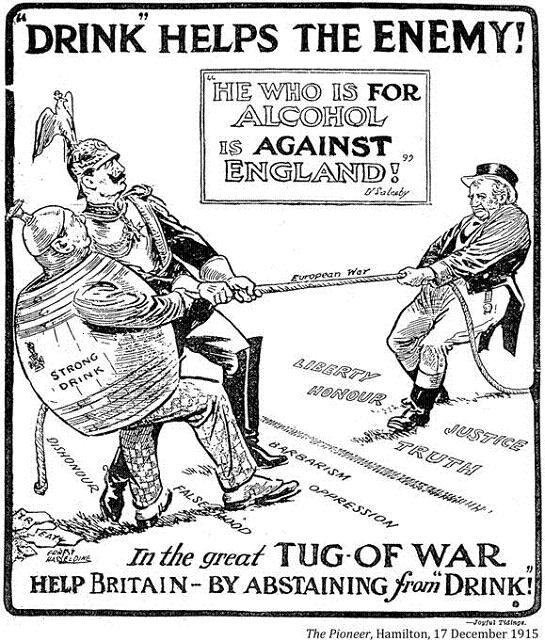







 Cottage Capers