On this day in history….2nd May 1942

On this day in history : 2nd May 1942 – HMS Edinburgh is sunk in the Barents Sea off the Norwegian coast….with a cargo of gold bars, which lay un-salvaged until 1981….
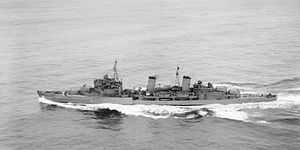
img_3078
HMS Edinburgh, October 1941 – Royal Navy official photographer Coote, RGG (Lt) – Public domain

Under the command of Rear-Admiral Stuart Bonham-Carter HMS Edinburgh was acting as flag-ship escorting a convoy of 17 ships departing from Murmansk, Norway on the 28th of April 1942 bound for Britain…. On the 30th of April a torpedo hit the Town-class Light Cruiser and she began to list…. Quick acting crew managed to close the watertight bulkheads at the front to prevent her from sinking….

img_3079
Rear-Admiral Stuart Bonham-Carter – from the collections of the Imperial War Museums

Shortly after another torpedo was to hit Edinburgh’s stern, crippling her…. It was decided to try and attempt to tow her back to Murmansk; two destroyers – Foresight and Forester – along with four minesweepers – Niger, Hussar, Gossamer and Harrier – were despatched to accompany her….
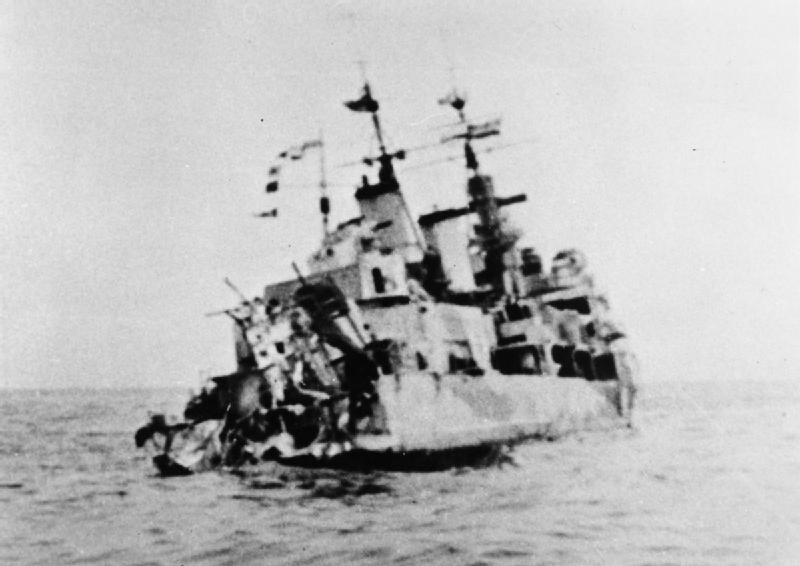
img_3077
HMS Edinburgh’s wrecked stern – image assumed Royal Navy – Public domain

Progress was slow but on the 2nd of May the small convoy and stricken Edinburgh reached Bear Island, the most southernmost Norwegian Svalbard Archipelago island – but then she was attacked by three large German destroyers….

Edinburgh cast off her tow and started to sail in circles, at the same time firing her guns…. One of the German destroyers was so badly damaged its crew scuttled it….

Edinburgh took another torpedo hit and her crew were forced to abandon…. Gossamer and Harrier took the crew onboard; 58 men had lost their lives….

Harrier then attempted to scuttle Edinburgh using gunfire….although 20 shells were fired she remained afloat…. Even after depth charges were used she refused to sink…. Eventually Forester used her last torpedo to sink HMS Edinburgh….

img_3081
Barents Sea Map – assumed author NormanEinstein CC SA 3.0

4.5 long tons of gold bullion went down with Edinburgh….465 gold ingots in 93 wooden boxes, which were stored in the bomb room at the front of the ship…. She was carrying the gold back to the UK; it was part of a payment from Russia for war equipment received from the Western Allies…. In 1942 the bullion was worth £1.5 million, equating to nearly £70m today….

In 1954 the British government offered the salvage rights to a British salvage company….but because by then the relationship had become strained with Russia plans were put on hold…. In 1957 the wreck became a designated war grave making any further thoughts of retrieving the gold improbable….

However, in the late 1970s the government became increasingly worried that Russian salvagers were going to attempt to recover it…. In the early 80s a contract was awarded to a leading global diving company…. Experienced divers from Jessop Marine, under the guidance of Wharton Williams Ltd were to attempt to cut into the wreck – far more sensitive and appropriate for the situation as opposed to the normal explosive methods usually employed….

In April 1981 survey ship Dammtor began to search for Edinburgh in the Barents Sea – in less than 48 hours it had found her….in 800ft of water…. Using detailed film footage the team were able to evaluate the recovery project…. Edinburgh’s sister ship HMS Belfast, moored in the Thames, was also invaluable to the planning of the operation…. The divers were able to gather vital information and knowledge as to the layout and interior of the ship especially around the bomb room area….
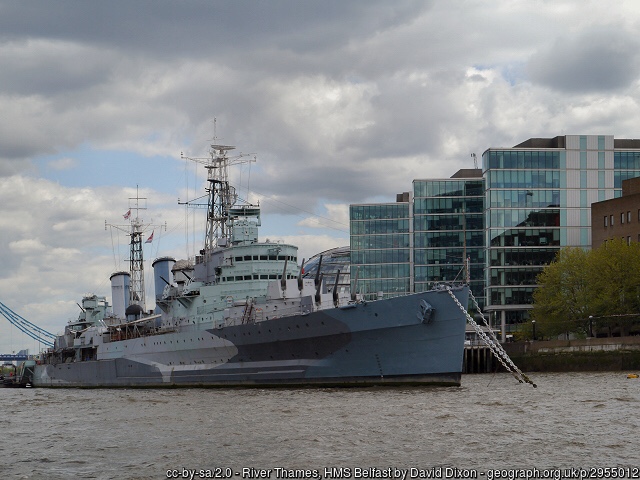
img_3080
HMS Belfast

The diving operation began on the 30th of August 1981, under the leadership of Mike Stewart, a former Royal Navy clearance diving officer. On the 15th of September diver John Rossier found the first gold bar….by the 7th of October 431 of the 465 gold ingots had been recovered….but then bad weather forced the operation to stop…. However, it was a bullion recovery project in deep water diving that set a world record – a record that still stands today….

In 1986 a further 29 bars of gold were brought up….that means there’s still five bars down there…!

On this day in history….25th February 1939

On this day in history : 25th February 1939 – The first Anderson shelter is erected in a garden in Islington, London…. 1.5 million are distributed before the outbreak of World War II….

Designed in 1938 by William Paterson and Oscar Carl Kerrison, the shelter was named after Sir John Anderson, the politician responsible for air-raid precautions and who initiated its design….

img_2467

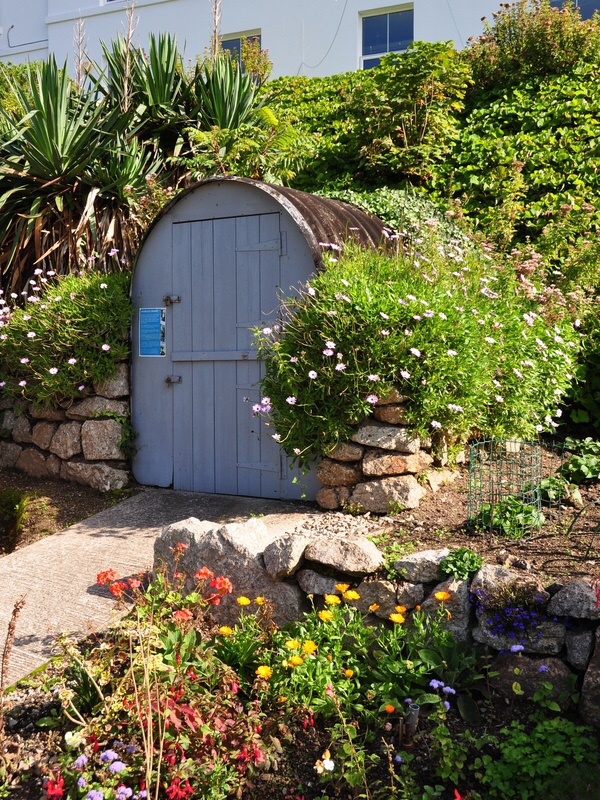
Made from corrugated galvanised steel, six curved panels would be bolted together at the top and then straight panels fixed to form four walls, with a door at one end…. The whole construction would then be half-buried and the roof covered with at least 15 inches of soil….


The shelters were issued free of charge to those families with an income of less than £5 per week (£300 in today’s terms)…. Higher earning families could buy one for £7…. The shelter would be supplied in kit form – everything required to build it would be included along with an instruction guide – but it was up to the family to erect it….

At 6ft high, 4.5ft wide and 6.5ft long the shelters were designed to accommodate up to six people…. How comfortable they were inside was up to the individual family – although incredibly strong, which gave reassurance, they were cold, damp and cramped inside….

img_2465
Children in an Anderson shelter during frequent night-time German bombing raids on Bournemouth in 1942. Image credit: TheBrit CC BY-SA 4.0

It was possible to make the outside to look quite attractive, flowers and vegetables could be planted over them…. In fact some neighbourhoods held competitions for the prettiest shelter….

img_2470
Porthcurno Telegraph Museum – Photo credit: Robin Stevens

Throughout the war period over 2.5 million Anderson shelters were erected. At the height of production John Summers & Sons Ironworks in Deeside were producing 50,000 per week….

For a small fee families were allowed to keep their shelter after the war – and indeed many were dug up and used for sheds….


On this day in history….12th December 1939

On this day in history : 12th December 1939 – HMS Duchess sinks after colliding with HMS Barham off the coast of Scotland; 136 lives are lost….

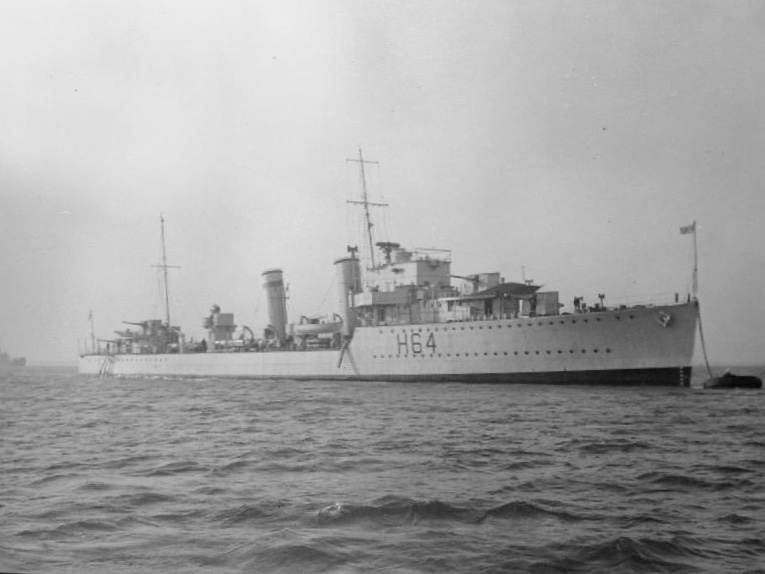
HMS Duchess – Public domain

HMS Duchess, a D-class destroyer, had been built in the 1930s…. In December 1939 she was ordered, along with her sister ships, HMS Delight, HMS Duncan and HMS Dainty, to escort HMS Barham back to the UK from Gibraltar…. Barham was a Queen Elizabeth-class battleship that had been built in the early 1910s…. She had served in World War One and then after a major refit in the 1920s was to serve in World War Two…. She had been part of the Mediterranean fleet but as of the 1st of December 1939 had become a private ship and so was heading to join the home fleet…. The convoy departed on the 6th of December….

The voyage went well but arrived off the coast of Scotland on the morning of the 12th of December in dense fog…. Nine miles west of the Mull of Kintyre HMS Barham accidentally rammed HMS Duchess due to the poor visibility…. Duchess capsized and her depth charges exploded…. 136 of her crew were lost, including her commanding officer, Lieutenant Commander Robert C.M. White – who was trapped in his cabin as his sliding door had jammed….

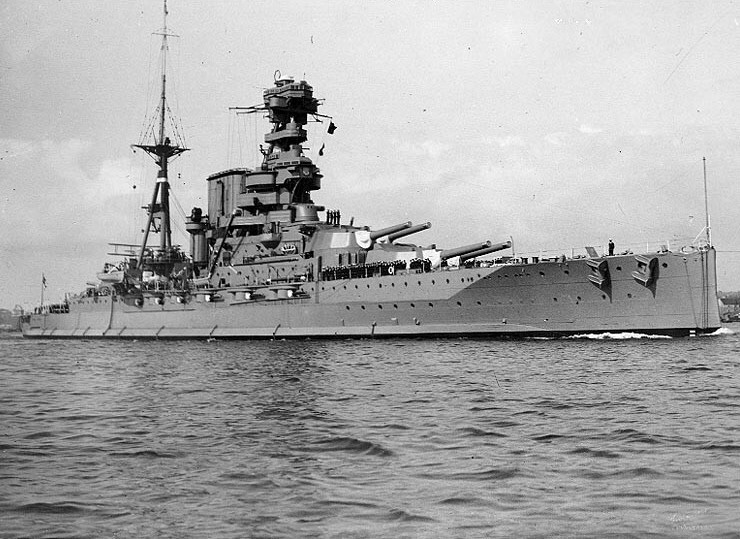
HMS Barham – Public domain

HMS Barham herself was to sink two years later, on the 25th of November 1941 – after being torpedoed…. At the time her sinking was censored from the news by the Board of Admiralty, in an effort to conceal the sinking from the Germans – but also to protect the British morale…. It was several weeks before the next of kin of the 862 crew who had died onboard Barham were informed…. Even then they were requested to keep it secret….

The sinking was officially announced on the 27th of January 1942…. The explanation for the delay was given as…. ‘It was clear at that time that the enemy did not know that she had been sunk, and it was important to make certain dispositions before the loss of this ship was made public’….

The sinking of Barham was caught on film by a cameraman from Pathe News who had been onboard HMS Valiant….

On this day in history….2nd October 1942

On this day in history : 2nd October 1942 – British cruiser HMS Curacao sinks after colliding with the liner RMS Queen Mary off the coast of Donegal…. 337 lives are lost….

HMS Curacao – Public domain

HMS Curacao was part of a convoy escorting the RMS Queen Mary – which was carrying 10,000 American troops of the 29th Infantry Division…. The liner was travelling at a speed of around 26 knots on a zig-zag course – to avoid attack from German submarines…. HMS Curacao, an elderly cruiser built during WW1, was travelling on a straight course (to make it easier to defend the liner against enemy aircraft attack) and was moving at around 25 knots….

Problems began to arise as both Captains believed that they had right of way…. Commodore Sir Cyril Gordon Illingworth of the Queen Mary expected Curacao to give way as the liner crossed its path…. Whereas Captain John Wilfred Boutwood kept Curacao on its straight path believing the Queen Mary would accommodate it….

At 13.32pm it became obvious that the two ships were going to come too close…. Queen Mary’s watch officer began to alter course but Illingworth intervened, saying : “Carry on with the zig-zag. These chaps are used to escorting; they will keep out of your way and won’t interfere with you”….

RMS Queen Mary, New York Harbour, June 1945, carrying US troops from Europe – Public domain

At 14.04pm Queen Mary started a starboard turn, she was around 366m behind the cruiser…. Too late it was realised that a collision was inevitable and there was no time to do anything about it…. The Queen Mary hit Curacao amidships at full speed – the cruiser was cut clean in half…. The rear section sank immediately, followed by the front end a few minutes later….

The Queen Mary continued on with a damaged bow to avoid the risk of a U-boat attack – but reported the collision to the rest of the escort group who were about eight miles away…. HMS Bramham and another ship arrived at the scene an hour or so later and picked up 101 survivors, including Captain Boutwood…. 337 officers and crew were lost….

Those who witnessed the illusion were sworn to secrecy due to national security…. The incident was not made public until after the War had ended….

On this day in history….26th September 1938

On this day in history : 26th September 1938 – The first gas masks are issued to British citizens as concerns over the prospect of war with Germany grow….

The government issued some 35 million ‘General Civilian respirators’…. During World War One chlorine gas and then mustard gas had been used for the first time…. It is estimated some 88,000 were killed by gas and 1,200,000 injured….

As World War Two loomed the UK government planned for tens of thousands of deaths in London alone…. They had been advised to expect 250,000 deaths from gas in Britain in the first week of the war….

Masks were issued in a cardboard box, with the instructions printed inside the lid…. Adults had ones made of plain black rubber; children had ‘Mickey Mouse’ masks – in an attempt to make them seem a little less scary…. Babies had a mask ‘suit’ which completely enclosed them, leaving only their legs exposed….

AIR RAID PRECAUTIONS ON THE BRITISH HOME FRONT: MOTHER AND BABY IN GAS MASKS, C 1941 (D 3918) Copyright: � IWM. Original Source: http://www.iwm.org.uk/collections/item/object/205198677

People were instructed to carry their masks with them at all times – and to practice putting them on and wearing them…. Many found the masks awkward and cumbersome whilst others found the small of the rubber made them nauseous….

British couple wearing their gas masks at home in 1941 – Image : Ministry of Information – Public domain

It was to be almost a year before war eventually broke out…. Whilst the government had prepared the public for what it feared would be Hitler’s secret weapon thankfully the masks were never needed….