On this day in history….25th May 1913

On this day in history : 25th May 1913 – The birth of Richard Dimbleby, pioneering journalist and broadcaster and the BBC’s first war correspondent – before becoming its main news presenter….
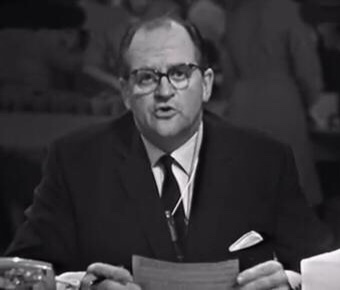
Richard Dimbleby – Fair use

Frederick Richard Dimbleby was born in Richmond, Surrey to Gwendoline and Frederick J.G. Dimbleby, who was a journalist…. After leaving school in 1931 he began working on the family newspaper, which had been acquired by his grandfather in 1894…. The Richmond and Twickenham Times remained in the family until 2002….

Richard worked on other papers, including the Southern Evening Echo in Southampton, before joining the BBC in 1936…. It was in 1937 that he married Dilys Thomas and they were to go on and have four children….two of whom became major broadcasters in their own right – David and Jonathan….

The BBC sent Richard to Spain to cover the Civil War…. At the time there was no official foreign correspondent and it was at the outbreak of World War 2 that the title ‘War Correspondent’ was created…. During the War Richard was to accompany the British Expeditionary Force to France, making broadcasts from the Normandy beaches during the D-Day landings….and from the Battle of El Alamein, North Africa…. He flew on some 20 raids with the RAF as an observer and in April 1945 he made one of the first reports during the liberation of the Bergen-Belsen concentration camp….He was a groundbreaking broadcaster, reporting from 14 countries during WW2…. He was among the first into Berlin and was to broadcast from the ruins of Hitler’s bunker….
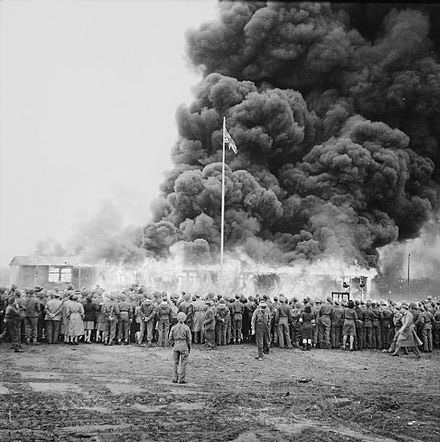
Liberation of Bergen-Belsen, May 1945…. A crowd watches the destruction of the last camp hut – Image : Bert Hardy No.5 Army Film & Photographic Unit – Public domain

In 1946 Richard was awarded an OBE and then later in 1959 a CBE…. He was to become one of the most familiar and trusted faces on British television…. He was to lead the coverage for the majority of major state and political affairs, including Queen Elizabeth II’s Coronation, the Victory Parade of 1946 and the funerals of Sir Winston Churchill, King George VI and John Kennedy…. He was to be the anchorman on the coverage of the General Elections of 1955, 1959 and 1964…. He was also to become the presenter of ‘Panorama’ – the BBC’s flagship current affairs programme….

Of course there were lighter moments in his broadcasting career…. He took part in radio broadcasts on the panel of ‘Twenty Questions’ and hosted ‘Down Your Way’…. He was also involved in the now famous April Fools Day prank of 1957 when he provided the narration for the Spaghetti Tree Hoax….

In December 1965 Richard presented a documentary on the link between smoking and lung cancer…. It was at this time he revealed that he too was suffering from cancer – a subject that was still little talked about…. By talking about his own condition he helped raise public awareness and break the taboo…. Richard had been diagnosed five years earlier with testicular cancer….he was to die just two weeks after the documentary on the 22nd of December 1965 in St. Thomas’ Hospital, London…. He was just 52 years of age….

With funds from public donations the family set up the Richard Dimbleby Cancer Fund – which relaunched in 2008 as Dimbleby Cancer Care…. In 1972 the Richard Dimbleby Lecture, an annual televised lecture, was founded in his memory…. Every year it is delivered by an influential, respected person and over the years has included Prince Philip, Prince Charles, Lord Hailsham, Bill Clinton, Bill Gates, Sir Terry Pratchett and of course many, many others….
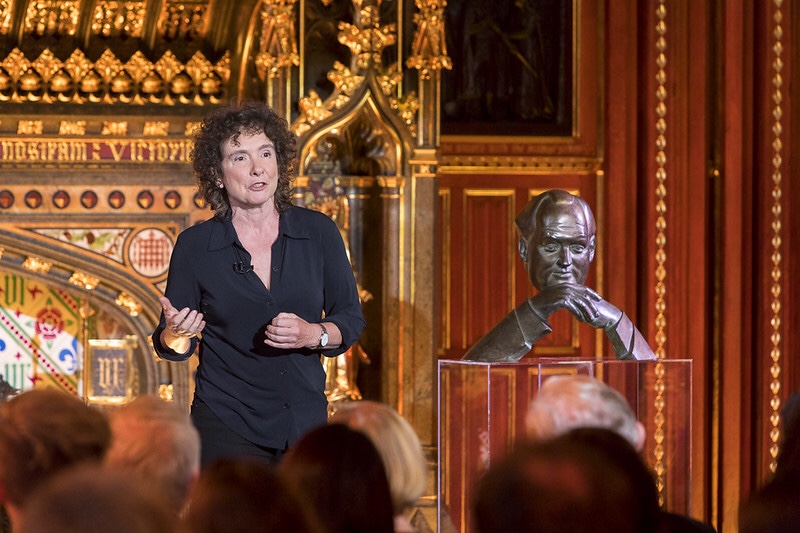
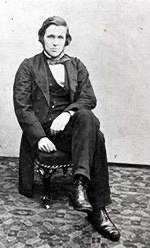
2018 BBC Richard Dimbleby Lecture – speaker Jeanette Winterson on the theme of women’s equality – Image: ukhouseoflords via Flickr

On this day in history….24th May 1836

On this day in history : 24th May 1836 – The birth of Quaker, philanthropist, social reformer, businessman and chocolatier Joseph Rowntree….

Joseph Rowntree – Public domain

Joseph was born in York and was the son of Sarah and Joseph Rowntree, who opened a grocery shop in York in 1822…. He attended Bootham School, an independent Quaker school and upon his leaving started an apprenticeship in the family shop….

At the age of 14 Joseph accompanied his father to Ireland and here he saw first hand the effects of the Potato Famine…. The experience shaped his political views and planted the seeds for the business ideas that would come to him in later life….

After the death of their father in 1859 Joseph and his brother, John Stephenson Rowntree, took over the running of the family business…. He was to marry Julia Eliza Seebohm in 1862 but sadly she died the following year…. He was to marry again in 1867, to her cousin Emma Antoinette Seebohm and they were to have six children….

It was in 1869 that he joined his other brother, Henry Isaac, who owned a chocolate factory in York – but was experiencing financial difficulties at the time…. H.I.Rowntree & Co was formed and in 1881 the company introduced their famous Rowntree’s Fruit Pastilles, to compete against imported French sweets…. The pastilles were a huge success, producing 25% of the company’s annual turnover by 1887…. It was also in 1881 that a purposely designed new factory was opened….

Fair use

Henry Isaac died in 1883 and Joseph was to become sole owner of the company…. He was in a position to be able to buy machinery to produce chocolate on a large scale and compete with rival Cadbury…. Then in 1893 Rowntree’s added Fruit Gums to their range….

Fair use

By the end of the 19th century the company had grown from 30 employees to more than 4,000 and was Britain’s 18th largest manufacturing employer of the time…. It also provided one of the first occupational pension schemes…. In 1904 The Joseph Rowntree Foundation was established to understand the root causes of social problems and at the same time The Joseph Rowntree Charitable Trust was founded…. New Earswick, a garden village, was built in York providing decent homes at an affordable rent for low income families….

Joseph Rowntree died on the 24th of February 1925…. Rowntree’s merged with Mackintosh & Co in 1969 and in 1988 were taken over by Nestle….

On this day in history….23rd May 1984

On this day in history : 23rd May 1984 – An explosion at a water pumping station in Abbeystead, Lancashire, kills 16 people…. For a considerable time afterwards the cause remains a mystery….

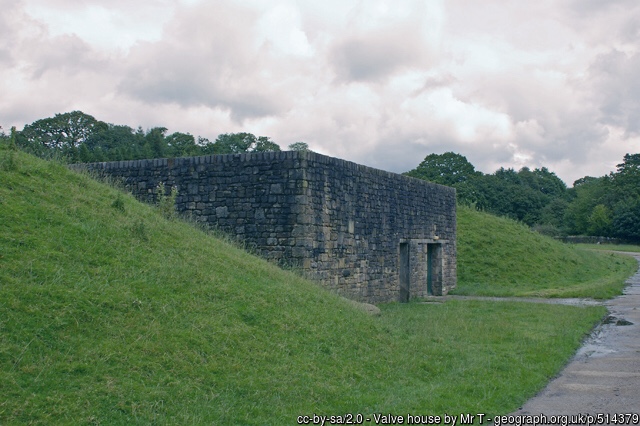
The Abbeystead Valve House was built as part of a water supply project to help meet the needs of an anticipated increase in demand for water across South Lancashire during the 1980s…. It was built underground as it is situated in an Area of Outstanding Natural Beauty and was considered an incredible feat of engineering…. It was opened by Her Majesty the Queen in 1980….

The operation involved transferring water from the River Lune, approximately 8 miles north west of Abbeystead, to the River Wyre…. Some 280 million litres of water were moved on a daily basis…. In early 1984 the village of St. Michael’s-on-Wye experienced persistent severe flooding and local residents blamed the pumping operation at Abbeystead…. Hoping to address their concerns the North West Water Authority organised a tour of the Valve House for the villagers…. At 7.20 on the evening of the 23rd of May 36 residents arrived for the demonstration and were met by 8 representatives of the NWWA…. The pumping station had not been used for the previous 17 days as Lancashire had been experiencing drought conditions….

The system was switched on – but there was no water in the pipes…. They waited but still nothing happened…. It was then decided to turn on a set of reserve valves – which proved to be a fatal mistake…. A massive explosion ripped through the underground building causing the 30 concrete roof beams, weighing 2.5 tons each, to be blown skywards, tearing through the earth above them…. They then crashed back down into the chamber – at the same time a huge fireball engulfed those trapped inside…. Emergency services received the first call at 7.37pm…. 9 people were killed instantly, 28 were seriously injured – 7 died of their injuries later…. 2 of the dead were children…. Not one person present in the Valve House at the time escaped unharmed….

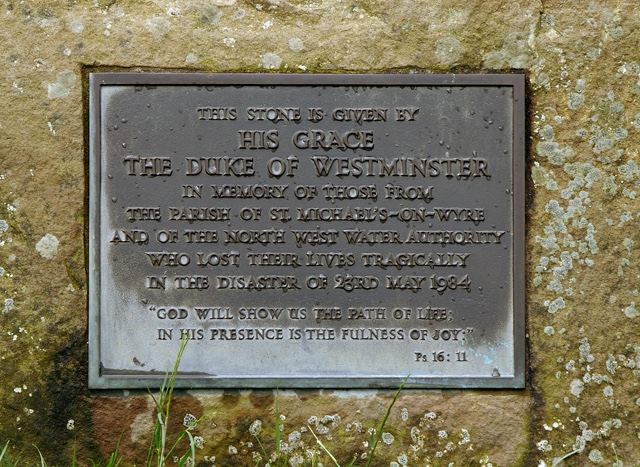
Plaque commemorating those who died – Image credit : Mr T CC BY-SA 2.0

Immediate tests carried out at the scene revealed no trace of gas – indeed there were no gas installations at the pumping station itself…. Later investigations by the Health and Safety executive discovered the site is situated close to coal seams, making build ups of methane gas possible…. As the Valve House had not been used in recent weeks a build up of gas had accumulated in the water pipes…. As the plant was switched on the methane had been pumped into the chamber…. What caused the initial spark to ignite it remains unanswered – but it has to be remembered smoking laws were far more relaxed back then….

The pumping station was later refurbished following the accident….

On this day in history….22nd May 1859

On this day in history : 22nd May 1859 – The birth of Sir Arthur Conan Doyle, the British medical doctor and writer – and the creator of Sherlock Holmes….

Arthur Conan Doyle in 1914 – Public domain

Doyle was born at 11 Picardy Place, Edinburgh; his father was born in England but both of his parents were of Irish Catholic descent…. The family split up in 1864 due to his father’s alcoholism and Doyle stayed with a family friend whilst continuing his education at Newington Academy…. In 1867 the family reunited but were living in poor conditions in a run-down tenement flat….

However, thanks to his wealthy uncles, Doyle was sent away to school in England at the age of 9…. He was to attend the Jesuit preparatory school, Hodder Place in Stonyhurst, Lancashire…. After leaving in 1875 he spent a year studying in Austria and then until 1881 studied medicine at the University of Edinburgh Medical School…. He was also to study botany at Edinburgh’s Royal Botanic Garden….

It was at this time that Doyle began to write short stories…. His first published work was in the Chambers Edinburgh Journal in September 1879; it was a story set in South Africa, entitled ‘The Mystery of Sasassa Valley’….

Portrait of Doyle by Herbert Rose Barraud 1893 – Public domain

Doyle graduated as a Bachelor of Medicine and Master of Surgery in 1881 and joined the crew of SS Mayumba as Ship’s Surgeon on a voyage to the west coast of Africa….He then went on to complete his Doctor of Medicine Degree and in 1882 became a partner in a medical practice in Plymouth…. However, it was a difficult working relationship and so he moved to the Portsmouth area to set up his own practice at 1, Bush Villas, Elm Grove, Southsea…. But his medical practice was slow to take off – and so he began to write fiction to fill in his time…. In November 1886 publishers Ward Lock & Co bought his first work featuring Sherlock Holmes and Dr Watson ‘A Study in Scarlet’…. Doyle had written it in just three weeks and the character of Holmes was based on Joseph Bell, one of his former university lecturers…. The story was received well by the public – and Doyle was commissioned to write a follow-up…. ‘The Sign of the Four’ first appeared in February 1890….

In 1885 Doyle married Louisa Hawkins and they had two children, Mary Louise in 1889 followed by a son, Kingsley in 1892…. However, his wife, a TB sufferer, died in 1906…. By this time Doyle had moved his medical practice to London and had been heavily involved with the design of the house he had built for his family…. They lived at ‘Undershaw’, near to Hindhead, Surrey from October 1897 to September 1907…. It became a hotel in 1924, closing in 2004 and then controversially stood empty falling into disrepair to the point of being derelict…. Rows about planning and development rumbled on – but finally in 2016 it opened as a school for children with disabilities….

Undershaw, with Doyle’s children, Mary and Kingsley, in the driveway – Public domain

In 1907 Doyle married Jean Elizabeth Leckie and had three more children; Denis 1909, Adrian 1910 and Jean 1912…. Sadly none of his children had offspring of their own – and so Doyle has no direct descendants….

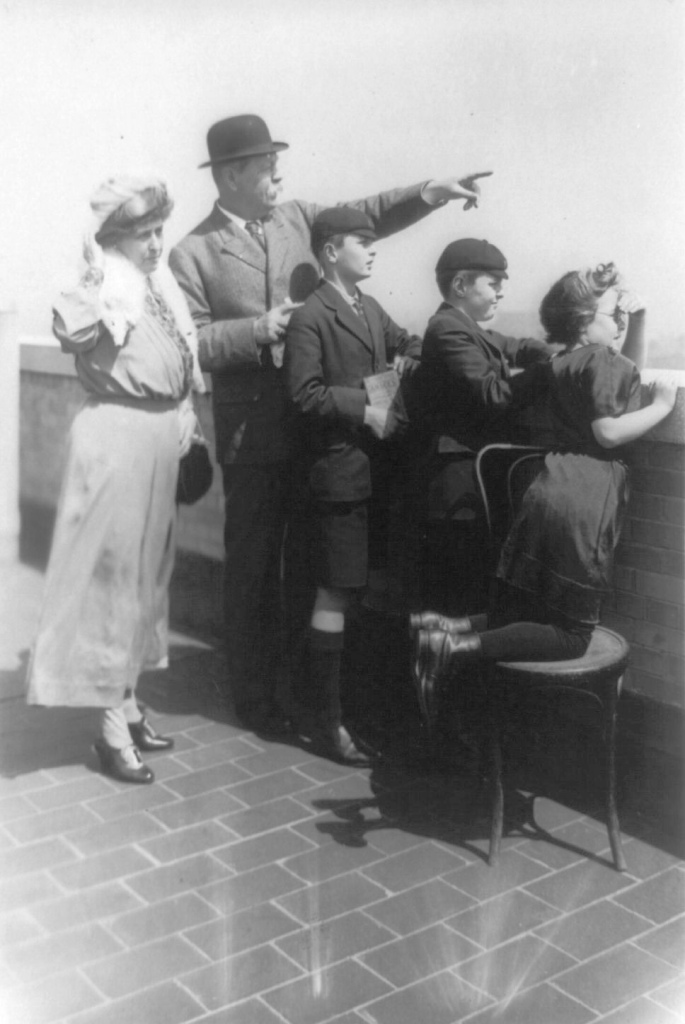
Doyle with his family in New York, 1922 – Public domain

However, he was to leave us a legacy that includes many novels and short stories; there are 56 Sherlock Holmes short stories and 4 novels alone….

Doyle had many other interests in life…. He was a keen sportsman, playing football, cricket and golf…. He was an amateur boxer and even played billiards…. He became involved with politics at the turn of the century…. He was agnostic – despite his Catholic upbringing – and later in life became a spiritualist mystic…. He was also a Freemason, having been initiated in Southsea in 1887….

Doyle in 1930, the year of his death – with son Adrian – Image credit : Bundesarchiv CC BY-SA 3.0DE

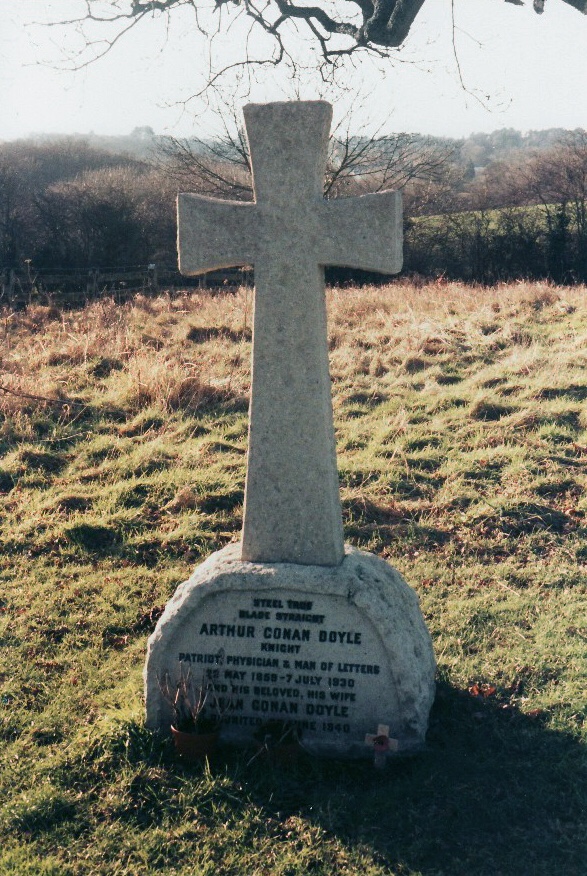
Doyle died of a heart attack on the 7th of July 1930 at his home in Windlesham Manor at Crowborough, East Sussex…. He was originally buried there in the rose garden – but after the death of his wife in 1940 he was reinterred with her in the New Forest….

Image credit : Astrochemist – own work – Public domain

On this day in history….21st May 1950

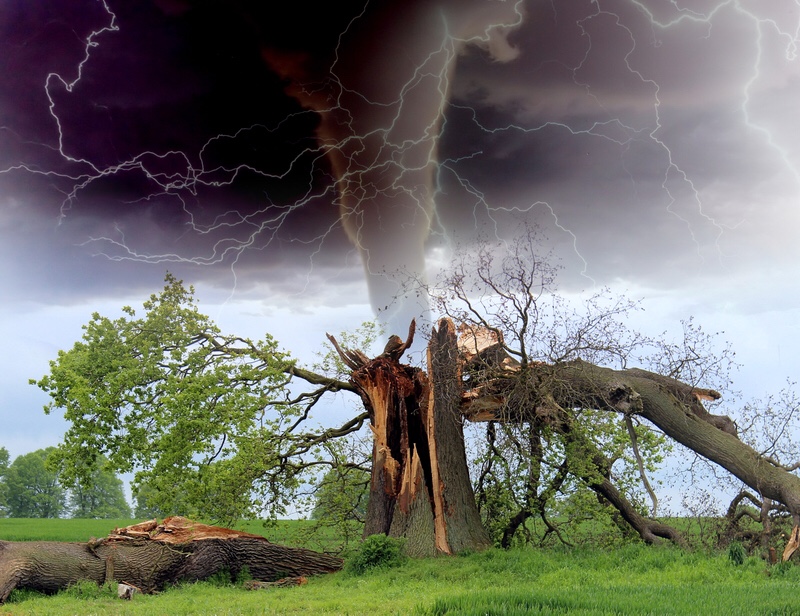
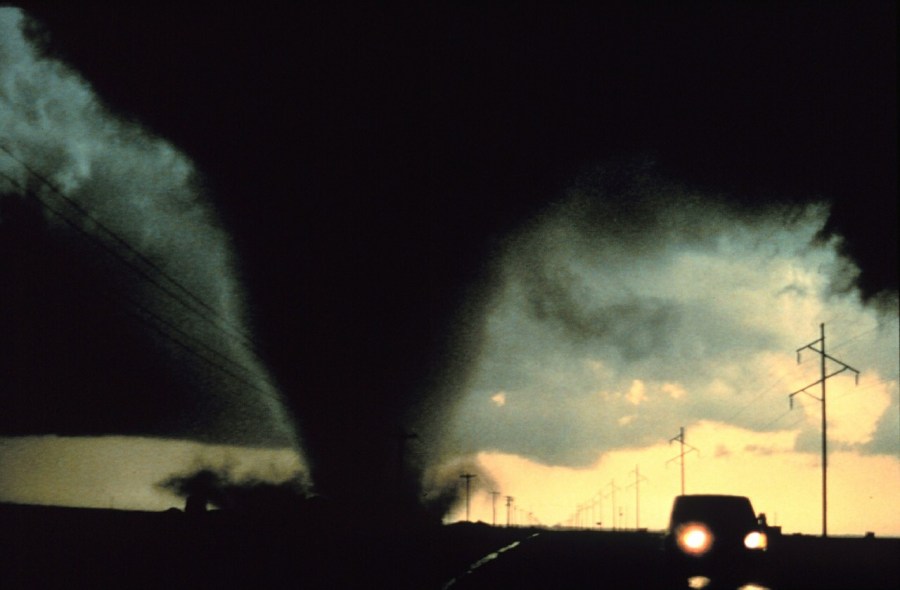
On this day in history : 21st May 1950 – Violent storms and a tornado sweep across parts of Southern England, causing devastation and the death of three people….

It was a Sunday afternoon….intense dark clouds were seen accumulating between 2.30pm and 4pm over Buckinghamshire, Bedfordshire and the Chiltern Hills – and then the thunderstorms broke out…. But worse was to come, as a tornado formed, which first touched down at Missenden in the Wendover Valley…. Uprooting trees on its way it then changed direction towards the town of Wendover – ripping tiles from the roofs of houses as it passed through….

The tornado was to sweep through the counties to the north of London beginning in Buckinghamshire, travelling as far as Cambridgeshire before eventually dying out in North Norfolk…. Its path, at least 66 miles long, is still the longest tornado trail on record in England – its duration, at 2.5 hours, is the longest lasting on record in Europe….

Complete streets of houses lost roof tiles, torrential rain then pouring into the properties…. In Linslade village, Buckinghamshire, approximately 200 houses were damaged, 50 severely…. A shop in Leighton Buzzard was struck by lightening and set ablaze…. Hailstones broke windows, damaged crops, killed poultry and blocked the road at Oakley, Bedfordshire – where they lay a foot deep…. A double decker bus in Ely, Cambridgeshire, overturned….

Many people were made homeless….the Ministry of Supply had to issue some 450 tarpaulins to cover damaged roofs…. Parked cars were lifted up by the tornado – as were horses and cattle…. People were injured and three people lost their lives…. Two, Frederick Cast and James Perry, were struck by lightning in Kempston, Bedfordshire, as they ran for shelter – whilst three others with them were hospitalised…. 8-year-old Jennifer Margaret Reeves was swept away by flood waters and drowned….