On this day in history….18th March 1834

On this day in history : 18th March 1834 – A group of six farm labourers from the village of Tolpuddle, Dorset, are sentenced to transportation to Australia for forming a trade union….
Although trade unions were not technically illegal, laws – known as the ‘Combination Acts’ – had been passed outlawing organised methods of gaining improved working conditions…. They proved to be so unpopular that after being repealed in 1824 they were replaced with the ‘Combinations of Workmen Act 1825’….Trade unions had now been legalised but were tightly restricted in their powers….

This was something that became all too evident to 37-year-old George Loveless, a Methodist preacher from Tolpuddle, who led discussions with local landowners about the recent lowering of agricultural wages…. An agreement was made to raise the weekly wage to 10 shillings – however, in Tolpuddle the landowners would only raise it to 9 shillings…. They then lowered it to 7 and were threatening to cut it again, to 6 shillings….

In 1833 six men, led by George Loveless, formed the Friendly Society of Agricultural Labourers…. They were eventually to become known as the ‘Tolpuddle Martyrs’ and included Loveless himself, his brother James, their brother-in-law Thomas Standfield (in who’s cottage they would meet), another Thomas Standfield (their nephew) – and two other men, James Hammett and James Brine…. Their aim was to protest against the lowering of the agricultural wage – but with the emphasis on being a friendly society….
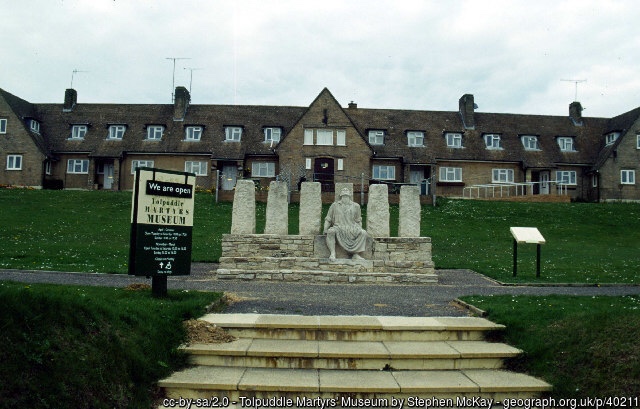
Tolpuddle Martyrs’ Museum and cottages

Landowners were determined to stamp out all organised protests….memories of the French Revolution still being very fresh…. It was magistrate and local landowner James Frampton who wrote to the then Home Secretary, Lord Melbourne, to complain of this new ‘trade union’…. Melbourne suggested using the ‘Unlawful Oaths Act 1797’ – an obscure law brought into force in 1797 in response to the Spithead and Nore Mutinies by sailors in the Royal Navy…. It made making secret oaths illegal – and it was under this charge that the six men from Tolpuddle were arrested….

The men were brought before Sir John Williams at the Dorchester Assizes, where they were found guilty and sentenced to 7 years transportation to the Australian colonies…. On the 25th of May 1833 the six set sail on the ‘Surry’ from Portsmouth, bound for New South Wales…. Loveless did not make it that far, due to illness he disembarked early on the 4th of September and ended up at Van Dieman’s Land (changed to Tasmania in 1856)…. The others sailed on to Sydney and all six were assigned to the role of farm labourer….

Meanwhile, back in England, the six men had become heroes amongst the working classes…. Some 800,000 had signed a petition calling for their release, which was then delivered to Parliament…. Protests took place and a march involving thousands was organised through London – it was to be one of the first ever successful marches of its kind in the United Kingdom…. Collections were made to support the families of the men…. George Loveless himself had left behind a wife, Betsy and three children….
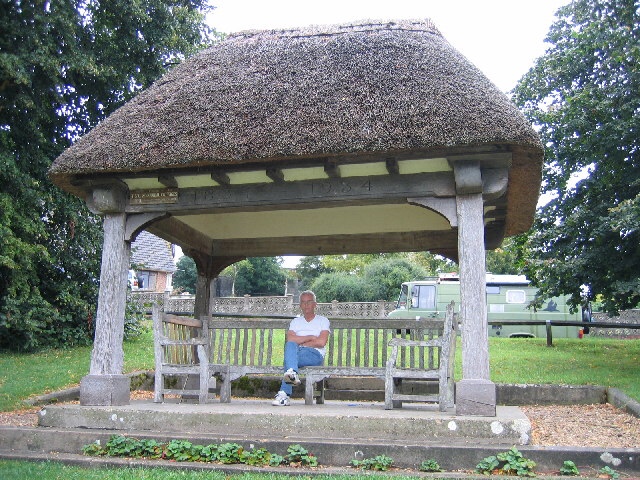
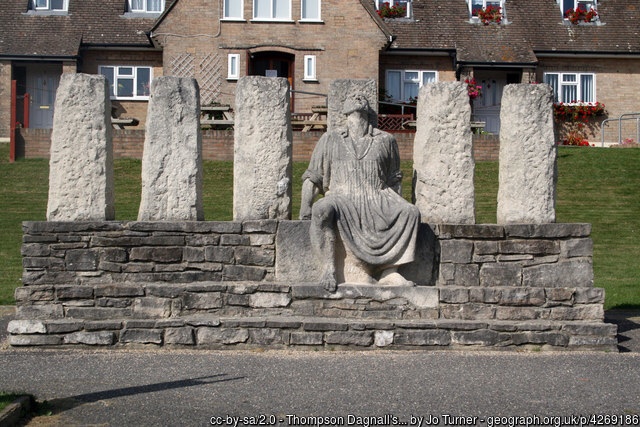
The Shelter, Tolpuddle – erected as a memorial in 1934 – image John Goodall CC BY-SA 2.0

The transported men were eventually pardoned in March 1836, with support from the new Home Secretary, Lord John Russell…. By now Loveless had asked his wife to join him on Van Dieman’s Land but after receiving a letter on the 23rd December saying she would not be coming he set sail for England – arriving on the 13th of June 1837….

Due to delays by the authorities in releasing the remaining men from their duties, the others (with the exception of James Hammett) did not get to leave until the 11th of September – finally arriving back in Plymouth on the ‘John Barry’ on the 17th of March 1838…. Hammett, having been charged with assault, arrived back in August 1839…. The Tolpuddle Martyrs were all finally back home…. An annual festival is now held in Tolpuddle to commemorate the events that were to lead to the foundation of today’s modern trade unions….
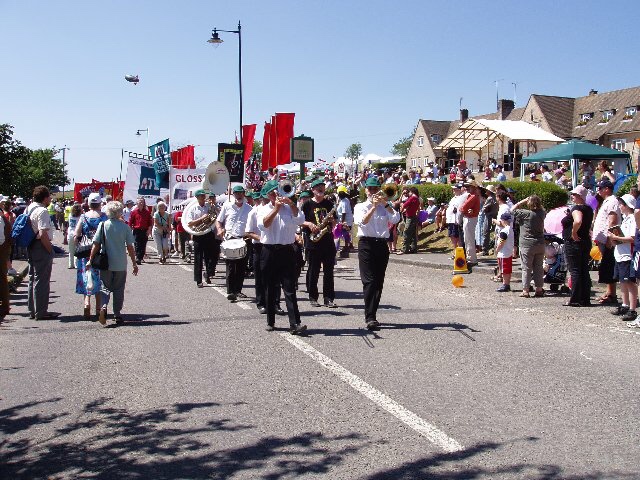
Martyrs’ Day commemoration, 2005 – Image : Dave Headey CC BY-SA 2.0

On this day in history….17th March 1846

On this day in history : 17th March 1846 – The birth of Kate Greenaway – the artist and writer known for her illustrations in children’s books….

Kate Greenaway – Public domain

Kate was born Catherine Greenaway in Horton, London, the second of four children…. Her father, John, was a woodblock printer and engraver and her mother, Elizabeth, a seamstress…. They were a working class family – John also supported his mother and sisters, so very often it could be hard financially….but both he and Elizabeth were determined to give their children a good childhood….

The family moved around quite a lot but Kate spent a substantial part of her childhood in a farmhouse in Rolleston, Nottinghamshire – for her this felt like her real home and where she would often return to as an adult…. She studied at various places and at the age of 12 began nightly art classes at Finsbury School…. She was to go on to study at the Royal Female School of Art, which was part of what is now the Royal College of Art in London….

She began to exhibit her drawings in 1868 and her first published work was in magazines for children, such as ‘Little Folks’…. She also worked at illustrating greetings cards to contribute towards the family’s income….

In 1879 her first successful book was published – ‘Under the Window; Pictures and Rhymes for Children’…. It was to become a best seller, over 100,000 copies were sold…. In 1880 it was followed with her illustrations in ‘The Birthday Book’, ‘Mother Goose’ in 1881 and ‘Little Ann’ in 1883…. She was to go on to illustrate over 150 books – only two were both written and illustrated by Kate, her first ‘Under the Window’ and later ‘Marigold Garden’ (or ‘The Language of Flowers’) in 1895….

Marigold Garden – Public domain

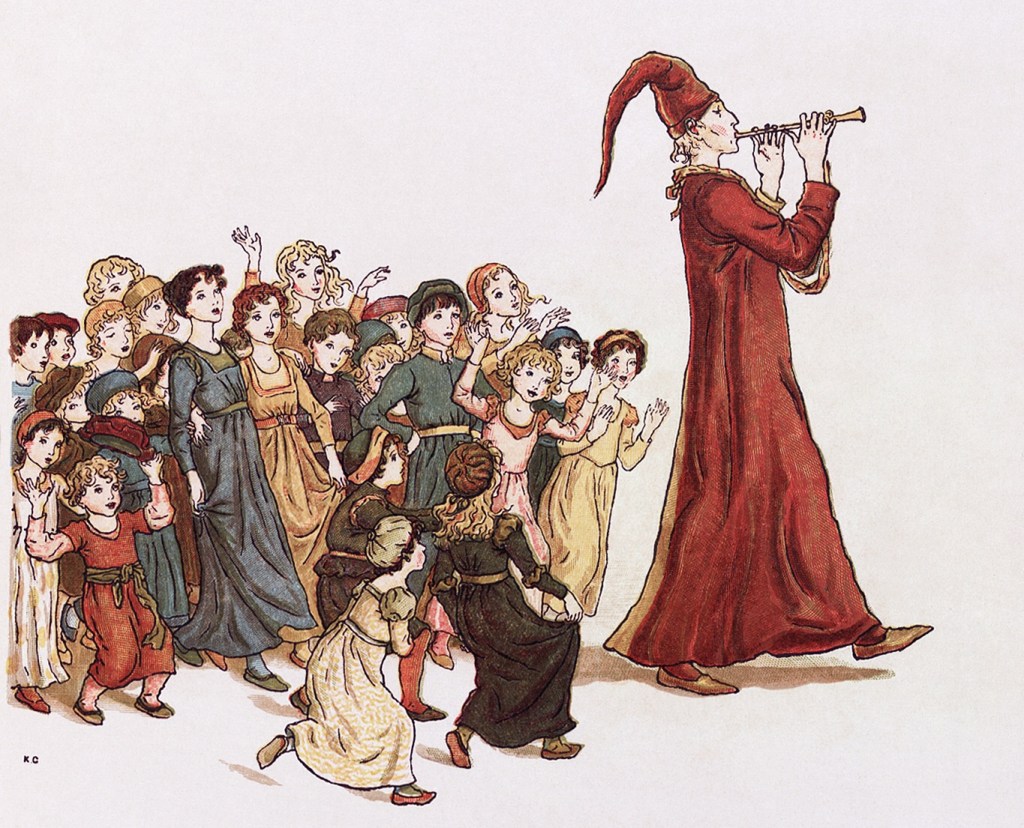
She brought many well-known stories to life, such as Robert Browning’s ‘The Pied Piper of Hamelin’…. Leading art critics around the world praised her work….

Her own favourite books as a child may have influenced her – Sleeping Beauty, Cinderella, Beauty and the Beast and illustrated editions of Shakespeare…. In her own illustrations she always dressed her children in the Regency fashions of the late 18th Century….smock frocks and skeleton suits for the boys and high-waisted pinafores and dresses with mobcaps and straw bonnets for the girls…. A style which was to catch on….Liberty of London created children’s clothes by adapting her drawings….

Polly from ‘The Queen of the Pirate Isle’ – by Bret Harte – Public domain

In 1890 Kate was elected to the Royal Institute of Painters in Watercolours; she exhibited at the Fine Art Society in 1891, 1894, 1898 and was exhibited posthumously again in 1902…. From 1883-1897 she published Kate Greenaway’s Almanacs…. Kate died of breast cancer at the age of 55 on the 6th of November 1901…. She was buried in Hampstead Cemetery, London….

May Day – Public domain

The Kate Greenaway Medal was established in 1955 in her honour…. It is awarded annually by the Chartered Institute of Library and Information Professionals in the UK to a chosen illustrator of children’s books….

Public domain

On this day in history…..16th March 1190

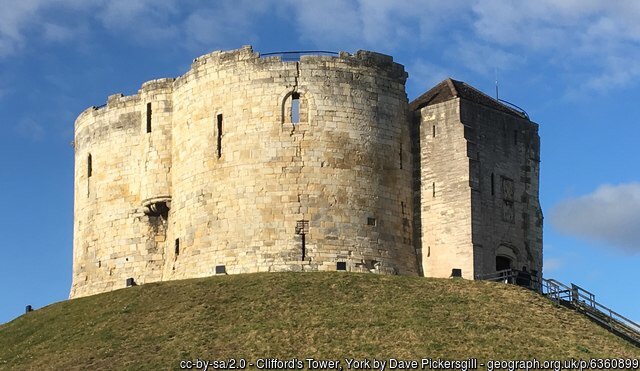
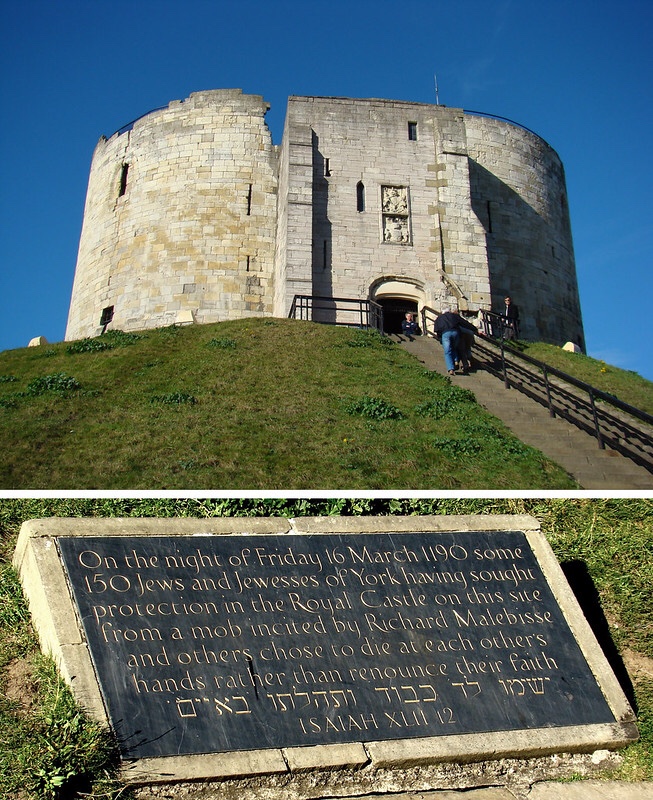
On this day in history : 16th March 1190 – The massacre of some 150 Jews at Clifford’s Tower, York – many chose to commit suicide rather than be murdered or face forced baptism….

After the Norman Conquest of 1066 many Jews came to England from Rouen, France…. The Norman kings needed money to build castles to defend their kingdoms – but it was forbidden for Christians to profit from money lending…. However, for the Jews it was permitted and so they were welcomed and given the protection of the Crown…. Many of them became very wealthy through their money lending but in return they were heavily taxed….

In time Jewish communities became established in most principal cities across England, including York…. However, anti-Semitic feelings began to run high across Europe, particularly England, France and Germany….fuelled by the Christian Crusades and the Church’s teaching that the Jews had brought about the death of Jesus…. Resentment of the Jewish people was also inflated by anger at the taxes being levied to fund the Crusades…. Malicious stories were spread about Jews murdering Christian children…. Hostility against the Jewish population escalated with riots breaking out in Norwich, Stamford, Lincoln and York…. Violence even broke out at the coronation of King Richard I – after the exclusion of Benedict of York from the coronation banquet…. Benedict, a money lender, was the most wealthy and influential Jew in York…. He died of the injuries he received at the riots in Westminster….

A few months later the Sheriff of York was away taking part in the Third Crusade when a fire broke out in the city…. Some of the citizens took advantage of the fire and the absence of the Sheriff….they attacked and looted the home of Benedict of York’s family – murdering those inside….

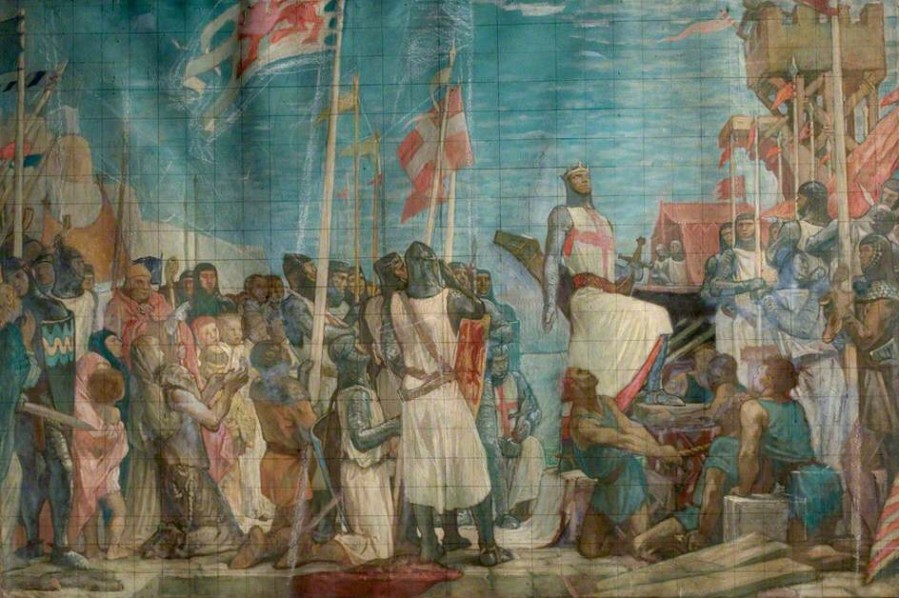
Philpot, Glyn Warren; Richard the Lionheart Embarks on the Third Crusade; Nottingham City Museums and Galleries; http://www.artuk.org/artworks/richard-the-lionheart-embarks-on-the-third-crusade-47454

The rest of the Jewish community – it is unknown how many this actually involved but it is estimated between 20 and 40 families – fled their homes and sought protection in the castle keep…. They now found themselves trapped in the wooden tower by the angry mob outside…. It was Friday the 16th of March – the Great Sabbath ‘Shabbat Hagadol’ – before the Jewish festival of Passover….

Realising they had no hope of escaping many of the Jews decided it was preferable to die by their own hand, together, rather than be murdered…. Fathers killed their wives and then their children – then setting fire to their possessions before taking their own lives…. The flames spread to engulf the wooden tower…. Not all of the Jews chose suicide – safe passage was promised if they pledged to abandon their religion and convert – only it was a ploy to coax them out…. Once they left the tower they were immediately murdered – that’s if they even made it out of the flames alive….

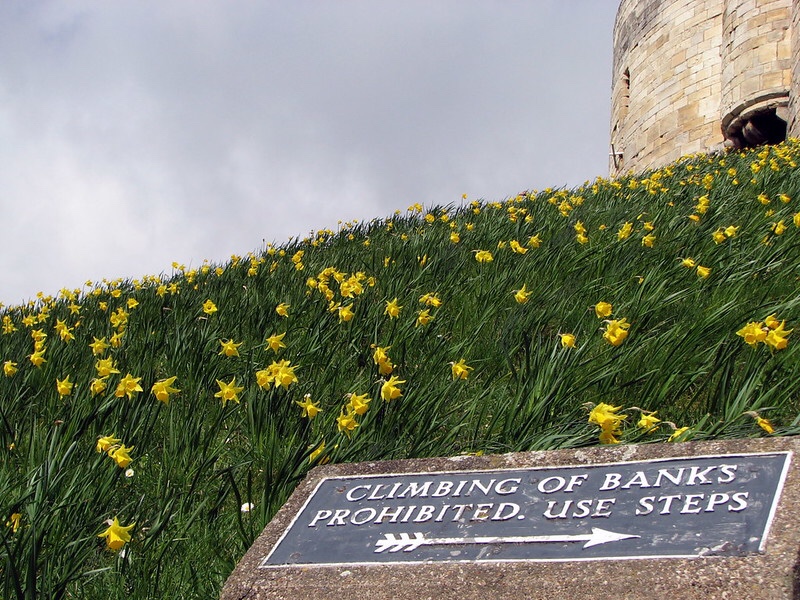
A new stone tower, the present day Clifford’s Tower, was built on the site of the original castle keep…. 20th century excavations uncovered the blackened remains of the old tower…. Each year, around the time of the anniversary of the massacre daffodils bloom around the tower….their petals representing the Star of Daniel, as a memorial…. A plaque was installed at the base of the tower in 1978 to commemorate those who died in one of the worst anti-Semitic massacres of the Middle Ages…. Sadly the 1190 York Pogrom was one of many such occurrences across a Europe that at the time bore little tolerance to religious diversity….

On this day in history….15th March 1898

On this day in history : 15th March 1898 – The death of Henry Bessemer – the inventor and engineer who pioneered the first method of inexpensively manufacturing steel….

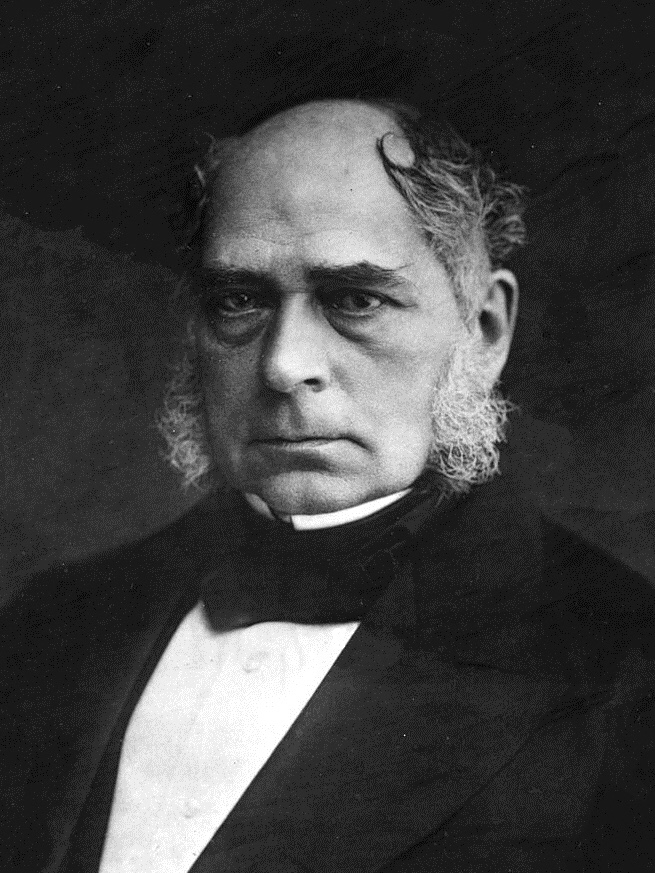
Henry Bessemer – Public domain

Bessemer was born in Charlton, Hertfordshire on the 19th of January 1813…. He was the son of an engineer and inventor and he started to show the same qualities himself from an early age – and in which he was mainly self-taught….

Spanning over a period of 45 years, from 1838 to 1883, Bessemer held well over 100 patents – he was a prolific inventor…. From moveable dies for embossing postage stamps to military ordnance and methods of extracting sugar from sugar cane….to many other inventions in the glass, iron and steel industries….

He initially made his fortune by inventing a series of 6 steam powered machines for producing the bronze powder used to make gold paint…. The Victorians couldn’t get enough gold paint – the decoration style of the time demanding huge quantities of it…. Bessemer became a very wealthy man….

But what he is really known for is his breakthrough in finding a way to inexpensively produce steel…. At the time there were only two types of iron based material – cast iron and wrought iron…. The cast variety was made by treating iron-ore with coke in a blast furnace; whereas wrought iron involved a labour intensive process known as ‘puddling’…. This meant iron had to be stirred continuously to remove carbon – which makes iron brittle – and during the process the slag had to be raked off…. Cast iron was used for load bearing applications, such as the towers of bridges and for engine parts…. But for things such as girders and rails only wrought iron was suitable…. The puddling method used for wrought iron produced a material that could then be forged – but it was in enormous sized quantities – lumps between 100-200 lbs – and full of slag…. This then required steam hammers to bring it to a condition where it could be rolled into pieces of a workable size…. It was a slow and laborious process….

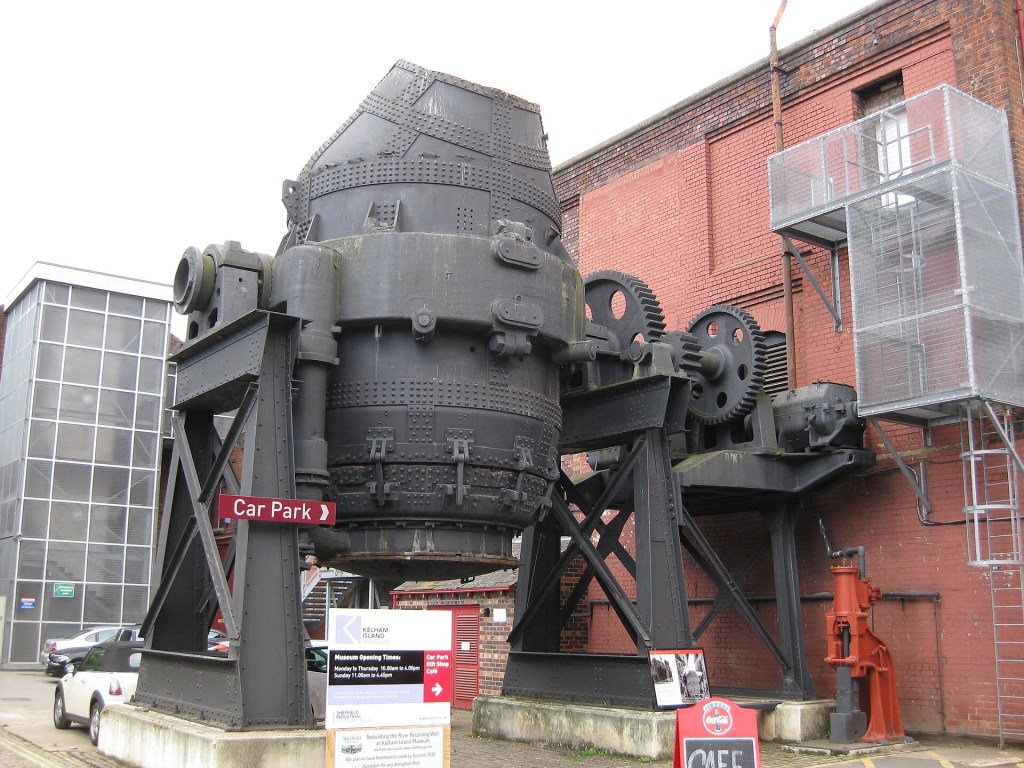
Bessemer invented a process which used oxygen in air which was then blown through molten pig iron – in a pear-shaped receptacle called a ‘converter’…. This burnt off the carbon and impurities to make steel…. It was called ‘The Bessemer Process’ and meant there was now a way to mass produce steel – it also meant Bessemer helped to inspire the Industrial Revolution….

The Bessemer Process – Public domain

It is a method no longer widely used – but at a time of rapid development it was invaluable….as it supplied a ready supply of a material much in demand….

Bessemer Converter, Kelham Island Museum, Sheffield – Image : Chemical Engineer – own work – Public domain

Bessemer was elected to the fellowship of The Royal Society of London in 1877 and on the 26th of June 1879 he was knighted by Queen Victoria…. He died at Denmark Hill, London….and was buried in West Norwood Cemetery…. He rests amongst other influential Victorians such as Sir Henry Tate, Baron de Reuters and Sir Henry Doulton….

Photo : Robert Mason, own work CC0

On this day in history….14th March 1914

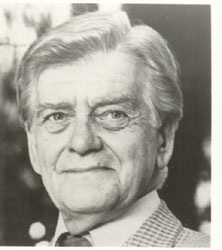
On this day in history : 14th March 1914 – The birth of Bill Owen – known to us as ‘Compo Simmonite’ in one of our all time most favourite BBC sitcoms ‘Last of the Summer Wine’….

Fair use

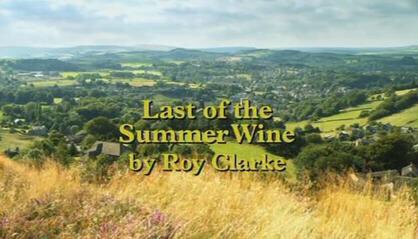
Last of the Summer Wine was created by Roy Clarke and was broadcast from 1973 to 2010…. With 31 series comprising of 295 episodes it is the world’s longest-running comedy series….

William John Owen Rowbotham was born in Acton Green, London into a working class family…. He made his first film appearance in 1945 and had several parts in early Carry On films…. He co-starred with Spike Milligan in the West End hit ‘Song Oblomov’ in 1964 and also during the 1960s had a tangent career as a songwriter – including the hit ‘Marianne’ recorded by Cliff Richard…. But it was in 1973 that he became a household name when Last of the Summer Wine came to our screens….

Fair use

The concept for the show came in 1972 from Duncan Wood, the BBC Head of Comedy…. He offered the sitcom to Roy Clarke, who almost turned it down, thinking the idea of three old men dull…. It was he who proposed the three pensioners had to be unmarried/divorced/widowed and so free to roam the streets, acting like juveniles and getting into mischief…. It was also he who chose the title, reflecting that they were not quite in the autumn of their lives yet…. It was not a name that was popular with the producers straight away….

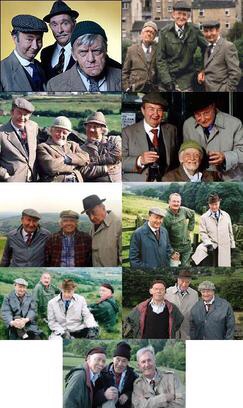
Bill Owen played the part of ‘Compo’, his name coming from the phrase ‘he’s on the Compo’ – meaning unemployment compensation…. The scruffy pensioner, in his woolly hat, would often be bossed around by his friends Norman Clegg (Peter Sallis) and ‘Foggy’ Dewhurst (Brian Wilde)…. He would be the one who invariably bore the brunt of their many misadventures and escapades…. And then there was his unrequited lust for Nora Batty (Kathy Staff) – with her housewife’s pinafore and wrinkled stockings….

Fair use

Later we saw the introduction of the eccentric Seymour Utterthwaite (Michael Aldridge) and Herbert ‘Truly of the Yard’ Truelove, a former policeman (Frank Thornton)…. The very first trio had comprised of Compo, Norman Clegg and the pompous Cyril Blamire (played by Michael Bates)…. However, after two series Bates retired from the programme through ill-health and was replaced by Walter ‘Foggy’ Dewhurst….

Fair use

Last of the Summer Wine was filmed around Holmfirth, in West Yorkshire…. It was producer Barry Took who suggested the location for the exterior filming…. The theme music for the show was created by Ronnie Hazlehurst….

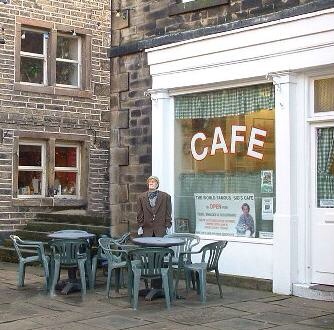
The cafe in Holmfirth used as a regular filming location – with a model of Compo outside for photo opportunities – Image : Nigel Homer CC BY-SA 2.0

It was whilst filming a millennium special in France that Bill began to feel unwell – but he insisted on continuing to film…. Once back in England he was diagnosed with pancreatic and bowel cancer…. He worked right up to his death on the 12th of July 1999…. He was buried in the churchyard of St. John’s Parish Church, Holmfirth – the place he had come to love so much…. (In June 2017 Peter Sallis was buried next to him)….

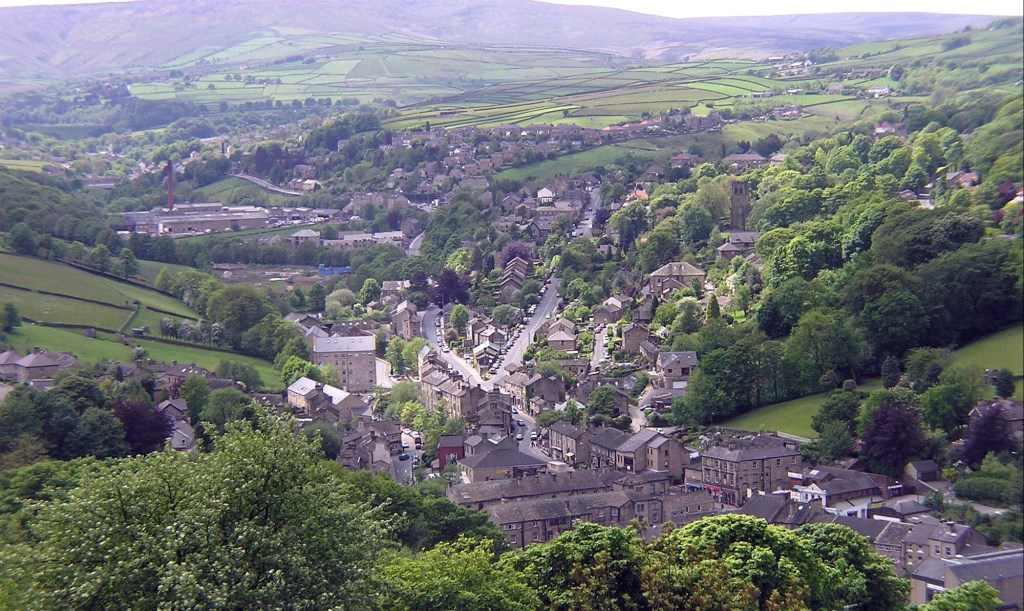
Holmfirth from the cliffs above Cliff Road – Image : Richard Harvey – own work CC BY-SA 2.0uk

Bill left behind his wife, Kathleen O’Donoghue, whom he had married in 1977 (he had previously been married to Edith Stevenson, from 1946-1964)….and he had two children – including the actor Tom Owen, who was also to star in Last of the Summer Wine…. 1977 was also the year that Bill was awarded with an MBE….