On this day in history : 15th September 1966 – The launch of HMS Resolution, Britain’s first nuclear ballistic missile submarine, at Barrow-in-Furness….and is attended by the Queen Mother….
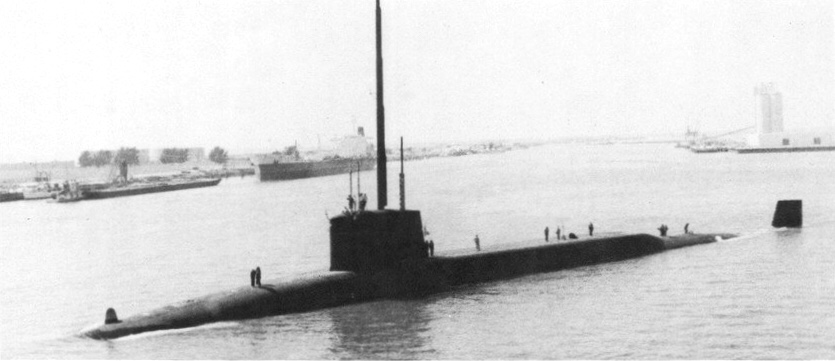
HMS Resolution, 1977 – Public domain
It had been decided that Britain would have 4 Polaris submarines to carry the latest A-3 missiles…. The submarines were to be designed and built in Britain but the weapon systems, with the exclusion of the warheads, were to be purchased from the United States…. The warheads themselves would be manufactured in the UK…. The programme was authorised in February 1963 – and the Polaris submarine programme was then to take some 500,000 man-hours to complete…. A full scale wooden mockup model was built – to help determine where all the equipment should go and also to aid the placement of all the pipes and cables…. It was even possible for the crew to train on it….
The formal purchase order for Resolution was placed in May 1963, at a cost of £40.2m…. The 130m (425ft) long submarine was built by Vickers Armstrong – and her keel was laid down on the 26th of February 1964 by Director General Ships Sir Alfred Sims….
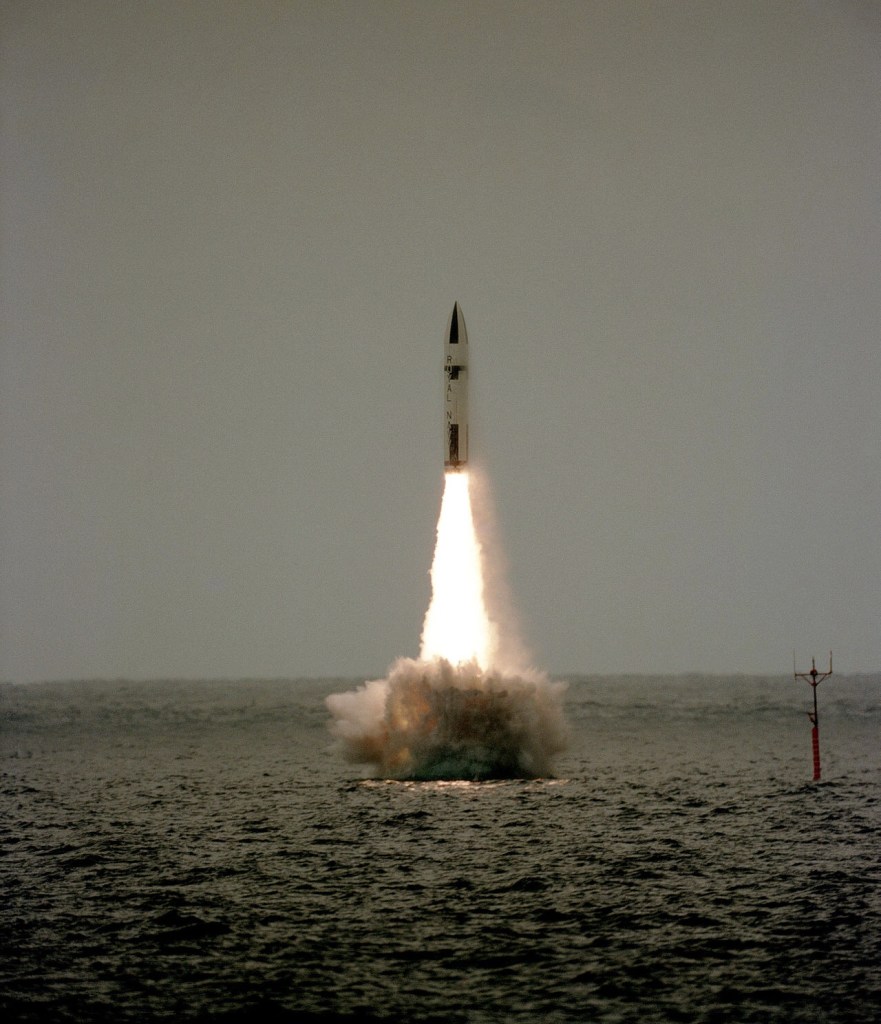
Resolution was commissioned on the 2nd of October 1967…. She underwent extensive trials which included the firing of the first Polaris missile on the 15th of February 1968 – followed by a second on the 3rd of April…. Her surface speed was 37km/h and when submerged 48km/h…. Her first patrol began on the 15th of June 1968 – she was soon joined by her sister ships Repulse, Renown and Revenge…. An order for a fifth submarine was placed but this was later cancelled….
Polaris missile launch from Resolution, 1983 – Public domain
The first Trident submarine was completed in 1992 and gradually the Resolution class of submarines were withdrawn from service…. After 61 patrols, the longest being 108 days, Resolution was de-commissioned on the 22nd of October 1994 and laid up at Rosyth Dockyard….
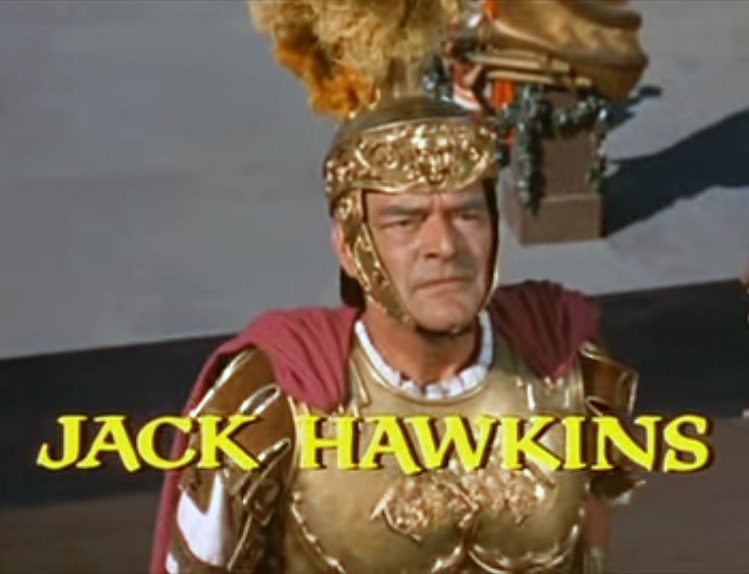
On this day in history : 14th September 1910 – The birth of actor Jack Hawkins – who appeared in films such as Lawrence of Arabia, Zulu and The Bridge on the River Kwai…. He was voted No 1 star of the British Box Office in 1954….
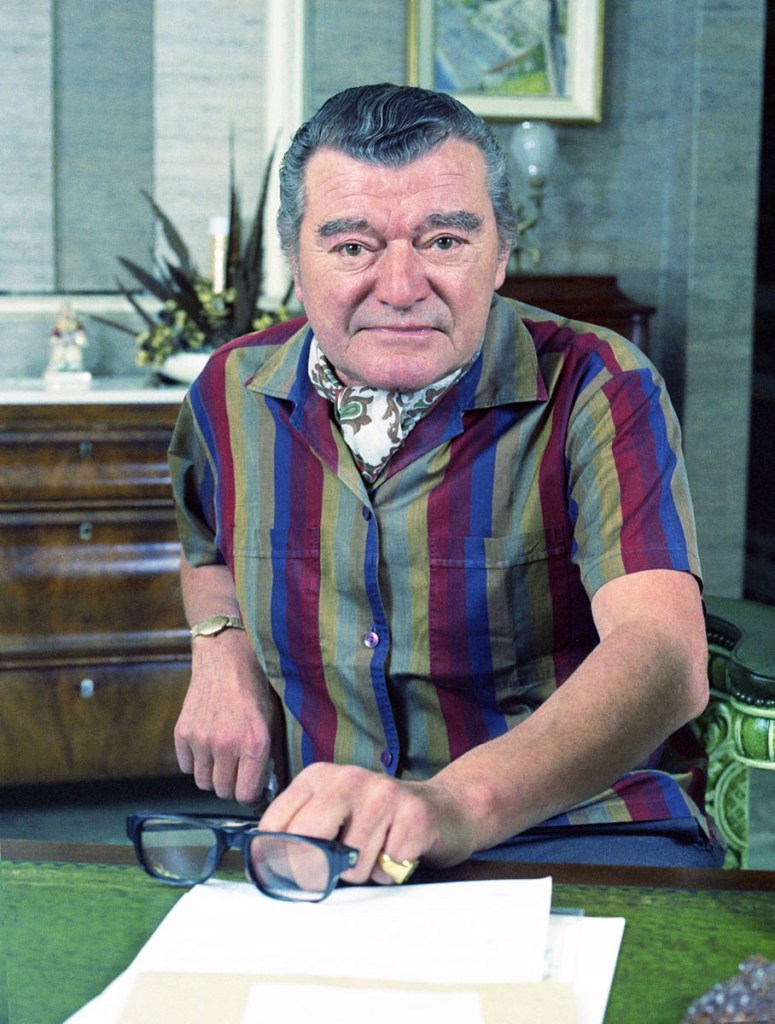
Jack Hawkins – Image credit : Allan Warren – own work – CC BY-SA 3.0
Hawkins was one of Britain’s best known and popular film actors of the 1950s…. He was born in Wood Green (now Haringey) London and at around the age of 10 he joined the local operatic society…. He made his stage debut in Gilbert and Sullivan’s Patience with the society…. Encouraged by his parents he then enrolled in the Italia Conti Academy…. His London stage debut came at the age of 11, as the Elf King in the pantomime Where the Rainbow Ends, alongside a young Noel Coward….
During the 1930s Hawkins built on his stage career, having made his Broadway debut at 18 in Journey’s End…. He had also begun to venture into film, making a number of quota quickies; at the time there was a requirement for British cinemas to show a percentage of British films in an aim to revive a flagging British film industry…. In 1932 Hawkins was to marry actress Jessica Tandy, they had a daughter in 1934 but divorced in 1940….
World War 2 saw Hawkins join the Royal Welch Fusiliers as an officer – he was to become Colonel in the Entertainments National Service Association (ENSA)…. Then after being demobilised in 1946 he resumed his acting career, meeting actress Doreen Lawrence, whom he married in 1947…. They were to have three children, two sons and a daughter….
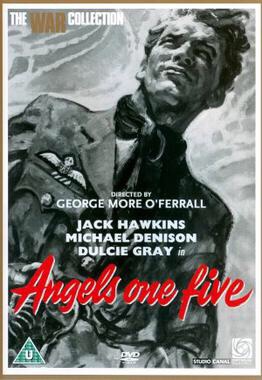
True stardom arrived for Hawkins in the 1950s – after the release in quick succession of three successful films:- Angels One Five (1951), The Planter’s Wife (1952) and The Malayan Emergency (1952)…. In these films Hawkins played strong authoritative characters who at the same time showed a sympathetic side…. These characters were different to the ones he usually portrayed – but the roles suited him…. His next film, The Cruel Sea (1953), in which he played a naval officer, was the most successful film of that year….
Fair use
He received his first offer from Hollywood in 1955, as the part of a Pharaoh in Land of the Pharaohs…. He then returned to the UK, made a few minor films – and then landed one of the main parts in The Bridge on the River Kwai, alongside Alec Guinness and William Holden in 1957…. He was awarded a CBE for his services to drama in 1958 and continued on to star in successful films such as Ben-Hur in 1959 and League of Gentlemen, 1960….
Ben-Hur trailer – Public domain
Hawkins was a star at the top of his game – but he had a vice…. He was an extremely heavy smoker, going through three packs a day…. In the late 1950s he began to experience problems with his voice…. This was unknown to the public at the time – but explains why he took more or less any work that came his way…. For a star of his calibre he took on some surprisingly minor roles – his concern being that if his voice went, then so did his income…. He reduced the amount of cigarettes he was smoking, from 60 to 5 a day and took voice coaching lessons….
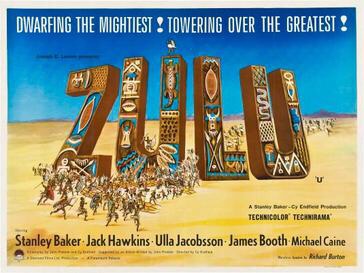
He still managed to land some good roles in big films such as Lawrence of Arabia in 1962, in which he played General Allenby…. Then Zulu, in 1964, he was cast in the supporting role, as a priest who was none too brave – his days of the macho lead were over….
Fair use
In December 1965 Hawkins was diagnosed with throat cancer and in January 1966 his larynx was removed…. Amazingly his acting career continued, his voice being dubbed – although the dialogue was kept to a minimum…. Stubbornly he continued to smoke….
In May 1973 he underwent experimental surgery for an artificial voicebox…. However the following month he began haemorrhaging and was admitted to hospital…. A second haemorrhage occurred and Hawkins died on the 18th of July 1973….
A memorial service was held on the 14th of September 1973 on what would have been his 63rd birthday, at St Martin-in-the-Fields, London…. The address was read by Kenneth More and the lesson by Richard Attenborough….
Jack Hawkins – Image credit : Allan Warren – own work – CC BY-SA 3.0
On this day in history : 13th September 1970 – Concorde makes its first landing at Heathrow Airport to a barrage of complaints about the noise from local residents….
Image via Pinterest
Concorde 002 (G-BSST) was Britain’s first Concorde and made its maiden flight on the 9th of April 1969…. It took off from Filton for RAF Fairford, where it was to be based for testing and development…. The pilot was chief test pilot Brian Trubshaw, who made a faultless landing at Fairford despite the altimeters failing to function….
The Concorde was shown at the Farnborough Airshow on the 1st of September 1970 – shortly before making its landing at Heathrow on the 13th – its first landing at an international airport….
During its flight history Concorde 002 made 438 flights, 196 of which were supersonic…. Its final flight was on the 4th of March 1976, when it was delivered to Yeovilton Air Museum – where it can be seen today….
Concorde 002 G-BSST at Yeovilton Air Museum – Photo credit : Alan Wilson CC BY-SA 2.0
On this day in history : 11th September 1895 – The original FA cup trophy is stolen from a shop window in Birmingham…. 63 years later an 83 year old man confesses he melted it down to make counterfeit coins….
Aston Villa players posing with the FA cup trophy 1887 – Public domain
Aston Villa had beaten West Bromwich Albion 1-0 to become the cup holders and it was on display in a sports shop in Aston, owned by William Shillcock, for fans to admire….
The cup, which had been made in 1872 by Martin Hall & Co of Birmingham, was much smaller than today’s trophy – and had cost £20…. Efforts were made to find it with a reward of £10 offered for information to its whereabouts….but with no success…. Eventually Aston Villa were forced to pay out £25 for its replacement as the trophy had been in their care at the time….
The second FA cup trophy, used between 1896 and 1910 – Public domain
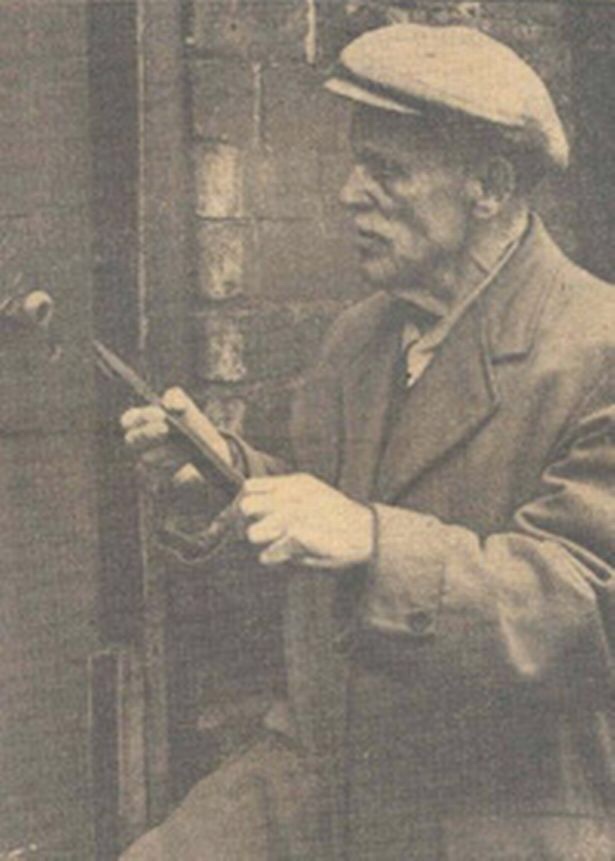
Over 60 years later, on the 23rd of February 1958, a Sunday newspaper ran the headline ~ “Soccer’s biggest riddle” ~…. Henry James Burge – known as Harry – had confessed to committing the burglary of the sports shop…. He claimed to have broken in through the rear door by using a crowbar…. He and two accomplices had then allegedly entered the shop and after helping themselves to several pairs of football boots had taken the cup…. Harry said the trophy had been melted down that very night to produce forged half-crown coins…. He even posed for his picture to be taken demonstrating how he had broken in….
Harry Burge – Fair use
However, there was some discrepancy to his story…. Other reports say the thieves had got in by making a hole in the roof of the building…. Harry was a career criminal…. During his lifetime he received sentences totalling up to 46 years and 11 months…. After his final release in 1961 he was placed in an old folks home….and died in September 1964…. We will never know if he really did steal the FA cup trophy….
On this day in history : 10th September 1973 – London fashion store Biba opens its iconic department store in West London’s Kensington High Street….
Fair use
Biba had been started by Polish-born Barbara Hulanicki, aided by her husband Stephen Kitz-Simon, primarily as a mail order business…. Their first shop opened on Abingdon Road, Kensington in September 1954…. It was nearly ten years later, in the May of 1964, that they ran a promotional advert in the Daily Mirror for a dress similar to one worn by Brigette Bardot…. Biba were inundated with orders….selling 4,000 overnight…. The business then began to snowball….
Barbara Hulanicki – Image credit : AVESSA – source : High Gloss 2018 : The Art of Fashion. Trendencias with Carlos Marrero CC BY 3.0
In 1971 Biba purchased the seven storey building that had been occupied by London department store Derry and Toms…. The store, famous for its roof garden, had originally opened in 1938…. Biba spent £1m refurbishing the Art Deco store – and with the backing of Dorothy Perkins and property development and investment firm The British Land Company – ‘Big Biba’ opened in September 1973…. Not only did the new department store sell Biba’s own collection of clothes and accessories but it also stocked household goods, cosmetics, sports equipment and children’s clothing…. It had a children’s toy department, a food hall and a restaurant….
The Art Deco interior had a touch of the Golden Age of Hollywood and quickly attracted a million visitors a week – bringing a welcome boost to the rest of Kensington High Street at a time when the UK was suffering a recession…. However, the problem was that most of Biba’s visitors were tourists – and not customers – there to see the sights but not to buy…. Within two years Biba itself had become a victim of the recession – the store closed its doors in 1975….
The former ‘Big Biba’ building circa 2006 – Image : Thomas Blomberg (assumed) CC BY-SA 2.5






 Cottage Capers