On this day in history….20th March 1974

On this day in history : 20th March 1974 – An attempt is made to kidnap Princess Anne as she and her husband Captain Mark Phillips are being driven down Pall Mall….
img_2601
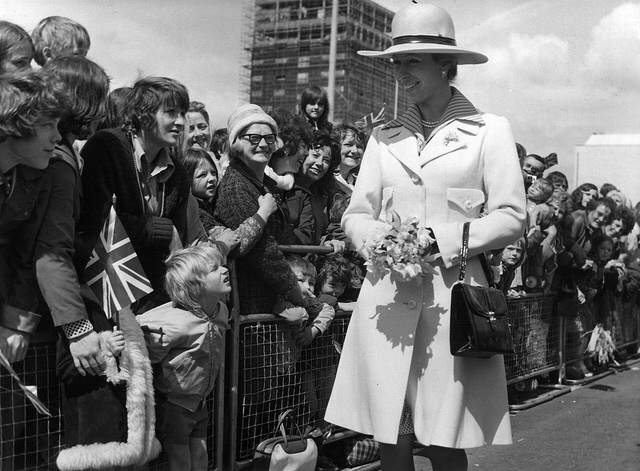
Princess Anne 1974 – Photo credit: Tyne & Wear Archives and Museum via Flickr

The 23-year-old Princess and her husband were being chauffeur-driven back to Buckingham Palace after attending a charity event…. It was around 8pm when a white Ford Escort blocked their way, forcing the Rolls Royce to stop…. A man got out of the Ford, brandishing two handguns…. The Princess’s body-guard, Inspector James Beaton and the chauffeur, Alex Callender attempted to apprehend the man – but both were shot…. Despite his injuries Inspector Beaton got to his feet to try and stop the gunman again – and again….in total he was shot three times…. Also shot was a passer-by who tried to help – tabloid journalist, Brian McConnell….

The gunman then forced his way into the Rolls Royce…. He ordered Princess Anne out – to which she replied….“not bloody likely”…. She did eventually get out though and as the gunman followed after her another passer-by, former boxer Ron Russell, who had positioned his car to stop the Ford from escaping, struck the gunman on the back of the head…. Russell was then able to lead the Princess to safety….

Meanwhile, after hearing gun shots PC Michael Hills had rushed to the scene – he tried to detain the gunman – but was himself to be shot in the stomach…. The gunman attempted to run but was pursued by Detective Constable Peter Edmonds, who brought him to the ground and managed to disarm him….

The gunman was Ian Ball, a 26-year-old unemployed labourer, who suffered from a mental illness…. When his car was searched handcuffs, tranquillisers and a ransom note were found…. The note was addressed to the Queen and demanded that £2 million be paid to the National Health Service…. Ball later claimed he did it to highlight the lack of mental health care available…. He was prosecuted for attempted murder and received a sentence of life imprisonment – and was placed in a psychiatric hospital…. His remains the closest attempt anyone has ever made on abducting a member of the royal family….

All four men who were shot thankfully recovered…. Inspector James Beaton later received the George Cross….whilst PC Michael Hills and Ron Russell were given the George Medal…. Chauffeur Alex Callender, journalist Brian McConnell and Detective Constable Peter Edmonds were all awarded the Queen’s Gallantry Medal for their bravery….

Russell later revealed that the Queen had said to him as he received his award….“The medal is from the Queen, the thank you is from Anne’s mother”….
 

On this day in history….19th March 1965

On this day in history : 19th March 1965 – An article is published in the Tailor and Cutter magazine asking the Rolling Stones to start wearing ties – to save the tie makers from financial ruin….

img_2594
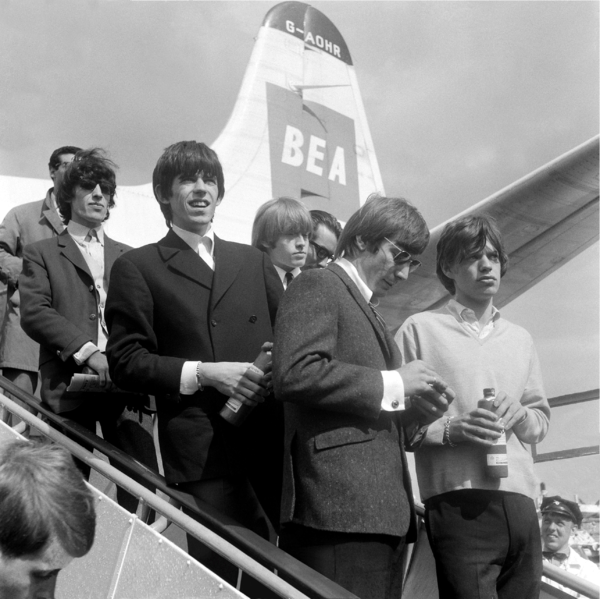
The Rolling Stones at Amsterdam Airport Schiphol – 1964

“With position comes responsibility. It is a thought we recommend to the Rolling Stones…. We would urge pop stars everywhere to give at least passing consideration to the financial straits in which the manufacturers are likely to find themselves if the next generation goes eternally open-necked”…. ~ Tailor and Cutter magazine….

Mick Jagger responded with the quip ~ “The trouble with the tie is that it could dangle in the soup”….

Taylor and Cutter was a dedicated magazine for the tailoring world and had been started by a passionate, wild haired and bearded Scotsman named John Williamson in 1866…. The first edition of the publication demanded better working conditions for the craftsman of the industry….

Williamson moved to London later that same year and saw there was an opportunity for a regular publication….communicating current trends and technical information to the tailoring community and its associated trades…. Two publications were launched ~ ‘The Tailor’ and ‘The Cutter’ ~ covering news from the world of tailoring, pictures of the latest fashions and creations, articles and advertisements – from tailor’s chalk to cloth merchants…. Williamson launched his magazines in September 1866 with the financial backing of wealthy benefactor Angelica Patience Fraser…. Soon the two publications merged into one….

img_2593
Via Wikimedia – A file donated by Nordiska Museet as part of the Europeana Fashion Collaboration – Public domain

With the belief that tailors should strive to better themselves Williamson wrote in 1869…. “Our mission is to put a superior class of literature dealing with the science and art of the trade into the hands of every tailor”…. From 1884 a separate journal for women’s tailoring was published….

By the 1960s men’s attire had become far more casual….suits, collars and ties tending to be kept for the office and formal occasions…. An even bigger threat to the tie being the popularity of the polo neck and the leisure shirt…. Ready to wear, off the peg tailoring meant there became a large drop in readership of Tailor and Cutter…. So it was in 1972 that the final edition was printed…. Meanwhile the tie still has its place in nearly every man’s wardrobe….

img_2595
1960s Neckties – Made of silk or Dacron polyester…. Image credit: CG Hughes via Flickr

On this day in history….18th March 1925

On this day in history : 18th March 1925 – Fire destroys two floors of Madame Tussaud’s in London and many of the waxworks melt – leaving a grotesque scene….

The fire was discovered at 10.30pm and by 11.30pm the top floor was a raging inferno. One eyewitness, as reported by the Guardian at the time said flames leapt 50 feet high from the roof of the building – “The wax models could be distinctly heard sizzling themselves to death”…. Those waxworks represented world leaders, members of parliament, historical characters, sports personalities….and infamous criminals. A macabre scene of melted faces, charred twisted limbs and broken torsos…. Also lost was an important collection of Napoleonic relics, including Napoleon’s deathbed and carriages….

img_2591
via imgur.com

Dozens of fire engines attended…. The fire chief, Mr. A.R. Dyer had been enjoying a night out at a nearby theatre and arrived to start tackling the fire in full evening dress…. It took and hour and a half to bring the blaze under control and by midnight it was out…. The whole top floor was destroyed, the roof had collapsed, leaving the Planetarium dome a mere skeleton. Lower floors of the building suffered severe water damage….

Thankfully nobody was injured…. One survivor was a parrot in a cage – at first nobody was sure if it was a waxwork or real…. However, a few moments after being brought outside into the ‘fresh’ air it fully revived…. Evidently it was a talking parrot because apparently on recovery its first words were “This is a rotten business”….

Luckily the Baker Street attraction of Madame Tussaud’s was insured. In 1928 it reopened – complete with new cinema and restaurant…. Thankfully all the moulds for the waxworks were stored at a separate site….


On this day in history….17th March 1845

On this day in history : 17th March 1845 – British inventor and businessman Stephen Perry patents the rubber band in London….img_2588

The Olmec people (meaning ‘rubber people’ in Aztec) had been using latex from the rubber tree to make balls with which to play sport dating back to around 1600BC…. The latex sap from the rubber tree Hevea brasiiensis hardens into a springy mass when exposed to the air….

Rubber had first arrived in Europe in the 1730s…. French explorer Charles Marie de La Condamine had returned with some samples from South America. It first appeared in Britain later that century and was soon discovered to be a miracle worker at erasing pencil markings…. It was given the name ‘rubber’ by chemist Joseph Priestly….

In 1820 Englishman Thomas Hancock patented elastic fastenings for gloves, shoes, suspenders and stockings…. He also invented the masticator – a machine to recycle rubber scraps for reuse…. He was later to join forces with Scottish chemist Charles Macintosh and together they produced Mackintosh raincoats….

But it was American inventor Charles Goodyear who came up with vulcanised rubber in 1839….giving rubber the ultimate strength and elasticity needed for the likes of the rubber band….

img_2590
Charles Goodyear – Engraving by W.G. Jackman, D. Appleton & Co. New York – Public domain

Stephen Perry, with his company Messrs Perry & Co. Rubber Manufacturers of London – who made products from vulcanised rubber – came up with the idea of a band to hold together papers or envelopes…. On the 17th of March 1845 he received British Patent No. 13880 for his rubber band….img_2589

On this day in history….16th March 1872

On this day in history : 16th March 1872 – The first ever English FA Cup Final takes place between the Wanderers Football Club and the Royal Engineers at the Kennington Oval…..

img_2581
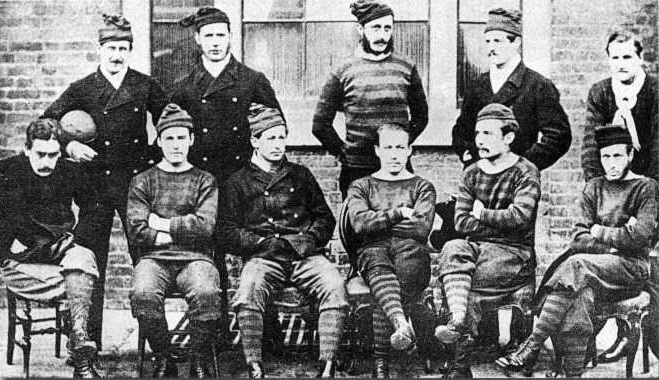
The Royal Engineers pictured in 1872 – Public domain. Back : Merriman, Ord, Marindin, Addison, Mitchell – Front : Hoskyns, Renny-Tailyour, Creswell, Goodwyn, Barker, Rich.

Before 1871 there had been no regular competitive league games…. Secretary of the Football Association, Charles Alcock, drew up the plans for a league and 15 teams entered the first round in November 1871…. In the beginning it was based very much around the ‘old boys’ public schoolboy network….

Wanderers had formed in 1859 as Forest Football Club….consisting mainly of Harrow schoolboys…. They became known as the Wanderers as they had no fixed ground of their own – but by 1869 they had become based at the Kennington Oval…. Charles Alcock, who had played for Wanderers, was also Secretary of Surrey Cricket Club….

Many football clubs played on cricket grounds at this time…. Often football teams emerged from the cricket teams themselves – as the game was used as a way of keeping fitness up during the winter months…. It wasn’t until the late 1880s and into the 90s that purpose-built football grounds began to appear….

An estimated crowd of 2,000 paid a shilling at the door to watch 22 amateurs play on a cricket pitch, with no nets at the goals, in the first FA Cup Final….

img_2584
The oldest surviving cup trophy 1896-1910. Photo credit: Oldelpaso via Wikipedia. Public domain

Wanderers had only won one match in the qualifying fixtures….they had drawn with Queen’s Park, a Scottish team, in the semi-finals…. This meant a re-match – but the Scots did not have enough money to return to London and so had to withdraw from the competition…. Under the rules at the time, this meant Wanderers automatically gained a place in the final…. The Royal Engineers – who were founded in 1863 by Major Francis Marindin – secured their place with a 3-0 win over Crystal Palace in a replay….

The match was won by Wanderers, who beat the Royal Engineers 1-0…. The winning goal was scored 15 minutes into the game by Morton Betts, playing under the pseudonym ‘A.H. Chequer’ – as he had attended Harrow and played for Harrow Chequers…. His goal was a simple ‘tap in’ after the ball had been successfully dribbled through the Royal Engineers’ defence….

img_2583
Morton Betts – Public domain

The FA Cup remains the oldest football competition in the World….