In raptures with raptors….

Back in the Spring of last year, we (as a family) took part in a Bird of Prey Experience Day. It was the end of March and an unseasonable, bitterly cold day but this did not spoil the absolutely delightful time we had….

We were part of a small group, six in total. Sally, our hostess and falconer introduced us to her many birds; European Eagle owls, Barn owls, Harris hawks, Peregrine falcons to name but a few…. She showed us the equipment every falconer needs to use; hoods, jesses and lures….and then we got the opportunity to handle the birds and fly them….

British birds of prey are protected under the Countryside and Wildlife Act 1981. In the UK it is permitted to carry out hunting with raptors without having a special licence, although it is a stipulation that the birds must be bred in captivity. The Secretary of State for the Environment can issue licences enabling birds to be either taken from the wild or imported but very few are ever issued. To import or remove birds (or eggs) from their natural habitat without a licence is a criminal offence. Birds must be ringed and registered to help combat the black market….

Captive breeding began in the early 1970s. Peregrines especially, were  suffering a decline in the wild due to pesticides being used in agriculture.

bop-28
Photo credit: ‘Miniature Falcon’ – Eric Kilby via Foter.com / CC BY-SA Original image URL: https://www.flickr.com/photos/ekilby/4697206843/
bop11
Photo credit: ‘Peregrine Falcon’ – birdsaspoetry via Foter.com / CC BY-NC-SA Original image URL: https://www.flickr.com/pages/birdsaspoetry/26401283360/

Examples of birds used in falconry today:

Broadwings; Golden eagle, Buzzard, Harris hawk
Longwings; Peregrine falcon, Lanner falcon, Gyrfalcon
Shortwings; Goshawks
(Raptors are identified by their wing and body shape).
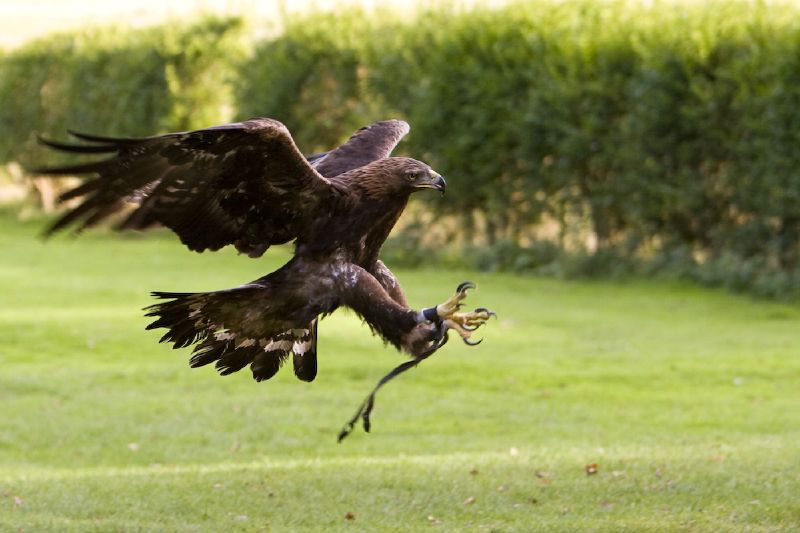
bop-6
Photo credit: ‘Final Approach’ – Brian Scott Images via Foter.com / CC BY-NC-ND Original image URL: https://www.flickr.com/photos/brianscott/1465605062/ Golden Eagle

Owls are sometimes used but are less common. They rely on sound more, as they see in black and white and are long sighted….(a raptor’s sight is ten times greater than a human’s)…. When owls are used, it is more likely to be the European Eagle owl, Barn owl or Great Horned owl….

bop-7
Photo credit: ‘Great Horned Owls (Bubo Virginianus)’ – Idjaffe via Foter.com / CC BY-NC-SA Original image URL: https://www.flickr.com/photos/Idjaffe/7417967256/

When starting out in falconry it is strongly recommended training is sought from an experienced falconer…. Most beginners start out with Harris hawks and Red Tailed hawks….

The Red Tail hawk is easy to breed in captivity. They are known for their brick red coloured tail feathers. Native to the USA, they are North America’s most common hawk, they are also found in the West Indies. They are very adaptable to their surroundings, living in environments as diverse as tropical rain forests and mountains alike, quite happily. These keen eyed birds of prey are efficient hunters of rabbits, hares, squirrels, ducks, pheasants and geese….
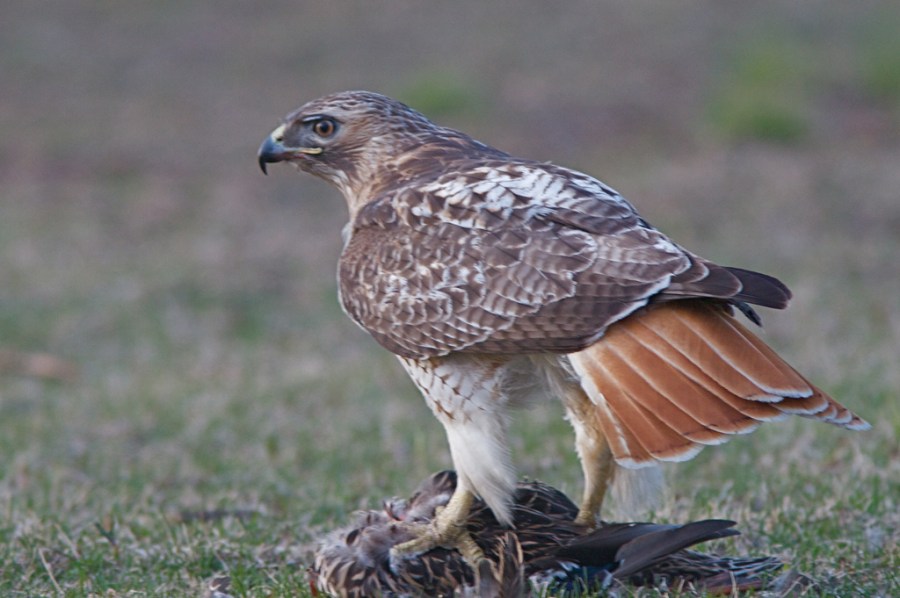
bop-8
Photo credit:’Red-tailed hawk with mallard prey’ – Henry McLin via Foter.com / CC BY-NC-ND Original image URL: https://www.flickr.com/photos/hmclin/3384360748

The Harris hawk, also from the USA, originating in Texas, Arizona and northern parts of South America, is once again a keen, efficient hunter. It is unique amongst its raptor counterparts because it lives in packs in its natural habitat. Being used to social hierarchy, it makes it easier to train….

bop-9
Photo credit: ‘Harris Hawk’ – BigA888 via Foter.com / CC BY-NC-SA Original image URL: https://www.flickr.com/photos/biga888/31914762754

Raptors need considerable human contact on a daily basis or they will soon revert back to their wild state. ‘Manning’ is an essential part of training, acclimatising the bird to live and work with humans, involving all areas where human and bird lives cross – this even includes housing, car, pets etc…. The better manned they are, the calmer they will be and easier to train and fly….

bop-17
Photo credit: ‘A lunch in the hand’ – Lofter via Foter.com / CC BY-NC-ND Original image URL: https://www.flickr.com/photos/225460487/

The trainer wears a gauntlet on which the bird will be taught to perch upon, by being fed with morsels of food, (food becomes an important bond between bird and human). Once used to ‘sitting on the fist’, the bird will then be encouraged to fly between the perch and fist, always with the reward of food. A creance can be used at this stage – a long, light line that attaches to the bird’s jesses….

bop-10
Photo credit: Flying Bengal Eagle Owl on the creance – Marja Kingma via Foter.com / CC BY-SA Original image URL: https://www.flickr.com/photos/mak61/4911940141/

The jesses are strips of strong leather, (or often kangaroo hide these days, used because of its softness), that attach to the raptor’s legs. The jesses need replacing regularly to ensure they still fit and are comfortable….

bop-13
Photo credit: ‘Steppe Eagle’ – Ray Euden via Foter.com / CC BY-NC-SA Original image URL: https://www.flickr.com/photos/rayeuden/3316387790/

Bells are also fitted to the legs, with leather strips called ‘bewits’. The bells can be heard from a considerable distance and enable the falconer to locate the bird when on flying exercises. Nowadays, it is not uncommon for a transmitter to be fitted incase the bird gets lost….

bop-14
Photo credit: ‘bell’ – Shioshvili via Foter.com / CC BY-SA Original image URL: https://www.flickr.com/photos/vshioshvili/276560149/

Also, raptors are trained for the ‘lure’; usually made from leather, with feathers attached, the lure is a representation of prey…. The falconer swings the lure around on a cord for the bird to chase for exercise, or to ‘call’ it in. There are at least three types of lure used; short line, long line and pole line….

bop-16
Photo credit: ushtey via Foter.com / CC BY-NC-SA Original image URL: https://www.flickr.com/photo/ushtey/10928852436/

Another necessity for successful training and flying is a hood…. They are used to keep the raptor calm. Not being used to sudden movement or change in light, they can be easily startled and may attempt to jump from the fist and harm themselves; similarly, they may get over excited about the prospect of going out…. Not being able to see makes a bird think it’s safe and calms it down. The falconer needs the bird to be alert and ready when it is required to fly….

The hood is made from kip leather or kangaroo hide: there are two main types of hood:- The Anglo Indian, which is made from one complete piece and the Dutch hood, which is made from three separate pieces. This second hood is made on a special mould, to fit the raptor’s head, allowing space for the eyes and a good fit at the neck. The hood must be a good, comfortable fit – or the bird will reject it, making training difficult….

************

It is thought falconry began in Mesopotamia some 4,000 years ago. Tradition says the first falconer was the King of Persia. It is said the King was entranced by the beauty of a wild falcon capturing a passing bird. He ordered that the falcon be caught and he then kept it at his side at all times….
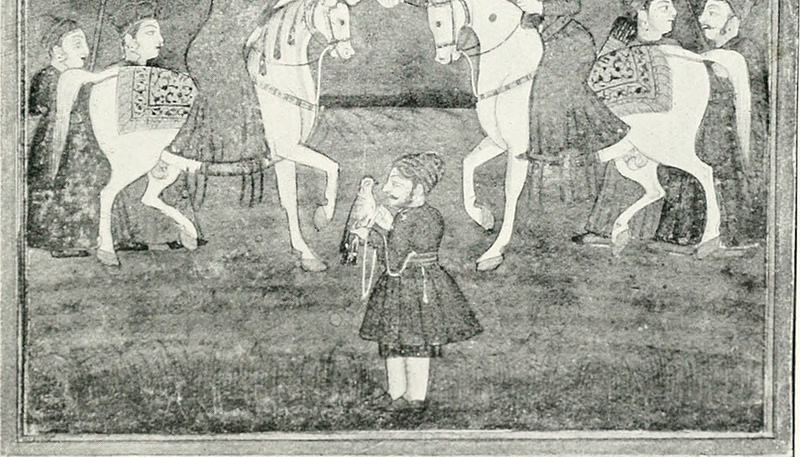
bop-27
Photo credit: Image from page 36 of ‘The Baz-nama-yi Nasiri, a Persian treatise on falconry’ (1908) – Internet Archive Book Images via Foter.com / No known copyright restrictions Original image URL: https://www.flickr.com/photos/internetarchivebookimages/14781163801/

As trade began to increase between Arabia, Europe and the Far East, so did the interest in falconry. It had reached the Mediterranean by 400AD and by 875AD was practised widely throughout Western Europe and Saxon England.

bop-42
Photo credit: Image taken from page 196 of ‘Artour de la Mediterranee…. Illustrations par A. Chapon, etc.’ – The British Library via Foter.com / No known copyright restrictions Original image URL: https://www.flickr.com/photos/britishlibrary/11301621276/

In fact, it was something of a craze – a way of life for many – one that was to last for centuries, the peak of interest being between 500AD and 1600AD. In Mediaeval society, as well as being a very popular sport, it was a status symbol with strict hierarchy for raptor ownership:-

Emperor; Eagle, Merlin
King; Gyrfalcon & the tercel* of
Prince; Falcon gentle & tercel gentle
Duke; Falcon of the Loch (Peregrine)
Earl; Peregrine
Baron; Bustard (Peregrine)
Knight; Sacre and Sacret
Esquire; Lanere, Laneret
Lady; Marylon
Young man; Hobby
Yeoman; Goshawk
Poor man; Tercel
Priest; Sparrowhawk
Knave or servant; Kestrel
*’Tercel’ or ‘tiercel’ refers to a male hawk or falcon

bop-22
Photo credit: Image from page 462 of ‘Library of the world’s best literature, ancient and modern’ (1902) – Internet Archive Book Images via Foter.com / No known copyright restrictions Original image URL: https://www.flickr.com/photos/14577700129/

Such was the class system in Mediaeval times, that to own a bird above social rank could result in the offender’s hands being cut off!!

The first documented English falconer was Ethelbert II, Saxon King of Kent (followed by Alfred the Great). Until 1066 only native birds had been used in the UK but after the Norman Conquest new species were introduced. Falcons became so highly valued, they were quite literally worth their weight in gold. They were used as peace offerings. In 1276 the King of Norway sent eight gyrfalcons to Edward I as a sign of peace. In 1552 Czar Ivan IV of Russia and Queen Mary I exchanged a gyrfalcon and a pair of lions, when the two countries established diplomatic relations. Ancient tradition has it that the English Monarch is presented with a falcon, by the Duke of Athol, Lord Derby and the Officer of the Royal Falconry (Master of the Mews), at the time of coronation; a tradition that still continues today….

Because of their extreme value (in Mediaeval times), strict laws came into force in England, to protect birds of prey. To take eggs from a nest would mean a year’s imprisonment; to steal a bird could result in the thief’s eyes being poked out as a punishment! It could be said these laws were the origins of wildlife conservation….

bop-25
Photo credit: ‘Red Kite’ – The Wasp Factory via Foter.com / CC BY-NC-SA Original image URL: https://www.flickr.com/photos/thewaspfactory74/26392548451/

The majority of birds used were caught in bow nets which were set along the migration routes of the birds of prey in Holland. Valkenswaard, the Dutch town (which was then still a village), became solely reliant and prospered upon trapping birds and manufacturing falconry accessories. Every autumn a bird auction was held, with visitors attending from far and wide. It was a trade that did not die out completely in Valkenswaard until 1937.

During Mediaeval times falconry was viewed as a sport, art and a way of hunting for food; for many households it was one of the main ways of obtaining meat. Gyrfalcons were used for catching rook and herons, which were considered delicacies centuries ago and so were reserved for Royalty and the upper classes.

bop-23
Photo credit: ‘Gyrfalcon’ -Denali NP Alaska USA : Fveronesi1 via Foter.com/ CC BY-NC-SA Original image URL: https://www.flickr.com/photos/franesco_veronesi/4475341447/

Tercels were employed to catch snipe or partridge and Goshawks for hare, rabbit, pheasants and other large game birds. Much of Mediaeval life was governed by custom and tradition; permission of the land owner had to be sought in order to hunt. If, for example, some one was caught illegally hunting on the Monarch’s land, it could result in death….
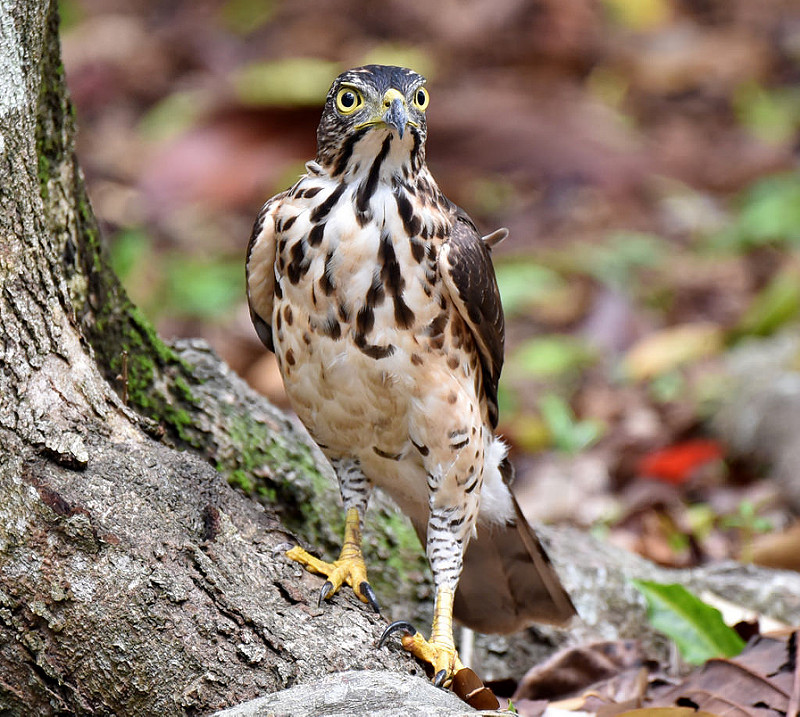
bop-12
Photo credit: ‘Crested Goshawk’ – Naturelly via Foter.com / CC BY-NC-SA Original image URL: https://www.flickr.com/photos/51995830@N02/22448788308/

For the upper classes, falconry was used as a social excuse to host hunting parties. The Kings of England and France, the Russian Czars and Holy Roman Emperors all had huge falconry establishments and employed hundreds of the finest falconers. Higher nobility spent little time training the birds themselves, this was left to the Master falconers, who were capable of earning a very high wage…. Training could be a very cruel affair. Raptors often had their eyes ‘stitched up’. The thread would then be tied back over the bird’s head so the trainer could pull the eyes open and shut; this temporary blinding supposedly made it easier for training….

bop-26
Photo credit: ‘Medieval falconer’ – orientalising via Foter.com / CC BY-NC-ND Original image URL: https://www.flick.com/photos/orientalizing/29646330236/

Even after the decline of using birds of prey to hunt for food, the social standing of falconry remained; it had become an ingrained way of life….The Clergy was particularly fond of the art, even a nun would often have been seen with a bird on her wrist. Bishops complained about the frequency of raptors being taken into Services, as they interfered with concentration….

Gradually, by the 17th and 18th Centuries the popularity of falconry began to die out. With the collapse of the feudal system in Europe and the invention of the shot gun, these majestic birds no longer held such high esteem in society. In time, they became seen as vermin, nests were destroyed and birds killed. This escalated, coming to a head in the first half of the 20th Century, when they became seen as direct competition for prey, by hunters with guns….

Nowadays, because of careful conservation, it is becoming an increasingly familiar sight to see birds of prey in the wild….
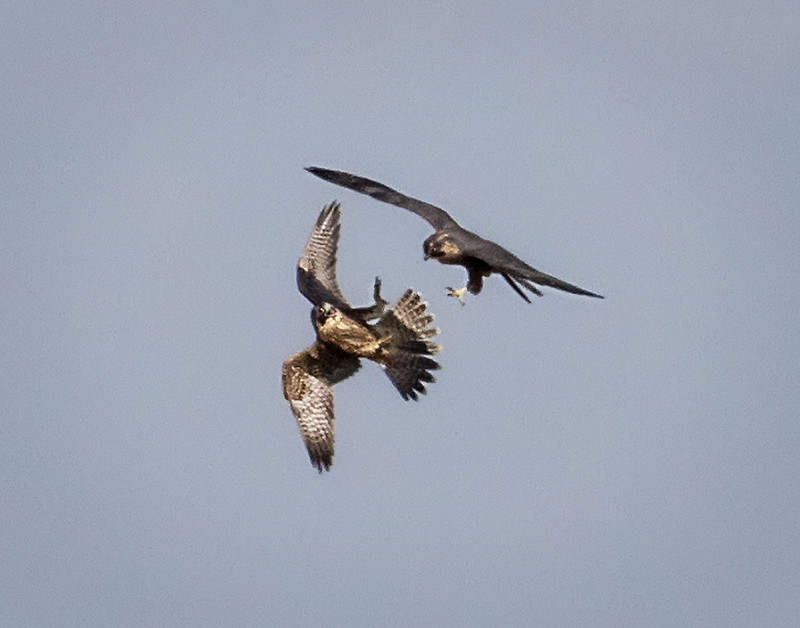
bop-29
Photo credit: ‘Peregrine Falcons Playing May 22, 2014’ – grandmasandy+chuck via Foter.com / CC BY-NC Original image URL: https://www.flickr.com/photos/27784972@N07/14269322523/

Falconry as a pastime is also enjoying huge interest, helped by the popularity of ‘experience days’. It is possible to get a ‘taster’ of what the sport entails, maybe encouraging people to train and take up the activity themselves – or at the very least learn about and become more aware of these wondrous creatures….

I, for one, will never forget the fantastic day we had as a family at http://www.westsussexfalconry.co.uk ….
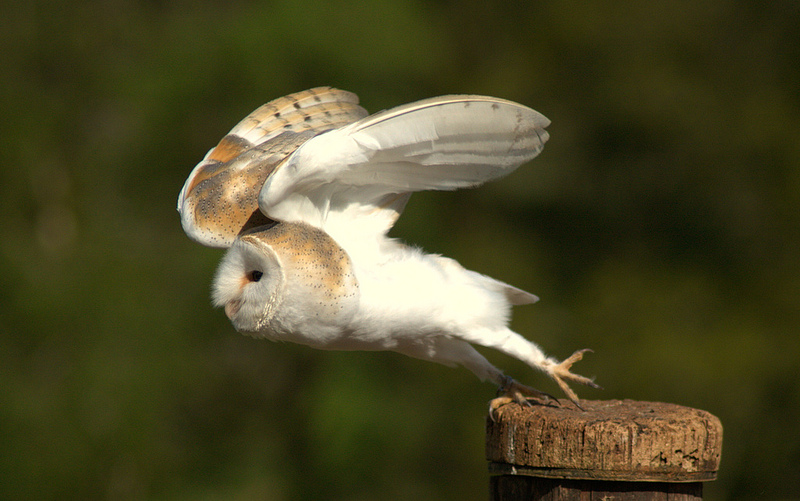
bop-24
Photo credit: ‘Barn Owl Takeoff’ – Peter_stanton86 via Foter.com / CC BY-NC-SA Original image URL: https://www.flickr.com/photos/peter_stanton86/8739601780/

Not past my ‘sell-by’ date yet….

When I look in the mirror these days, it’s with a certain amount of trepidation…. Every time I do, it seems another line has appeared and I’m sure if I were to stop highlighting my hair, I would find it has turned completely grey…. At least I’m spared that particular consternation….

What took the biscuit though, was a recent comment from my 16 year old son…. Having just returned from a school trip to Iceland, he was full of enthusiasm for what they had experienced there; glacier walking, lava tubing, visiting geysers, swimming in thermal pools….

It really sounds like they had the time of their lives….”You should go, Mum, you’d love it…. Don’t leave it too long though, there’s a lot of walking involved….”

Now, I know I’m on the wrong side of 50 but hang on a minute…. I don’t need a Zimmer frame just yet…. Cheeky young pup….

It got me thinking though – about age. When I was 16, what did I consider ‘old’? Probably anything over 30…. 50 would have seemed positively ‘ancient’. It’s funny, now that I have officially reached ‘ancient’, I feel as though I am still 16….

By coincidence, the next time I logged on to check my emails, an article popped up. According to recent research, one third of the over 50s feel ‘more empowered and adventurous’ than they did ten years ago. They want to challenge themselves and have a ‘once in a lifetime’ experience. Being in your 50s and 60s is, apparently, the ideal time for adventure travel; getting off the beaten track, exploring, discovering new cultures…. EXPLORE – (the adventure travel experts) – say, that in 2016 the average age of their customers was 54. People are generally staying healthier and fitter nowadays and want to make the most of it….

For a majority of the over 50s, it is a time when life becomes more settled; finances are more secure, the family has flown the nest or is about to, some may even be thinking about early retirement…. Hold on! STOP! Rewind….

Each week in the UK, three babies are born to mothers who are aged over 50…. In March 2016, Sharon Cutts, a grandmother from Lincolnshire, became the World’s oldest mother of triplets at the age of 55. A couple of weeks ago, Dame Julia Peyton-Jones, former co-director of the Serpentine Gallery, gave birth to her first child; she is 64. Where as it used to be that a woman in her 30s was considered to be an ‘older’ mum, nowadays it seems normal to become a parent in later life. Women are often putting having a family on hold in order to pursue their careers and with advancements in fertility treatment there are more and more possibilities. Last year, a woman who is thought to be the World’s oldest mother gave birth at 70, after two years of IVF treatment….

If the thought of sleepless nights and dirty nappies doesn’t quite ‘cut it’ for you, don’t worry, you don’t have to look far for inspiration when it comes to accepting a challenge….

sbd-6-nappies
Photo credit: 5305 ‘drying nappies’- imcountingufoz via Foter.com / CC BY                                                                                                                Original image URL: https://www.flickr.com/photos/imcountingufoz/2647621312/

How about climbing Everest? The oldest person to climb Mount Everest is Yuichiro Miura, from Japan; he was 80 years old at the time. He reached the summit (his third conquest of the mountain) in 2013, having just endured three heart operations and extensive surgery for a shattered pelvis. Currently, he is training to ski down Cho Oyu, the World’s sixth highest mountain, which he intends to do when he is 85. For his 90th year, he plans to conquer Everest for a fourth time….

sbd-1everest
Photo credit: ‘Way to Everest BC’ – SamHawleywood via Foter.com / CC BY  Original image URL: https://www.flickr.com/photos/samhawleywood/6615781827/

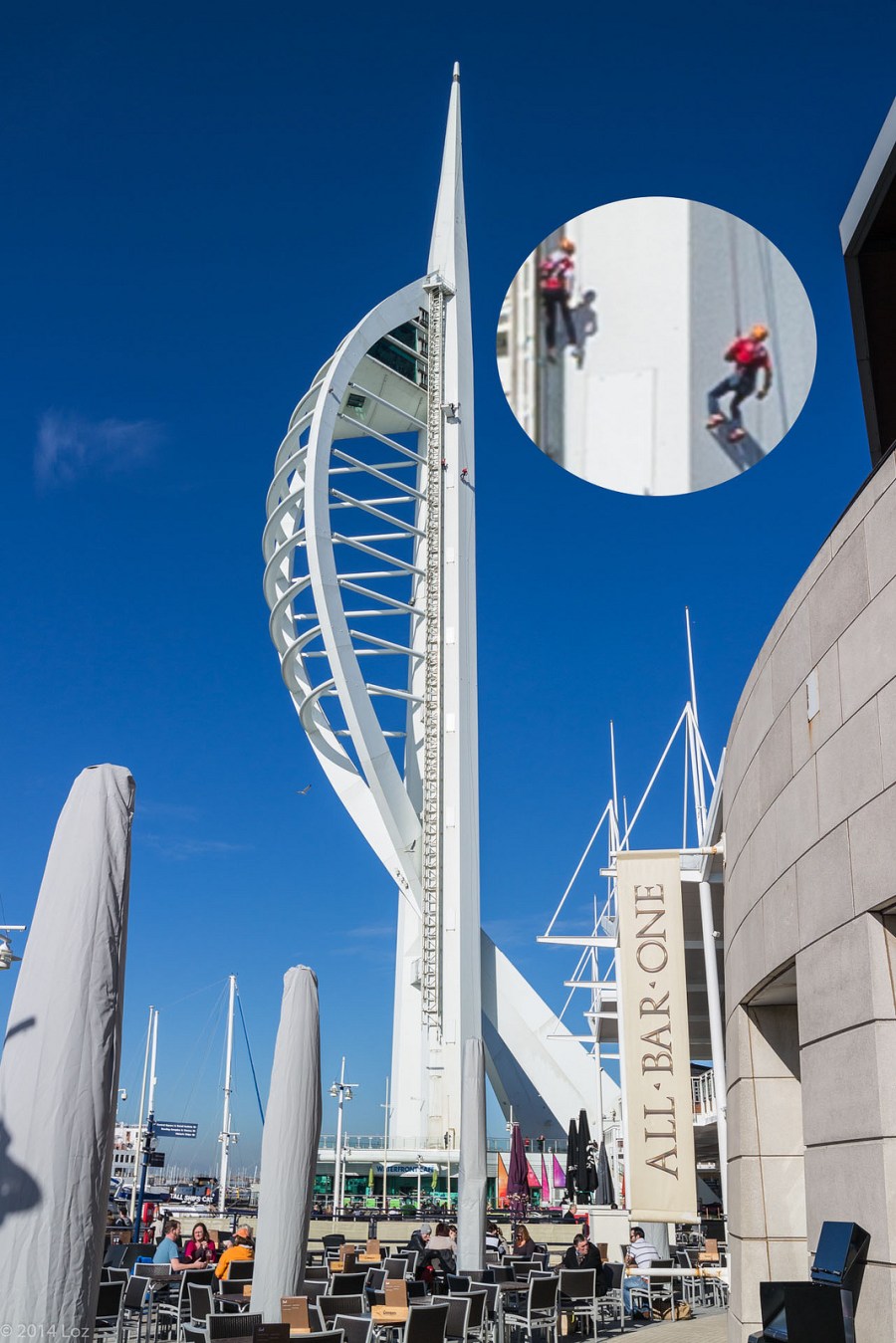
If climbing is your thing but you don’t fancy tackling a mountain, what about abseiling? In July 2015, at 101, Doris Cicely Long became the World’s oldest abseiler, when she abseiled down Portsmouth’s Spinnaker Tower….

sbd-2-Spinnaker
Photo credit lozwilkes via Foter.com / CC BY-NC-ND Spinnaker Tower – Portsmouth https://www.flickr.com/photos/lozwilkes/

If swimming is more your style, the oldest person to swim the English Channel was 73 year old Otto Thaning. While the record for the oldest person to row across the Atlantic goes to a British woman, Diana Hoff, at the age of 55….

sbd-3-channel
Photo credit: Kyle Taylor, Dream It. Do It via Foter.com / CC BY                                                            https://www.flickr.com/photos/kyletaylor/

If you prefer to keep your feet on dry land, there’s always marathon running. Fauja Singh was 89 when he ran his first marathon; at the age of 101 he ran the London Marathon, completing it in 7 hours and 49 minutes….

sbd-4-fauja-singh
Photo credit: Hong Kong Fauja Singh –  Prachatai via Foter.com / CC BY-NC-ND Original image URL: https://www.flickr.com/photos/prachatai/8528180302/

If all that sounds like too much physical exertion but you crave adventure, Space travel could be an option. The oldest astronaut was John Glenn of the USA at 77; whilst the oldest woman to go into Space is Barbara Morgan, also of the USA, who was 55 at the time….

sbd-5-orion
Photo credit: NASA’s Marshall Space Flight Center via Foter.com / CC BY-NC Orion

So, at the ripe old age of 51, next time my teen hints that I may be approaching my ‘sell by’ date – I have ammunition…. There’s still plenty of time to break records…. and I know which one I’m going to have a crack at….

The oldest person on record to have lived, was a French woman by the name of Jeanne Louise Calment. She was born in 1875 and died in 1997 – aged 122 years and 164 days….

If I’m going to beat that record, it looks like I’m going to be around for a bit longer yet….

sbd-10-daisies-1
Photo credit: Nick Kenrick via Foter.com / CC Y-NC-SA “Of this world’s theatre in which we stay”…. Original image URL: https://www.flickr.com/photos/zedzap/9556850685/

A very British storm in a teacup….

weather-4

Today I am going to talk about the weather – because I am British and that’s what we Brits do…. In fact, we are rather good at it, it is ingrained into us, we are obsessed with it…. We talk about it at least once every six hours, 70% of us check the weather forecast daily….

Why?

Actually, contrary to Worldwide belief, our weather is not that bad, it’s usually temperate…. It’s just that when extreme conditions do come along, we are unprepared and ill equipped. Here’s the problem : it is unpredictable…. Where else can you experience four seasons in one day….?

weather-5

It is hardly surprising our weather behaves so unpredictably…. We are a nation where war is constantly raging – a clashing of the fronts…. Being a group of islands we are battered by winds from all directions:-

Artic Maritime from the North – cold ;
Polar Continental, North East – cold and dry ;
Polar Maritime, North West – cold and damp ;
Tropical Continental, South East – warm and dry ;
Tropical Maritime, South West – warm and wet….

No wonder our weather gets confused!

Britain lies at the edge of the Atlantic. Storms feed on the temperature difference between the Poles and the Equator. As the cold and warm air rush towards each other and meet, cyclones are formed. Being at the end of the storm track, we get the tail end of them. Sometimes, there can be a sting in that tail….

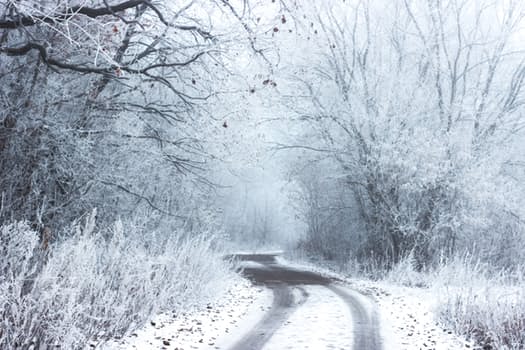
Today, we are being warned to expect one of our rarer phenomenons, we have the possibility of ‘thundersnow’. This occurs when very cold air moves over a relatively warm sea, causing powerful upward air currents. Cumulonimbus clouds form, those that are associated with thunderstorms – if it is cold enough the clouds can produce snow….

We are all aware of the chaos snow can bring to this country ; schools shut, roads become impassable, trains stop running, airports close….

weather-1

Today a severe weather warning is in place, as is a public health alert for cold conditions…. Are we over reacting? Quite possibly – but we simply are not used to these extremes! A friend, who lives in Russia, recently told me they have been experiencing temperatures of -35 degrees centigrade. As a Brit, I cannot get my head around that! I find it impossible to imagine what that must be like – that really is extreme! It is no wonder why the rest of the World finds our weather obsession amusing…. All this fuss over a few degrees below freezing and a bit of the white stuff….but it’s just not normal for us!!

It’s the same when the mercury shoots up the other way….we can’t do heat either. We run out of water and hose pipe bans are enforced. Torrential rain means too much water and we have flooding. High winds, we loose our power supplies….and so on….

weather-9

So, it is hardly surprising that we complain about our weather so much….but in the next breath we can be equally defensive….and nostalgic! We have a tendancy to look back on summers gone by – the ones of our childhood – filled with long, sunny days. Were they really that perfect? Or is it just that this is how we choose to remember them? The same for Christmas…. Each year we ask the question – “are we going to have a white one?” In reality, we have only had four true white Christmases in the last 51 years….! Ah, nostalgia….!

weather-8

Anybody who works outside will obviously have a vested interest in what the weather has in store for us….livelihoods depend on it. We have a very good weather forecasting service in this country – we have plenty of notice when severe weather is expected…. It becomes news worthy – the media feasts upon it and brings it to our attention, which makes us talk about it even more….and talking about the weather helps us to over come our social inhibitions….

How many times has a complete stranger asked you a weather related question, whilst at the same time stating the obvious? “Cold today, isn’t it?” It is an invitation to start a conversation – an ‘ice-breaker’ (no pun intended). Or it might be used to fill an awkward silence, perhaps it may divert away from an uncomfortable subject…. If we start to analyse this and look at social interaction on a deeper level, it brings us to the ‘Politeness Theory’. Developed in the 1970’s and 80’s by researchers at Stanford University, California, the Politeness Theory assumes politeness has ‘faces’ and we in turn have a ‘face’ (wants and needs) :

‘Positive face’ – the desire to be liked and admired, not to be ignored and to maintain a consistent self image.

‘Negative face’ – the desire not to be imposed upon, to protect personal space, be in control, make own decisions….

Britons tend to belong to the ‘negative face’ group; we will play safe when initiating conversation, choosing an unobstrusive topic (such as the weather), it maintains distance, doesn’t give too much away…. Ask a Brit how they are feeling and they will often answer “not bad”…. Ask an American the same question and being of ‘positive face’ you are likely to get a more direct and detailed reply…. The same goes for American ‘ice-breaking’ questions – they will probably entail a more personal enquiry…. “How old are you?” or “what do you do for a living?” This is why the British often find the Americans rude and too forward – where as we can come across as aloof and reserved. Neither side wishes to appear rude to the other – we just have different ways….different ‘faces’….

So, after just hearing the latest weather report on the radio, this Brit is going to go and dig out her snow boots….
That is if she is to believe all the media hype….
Cynicism – now there’s another truly British trait….

weather-2


New year, new beginnings, old traditions….

new-years-eve-4

As the New Year approaches, I find myself wondering about some of the traditional customs we associate with it, here in the British Isles and how they vary from region to region….

New Year is one of our oldest holidays, although the exact date of the festivities has changed over the times. Its origins can be traced back thousands of years to Ancient Babylon, when, starting on the first day of Spring, (which was determined by the cycle of the Sun and Moon), an eleven day long festival was held. These early, mostly Pagan, celebrations were in honour of the Earth’s cycles….

January the 1st became the common day for celebrating New Year with the introduction of the Julian Calendar, implemented by Julius Ceasar….

The Julian Calendar has its flaws, namely that it does not accurately record the actual time it takes for the Earth to circle once around the Sun (tropical year). It is because of this, that in 1582 the Gregorian Calendar was first introduced. Also known as the Western or Christian Calendar, it is the most commonly used one in the World today. It is named after its founder, Pope Gregory XIII but it was not adopted by the whole World immediately. In fact, it took over 300 years for it to become used to the extent it is today. France, Italy and Spain were amongst the first to employ it, the United Kingdom, United States and Canada did not start using it until 1752. Turkey was the last and it wasn’t until 1927 that they followed suit….

After the fall of the Roman Empire the date for New Year changed in Britain to March the 25th. It wasn’t until the adoption of the Gregorian Calendar that January 1st became the official day once again. It took until 1974 for it to become a public bank holiday….

There have always been superstitions associated with New Year, evolving in their own particular ways, from one part of the country to another. Most of them relate to luck and new beginnings….

Making New Year’s resolutions goes back to ancient times. Other customs and beliefs have come to us along the way…. Some are more general, such as opening the door at midnight to let the old year out and the new one in….

‘First Footing’ is also a widely observed custom but one that has its variations depending on its whereabouts in the country. Most commonly though, it is believed that the first person to cross the threshold after midnight, should have dark hair, to bring good luck. Ideally, they should bring coal, to symbolise warmth for the coming year, bread to represent food and salt for money – (hence the saying “worth his salt”). Many believe that if a blonde person were to be the first, ill luck would be forth coming. Many Scottish people believe the First Footer should be a stranger. In Wales, where it is known as ‘Nos Galan’, it is considered that if the first visitor is a woman and the door is opened by a man, this will bring bad luck. The Welsh also believe that bad luck will also be brought if the First Footer is a red head. Another belief is that all debt must be paid by the end of the year. To start a new year owing, would mean a whole year will be spent in debt….

Another popular superstition was – ‘the cream of the well’. It was believed that if a woman washed in the first water drawn from the well on New Year’s Day, she would become beautiful….

Some traditions are very regional. In Yorkshire, just before midnight, people say “black rabbits, black rabbits, black rabbits”. Then immediately after the clock has struck, “white rabbits, white rabbits, white rabbits”. By saying these words, good luck is ensured for the coming year. This is where the saying “white rabbit” comes from, said by so many of us on the first day of every month….

Herefordshire once had an old tradition of ‘burning a bush’. A young farmer, rising before day break, would cut down a hawthorn bush and set fire to it, to guarantee a good harvest later in the coming year….

Fire seems to feature in many of our New Year’s customs and beliefs. Northumberland for instance, has the Allendale Tar Barrel Festival. On the 31st of December, whisky barrels are filled with kindling, sawdust and burning tar, they are then paraded through the streets, on the heads of barrel carriers, called ‘Guisers’….

In Perthshire, the town of Comrie has its Flambeaux Procession. Eight, flaming torches are carried through the town and then are flung from a bridge into the River Earn, this is meant to cast out any evil spirits….

Stonehaven, near Aberdeen, has a Fireball and Chain Festival. Sixty, kilt clad marchers, swing about their heads, sixteen pound balls of fire attached to wire ropes, whilst parading through the streets accompanied by pipes and drums….

The Welsh people have their own gift giving tradition of ‘Calennig’. Some think this custom goes back to Pagan times. The name ‘Calennig’ is thought to come from the Latin ‘calends’ or ‘kalends’ – meaning first day of the month, which is also where we get the word ‘calendar’ from. A Calennig is a small decoration made from an apple, (or perhaps, nowadays, an orange), which has been studded with cloves and supported on three twigs. A sprig of box foliage is then inserted into the top of the fruit. It is meant as a token to ensure a future good harvest and is either displayed in the house or given as a traditional New Year’s gift….

Welsh children often get up early on New Year’s Day, (Dydd Calan), in order to go and sing songs to their neighbours, perhaps taking calennig decorations as gifts. In return, they receive sweets and money….

Another Welsh tradition, especially in South Wales, first recorded in 1800 and known as ‘Mari Lwyd’ (Venerable Mary), was not always so welcome! The skull of a horse, decorated with colourful streamers, would be carried on a pole and made so that the jaws could be snapped open and shut. The bearer would be covered in a white sheet, draped from the skull. Then, accompanied by a group of men, the ‘horse’ would go from house to house. The home owners would be challenged to a contest in song and rhyme, each taking a turn to banter in a more and more humorous and witty way as the contest progressed. The idea was for the group to be invited into the house to partake in ‘merriment’, in the form of food and drink. Obviously, having a group of boisterous, probably drunk, rabble of men, turn up on the doorstep, late at night, wielding a horse’s skull and expecting fun and banter….did not appeal to all! So, this custom began to decline at the beginning of the 20th Century. It was also discouraged by some of the Christian clergy, who frowned upon its Pagan origins….

Then, of course, we come to Scotland’s Hogmanay – the Scots word for the last day of the year. The exact origins of the name are unknown, the earliest references come from the 1600’s, with many spellings, such as ‘hagmane’, ‘hog ma nae’ and ‘hagmonay’….

Christmas, as we know it, was not celebrated as a festival in Scotland. In fact, from the end of the 17th Century, right up to the 1950’s, it was more or less banned…. Most Scottish people had to work over the Christmas period and instead celebrated the Winter Solstice holiday of New Year. The reason being, the Kirk (Church) viewed Christmas as a Catholic feast and as the Scottish Church had its roots in the Protestant Reformation, the festivities had to be banned….

‘Hand Selling’ was once the Scottish custom of giving gifts, it would happen on the first Monday of the year but this has now died out. Instead, New Year became the time for Scots to gather, exchange gifts, feast and hold celebrations. An important part of the festivities was (and indeed still is today), to welcome both friends and strangers into the home, to enjoy warmth and hospitality….

Hundreds of years ago, Pagan festivities would include lighting bonfires and rolling tar barrels, that had been set ablaze, down hillsides. These traditions are reflected in the magnificent firework displays and torch light processions, held every year, in Edinburgh and many other Scottish cities. Even more Pagan was the act of wrapping animal hide around a stick and setting it alight. The smoke was believed to ward off evil spirits, the smoking stick was known as a ‘Hogmanay’. Other customs would involve people dressing up in cowhides and running around the village whilst being beaten with sticks! Some of the more rural, remote communities, especially the Highlands and Islands, still continue a form of these old traditions today. For example, in the Outer Hebrides, on the Isle of Lewis, young boys divide into groups, the leader dresses in a sheepskin and they move from house to house, with a sack in which they collect a type of fruit bun, called a bannock….

In other parts of Scotland, it is traditional to give children a Hogmanay Oatcake on New Year’s Eve – this represents the time when they would of gone from door to door asking for oatcakes and bread….

“Get up, goodwife, and shake your feathers,
And dinna think that we are beggars;
For we are bairns come out to play,
Get up and gie’s our Hogmanay!”

One of the oldest traditions (and one shared by many cultures), is the cleaning of the house until it is spotless, on New Year’s Eve, making sure every task is finished. Symbols for what is desired for the coming year may be left out, such as food, so there will be plenty to come, coins for wealth and dolls, for the hope of being surrounded by family. Many Scots fast, or perhaps just have a very small breakfast, on New Year’s Eve. Then, once the magical hour of midnight arrives, all the windows and doors of the house are flung open to welcome in the New Year and to let out the old. Then a huge feast is partaken of….but not of course until the traditional “Auld Lang Syne” has been sung….

Nowadays, Auld Lang Syne has been adopted as the official New Year’s song, by just about every English speaking nation of the World….

It was in 1788, that Robert Burns first recorded the lyrics on paper and sent them to the Scots Musical Museum. He had based his famous poem on an earlier song, printed by James Watson in 1711. There is doubt as to whether the tune we all know and sing the words to, is actually the melody Burns intended….

Roughly translated, “Auld Lang Syne” means “for old times sake”. It is about looking back over the previous year and preserving friendships….


“Should auld acquaintance be forgot
And never brought to mind?
Should old acquaintance be forgot
And auld lang syne


For auld lang syne, my jo
For auld lang syne,
We’ll tak a cup o’ kindness yet,
For auld lang syne….

On that note….it just remains for me to wish you, in whatever way you choose to celebrate it – A very happy and prosperous New Year!


                                                                                   new-years-day-6