On this day in history….17th March 1846

On this day in history : 17th March 1846 – The birth of Kate Greenaway – the artist and writer known for her illustrations in children’s books….

Kate Greenaway – Public domain

Kate was born Catherine Greenaway in Horton, London, the second of four children…. Her father, John, was a woodblock printer and engraver and her mother, Elizabeth, a seamstress…. They were a working class family – John also supported his mother and sisters, so very often it could be hard financially….but both he and Elizabeth were determined to give their children a good childhood….

The family moved around quite a lot but Kate spent a substantial part of her childhood in a farmhouse in Rolleston, Nottinghamshire – for her this felt like her real home and where she would often return to as an adult…. She studied at various places and at the age of 12 began nightly art classes at Finsbury School…. She was to go on to study at the Royal Female School of Art, which was part of what is now the Royal College of Art in London….

She began to exhibit her drawings in 1868 and her first published work was in magazines for children, such as ‘Little Folks’…. She also worked at illustrating greetings cards to contribute towards the family’s income….

In 1879 her first successful book was published – ‘Under the Window; Pictures and Rhymes for Children’…. It was to become a best seller, over 100,000 copies were sold…. In 1880 it was followed with her illustrations in ‘The Birthday Book’, ‘Mother Goose’ in 1881 and ‘Little Ann’ in 1883…. She was to go on to illustrate over 150 books – only two were both written and illustrated by Kate, her first ‘Under the Window’ and later ‘Marigold Garden’ (or ‘The Language of Flowers’) in 1895….

Marigold Garden – Public domain

She brought many well-known stories to life, such as Robert Browning’s ‘The Pied Piper of Hamelin’…. Leading art critics around the world praised her work….
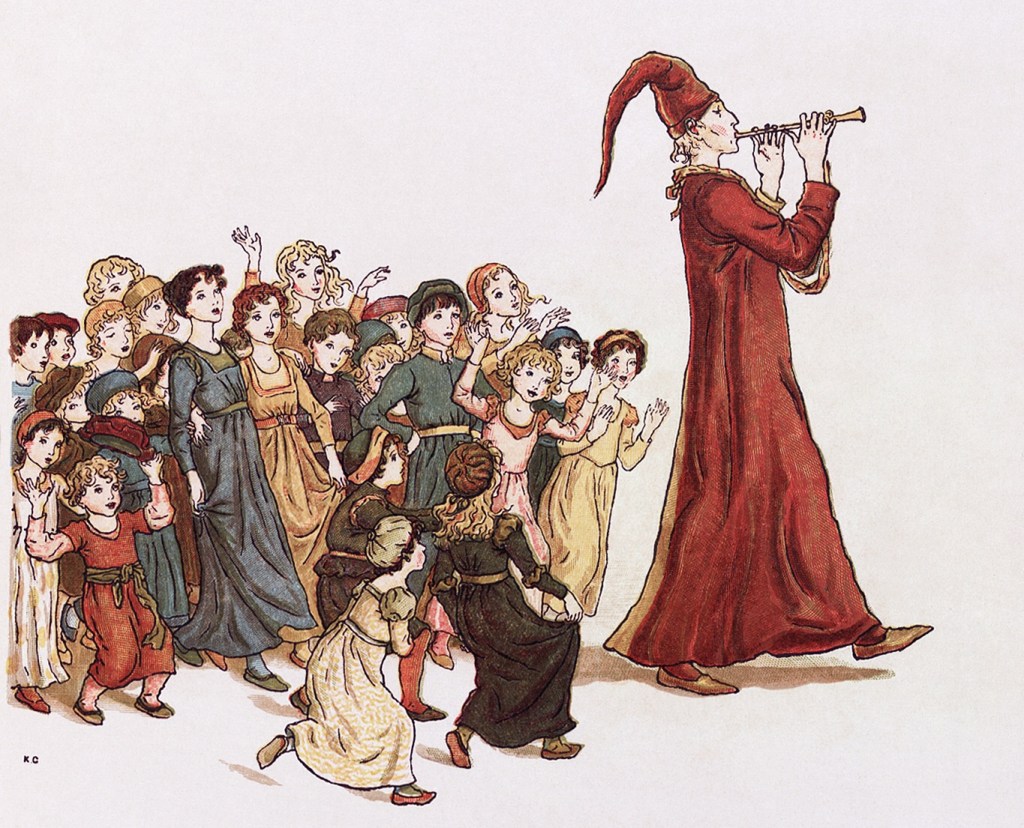
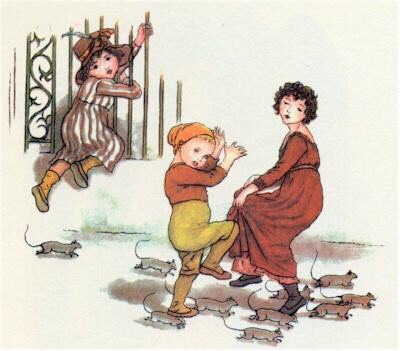
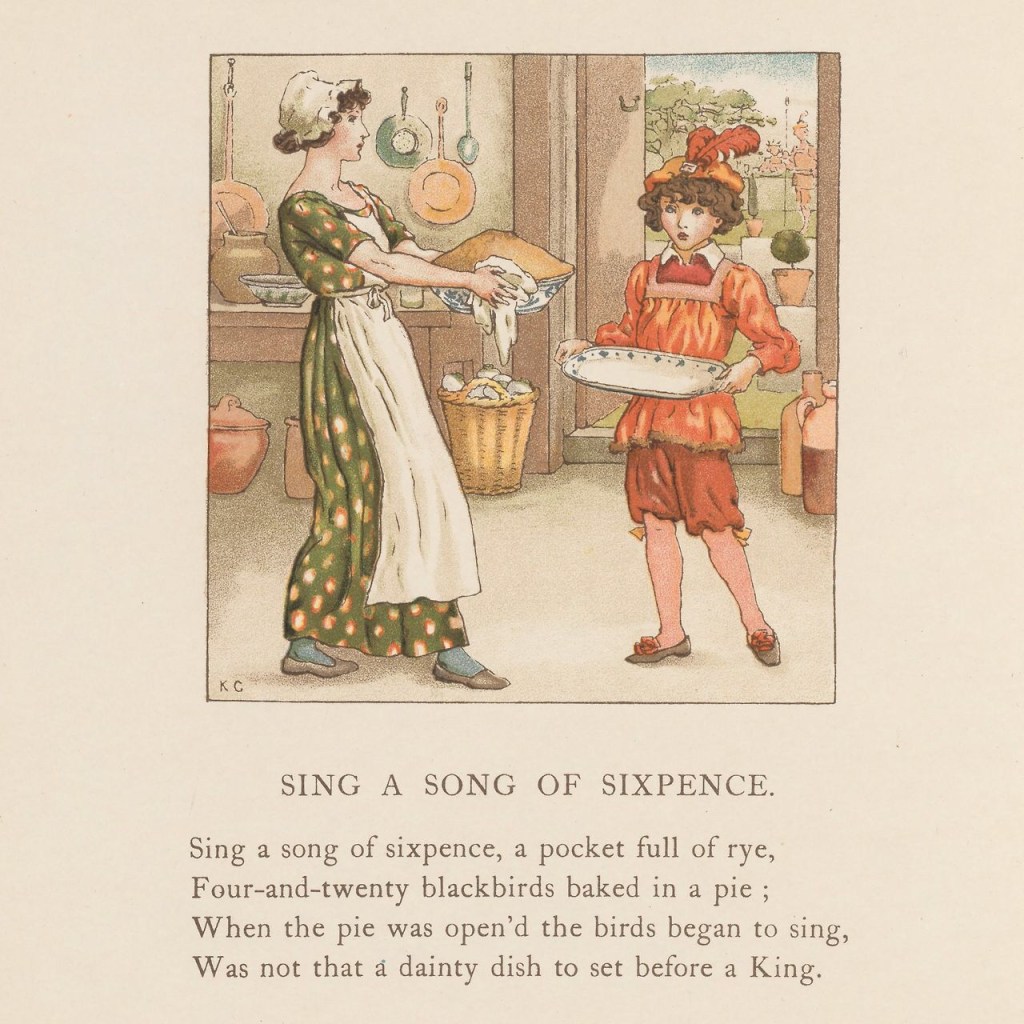
Her own favourite books as a child may have influenced her – Sleeping Beauty, Cinderella, Beauty and the Beast and illustrated editions of Shakespeare…. In her own illustrations she always dressed her children in the Regency fashions of the late 18th Century….smock frocks and skeleton suits for the boys and high-waisted pinafores and dresses with mobcaps and straw bonnets for the girls…. A style which was to catch on….Liberty of London created children’s clothes by adapting her drawings….

Polly from ‘The Queen of the Pirate Isle’ – by Bret Harte – Public domain

In 1890 Kate was elected to the Royal Institute of Painters in Watercolours; she exhibited at the Fine Art Society in 1891, 1894, 1898 and was exhibited posthumously again in 1902…. From 1883-1897 she published Kate Greenaway’s Almanacs…. Kate died of breast cancer at the age of 55 on the 6th of November 1901…. She was buried in Hampstead Cemetery, London….

May Day – Public domain

The Kate Greenaway Medal was established in 1955 in her honour…. It is awarded annually by the Chartered Institute of Library and Information Professionals in the UK to a chosen illustrator of children’s books….
Public domain

On this day in history….1st November 1887

On this day in history : 1st November 1887 – The birth of English artist L.S. Lowry – famous for his matchstick figures, mill scenes and industrial landscapes….

Millworkers by LS Lowry – Photo by Bruce Lamberton – own work – CC BY-SA 4.0

Laurence Stephen Lowry was born in Barrett Street, Stretford…. His father, Robert, was a clerk for a property company and his mother, Elizabeth, a teacher and talented pianist…. She was to suffer ill-health after the birth and had to give up work and all aspirations of becoming a concert pianist…. This made her resentful and added to the fact that she made it no secret that she had longed for another daughter and not the son she got – Lowry himself admitted that his childhood was not an overly happy one…. His father was introverted and meek, whereas his mother was domineering….

In 1898 the family moved to Victoria Park, a pleasant leafy suburb of South Manchester…. However, in 1909 financial difficulties forced a move to Pendlebury, the industrial area between Manchester and Bolton….

On leaving school Lowry took a couple of jobs working for chartered accountants but after being made redundant for a second time in 1910 he began to work as a rent collector for the Pall Mall Property Company…. He remained working for this firm until his retirement in 1952….

Lowry had always enjoyed drawing as a child and once he had started earning his own money he paid for private art lessons…. Then in 1905 he began evening classes at the Manchester Municipal College of Art, where he studied under French impressionist Pierre Adolfe Valette – a man he greatly admired….

Still Life (1906) – Fair use

To further his art training he joined Salford’s Royal Technical Institute in 1915 and remained studying here until 1925 – by which time he had now developed his own unique style of urban landscapes, matchstick men and deep, brooding portraits….

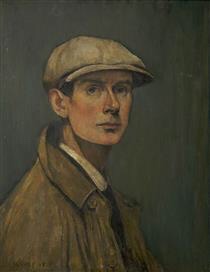
Self Portrait (1925) – Fair use
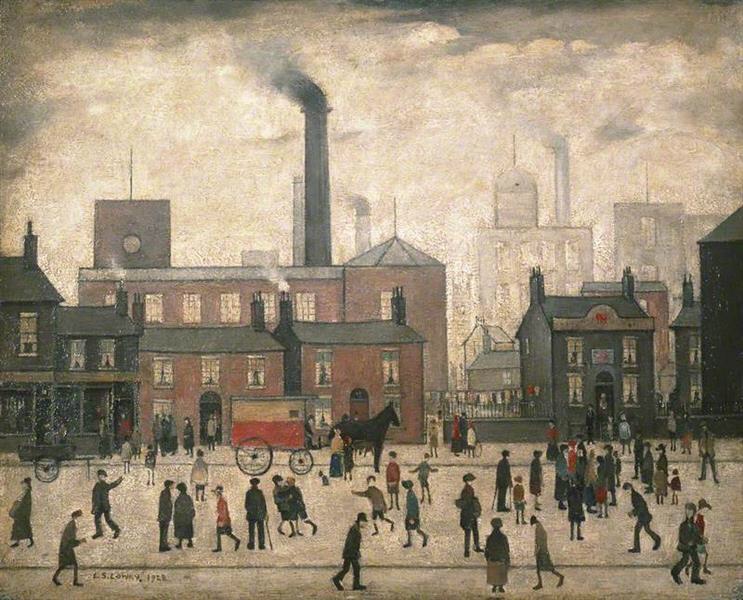
Coming Home from the Mill (1928) – Fair use

Lowry’s father died inn 1932, leaving the family in debt and financial difficulty…. Before long his mother had become bedridden and it was Lowry who had to care for her…. The only time he got to himself was late at night – he would often paint into the early hours…. His mother never appreciated his talent; he had his first solo exhibition at the Lefevre Gallery, London, in 1939 – which was hugely successful and many of his paintings sold…. His mother did not live long enough to see his success – she died in October 1939….

View of a Town (1936) – Fair use
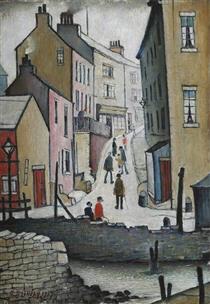
An Old Street (1937) – Fair use

During World War 2 Lowry became an official war artist…. By now he was battling with depression; he stopped looking after his home – and in the end the neglect had become so bad that in 1948 he was evicted from the house by the landlord…. Fortunately Lowry was now financially secure and so he bought himself a house, ‘The Elms’, in a more rural area of Cheshire…. Although he claimed he didn’t much like the house or area he set up his studio here and remained until his death….

Going to Work (1943) – Fair use

Lowry liked to holiday each year in the same seaside hotel in Sunderland…. Here he painted beach scenes, the nearby ports and coal mines…. If he saw something that interested his artist’s eye and had no sketch pad to hand he would utilise whatever was available, maybe the back of an envelope or perhaps a napkin…. He would give these sketches away to whoever was present and taking an interest in what he was doing…. These drawings are now highly desirable and fetch a small fortune….

July, the Seaside (1943) – Fair use

Although regarded as a private person and a loner Lowry was a likeable character and made many long lasting friends in his lifetime…. He never married but did have lady friends…. He particularly befriended colleagues in the art world – and would go out of his way to encourage young artists, often by buying their work…. He would frequently act as a mentor…. Lowry was also football fan and a keen Manchester City supporter….

He retired from his job as a rent collector on his 65th birthday…. By now he was beginning to tire of painting industrial scenes and although he didn’t totally abandon his trademark theme he began to paint small groups of figures…. Influenced by his holidays in Sunderland he also started painting more and more empty landscapes….

Seascape (1950) – Fair use

Into his old age Lowry continued to paint and draw – it is perhaps evident he did so purely to please himself – and did not intend it for public display…. His work from this time has an intimate, private, even surreal quality to it…. ‘Mannequin’ drawings….young women in absurdly restrictive clothing; tight bodices they could hardly breathe in – or even dressed in men’s evening attire…. A large quantity of these pictures were found after his death….

Man Lying on a Wall (1957) – Fair use

Lowry was admitted to Woods Hospital, Glossop, following a stroke…. He died of pneumonia on the 23rd of February 1976…. He was buried at Southern Cemetery, Manchester, alongside his parents….

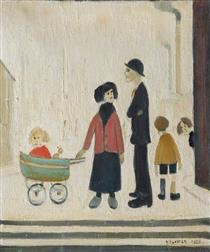
Family Group (1958) – Fair use

A major exhibition of his work was later held at the Royal Academy and attracted a record number of visitors for a British artist…. His works are often now sold for millions….

L S Lowry contemplating Stockport (a scan taken from a photograph by Crispin Eurich in 1962) – Image credit : Smabs Sputzer (1956 – 2017) via Flickr

On this day in history….26th June 1817

On this day in history : 26th June 1817 – The birth in West Yorkshire of painter and poet Branwell Brontë – only son of the Brontë family and brother to writers Charlotte, Emily and Anne….

img_3430
Bronte Birthplace Plaque – Tim Green via Flickr

Born in Thornton, near to Bradford, Patrick Branwell Brontë – known as Branwell – was the fourth of six children…. He was just 4-years-old when his mother died in 1821 – and his aunt Elizabeth Branwell moved in to look after the children…. He was then to be deeply affected when his two eldest sisters, Maria and Elizabeth, were to die from TB shortly before his eighth birthday…. The four remaining Brontë children were to become very close….

Branwell, always on the small side for his age and with flaming red hair, was quick-witted and a bit of a show-off in public…. His father decided to educate him at home and taught him in the classics – whilst his sisters were sent away to boarding school….

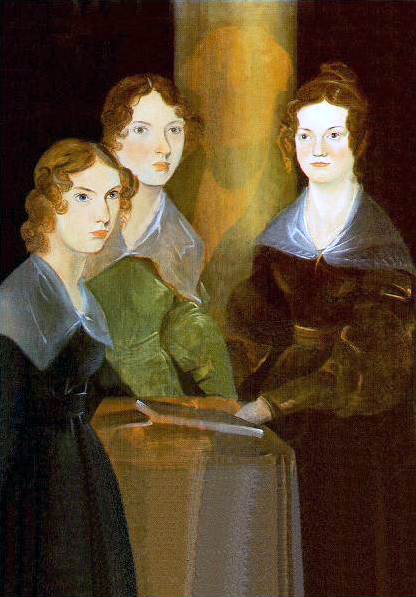
In 1829 the children’s father hired the services of John Bradley, a local artist of some repute, to teach his children to draw…. It was possibly then that Branwell began to aspire to become a portrait painter…. In 1834 he painted a portrait of his sisters and himself – only to paint out his own image as he was dissatisfied with it…. The portrait now hangs in the National Portrait Gallery and is recognised as one of the best known images of the sisters….

img_3427
Branwell Bronte – Public domain

Branwell rented a studio in Bradford in 1838 and set himself up as a professional portrait painter…. Only he made a lot of friends in the artistic community and spent too much time in the pub and failed to make a living as an artist! In 1840 he took employment as tutor to the children of a wealthy family – but was sacked within a year…. Then for the next six months he worked as a clerk but again lost his job, over a discrepancy with the accounts….

img_3428
Branwell Bronte, self portrait, 1840 – Public domain

At the beginning of 1843 his sister Anne managed to secure him a job as a tutor – but once again, in 1845, he was sacked – seemingly after having an affair with his employer’s wife…. Returning to the family home in disgrace he fell into self-pity and soon became an alcoholic and addicted to opium…. Branwell died on the 24th of September 1848, possibly from TB….

img_3429
Self caricature of Branwell in bed waiting to die, 1847 – Patrick Branwell Bronte – Public domain

ë

On this day in history….12th May 1812

On this day in history : 12th May 1812 – The birth of Edward Lear, artist, author, illustrator, musician and the writer of nonsense verse, including the much-loved ‘The Owl and the Pussy-Cat’….

img_3136
A Book of Nonsense (c.1875 James Miller edition)

Lear was born in the North London suburb of Holloway into a large middle class family; he was the second to last of 21 children and the youngest to survive…. Throughout his life he suffered health problems – asthma, bronchitis, poor eyesight and epilepsy…. He was acutely embarrassed by his epileptic fits….possibly this contributed to his bouts of melancholic depression, to which he referred to as ‘the morbids’….

img_3133
Edwaard Lear in 1866

His was a difficult childhood…. His father, a stockbroker, encountered severe financial difficulties….and due to the family’s economic situation Lear was entrusted to the care of his eldest sister, Ann, 21 years his senior…. Lear would sometimes tell people his father had gone to debtor’s prison – but there is no evidence this actually happened…. However, his mother never resumed her maternal duties towards him and her rejection affected him…. His sister continued to care for him until her death when she was aged 50….

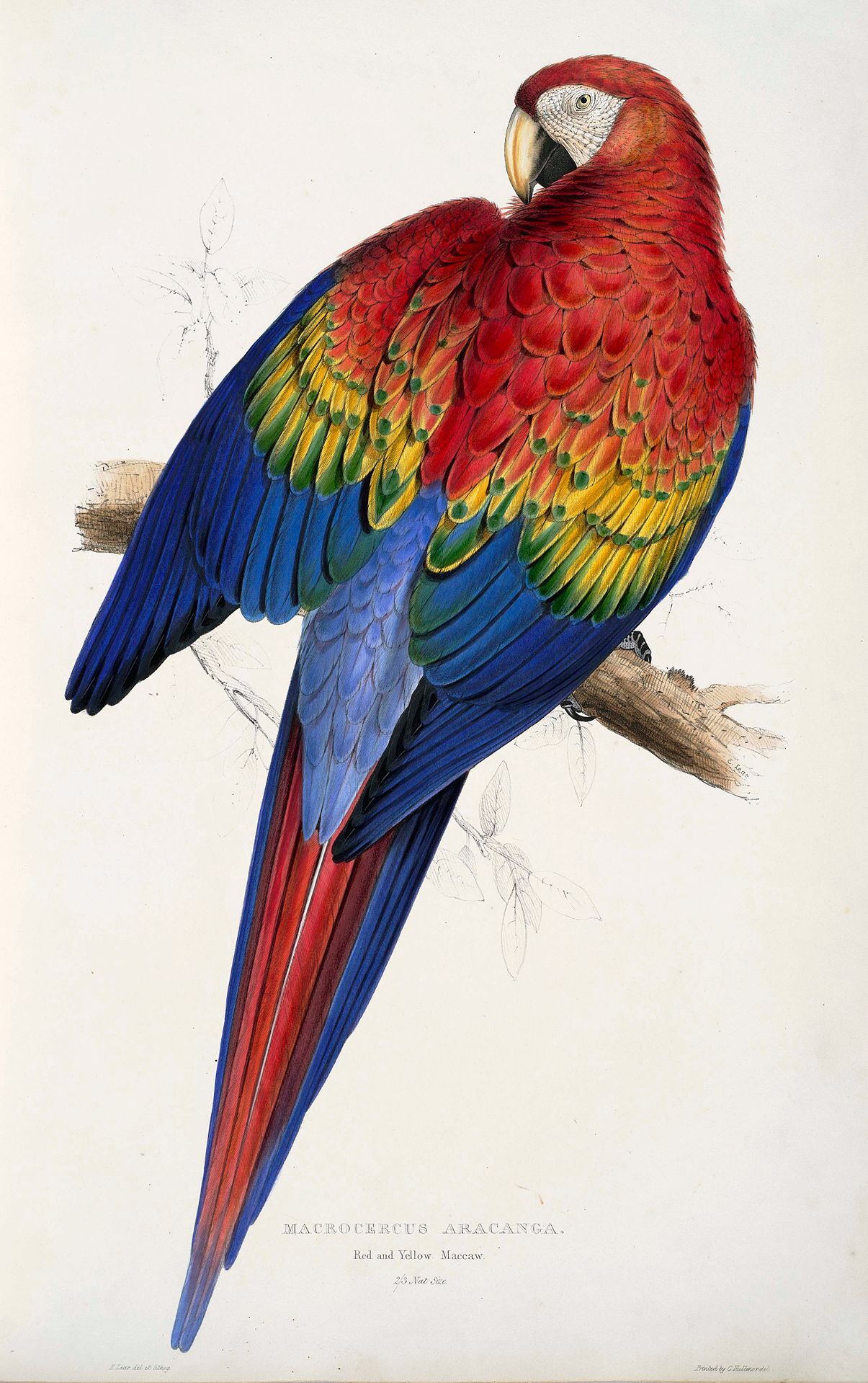
At the age of 15 Lear began to earn a living as an artist…. He had received no formal education, just what Ann had taught him at home…. At first he produced drawings and paintings which he sold for a ‘crust’ – but was then employed by the Zoological Society as an ornithological illustrator…. He was the first major artist to draw live birds rather than dead specimens….

In 1832 he published a book of prints of parrots and came to the attention of Edward Stanley, who was later to become the 13th Earl of Derby…. Stanley had a menagerie at Knowley, the family estate in Lancashire…. Wanting an artist to draw his animals he offered Lear the job….and between 1832 and 1837 Lear lived and worked on and off at the estate….This provided him with many opportunities; he met many aristocrats who bought his paintings….and he made acquaintances with those within circles not usually open to the middle classes….

img_3137
From his first book

Lear would later travel….Greece, Egypt, India, Ceylon…. Having developed a passion for landscape painting he would make many colour-wash drawings to record what he saw, transforming them into oil and watercolour paintings on his return to his studio…. Many of these were used as illustrations in his books….

img_3130
Oil on canvas by Edward Lear

He was later to spend much of his time in Italy…. In 1842 he travelled through Lazio, Rome, Molise and other regions….and spent time in Sicily…. He studied the ancient monuments, the people, their way of life and traditions….his travels reflected in his work of the time….

img_3134
Temple of Venus and Roma, Rome by Edward Lear

In 1846 he published ‘A Book of Nonsense’, the style of writing so many of us associate with Edward Lear…. 1871 saw the publication of ‘Nonsense Songs, Stories, Botany and Alphabets’….included amongst its poems was ‘The Owl and the Pussy-Cat’ – which was written for the children of the 13th Earl of Derby….

img_3132
Nonsense drolleries : The owl and the pussy-cat ; The duck and the kangaroo / by Edward Lear ; with original illustrations by William Foster (1889) : Image credit Circasassy via flickr

Lear also composed music to accompany not only his own verse but the poems of other poets too…. He was an accomplished musician, mainly piano but could also play the flute, guitar and accordion….

In 1880 Lear eventually settled in San Remo, on the Italian Mediterranean coast, in a villa he named ‘Villa Tennyson’…. He never married, although he did propose to a woman 46 years his junior – twice! He found it difficult to forge close friendships, he had a tendency to be somewhat ‘obsessive’ in his relationships, male or female…. One close friendship he did maintain was with Giorgio, his Albanian chef…. He said of him….”A faithful friend but a thoroughly unsatisfactory chef!”….

Lear died in 1888 of heart disease – it had been a long illness…. By all accounts his was a lonely funeral – what friends he did have were unable to attend…. He is buried at Cemetery Foce in San Remo….

The Owl and the Pussy-Cat went to sea
In a beautiful pea-green boat;
They took some honey, and plenty of money
Wrapped up in a five pound note.
The Owl looked up to the stars above,
And sang to a small guitar,
"O lovely Pussy, O Pussy, my love,
What a beautiful Pussy you are,
You are,
You are!
What a beautiful Pussy you are!"

Pussy said to the Owl, "You elegant fowl,
How charmingly sweet you sing!
Oh! let us be married; too long we have tarried,
But what shall we do for a ring?"
They sailed away, for a year and a day,
To the land where the bong-tree grows;
And there in a wood a Piggy-wig stood,
With a ring on the end of his nose,
His nose,
His nose,
With a ring on the end of his nose.

"Dear Pig, are you willing to sell for one shilling
Your ring?" Said the Piggy, "I will."
So they took it away, and were married next day
By the turkey who lives on the hill.
They dined on mince and slices of quince,
Which they ate with a runcible spoon;
And hand in hand, on the edge of the sand,
They danced by the light of the moon,
The moon,
The moon,
They danced by the light of the moon....


img_3135
Edward Lear in 1887, a year before his death

On this day in history….27th August 1995

On this day in history : 27th August 1995 – The death of cartoonist Giles – famous for his cartoons in British newspaper The Daily Express and for the annuals found in so many of the nation’s Christmas stockings each year….

Fair use

Ronald ‘Carl’ Giles was born in Islington, London on the 29th of September 1916…. His friends thought he looked like the actor Boris Karloff and so this earned him the nickname ‘Karlo’ which later became shortened to ‘Carl’….

Giles was the son of Albert Giles, a tobacconist and his mother was the daughter of a Norfolk farmer – he spent most of his childhood summer holidays on the farm…. After leaving school at 14, with no formal art training, he went on to work as an office boy for Superads – an advertising agency…. He was to progress up the ladder to become a junior animator of cartoons….

From 1935 he was to work for Alexander Korda, who was one of the main animators for the first full length British colour cartoon film with sound – The Fox Hunt…. He then went on to join Roland Davies in Ipswich, who was setting up an animation studio….

After the death of his brother in 1937 Giles returned to London and started working for the left wing weekly publication Reynolds News, where he produced, amongst others, the cartoon strip Young Ernie…. He was to come to the notice of John Gordon, editor of the Sunday Express, who in 1943 offered Giles a job on the Daily Express and Sunday Express…. At a temptingly much higher salary it was an offer Giles could not refuse – and so he left Reynolds News to work for the Express Group – his first publication appearing in the Sunday Express on the 3rd of October 1943…. Giles was later to say that he felt some guilt – as his political allegiances lay more with the views of Reynolds News….he did not like the Express’s politics…. However, the money was better than good….by 1955 he was earning the equivalent of around £200K a year in today’s terms, for producing three cartoons a week….

Giles had been declared unfit for war service as he was deaf in one ear and blind in one eye following a motorcycle accident…. So instead during World War 2 he made animated short films for the Ministry of Information…. He also served for a time as a war correspondent to the Coldstream Guards, who liberated Bergen-Belsen…. He was to interview Josef Kramer, the camp commandant, who turned out to be a fan of Giles’s…. Kramer was later hanged for his war crimes….

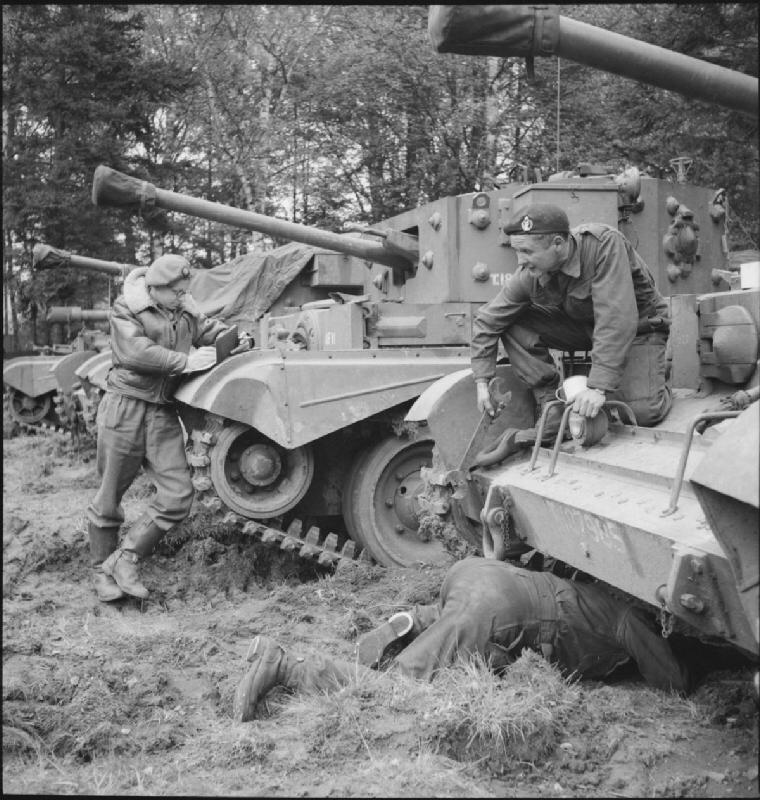
Giles sketches whilst leaning on the front of a tank, whilst his comrades work on the vehicles – From the collections of the Imperial War Museums

In 1942 he married his first cousin Sylvia Joan Clarke…. They were to be married for over fifty years but had no children…. They made their home at Witnesham, near to Ipswich, Suffolk – and here they spent the rest of their lives….

Among Giles’s many thousands of fans were members of the royal family; a request often came from the Palace for originals of his work…. In 1959 he was awarded with an OBE….

The characters we usually associate with his work include the matriarch ‘Grandma’ and ‘Chalkie’, the school teacher – who was modelled on one of his own former schoolmasters…. These characters and others of the extended Giles family first appeared as a published cartoon on the 5th of August 1945…. Many of his cartoons made reference to, or even quoted the headlines of the current news stories of the day….

The first Giles Annual appeared in 1946 and the series still runs today…. Giles left the Daily Express in 1989 but continued at the Sunday Express until 1991…. In the last decade of his life he was plagued by ill health…. His sight loss was increasing and he was becoming more and more deaf….In 1990, due to poor circulation, he had both of his legs amputated…. Then on Christmas Day 1994 his wife died…. Giles was never to get over her death – eight months later, on the 27th of August 1995, he passed away in Ipswich Hospital…. He was aged 78….

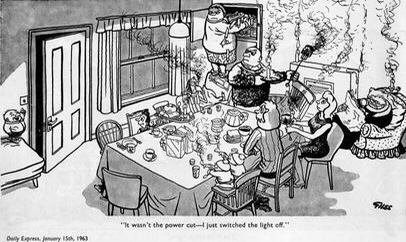
The Giles Family ‘Powercut’ – published January 15th 1963 – Fair use