On this day in history….7th January 1928

On this day in history : 7th January 1928 – The River Thames bursts its banks and floods much of Central London…. Fourteen people lose their lives and thousands more are made homeless…. The Tower of London, Houses of Parliament and Tate Gallery are all swamped….

During Christmas 1927 heavy snow had fallen in the Cotswolds, where the Thames has its source…. A sudden thaw on New Years Eve, followed by excessive heavy rain meant there was double the usual volume of water coming down river…. This coincided with a high spring tide – but at the same time a storm surge, caused by a cyclone in the North Sea meant water levels were raised in the Thames Estuary….

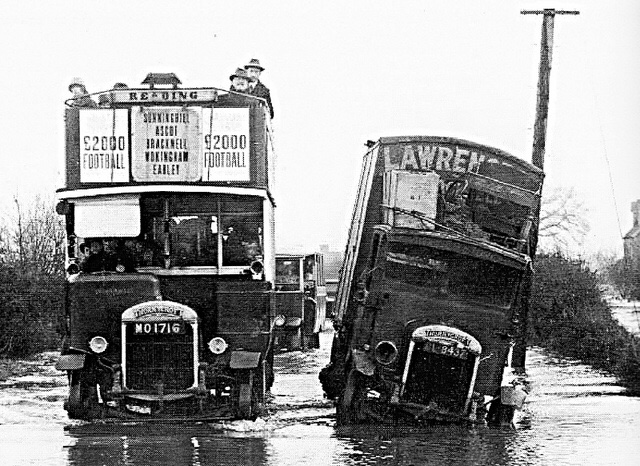
img_2095
Floods at Reading in January 1928 – showing the impact of the Thames flooding even further down river…. Image credit : Alan Farrow via Flickr

The situation was made even worse by dredging work that had been carried out in the Capital between 1909 and 1928 to deepen the river channel – to allow easier access for shipping in to the Port of London….

The river burst its banks just after midnight – when most Londoners were in their beds…. The first section to break was a 75ft stretch at Millbank – opposite the Tate Gallery…. Water poured into the gallery, up to 8ft deep on the ground floor….18 paintings were damaged beyond repair, 226 badly damaged and a further 67 received minor damage…. Many were by renowned artist J.M.W. Turner….

Westminster Hall and the House of Commons were flooded, as were most underground stations close to the river…. The Blackwall Tunnel was submerged, as was the Rotherhithe Tunnel…. The moat surrounding the Tower of London, which had been empty for over 80 years, was filled…. The flooding extended from the City of London and Southwark right to Putney and Hammersmith….

img_2090
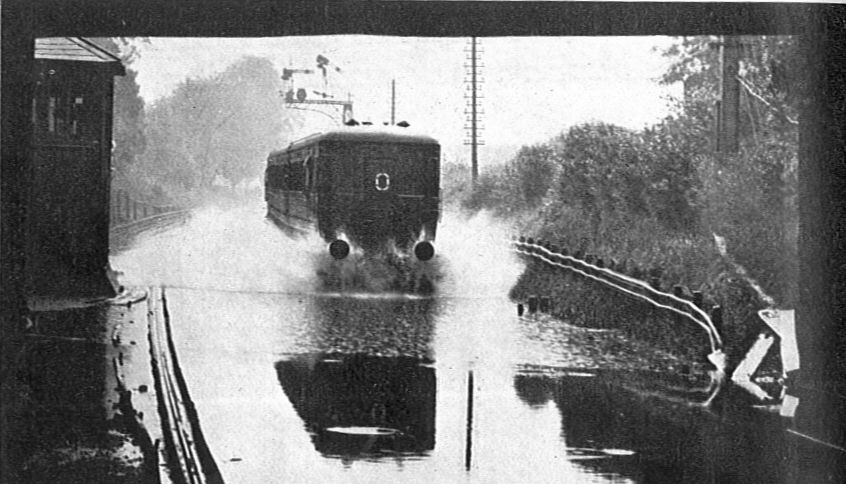
A Southern Railway electric multiple unit tackles floods at Kew Bridge railway station Credit : Andy Dingley (scanner) – Public domain

However, the most devastating part of the disaster has to be the human cost…. As the embankment near to Lambeth Bridge broke floodwaters gushed onto the streets of the run-down working-class area between Southwark and Blackfriars, which backed on to the river…. Water poured into the basements….which were the homes of so many of London’s poorer people….

There was little time to escape; police went from door to door, urging people to leave….many did, wearing just their nightclothes….but for some it was too late….

As the water poured into these basements nine people drowned – and another died from a heart attack brought on by the shock…. Alfred Harding later had to identify the bodies of 4 of his daughters:- Florence Emily, 18 – Lillian Maude, 16 – Rosina, 6 and Doris, who was only 2-years-old….

Two more died in Hammersmith, domestic servants Evelyn Hyde, aged 20 and Annie Masters Moreton, aged 22 – who shared a basement room…. Another two people died in Fulham…. 4,000 were made homeless….

The flood peaked at 1.30am, at a level of over 18ft above the Ordnance Datum line….the highest water level ever recorded in the Thames at London…. The water had subsided by the end of the day – but it took a month to pump all of it away…. The damage took several years to repair….many of the old slum areas had to be demolished, Millbank and the surrounding area had to be virtually rebuilt…. Political rows broke out over who should pay for the clean-up operation – was it the responsibility of local or central government…. Arguments also occurred amongst authorities and politicians over the role the dredging work had played in the disaster….

img_2093
Thames flood level markers at Trinity Hospital, Greenwich

The embankments had once been marshland but were reclaimed during the Victorian era and had been developed for housing and commercial purposes…. As a result of the 1928 flood the river’s embankments were raised…. Thankfully it was the last major flood to occur in the city – but it came close again in 1953 – when the river almost broke the embankment – and did cause some flooding at Bermondsey and other low-lying areas…. A further flood occurred on the Lower Thames in 1959….

At last the government were prompted to consider flood defence – once again there were disagreements over who should foot the bill…. Plans were made in the mid 1960s for a flood barrier – and in 1974 work finally got underway…. The Thames Barrier officially opened in 1984….


On this day in history….3rd January 1911

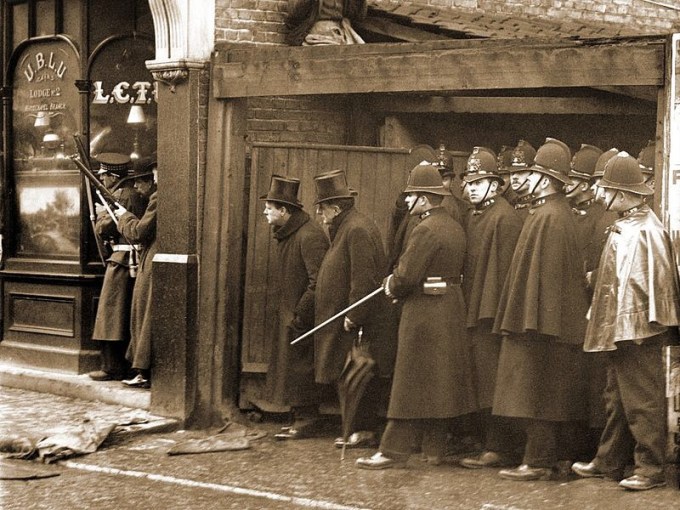
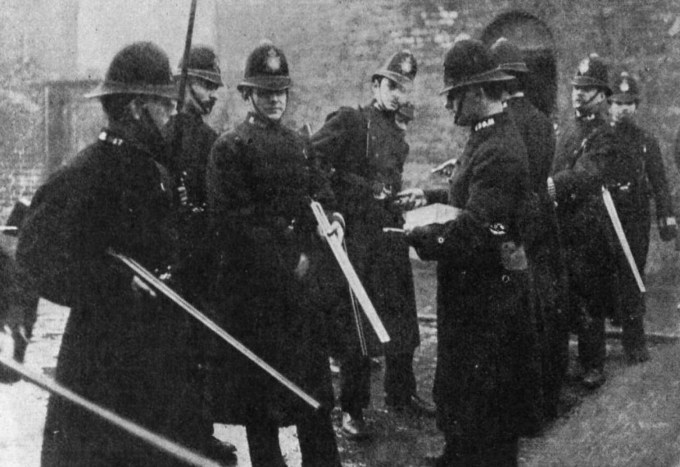
On this day in history : 3rd January 1911 – The Siege of Sidney Street takes place….a gun battle is waged on the streets of London as two Latvian anarchists hold out in an East End tenement for several hours – against over 200 armed police and a detachment of soldiers….

img_2059

The drama had begun to unfold three weeks previously, on the 16th of December 1910. A gang of Latvian revolutionaries had attempted to rob a jeweller’s shop in Houndsditch. The gang, calling itself ‘Leesma’, meaning ‘flame’, consisted of approximately thirteen people, including two women….their purpose was to commit robberies to raise money to help fund fellow activists in Latvia and Russia, who supported Lenin and the Bolshevik Movement….

The gang had rented rooms in a building annexing the back of the jeweller’s shop….the plan was to break through the common wall between the two adjoining properties. They chose to carry out their planned robbery on a Friday night….but being a predominantly Jewish neighbourhood – and Friday being the Jewish Sabbath – it was a particularly quiet time. Alerted by the noise the gang were making whilst attempting the robbery local residents called the police….

Eight unarmed police officers arrived, three sergeants and five Constables….the gang opened fire on them. Three policemen were killed and two were injured – the gang then made their escape…. One Latvian was injured – having been shot accidentally by another member of the gang. He was carried away by his friends but later died from his injuries – and was found dead in his lodgings the following morning….

The police immediately mounted a search and by the end of December had most of the gang in custody…. They then received a tip-off that two members, Fritz Svaars and William Sokolow, were hiding at 100 Sidney Street, which is located at the heart of Stepney. A room at the address was being rented by Betsy Gershan, the girlfriend of Sokolow. Being the East End of London the area was very overpopulated and the property itself overcrowded….fourteen people were registered at the address, two families with young children….

At midday on the 2nd of January two horse-drawn vehicles arrived in Sidney Street; concealed inside were armed policemen – and the building was placed under observation….

During the early hours of the 3rd of January a long snaking line of over 200 policemen made their way to 100 Sidney Street. Some were armed – but their weapons, such as revolvers, shotguns and tube guns, were old and antiquated. The men had not been briefed as to the nature of the task at hand – but they knew it was dangerous, as married men had been excluded from the operation….

img_2063

By dawn all was in place and the police were ready to take action. Somehow they managed to evacuate 100 Sidney Street and the surrounding properties without alerting Svaars and Sokolow, who were on the second floor…. The pair were Continue reading “On this day in history….3rd January 1911”

On this day in history….31st December 1892

On this day in history : 31st December 1892 – The first hostel for homeless men, Rowton House in Vauxhall, London opens….

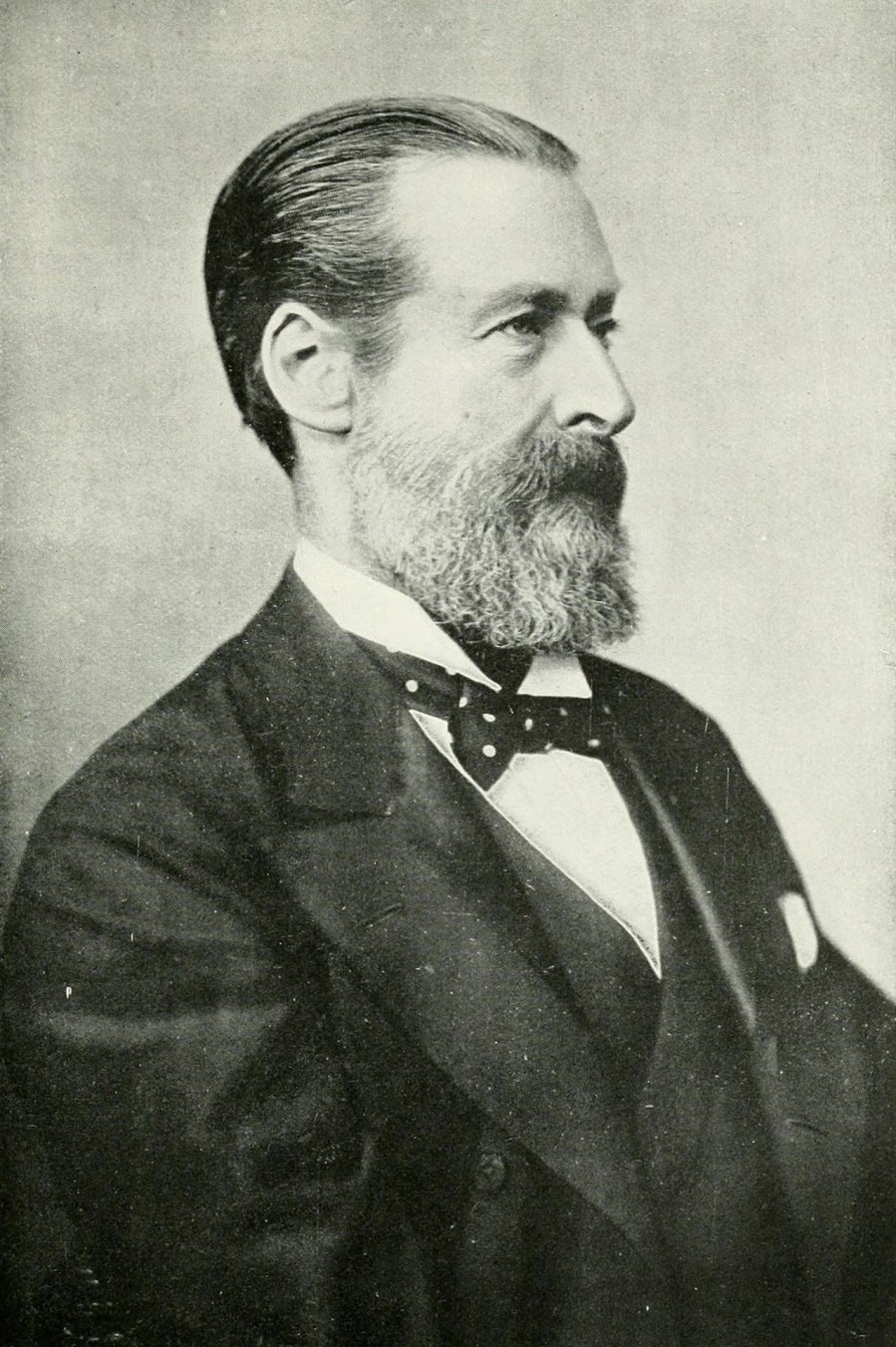
It was the brainchild of Tory Peer and philanthropist Montagu William Lowry-Corry (1838-1903) – otherwise known as Lord Rowton – who put £30,000 of his own money into the venture….a considerable amount in the day – equating to over £3.5 million in today’s terms….

img_5298
Montagu William Lowry-Corry – Public domain

Lord Rowton had been Private Secretary to Disraeli and had helped to set up the Guinness Trust in 1890 – helping homeless people in London and Dublin…. He had inspected common lodging houses in the East End of London on behalf of the Trust and was appalled by what he saw…. It was then he made the decision to open the hostel on Bond Street (now Bondway) in Vauxhall….

img_5300
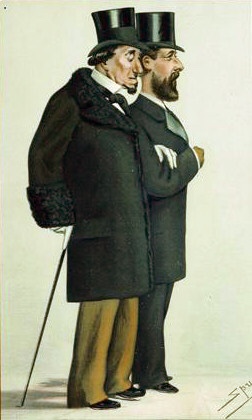
Lord Rowton (pictured right) with Benjamin Disraeli – Leslie Ward – Public domain

His was a completely new concept in helping down-and-out or low paid working men…. The aim was to provide decent, cheap accommodation, that was far superior to the squalid lodging houses which were the only alternative at the time….

“Lord Rowton’s Lodging House” ~ the Poor Man’s Club, where he finds a Comfortable Home, Good Food and Wholesome Recreation ~

The accommodation comprised of 470 bedded cubicles; each man would be supplied with clean sheets and had the use of facilities to wash and dry his clothes…. In the bathrooms there was an ample supply of hot water….and each wash basin had above it a hook for him to hang his hat and coat – so he could keep an eye on them…. There was a large dining room and a library….all for the price of 6d (sixpence) a night….

Rowton affectionately referred to his venture as ‘the Beehive’…. He even had one of the beds installed in his own home – so he could try it out….

On the first night of opening only 77 out of the 470 cubicles was occupied…. However, news spread quickly – in the first year 140,105 beds were let – and the hostel returned a profit…. Such was its success that Vauxhall became the first of six such establishments across London….

It wasn’t all plain sailing from the start though…. In the early days there was a high turn over of staff – and it was hard to maintain a constant, smooth running establishment…. In the first few weeks every book in the library had disappeared – so lockable bookcases had to be introduced and a paid librarian employed…. During the first fire drill it emerged all of the copper fittings on the hosepipes had been stolen…. It was also decided that soap was going to have to be charged for as such huge quantities were being ‘used’…. Eventually a superintendent was employed – a former sergeant major – who soon had things in order….

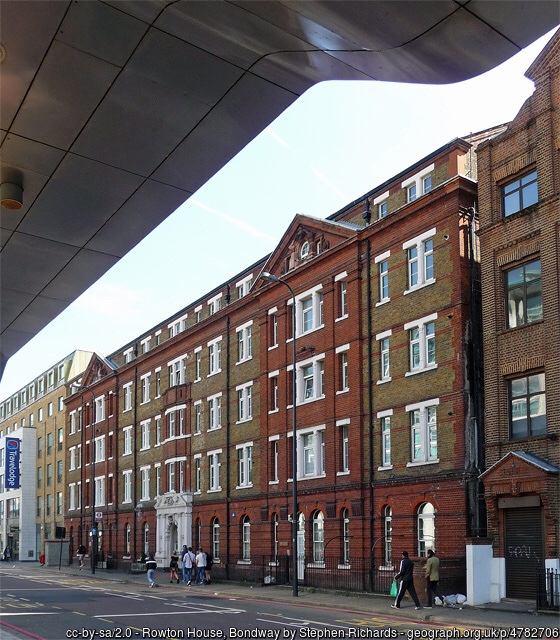
Nowadays Rowton House is occupied by the Centrepoint Vauxhall Hostel…. The Centrepoint Charity provides accommodation and support for homeless people aged between 16 and 25 years-of-age…. Before she died Princess Diana was its patron – her son Prince William has been patron since 2005….it was his first patronage….

img_5299
Rowton House, Bondway, Vauxhall

On this day in history….17th December 1983

On this day in history: 17th December 1983 – An IRA terrorist car bomb explodes outside Harrods Department Store, in Knightsbridge, Central London – killing 6 people and injuring a further 92….

img_4883
Elliott Brown via Flickr

At 12.44pm a call, using a code word, was made to the Central London branch of the Samaritans…. The caller said there was a car bomb outside Harrods and a further two bombs inside the store…. The car registration number was given but not a description of the car…. It was also claimed that further bombs had been placed on Oxford Street and in the Littlewoods store on Oxford Street…. Much of the message proved to be false information – and the police had already received 22 similar calls about suspicious devices that day – all of which were false alarms…. However, following receipt of the warning, the police immediately started to search – but did not evacuate the area….

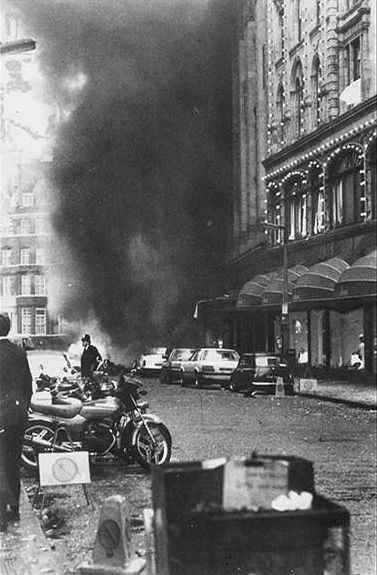
At just before 1.30pm, on one of the busiest shopping days of the year, a Saturday just before Christmas, a car bomb containing 25-30lb of explosives and detonated by a timer, exploded…. It had been placed inside a 1972 blue Austin 1300 GT 4-door saloon car, parked close to the side entrance of Harrods, in Hans Crescent…. Five people died at the scene and another later in hospital…. Of these six, three were police officers and three were members of the public; a reporter, an American citizen and a young mother…. Another 92 people were injured, including 14 police officers….

img_4884
Image via Pinterest

Home Secretary, Leon Brittan, expressed his revulsion at such a cold-blooded and cowardly attack…. The day following the bombing the IRA admitted responsibility….

As a result Scotland Yard increased security in Central London – hundreds of extra police and mobile bomb squads were drafted in…. Harrods, despite the damage, reopened three days later….the owners said they would not be defeated by acts of terrorism….

On this day in history….5th December 1952

On this day in history : 5th December 1952 – ‘The Great Smog’…. A terrible killer fog descends on London and causes the death of thousands of Londoners….

A high pressure weather system had stalled over the South of England, causing a ‘temperature inversion’ – meaning the cold air at ground level becomes trapped by a layer of warmer air at a higher level…. A thick fog had formed – and with no breeze to disperse it – was unable to escape…. It was soon to turn a sickly yellowy-brown colour, as it filled with sulphur pollutants and soot, mainly from the many coal fires as people tried to keep their houses warm in the cold snap…. Smoke from factories and fumes from vehicles also contributed….

img_4811
Nelson’s Column during the Great Smog – N T Stobbs CC BY-SA 2.0

Londoners were used to ‘pea-soupers’ – but this was like nothing before…. Visibility was so poor that the transport system (other than the underground) ground to a halt…. Even the ambulance service stopped…. School children were kept home, sporting events called-off…. The smog seeped into buildings….theatre performances were cancelled and cinemas closed as people were unable to see the screens…. Criminals had a field day, as looting, bag snatches and burglaries became epidemic….

But by far the worse impact the fog was to have was on people’s health…. Most at risk were the young, elderly and those with respiratory problems – heavy smokers were particularly vulnerable…. It is estimated 4,000 died during the period and immediate aftermath – although experts claim the number to be more like 8,000 lives lost due to the smog – the most common causes of death being pneumonia and bronchitis…. Well into the summer of 1953 the death rate remained well above normal levels…. With that taken into consideration the final smog-related death toll could amount to as high as 12,000…. A further 100,000 are estimated to have been made ill….25,000 Londoners claimed sickness benefit during the period….

The smog finally lifted on Tuesday the 9th of December, the sulphurous cloud drifting out over the North Sea…. A government investigation resulted in the Clean Air Act of 1956 being passed by Parliament – authorising authorities to set up smoke-free zones and the restriction of burning coal in urban areas….

The Great Smog of 1952 is recorded as the tenth deadliest disaster ever to have hit Britain….