Accumulations….

Here in the UK about a third of us can be classified as ‘collectors’ – and we are far from being alone – all across the World there are like-minded people adding to their own accumulations; a collection of collections which is more diverse and varied than most of us can possibly imagine….from the simple, to the sublime, to even the outright bizarre….

For many of us, collecting is something that begins in childhood; it may be trading cards, Lego, stamps, Barbie dolls – whatever captures the young imagination…. For my son, in his infant days, it was an insatiable appetite for Thomas the Tank Engine – we still have a huge stash of die-cast models up in the loft (I think he’s quietly hoping they may one day increase in value)…. Later he moved on to Lego – I’m currently badgering him to do something about his hoard – it is surprising how much space it takes up….

collect 4
Lego photo credit Foter.com

The thrill of coming across that elusive Pokémon card or that hard to find action figure….that feeling of satisfaction…. Of course, those feelings don’t necessarily disappear upon reaching adulthood, very often we elevate to more elaborate things to amass – frequently with a passion and sometimes even with an obsession….

collect 5
Trading Cards Minhimalism via Foter.com / CC BY-ND Original image URL: https://www.flickr.com/photos/minhimalism/5516898844/

It is only over the last 150 years or so that everyday people have begun to collect. More disposable income, an increase in leisure time, the advent of consumerism and having more personal space has allowed the magpies amongst us to indulge our whims….

In 1892 the US Mint produced its first commemorative coins, to celebrate the 400th anniversary of Europeans arriving in the Americas. Nowadays, the commemorative coin market is worth a mint in itself…. Obviously it’s not just coins that are produced purely for the collector; plates, figurines, stamps, soft toys, t-shirts – the list is endless…. Memorabilia is another area that often attracts – be it a Royal wedding or maybe a national event, people like souvenirs…. I doubt if there are many households in Britain that don’t have at least one mug, spoon or plate commemorating the Queen’s Golden Jubilee….

collect 3
God bless you maam Project 365(3) Day 11 Keith Williamson via Foter.com / CC BY Original image URL: https://www.flickr.com/photos/elwillo/6919761373/

Then there’s celebrity memorabilia; an autograph (or more likely these days a selfie with one’s favourite celeb), perhaps a lock of hair, underwear…. Yes! I’m serious – a quick on-line search might well reveal just how much a famous person’s knickers can fetch….

collect 11
Photo credit: express.co.uk

Household trade brands were quick to recognise the potential of producing relative paraphernalia – often involving trademark characters, such as Homepride’s Fred, Robinsons Gollies – or what about those Natwest Piggies so many of us aspired to – how could we ever forget those?…

Personally, I am old enough to remember a time before teabags became the norm…. I recall, as a nipper, hanging around excitedly when my mother opened a new packet of tea – waiting to see what the enclosed card would be…. I never took it as far as trying to complete a set – but plenty of people did – what a brilliant way for companies to ensure customer loyalty…. Cigarette cards were another biggie of the time – smoking may no longer be in vogue but those cards have managed to remain a mainstay in the world of collecting….

collect 8
Roses Cigarette Card Effervescing Elephant via Foter.com / CC BY-SA Original image URL: https://www.flickr.com/photos/cr01/5584111357/

Sometimes a craze takes the Planet by storm; one particular one that springs to mind is the Beanie Baby phenomenon back in the late 90s…. At the time I had two gift shops and stocked the collectable little bean bags…. When a new delivery came in, very often it became what can only be described as pandemonium…. I have witnessed grown adults fighting over some of the more desirable of what were essentially intended to be children’s toys…. Such was the secondary market that certain Beanie Babies changed hands for hundreds, sometimes even thousands, of pounds…. I feel a little embarrassed to admit I still have a large collection myself, taking up room at my mum’s house (and I have the audacity to complain about Jordan’s Lego)….

collect 10

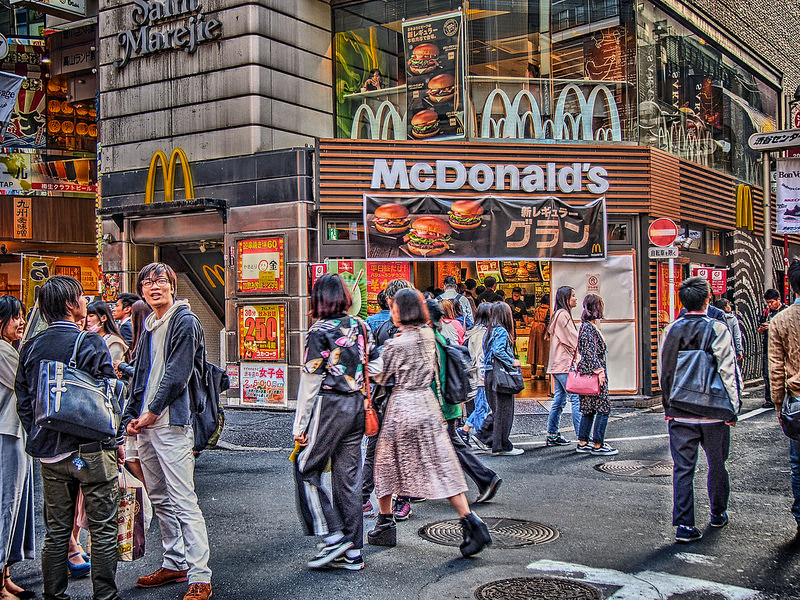
Sometimes companies will collaborate and work in affiliation with each other; sticking with the Beanie Baby theme, Ty and McDonald’s did just that – with a range of Teenie Beanies produced for McDonald’s Happy Meals…. Collecting the free toys given away with Happy Meals is in itself a pastime enjoyed by many – but did you know, Mike Fountaine, owner of McDonald’s, has over 75,000 pieces of memorabilia from his World famous burger restaurant chain, occupying 7,000 sq ft of his home?…
collect 7
McDonald’s jun560 via Foter.com / CC BY-NC-ND Original image URL: https://www.flickr.com/photos/47741487@N06/34376741161/

Of course, collecting is a very personal thing – maybe it could be a preference for a certain kind of animal: cows, owls, cats, dogs, ducks etc etc…. Sometimes collections happen by accident…. Having acquired a spinning wheel, which resides in our sitting room, it has over the last few years become home to an array of various ornamental sheep…. Naturally, when it becomes known that someone has a collection of a particular item (or theme), they can expect to receive related gifts, when it comes to birthdays and other such occasions….

Soft toys are often a popular thing to collect, perhaps because they have a nostalgic link to our childhoods; characters such as Winnie the Pooh are always a favourite. Dolls such as Barbie or Raggedy Ann remain firm contenders – Troll dolls are another example; one collector, Sherry Groom, has more than 3,500…. Then there’s the occasional quirky collectors….one couple own 240 blow-up dolls (yes, you know the ones)….they like to dress them and treat them like members of the family….

Me, I’ve got a soft spot for teddy bears…. There’s not a room in this house that doesn’t have at least a couple of bears lurking somewhere…. My weakness is for those German bears with the tag in the ear….

To be honest though, I find it hard to resist any bear…. My collection will never rival that of Jackie Miley though, who has over 7,000 of our furry friends…. The other collection that appears to be growing in this household is themed around witches – there seems to be at least one of those in every room too…. now, I can’t think why – but there again I do believe there are those who consider I might be one….

Witchy profile

Sometimes people may accumulate things associated with their profession, be it of a humorous nature or more directly connected….maybe vintage tools of the trade or examples of the end product…. Former milkman, Paul Luke, boasts over 10,000 different types of milk bottle….

Men and women are equally likely to collect….occasionally crossing the stereotypical boundaries….  Perhaps the largest collection of women’s dresses belongs to German, Paul Brockman – who owns more than 55,000 of them – (although in his defence, he claims they are for his wife)…. Now, there’s one wardrobe I wouldn’t mind having a rummage through….

Housing large collections can cause a few headaches – especially for those living in the same space as the collector. Sure, there are those lucky enough to be able to devote an entire room to their passion but for many every available nook and cranny gets taken over. I wonder where Valli Hammer keeps 2,450 rubber ducks and where does UK’s David Morgan store his 137 traffic cones? Then there’s Russian Grigori Fleicher with over 1,300 toothbrushes and the Dutch collector who has more than 6,000 air-line sick bags….

collect 6
Sick Bag by Jill Hadfield Map of the Urban Linguistic Landscape via Foter.com / CC BY Original image URL: https://www.flickr.com/photos/mapurbanlinguisticlandscape/14229060841/

There is no end to the odd things people collect…. I found a huge quantity of shower caps acquired from hotels, whilst helping to clear my mother-in-law’s house…. My own mum used to save those little sticky labels that often come attached to individual fruit and vegetables…. She used to stick them to the inside of a kitchen cupboard door and over time built up quite a collage of them…. Collecting is such an individual thing, it can be whatever captures the heart – like Italian David Andreani, who has Coca Cola cans from nearly every country in the World; or Carsten Tews from Germany, with over 1,500 different mobile phones….

Then there is the more bizarre…. Graham Barker collects belly button fluff….his own admittedly; he began accumulating it in 1984 and now has over 21 grams of the stuff stored in jars…. Or how about a hoard of 24,999 toe nail clippings? Gathered for a scientific study in 2013, this has to be one of the more gruesome accumulations….

There are those who particularly like gruesome or even ghoulish…. Victorian surgeons’ equipment is an area some find interesting – but how about corpse tattoos? Tattoos are  removed from dead bodies, preserved with mummification and stretched so they become translucent and are presented mounted under glass…. Or what about murderabilia? Artwork produced by convicted serial killers….it might sound like a very odd thing to collect but it is extremely popular on-line….

Then there’s those who collect things that many of us may find very distasteful…. I used to work with a chap who had an interest in Nazi memorabilia. He used to wear a ring which he claimed was made from gold taken from the teeth of victims of the Holocaust – I personally found that absolutely horrifying and abhorrent….

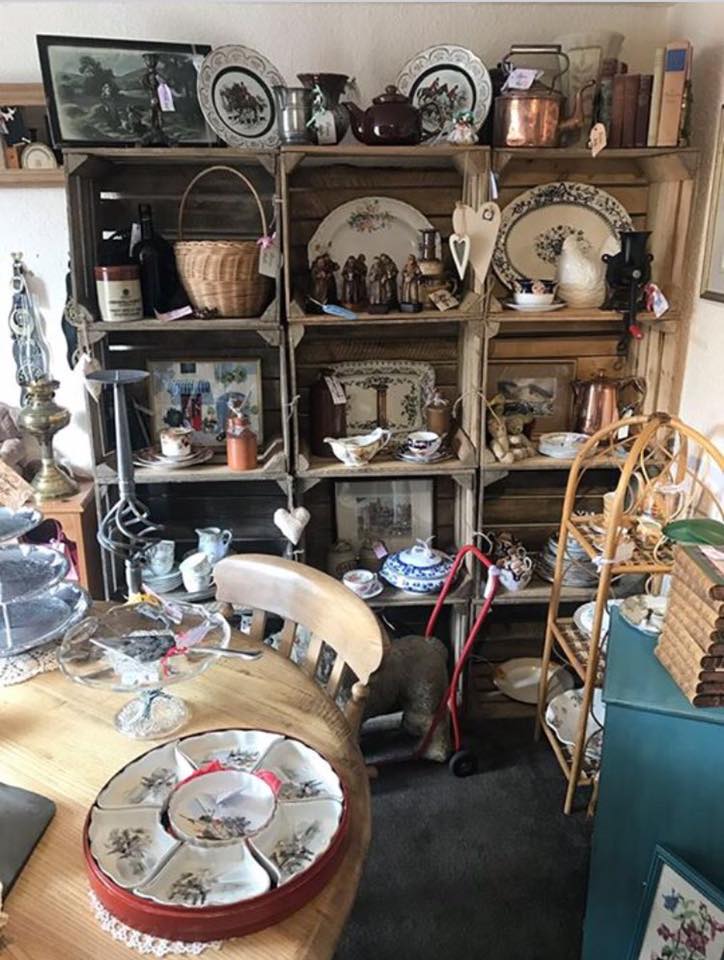
On a lighter note – I naturally come into contact with many a collector through my line of work…. Being a dealer in vintage/antique I am often asked if I ever come across certain items and pieces – I have met some fascinating people and it never ceases to amaze me to the variety of things folk choose to collect…. For every person who collects something, from the man who acquires vintage cars to the woman who accumulates kitchenalia….they do it for a reason….it gives them pleasure. Some may not understand, how what to them is an ordinary and mundane object, can be another’s passion – take for example those who collect antiquities – I, for one, totally get that – (well, I would wouldn’t I)? I hope long may they continue to enjoy their passion – purely for selfish reasons – it gives me an excuse to continue indulging my own – one which I’m also lucky enough to call my job….
collect 12

Striding down the road to knowledge….

To me it seems such a short time ago that we moved into what was then a ‘building site’…. It was the beginning of September 2005; I had always been adamant we were not going to live in a half completed house and that the renovations had to be finished before Jordan started school….but so often these things don’t go according to plan…. That is how we found ourselves frantically moving into a semi-derelict cottage the day before Jordan took his place in the reception class of a local primary school…. A rather chaotic and stressful beginning to his academic life….

How the time has flown – this week Jordan’s school year will be celebrating the end of the exam season and their final year at secondary school, in the way that has become customary in the UK – with their school prom….

knowledge 1
CXO Prom 2017 danxoneil via Foter.com / CC BY Original image URL: https://www.flickr.com/photos/juggernautco/34492830791/

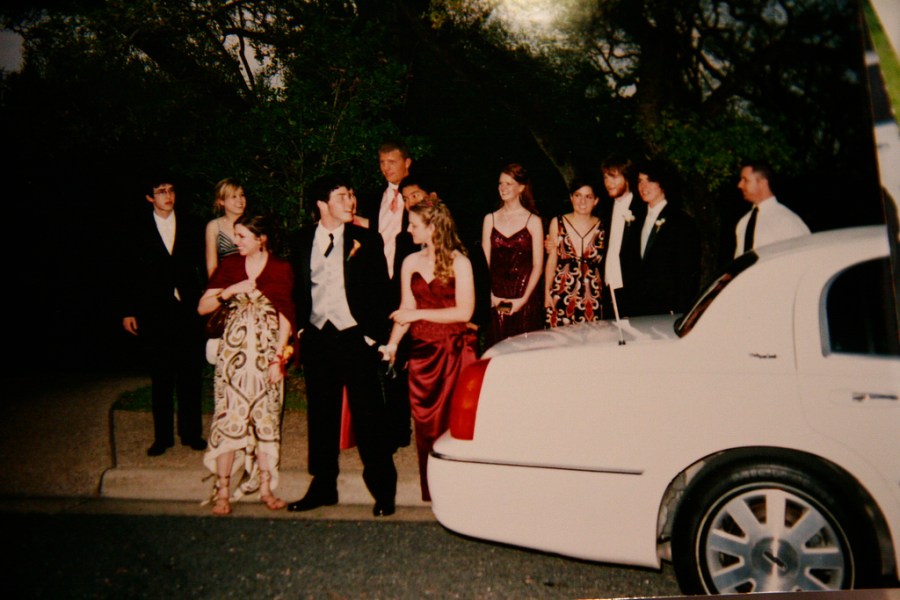
I have to admit, the school prom is a completely new experience for me too…. A fairly recent tradition that has taken the best part of a century to cross the Atlantic from the States…. I left school in the early 80s – I can’t remember if we even had a leaver’s disco, let alone a prom! How things have changed…. On Thursday evening Jordan and his school friends will be attending a formal dinner dance at a rather plush wine estate in Dorking…. His new suit, bought for the occasion, is hanging on the back of his bedroom door; he has a new shirt, tie, pocket-chief and shoes, to complete the ensemble…. I perhaps ought to think myself lucky I have a son, I can only imagine the preparations (and expense) for those with daughters….

knowledge 2
Day 23 …girls just wanna have fun! @RunRockPrincess via Foter.com / CC BY-ND Original image URL: https://www.flickr.com/photos/thotmeglynn/4594197800/

With over 85% of schools now holding leaver’s proms in the UK, it is a massive business; over £100 million a year is collectively spent countrywide on the occasion – prom dresses/suits (hair, makeup, nails, accessories etc), transport, the venue…. Then there’s year books, leaver’s hoodies…. so it goes on…. Some parents can expect to fork-out up to £1,500! It is now a huge industry and this year is set to be the biggest yet….

knowledge 3
Standing beside limo jabzoog via Foter.com / CC BY Original image URL: https://www.flickr.com/photos/capricious/122097511/

It is hard to think, that less than 150 years ago it was not even a legal requirement to attend school at all….

The oldest school in the UK, Kings School, Canterbury, was founded in Saxon times, in 597. During the Middle Ages schools were established to teach Latin grammar to boys from aristocratic families, mainly for those being prepared to enter the Clergy. During Tudor times, under Edward IV’s reign, the system was reformed, to provide ‘free grammar schools’. Theoretically, these were open to anyone – but the majority of poorer families could not spare their children, they were needed for work, their labour bringing in much-needed income to the family….

Up until the late 19th Century the majority of education was organised by the Church, concentrating mainly on religious studies and the teaching of Latin and Greek. The University of Oxford was set up in affiliation with the Church, shortly followed by Cambridge…. For many a child, the only education received was in the form of Sunday school; by 1831 some 1,250,000 children attended Sunday school – this is often seen as the beginning of the British school system as we know it….

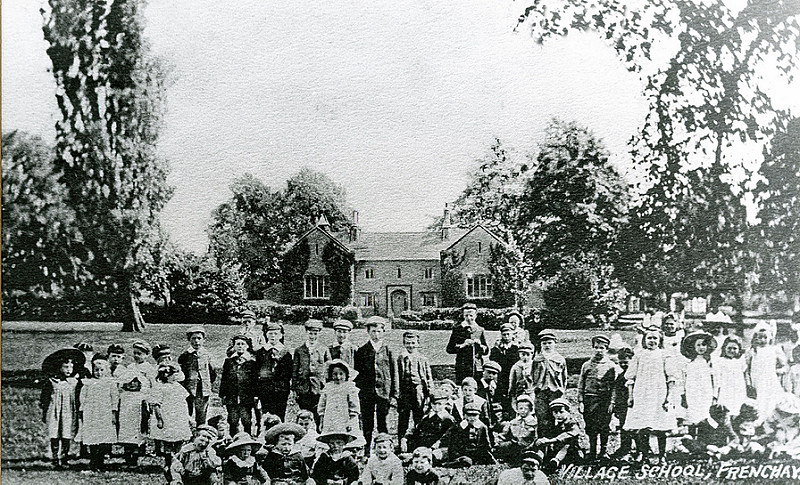
Children in wealthier families may have had a governess who would have taught them at home until they were 10 years old. Boys would usually have gone on to public school, whilst girls might have continued education at home. Other children may have attended ‘charity schools’, (informal village schools); or they may have gone to ‘dame schools’. These were run by school mistresses and were basically private schools at the lower end of the scale – they were often very basic, teaching only spelling, occasionally maths and grammar, depending on the mistress’s own abilities…. Many of these lessons were conducted in the school mistress’s own home….sometimes a purpose-built building was available ( a few of these still survive today – a nearby village to here, Thursley, has one within its churchyard)…. Although given the name ‘charity schools’, they were not exactly that, they were not free of charge. In 1870 the Education Act stated schools could charge no more than 9 pence per week per child; it wasn’t until 1891 that free education became available….

knowledge 11
Victorian School Photograph at Frenchay Church of England School brizzle born and bred via Foter.com / CC BY-ND Original image URL: https://www.flickr.com/photos/brizzlebornandbred/8524545330/

It was actually in August 1833 that the State became involved in education, allocating money for schools to be built for poorer children in England and Wales – (Scotland had begun its programme in the 17th Century)…. In 1837 a bill for public education was presented to Parliament…. In 1880 the Elementary Education Act made it compulsory for 5-10 year olds to be educated (with the exception of blind or deaf children). This was not popular amongst many poorer families; tempted to keep their youngsters out earning, they risked a visit from the ‘Attendance Officer’…. Only when a child had reached the required satisfactory level of educational standard were they issued with a School Certificate, enabling them to work. If this certificate could not be produced by any working child under the age of 13, the employer in question could face heavy penalties….

In 1893, the Elementary Education (School Attendance) Act raised the minimum leaving age to 11, this time including blind and deaf children on a voluntary basis, (by now specialist schools were being introduced). An amendment in 1899 raised the age to 12, a further amendment raised it to 13 and made attendance compulsory for blind and deaf children…. During the late Victorian era the grammar school curriculum was brought up to date but Latin was still taught….

In 1944 the school-leaving age became 15 and on 1st September 1972 it increased to 16…. Of course, things have changed again recently….unless taking up an apprenticeship, it is now a legal requirement to remain in full-time education until the age of 18….

The first exams for schools were introduced in 1858, the schools themselves demanding them as a way of determining achievement levels. Universities, such as Oxford and Cambridge were asked to produce them so boys could sit exams in their home towns (they may have been sat at the school or somewhere like a church or village hall)…. Girls were not permitted to sit exams until 1867….

knowledge 5
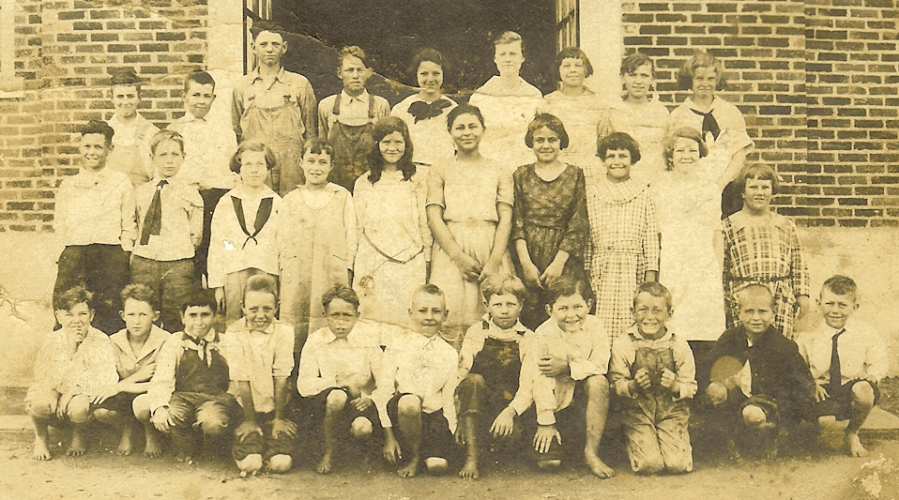
Girl Scholars 1895 Sunderland Public Libraries via Foter.com / CC BY-NC-SA Original image URL: https://www.flickr.com/photos/sunderlandpubliclibraries/3680817889/

The first exams took place on the 14th December 1858. There were 2 levels; Junior (for the under 16s) and Senior (for 16s to 18s). Subjects included: English Language and Literature, History, Geography, Geology, Greek, Latin, German, French, Political Economy, Mathematics, Arithmetic, Music, Physical Sciences, Chemistry, Zoology and Religious Knowledge (although parents had the right to withdraw their child from this particular one)….

Examiners would arrive wearing full academic dress, carrying a locked box containing the exam papers. Nowadays, the papers are sent in advance, schools appoint their own invigilators and the papers are returned for marking. Even that is changing though; with the advent of ‘e-testing’, exam papers could well become a thing of the past….

knowledge 12
Day138/365 Kennysarmy via Foter.com / CC BY-NC-ND Original image URL: https://www.flickr.com/photos/kennysarmy/8721165482/

In 1944 the 11 plus exam was introduced, determining whether a child should attend a grammar, technical or secondary modern school for their senior education. It wasn’t until 1964 that comprehensive schools (a school for mixed abilities serving a specific catchment area) were proposed by Harold Wilson’s Labour government….

A General Certificate of Education (GCE), O-levels and A-levels were introduced in 1951 (replacing the School Certificate) – but these were mainly for those attending grammar schools. Some education authorities brought in their own exams for those not eligible to take GCEs and in 1965 the CSE was introduced as an alternative. O-levels and CSEs were then replaced by the GCSE in 1988. In 1995 a further set of tests, often referred to as SATs, were introduced for children aged 7, 11 and 14….

Back in those early days, exams took place over the period of a week….papers were sat morning, afternoon and evening. Nowadays, the exam season extends over 2 months in early Summer. Expectations of students were also very different in the beginning, vast amounts of information had to be learnt off by heart…. A more flexible approach now means students are allowed to demonstrate they can analyse information and show they can apply knowledge and understanding….

Modern day thinking takes the view that children should be encouraged to ask questions in order to learn. In days gone by this was not the case; the belief was that children had to be taught to behave in a correct manner; “children should be seen and not heard” – “spare the rod and spoil the child”. This ‘reasoning’ stemmed from religious views, the Christian belief that mankind was born with a tendency to sin and do wrong. Discipline in Victorian schools probably had to be tough due to large class sizes. Any form of physical punishment today is viewed as abuse; Victorians certainly had no such view – slipper, belt, cane – sometimes it really must have been a severe case of abuse, cruel adults unable to show restraint….both in school and at home…. Poland was the first country to abolish corporal punishment in schools, in 1783. It took English state schools until the late 1980s to follow suit (2000 for Scotland, 2003 for Northern Ireland) and in Britain’s private/public schools right up to 1999. Nowadays corporal punishment is not practised in any European country (although some parts of the World still use it)….

knowledge 7
Junior School Punishment Book theirhistory via Foter.com / CC BY-NC-SA Original image URL: https://www.flickr.com/photos/22326055@N06/3598627253/

There are those who would argue the cane should be brought back, a little discipline should be instilled. I don’t know, perhaps it is just good fortune – but having just had a child go through the state education system, up to the point of starting college, it has been nothing but an exceptionally positive experience. I have always admired the level of respect both teachers and pupils have shown to each other and there has been a genuine desire from the students to learn and do well…. The kids have worked so damned hard towards these exams; now they are over and prom night is upon us. I hope every single one of them has a fantastic time….they deserve it….X

knowledge 6
Happy School Kids ‘playingwithbrushes’ via Foter.com / CC BY Original image URL: https://www.flickr.com/photos/playingwithpsp/1578887549/


I don’t mean to badger you….but….

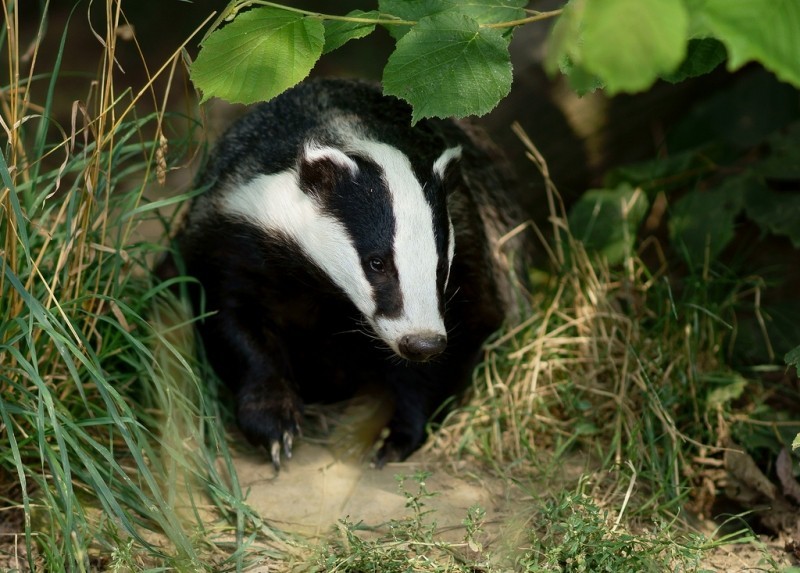
I have only ever seen a live badger in the wild once – and that was just a fleeting glance…. Actually, the badger (Meles meles) is one of the UK’s most widespread wild animals and just as common as the fox – just far more elusive….

badger 2
Badger 25-07-09 Chris_Parfitt via Foter.com / CC BY Original image URL: https://www.flickr.com/photos/chr1sp/3759751616/

When I did  finally get to see a badger close-up for the first time, I was amazed at the power and strength of the creature…. It was during a visit to the British Wildlife Centre, near Lingfield, Surrey, when I was delighted that we had the opportunity to witness one of the resident badgers being fed…. Boy, was that chappie eager for his food….a bit like someone else we know….

Lewes, our ‘a little bit dim’, food obsessed cat has recently started to refuse to come in at night. Up until this point, this hasn’t worried me too much, as he doesn’t go far (unlike his sister) – he prefers to dither around in the garden…. The other night, during the wee hours, the whole household was awoken by the most almighty din outside….a blood curdling screaming…. Assuming Lewes had got himself into a spot of bother with another cat, John shot outside – only to be confronted with Lewes, involved in a punch-up with a young badger…. The noise was horrendous…. Thankfully, at John’s appearance, the fight instantly broke up and the badger scurried off; neither animal appeared to have sustained any damage – Lewes can thank his lucky stars it was a young badger; only a cat with suicidal tendencies will contemplate taking on an adult badger…. Generally, badgers are peaceful animals, they do not go about picking fights with cats; I can only assume the pair came across each other accidentally…. The noise the badger was emitting tells this tale…. When threatened, a badger will give out deep growls, it will bark when surprised – but if it is truly frightened, it will scream in a piercing manner…. I don’t blame this little fella for being terrified – Lewes can be a very scary cat sometimes….(although it’s a good job it wasn’t Lola)….

It’s not the first time a badger has made itself known here…. A few months ago John arrived home particularly late from work to find a badger sniffing around the back door….

Badgers are one of our most beloved animals; children’s tales often involve them – Wind in the Willows or Beatrix Potter for example….even Rupert the Bear…. Badgers are native to all Europe and parts of West Asia – it is our largest land predator here in the UK. Part of the Mustelidae family, which includes otters, weasels and stoats, the badger has a status of ‘least concern’ in the conservation stakes; there are some 250,000 adults in this country….

That said, they are protected by law…. The Protection of Badgers Act 1992 states it is an offence to interfere with a sett or take possession of a live badger (other than to assist an injured or sick animal)…. Conviction for badger baiting can carry a 6 month jail sentence, a fine of up to £5,000 and a ban from keeping dogs…. Once a popular blood sport, badger baiting is a completely barbaric act; badgers are caught alive, put into boxes and dogs set upon them – totally senseless….just like all blood sports….not wishing to be controversial – but everyone’s entitled to an opinion…. Even back as far as the early 1800s badger baiting was recognised as being cruel – The Cruelty to Animals Act 1835….

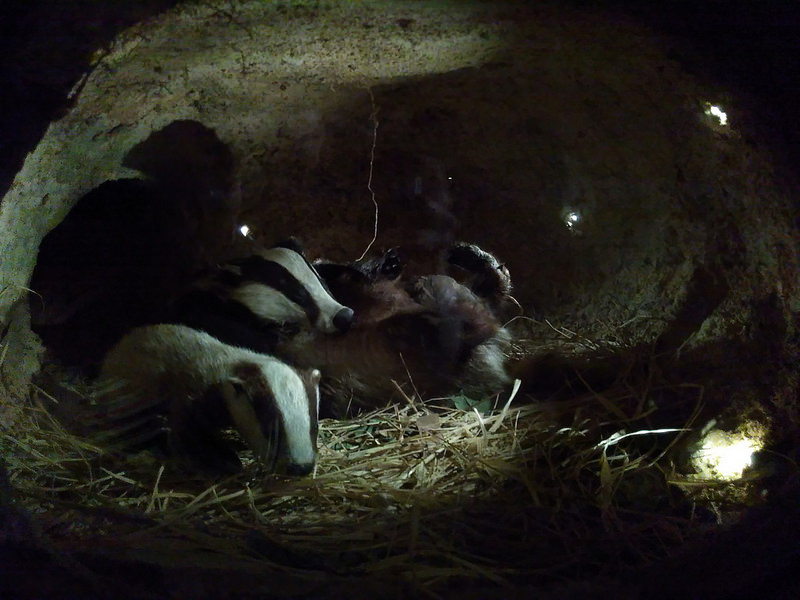
On looking into the private life of a badger, it is surprising at how social this animal is – they value family, just as we do…. Badgers are nocturnal, explaining why we see so little of them. They live in underground burrows, called setts, which they inherit from their parents; each generation adds to and expands it…. Some well established setts can be centuries old….

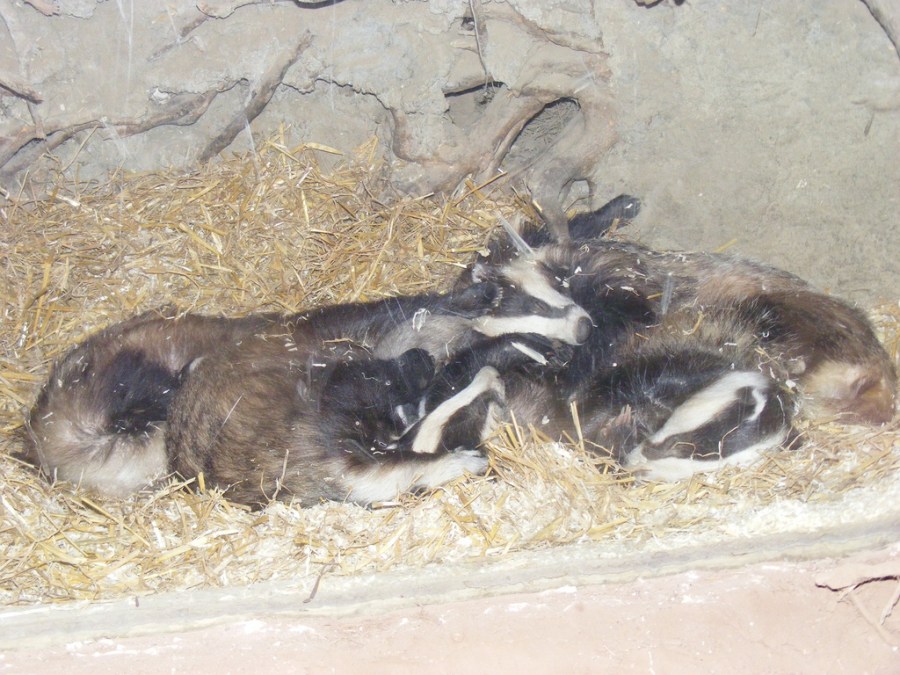
Badgers live together in groups; the males are called ‘boars’ and the females ‘sows’…. On average there are roughly 6 adults in a family, although as many as 23 have been recorded. Usually a pair will mate for life; sexual maturity in boars is usually between 12-15 months but it can be up to 2 years – sows normally begin to ovulate in their second year. Mating can happen at any time of the year but the peak is February to May….the babies are born in the following spring, with a litter size of up to 5….

badger 12
European badger Marie Hale via Foter.com / CC BY Original image URL: https://www.flickr.com/photos/15016964@N02/5918510994/

When the cubs arrive they are pink with silvery coloured fur but darker hairs begin to appear within a few days. They weigh between 2.5-4.5oz and their eyes remain closed until they are around 4-5 weeks old. It is also about this time they get their milk teeth, they will have their adult teeth by 4 months and begin to wean at 12 weeks, although they may still suckle until they are 5 months old. They emerge from the burrow after 8 weeks – less than 50% survive through to adulthood…. Only mature sows breed, immature females will help with child-rearing responsibilities….cubs tend to remain with the family group after reaching adulthood….

badger 8
Don’t be fooled Marie the Bee via Foter.com / CC BY-NC-ND Original image URL: https://www.flickr.com/photos/the_sampler/3552959366/

There is definitely a hierarchy amongst the families sharing a sett; larger boars will show dominance over smaller ones…. Generally, badgers show an enormous tolerance of others, both within the immediate group and outside it…. It is mainly the males that show territorial aggression; during the mating season, males may try their luck in a neighbouring territory…. The size of a territory can range from 30 hectares – (where there is plenty of food available) – to 150 hectares in sparser conditions. When fighting, badgers will attempt to bite the neck and rear end of their opponent whilst chasing them…. Sometimes, wounds can prove to be fatal….

A larger territory may have several setts – the burrows are divided into areas for sleeping, nesting etc.

badger 3
BADGERS janetmck via Foter.com / CC BY Original image URL: https://www.flickr.com/photos/janetmck/2847103646/

They even have special latrine areas where the badgers do their ‘business’…. Badgers are extremely clean animals and are very fussy about hygiene…. Soiled bedding is regularly removed and replaced with fresh grass, bracken and leaves…. If a badger dies within the sett, sometimes the chamber is sealed-off, like a tomb; other times, the rest of the family will drag the body out and bury it…. Occasionally, the burrow is shared with other animals, such as foxes and rabbits; although rabbits will choose areas that are furthest away and least accessible from the main living quarters, as young rabbits are in fact prey to badgers….

badger 9
Badger Peter G Trimming via Foter.com / CC BY Original image URL: https://www.flickr.com/photos/peter-trimming/7928637394/

Being omnivores, badgers have a varied diet; mainly it consists or earthworms, large insects, slugs and snails, roots, cereals and fruits, such as blackberries. They will hunt small mammals; mice, shrews, moles, baby rabbits, squirrels, hedgehogs. They are able to destroy a wasps nest and eat the contents; their thick skins and hair protecting them from the stings…. Very occasionally, although usually only because food is scarce, they will take domestic chickens – but this is rare….

There have been accounts of badgers being tamed…. They can be affectionate and it is possible to train them to come when called; apparently they can make a loving and loyal pet. However, they don’t generally tolerate living with cats and dogs and will chase them : (did you hear that, Lewes? Guess we wont be inviting your new ‘friend’ to move in here, then)….

badger 15
‘Honey’ and Laura Peter G Trimming via Foter.com / CC BY Original image URL: https://www.flickr.com/photos/peter-trimming/5801261291/
badger 6
Badger bathtime hehaden via Foter.com / CC BY-NC Original image URL: https://www.flickr.com/photos/hellie55/28004586220/

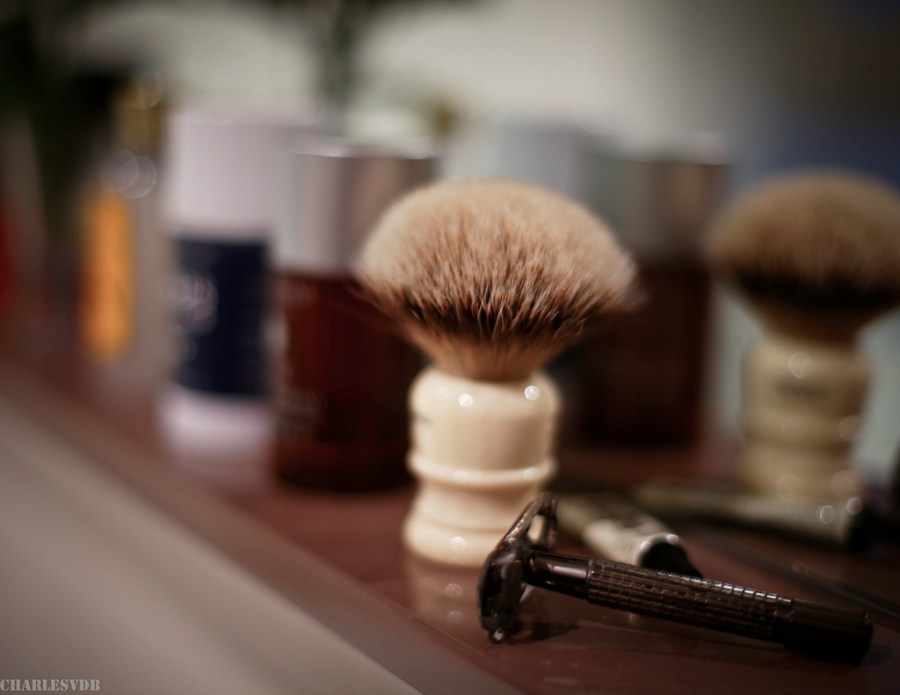
In the Middle Ages badger meat was held in high esteem – but back then people ate just about anything…. Nowadays, badger hair is used to make shaving brushes; occasionally, wild hair is used but mostly it comes from animals farmed in China especially for the purpose. The Scottish sporran is also traditionally made from badger fur….

badger 10
Badger Charlievdb via Foter.com / CC BY-NC-ND Original image URL: https://www.flickr.com/photos/charlot17/6031750887/

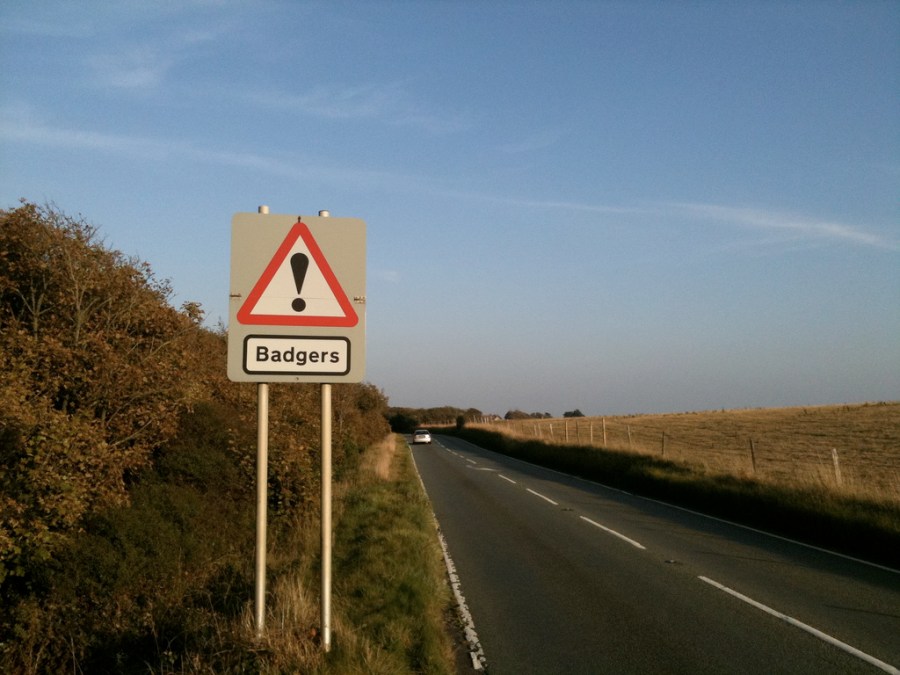
Badgers can live up to 14 or 15 years in the wild, although 3 years is the average lifespan. They have no natural predators here in the UK; the main danger posed to them is us, mankind…. 50,000 badgers a year are killed on our roads….

badger 16
Badgers! STML via Foter.com / CC BY-NC-ND Original image URL: https://www.flickr.com/stml/3960249080/

Then there is the controversial subject of badger culling….

TB was first observed in badgers living in Switzerland in 1951. It was discovered in British badgers in 1971 when linked to an outbreak of bovine TB in cows…. It is debatable as to whether culling will eliminate TB in cattle; many feel there is not enough scientific evidence available to warrant a cull. Vaccination against bovine TB is thought to be the way forward….

badger 14
Badger Cull Protest-2 davidjmclare89 via Foter.com / CC BY-NC-SA Original image URL: https://www.flickr.com/photos/davidjmclarepics/8986457762/

I, for one, am chuffed to know we have badgers living close by – I just hope ‘Badger Basher Lewes’ hasn’t scared them off for good…. He is now officially on a curfew in the evenings, he is locked in long before it gets dark….

I am surprised badgers come into the garden, as there is no obvious through route – badgers are known to follow well used paths…. I can only imagine the food I feed to the swans is the attraction….

badger 4
badger badger badger FatMandy via Foter.com / CC BY-NC-ND Original image URL: https://www.flickr.com/photos/fatmandy/4662207017/

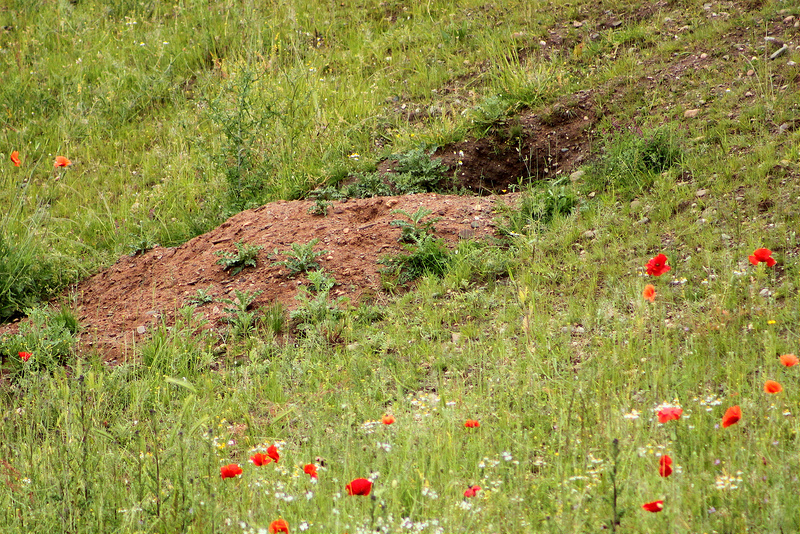
Being nocturnal, it is virtually unheard of to see badgers during day-light hours  – but next time you are out and about in your local vicinity….look out for tell-tale signs : 5 toed foot prints, claw marks on trees, remains of discarded bedding, piles of fresh earth, dung pits, wiry hair caught on fences…. You never know, there might be a badger family sound asleep, right beneath your feet…..

badger 1
Badger sett muffinn via Foter.com / CC BY Original image URL: https://www.flickr.com/photos/mwf2005/7188833725/


A nation of shopkeepers….

It is a busy time at the moment – sorting through my stock ready for when I move into the antiques centre at the end of this month – At the same time, I can’t resist looking for one or two more unusual bits, to add to the flavour…. I was particularly excited this last week to happen across a Victorian butter churn…. I had to have it….

IMG_2092

Butter dates back to 2000BC; possibly it may have been discovered accidentally. The first butter was produced by putting milk into bags made of animal skin and then literally shaking until the milk and fat separated…. It is quite likely this process came to light when milk was being transported by animal….

butter 4
Rollin’ USFS Region 5 via Foter.com / CC BY Original image source: https://www.flickr.com/usfsregion5/16188477770/

Butter churns have probably been around since the 6th Century…. There are different variations of them but all use the same concept….to agitate the liquid until separation…. The buttermilk is then strained off (and can be used in cooking and baking), leaving behind the creamy butter…. To speed up the process, cream skimmed off the milk could be used; well into the 1800s this was done by simply allowing the milk to sour a little – but by the late Victorian / early Edwardian times cream separators became available….

IMG_2084
Edwardian stoneware cream separator – one method used to separate cream from milk….

The more familiar styles of butter churn are: The Plunge Churn – (also known as the Up and Down Churn) – an upright container, with a pole inserted through the top, which is then moved up and down vertically….

butter 1
Butter Churn and Washboard chris league via Foter.com / CC BY-NC-SA Original image source: https://www.flickr.com/photos/chrisleague/450847202/

The Barrel Churn – a barrel with a handle attached, that either turns paddles within or rotates the whole barrel itself….

butter 2
butter churn Steve Slater (used to be Wildlife Encountered) via Foter.com / CC BY Original image source : https://www.flickr.com/photos/wildlife_encounters/9247055775/

Or, The Paddle Churn – a container with paddles inside, that are turned by a handle…. The butter churn I acquired this week is of the latter form; it is French in origin and full of rustic charm…. The paddles inside are made of wood, with cut-outs in the shapes of heart, diamond, club and spade, as in a pack of playing cards….

IMG_2102

The crank handle on the outside still turns the paddles and so I guess it’s in full working order…. Theoretically, butter could be made – I don’t think I will be giving it a go, though – I’ll stick to buying my butter from the shop….

In years gone by, it would have been very much my job to make sure the family had butter, an essential part of a woman’s daily work…. Even producing the most simple of meals, such as a breakfast of boiled eggs, toast and jam required much effort…. After tending the chickens and collecting the eggs, the bread needed to be made and baked, ready to be slathered with freshly churned butter and home-made jam…. At least in more recent times it became possible to nip down the village shop….

butter 3
Image from page 10 of “The days of long ago, and Immortality (Antithesis of “The Rubaiyat”)”(1909) Internet Archive Books via Foter.com / No known copyright restrictions Original image source: https://www.flickr.com/photos/internetarchivebookimages/14790395683/

Mankind has been trading his wares for centuries…. The Ancient Greeks had their ‘agoras’ and the Romans their ‘forums’ – market places to you and I…. The Romans were even known to use shopping lists – one was found close to Hadrian’s Wall – dating to 75-125CE (current era, the numbering system for the Julian and Gregorian calendars)…. The Middle Ages saw street hawkers, markets and fairs…. As the 1600s approached, the average Englishman’s purchasing power increased….the demand for sugar, tea, cotton and luxury goods rose….the beginnings of consumerism. Market places expanded…. In 1609 the first shopping ‘centre’ was opened in the Strand, London, by politician, Robert Cecil, the first earl of Salisbury…. This was the start of specific streets and areas being designated to retail….

The first plate-glass windows arrived in the late 18th Century, allowing displays to entice customers in…. A tailor’s shop in Charing Cross was amongst the first to install such windows…. Department stores also arrived in the late 1700s….the first is believed to be Harding, Howell & Co. of Pall Mall, in 1796; it closed 24 years later, after the partnership dissolved. During the 1840s and 50s department stores took off in a big way across the UK, France and USA….

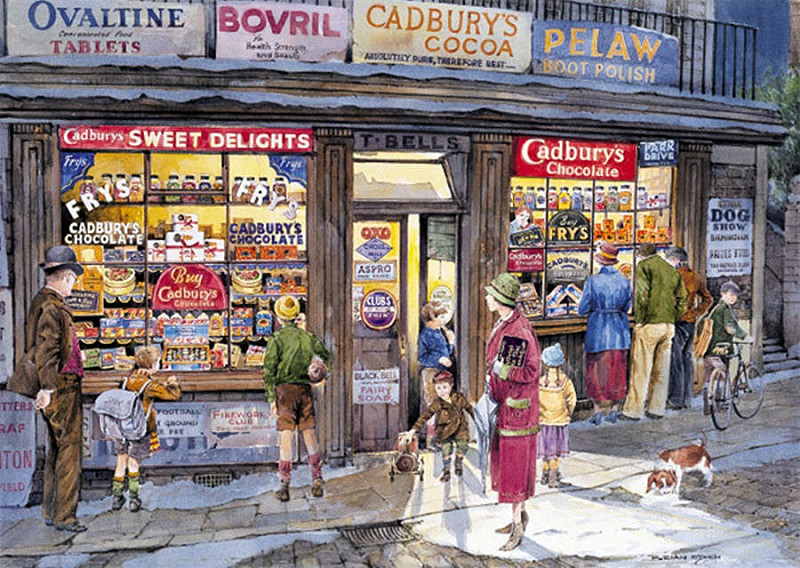
Most villages would have had a village shop…. A centre of the community, where locals would meet and exchange news and gossip….where the proprietor knew most of his customers by name…. Very often, these little shops were a life-line to some of the village’s residents….


Britain’s oldest surviving shop is the Boxford Stores, in Suffolk. Documented evidence shows it was first used as a warehouse for the buying and selling of wool and fabric. It has been in continuous service as a shop since 1528, when it was rented to Thomas Rastall, a butcher…. Over the centuries it has accommodated a variety of retail businesses, including green grocers, iron mongers and drapers…. Concerns were raised in 2015 that it may close as a shop, when ownership changed hands – but it was bought by two businessmen and it now trades as a green grocers and delicatessen….


The corner shop is the urban equivalent to the traditional village store….both have been facing a struggle to survive, many have already disappeared. Very often, small shops are family run businesses; because of other opportunities available to them, it is often the case that the children of the family don’t want to take over the running of the business. Of course, the other main reason for their demise is competition from the ‘big boys’…. Smaller premises means the variety of produce available is limited and with their larger purchasing power, supermarkets can very often sell goods at much cheaper prices….

butter 8
Premier chrisinplymouth via Foter.com / CC BY-NC-SA Original image source: https://www.flickr.com/photos/chrisinplymuth/7182920710/

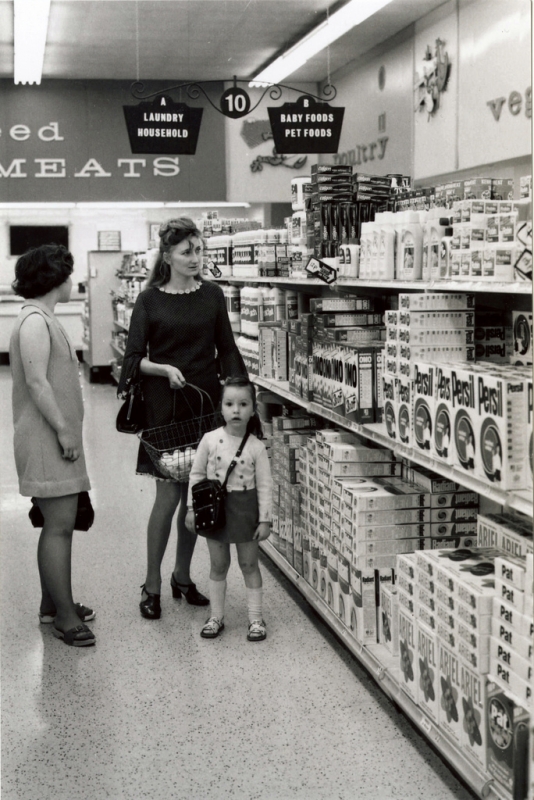
The concept of the self-service grocery store came about in 1916. On the 6th of September of that year, American grocer, Clarence Saunders opened his first ‘Piggly Wiggly’ store at 79, Jefferson Avenue, Memphis, Tennessee…. By 1922 he had 1,200 stores across the States and by 1932 the number had risen to 2,600….


The first supermarket to be opened in the UK was by the Cooperative Society on the 12th of January  1948, in Manor Park, London…. (Sainsbury’s first opened in 1950, followed by Tesco in 1954)….

Up until that point, shopping meant a trip to several different stores….the butcher, fish monger, green grocer, baker etc…. It meant queuing at the counter, waiting for purchases to be weighed, measured and packaged….which all took a considerable amount of time….

On that first morning of the brand new Co-op store opening, housewives queued outside in the freezing January cold…. Once inside they were amazed by the variety available to them….and were confused by the concept of serving themselves….

butter 12
“The arrival of the Supermarket, it changed our lives forever” brizzle born and bred via Foter.com / CC BY-ND Original image source: https://flickr.com/photos/brizzlebornandbred/8751069802/

Early stores did not carry fresh produce, such as fruit, vegetables and meat…. How different things are today…. As we all know, just about everything we require on a day-to-day basis can be found under one roof….and of course, bigger stores offer so much more….clothing, electrical goods, toys, even financial services…. There really is no stopping them…. Nowadays, many of the old corner shops are being replaced by the big chains with their smaller convenience stores….

The way we shop has also changed…. Competition between the big concerns and the relaxation of Sunday opening means stores are trading for longer hours, some are even open 24 hours a day…. In recent years we have seen the advent of on-line shopping…. A few clicks and the weekly shop is delivered straight to your door…. ‘Dark stores’ exist; warehouses essentially layed-out like supermarkets but not open to the public – their sole purpose to fulfill all those on-line orders….  Nowadays, the focus is very much on on-line shopping for just about everything…. We don’t have to take time out of our busy lives to trudge around stores and can arrange delivery to a convenient location, be it home, the office…. Actual, physical ‘shopping’ has, to some extent, become reserved as a leisure activity….

We are all often nostalgic when we think about our village shops and corner stores….

butter 9
The Corner Shop brizzle born and bred via Foter.com / CC BY-ND Original image source: https://www.flickr.com/photos/brizzlebornandbred/13799292373/

Unfortunately, it is our preference for convenience that has seen the demise of so many….we simply haven’t supported them…. Although it may be too late for some, it’s not all doom and gloom….there are plenty that are fighting back…. It is not unusual these days for a village shop to be owned and run by the villagers themselves….often selling local produce – eggs, milk, vegetables from a local farmer, bread delivered daily from a local bakery…. Sometimes these shops will offer a range of artisan or hand-crafted foods…. Many might provide a facility for fresh coffee and place to catch-up with neighbours whilst picking something up for dinner…. The village shop is still, in so many cases, the central hub of the community…. Thankfully, their value has been recognised and conscious efforts are being made to preserve them…. Obviously, we all have to move with the times, many of these little stores are doing just that…. It’s up to us as individuals to help keep them going; personally, I love it when I can pop into a little shop and find something different….may be a jar of locally produced honey – or handicrafts made by somebody within the village…. Let’s face it, we all love a little retail therapy….

“To found a great empire for the sole purpose of raising up a people of customers, may at first sight, appear a project fit only for a nation of shopkeepers. It is, however, a project altogether unfit for a nation of shopkeepers, but extremely fit for a nation whose government is influenced by shopkeepers”….  Adam Smith – Wealth of Nations 1776


Most definitely an omen….

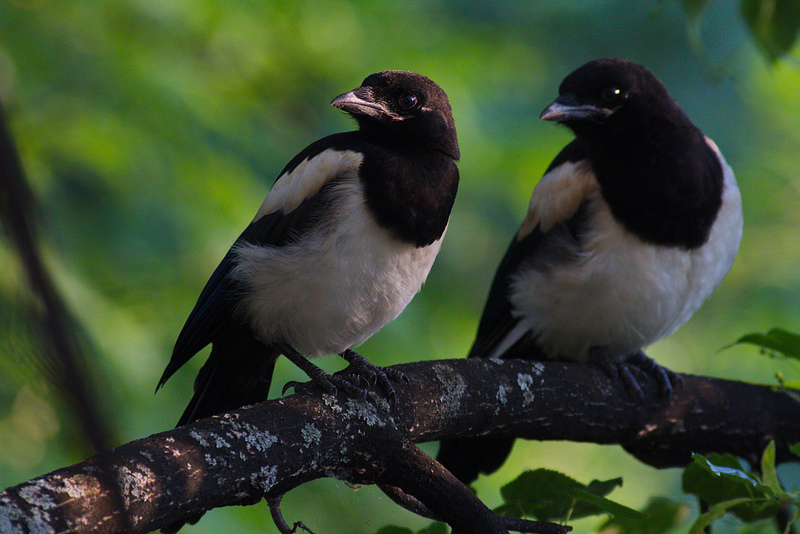
I am a great believer in omens, I suppose that goes hand in hand with being superstitious…. I’m one of those people who, when I see a magpie on its own, have to wish him ‘good day’ and enquire after his lady wife…. If I see a pair together, it always cheers me up – as I am convinced something good is about to happen…. I saw a pair just the other morning, attempting to ‘hijack’ the bird feeder – it was all quite comical and their antics made me laugh….

A few weeks ago, I wrote a blog post – Standing at the cross roads…. – inspired because – at that point in time – I felt as though that was exactly what I was doing….trying to decide which way to go…. I had to choose whether to continue waiting to return to the antiques centre where I have a room (but had to vacate some 18 months ago, due to a serious fire – complications have meant rebuilding has been delayed). Taking the decision to wait required finding a way to fund the continuation of keeping all my stock and fittings in storage – i.e. “go out and get a new job, Haze”…. I must admit, this idea seemed favourite….but I knew what would happen…. I would become involved – adapt to a new life….that’s human nature…. Besides, I love what I do, it’s a passion; so, after careful consideration, it was clear, I needed to find another venue from which to trade….

After initial investigations, I was surprised by the lack of antiques centres in my local area; those that do exist are just that little bit too far away to be practical…. There are two or three others near to the Mill but as I will hopefully be returning there eventually, having two bases so close together seemed counter-productive to me…. I needed something a similar distance from home but in the opposite direction….but nothing appeared to be available….

It was whilst discussing this matter with my Mum one afternoon last week, that I picked up my phone to do another quick search of antiques centres in the local area….and there it was! How could I have missed this one before? Right there, under my nose, just half an hour away…. I must have passed it scores of times, as it lies on route to where my mother-in-law used to live…. From what I could see from the website – it looked lovely, absolutely perfect…. Obviously I was going to have to find out more….

Now this is where it gets uncanny….

A couple of weeks ago, I wrote another blog post – A stitch in time…. – As with all my ‘mini project’ posts, I became completely engrossed in finding out about my chosen subject; I was totally absorbed with this particular one – especially with regards to the treatment imprisoned suffragettes were subjected to – in the form of force-feeding…. In the blog, I mentioned several prominent activists who had been based in the Surrey Hills area…. One couple, who helped Emmeline Pankhurst found and run the Women’s Social Political Union (WSPU), were husband and wife Frederick and Emmeline Pethick-Lawrence. It was their home, ‘The Mascot’, in South Holmwood, where many of the suffragettes who had been on hunger strike whilst in prison, went to recover upon their release…. Bearing in mind how I had taken this subject to heart – imagine my surprise when I found out this antiques centre neighbours that very house once occupied by the Pethick-Lawrences….

I knew as soon as I walked in to The Holly and Laurel Emporium that this was going to be the new place for me…. Everything about it felt ‘right’ – the friendly atmosphere, the delights around every corner waiting to be discovered…. My idea of ‘Heaven’….(and a gorgeous tea room – always an important factor in my book)…. So, at the end of this month, I will be taking up residence in a room at http://www.thehollyandlaurelemporium.com – and I can’t wait…. It will be so good to get my teeth back into what I love doing so much…. Then, of course, once the Mill reopens, I’ll have double the fun….

So, I am no longer at the crossroads, I am off down a chosen route again. I have always been of the opinion ‘what’s meant to be’…. Some may say all this is simply coincidence – but for me it is definitely an ‘omen’….

omen 3
Magpie Fledglings ressaure via Foter.com / CC BY-SA Original image URL: https://www.flickr.com/photos/ressaure/7465779804/